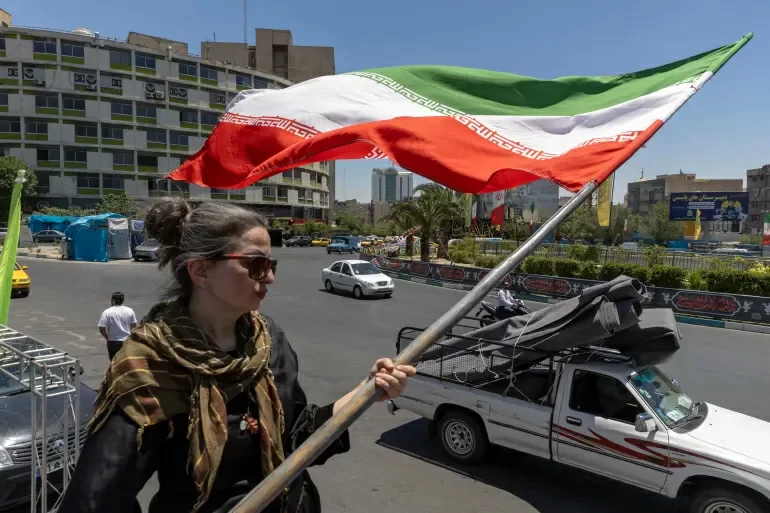
After months of grueling, high-stakes negotiations, the United States and Iran have finalized a memorandum of understanding set to be signed this Friday in Switzerland. Yet even as the diplomatic milestone approaches, deep unresolved differences and fierce internal rifts within Iran’s political establishment leave the future of the deal far from certain, with experts warning frictions will almost certainly emerge during implementation in the coming months.
At the center of the uncertainty is Iran’s new Supreme Leader, who succeeded his father, the late Ayatollah Ali Khamenei, after Khamenei was assassinated in a February airstrike that also left the new leader wounded. Since taking office, the new Supreme Leader has made almost no public appearances, releasing only rare written statements, and has yet to take an explicit public stance on the agreement with the US. His public comments have so far focused exclusively on two non-negotiable priorities: maintaining Iranian control over the strategic Strait of Hormuz, and protecting the country’s nuclear and missile programs as inalienable national assets.
This silence has sparked widespread speculation and competing interpretations across Iran’s political landscape. Keyhan, the ultraconservative newspaper whose editor-in-chief was originally appointed by the late Khamenei, argues the new leader’s deliberate refusal to address the nuclear file is a signal that Iran considers the dossier closed, and sees no need for further negotiation — even as the US and Israel launched their recent military campaign explicitly aimed at curbing Iran’s nuclear ambitions. The publication has issued a stark warning, noting “We stand at a critical juncture in West Asian history; there is no room for weakness or error, and no one must cross the Supreme Leader’s red lines.”
Remaining senior leaders of the Islamic Revolutionary Guard Corps (IRGC), which lost dozens of top officers in the recent conflict, have emerged as key power brokers shaping the negotiations with Washington. IRGC chief General Ahmad Vahidi and other senior commanders have repeatedly stated they are prepared to resume military operations if necessary, but have declined to comment on the fine print of the draft agreement. Having invested decades and billions of dollars building Iran’s regional “axis of resistance” network of allied militias, IRGC leaders insist Tehran will never abandon its allies, most notably Lebanon’s Hezbollah, and that any final agreement must protect these groups from Israeli aggression.
Esmail Qaani, commander of the IRGC Quds Force which oversees the axis of resistance, made his first public appearance in months Monday evening to address the agreement. Qaani claimed the Bab al-Mandeb Strait is fully controlled by Hezbollah, Yemen’s Houthi movement and other resistance groups, and reaffirmed Iran’s threat to close the critical waterway if hostilities resume. He also explicitly offered public support to Mohammad Bagher Ghalibaf and other members of Iran’s negotiating team, who have faced fierce backlash from hardline factions for striking a deal with the US.
Ghalibaf, currently Iran’s parliamentary speaker and a former senior IRGC commander, is widely viewed as a pragmatic conservative who backs the agreement. In a rare address on state television following April’s ceasefire, Ghalibaf acknowledged that the US and Israel hold overwhelming military superiority over Iran, meaning they cannot be defeated through open conflict, but argued that a favorable agreement is achievable if Iran can secure gains on the battlefield. Even IRGC General Mohammad Bagher Zolghadr, secretary of Iran’s Supreme National Security Council (SNSC), who previously insisted Tehran would not make concessions, ultimately oversaw the SNSC’s public ratification of the draft deal with Washington.
Hardline factions within Iran’s establishment remain fiercely opposed to the agreement, which they dismiss as a capitulation to US President Donald Trump, whom they hold directly responsible for the assassination of former Supreme Leader Ali Khamenei and Quds Force commander Qassem Soleimani in 2020. Hardliners demand Tehran refuse to make any major concessions on its nuclear program, maintain full control of the Strait of Hormuz, impose shipping tolls on foreign vessels passing through the waterway, and force all US troops out of the Middle East.
The faction includes dozens of hardline parliamentarians and members of the Paydari Front, led by Saeed Jalili, Khamenei’s personal representative to the SNSC and a veteran negotiator who has overseen multiple failed rounds of talks with the West. Jalili is one of the most prominent opponents of the current deal, and unconfirmed rumors have circulated that he was removed from his post shortly before the agreement was announced. Alongside Keyhan, IRGC-aligned media outlets including Tasnim News Agency, Fars News and Mehr News have all pushed a hardline anti-US narrative and criticized the draft deal.
By contrast, Iran’s civilian government led by moderate President Masoud Pezeshkian, who supports the agreement, has seen its political power erode significantly in recent years as hardliners outside the government have consolidated control. Pezeshkian, who still serves as chairman of the SNSC, argued last week in Tehran that Iran must end the damaging status quo of “no war, no peace” with the United States. He has appointed several key ministers who back a negotiated solution that protects Iranian interests, most notably through the full lifting of crippling Western sanctions.
Reformists and moderate figures, including former presidents Hassan Rouhani and Mohammad Khatami and former foreign minister Javad Zarif, have been largely sidelined from power in recent years, but they remain vocal supporters of the negotiating process. They back a deal to end hostilities and open up Iran’s struggling economy to prevent a total economic collapse. Following the announcement of the draft memorandum, Khatami called for national unity, saying “Now is the time for unity among all Iranians — both supporters and opponents of the system — to support the negotiations and negotiators, and work toward an agreement that brings lasting peace and a life free from fear and war.”
Even as preparations for Friday’s signing move forward in Switzerland, the competing visions and deep divisions within Iran’s political elite mean the path ahead for the agreement remains rocky, with multiple potential roadblocks that could derail implementation long after the ceremonial signing.