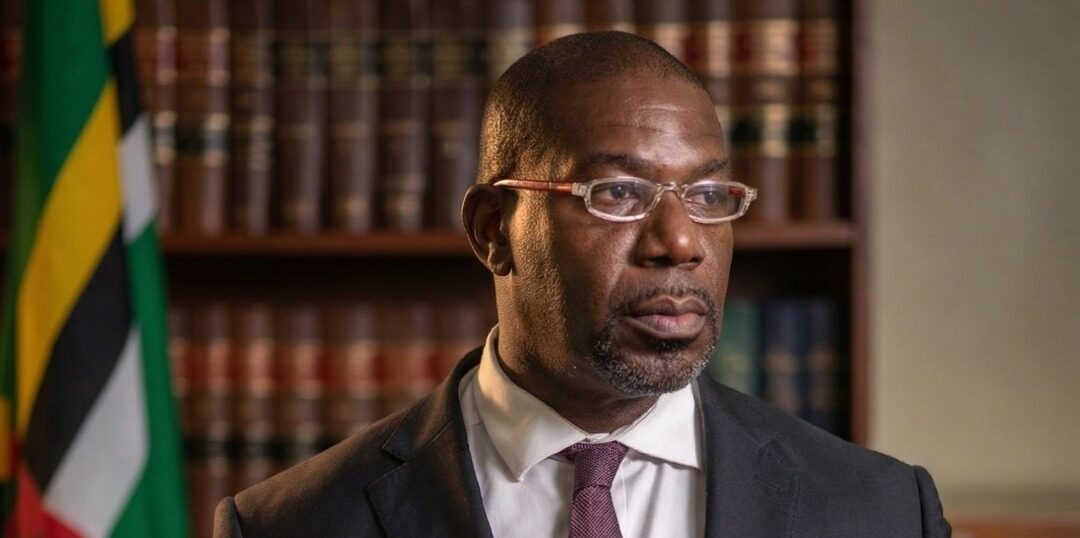
Recent back-to-back public meetings between senior leaders of the ruling Dominica Labour Party (DLP) and two long-time prominent figures from the main opposition United Workers Party (UWP) have sent shockwaves through Dominica’s political landscape. For many rank-and-file UWP supporters, the interaction has sparked anger, confusion, and a widespread sense of betrayal, with opposition-aligned media avoiding clear discussion of the encounters and grassroots activists expressing deep distress. Even among non-UWP supporters, the cross-partisan engagement has been met with quiet curiosity. Across the political spectrum, a common unspoken norm holds that sitting government officials and opposition representatives should avoid any substantive cooperation or public interaction, particularly between the DLP and UWP.
What makes this norm particularly striking, however, is its inherent contradiction: many of the same voices that decry collaboration between incumbents and opposition figures simultaneously demand unity among all anti-government groups to unseat the ruling party. For these critics, cooperation is only legitimate when it targets the sitting government’s political standing and authority. This double standard is not just inconsistent — it is dangerous, anti-democratic, and fundamentally counterproductive to Dominica’s national development.
This toxic worldview frames political disagreement as an eternal, zero-sum conflict that takes priority over the collective national good. Rooted in elite self-interest rather than public service, it treats political opponents as inherent enemies rather than competing actors with a shared stake in national progress. When any engagement across party lines is labeled betrayal, the nation deliberately locks out valuable perspectives, expertise, and human capital that could advance shared development goals, leaving critical potential resources untapped.
This flawed logic stands in direct contradiction to the core purpose of democratic governance. Democracy was never designed to institutionalize permanent hostility; instead, it exists to manage political disagreement peacefully while enabling collective action for the common good. Leading contemporary research on political polarization confirms that an “us versus them” ideological framework systematically erodes democratic institutions. As political scientists Jennifer McCoy, Tahmina Rahman, and Murat Somer detail in their work on global democratic crisis, severe polarization reshapes ordinary political differences into conflicting, hostile identities, turning political competitors into existential enemies. In this poisoned environment, compromise becomes betrayal, open dialogue becomes a sign of weakness, and effective governance becomes nearly impossible. The end result, all too often, is democratic erosion, institutional gridlock, and plummeting public trust in government.
These risks are exponentially higher for small island developing states like Dominica. Unlike large nations with large populations, deeply rooted democratic institutions, and vast domestic resource bases, small developing economies depend entirely on social cohesion, political stability, and efficient governance to thrive. Every skilled, capable citizen represents a critical national asset, regardless of their partisan affiliation. When political conflict is weaponized and prolonged, the nation voluntarily sidelines a portion of its most valuable human capital. Competence is replaced by political loyalty as a qualification for leadership, and collaborative opportunities are sacrificed on the altar of partisan rivalry.
The Caribbean region is littered with cautionary examples of how extreme political antagonism derails long-term development. Across multiple Caribbean territories, election cycles are defined by hyper-partisan mobilization that leaves societies deeply divided years after votes are counted. Sitting governments drain massive political capital deflecting opposition attacks, while opposition parties devote nearly all their resources to undermining incumbents rather than contributing constructive solutions to national challenges. In this environment, sound public policy becomes the first casualty of political warfare. Long-term development plans are routinely scrapped when new parties take power, and infrastructure and social projects are evaluated based on which party proposed them, not on their inherent public value.
Jamaica’s experience with extreme political tribalism in the 1970s and 1980s offers a particularly clear warning. Political competition grew so intense that entire communities were branded by their party allegiance, fueling deep social fragmentation and endemic political violence. The development costs were severe: pervasive political instability drove away foreign investment and eroded public confidence in state institutions. While Jamaica has since made major progress reducing political violence and strengthening democratic norms, its history stands as a stark reminder of how much damage entrenched political conflict can inflict on a society.
Similarly, Guyana’s decades-long political crises illustrate how the toxic combination of ethnic and partisan polarization cripples governance and delays development for generations. When political competition is framed as a zero-sum battle for survival rather than a debate over competing policy ideas, public distrust deepens and national consensus becomes nearly impossible to achieve. Partisan political calculations consistently take priority over pressing national development needs.
Scholarly research aligns with these on-the-ground Caribbean experiences: the most dangerous form of political conflict is not disagreement itself, but what researchers term “pernicious polarization” — a condition where society splits into mutually hostile camps that prioritize partisan victory over democratic norms, and increasingly distrust anyone outside their own group. In this context, opportunistic political leaders mobilize supporters through fear, resentment, and deliberate demonization of opponents. Over time, democratic institutions weaken as citizens come to value partisan success more than they value the foundational rules of democracy.
This threat should command the attention of every Dominican. If every single interaction between members of opposing parties is labeled a betrayal, democracy itself is drained of its purpose. Healthy democratic systems need political competition to function, but they also depend on targeted cooperation to deliver progress. Some of the world’s most successful democracies have prospered precisely because political actors accept that while they may disagree on policy and approach, they share a common responsibility to advance the nation’s future.
Across the globe, ruling governments and opposition parties routinely collaborate on core national priorities: national security, economic growth, disaster response, education reform, and constitutional updates, to name a few. This kind of cross-partisan cooperation does not eliminate political competition. Instead, it ensures that competition serves national development rather than undermining it.
The damage of permanent political conflict extends far beyond institutional gridlock. Polarization also opens the door for anti-democratic actors to manipulate public anger and fear. When ordinary citizens come to see political opponents as existential enemies rather than fellow citizens, they are far more likely to support undemocratic actions targeting those rivals. Multiple studies confirm that highly polarized societies face a much higher risk of democratic backsliding, because leaders can justify attacks on independent institutions, restrictions on dissent, and erosion of democratic norms by framing opponents as a threat to national survival.
For small developing states like Dominica, this risk is especially acute. Political instability deters foreign investment, weakens public confidence in institutions, and distracts leaders from addressing urgent national challenges: economic diversification, climate change adaptation, youth unemployment, education reform, healthcare expansion, and technological innovation. Like other Caribbean nations, Dominica faces steep development hurdles that demand national unity and collective effort. The climate crisis alone requires unprecedented cooperation between political parties, the private sector, civil society, and ordinary citizens. No single political party holds all the ideas, expertise, or resources needed to secure a prosperous future for the Dominican people.
That is why a fundamental rethinking of how political engagement works in Dominica is long overdue. Dominicans must reject the harmful myth that permanent conflict is a sign of a healthy democracy. Democracy is at its strongest when disagreement coexists with mutual respect, trust in democratic institutions, and a shared commitment to national progress. Political leaders who reach across partisan lines to engage constructively should be celebrated, not condemned. Citizens should judge leaders not by how fiercely they attack their opponents, but by their ability to solve problems, build consensus, and deliver for the public good.
Ultimately, ordinary Dominicans never benefit from permanent political conflict. The main winners are political elites and opportunists who profit from division, fear, and distrust. The rest of society pays the price: missed economic opportunities, weakened institutions, delayed development, and a weaker, less representative democracy. Dominica’s future prosperity does not depend on one political camp permanently defeating another. It depends on all citizens recognizing that national development is a shared project that requires buy-in from every part of society.
The defining political question for Dominica today is not how to intensify and weaponize political differences, but how to turn political competition into a productive force that drives national progress. By rejecting the weaponization of political disagreement, encouraging open dialogue across partisan lines, and prioritizing national development over narrow partisan interests, Dominica can strengthen its democracy and boost its prospects for shared prosperity. The nation faces a clear choice: a politics of permanent antagonism, or a politics of constructive engagement. Regional history, peer-reviewed scholarship, and decades of Caribbean experience all confirm that only the second path can deliver sustainable development and full democratic maturity for the Dominican people.