
博客

  • Caribbean Port State Control flags inspection concerns

    Caribbean Port State Control flags inspection concerns

    Top maritime regulatory leaders from across the Caribbean have gathered in Guyana for the 31st annual meeting of the Caribbean Port State Control (CPSC), where cracking down on repeat non-compliance among ocean-going vessels and rooting out fraudulent shipping documentation have emerged as top policy priorities.

    Opening the conference at the AC Marriott in Ogle, along Guyana’s East Coast Demerara on Tuesday, CPSC Chairman Michel Amafo laid out the core agenda for delegates, who will spend the summit reviewing past policy outcomes, approving the organization’s annual operating budget, and tackling pressing systemic gaps uncovered in routine port inspections.

    In an interview with Demerara Waves Online News, Amafo outlined the most common and dangerous deficiencies inspectors are currently flagging during port checks. These include faulty or non-functional life-saving equipment, inadequate firefighting systems, violations of seafarers’ employment contracts, and a growing number of cases involving fraudulent safety certificates, falsified vessel registries, and illegitimate “false flags” that hide a vessel’s true ownership and compliance status.

    When authorities encounter suspected false flags, Amafo explained the CPSC has a clear verification and enforcement protocol: the CPSC contacts the claimed flag state to confirm the vessel’s registration, and any vessel found to be operating under a falsified flag is immediately detained in port until the issue is resolved.

    Guyana’s Minister of Maritime Affairs Deodat Indar used the opening of the conference to call for a unified regional response to “rogue operators” that fraudulently misuse the Guyanese flag to avoid compliance checks. He emphasized that these bad actors undermine the integrity of the global shipping industry and unfairly damage Guyana’s reputation, noting the country is often wrongfully associated with illegal activity it does not condone or participate in. Indar stressed that coordinated action with regional partners is critical to stamp out this harmful practice.

    Looking back at the CPSC’s progress over the past decade, Indar praised the organization for driving tangible improvements in maritime safety across the region. He credited these gains to three key changes: the widespread adoption of digital inspection and clearance systems, deeper integration with global maritime regulatory frameworks, and the adoption of more standardized, consistent inspection protocols across all CPSC member states.

    Indar also warned of the severe human and environmental costs of allowing non-compliant vessels to operate, stressing that unaddressed inspection failures can lead to catastrophic accidents including groundings, sinking, and loss of life at sea. Even with these ongoing risks, he noted that regional compliance with international maritime conventions has improved significantly in recent years, with inspection practices growing far more consistent across member jurisdictions.

    Sharing details of Guyana’s own recent inspection work, Indar revealed that Guyanese authorities completed 12 in-person port state control inspections last year, and conducted digital vetting for 286 vessels through its online clearance system that serves cargo operations supporting the country’s growing offshore oil sector. He added that many shipping lines have served the Guyana trade route for decades, but are now moving three times the volume of cargo using the same older fleets — a trend that increases the urgency of rigorous regular inspections to catch safety deficiencies before they lead to accidents.
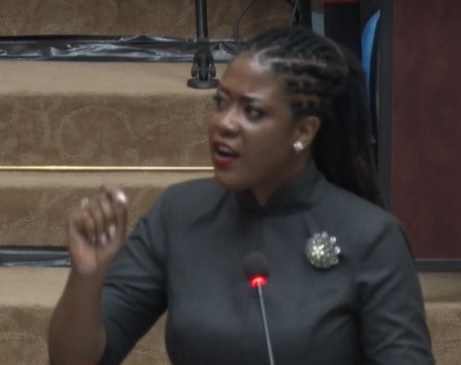

  • Walton-Desir to assist Primus on House Foreign Relations Committee

    Walton-Desir to assist Primus on House Foreign Relations Committee

    A recent parliamentary procedural ruling in Guyana has blocked the leader of a small opposition party from earning a seat on official legislative committees, prompting opposition leaders to arrange an informal collaborative workaround to leverage the politician’s deep policy expertise. The decision centers on Amanza Walton-Desir, founder and leader of the Forward Guyana Movement (FGM), who previously served as the opposition shadow minister for foreign affairs and international cooperation during the 2020–2025 legislative term as a representative for the A Partnership for National Unity+Alliance For Change (APNU+AFC) coalition.

    Following last September’s general and regional elections, the FGM secured just 4,332 votes overall, a total that Speaker of the National Assembly Manzoor Nadir has ruled insufficient to qualify the party for representation on any parliamentary committee, in line with Guyana’s proportional representation rules for committee assignments.

    Azruddin Mohamed, opposition leader and head of the opposition-aligned We Invest in Nationhood (WIN) party, confirmed that while Nadir’s ruling blocks Walton-Desir from an official committee seat, the party has arranged for her to work alongside Odessa Primus, WIN’s nominated chair of the bipartisan parliamentary sectoral committee on foreign relations. Mohamed noted that foreign policy falls directly in line with Walton-Desir’s long-standing area of expertise, making the informal collaboration a logical choice to strengthen the committee’s opposition oversight.

    “Even though my original goal was to secure Walton-Desir an official seat on the foreign relations committee, Speaker Nadir has made clear that per proportional allocation, her party’s vote share does not qualify for any committee position,” Mohamed explained in comments to Demerara Waves Online News.

    WIN frontbencher Tabitha Sarabo-Halley added that the party had initially hoped to place Walton-Desir on two separate panels: the constitutional reform committee and the parliamentary management committee. It was during the nomination process for the parliamentary management committee that Parliamentary Affairs and Governance Minister Gail Teixeira and Speaker Nadir formally confirmed that Walton-Desir could not be seated on any committee due to her party’s low vote total in the 2025 general election.

    The procedural outcome highlights how Guyana’s proportional representation framework for legislative committees limits representation for small, newly formed parties, even when those parties field candidates with extensive prior parliamentary and policy experience.

  • President offers GAWU to run a sugar estate

    President offers GAWU to run a sugar estate

    Guyana’s President Irfaan Ali has extended a public, unprecedented challenge to the Guyana Agricultural and General Workers Union (GAWU) to take over management of one of the Guyana Sugar Corporation (GUYSUCO)’s remaining operational sugar estates, as the government continues grappling with plummeting production in the country’s iconic but struggling sugar sector. The proposal was delivered Tuesday during a wreath-laying ceremony marking Enmore Martyr’s Day, a key event in Guyana’s labor history.

    Addressing attendees including GAWU President Seepaul Narine, who also serves as a member of parliament for the ruling People’s Progressive Party Civic (PPP), Ali extended an open invitation for the union to step into operations. “We also invited the union if you would like to take up the mantle of management and to take one of the estates and make it a model. We give you that challenge openly to take one of the estates and to manage it,” Ali stated, urging the union not to step back from the opportunity. The president framed the proposal as a test of alternative management models for the ailing industry, adding that the administration stands ready to collaborate with GAWU if it accepts the offer.

    Ali also defended the government’s decision to inject billions of dollars in public funding into the wholly state-owned GUYSUCO, arguing that without this financial support, the entire sugar industry would have collapsed entirely. The president reaffirmed the government’s ongoing commitment to backing the sugar sector, even as the administration explores new strategies to secure the industry’s long-term viability in the face of persistent financial losses and mounting debt.

    To address one of the sector’s most pressing challenges – a severe nationwide labor shortage – Ali pointed to the ongoing shift toward mechanized cane harvesting as a core solution. He confirmed that mechanization has already been rolled out across 44 percent of GUYSUCO’s cane lands, and the industry is adopting other modern technological upgrades too: traditional vehicle-based field inspections and fertilizer application are being replaced by drone systems, which cut both operational costs and completion times.

    “Modernisation of the sugar industry is necessary for its survival, resilience and sustainability,” Ali emphasized.

    The announcement also comes amid a previously reported pattern: while Ali has repeatedly threatened to dismiss senior officials at loss-making GUYSUCO over its poor performance, no executive removals have been carried out to date.

  • Van Genderen, eerste vrouwelijke griffier bij het Hof, heengegaan

    Van Genderen, eerste vrouwelijke griffier bij het Hof, heengegaan

    A trailblazing figure in the Surinamese judicial system has passed away, leaving the legal community in mourning. Monique van Genderen-Relyveld, the respected Head Clerk of the Suriname Court of Justice, died peacefully in her sleep on Wednesday morning at the age of 59, just months after her appointment was extended to leverage her decades of expertise. Her sudden death has left an irreplaceable gap in the country’s judiciary, according to senior court leadership.

    Van Genderen-Relyveld launched her career at the Court of Justice in 1992, the same year current Court President Iwan Rasoelbaks also joined the institution. Over the course of more than three decades, she worked her way up through the ranks, starting her journey into leadership in the late 1990s as a substitute clerk under then-acting Court President John von Niesewand, where she supported daily administrative operations of the court secretariat.

    A historic milestone came on November 7, 2008, when she was sworn in as the Court of Justice’s official clerk, with her formal installation following 21 days later. With this appointment, she made history as the first woman to hold the position of clerk at the Suriname Court of Justice, breaking a long-standing gender barrier in the country’s senior judicial administration.

    The pioneering head clerk had been preparing to celebrate her 60th birthday this year, but had no plans to step down from her role. Just recently, the court extended her appointment for an additional year, in a mutual decision that allowed the institution to continue benefiting from her deep institutional knowledge, proven expertise, and strong professional capabilities.

    In her final years in the role, van Genderen-Relyveld focused most of her work on the court’s Legalizations department, where she led critical efforts to modernize the department’s internal processes, making workflows more efficient and accessible for court staff and the public alike. She also provided indispensable support during extraordinary public court sessions, bringing steady leadership to high-stakes proceedings.

    In an interview with local outlet *Starnieuws*, Court President Rasoelbaks reflected on the profound loss the institution has suffered. “We have experienced the unexpected passing of the clerk as a shock and a substantial loss to the judicial organization,” he said. Rasoelbaks added that the court has lost “a calm, but decisive leader; a dutiful and integrity-driven head clerk.”

    A unique institutional feature of the court clerk role places the clerk’s operations under the oversight of the Court of Justice, while their formal employment status falls under the Legal Affairs department of the Ministry of Justice and Police. Unlike many other judicial administrative positions, the court clerk is sworn in by the head of state and formally installed by the court itself. As a marker of this distinct status, the clerk wears the same judicial robe and cap as sitting judges.

    Rasoelbaks extended the court’s deepest sympathies to those impacted by van Genderen-Relyveld’s passing. “Our sincere condolences go out to her family, loved ones and the entire judicial organization,” he said.

  • Leisure : Did you know ? #33

    Leisure : Did you know ? #33

    Every week, HaitiLibre’s popular general knowledge Quiz.HaitiLibre initiative releases two installments of its engaging trivia series “Did You Know?”, designed to spark curiosity and expand public knowledge across a wide range of topics. The 33rd edition of the series, published in June 2026, turns the spotlight to an often-overlooked trailblazer in automotive history: Bertha Benz, the wife of internal combustion engine automobile inventor Karl Benz.

    Long before modern highways and mass-produced cars entered the scene, Bertha Benz made an unprecedented choice that would change the trajectory of transportation forever. Without notifying her husband ahead of time, Benz set out in August 1888 alongside her two teenage sons on what would become the world’s first long-distance intercity road trip in a gasoline-powered automobile. The trio traveled 106 kilometers between the German cities of Mannheim and Pforzheim, using the third working prototype of Karl Benz’s Patent-Motorwagen, a clunky, untested vehicle that had only been demonstrated in short, controlled trials up to that point.

    The journey was far from a leisurely pleasure drive. It served as an unplanned real-world stress test of the prototype’s reliability, and Bertha Benz encountered multiple mechanical challenges along the way. When a fuel line became clogged, she used her hat pin to clear the blockage; when a loose electrical wire threatened to stop the trip, she insulated it using her garter, turning everyday accessories into improvised automotive tools. Her successful completion of the trip dispelled widespread public skepticism about the practicality of gasoline-powered vehicles. Up until that moment, many people saw the automobile as nothing more than a novelty toy, unsuitable for real travel. By proving that an internal combustion vehicle could complete a long-distance journey independently, Benz laid the groundwork for the global commercialization of the modern automobile, an invention that redefined global society.

    Beyond sharing this little-known piece of history, the article also serves as an update on the Quiz.HaitiLibre platform itself. As part of the platform’s monthly content expansion, 31 new trivia quizzes were added to the platform on June 1, 2026, bringing the total number of available games to 150, with new content added on a monthly basis. The free, no-registration platform caters to all audiences, offering three difficulty levels (beginner, intermediate, and expert) for every quiz, and is fully accessible in both French and English. While the “Did You Know?” series covers general knowledge topics from across the globe, the platform also features a wide selection of content focused on Haiti, alongside specialized expert-themed quizzes for more experienced trivia fans. Visitors can access the full range of content, share the platform with friends, and submit feedback directly through the Quiz.HaitiLibre website.

  • Derde helft WK 2026: Argentinië start titelverdediging in stijl; Messi scoort hattrick

    Derde helft WK 2026: Argentinië start titelverdediging in stijl; Messi scoort hattrick

    The 2026 FIFA World Cup kicked off its group stage action in Kansas City on Monday, with defending champions Argentina launching their title defense campaign with a dominant 3-0 victory over Algeria, who returned to the World Cup finals for the first time in 12 years. The night belonged entirely to 38-year-old Lionel Messi, who delivered a masterclass performance to score the tournament’s first hat-trick, leveling Miroslav Klose’s long-standing record of 16 World Cup goals as the competition’s all-time leading scorer.

    The match got off to a dramatic start, with two goals disallowed for offside inside the opening 10 minutes. First, Messi saw an early effort ruled out by the tightest of offside calls, before Algeria’s Fares Chaibi also had his opening goal wiped out by the assistant referee’s flag. It did not take much longer for Messi to break the deadlock in legitimate fashion, however. In the 17th minute, Rodrigo De Paul played a pinpoint through ball that put Messi clear on goal. The Argentine icon drove forward from 25 yards out and fired an unstoppable, precise shot past Algeria goalkeeper Luca Zidane, putting Argentina ahead. This goal marked not only a key milestone in the tournament, but also Messi’s 14th World Cup goal, coming in his 200th senior international cap for his country.

    Buoyed by the early opener, Argentina took control of the match, dominating possession with crisp combination play and a formidable midfield press. Algeria failed to register a meaningful attempt on goal until the 41st minute, when Argentine goalkeeper Emiliano Martinez produced a solid save to keep his sheet clean going into halftime.

    After the break, Algeria put up a stubborn defensive fight. In the 49th minute, Luca Zidane showcased his reflexes with a well-timed headed clearance to deny Lautaro Martinez a clear scoring opportunity from a dangerous Argentine attack. Messi came close to doubling his tally shortly after, curling a stunning effort just over the crossbar. Even NFL Kansas City Chiefs star Patrick Mahomes, in attendance at the Kansas City Stadium, was spotted soaking in the generational talent on display.

    Messi’s second goal finally arrived in the 60th minute, thanks to a defensive mistake from Zidane. Alexis Mac Allister hit a powerful low strike that the Algeria goalkeeper could only parry directly into the path of Messi, who coolly slotted home with his right foot. This strike took his World Cup goal tally to 15, moving him past Cristiano Ronaldo into sole second place on the all-time World Cup scoring list, just one goal behind Klose’s record.

    Zidane managed to deny Messi a third goal minutes later with a spectacular one-on-one save, but he could not stop history in the 76th minute. Substitute Nico Gonzalez played a perfectly weighted assist to Messi, who converted his third chance of the night to complete the first hat-trick of the 2026 World Cup and draw level with Klose’s record of 16 World Cup goals.

    When Messi was substituted off later in the match, the entire crowd in Kansas City rose to give the legend a thundering standing ovation, as spectators recognized they had just witnessed a historic moment in World Cup history. After his substitution, Argentina held firm to maintain their clean sheet, despite late efforts from Algeria to pull a goal back.

    With this commanding opening win, Argentina’s title defense got off to a perfect start. Messi now heads into his next group stage match with a golden opportunity to break Klose’s record and cement his status as the greatest World Cup goalscorer of all time. Monday’s performance was yet another reminder that even at almost 39 years old, Messi remains at the peak of world football, capable of carrying his team to glory on the biggest global stage.

  • DNA-lid Lau: Begroting leunt te zwaar op verwachte olie-inkomsten

    DNA-lid Lau: Begroting leunt te zwaar op verwachte olie-inkomsten

    As Suriname’s parliament debates the national budget, a ruling party legislator has sounded the alarm over the country’s overreliance on projected offshore oil revenues to stabilize its public finances, warning that current fiscal planning leaves the nation exposed to significant market and operational risks.

    Jeffrey Lau, a member of the National Assembly representing the National Party of Suriname (NPS), told lawmakers during budget deliberations that the government’s debt reduction strategy is built on a heavily optimistic foundation that depends entirely on favorable conditions in the global oil market. Under the government’s current plan, the country’s total public debt is projected to fall below the legal threshold of 60% of gross domestic product (GDP) starting in 2029. But Lau stressed that this projection is almost entirely tied to two core assumptions: that new offshore oil production will come online exactly on schedule, and that global crude prices will remain at profitable levels throughout the projection period.

    “This projection only holds under the best-case oil scenario. Without those projected oil revenues, the legal debt target will not be met, which makes the entire debt strategy fundamentally vulnerable,” Lau explained to the assembly.

    Beyond the overreliance on optimistic projections, Lau also pointed out that the current fiscal framework lacks any contingency planning for downside risks. These risks include sudden drops in global oil prices, a faster-than-expected global energy transition that reduces long-term demand for fossil fuels, or unexpected delays to the development of Suriname’s new offshore oil projects. To address this gap, Lau is calling on the government to develop and publish a formal stress test scenario alongside its baseline budget projections. This exercise would make clear exactly how slower growth, lower revenues, or higher debt would impact public finances, the annual budget, and long-term debt sustainability, he said.

    Lau emphasized that Suriname should not count unearned future oil revenues towards its current wealth, and instead must continue pushing forward with structural economic reforms to diversify the national economy beyond the oil and gas sector. A sustainable, healthy budget does not depend on oil revenues alone, he noted: it requires sound, conservative fiscal policy and a broad, diversified economic base that can withstand shocks to any single industry.

    While Lau acknowledged that the emergence of a new offshore oil and gas sector represents a major transformative opportunity for Suriname’s economy, he stressed that responsible governance requires preparing for less favorable outcomes. “We cannot only plan for the best-case scenario. We also need to understand how we will respond when setbacks occur. That is what responsible fiscal policy requires,” Lau told the assembly.

  • Illegal sand quarries : Strong operation by the Ministry (video)

    Illegal sand quarries : Strong operation by the Ministry (video)

    In a decisive step to curb rampant overexploitation of natural resources and safeguard ecologically fragile ecosystems surrounding Haiti’s capital, Environment Minister Valéry Fils-Aimé officially launched the second phase of government intervention targeting illegal sand quarries on June 16, 2026. The launch event took place at Laboule 12, covering four high-risk upland areas: Pèlerin, Laboule, Boutillier, and Kenscoff, all located in the hills overlooking Port-au-Prince.

    The minister was joined at the event by a cross-agency delegation of regional and national stakeholders, including the West Department’s delegate and deputy delegate, the Director General of the National Agency for Protected Areas (ANAP), the Mayor of Kenscoff, deputy mayors of Pétion-Ville, the Pétion-Ville Police Commissioner, local Community Action Committee (CASEC) leaders, the West Departmental Director of the Environment, the Director of Environmental Inspection and Surveillance (DISE), and senior officials from the National Bureau of Environmental Evaluation (BNÉE).

    During the event, Minister Fils-Aimé reinforced the Haitian government’s unwavering commitment to ending unregulated sand extraction, a practice that has been linked to accelerated degradation of critical watersheds, increased risk of catastrophic natural disasters, and eroded livelihood stability for local communities in impacted zones.

    Three core policy measures were announced as part of the new intervention phase. First, an immediate 30-day temporary ban on sand transport truck access to all four target areas took effect June 16. The temporary restriction is designed to halt further damage to these ecologically sensitive landscapes and give technical experts time to conduct full on-site assessments. To ensure compliance, a multi-agency monitoring checkpoint will be permanently staffed at the entrance to Laboule 12, with ANAP’s Bureau of Protected Areas, DISE, and the West Departmental Environment Directorate leading operations, backed by the Haitian National Police (PNH), local municipal governments, community leaders, and the West Departmental Delegation.

    Second, the Bureau of Mines and Energy (BME) has been tasked with completing a comprehensive national mapping of all active sand extraction sites. The mapping effort will document the exact location of each site, the scale of ongoing extraction activities, and whether each operation meets the requirements of Haiti’s existing environmental and mining regulations.

    Third, the BNÉE will conduct a full environmental and social impact assessment of all quarrying activities documented in the target region. Once the technical assessment is complete, the Ministry of the Environment will issue final rulings, which may include permanent closure for any sites found to pose significant risks to the natural environment, public safety, or broader national public interest.

    Unregulated illegal sand quarrying has been a longstanding environmental challenge in Haiti’s West Department, with prior government data showing as much as 89 percent of all quarries in the region operating without valid permits. Years of unregulated extraction in the uplands above Port-au-Prince have destabilized hillsides and damaged watersheds, increasing the country’s already high vulnerability to flooding and landslides during hurricane and rainy seasons. In closing, ministry officials emphasized that protecting the nation’s mountain ecosystems, critical watersheds, and natural resources is a non-negotiable national priority, and the Haitian state will fully uphold its responsibility to preserve this strategic heritage and reduce the country’s exposure to avoidable natural hazards.

  • President steunt initiatief SVJ voor zelfregulering journalistiek

    President steunt initiatief SVJ voor zelfregulering journalistiek

    On Tuesday, Suriname President Jennifer Simons held an introductory meeting with the newly seated board of the Suriname Journalists Association (SVJ), where she publicly voiced full government support for industry-led self-regulation of journalism and agreed to continue structured regular dialogue between the executive branch and the professional media body. The talks centered on three pressing challenges: rising disinformation, the growing impact of artificial intelligence on news ecosystems, and expanded access to government information for working journalists.

    Across the meeting, participants prioritized discussions around core principles of press freedom, improving journalistic quality, and the disruptive influence of unmoderated content on social media platforms. President Simons commended the SVJ’s proactive initiative to develop a formal framework for self-regulation and journalist accreditation, noting that such a system would create clear, public distinctions between professional, ethically grounded reporting and the unvetted information that circulates widely across social channels.

    In its remarks to the president, the SVJ board emphasized that the journalism profession itself is best positioned to take ownership of quality oversight and enforcement of professional ethical standards. The association is currently finalizing development of its national journalist accreditation system, and plans to present a full proposal to the Suriname government following the completion of parliamentary budget deliberations.

    One of the most urgent topics addressed during the conversation was the growing impact of social media platforms, generative artificial intelligence, and influencers on national news consumption. President Simons highlighted that ordinary Surinamese citizens increasingly struggle to separate reliable professional reporting from personal opinion and deliberately spread disinformation that can undermine public trust. She called on the SVJ to lead efforts to expand public media literacy, and develop targeted training programs for both working journalists and high-reach influencers who hold significant sway over public opinion.

    The SVJ board acknowledged that influencers have carved out an important role in modern public discourse, but stressed that they cannot replace the work of professional journalists. The association reaffirmed that core journalistic standards—including source verification, the right of reply, factual accuracy, and editorial independence—remain the foundational requirements for trustworthy news provision. Journalism, the board noted, is a regulated profession practiced in line with globally recognized professional ethical principles.

    In additional requests to the president, the SVJ pushed for more open access to government information. The association called for media outlets to be invited more regularly to key government events, allowing journalists to conduct on-the-ground reporting rather than relying exclusively on official press statements distributed by the Suriname Communication Service (CDS). The meeting also covered progress on the country’s Freedom of Information Act and improving accessibility for journalists to engage directly with cabinet ministers.

    President Simons reaffirmed that the Suriname government fully recognizes the critical role of a free and independent press in a functional democracy. She emphasized that setting professional standards for journalism is the responsibility of the industry body, not the state, aligning with the principle of editorial independence. Simons expressed clear commitment to continuing structured regular dialogue between the government and the SVJ, with the shared goal of building a more reliable national information ecosystem and a more resilient society at a time when disinformation and AI-driven content pose growing challenges.

    The meeting included the full SVJ board: Chair Nita Ramcharan, Deputy Chair Ivan Cairo, Secretary Wilfred Leeuwin, Treasurer Vishmohanie Thomas, Second Secretary Amanda Palis, Second Treasurer Ryaen La Rose, and Commissioner Harvey Panka. Accompanying President Simons were Chief of Staff Sergio Akiemboto and Cabinet Communication Coordinator Previen Sewnath.

  • Contract Shift Keeps Spotlight on Mira Family Ties

    Contract Shift Keeps Spotlight on Mira Family Ties

    In Belize, long-simmering questions about political nepotism and opaque government procurement have reignited after a recent shift in Ministry of Defense contracts linked to the family of Belmopan Area Representative Oscar Mira. What has drawn new public attention is not a new contract, but a subtle reshuffling: where one member of the Mira family once held a lucrative supply agreement, another close relative has now taken its place, renewing calls for full transparency in public sector contracting.

    For months, Oscar Mira has faced growing scrutiny over deals awarded to his relatives for supplying food produce to Belizean military bases. Previously, the system relied on multiple small-scale local vegetable vendors delivering directly to installations across the country. That structure was replaced in recent years with a single exclusive contract awarded to Jenny Mira, the politician’s relative. Now, 2026 tender results show Jenny Mira is no longer listed as a successful bidder for the defense ministry’s vegetable supply. But in her place, another of Mira’s siblings – brother Stanley Mira – has been awarded a new separate contract for staple grains including rice and beans, according to official tender documents obtained by local outlet News Five.

    Internal sources within the Belize Defense Force confirmed to News Five that the centralized single-supplier model now sees just one weekly delivery to Price Barracks, the country’s main military installation. From there, produce is redistributed to outlying bases: deliveries reach Orange Walk and Cayo bases every Wednesday, and the southern Punta Gorda base every Thursday. Critics have raised two core concerns with the new arrangement: first, that it cuts out small local vendors who previously held direct supply contracts, hurting local small business owners; second, that the reshuffling of contracts between family members raises serious questions about whether the tender process is being influenced by political connections rather than open competition.

    The defense ministry alone spends more than $20,000 per month on rice and beans for military rations, according to historical procurement records, making the contract a high-value public expenditure. As scrutiny of the new arrangement grows, Oscar Mira has declined repeated requests for comment from the press. When News Five reporters visited Mira’s constituency office on San Martin Road in Belmopan, the site itself added another layer to the controversy: the road’s 2021 rehabilitation was carried out by Fast Construction, a firm that has previously faced questions over its reported links to the Mira family.

    Records of the company’s Facebook page show Fast Construction launched its social media presence in March 2021, just four months after Mira won election in November 2020. By July of that same year, the firm was posting photos of its completed work on San Martin Road. When reporters approached Belmopan City Hall for comment, current Mayor Pablo Cawich told News Five the rehabilitation project was completed before he took office, but the city council is currently conducting a full audit of contracts awarded during the prior administration of former Mayor Palacio.

    Cawich explained that when his administration took over, it retained the same auditing team from the prior government and ordered full completion of backlogged audits. “When we came into office, we met with the auditors, the same auditors from previous administrations and we ask them these audits need to happen. So whatever it takes, let us know and we will do whatever is needed to ensure that these audits are completed,” Cawich said. “So in 2024, we were still trying to finalize the execution of audits from 2017. I can say that we are presently working on the audits from 2022 to 2024 and we are hoping to have those ready around December of this year, and that will also include the first year of [Mira’s current] administration.”

    Cawich noted that he maintains a regular collaborative working relationship with Mira, meeting monthly to coordinate on projects for Belmopan residents, and stressed that the city council currently has no active contracts with any companies tied to the Mira family. When asked directly if the Belmopan City Council has awarded any contracts to Mira-linked entities, Cawich said: “I was searching. I think I can say very clearly that no contract exists from the council for the Mira family, from the Belmopan City council.”

    Even so, the defense ministry contracts are just the latest in a string of questions over political connections in public procurement across Belizean government agencies. It remains to be seen whether the shift from Jenny to Stanley Mira will trigger further public backlash, but one fact is clear: questions about potential nepotism and lack of transparency in government contracting continue to follow Oscar Mira, and show no sign of fading from public debate. This report was prepared by Shane Williams for News Five.