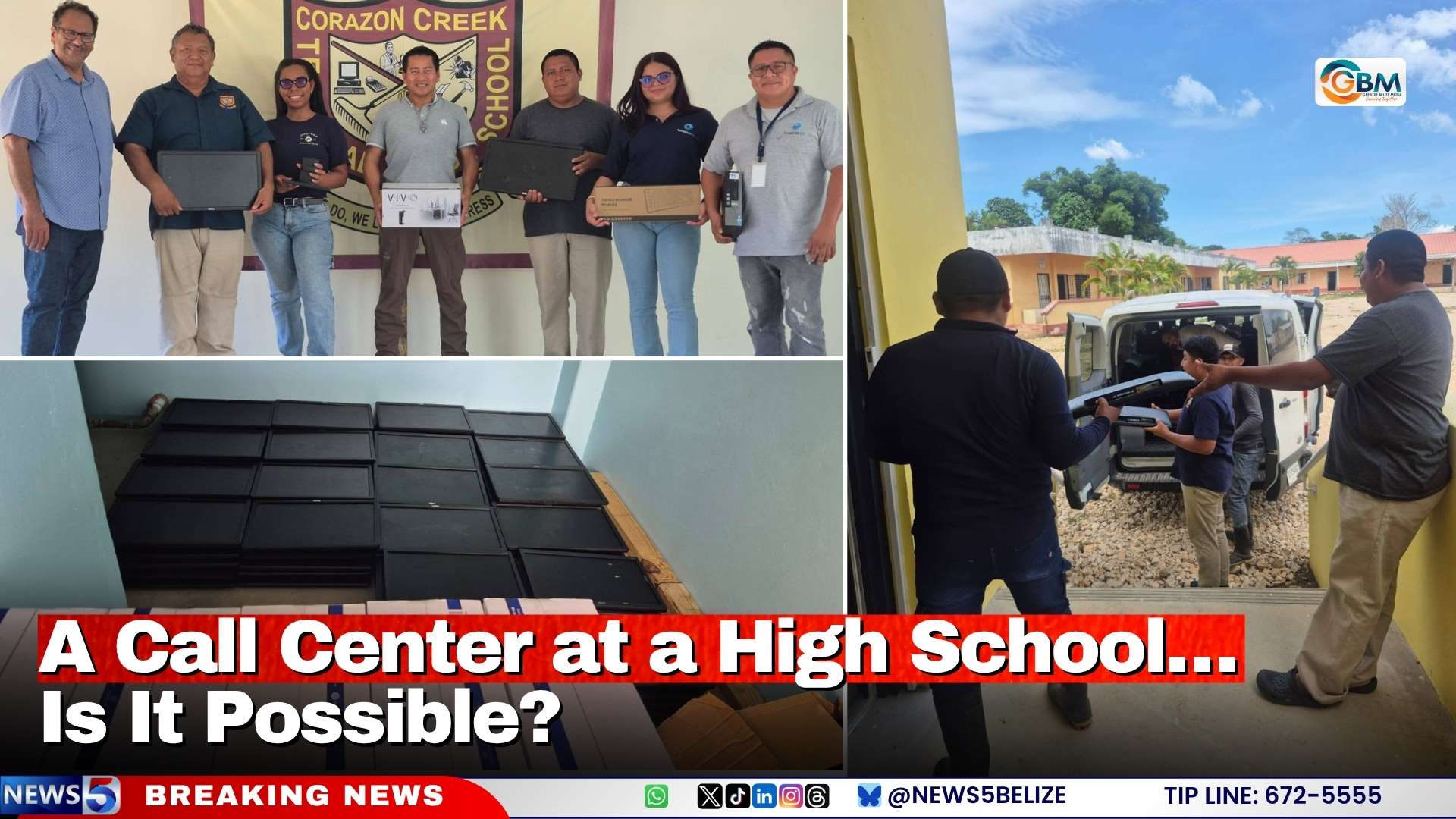
In a promising development for rural education and economic growth in southern Belize, a groundbreaking public-private partnership proposal is under evaluation that would bring a functional call center operation to Corazon Creek Technical High School (CCTHS) in Toledo District. If approved, the program would give local high school students a rare opportunity to earn a steady income without putting their secondary education on hold.\n\nThe details of the potential collaboration were made public by Osmond Martinez, the area representative for Toledo East, via a social media statement earlier this week. Martinez shared that Transparent BPO, a leading business process outsourcing firm, is in talks to anchor the on-site work program, creating a structured environment where students can balance part-time customer service roles with their academic requirements.\n\n\”Students can work and further their education at the same time,\” Martinez wrote in his post. \”We are currently doing our assessment and so far we are optimistic of this idea. This can boost the economy of Corazon Creek and surrounding communities.\”\n\nThe announcement coincided with a major philanthropic contribution from Transparent BPO to CCTHS: the firm donated 100 fully functional computer systems to the campus. According to Martinez, the new devices will not only lay early technical groundwork for the proposed call center program but also upgrade the school’s existing computer lab. The equipment will also support distance and concurrent learning opportunities for CCTHS students pursuing continuing education coursework through the University of Belize and Galen University.\n\nMartinez extended public gratitude to the BPO provider for its ongoing commitment to expanding opportunity across Toledo District and the broader Belizean community, calling the company’s investment “enormous support” for local residents.\n\nThe proposed on-campus BPO program builds on Transparent BPO’s recent regional expansion: the company just opened a new branch office in Toledo District, marking the first time a major business process outsourcing firm has established permanent operations in the area. This expansion aligns with national economic development goals outlined by Belizean Prime Minister John Briceño earlier this year.\n\nBriceño noted that the BPO sector has grown into a major economic engine for Belize, currently employing more than 20,000 people across the country and generating more than $150 million USD in annual wages for local workers. If the CCTHS pilot program proves successful, it could serve as a replicable model for expanding youth employment opportunities and strengthening the BPO sector’s local footprint in other rural communities across the nation.
博客
-
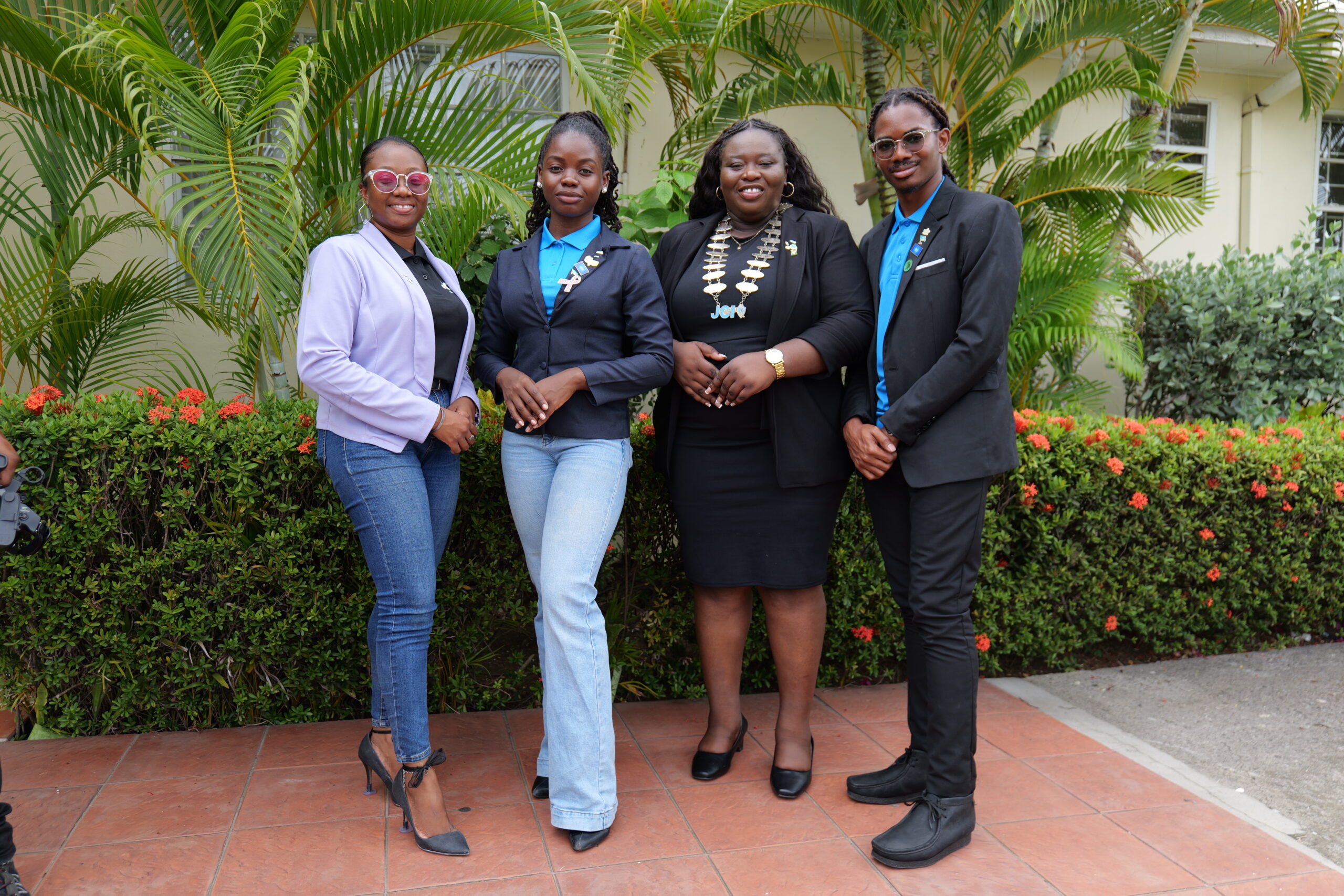
Saint Lucia to host 170 delegates at Jaycees regional convention
A landmark gathering for young change-makers across the region is set to kick off in Saint Lucia this fall, as the Caribbean island nation prepares to welcome roughly 170 delegates to the annual Junior Chamber International (JCI) West Indies National Convention. Scheduled to run from October 7 to 10 at the popular Bay Gardens venue, the four-day event is tailor-made for young people committed to driving tangible positive transformation in their local communities.
Founded in 1915, JCI—more commonly known as the Jaycees—is a worldwide non-profit movement that empowers young people between the ages of 18 and 40. The organization’s core mission centers on nurturing leadership skills, expanding access to community service opportunities, and supporting emerging entrepreneurial ventures, equipping a new generation to create lasting impact both at home and across the globe. Each year, the JCI West Indies National Convention rotates between member countries, making this year’s hosting by Saint Lucia a special milestone for the local chapter.
To finalize event logistics and align planning goals, JCI West Indies National President Regina Bunbury traveled to Saint Lucia for an official working visit from June 12 to 17. Speaking with local reporters during her trip, Bunbury shared that anticipation for the upcoming convention is running high, noting that significant progress has already been made in preparations. The gathering marks a key moment for JCI Saint Lucia, which only reaffiliated with the JCI West Indies regional body last year and is currently in an active period of new member recruitment.
Bunbury emphasized the unique value the organization offers to young Saint Lucians, saying, “If someone is looking to build themselves, to learn skills in entrepreneurship and personal development, they want a network, they’re passionate about community action or community development, JCI Saint Lucia is that organisation that I will encourage any young person between ages 18 to 40 to join and be a part of this great movement that has been in existence since 1915.”
Heading up the local organizing effort is Shan Lucien, president of JCI Saint Lucia. Lucien’s connection to the organization took off in 2024, when she was crowned Jaycees Queen—a victory that ended a 39-year drought for Saint Lucia, which had not claimed the title since 1985. She told reporters that preparations for the convention are proceeding smoothly, and framed the event as a life-changing opportunity for every attendee. Beyond workshops and planning sessions, Lucien highlighted that the convention will serve as a critical networking hub for young professionals across the region.
“We are also going to be networking because we have individuals in various professions around the region who are capable, who have experience, and so the convention serves as a platform for us to be able to get and share that experience from and with each other,” Lucien explained. For any young people interested in attending the 2024 JCI West Indies National Convention, registration is still open by reaching out directly to President Shan Lucien or any active JCI member based in Saint Lucia.
-

No Jail Time for Driver in Sandhill Crash That Killed Teen Passenger
Two years after a fatal car crash on Belize’s Philip Goldson Highway claimed the life of 18-year-old aspiring nurse Denia Rowland, a High Court judge has delivered a non-custodial sentence that has brought a somber close to one of the country’s high-profile road fatality cases.
Oscar Galindo Jr., a 23-year-old construction worker, pleaded guilty earlier this year to a charge of causing death by careless conduct, admitting his role in the April 2024 crash that killed Rowland, his passenger, between Miles 17 and 18 near Sandhill Village. In his sentencing decision, Justice Derick Sylvester ruled that Galindo would avoid prison time on the condition that he pays $5,000 in compensation to Rowland’s mother, Erica Garnett. Payments will start on July 1 at a rate of $400 per month, with a deadline of July 2027 for full repayment. Should Galindo default on this agreement, the judge ruled, an automatic six-month prison sentence will take effect.
The agreed-upon facts of the crash date back to a night of socializing between Galindo, Rowland and a group of friends. After traveling from Ladyville to Sandhill Village, the group began returning to Belize City when Galindo encountered unexpected danger while navigating a curve. Galindo told investigators he was temporarily blinded by the high beams of an oncoming vehicle, causing him to lose control of the pickup truck he was driving. The vehicle veered onto loose roadside gravel and overturned, throwing Rowland from the cab. The teen suffered fatal injuries in the incident.
Galindo was formally indicted on the charge on January 14, 2026, and entered an immediate guilty plea – a step the court identified as a major factor in the decision to forgo prison time. Crown Counsel Maria Nembhard-Santana led the prosecution, while defense attorney Oscar Selgado represented Galindo.
In an emotional victim impact statement delivered to the court, Garnett opened up about the irreversible grief of losing her daughter, who had been balancing work and sixth-form college coursework while pursuing her dream of becoming a nurse. She described the shock of learning of Denia’s death, a moment that still haunts her daily life. “I will never forget the moment my younger daughter told me that Denia had died. I was in complete shock,” she said. “I often think about the last words my daughter said to me and the beautiful dress she was wearing the last time I saw her. Every time I see the color pink, it reminds me of Denia.” Remarkably, even amid her profound sorrow, Garnett told the court she holds no malice toward Galindo. “Although I carry deep sadness and grief because of my daughter’s death, I do not hold any malice in my heart. I simply wish that my daughter was still here with us today,” she said.
For his part, Galindo struggled to articulate the depth of his remorse to the court, saying he could not find words to capture the pain he has carried since the crash. “I cannot find the proper words to express my true sorrow and personal grief that I hold for the families of the deceased and to the families of the survivors and to the survivors themselves,” he said. He issued a humble plea for forgiveness from everyone affected by the crash, adding that he prays for the Rowland family every night before he sleeps. “Every night before I sleep, I pray for those affected and I ask God to forgive me, and I also ask him to grant strength to the grieving family and friends to overcome their loss, and the strength to forgive me,” he said.
Galindo’s family also testified to his character, telling the court that the 23-year-old has been consumed by guilt since the night of the crash. His mother, Carmela Galindo, said he breaks down crying when discussing the incident, and she confirmed that he is truly remorseful for the harm he caused. His sister, Indira Johanna Galindo, echoed that testimony, confirming that Galindo has consistently expressed deep sorrow over Rowland’s death.
In outlining his sentencing reasoning, Justice Sylvester placed Galindo’s culpability for the crash at the lower end of the scale, setting an initial starting sentence of six months in prison. That was reduced to two months after accounting for the core mitigating circumstance of the incident: the crash stemmed from a momentary impairment by oncoming headlights, rather than intentional or deliberately reckless driving.
The court did note one key aggravating factor: Galindo had a blood alcohol level above the legal limit on the night of the crash. Justice Sylvester ruled, however, that this was far outweighed by a long list of mitigating factors. These include Galindo’s clean prior criminal record, his full cooperation with law enforcement investigators, and the genuine remorse documented in a Social Inquiry Report completed for the case.
When combined with Galindo’s early guilty plea and the Crown’s recommendation that compensation be used as an alternative to custody, these factors were enough to justify a fully non-custodial sentence, the judge ruled.
-

Dominica Cancer Society announces annual general meeting
The Dominica Cancer Society (DCS), a non-profit organization dedicated to supporting cancer patients and their families across the island nation, has officially announced plans for its 2026 Annual General Meeting (AGM), scheduled to take place Saturday, June 27 at the UWI Open Campus Dominica location on Elmshall Road in Roseau. The gathering is set to kick off at 9:00 a.m. local time, according to an official press release published by the organization.
This year’s AGM is framed as a critical open forum for both existing DCS members and community members interested in joining the non-profit. Attendees will have the opportunity to conduct a full review of the organization’s programming, activities, and key milestones achieved over the previous 12 months, before turning to collaborative conversations about upcoming strategic goals and institutional priorities. Beyond formal reporting, the meeting will empower attendees to take an active role in the DCS’s governance, giving community stakeholders direct input into the direction the organization will take in its work moving forward.
During the session, DCS leadership will present a series of comprehensive reports covering the status of ongoing community programs, the organization’s full financial performance for the past year, and updates on ongoing support services for people living with cancer and their loved ones across Dominica. After the presentation of reports, members will deliberate on the DCS’s core strategic objectives and high-priority focus areas for the 2026-2027 operational year.
The DCS reaffirmed its long-standing core mission in the press release: to expand public education and awareness around cancer, push for widespread adoption of prevention practices and routine early screening, provide holistic support for anyone impacted by the disease, and improve overall quality of life for both patients and their family members. The organization has issued a formal call for all registered members to prioritize attendance and active participation in the upcoming meeting, emphasizing that member engagement is central to the DCS’s community-centered mission.
For any community members or members seeking additional details about the meeting, including registration requirements or accommodation requests, the DCS notes that further information can be obtained by reaching out directly to the organization’s administrative team.
-

ABIA Warns Public of Investment Scam Using Its Name and Logo
The Antigua and Barbuda Investment Authority (ABIA) has issued an urgent public alert regarding a growing wave of fraudulent activity that exploits the agency’s official name, registered logo, and institutional brand identity without authorization.
In its official advisory, ABIA clarified a critical boundary for all potential investors and members of the public: the agency never solicits payments from private individuals via unsolicited private messaging on any platform. Any communication that makes such a demand under ABIA’s name is confirmed to be a malicious scam, the authority emphasized.
This brand impersonation tactic is not a new threat. ABIA noted that bad actors have a long history of misappropriating the agency’s official branding to trick unsuspecting targets into transferring unauthorized payments, making this a persistent risk to individuals seeking investment opportunities related to the twin-island nation.
In addition to the scam warning, ABIA also addressed ongoing technical issues with its official website, investantiguabarbuda.org. While the domain remains accessible in some regions, multiple users have reported intermittent service disruptions. The agency’s technical team is currently conducting a full review of the issue to restore consistent, reliable access for all users.
Out of an abundance of caution to protect the public, ABIA outlined clear safety guidelines for anyone interacting with the agency. First, all individuals should only seek information and conduct business through ABIA’s verified official communication channels. Second, users are strongly advised to avoid clicking on any unsolicited links that claim association with ABIA, as these often lead to phishing sites designed to steal personal or financial information.
ABIA reaffirmed its unwavering commitment to two core priorities: protecting the public from financial fraud, and upholding the integrity of Antigua and Barbuda’s national investment ecosystem. The agency closed its statement by urging all individuals to maintain a high level of vigilance when engaging with investment-related communications, and to report any suspicious activity impersonating ABIA immediately to local law enforcement or relevant regulatory authorities.
-

Island Life book launch celebrates young authors at Belmont Estate
On a rainy Sunday in mid-June 2026, the historic Belmont Estate in Grenada hosted the official launch of *Grenada’s Island Life: Where Family, Culture and Farms Thrive*, a groundbreaking community-led children’s book project funded by the Caribbean Culture Fund. The event brought together hundreds of attendees spanning students, educators, local families and regional community partners for a day of celebration centered on oral storytelling, cultural heritage and climate-conscious sustainable agriculture.
Co-authored by two local teens – 13-year-old Kaedi Ettienne and 14-year-old Meghan Noel, both raised on Belmont Estate – alongside academic and mentor Dr. Efua Akoma, the Grenada volume is one piece of a broader cross-Caribbean initiative that centers youth storytelling to elevate critical conversations around traditional farming practices, cultural identity, regional food security and climate-resilient agriculture.
Even as steady downpours forced organizers to adjust the day’s outdoor programming, the launch did not lose momentum. Attendees turned out in full force, bringing energy and enthusiasm to every scheduled session. The day’s clear highlight was a joint presentation from Ettienne and Noel, who shared their journey from community teens to published authors with confidence and poise. The young co-creators drew widespread praise from attendees and organizers alike, celebrated not just for their finished work but for stepping into role model positions for other young people across Grenada’s rural communities.
Dr. Akoma, who served as both co-author and mentor for the project, walked the two girls through every step of the storytelling and writing process, helping them shape their personal lived experiences into an accessible narrative for young readers. The book’s plot is rooted in Grenada’s recent climate reality: it follows the two young authors through the aftermath of a devastating hurricane, as they watch their local community unites to repair damaged farmland and rebuild collective hope. Through the beloved characters of Grand Mummy and Zumbee the Bee, the story introduces young readers to core sustainable practices including seed saving, soil conservation and collaborative community resilience-building.
The wider Island Life Project reaches across three Caribbean nations: Grenada, Dominica, and St. Lucia. It was intentionally designed to center intergenerational knowledge exchange, bringing together voices from children, parents, grandparents and long-time farming communities to document time-honored agricultural wisdom while promoting modern climate-smart techniques such as mulching, crop rotation, companion planting and raised bed farming.
Beyond the core book publication, the project includes a full suite of free educational resources for communities and schools, including teaching toolkits, student workbooks, structured lesson plans, activity coloring pages and instructional video content tailored to support teachers, learners and family groups. Organizers also conducted on-the-ground interviews with participating small-scale farmers to capture their lived experiences and preserve irreplaceable traditional agricultural knowledge for future generations.
A popular feature of the launch event was the custom agricultural swag bags distributed to all student attendees, packed with hands-on learning materials and beginner tools designed to encourage practical engagement with farming from an early age. These resources directly reinforce the project’s core mission: cultivating interest in sustainable agriculture among young people and inspiring the next generation of Caribbean farmers. Every attendee also went home with a complimentary copy of the new book, ensuring the messages of sustainability, community resilience and cultural pride extend far beyond the launch event into homes and classrooms across the island.
While the day’s planned outdoor activities were disrupted by the unseasonable heavy rain, organizers have confirmed that local teachers will lead the activities in school classrooms in the coming weeks. Student work and progress from these activities will be documented and shared with the regional Island Life project team for inclusion in future resources.
Organizers closed the event by extending sincere gratitude to all partners, funders, participating teachers, family volunteers and attendees whose collective contributions turned a rain-soaked day into a resounding community success.
-

Derde helft WK 2026: DR Congo verrassend gelijk tegen Portugal
In the latest round of 2026 FIFA World Cup Group K action, European powerhouse Portugal and African contender the Democratic Republic of the Congo (DR Congo) battled to a hard-fought 1-1 draw at Boston’s iconic tournament venue, with referee Abdulrahman Al-Jassim of Qatar overseeing the 90-minute contest.
This tournament marks just the second time DR Congo has qualified for a World Cup final stage, while Portugal is making its ninth appearance at football’s biggest global event, cementing its status as one of the most consistent sides in international football.
The game got off to a flying start for Portugal, who seized control of possession and attacking momentum from the opening whistle. Just six minutes in, João Neves put the European side ahead with a well-placed header, giving Portugal an early 1-0 lead that looked set to open the floodgates for a dominant victory. In the 18th minute, Nuno Mendes broke dangerously into DR Congo’s penalty area, but goalkeeper Lionel Mpasi read the play perfectly and made a key save to stop Portugal from doubling their advantage.
After the early opening exchanges, both sides created clear scoring opportunities, but wasteful finishing kept the scoreline unchanged. As the first half ticked into stoppage time at 45+5 minutes, it appeared Portugal would take their one-goal lead into the half-time break. That was until Yoane Wissa produced a moment of brilliance, heading a stunning effort past Portuguese keeper Diogo Costa to level the score for DR Congo right on the stroke of half time, sending the two sides into the break on level terms after an entertaining opening 45 minutes.
Shortly after the interval, substitute Francisco Conceição had a golden chance from close range to restore Portugal’s lead, but he failed to convert. The Portuguese side then launched a relentless wave of attacks on the DR Congo goal, but the African side’s defense held firm to weather the storm. On a rare counter-attack, DR Congo’s Cédric Bakambu saw his effort hit the post, coming inches away from putting his side in front.
As the match progressed, DR Congo gradually ceded possession and initiative back to Portugal, who looked to capitalize on their territorial advantage. Before the mandatory water break, Cristiano Ronaldo had a clear opening to put his side ahead, but he produced an uncharacteristically poor finish that missed the target. With just over 15 minutes remaining, Ronaldo was presented with another good chance from a cross into the box, but he again failed to test the DR Congo keeper. DR Congo also struggled to make their own opportunities count, with Bakambu unable to convert their best late chances.
In the closing minutes, both sides created late goal-scoring chances that could have snatched a winner, but neither side could find a decisive finishing touch. The match also saw unsportsmanlike conduct from several Portuguese players, who escaped punishment for multiple fouls that could have changed the outcome of the contest. With no further goals added after full time, the Group K clash ended in a 1-1 share of the points. The result leaves both sides still in contention to progress from the group stage, with their next matches set to determine their fate in the tournament.
-
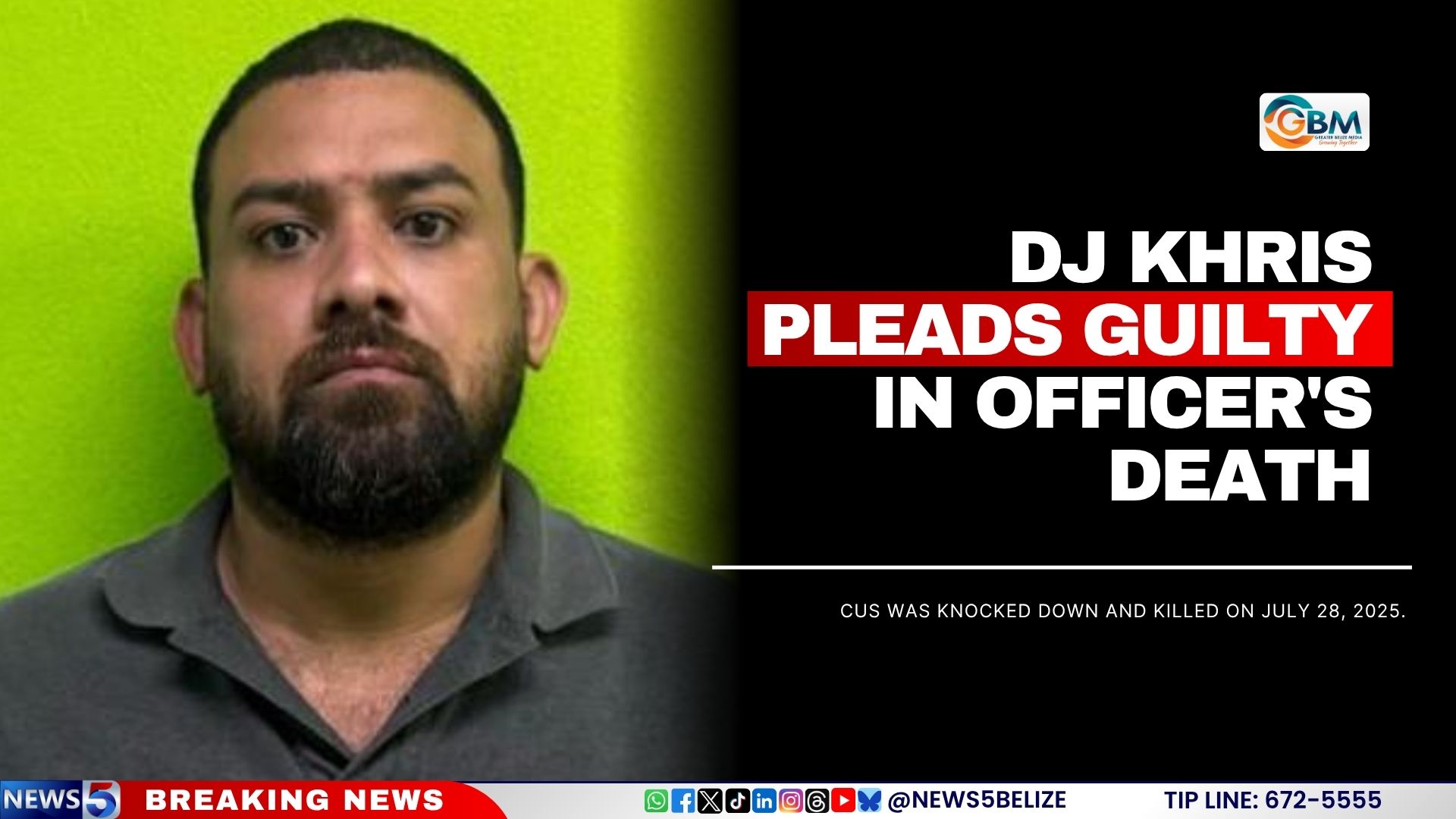
DJ Khris Pleads Guilty in Officer’s Death
Nearly 11 months after a fatal highway collision that claimed the life of an on-duty police officer, a Belizean nightclub owner has formally accepted responsibility for the tragedy in a court hearing.
Khris Rosado, a local disc jockey and businessman who operates the popular venue Thirsty Thursday, entered a guilty plea on Tuesday, June 17, 2026, to the charge of causing death by careless conduct. The plea brings the first major legal closure to a case that has drawn public attention across the small Central American nation.
The fatal incident unfolded on July 28, 2025, when 38-year-old Police Constable Arcenio Cus, a resident of Silver Creek Village, was traveling on his motorcycle from Ladyville en route to Belize City. According to official collision reports, a black SUV driven by Rosado crossed the center dividing line and entered the oncoming lane where Cus was riding, resulting in a direct, high-impact crash. The force of the collision ejected Cus from his motorcycle, inflicting catastrophic head and abdominal injuries. First responders immediately transported the injured officer to Karl Heusner Memorial Hospital, the country’s main public medical facility, where he was pronounced dead shortly after arrival.
Following the crash, prosecutors brought five separate criminal charges against Rosado: manslaughter by negligence, causing death by careless conduct, driving without due care and attention, failure to stop and render aid after a collision, and failure to report the accident to law enforcement. After an initial preliminary hearing at the Magistrate’s Court, the case was committed for trial, with justices green-lighting proceedings on the most severe charge of manslaughter by negligence. Prosecutors with the Director of Public Prosecutions’ office ultimately opted to proceed to the High Court with an indictment on the lesser charge of causing death by careless conduct, to which Rosado has now pleaded guilty.
Court records show Rosado was represented during the plea hearing by defense attorney Dr. Lynden Jones, while Crown Counsel Maria Nembhard-Santana argued the case on behalf of the prosecution. A sentencing hearing has not yet been announced to the public as of Tuesday’s court proceedings.
-
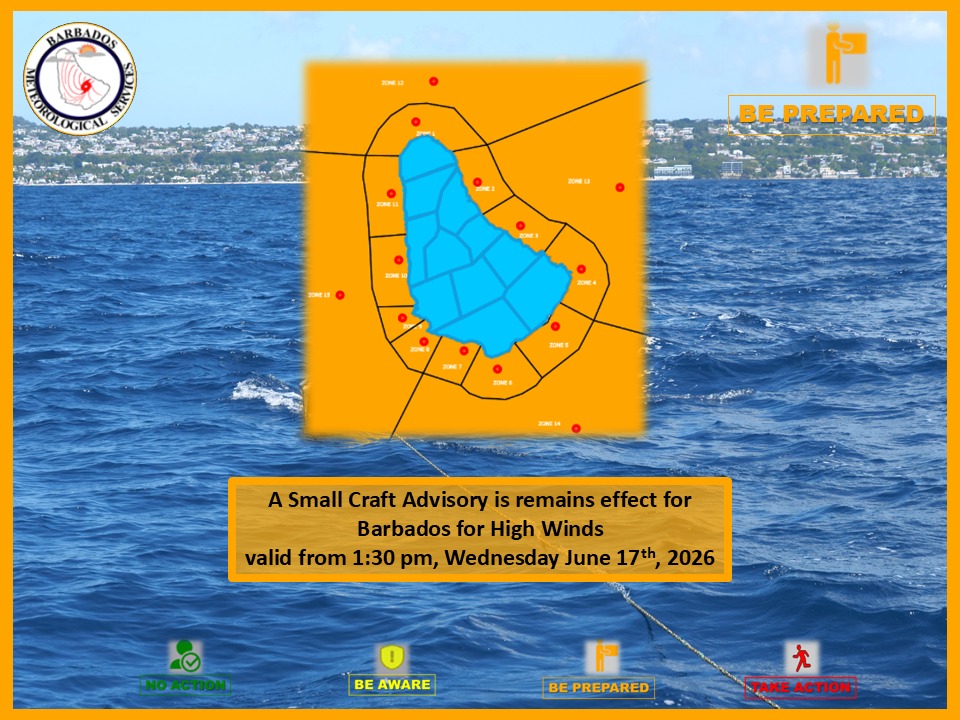
Small Craft Advisory remains in effect amid strong winds
Barbados Meteorological Services (BMS) has confirmed that a Small Craft Advisory will remain active across the island nation over the coming two days, as forecasted strong winds are set to create dangerous sea conditions that pose significant risks to small vessels and marine users. According to official weather projections, sustained wind speeds between 15 and 25 knots — equivalent to 30 to 45 kilometers per hour — will push open-water swells to heights ranging from 1.5 to 2.5 meters, creating a challenging and unpredictable environment for anyone operating on the water.
The combination of rough surf, unexpected wave patterns and heavy sea spray will make navigation far more difficult than usual, BMS warned, with small crafts facing an elevated risk of capsizing in these unstable conditions. Beyond the initial hazardous period on Thursday and Friday, the island’s weather forecast includes additional shifts scheduled for the weekend and the start of next week. A tropical wave is on track to reach Barbados on Saturday, which is expected to bring outbreaks of showers and sudden gusty winds that could further disrupt coastal and marine activity.
Forecasters note that sea conditions are projected to moderate slightly across the latter half of the weekend, providing a brief window of calmer conditions before winds and rough seas are set to strengthen once again early next week. In response to the ongoing and forecasted hazards, Barbados Meteorological Services has issued a urgent public appeal to all mariners, fishermen, recreational boaters and other marine users to stay updated on official weather announcements from the service, and to prioritize safety by exercising extreme caution when planning any activity on the water through the coming days.
-
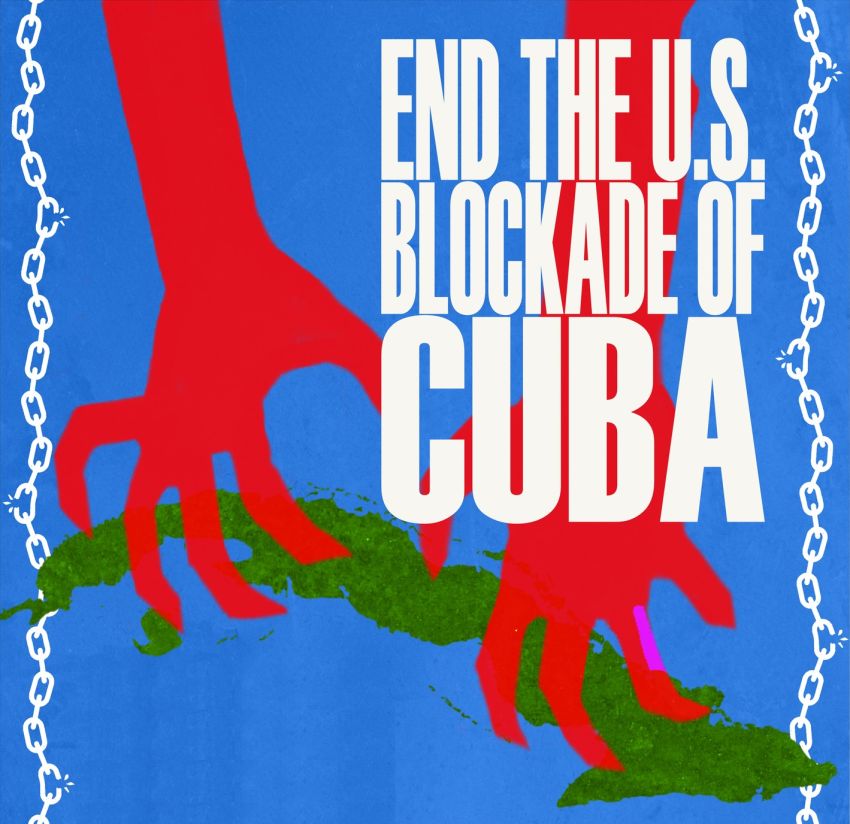
The total siege against Cuba
Written by Yadirys Echenique Paz, Cuba’s Ambassador to Grenada, this op-ed lays bare the coordinated, all-encompassing nature of Washington’s policy toward Cuba during Donald Trump’s second presidential term, framing it not as a collection of disconnected unilateral actions, but an intentional, systemic siege engineered to break the Cuban people, cripple the island’s economy, and coerce third nations into cutting their legitimate commercial and diplomatic ties with Havana.
The data presented underscores the scope and intensity of this pressure campaign: over a mere 18-month period, the United States implemented 36 distinct coercive measures that cut across every core sector of Cuban activity, from finance and energy to migration, culture, international cooperation and diplomacy. Each new restriction acts as another link in a steadily tightening chain designed to economically strangle the island nation.
In the financial domain, the January 20, 2025, re-listing of Cuba on the controversial, unilateral U.S. State Sponsors of Terrorism roster artificially inflated the country’s sovereign risk profile and deterred much-needed tourism investment from European and Asian markets. Just 11 days later, on January 31, 2025, the Trump administration reactivated Title III of the decades-old Helms-Burton Act, a provision that enables U.S. citizens to file lawsuits against foreign companies that operate on property expropriated from U.S. owners by the Cuban government, creating widespread legal uncertainty that discourages international investment. The U.S. government’s February 6, 2025, addition of Cuban remittance firm Orbit S.A. to its list of restricted entities pushed global money transfer giant Western Union to halt all services to Cuba, cutting off a critical lifeline for millions of Cuban households that rely on family remittances for basic needs.
The pressure campaign extended well beyond economic and financial levers, reaching into migration and cultural exchange. Between January and February 2025, Washington suspended humanitarian parole programs and entry visas for participants in academic, athletic, and scientific exchanges between the two countries. It also canceled planned bilateral migration talks scheduled for April 2025. Even youth and amateur sports delegations have been targeted: Cuba’s women’s national volleyball team was denied entry to a regional event on June 26, 2025, followed by a children’s baseball team from Cuba’s Pinar del Río province on July 13 that same year.
In the area of international cooperation, the United States imposed visa restrictions in August 2025 on officials from African and Central American nations that participate in Cuban-led medical outreach programs, a move Ambassador Paz frames as a direct attack on Cuba’s longstanding culture of international medical solidarity that has brought free healthcare to millions of vulnerable people across the Global South.
Energy security, a cornerstone of Cuba’s domestic stability, has also been a primary target. On January 29, 2026, the Trump administration authorized additional punitive tariffs on any country that supplies crude oil to Cuba, whether through direct or indirect trade routes. Two months later, on March 19, 2026, Cuba was explicitly excluded from U.S. licenses that allow third countries to trade in Russian crude oil, further cutting off the island’s access to critical energy supplies.
Even diplomatic activity has not been spared. On April 18, 2025, the United States imposed new operational restrictions on Cuba’s embassy in Washington D.C. In September that same year, Cuban delegations were blocked from participating in official activities of the Pan American Health Organization, a regional United Nations agency, denying the country its right to participate in global public health governance.
Ambassador Paz argues the overarching pattern of these actions leaves no room for doubt: this is a deliberate strategy of maximum pressure, extraterritorial coercion, and collective punishment against the entire Cuban population. This campaign is not rooted in legitimate political differences between the two governments, she emphasizes, but a deliberate strategy of economic strangulation designed to break the decades-long resistance of the Cuban people to U.S. interference.
The February 21, 2026, inclusion of Cuba alongside major global powers including Venezuela, Iran, North Korea, Russia, and China on the U.S. roster of “foreign adversaries” further confirms Washington’s goal of total diplomatic and economic isolation of the island. In response to this designation, the ambassador poses a sharp rhetorical question: Who can reasonably claim that Cuba poses any genuine threat to the national security of the world’s largest military and economic power?
In closing, the ambassador stresses that these cumulative measures are far more than routine targeted sanctions: they constitute a full-scale total blockade, an act of open economic warfare that directly violates core principles of international law and fundamental human rights. She calls on the global community to recognize that behind every bureaucratic restriction, every denied visa, and every punitive tariff, is an entire civilian population that suffers the consequences of U.S. policy, yet continues to stand firm in resistance.
*Disclaimer: NOW Grenada is not responsible for the opinions, statements or media content presented by contributors. In case of abuse, click here to report.*