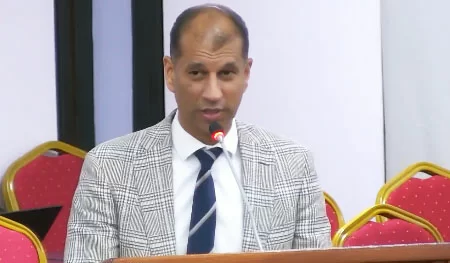
In the wake of a mass fish mortality event along Suriname’s Saramacca River that has sparked public and legislative concern, authorities are still working to pinpoint a definitive cause, according to the country’s Minister of Oil, Gas and the Environment Patrick Brunings.
Addressing questions from members of the National Assembly on Thursday, Brunings confirmed that final research results are still pending, with additional environmental data currently being collected to clarify what led to the large-scale die-off. Lawmakers have pressed for urgent clarity on potential pollution sources, active industrial operators in the affected river basin, and concrete policies to prevent a repeat of the environmental disaster.
Brunings defended the government’s rapid response in the immediate aftermath of the fish deaths, noting that a dedicated response team was deployed immediately to collect water and tissue samples that form the core of the ongoing investigation. All collected data is currently undergoing comprehensive analysis, and full findings will be shared publicly once finalized, Brunings said. These results will also guide the development of long-term action plans to address environmental risks in the region.
The minister added that the ministry is currently compiling a complete public register of all concession holders and operating companies along the Saramacca River. Information from past inspections conducted by the National Environmental Authority, as well as the full list of regulatory requirements companies must meet to hold river-area concessions, will be shared with the National Assembly in the coming weeks.
In a key announcement, Brunings confirmed the government will partner with the Ministry of Public Health and the Pan American Health Organization (PAHO) to conduct a wide-ranging biomedical study of communities living in affected areas along Suriname’s river systems. The research will not be limited to the location of the recent mass fish deaths, and will focus on detecting potential long-term exposure to harmful chemicals and mercury among local residents. The collected data will serve as a baseline reference for long-term monitoring of public health trends across the region.
Brunings also provided an update on separate ongoing research into mercury vapor emissions linked to artisanal and small-scale gold mining. An initial round of testing, focused primarily at gold purchasing facilities, has already been completed. A second round of more advanced testing required specialized equipment that was sent to Canada for calibration, which has now been returned to Suriname. The new round of testing will cover gold buying operations and other sites across the country where harmful emissions are suspected to occur.
Lawmakers across the National Assembly have repeatedly emphasized that significant gaps in transparency remain around the fish mortality event. Members have called for full disclosure of which companies and individuals hold concessions in the area under investigation, referencing recent comments from President Jennifer Simons that pointed to potential links to activities within a concession held by mining firm Grassalco. Legislators have pushed for details on the exact boundaries of active concessions, the legal status of ongoing operations, and whether any formal prevention plan has been put in place to stop future environmental disasters.
During Thursday’s debate, assembly members highlighted that even as the investigation into the Saramacca River event progresses, unregulated use of toxic chemicals in mining operations continues in other inland areas of Suriname. They have demanded the government outline immediate short-term measures to prevent a similar incident from occurring elsewhere.
The debate also covered Suriname’s current rules around the import and use of mercury, cyanide, and other toxic chemicals common in gold mining. Lawmakers have repeatedly called for stricter regulatory oversight, better industry governance, and a long-term structural overhaul of the gold sector, warning that waiting for another environmental catastrophe to act is unacceptable. Members also asked for clarification on the role of the Ministry of Oil, Gas and the Environment in reviewing permit applications for mining operations and gold purchasing facilities.
Assembly members have framed the Saramacca River mass fish death event as a critical wake-up call to strengthen enforcement of mining rules, crack down on unauthorized chemical use, and improve compliance with national environmental regulations. Beyond regulatory reform, they have called on the government to immediately outline short-term protective measures for inland communities that rely on Suriname’s river systems for food and livelihoods.