博客

  • Sports Day Highlights Belize Police Week 2026

    Sports Day Highlights Belize Police Week 2026

    Belize Police Department’s 2026 Police Week hit a festive peak on June 19, 2026, as hundreds of officers swapped their standard patrol uniforms for athletic jerseys at the Marion Jones Sporting Complex for a department-wide Sports Day.

    Far more than just a casual day of games, the event serves as a cornerstone of the week-long celebration, designed to step away from the high-pressure daily routines of law enforcement work and recognize the dedication of every man and woman serving in the department. This Sports Day is not an isolated event: it marks the final showdown of inter-departmental tournaments that kicked off across the country several weeks ago, with teams from different regional police formations competing in preliminary rounds across multiple sports to advance to today’s finals.

    Competitions held throughout the day covered a diverse range of activities, from fast-paced team sports including football and basketball to individual contests like cycling and track and field, even extending to the popular tabletop game dominoes, ensuring every officer could participate in an activity that suited their interests.

    In an interview on-site, Rear Admiral Elton Bennett, Chief Executive Officer of the Ministry of Home Affairs, explained the broader purpose behind the annual celebration. He noted that while today’s Sports Day is the last major social event of Police Week 2026, the schedule still holds key ceremonies planned for the following day. Tomorrow’s events will shine a spotlight on the department’s closest partners, honoring both collaborating organizations and outstanding members of the civilian community who have made significant contributions to the Belize Police Department’s successes over the past year.

    Bennett emphasized that initiatives like Police Week and its recreational activities are core to the ministry’s commitment to officer welfare. By creating space for officers to gather outside of work, socialize, and connect over friendly competition, the department aims to build a supportive, positive environment that helps all personnel thrive in their demanding roles – a goal that ultimately strengthens public safety services across Belize.


  • Belize Joins Global Yoga Day with Free Classes

    Belize Joins Global Yoga Day with Free Classes

    As the United Nations-designated International Yoga Day approaches on June 21, communities across Belize are gearing up to join the global celebration of the ancient holistic practice by offering a full slate of free, public yoga sessions open to people of all backgrounds and experience levels.

    From the coastal hubs of Placencia and Caye Caulker to inland population centers including Belmopan, Belize City and Punta Gorda, free classes have been organized across every region of the country, making this accessible wellness practice available to everyone regardless of income, ability or prior familiarity with yoga. Established by the United Nations to honor yoga’s wide-ranging benefits for physical fitness, mental clarity and spiritual balance, International Yoga Day has seen growing participation among Belizeans year over year, local organizers say.

    Ashanti Ruggles, Vice Chair of Belize-based wellness organization Black Orchid Wellness, has emerged as a key organizer for the nationwide initiative, and is personally encouraging all interested residents to attend a session, no matter their skill level. In an interview, Ruggles emphasized that the choice to host all sessions for free removes a key barrier to access, ensuring people of all income brackets, ages and life experiences can engage with the practice.

    “Yoga is more than just physical movement — it is a transformative, holistic practice that calms the mind and nurtures spiritual well-being alongside physical health,” Ruggles explained. “By offering all these classes for free, we open the door for anyone who has ever been curious to try it, without any financial pressure.”

    The full schedule of events caters to a range of schedules across the week leading up to and including International Yoga Day, which falls on Father’s Day this year:
    – Placencia: 9 a.m. June 20 at the covered basketball court
    – Punta Gorda: 10 a.m. June 20 at the Copal Tree Yoga Pavilion
    – Independence Village: 4 p.m. to 5 p.m. June 21 (Father’s Day) at the basketball court behind Altitude Gym
    – Belmopan: 7:30 a.m. June 20 on the steps of the National Assembly building
    – Caye Caulker: 6 p.m. June 21 at Ceiba Yoga (additional information available via the group’s Facebook and Instagram pages)
    – Santa Elena: 11 a.m. June 20 at Black Orchid Wellness, taught personally by Ruggles, with updates posted to Black Orchid Wellness’s social media pages
    – Belize City: 6:30 p.m. daily through June 27 at Digi Park, led by instructor Ida

    Ruggles noted that even people without access to social media can simply show up to any scheduled location, as no pre-registration is required for the free events. Attendees only need to bring their own yoga supplies to participate. She extended a special invitation to people of all ages, genders and body types, noting that yoga is adaptable to every body and no experience is necessary to enjoy the practice’s benefits.

    This report is adapted from a transcript of a televised evening newscast, which originally included transcribed Kriol text formatted per standard spelling conventions.

  • Belizean Students Turn New River into Real-World Science Lab

    Belizean Students Turn New River into Real-World Science Lab

    In the northern Belize district of Orange Walk, where the New River has long served as the economic and cultural heart of the region, a group of first-form students at New Hope High School have reimagined what science education can look like – turning the 85-mile waterway into an open-air, living laboratory whose findings are now contributing to global environmental research. What began as a standard class assignment in 2025 has evolved into a nationally recognized project honored by Belize’s Ministry of Education, Culture, Science and Technology (MOESCT) through its MoRE Campaign, a initiative designed to elevate project-based, community-focused learning.

    The project took root after the MOESCT introduced GLOBE, the NASA-affiliated Global Learning and Observations to Benefit the Environment program, to schools across the country. Under the guidance of their science teacher Zury Magana, who received specialized STEAM training from a Peace Corps education specialist, more than four dozen first-form students spent nine months systematically monitoring water quality in the New River, collecting on-the-ground measurements that have been uploaded to GLOBE’s open-source international database used by researchers around the world.

    For many of the students, the experience transformed their understanding of scientific work. Sophie Novelo, one of the student leaders who advanced the project beyond its original scope, explained that her initial expectation was just to complete the assignment for a grade. “Before I felt like it’s just for a grade. I’ll just do it for fun and so forth. But now knowing that this has gone so big that we went to present it and so forth, it got me really excited,” she shared in an on-site interview with News Five reporter Sabreena Daly.

    The student-led research yielded concerning results that match existing scientific observations of the New River’s declining health. Student Dylan Guerrero outlined the team’s key findings: low water transparency that makes it difficult for aquatic vegetation to photosynthesize, and consistently poor dissolved oxygen levels that threaten the survival of fish and other river wildlife. “As you could see in some pictures, you can’t see through the water… And then the dissolved oxygen, when we tested it, for the most part, we got poor results, which shows that the fish or any other animals in it would struggle to breathe, which is a big issue ‘cause animals need to eat fish, and we need to eat other animals too,” Guerrero explained.

    Beyond just collecting data on the river’s challenges, the project pushed students to engage with ongoing restoration solutions and connect local environmental health to regional ecosystems. Magana organized two educational excursions for the participating students: a site visit to PHYCORE, a biotech firm partnering with Columbia University students on large-scale bioremediation efforts for the New River, and a trip to Calabash Cay where students observed how runoff and pollution from mainland Belize eventually impacts the Caribbean Sea.

    The students didn’t stop at data collection and site visits. They formalized their findings and presented their work to two key stakeholders: Peace Corps officials in Belmopan and the Orange Walk Town Council. Student Eleazar Novelo, who presented the team’s research to local government leaders, said the council responded positively to the youth-led effort and pledged support for continued monitoring. “We thought the New River wouldn’t be safe, but in the end it was not perfect, but it was okay. The town council expressed that they would help and had a good attitude,” Novelo noted.

    The project’s alignment with the MOESCT’s MoRE Campaign – which stands for “doing more” for community-centered education – earned the school national recognition. Carlos Quiroz, MOESCT’s 501 Program Coordinator, explained that the New Hope High project embodied exactly what the campaign aims to encourage. “We encourage that because for us, that is what education and doing more is all about. It’s about going beyond just doing work for grades. It’s taking it into your community. It’s action in your community. So that’s why when it relates to doing more, we were happy to see that they decided to pick a topic that is very near and dear to their community and to try and find an understanding of the issue,” Quiroz said.

    Magana emphasized that the project’s greatest impact is not just the data it contributed, but the way it empowered young Belizeans to take ownership of local environmental issues. “So research like this is important because it gets the exposure to my students. They’re not only tackling problems that affect our community, but also if we don’t do anything about it, in the longer run, it will affect the entire country of Belize,” she said.

    What began with simple equipment – a few testing buckets and portable monitoring tools – and a stretch of river students pass every day has grown into a model for immersive, impactful science education that connects local action to global research. The project proves that curiosity, paired with committed teaching and institutional support, can turn everyday community spaces into opportunities that shape both student learning and real-world environmental progress.

  • Drainage works begin at Trents to ease flooding, support civic centre relocation

    Drainage works begin at Trents to ease flooding, support civic centre relocation

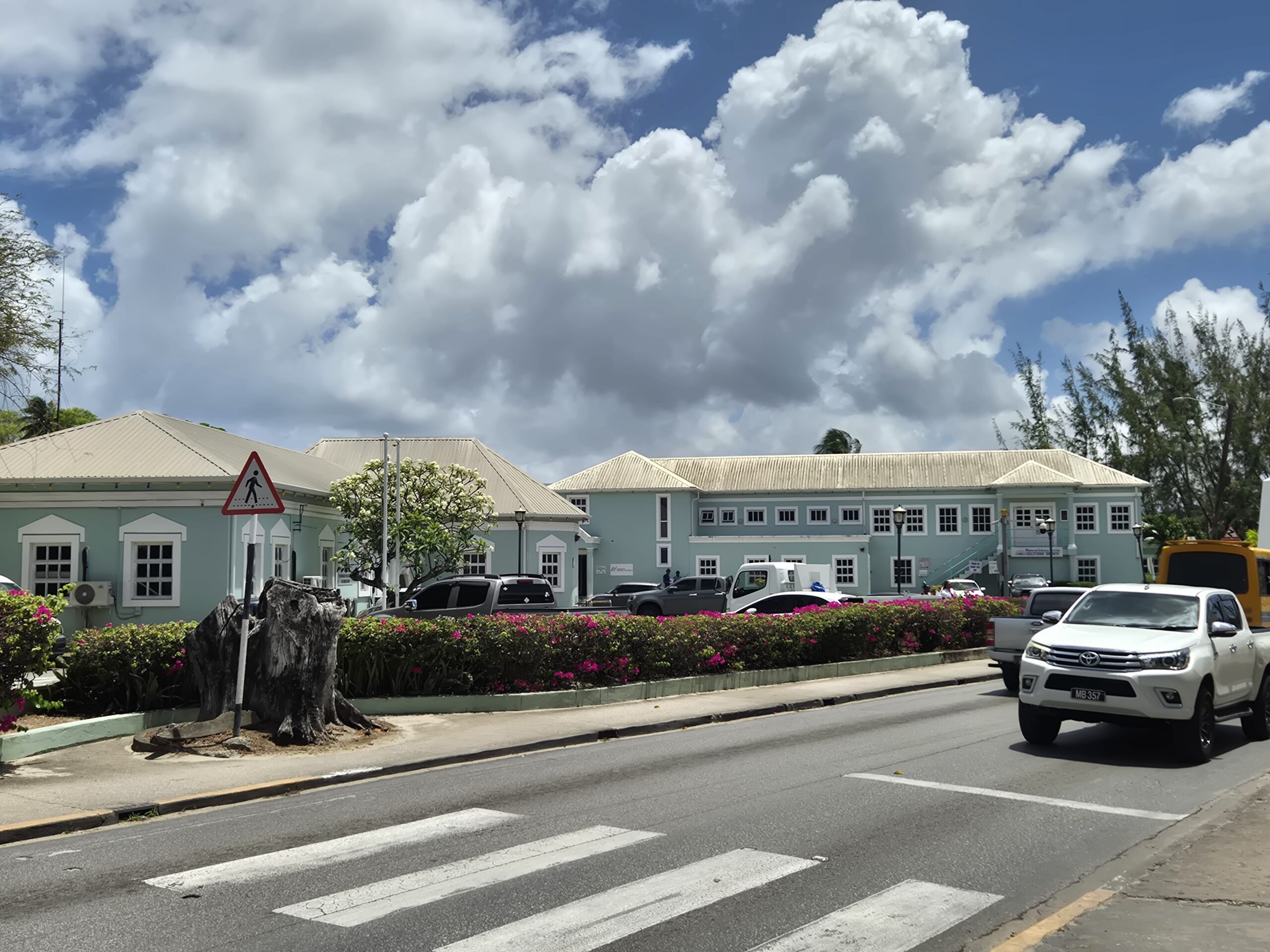
    Ongoing drainage construction at Trents Tenantry in St. James, Barbados, is advancing two key goals: cutting chronic flooding in the local area and prepping the plot marked for the controversial relocation of the Holetown Civic Centre, Barbados’ Ministry of Transport and Works (MTW) confirmed in an official statement Friday.

    The infrastructure project is being executed by local contractor Infra Construction Inc. on behalf of the government, as part of a broader redevelopment initiative along Barbados’ west coast. The core plan calls for moving the existing beachfront Holetown Civic Centre—currently home to a police post, magistrates’ court, public library, post office, and multiple other government services—to the Trents site, clearing the original waterfront plot for a $176 million hotel development awarded last year to the Insurance Corporation of Barbados Limited (ICBL).

    Since the plan was first unveiled, it has sparked intense public debate across multiple stakeholder groups. Local residents, small business owners, heritage preservation advocates, and conservation organizations have raised repeated red flags, warning that the hotel project risks eroding Holetown’s unique historic character, restricting public access to the popular beachfront area, and straining the region’s already overburdened existing infrastructure.

    Work on the Trents drainage site was briefly paused earlier this month after nearby Frederick Smith Secondary School raised complaints about excessive construction dust impacting campus operations. To address these concerns, MTW confirmed that project managers implemented new dust mitigation measures, including the installation of a perimeter containment fence, before work resumed on Tuesday. Officials later held a follow-up meeting with school leadership on Thursday, where no outstanding concerns were documented.

    A visit to the site by Barbados TODAY last month found that multiple sections of the property had already been cleared and excavated, with prominent warning signs posted along the adjacent roadside marking active construction. A newly excavated retention pond was already visible on the property, with crews actively installing underground drainage pipes and related flood-control infrastructure.

    Flooding has long been a persistent problem for residents and workers across Holetown and surrounding communities. Maria, a local worker who asked to withhold her last name, shared that even moderate heavy rain routinely leaves key civic buildings underwater at the existing Civic Centre site. “The post office is flooded. The police station is flooded. The water comes up when there is heavy rain,” she explained, adding that she also shares concerns about prolonged construction disrupting local traffic, spreading ongoing dust, and hurting business activity near both the Trents site and the original Holetown location.

    For many other nearby residents, their top frustration is not flooding or construction disruption, but a persistent lack of transparent public information about the final layout and scope of the new Civic Centre. Artneal Abby, an area Airbnb operator who lives close to the Trents site, told reporters that local residents are still left with dozens of unanswered questions months after the project was announced. “There is zero information,” Abby said. “There’s a big board there for quite a long time and it says if you want to see the plans, click on this link. When you go on that link, there aren’t any plans to see. We don’t know the size of the buildings, where the car park’s going, where the roads are going. There isn’t any information.” He added that neighbors just want clear details to understand how the development will impact adjacent properties and the broader community: “What I would like is a letter outlining exactly what they’re going to do and a picture of what it’s going to look like so we can see if there are going to be buildings directly behind us or whether it’s going to be a car park.”

    Still, the project has not faced universal opposition. Jaiye Maynard, a local Trents resident, said he supports the redevelopment and welcomes the planned relocation of the Holetown police station to the new site, arguing that a closer police presence will improve public safety for the surrounding neighborhood. “I’m happy for it,” Maynard said. “Having a police station here will bring a lot of safety to the area.”

  • Derde helft WK 2026: Marokko verrast Schotland met vroege goal

    Derde helft WK 2026: Marokko verrast Schotland met vroege goal

    The 2026 FIFA World Cup Group C stage delivered a dramatic opening clash on Thursday, as Morocco secured a hard-fought 1-0 victory over Scotland, driven by one of the most iconic early goals in the tournament’s recent history. The game was barely over a minute old when Ismael Saibari fired Morocco into the lead, with his 71st-minute strike standing as the fastest goal recorded at the tournament so far.

    The lightning-fast opener did not come out of thin air: Brahim Diaz split Scotland’s backline with a perfectly weighted through ball, but the chance opened up after Scotland center-back Grant Hanley made a costly misjudgment stepping out of the defensive line to intercept. Saibari burst through the gap, controlled the ball in one touch, and unleashed a blistering, precise finish into the far top corner, leaving Scottish goalkeeper Angus Gunn with no chance to make a save. The goal left stunned Scottish fans silent while erupting Morocco’s traveling support into celebration, and set the tone for 90 minutes of gritty, tactical battle across the pitch.

    From that point onward, Scotland was forced to chase the game. The side pushed forward immediately, looking for an equalizer through attacking threats Ryan Christie and Che Adams, but Morocco’s defense held firm under pressure. Goalkeeper Yassine Bounou made several key clearances, while right wing-back Achraf Hakimi kept Scotland pinned back with dangerous overlapping runs and sharp crosses that kept the Scottish defense on its heels. At the other end, Angus Gunn produced a string of critical saves to keep Scotland in the game, even as Morocco dominated possession and controlled much of the play down the left flank for most of the first half.

    After a hydration break, Scotland manager Steve Clarke adjusted his side’s tactics to push higher up the pitch, and the team saw slightly more possession and created half-chances, but failed to generate any clear-cut threats on goal. The first half ended with Morocco holding onto its 1-0 advantage from that iconic early strike.

    Tensions rose through the second half as Scotland threw more players forward in search of an equalizer. Scottish fans and players were left frustrated early in the half when a penalty appeal was turned away after John McGinn went down in the box, with the referee waving away the calls to the dismay of the Scotland camp. Morocco remained dangerous on the counter-attack, coming close to doubling its lead twice: Saibari hit the crossbar with a powerful effort, and Bilal El Khannouss saw a well-placed header saved by Gunn.

    Clarke turned to his bench to inject fresh energy into his side, taking off tired starters Christie and Adams to bring on Lyndon Dykes and Kenny McLean. Lewis Ferguson began to win more possession in the midfield as Scotland increased the pressure, and multiple rough tackles on key Scottish playmakers like McGinn and Scott McTominay drew boos from the traveling support, who felt more fouls should have been called. However, the referee allowed play to continue consistently through the physical contest.

    As the game entered its final stages, Scotland’s attacks grew increasingly dangerous. McTominay forced a late corner, and Dykes came inches away from connecting with a cross to head home the equalizer. Clarke made two more late substitutions, bringing on Ross Stewart and Anthony Ralston to add more attacking weight to his side, but Morocco’s defense held firm, shutting out every attempt to break through the organized backline.

    Six minutes of stoppage time gave Scotland one final push, as the side threw every player forward into the box for a series of late corners and crosses. But Morocco withstood the relentless pressure, holding on to their early lead to secure three points. While Scotland grew stronger as the match progressed and put in a gritty second-half performance, Saibari’s early blistering finish ultimately proved to be the difference that could not be overcome.

    The result gives Morocco a vital opening win in Group C, putting them in a strong position to progress to the knockout stage, while delivering a major setback to Scotland’s hopes of advancing from the group stage.

  • Minister Meets Cedar Valley Golf Course Management to Discuss Future Upgrades

    Minister Meets Cedar Valley Golf Course Management to Discuss Future Upgrades

    In a recent strategic meeting focused on bolstering Antigua and Barbuda’s sports and tourism ecosystems, Dwayne George, Minister of Sports and Creative Industries, sat down with senior management from Cedar Valley Golf Course to map out a forward-looking development roadmap for the iconic facility.

    The closed-door discussion centered on two core priorities: expanding the golf course’s existing contribution to the nation’s fast-growing sports tourism segment, and locking in its status as one of Antigua and Barbuda’s top-tier sporting and recreational hubs. Both sides exchanged actionable ideas to update operations, upgrade visitor experiences, and align the venue’s growth with national tourism goals, according to official statements released after the meeting concluded.

    Minister George used the meeting to reaffirm the Antigua and Barbuda government’s unwavering commitment to investing in initiatives that deliver three layered benefits: inclusive sports development, broad-based economic expansion, and deeper community engagement. He emphasized that Cedar Valley Golf Course is far more than a recreational spot — it is a critical national asset that caters to both local golf enthusiasts and international travelers, adding significant value to the country’s overall tourism offering.

    For years, Cedar Valley Golf Course has held a reputation as a cornerstone of Antigua and Barbuda’s sports infrastructure, drawing consistent interest from both residents planning weekend outings and tourists seeking world-class leisure activities during their stay. Moving forward, the national government has pledged to sustain collaborative work with all relevant stakeholders to advance development projects that lift the broader sports and recreation sector, while simultaneously strengthening Antigua and Barbuda’s global reputation as a premier destination for sporting events and active travel.

    This meeting marks the latest step in the government’s ongoing push to leverage existing sports assets to drive economic growth and position the twin-island nation as a top sports tourism hotspot in the Caribbean.

  • Accommodation Providers Urged to Register as CHOGM 2026 Bookings Intensify

    Accommodation Providers Urged to Register as CHOGM 2026 Bookings Intensify

    As final preparations accelerate for the 2026 Commonwealth Heads of Government Meeting (CHOGM), the Caribbean twin-island nation of Antigua and Barbuda is launching a urgent call to all property owners across the country to register their accommodation offerings for one of the most high-profile international events the country has ever hosted.

    Patrice Simon, who serves as both Executive Director of the Antigua and Barbuda Hotels and Tourism Association (ABHTA) and Co-Lead of CHOGM’s Accommodations Sub-Committee, emphasized that securing sufficient lodging is a make-or-break component of the event’s strategic planning. With thousands of delegates, heads of state, and other participants expected to travel from Commonwealth member nations across the globe, organizers are working to map out enough room capacity to meet demand.

    Speaking during the *Road to CHOGM* program on the country’s state-owned media outlet, Simon outlined the committee’s core priority from the early stages of planning: locking in room inventory across all types of accommodation. Beyond the association’s network of traditional hotel partners, the taskforce is actively reaching out to unregistered short-term rental properties commonly listed on platforms like Airbnb, as well as private villas, independent guesthouses, and residential apartments.

    To project total room needs, organizers are using the 2024 CHOGM held in Samoa as a benchmark, which drew roughly 5,000 delegates. The 2026 Antigua and Barbuda meeting will welcome heads of state, including presidents and prime ministers, foreign ministers, senior diplomats, and official delegation members. In addition to the main leadership gathering, the event will host a suite of parallel forums: the Women’s Forum, Youth Forum, People’s Forum, and Business Forum, each expected to draw approximately 250 attendees.

    Simon stressed that housing the massive delegations will require a whole-nation effort, not just contributions from the country’s established hotel and resort sector. “This is not just about hotels. We need villas, guesthouses, apartments and short-term rentals because accommodating CHOGM will require a national effort,” she explained. The overarching goal, she added, is to spread economic benefits of the landmark event across all communities in Antigua and Barbuda, rather than concentrating gains only in traditional tourism hotspots.

    As of the latest update, only 70 property owners have completed their registration, with just under 50 of those being short-term rental units. Organizers estimate that dozens, if not hundreds, more eligible properties remain unregistered, and time is running out. July has been flagged as the critical booking window for heads of delegation and senior ministerial teams, making immediate registration a priority for interested property owners.

    Currently, the National Taskforce Accommodations Committee is already managing booking arrangements for 37 of the 56 Commonwealth member states, while 15 additional countries have already sent teams to conduct advance inspections of potential lodging.

    Beyond hosting a successful one-week event, Simon framed CHOGM as a long-term strategic opportunity for Antigua and Barbuda. “CHOGM is not only about hosting delegates for one week; it is an opportunity to position Antigua and Barbuda as a premier destination for major international conferences and events,” she noted.

    To be eligible to host delegates, all properties must complete three steps: official registration, a formal inspection, and final approval from the Ministry of Tourism’s Quality Assurance Unit. Inspections evaluate a range of critical standards to ensure guest safety and comfort, including overall cleanliness, consistent housekeeping protocols, fire safety compliance, drinking water quality, sanitation infrastructure, on-site security, and overall expected guest experience. Only properties that pass the inspection and receive official approval will be listed on the secure CHOGM accommodation portal that all delegates use to book their stays.

  • Three Men Break Into Paradise View Home, Brutally Assault Elderly Resident

    Three Men Break Into Paradise View Home, Brutally Assault Elderly Resident

    A brutal midday home invasion in the Paradise View neighborhood of Antigua and Barbuda has left a senior citizen with severe injuries, reigniting long-simmering public anxiety over violent residential crime that shook the nation more than 10 years ago.

    According to initial law enforcement and witness accounts, three unidentified male suspects forced entry into the elderly resident’s property by breaking down the front entrance just after noon on Thursday, June 18. Immediately after gaining access, the intruders launched a savage assault on the homeowner, leaving him with critical injuries before fleeing the scene.

    Emergency responders were called to the location shortly after the attack, and the victim was rushed via ambulance to the country’s main public healthcare facility, Sir Lester Bird Medical Centre. As of the latest update, the man remains in hospital receiving care, and medical authorities have not yet released detailed information about the full scope of his injuries.

    The shocking incident has quickly spread through local communities, prompting renewed public discussion about the persistent threat of home invasions and their far-reaching harm beyond immediate physical damage. Local residents have voiced clear alarm over the attack, emphasizing that surviving such a violent violation of one’s home often leaves deep, long-lasting emotional and psychological trauma that persists for years even after physical wounds heal.

    Most notably, the assault has stoked widespread fears that the country could see a resurgence of the wave of violent home invasions that terrorized Antigua and Barbuda in the early 2010s. During that period, dozens of local residents were targeted in their own homes by armed criminal groups, leaving the community on edge for months.

    At present, officers from the Royal Police Force of Antigua and Barbuda are actively working the case, processing evidence and pursuing leads to identify and apprehend the three suspects. No arrests have been announced as of the latest update. Law enforcement officials are issuing a public appeal for any member of the community who may have information related to the invasion, suspicious activity in the Paradise View area around the time of the attack, or details about the suspects to reach out immediately to the Criminal Investigations Department or the anonymous Crime Stoppers hotline to assist the investigation.

  • Pan in the City to Showcase Nine Steel Orchestras Ahead of Panorama

    Pan in the City to Showcase Nine Steel Orchestras Ahead of Panorama

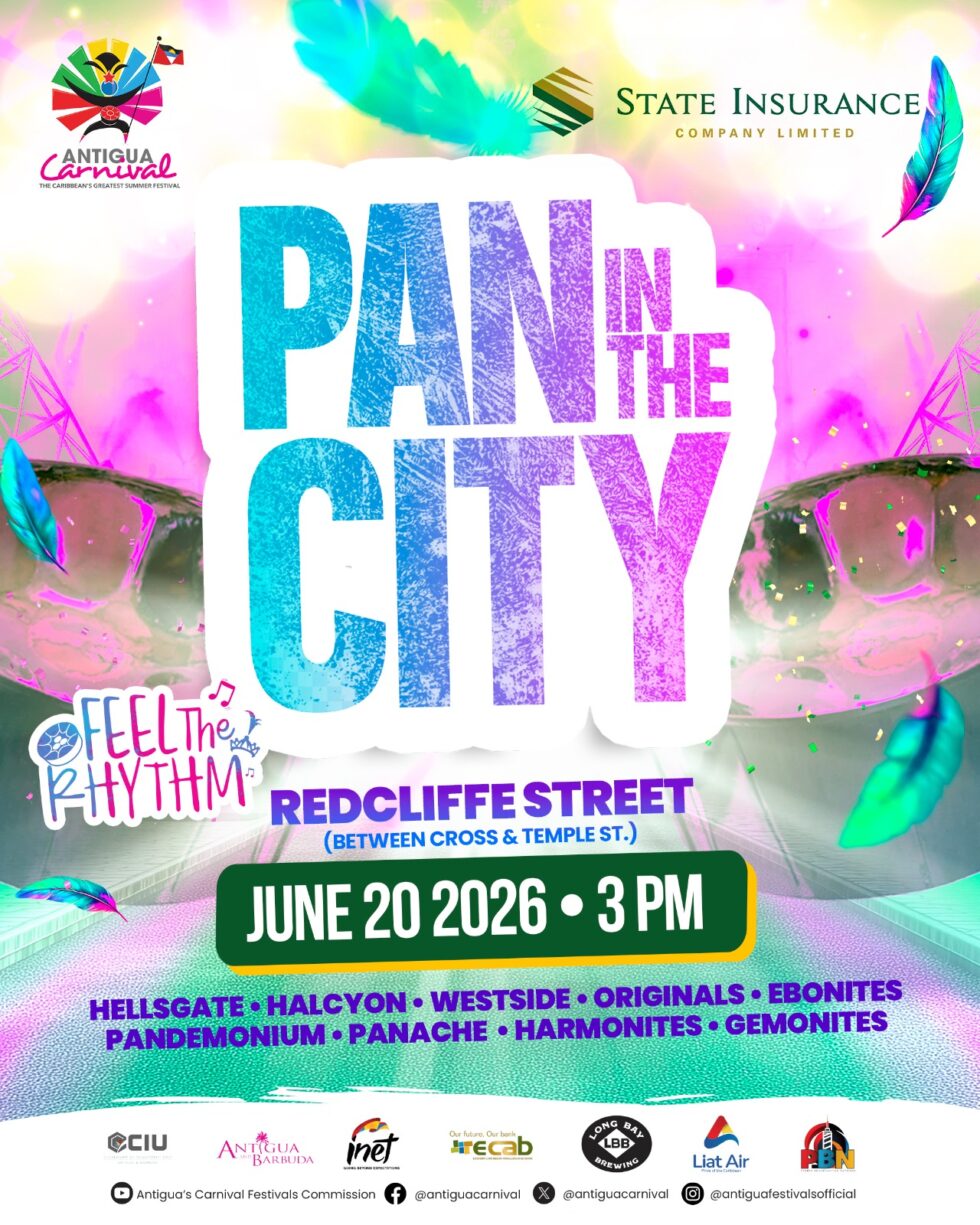
    This weekend, downtown St. John’s will pulse with the distinctive, rhythmic sounds of Caribbean steelpan music, as the Antigua and Barbuda Festivals Commission hosts Pan in the City – a pre-Panorama preview event celebrating the nation’s most iconic cultural art form. Slated to begin at 3 p.m. on Saturday, the open-to-public gathering will take place outside the State Insurance Company Ltd. building along Redcliffe Street, staged in partnership with the local insurance firm as part of the lead-up to Antigua and Barbuda’s 2026 Carnival celebrations.

    One of the event’s most meaningful moments will be a formal cheque presentation, where the Antigua and Barbuda Festivals Commission will hand over a new sponsorship grant to the Antigua and Barbuda Pan Association. According to event organizers, the contribution is far more than a one-time donation: it represents the commission’s ongoing commitment to nurturing steelpan music growth and strengthening the country’s entire creative cultural sector.

    Attendees will also hear opening remarks from Dwayne George, the government minister overseeing Carnival and the nation’s creative industries, before the day’s main performances get underway. Nine of the country’s top steel orchestras are lined up to take the stage, giving audience members an exclusive early look at the acts that will compete in this year’s official Panorama competition. The full roster of participating bands includes Hell’s Gate Steel Orchestra, Halcyon Steel Orchestra, Westside Symphony, Original Steel Orchestra, Ebonites Steel Orchestra, Pandemonium Steel Orchestra, Panche Steel Orchestra, Harmonites Steel Orchestra and Gemonites Steel Orchestra.

    A host of distinguished special guests will also be in attendance, including board and leadership members of the Antigua and Barbuda Festivals Commission, the reigning Antigua and Barbuda Carnival Queen, contestants vying for the 2026 Carnival Queen title, and competitors in the ECAB Mr. and Miss Teenage Pageant.

    Organizers note that the event was developed with two core goals in mind: first, to build early hype and public excitement ahead of the official Panorama competition, and second, to bring the beloved traditional sound of steelpan directly into the central commercial and cultural heart of the nation’s capital. As Antigua and Barbuda continues final preparations for its iconic annual summer Carnival, Pan in the City is projected to draw crowds of passionate steelband fans, committed Carnival followers, and casual visitors to St. John’s alike.

  • COMMENTARY: We Should Die Twice

    COMMENTARY: We Should Die Twice

    Dr. Lester CN Simon offers a sharp, satirical reflection on the performative dishonesty that plagues modern funeral customs, arguing that every person deserves to die two deaths: the first to witness what people really say about them after their passing, and the second to be laid to rest for good.

    Can you picture slipping out of your coffin minutes into your own funeral, walking out of the church reeling from the things you just heard? There are the false eulogies, the theatrical weeping, the forced gnashing of teeth—even from the person whose poor oral hygiene you’d give anything to have their flood of fake tears wash clean. In the hours immediately after news of your death spreads, these same people who spent your life begrudging you, scheming against you, and torturing your peace stand up to declare how they hope your soul rests in peace. These are the same bad-hearted, greedy individuals who made your life miserable when you were alive. Most do not even bother to wonder what becomes of a soul after death, whether it lingers near the body for days before transitioning to its new ethereal form. It is clear they are simply glad you are gone. Their hollow condolences and generic cries of “rest in peace” ring completely false—Simon notes it is a blessing restless spirits (called jumbies in Caribbean folklore) cannot speak ill of the living, or there would be no end to the complaints.

    It is little wonder, Simon argues, that so many restless spirits wander the world today, secretly distracting drivers and passersby, hoping the hypocrites that spoke lies over their graves will soon join their ranks, and end up resting far away from them in a completely different graveyard. That said, he acknowledges there is almost always at least one honest person in attendance, for which we ought to give thanks. The best of these honest mourners are those who can tell the truth about the departed with wit and personality, painting an accurate picture of who the person really was, to the shock of many other guests.

    Simon illustrates the absurdity of these customs with a quick, humorous anecdote: a bald Rastaman who traveled to the American frontier, stepped into a saloon thirsty, and politely greeted the entire room by shouting “Jah!”—only to die before he could finish his greeting of “Jah Rastafari.” All that was left to say was the mandatory “may his soul rest in peace.”

    This long-standing cultural tradition of funeral behavior, Simon argues, is long overdue for close examination. In recent decades, the ritual has shifted from a somber dirge to a celebration of the departed’s life, which is the right direction—after all, funerals are for the living, not the dead. The departed cannot hear the kind words spoken over their casket, cannot smell the fancy bouquets, and certainly cannot see the fancy new clothes and expensive perfume people wear to show off at the service, or the body parts people expose that the deceased never even got to see when they were alive, despite all the empty promises made to see them. Simon quips that would-be attention-seekers might as well try to raise the dead at that point, echoing a line from the late calypsonian Lord Kitchener.

    This idea of dying twice is not just abstract: Simon points to the iconic Caribbean calypsonian The Mighty Sparrow, known as the Barb of the Caribbean, who was falsely announced dead multiple times before his actual passing. He even imagined Sparrow standing in a corner listening to his own false death announcement, watching his pre-funeral broadcast on television, which now streams across the world wide web as just another viral cascade of lies.

    Instead of the hollow performativity common at modern funerals, Simon lays out a better, more honest vision: services should center the music the departed actually loved and wanted to share with the people they left behind. He lists a range of iconic tracks from across jazz and classical genres, from John Coltrane’s *A Love Supreme* and Miles Davis’ *So What* to Ornette Coleman’s *Lonely Woman* and the Adagietto from Gustav Mahler’s Fifth Symphony, arguing that this personalization makes the service far more meaningful than generic speeches. After the congregation sings the traditional Nunc Dimittis, mourners should process out of the church to the sound of an iron band, and the departed should be laid to rest to the melodious notes of a steelpan band.

    Even with all these changes, Simon acknowledges that old habits die hard: after the burial, guests will pile into the repast, drink all the liquor and eat all the food paid for by the deceased’s hard-earned savings, and spend the whole time gossiping and spreading lies about the person who died. Occasionally, someone will pause and question the chaos, wondering out loud if this is really how we should honor a person’s life. They may even note that the deceased would be justified in rising from the dead three days after burial to see how guests are carrying on. At that point, when confronted with the absurdity of it all, there is only one thing left to say: Jesus.