博客

  • U.S. Embassy: Americans in the Dominican Republic can obtain emergency passports

    U.S. Embassy: Americans in the Dominican Republic can obtain emergency passports

    SANTO DOMINGO — The United States Embassy in the Dominican Republic has rolled out a new clarification of its emergency consular services, highlighting a dedicated emergency passport program for U.S. citizens who find themselves without valid documentation amid urgent international travel plans.

    The announcement, shared publicly via the embassy’s official Instagram account, outlines clear guidelines for Americans residing in the Caribbean nation or visiting as tourists who have had their passports lost, stolen, damaged, or have accidentally let their travel documents expire ahead of a planned trip. To access the emergency passport service, applicants are required to first book an appointment through the U.S. Embassy’s official website, and bring any available pieces of personal identification, documentation that can prove U.S. citizenship, and formal evidence confirming their scheduled international departure within the next 14 days. Embassy officials stress that the service is exclusively reserved for urgent scenarios requiring imminent cross-border travel, and is not available for non-emergency documentation requests.

    Beyond the emergency passport program, the embassy also issued a public reminder to all U.S. citizens in the Dominican Republic about its 24-hour, seven-day-a-week emergency assistance hotline. This round-the-clock service is designed to respond to severe, life-altering or high-priority events involving American citizens, including reported deaths, arrests, unexpected hospitalizations, and missing person cases. To reach the emergency response team, citizens can call the dedicated hotline at 809-567-7775. In a key clarification, embassy officials emphasized that this hotline is restricted solely for emergency reporting, and cannot be used to answer routine questions related to standard passport processing, visa applications, or other non-urgent consular services. Routine inquiries should be directed through the embassy’s official website and regular public service channels, officials added.

  • Dominican Republic to chair Caribbean Trade Development Committee for 2026–2027

    Dominican Republic to chair Caribbean Trade Development Committee for 2026–2027

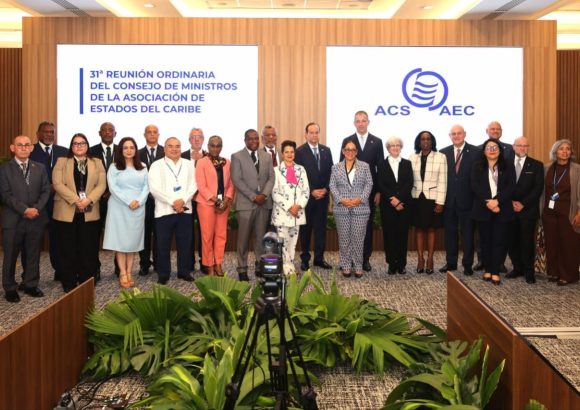
    At the 31st Ordinary Meeting of the Council of Ministers of the Association of Caribbean States (ACS), held this week in Panama City, regional representatives voted to appoint the Dominican Republic as chair of the organization’s Special Committee on Trade Development and External Economic Relations for the 2026–2027 term.

    The Dominican delegation at the gathering was headed by Carmen Elena Ibarra Toledano, who attended the meeting on behalf of Dominican Foreign Minister Roberto Álvarez. In its new leadership role, the Caribbean nation will lead and coordinate cross-regional initiatives to expand trade flows and deepen economic integration across the ACS’s 25 member states and dependent territories. As the only regional integration body that spans the entire Greater Caribbean, the ACS relies on its specialized committees to advance collaborative policy and development goals across the bloc.

    The selection of the Dominican Republic for the chairmanship is widely interpreted as a clear signal of the bloc’s recognition of the country’s longstanding active engagement in Caribbean regional affairs. It also highlights the Dominican Republic’s consistent commitment to multilateral collaboration, inclusive economic integration, and equitable sustainable development across the Greater Caribbean. This new appointment adds to the country’s existing leadership portfolio within the ACS, where it currently serves as vice chair of the organization’s Special Committee on Disaster Risk Reduction. The dual roles are expected to reinforce the Dominican Republic’s growing influence and strategic leadership position across the entire regional bloc.

  • MITUR and Arajet showcase Dominican Republic tourism at Miami Marlins game

    MITUR and Arajet showcase Dominican Republic tourism at Miami Marlins game

    MIAMI, Florida – The Dominican Republic has upped the ante on its tourism marketing push in the United States, launching a targeted promotional activation at Miami’s LoanDepot Park during a recent Major League Baseball matchup between the San Francisco Giants and the Miami Marlins. The collaborative effort between the nation’s Ministry of Tourism (MITUR) and low-cost Caribbean carrier Arajet brought Dominican travel and culture directly to thousands of in-stadium baseball fans, with iconic Dominican Hall of Fame pitcher Juan Marichal headlining the event as the guest of honor.

    Attendees at the activation got a hands-on introduction to everything the Caribbean nation has to offer, from its postcard-perfect white-sand coastlines to its vibrant cultural traditions and world-renowned culinary scene. Interactive activities, themed competitions, and high-value giveaways kept crowds engaged, with top prizes including free round-trip airline tickets on Arajet and complimentary multi-night stays at Dominican resorts. Beyond the fan-facing activations inside the stadium, MITUR and Arajet also hosted an invitation-only industry reception for U.S. travel agents, tour operators, media personalities, digital travel influencers, and leading tourism stakeholders. The private event centered on highlighting the nation’s expanding portfolio of diverse attractions and the growing network of direct air links connecting the U.S. to popular Dominican destinations.

    This activation marks the second time MITUR, Arajet, and the Miami Marlins have partnered on a tourism outreach campaign, signaling the nation’s long-term commitment to growing its share of the U.S. leisure travel market. Dominican tourism officials stressed that the United States has long held its position as the single largest source of international visitors to the country, a status that makes targeted strategic promotions and expanded air connectivity two of the most critical pillars for driving consistent tourism sector growth and long-term sustainable economic development across the nation.

  • Health Minister highlights Dominican efforts to strengthen HIV response at UN Meeting

    Health Minister highlights Dominican efforts to strengthen HIV response at UN Meeting

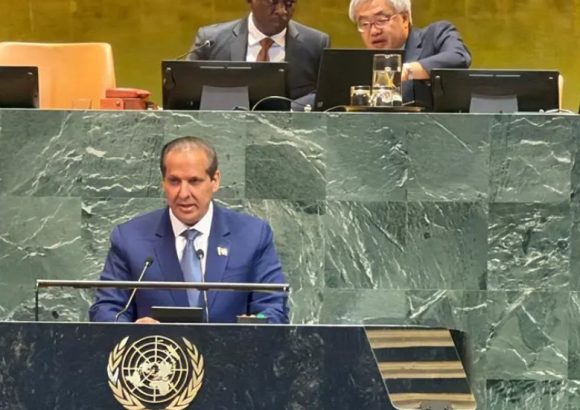
    During a high-stakes United Nations High-Level Meeting on HIV/AIDS hosted at UN Headquarters in New York, the Dominican Republic has publicly restated its dedication to advancing a sustainable, cross-sector integrated, and community-focused approach to addressing the global HIV crisis. Health Minister Víctor Atallah, who represented the Caribbean nation at the 90th Plenary Session of the gathering, delivered a pragmatic address that balanced acknowledgment of global progress with a candid assessment of unmet goals.

    Atallah noted that while the global fight against HIV/AIDS has yielded notable gains over the past decades, the internationally agreed 2025 treatment and prevention targets have not been reached on schedule. This shortfall, he emphasized, makes it urgent for the global community to confront deep-seated challenges that continue to hinder progress. Among the most pressing barriers he outlined are shrinking international financial contributions to global HIV initiatives, systemic inequities in access to high-quality HIV care and treatment services across different income groups and regions, and the ongoing societal stigma and legal discrimination that prevent many at-risk people from seeking testing and care.

    The minister stressed that an effective, long-term response requires an honest accounting of both the victories already secured and the gaps that remain unaddressed. Only through this balanced assessment, he argued, can nations build a more equitable global response that leaves no community behind.

    Shifting to the Dominican Republic’s domestic action plan, Atallah laid out the three core pillars of the nation’s updated national HIV strategy. First, the country is prioritizing the full elimination of vertical transmission of HIV, syphilis, and hepatitis B from mother to child, a key milestone for ending generational spread of the viruses. Second, the government is working to integrate all essential HIV services into national primary healthcare systems, as part of a broader push to expand universal health coverage for all Dominican residents. Third, the strategy targets gaps across the entire HIV care continuum, with the goal of improving patient retention in care and increasing rates of viral suppression among people living with HIV.

    In closing, Atallah reaffirmed the Dominican Republic’s unwavering commitment to meeting the widely adopted international 95-95-95 targets. These global benchmarks are designed to ensure that 95% of people living with HIV know their status, 95% of those diagnosed receive sustained antiretroviral treatment, and 95% of people on treatment achieve durable viral suppression, a key marker of individual health and reduced transmission risk.

  • COMMENTARY: OECS at 45 – A Caribbean success worth celebrating

    COMMENTARY: OECS at 45 – A Caribbean success worth celebrating

    As the Organisation of Eastern Caribbean States (OECS) marks its 45th founding anniversary this year, it offers a timely opportunity to reflect on the real-world progress delivered by one of the Caribbean’s most ambitious regional integration projects. What started as a compact agreement between a handful of tiny Caribbean territories has grown into a powerful example of what small nations can achieve when they prioritize collective action over individual effort.

    Founded officially on June 18, 1981, under the Treaty of Basseterre, the OECS was built on a deceptively simple core principle: that shared resources, coordinated policy, and unified action would produce far greater outcomes for residents than each territory could secure working alone. Four and a half decades later, that founding premise has been thoroughly proven correct.

    Today, the OECS has expanded beyond its original membership to include 11 territories: Antigua and Barbuda, Dominica, Grenada, Montserrat, Saint Kitts and Nevis, Saint Lucia, Saint Vincent and the Grenadines, Anguilla, the British Virgin Islands, Martinique, and Guadeloupe. Together, this diverse grouping has built one of the most successful and functional models of regional integration in the entire developing world, outpacing many far larger regional blocs in delivering practical, on-the-ground results for ordinary citizens.

    Among the OECS’s most transformative landmark achievements is the 2011 launch of the OECS Economic Union. This framework has unlocked unprecedented freedom for residents of member states: people can now move, live, work, and launch businesses across participating territories with far fewer barriers than existed before. In many key measures of functional integration, the OECS has made more progress than much larger regional bodies with far bigger budgets and broader mandates.

    Another long-standing success story is the Eastern Caribbean Currency Union, overseen by the Eastern Caribbean Central Bank. Through decades of cascading crises — including devastating Atlantic hurricanes, the 2008 global financial collapse, and the widespread economic and social disruptions of the COVID-19 pandemic — the Eastern Caribbean dollar has maintained exceptional stability, protecting the purchasing power and economic security of millions of residents across the bloc.

    Beyond economic and monetary integration, the OECS has also emerged as a leader in coordinated action on a range of cross-border priorities, from public health collaboration and bulk pharmaceutical procurement to systemic education reform and building collective climate resilience. Its coordinated response to shared global challenges has served as a powerful demonstration of the impact small states can deliver when they pool limited resources and specialized expertise.

    The more recent addition of Martinique and Guadeloupe to the grouping has brought a valuable new dimension to regional cooperation, helping bridge long-standing linguistic and cultural divides that have split the Caribbean for centuries. This expanded, more inclusive vision of shared Caribbean identity may ultimately stand as one of the most significant long-term developments in the organization’s 45-year history.

    That said, the OECS is not without unmet challenges and areas for improvement. Public awareness of the organization and its work remains stubbornly low across the bloc: millions of residents benefit from OECS programs and initiatives every day, but few recognize the organization as the driving force behind those gains. Progress on integrating the private sector across member territories has also lagged far behind the advances made in intergovernmental cooperation, and the organization has yet to build robust, sustained engagement with younger generations to secure the future of the regional integration project.

    These challenges will only grow in urgency as the OECS confronts a new wave of pressing 21st-century priorities, from regulating artificial intelligence and advancing digital transformation to shoring up fragile food systems, scaling up renewable energy infrastructure, and accelerating climate adaptation across vulnerable small island territories.

    Even with these unaddressed hurdles, the overall 45-year track record of the OECS remains overwhelmingly positive. The organization has proven that regional integration delivers the greatest value when it prioritizes practical, tangible results over empty, lofty declarations. It has built durable, functional institutions, delivered critical cross-border public services, and expanded economic and personal opportunities for millions of citizens across its member territories.

    At 45 years old, the OECS stands as one of the Caribbean’s most successful examples of cooperation in action. Its decades of experience offer a vital lesson for regional integration efforts across the globe: integration only succeeds when it moves beyond rhetorical rhetoric and delivers concrete, visible benefits to ordinary people. That lesson may ultimately prove to be the OECS’s most enduring contribution to the Caribbean’s ongoing story.

  • Youth Arise Antigua Opens Membership Registration for 2026

    Youth Arise Antigua Opens Membership Registration for 2026

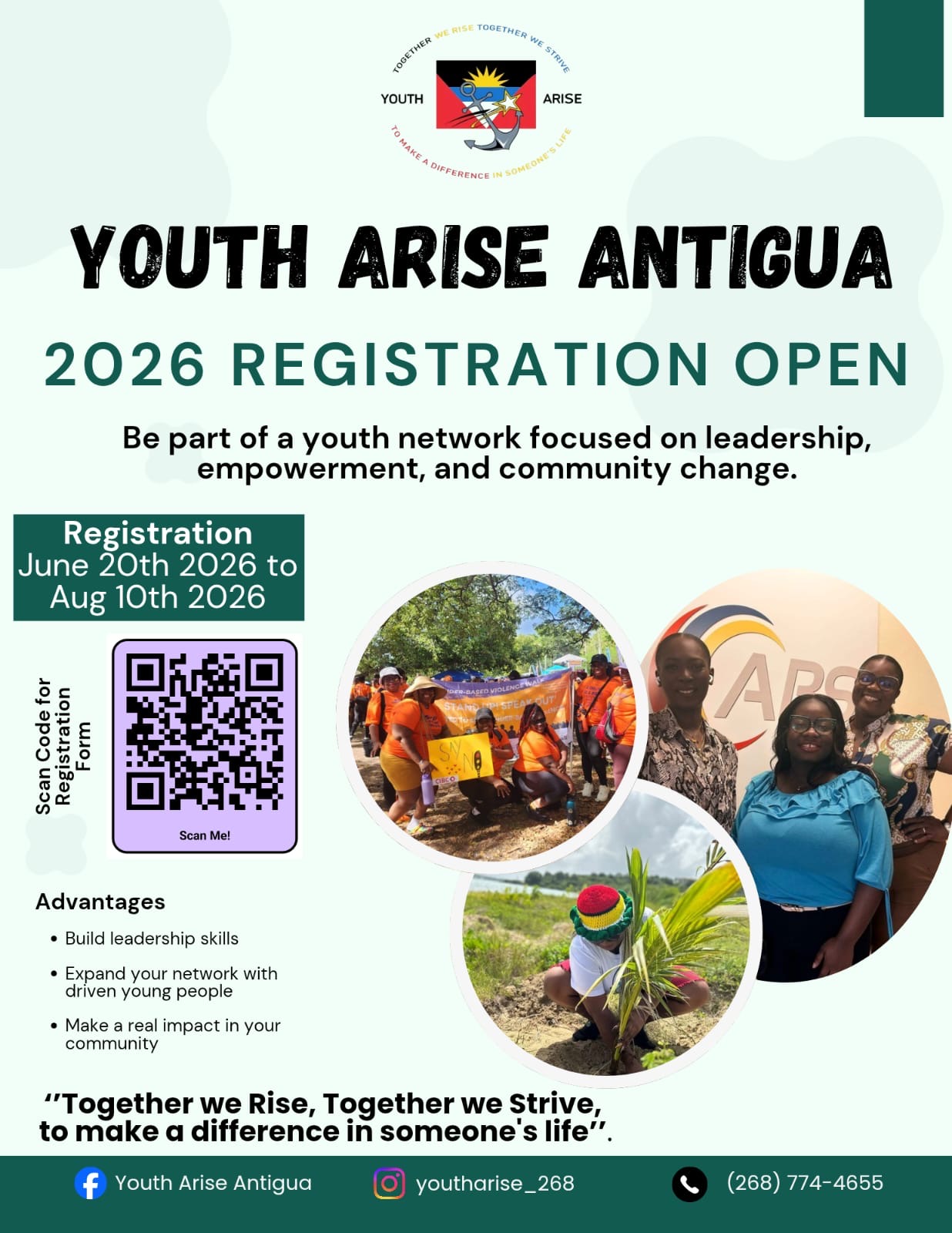
    In St. John’s, Antigua, a local youth-focused non-profit initiative, Youth Arise Antigua, has officially launched its 2026 membership recruitment campaign, opening applications for young people across the island aged 16 to 35. The drive comes as the organization scales up two core pillars of its work: community outreach programming and targeted leadership development training for emerging young voices.

    Online and in-person registration for the new membership cohort opened to the public on June 20, 2026, and will remain available to interested applicants through August 10 of the same year, according to official details released by the organizing team.

    Youth Arise Antigua has outlined clear priorities for this year’s recruitment: the group is specifically seeking driven, proactive young people who hold genuine interest in leadership building, volunteer service, local community engagement, and intentional personal growth. Organizers frame the membership program as more than just a club—it is a structured platform that empowers young people to sharpen actionable leadership competencies, grow their professional and personal networks, and directly contribute to grassroots projects that create tangible, positive change for communities across Antigua.

    “In this recruitment cycle, we are welcoming applications from 16 to 35-year-olds who are eager to contribute their energy, learn new skills, and take meaningful action in their communities,” the organization shared in its official public announcement.

    For accepted members, the benefits extend far beyond a membership card. Participants will gain structured opportunities to connect with like-minded young leaders from across the island, develop hands-on practical skills that translate to both academic and professional settings, and take part in a range of curated activities centered on youth empowerment and increased civic participation. The group noted that these experiences are designed to help young people turn their passion for change into action, building a pipeline of engaged community leaders for Antigua’s future.

    In a call to action shared across local social media channels and youth centers, Youth Arise Antigua encouraged all eligible young people to submit their applications before the deadline, reminding prospective applicants that “every great change begins with individuals who are willing to step forward and take action.”

    This year’s membership campaign is being carried out under the unifying theme: “Together We Rise, Together We Strive, to Make a Difference in Someone’s Life,” a motto that reflects the organization’s core mission of collective growth and community service.

  • Openbaar vervoer krijgt digitale koerswijziging: gps verplicht voor bussen en boten

    Openbaar vervoer krijgt digitale koerswijziging: gps verplicht voor bussen en boten

    Public transportation in Suriname is on the cusp of a transformative modernization push, Transport, Communication and Tourism (TCT) Minister Raymond Landveld has announced during ongoing national budget deliberations.

    Under the proposed reforms, all licensed bus and ferry operators will be mandated to install GPS tracking devices on their vessels and vehicles. A nationwide centralized digital database will also be developed, compiling up-to-date information on all public transport routes, departure schedules, fare structures, and stop locations across the country.

    Minister Landveld confirmed that the public tender process for the public transport digitalization project will launch as early as this month, carried out in partnership with the national e-Government program. A draft state decree outlining the regulatory framework for the reform has already been submitted to the Council of Ministers for review.

    Beyond improving transparency into service delivery, the digital overhaul is designed to streamline subsidy disbursements to bus and ferry operators. With real-time GPS data, the TCT Ministry will be able to accurately verify which transport services are actually being operated, eliminating inaccuracies in current subsidy calculation processes.

    The new integrated system will also equip policymakers with robust data to analyze passenger movement patterns, helping identify demand for new routes, additional bus stops, upgraded stations, and improved transfer hubs. This data-driven approach will allow the ministry to align public transport services more closely with the actual travel needs of residents.

    In a separate key development, Landveld confirmed that a formal proposal has been submitted to revive the cross-river ferry service connecting Paramaribo and Meerzorg. Authorities are currently assessing the operational and financial feasibility of the project, alongside plans to construct improved docking infrastructure to support the service.

    Safety upgrades are also a core priority of the broader reform package. Recently implemented executive regulations for coastal and inland waterway transport include stricter requirements for operating licenses, enhanced regulatory oversight, and a mandatory rule requiring all passengers to wear life jackets during voyages.

    Minister Landveld acknowledged that Suriname’s public transport sector has grappled with long-standing systemic challenges for decades, including deferred infrastructure maintenance, insufficient passenger amenities, and outdated regulatory frameworks. The sweeping digital transformation, he noted, marks a critical foundational step toward building a more efficient, safer, and more reliable public transport network that serves the needs of all travelers.

  • OPEN LETTER: Gregor Nassief to the prime minister on why you cannot tell Dominicans to “move on” from the Electoral Commission

    OPEN LETTER: Gregor Nassief to the prime minister on why you cannot tell Dominicans to “move on” from the Electoral Commission

    A long-simmering dispute over the integrity and independence of Dominica’s electoral system has escalated, with prominent local figure Gregor Nassief formally announcing plans to refer longstanding public confidence concerns to regional and international election monitoring bodies after Prime Minister Roosevelt Skerrit repeatedly dismissed calls for reform.

    For decades, Dominican voters and political observers have flagged a consistent set of vulnerabilities that erode trust in the country’s election outcomes. These longstanding issues include bloated voter rolls, questionable voting practices involving long-term overseas residents and transient flown-in voters, insufficient identity verification protocols, widespread reports of vote-buying and campaign finance violations, and uneven enforcement of electoral rules, all compounded by persistent public doubt that the Electoral Commission can act as an impartial referee free from political influence.

    Nassief emphasizes that the independence of the commission is non-negotiable for legitimate elections. Without a publicly trusted body committed to enforcing rules fairly and addressing systemic abuses, disputes will continue to plague every election cycle, and any close result will inevitably face widespread suspicion of manipulation. The 2019 general election, the last fully contested national vote, underscored just how high the stakes of these weaknesses are: official results showed five constituencies – Castle Bruce, La Plaine, Mahaut, Morne Jaune, and Wesley – were decided by margins of less than 8%, where even minor lapses in enforcing residency rules, voter list integrity or anti-bribery laws could swing the final outcome.

    On June 8, Nassief and other stakeholders issued a formal public appeal to Skerrit to support a reset of the Electoral Commission, after public confidence in its impartiality and independence collapsed. The appeal focused on concrete, documented problems rather than unsubstantiated rumors: a more than one-year suspension of voter registration that threatened to disenfranchise new voters ahead of upcoming local elections, the ongoing failure to issue legally required voter identification cards, overt political interference in the commission’s operational space, and premature public framing of an October 14, 2026 deadline for voter confirmation that incorrectly implied the commission had no legal discretion to adjust the timeline.

    Two days later, at a June 10 press conference, Skerrit did not address any of the specific concerns raised. Instead, he dismissed allegations of political interference and eroded public trust as political distractions and “smoke screens”, told voters to proceed with the voter confirmation process as planned, and claimed the issue was “out of my hands”. He also asserted that he represents more Dominicans than any other individual and challenged critics to prove their claims of institutional failure.

    Nassief pushes back against these remarks, arguing that no single political leader – no matter their electoral success – has the right to dismiss valid public concerns out of hand. Confidence in elections cannot be measured by the comfort of the incumbent government, he says; it must be measured by whether voters across all political factions believe the rules are applied fairly, transparently, and without favoritism.

    The facts behind the concerns are unambiguous, Nassief argues: voter registration was indeed suspended for more than 12 months, a period that overlapped with local government elections that locked out newly eligible voters from participating. The voter confirmation process launched with well-documented administrative failures and slow processing speeds. The Registration of Electors Act legally requires the Chief Registering Officer to issue voter ID cards to all approved registered electors, yet thousands of approved voters still wait for their cards to this day.

    Critically, the appeal is not a call for voter boycotts – it is the opposite. Nassief stresses that every eligible Dominican should complete registration and confirmation, but maximum voter participation can only be achieved when the public trusts the process. Voters should not be expected to participate blindly, with questions about fairness, administrative competence and institutional independence brushed aside as irrelevant.

    Claims of political interference are also not baseless, Nassief notes. The Electoral Commission Act enshrines the body as fully independent, not subject to direction or control from any individual or government authority. But public records show repeated instances where Skerrit has spoken on the commission’s behalf, intervened in its operational decisions, defended its legal violations, secured unrequested external support for it, and shaped public expectations of its deadlines and procedures. This consistent blurring of lines between the executive branch and the supposedly independent electoral body is the natural root of public doubt, not unfounded mischief.

    Skerrit’s claim that the electoral process is “out of my hands” is particularly inconsistent with recent history, Nassief argues. On a prior occasion when the government deemed intervention necessary, the commission’s supposed untouchable independence was set aside immediately. Public records confirm that Skerrit stepped in to direct the commission to reinstate birth certificates as a valid form of voter identification in specific cases – a move that had broad public support, but clearly demonstrated that the commission has not asserted its constitutionally mandated independent space. Nassief says it is therefore not credible for the executive to shape electoral procedures informally when it suits political goals, then disclaim any responsibility for restoring public confidence when systemic failures emerge.

    Dominica’s existing legal framework already grants the Electoral Commission broad discretionary authority over voter registration, confirmation, roll revisions, special registration windows and timeline adjustments. The law also specifies that if an election writ is issued mid-confirmation process, a transitional voter roll will be used, and the roll is frozen to changes until after polling day. The House of Assembly Elections Act designates voter ID cards as the primary voting document, with a secondary pathway for voters without cards to prove identity via other official documents and a sworn oath. In short, the law already gives the commission enormous power to shape election outcomes – if the commission is weak, error-prone or distrusted, that power does not reassure voters; it amplifies the risk of unfair results.

    In his June 8 letter, Nassief closed with an appeal directly to Skerrit, writing “As the arbitrator of all things in Dominica, the reset is entirely in your hands. I appeal to you to act.” Skerrit’s June 10 response did not dispute the core facts, acknowledge any institutional failures, or outline a plan to rebuild public trust. Instead, it effectively told the Dominican public to accept the status quo and move forward. Nassief argues that a government cannot demand public acceptance when it has not earned public confidence, and a prime minister cannot claim to speak for all the people while dismissing the concerns that the people are raising.

    Now, after Skerrit’s clear refusal to address the concerns raised across seven consecutive open letters, Nassief is escalating the issue by formally referring the full set of concerns to regional and international election observation bodies, including the Organization of American States, CARICOM, and the Commonwealth Secretariat. This step is not intended to discourage voter participation, he stresses – it is intended to protect it. Every eligible Dominican deserves the chance to participate in an electoral process that commands public trust, with an independent commission that addresses the historic flaws that have undermined Dominican elections for decades.

    “Since we can no longer rely on you to address these concerns, we will appeal to others to give them the closest possible attention,” Nassief writes. He adds that the issue will not be dropped, because the commission’s full independence remains unfulfilled, its unconstitutional errors are documented and unaddressed, close election margins amplify every systemic weakness, and the Dominican people deserve an electoral process that is not just technically legal, but genuinely credible, impartial, and worthy of public trust.

  • St Gabriel’s students top 2026 BSSEE

    St Gabriel’s students top 2026 BSSEE

    Barbados’ annual national secondary school placement assessment has wrapped up, and St Gabriel’s Primary School has claimed an unprecedented milestone: producing both the highest-scoring male and female candidates in the 2026 Barbados Secondary School Entrance Examination (BSSEE). The long-awaited results were officially unveiled Monday morning by Minister of Education Transformation Chad Blackman during a press briefing attended by senior ministry officials.

  • Regional outage disrupts services in Dominica and St Lucia

    Regional outage disrupts services in Dominica and St Lucia

    On the evening of Sunday, June 21, 2026, two of the Caribbean’s leading telecommunications providers, Flow and Digicel, faced an unprecedented large-scale service outage that cut off connectivity for thousands of residential and commercial customers across Dominica and St. Lucia. The widespread disruption triggered immediate activation of emergency response protocols across both companies’ regional network operations centers.

    Flow confirmed in an official press statement that the outage began at approximately 5:30 PM local time, and was quickly categorized as a crisis-level event. In response to the disruption, the provider activated its pre-established Regional Network Disaster Response & Recovery Center, alongside on-the-ground local Crisis Management Teams in both affected island nations. The company mobilized technical personnel from across the Caribbean region to support recovery efforts, with initial investigative work targeting a suspected core network fault that caused total service loss across most of St. Lucia and intermittent connectivity failures in Dominica. According to Flow, the outage has impacted a wide range of services, including residential broadband and business IP communications. Since many network-dependent customer update channels were also taken offline by the incident, the company has distributed status updates via SMS, partnered local media outlets, and its official social media accounts.

    In a public post to its official Facebook page, Digicel also acknowledged the issue, referring to the event as a widespread “degradation” of service that affected its customer base. The company confirmed that its technical teams were already engaged in active investigation, and were prioritizing rapid full restoration of all services for affected users.

    Sharon Jemmott, Country Manager for Flow Dominica, issued a formal apology to customers on Monday, noting that the company understands how critical consistent, reliable connectivity is for daily life across the islands. “Families rely on our networks to stay connected to loved ones, businesses depend on them to operate, and essential services count on our infrastructure to serve communities,” Jemmott said in the statement. “We sincerely apologize for the disruption and thank our customers for their patience and understanding as our teams continue to work diligently to resolve this issue.”

    Flow has emphasized that full service restoration remains the company’s top operational priority, with technical teams working around the clock to identify the root cause of the fault and bring all affected networks back online safely and as quickly as possible. Customers in both nations are being advised to monitor the companies’ official social media channels and local media outlets for the latest real-time updates on restoration progress.