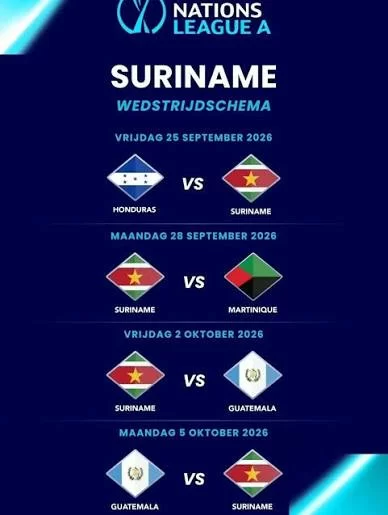
The fifth edition of the Concacaf Nations League is just around the corner, with all preliminary preparations already finalized: group stage draws have been completed, group compositions set, and match dates officially confirmed. Suriname has been drawn into Group B of the competition’s top tier, League A, where they will compete against five other nations for a top-two finish that advances them to the next stage of the tournament.
Two familiar opponents from recent FIFA World Cup qualifying rounds, El Salvador and Guatemala, are also in Group B, though El Salvador will not face Suriname in this phase of the competition. Based on Suriname’s recent performance in major international tournaments including the Gold Cup and the aforementioned World Cup qualifiers, the nation was not placed in the lowest tier of the competition – Group B also features Martinique, alongside former World Cup participants Honduras and Jamaica. Unlike traditional round-robin group formats, this tournament uses the Swiss system, meaning Suriname will not face every team in the group during the group stage.
Suriname’s first three matches of the campaign are scheduled during the September 2026 FIFA international window, against Honduras, Martinique and Guatemala, respectively. The team’s opening fixture is an away match against Honduras set for September 29. Off the pitch, the Suriname Football Association (SVB) has recently completed two key organizational steps in professional fashion: unveiling the national team’s new kit and introducing its new head coach. Notably, the coach signed a long-term contract with the association, a move expected to bring stability to the program and create space to build a cohesive, competitive squad. If the team meets its initial targets, the long-term structure will give the side consistent opportunities to develop toward its ultimate long-term goals.
However, a major unresolved issue hangs over Suriname’s campaign: a months-long passport eligibility dispute that has left several top professional players unwilling to represent the nation. The dispute centers on players born in the Netherlands with Surinamese heritage, who want to represent Suriname without having to renounce their Dutch citizenship. The four-month-long impasse has yet to be resolved, leaving major uncertainty over whether the national team will be able to call up these high-level players for the upcoming Nations League fixtures.
Suriname authorities have reportedly drafted a legislative amendment to resolve the eligibility issue and clear the players to compete, but no detailed information about the proposal has been released to the public, leaving doubts about whether it will actually achieve the desired outcome. Compounding the urgency, just 46 days remain between now and Suriname’s first match, and the amendment still needs approval from Suriname’s national legislature. Lawmakers are scheduled to begin their month-long September recess imminently, leaving only 13 working days for the body to consider and pass the measure. While the recess is not a mandatory break and emergency legislation can technically be considered during the period, past practice shows that holding legislative sessions is extremely difficult at this time, as most lawmakers travel abroad for vacation. With time running extremely short, the clock is ticking for Suriname to resolve the eligibility issue ahead of its opening Nations League clash.