博客

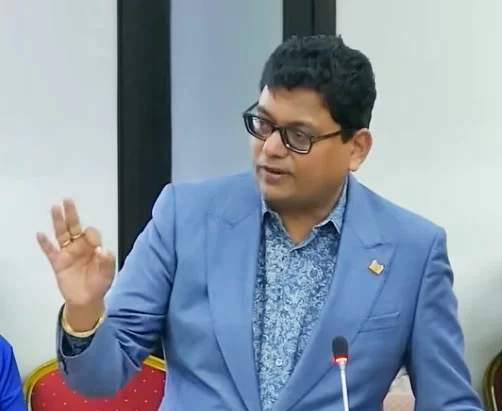
  • Grenada’s new Atlantic bridge to Nigeria could be a diplomatic turning point

    Grenada’s new Atlantic bridge to Nigeria could be a diplomatic turning point

    By Michael Derek Roberts

    For small island nations across the Caribbean, economic survival and growth depend entirely on the ability to expand beyond traditional trading and diplomatic partnerships. Now, the Caribbean country of Grenada is taking a deliberate, ambitious step in that direction: opening full visa-free access to Nigerian passport holders, a policy shift that extends far beyond a simple update to immigration rules. This move represents a calculated strategic gambit to broaden Grenada’s diplomatic and economic footprint far beyond its conventional focus on the Caribbean and North Atlantic regions.

    Against a global backdrop where small developing states face fierce competition to attract investment, tourism revenue, skilled talent and new trade routes, Grenada is wagering that stronger bilateral ties with Nigeria will unlock untapped opportunities across the vast African diaspora. Beyond the visa waiver itself, the island government has outlined plans to deepen collaboration across five key sectors: trade, tourism, investment, education, with the long-term goal of establishing direct air connectivity between the two nations.

    This initiative marks a meaningful departure for a country of Grenada’s size, signaling an outward-facing foreign policy that frames diplomacy not as a purely ceremonial practice, but as a core driver of economic expansion. The move is also rooted in practical economic necessity. For decades, Grenada’s economy has relied heavily on tourism, service sector exports and foreign exchange inflows, making any policy that opens access to new markets a high-stakes, high-reward proposition. Nigerian entrepreneurs, investors, students and professional workers represent a promising new stream of economic activity, with particular potential for growth in healthcare, sustainable agriculture, real estate and financial services. If Grenada can translate initial diplomatic goodwill into tangible, regular cross-border exchanges, the gains will reach far beyond increased tourist arrivals and formal diplomatic statements.

    What makes this development particularly significant is its timing and symbolic weight. Connections between African and Caribbean nations have been gaining renewed global and regional attention in recent years, and Grenada is positioning itself as an active bridge between the two regions, rather than a passive bystander. This is no small step: while many small Caribbean states pay lip service to the abstract ideal of South-South cooperation, few have taken decisive, concrete action to turn that vision into reality. For Grenada, Nigeria is the logical starting point for this new push: as Africa’s most populous nation and one of its largest and most dynamic economies, it offers unmatched access to the continent’s fast-growing markets.

    Yet success is far from guaranteed. The visa-free announcement is only the first step in a long process of implementation. The true test of the policy will be whether Grenada can build out the required administrative frameworks, transport infrastructure, business facilitation systems and sustained diplomatic follow-through to turn its policy of openness into measurable economic gains. Concrete actions — from launching direct flights between the two countries to streamlining business entry procedures and forging active private-sector partnerships — will make all the difference, but these steps must move from planning and discussion to on-the-ground delivery.

    The policy also carries a broader geopolitical message. Grenada is making clear that small Caribbean nations can pursue ambitious, commercially focused, globally connected foreign policies without sacrificing their national or regional identity. This brand of quiet, strategic diplomacy — rooted in smart alignment rather than loud geopolitical posturing — is exactly what can deliver tangible benefits for small states. If executed well, the new Grenada-Nigeria partnership could serve as a replicable model for other Caribbean governments looking to deepen tangible, economically profitable and culturally meaningful ties with African nations.

    In the final analysis, Grenada’s outreach to Nigeria is best defined as a bold bet on shared, mutual opportunity. It will only stand as a successful diplomatic masterstroke if it delivers real growth in trade, tourism, investment and people-to-people exchange. If it does, Grenada will have transformed a simple visa policy change into a far larger story of repositioned economic diplomacy across the Atlantic.

    *Disclaimer: NOW Grenada does not take responsibility for opinions, statements or third-party content contributed by external authors. To report inappropriate content, follow the official channel for abuse reports.*
  • Republic Bank commends MWAG on successful media development programme

    Republic Bank commends MWAG on successful media development programme

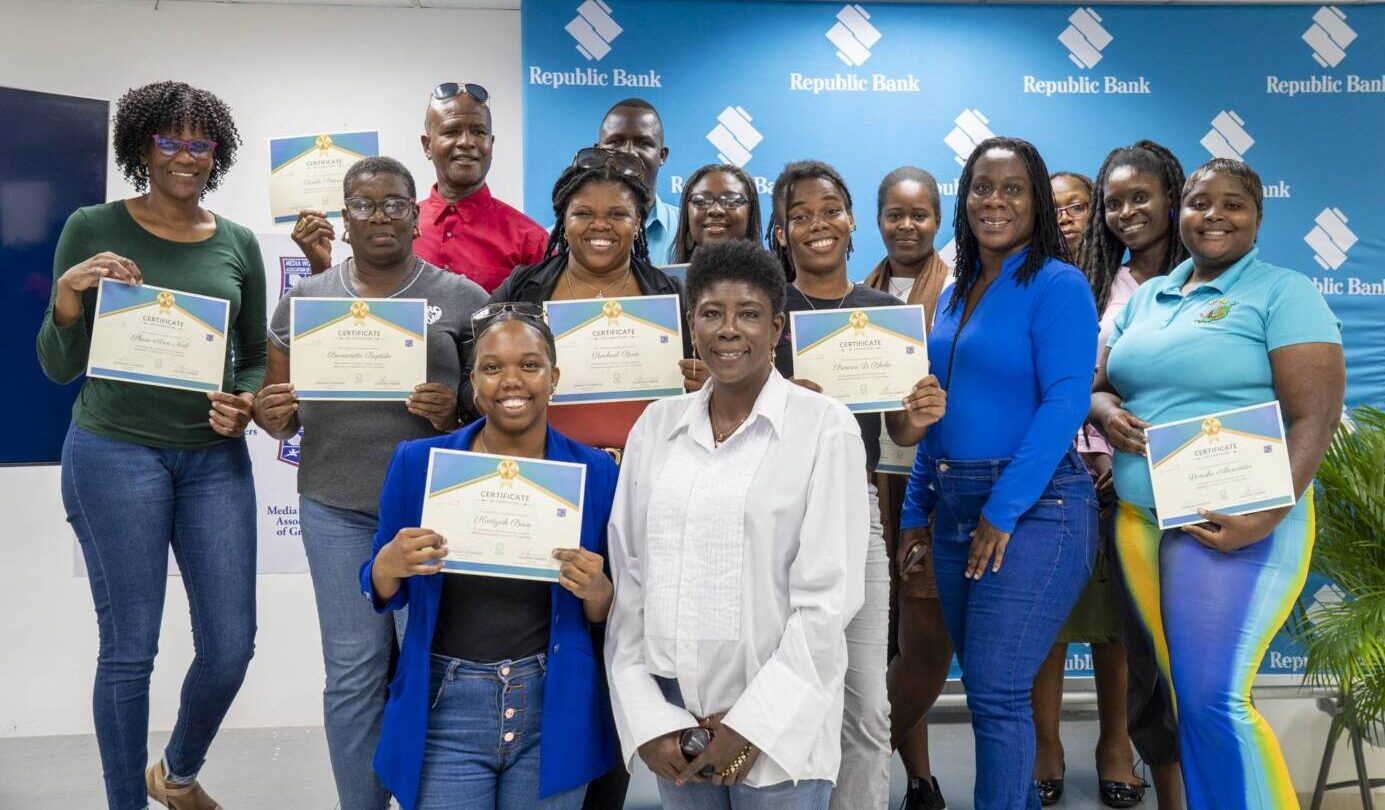
    Grenada’s media sector took a major step toward professional growth last month, as the Media Workers Association of Grenada (MWAG) wrapped up a week-long intensive journalism training initiative with key support from Republic Bank. Held between June 15 and 19 at the island’s National Cricket Stadium, the program brought together a diverse cohort of working media professionals, aspiring early-career journalists, and young communications specialists to elevate core journalistic standards across the country’s local media landscape.

    Unlike passive training formats, the workshop centered on hands-on skill building, covering critical topics ranging from foundational news writing and advanced interviewing techniques to narrative story development and core principles of ethical reporting. Beyond technical instruction, the program created dedicated space for peer connection and one-on-one mentorship, linking up-and-coming communicators with veteran media practitioners to share on-the-ground insights and career guidance.

    In a statement following the program’s conclusion, Republic Bank Managing Director Naomi De Allie praised MWAG for leading the forward-thinking initiative, emphasizing the long-term value of investing in professional development for the media sector. “At Republic Bank, we recognize the vital role that journalists and media practitioners play in informing, educating, and empowering our communities,” De Allie said. “A strong and responsible media sector contributes significantly to national development, transparency, and public engagement. We are therefore proud to have supported a programme that helps strengthen the skills and capacity of both current and future media professionals.”

    De Allie added that the bank’s sponsorship of the training aligns with its broader institutional commitment to advancing education, cross-sector knowledge sharing, and sustainable community development across Grenada. “The participants in this programme represent the future of journalism in Grenada. By investing in their growth and development, we are helping to build a more informed society and a stronger communications environment for generations to come,” she noted.

    Leading the instructional design and delivery of the program was Johnson John Rose, a widely respected regional media leader with decades of experience across journalism, broadcasting, strategic communications, and media management across the Caribbean. Drawing on his deep roots in the regional media industry, John Rose walked participants through the unique challenges and opportunities of modern journalism, sharing actionable insights on upholding professional standards, maintaining ethical reporting practices, and crafting compelling storytelling in a fast-changing digital media ecosystem. Industry observers and participants alike credited John Rose’s expertise and hands-on mentorship as a core driver of the program’s success, noting that the skills gained will have a lasting positive impact on the next generation of Grenadian journalists.

    Moving forward, Republic Bank extended formal congratulations to all participants who completed the full training curriculum, and expressed gratitude to MWAG for the collaborative partnership to deliver the impactful initiative. As a socially responsible financial institution operating across the Caribbean, Republic Bank reaffirmed its ongoing commitment to supporting learning-focused initiatives that expand access to professional growth opportunities, drive individual advancement, and support inclusive national development throughout Grenada and the wider region.

  • New SVG Tourism Authority CEO lays out results-driven vision

    New SVG Tourism Authority CEO lays out results-driven vision

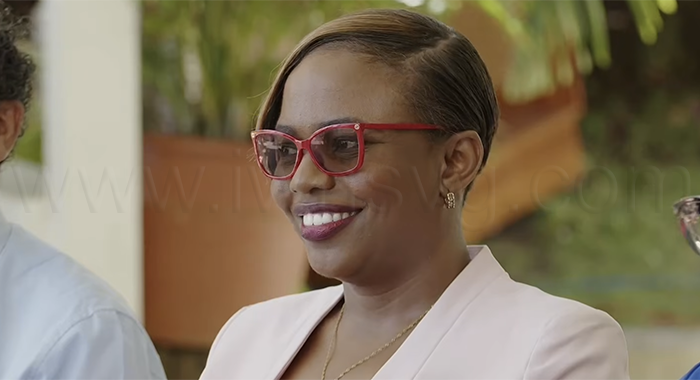
    On Monday, at a press conference held in Villa, St. Vincent and the Grenadines, incoming Chief Executive Officer of the St. Vincent and the Grenadines Tourism Authority (SVGTA) Shafia London outlined her bold, inclusive vision for the nation’s tourism sector ahead of her official 1 July start date. London, who will serve a three-year contract after returning home following a decade of work across the Caribbean region, has pledged to build a results-focused, collaborative tourism framework that delivers widespread benefits to all Vincentian communities.

    London opened her remarks by expressing gratitude for the appointment, emphasizing that her core mission is to serve the people of St. Vincent and the Grenadines. She framed tourism as far more than a single industry, positioning it as the central economic engine that touches every corner of the nation – from the northern community of Fancy to the southern tip of Mayreau. The sector empowers a broad cross-section of workers, she noted, including taxi drivers, small-scale tour operators, local farmers, artisans, hotel staff, and fisherfolk, weaving economic opportunity into every village, family, and generation.

    Acknowledging the solid foundation laid by previous tourism leaders, staff, and policymakers, London highlighted the significant momentum the sector has already built. She noted that stay-over visitor arrivals have recorded double-digit growth in recent years, driven by major investments in hotel infrastructure, new international air routes, and the tireless work of industry predecessors. Building on this progress, London outlined a clear two-part immediate mandate: continuing to grow visitor arrivals, and elevating the overall visitor experience to exceed traveler expectations from arrival to departure.

    London stressed that the nation’s greatest competitive advantage lies in its unique authenticity, rather than imitation of other Caribbean destinations. “We are a small nation, but we are a remarkable one,” she said. “Our strength is our authenticity, our culture, our diverse, unspoiled beauty, and our people. That is our competitive advantage, and we are going to protect it, package it properly, and present it to the world with confidence.”

    After months of preliminary research, London identified three core strategic positioning platforms for SVG’s tourism brand, pending consultation with cabinet, the SVGTA board, and key industry stakeholders: adventure and nature tourism, a global sailing paradise, and authentic culture and celebration.

    For the adventure and nature platform, London laid out a 2027 vision for a structured, internationally certified immersive eco-tourism network across SVG’s existing trails and natural sites. The plan calls for trained local guides, formalized safety protocols, and adherence to globally recognized sustainable tourism standards, demonstrating the nation’s commitment to protecting its natural assets.

    In the sailing segment, London proposed an aggressive push to establish SVG as the premier sailing capital of the Caribbean. Key initiatives include expanding mooring infrastructure, implementing dedicated ranger systems, improving wastewater management for yachting visitors, partnering with international yacht charter companies, and curating exclusive official yachting experiences that position SVG as a top global sailing itinerary.

    For culture and celebration, London argued that SVG’s existing events calendar should be developed into a intentional strategic economic and branding asset. The plan calls for professional packaging of iconic local events including Vincymas, the Bequia Regatta, and Garifuna heritage celebrations, alongside targeted investment in artisans, storytellers, and heritage sites to transform raw cultural assets into compelling, marketable visitor experiences.

    Drawing on her background in engineering, London emphasized that sector success will be measured by tangible, hard data rather than empty rhetoric or ceremonial announcements. For London, success is defined as growing the number of high-value visitors who respect SVG’s culture, environment, and communities, increasing average length of stay and visitor spending, improving sector infrastructure, creating new quality jobs, and ensuring widespread local community benefit. Her overarching vision is to position SVG as the Caribbean’s most uniquely diverse destination, where travelers across all three core tourism segments can engage with the nation’s authentic natural and cultural heritage, while every community, business, and family shares in the sector’s growth. The ultimate goal, she noted, is to deliver such exceptional experiences that visitors return home as passionate brand ambassadors for SVG.

    London acknowledged that delivering this ambitious vision will require unprecedented coordination across the public sector, private industry, local communities, and the Vincentian diaspora. Improving accommodation capacity, maintaining bookable visitor products, and preserving the nation’s pristine natural sites demands collaborative action across all levels of society, she said, issuing an open invitation for all stakeholders to join the effort as active builders, not passive observers. “SVG can only be built by all of us moving in the same direction with the same intent,” she noted.

    In the coming weeks ahead of her official start, London plans to conduct a nationwide outreach tour, meeting with tourism stakeholders at every level – from frontline workers and small business owners to airline partners and community leaders. She emphasized that she will spend dedicated time in rural and outer-island communities, to ensure tourism benefits people where they live, not just in popular tourist hubs. Her goal is to build a sense of ownership and opportunity for ordinary Vincentians across the entire sector.

    Closing her remarks, London reaffirmed her commitment to delivering results and transforming the SVGTA into a more proactive, outcome-focused organization. “I return home committed to listening, to working, and to delivering,” she said. “In the months ahead, you will see this Tourism Authority show up differently — with focus, with urgency, and with results. The future is bright. Let’s build it together.”

  • VHP protesteert tegen opening DNA-vergadering vanwege procedurefout

    VHP protesteert tegen opening DNA-vergadering vanwege procedurefout

    On June 22, the main opposition faction VHP in Suriname tabled a formal objection during a public plenary session of the country’s National Assembly (DNA), calling out a critical procedural violation committed by Assembly Speaker Ashwin Adhin that puts the entire meeting’s legal validity into question.

    According to VHP faction leader Asis Gajadien, the error occurred before the session officially got underway. Adhin opened the meeting ahead of the formal handover of the chairmanship, and failed to sign the mandatory attendance register upon entering the chamber – a step explicitly required under Article 31 of the DNA’s Rules of Procedure, which mandates every member sign the attendance list when arriving for a session.

    After the oversight was uncovered, Gajadien says faction leaders held emergency consultations to resolve the issue. The VHP proposed a straightforward fix: formally acknowledge the omission, restart the opening process following correct procedure, and then proceed with the meeting with full legal standing. To the opposition’s frustration, this compromise solution was never implemented. Assembly leadership instead pushed ahead with the session as if no procedural irregularity had occurred, prompting immediate protest from VHP representatives.

    The VHP has emphasized that strict adherence to parliamentary procedures is a non-negotiable foundation for legitimate lawmaking in any democratic system. The party argues that as the nation’s highest representative body, the National Assembly must set a clear example of transparency, due process, and rule-of-law governance – these standards cannot be set aside for political convenience or practical shortcuts.

    Despite the formal objection and public protest, the VHP chose to remain in the session to continue participating in deliberations, a decision driven by the critical item on the day’s agenda: the review of the national state budget. The faction noted that the broad social and economic interests tied to the budget process far outweigh the need to walk out over the procedural dispute.

    VHP representatives stressed that their continued participation does not mean they are withdrawing their objection to the breach. The faction has formally called on Speaker Adhin to take immediate steps to ensure all parliamentary procedures are strictly followed in all future Assembly sessions, to protect the institution’s democratic legitimacy.

  • OPEN LETTER: A message to Dominicans, before it is too late

    OPEN LETTER: A message to Dominicans, before it is too late

    Against the backdrop of a heated by-election for the Marigot constituency seat, an unsigned open letter has sparked national reflection on the declining state of democratic norms and growing social fracture across Dominica. As the island nation navigates a critical crossroads in its political evolution, the author draws urgent attention to a rising tide of intolerance, bitter partisan rivalry and internal strife that has seeped into every layer of Dominican life — from politics and civil society to religious institutions, leaving communities deeply divided along party lines.

    The letter frames this moment as more than a fight for electoral victory or political leadership: it is a generational test of the values that underpin a healthy, functional democracy. “Every nation, every community, and every generation faces moments when its core values are put to the test,” the author writes. “Sometimes these tests arrive through crisis or conflict, sometimes through the quiet accumulation of small, unremarkable choices that slowly reshape a people’s national character.”

    Beyond the mechanics of regular voting, the author argues that democracy is a sustained practice and shared discipline that requires all members of society to uphold the principle that no individual, party or political movement stands above the law, above truth, or above the inherent dignity of every citizen. For this system to thrive, it depends on robust, independent institutions that can withstand partisan pressure and hold themselves accountable: independent judiciaries that rule without political interference, journalists empowered to ask tough questions of power, public servants who prioritize national duty over partisan loyalty, and citizens who recognize that freedom means more than cheering for one’s own side when it wins.

    A core measure of a society’s health, the text notes, is how it treats people who hold different views. It is simple to claim unity when everyone already agrees; the real test comes when we face rivals, critics and opponents who challenge our most deeply held beliefs. The author emphasizes that political opposition does not make someone an enemy: opponents remain fellow citizens who share the same communities, same public spaces, same hopes and same collective future. When we lose sight of that basic truth, politics devolves into a zero-sum war where victory overshadows the common good.

    This framework does not demand moral equivalence between all ideas, nor does it call for silence in the face of corruption, discrimination, abuse of power or violence. Instead, it requires citizens and leaders alike to respond in ways that strengthen democratic institutions rather than tear them down. Long-held political norms, traditions of peaceful power transition, respect for independent bodies, and the willingness to negotiate with people we disagree with are not empty ceremonial gestures — they are the structural framework that holds public trust together. When these norms erode, damage builds gradually: one insult, one distortion of truth, one abuse of power, one refusal to accept a fair electoral result at a time, until one day the public wakes to find that trust in the system has vanished entirely.

    The letter redefines the meaning of public leadership: holding office is not a form of ownership, but a temporary stewardship. Leaders are caretakers of institutions that existed long before they took power, and will continue long after they leave. The conduct, language and restraint of public officials therefore matter deeply: how leaders talk about opponents, judges, journalists, marginalized groups and ordinary citizens sets the standard for acceptable public behavior. When leaders mock, divide, threaten and demean others, they do not only harm individual people — they erode the shared moral standards that keep public life functional, a standard that all citizens ought to uphold.

    Serious policymaking is also a core pillar of responsible governance, the author argues. Decisions that shape national security, public health, education, economic development, climate action and justice cannot be reduced to catchy slogans or tools for personal rivalries. Every policy debate has real, tangible consequences for real families, workers and communities across the country. Responsible governance demands more than winning political arguments: it requires evidence-based decision-making, patience, honesty, and accountability for both successes and failures. Public service is not a performance for social media or rallies — it is a solemn duty.

    On the question of national unity, the author rejects the common idea that unity requires eliminating all disagreement. Instead, unity is a deliberate choice to remain committed to shared rules, mutual dignity and collective responsibility even when disagreements run deep. It rests on the unifying truth that all Dominicans share a common future, whether they like it or not. The author acknowledges that there will always be actors who profit from political division, who gain attention by humiliating opponents, spreading fear and stoking resentment on every issue, but a healthy society cannot survive on perpetual outrage or governance through contempt.

    The harder, more honorable path forward is the one the letter endorses: listening to others without abandoning core convictions, debating differences without throwing away mutual respect, compromising on policy without betraying core principles, and opposing wrongdoing without surrendering one’s own commitment to decency. This collective responsibility does not fall only on elected leaders and public officials, the author stresses — it belongs to every Dominican. Every citizen shapes the tone of national public life: every conversation, every vote, every choice to refuse to spread hate, every act of speaking truth matters.

    The letter closes with a call to reject both cynicism and despair. Cynicism — the belief that all leaders are the same, that nothing can change, that truth does not matter, that institutional reform is impossible and that participation is pointless — may feel comfortable, but it is ultimately an act of surrender. Despair, meanwhile, forgets that every major advance in rights, reform, justice and freedom was won by people who kept working even when progress seemed impossible.

    The author urges all Dominicans to show up for democracy: engage when possible, vote where it matters, speak out against injustice, organize for change, defend vulnerable communities, hold power to account, protect truth, and demand better from both the people you support and the people you oppose. “A society is not held together by perfect agreement,” the author writes. “It is held together by people who understand that disagreement must have boundaries, that power must have limits, that freedom must come with responsibility, and that human dignity must never depend on which side wins.”

    This work of rebuilding democratic trust and unity is not easy, the author acknowledges. It is often slow, frustrating and imperfect. But it is the work that keeps communities free, institutions honest, and hope alive. If Dominicans can do this work together — across their differences, across their disappointments, across their fears — they can build a public life that is worthy of all the people it is meant to serve.

  • Prime Minister Mitchell to attend oil and gas summit in Suriname

    Prime Minister Mitchell to attend oil and gas summit in Suriname

    As Caribbean nations position themselves to tap into the region’s untapped offshore energy potential, Grenada is taking a proactive step to engage with global industry stakeholders: Prime Minister Dickon Mitchell will lead a senior delegation to the 2026 Suriname Energy, Oil and Gas Summit (SEOGS), a leading regional industry gathering set to convene in Paramaribo, Suriname that draws top energy leaders, policymakers, and investment stakeholders from across the globe.

    Joining Mitchell on the delegation is Nazim Burke, chair of Grenada’s Technical Oil and Gas Working Group, alongside a team of specialized technical experts. The makeup of the delegation underlines Grenada’s formal commitment to integrating its energy strategy with the rapidly shifting dynamics of the Caribbean regional energy sector.

    The 2026 summit coincides with a critical turning point for host nation Suriname, which is transitioning from years of major offshore hydrocarbon discoveries to launching its first commercial crude oil production. This milestone marks a definitive shift from the exploration phase to full-scale industrial development, making it an ideal time for neighboring energy aspirants to observe and learn from the process. For Grenada, the summit will serve as a valuable opportunity to gain first-hand insight into industry best practices, effective regulatory frameworks, and proven strategies for managing energy resources in line with responsible and sustainable development goals.

    Grenada has been actively positioning itself as the Caribbean’s next major hydrocarbon production hub. The small island nation holds significant advantages for energy development, including a geographically strategic position in the Caribbean basin and an offshore territory that geoscientific surveys have identified as highly prospective for commercial oil and gas reserves. Currently, Grenada is moving forward with structured initiatives to unlock this untapped energy potential.

    During the summit, Mitchell is scheduled to deliver a keynote Presidential Address on Tuesday, 23 June, where he will outline Grenada’s official vision for balanced energy development, cross-border regional cooperation, and inclusive sustainable economic growth. Beyond his keynote, the prime minister will take part in closed-door leadership dialogues and one-on-one bilateral meetings with other global and regional energy stakeholders. Meanwhile, the rest of the Grenadian delegation will participate in a full schedule of keynote sessions, open policy debates, and solution-driven panel discussions focused on the future of energy across the Caribbean and global markets.

    SEOGS’ executive summit is projected to draw more than 1,000 registered attendees this year, including sitting Heads of State, national Energy Ministers, public sector energy regulators, leaders from top international oil companies (IOCs), executives from national oil companies (NOCs), energy industry contractors, cutting-edge energy technology providers, global financial institutions, and independent energy investors. Core discussion themes for the 2026 event center on advancing a just transition to a sustainable energy future and harnessing hydrocarbon resources to drive inclusive national and regional economic development.

    Grenada’s decision to participate at the highest level reflects the island nation’s forward-thinking approach to energy development: by engaging directly with global energy trends, strengthening collaborative ties with neighboring Caribbean energy producers, and learning from early movers like Suriname, Grenada aims to ensure that any future domestic energy development aligns with its core national priorities of environmental sustainability, economic diversification beyond traditional tourism reliance, and building long-term economic resilience.

    Following his address to the summit on 23 June, Prime Minister Mitchell is scheduled to return to Grenada. More information on summit speakers and programming is available via the official Suriname Energy website.

  • Derde helft WK 2026: Messi schiet Argentinië langs Oostenrijk naar volgende ronde

    Derde helft WK 2026: Messi schiet Argentinië langs Oostenrijk naar volgende ronde

    Group J World Cup action unfolded at Dallas’ host stadium on June 22, bringing defending champions Argentina up against a confident Austria side in a matchup that promised high stakes and competitive football. Argentina had kicked off their tournament with a win against Algeria, while Austria entered the match off a dominant opening outing against Jordan, setting the stage for a tightly contested battle that lived up to its pre-match hype. When the final whistle blew, it was Argentina that walked away with a 2-0 victory, secured by two late goals from captain Lionel Messi.

    The defending champions came out of the gate flying, pushing hard for an early opening goal to take control of the match. That early opportunity arrived in just the 4th minute, when Inter striker Lautaro Martinez was brought down by two Austrian defenders inside the penalty area. Though the on-field referee initially allowed play to continue, a review from the video assistant referee (VAR) overturned the call and awarded Argentina a penalty. Messi stepped up to take the spot kick, but in an uncharacteristic miss, he sent the ball wide of the goal, leaving the scoreline deadlocked.

    Argentina continued to press through the opening half, with another clear chance coming in the 19th minute, when Messi broke into Austria’s 18-yard box only for defender Kevin Danso to make a well-timed intervention to snuff out the danger. Austria, for their part, pushed forward on the counter and put consistent pressure on Argentina’s backline, but failed to convert that pressure into clear-cut chances, with final passes consistently missing their target or shots failing to materialize.

    Another dangerous Argentina attacking buildup in the 36th minute ended with a cross that floated into empty space between the defense and goalkeeper, but three minutes later, the deadlock was finally broken. At the end of a sustained Argentina attacking sequence, Messi found himself on the end of a pass inside the box and made no mistake this time, firing home a clean finish to put his side up 1-0, a score that held through halftime.

    After the break, Austria shifted into a more attacking gear in search of an equalizer, putting together some promising build-up play but still failing to test Argentina’s goalkeeper or create a clear scoring opportunity. Argentina controlled the pace of the second half, managing the game without taking unnecessary risks as they hunted for a decisive second goal to seal the win. In the 73rd minute, substitute Nicolás Gonzalez had a golden chance to double the lead, meeting a Messi corner kick with a header that went just inches wide of the post.

    For the rest of regulation, both sides mustered only half-chances, and it looked as though the match would end with Argentina holding on to a narrow 1-0 win. But in the final minute of stoppage time, Messi delivered one final moment of magic, slotting home a falling finish to double Argentina’s lead and put the match out of reach. The 2-0 win gives Argentina six points from their first two group stage matches, officially securing their spot in the knockout round of the tournament with one group game still to play.

  • Police searching for missing 12-year-old girl

    Police searching for missing 12-year-old girl

    Law enforcement officials in Barbados have issued a public call for assistance as they work to track down a preteen girl who has been missing for more than a week. Kalicia Ariana Layne, 12, a resident of Vauxhall in the parish of Christ Church, was last spotted by members of the public on Sunday, June 21, 2026.

    Investigators with the Barbados Police Service have released a detailed physical description of the missing child to help community members identify her. Layne stands roughly 5 feet 7 inches tall with a slim build and brown skin. Her facial features include full-set eyes, a medium-sized nose, and a sharply pointed chin. In terms of hairstyle, the 12-year-old wears her hair in a combination style: cornrow braids along the front of her head, with single plaits falling down her back. When she was last observed by witnesses, Layne was dressed in a plain black short-sleeved shirt and full-length brown trousers.

    Authorities have also noted the specific areas across the country that Layne is known to visit regularly, including the Vauxhall Gardens neighborhood and Adams Castle, both located in her home parish of Christ Church, as well as the Bayville district in the neighboring parish of St Michael.

    The Barbados Police Service is urging any member of the public who may have seen Layne since her disappearance, or who holds any information that could help officers confirm her current location, to reach out to law enforcement immediately. Tips can be submitted directly to the Oistins Police Station by calling either 418-2612 or 418-2604, to the national 24/7 police emergency line at 211, or to the anonymous Crime Stoppers hotline at 1-800-8477. Information can also be filed in person at any local police station across the island.

  • Persons Who Murdered Pregnant Woman Are Belize City Residents

    Persons Who Murdered Pregnant Woman Are Belize City Residents

    On a Saturday afternoon in June 2026, a brazen public shooting claimed the life of pregnant Jane Urbina at a bus terminal in Hattieville, Belize, leaving law enforcement authorities racing to track down two at-large attackers who officials confirm are residents of Belize City. Senior police officials have formally classified the mid-day killing as a pre-planned targeted attack, and are currently exploring a potential connection between the murder and the high-profile murder case against Urbina’s jailed brother, former Police Constable Lionel Urbina.

    Per official accounts of the incident, the tragedy unfolded shortly after Jane Urbina and her mother completed a prison visit to see Lionel, who is currently being held on remand at Belize Central Prison as he awaits trial for the 2025 killing of 19-year-old Belizean-American Kevin DePaz in Caye Caulker. After leaving the correctional facility, the pair traveled back to Hattieville to wait for connecting transportation to their home in Santa Elena, when the attack unfolded in broad daylight in front of other passengers at the bus stop.

    Assistant Commissioner of Police Hilberto Romero, head of Belize’s National Crimes Investigation Branch, confirmed the premeditated nature of the assault in a press briefing held the morning after the killing. “It was a targeted attack,” Romero stated. “They had specific information on where she was at the time.” Romero detailed the attackers’ approach: two individuals traveled to the bus stop on a single motorcycle, with one gunman dismounting the vehicle, approaching Urbina directly, and firing multiple shots that inflicted fatal wounds on the victim before the pair fled the scene.

    Investigators also revealed that prior threats were made against Lionel Urbina before he was formally charged with DePaz’s murder, though Romero could not confirm whether any direct threats had been received by Jane Urbina or other members of the Urbina family ahead of the attack. Following the shooting, responding authorities initiated an immediate pursuit of the suspects, forcing the motorcycle off the public road roughly a quarter of a mile from the Hattieville bus stop. The two assailants managed to escape on foot, disappearing into dense vegetation near the roadway before law enforcement could apprehend them.

    As of the latest official update, no arrests have been made in connection with Urbina’s killing, and the two suspects remain at large. Police have issued a public appeal for any witnesses with information on the identity or whereabouts of the attackers to come forward to assist with the ongoing investigation.

  • Shafia London is new CEO of SVG Tourism Authority

    Shafia London is new CEO of SVG Tourism Authority

    On Monday, the St. Vincent and the Grenadines Tourism Authority (SVGTA) made a key leadership announcement: seasoned business and civic leader Shafia T.T. London will take office as its new Chief Executive Officer on July 1, tasking her with steering the Caribbean nation’s tourism sector through a period of targeted strengthening, modernization, and sustainable expansion.

    London brings nearly 20 years of impactful, forward-thinking leadership experience spanning local and regional markets to her new role. She built her early career foundation in local economic development as Executive Director of the SVG Chamber of Industry and Commerce, before launching a distinguished corporate trajectory that began with a marketing manager position at St. Vincent Brewery Ltd and ultimately led to senior regional executive appointments.

    Her career ascent included multiple executive roles at Barbados-based Banks Holdings Limited Group, the parent company of Banks Breweries and PINEHILL Dairy, where she progressed through roles as group marketing manager, group commercial manager, and finally country head. Later, as country head for AB InBev — the world’s largest brewing conglomerate — she oversaw cross-market operations across Barbados, St. Vincent and the Grenadines, and Dominica, consistently delivering strong revenue growth and expanded market reach. Her strategic vision and operational performance earned her the 2022 title of Top ABI Business Leader for the Caribbean and Latin America, a testament to her industry standing.

    After a corporate merger and acquisition, London stepped into the role of general manager at the SLU Group of Companies, a member of the KOSCAB group, where she led operational optimization and large-scale business transformation projects. Most recently, she served as First Vice President of the Barbados Manufacturing Association and as SVG’s technical representative to the Caribbean Private Sector Organization.

    In an official press release announcing the appointment, SVGTA highlighted that London’s decades of broad corporate leadership experience will be a critical asset as the authority works to build stronger cross-sector partnerships, attract targeted tourism investment, and embed greater commercial discipline into its operations. Beyond her corporate career, London is also an active entrepreneur, a background the authority says will give her a unique perspective on strengthening connections between the tourism sector and local businesses — especially small and medium-sized enterprises that form the backbone of many local communities.

    Outlining her core priorities upon taking office, London emphasized a commitment to actionable execution and measurable, equitable outcomes. “Together with the minister, board and team at SVGTA, my immediate focus as CEO is to transform our destination as a brand, elevate our marketing strategies, and forge stronger alliances with local, regional and international stakeholders,” London stated. She added: “Attracting and bringing visitors and investors is part of the mission. Just as crucially, we must enhance the on-island experience for every visitor while expanding opportunities for local communities — ensuring the economic benefits of tourism are felt widely and equitably.”

    The SVGTA Board of Directors noted that London’s rare combination of deep marketing and commercial expertise, hands-on entrepreneurial experience, and broad regional industry connections makes her uniquely positioned to lead the authority at a time of significant growth opportunity and sector transformation.

    Academically, London boasts an impressive resume: she holds a Master of Business Administration with distinction from the University of the West Indies (UWI) Cave Hill campus, a Master of Science in biochemical engineering from University College London, and a First-Class Honours Bachelor of Science from UWI St. Augustine. She is currently completing a doctor of business administration. A product of St. Vincent’s local education system, she is an alumna of Langley Park Government School and St. Vincent Girls’ High School, was awarded a national scholarship in 2003, and has earned multiple honors for academic excellence.

    Beyond her professional and academic accomplishments, London maintains a deep commitment to civic and community service. She made history as the first female president of the Rotary Club of St. Vincent, and actively supports a wide range of youth and social development initiatives across the region. Her community contributions earned her the GTM Regional Unsung Hero Recognition.

    A native of Dickson Village, St. Vincent, London is the daughter of the late popular local talk show host EG Lynch and Millicent Johnson. She is married to former attorney general Grenville Williams and has two sons.

    The press release concluded that under London’s leadership, which pairs sharp business acumen with a demonstrated commitment to community uplift, SVGTA is poised to enter a dynamic new era of growth. The organization expects to elevate St. Vincent and the Grenadines’ global profile as a top travel destination while cementing tourism’s role as a powerful, inclusive engine for local economic development. As a reminder, SVGTA is the official body tasked with promoting and developing tourism across the island nation, working to position the country as a competitive contender in both regional and international travel markets.