博客

  • PNH New Generation : Women at the Heart of Change

    PNH New Generation : Women at the Heart of Change

    On August 22, 2026, Haitian National Police (PNH) partnered with the United Nations Development Program (UNDP) and the European Union to host a pivotal public awareness event in the southern coastal city of Les Cayes. The gathering marked the third iteration of the “PNH New Generation: Women at the Heart of Change” initiative, designed to encourage professional women and young female candidates to pursue careers in law enforcement and reshape the institutional culture of Haiti’s national police force.

    The campaign grows out of a broader strategic effort to build a police force that is more inclusive, representative of Haiti’s diverse population, and held to high professional standards. By centering women’s participation in public security, organizers aim to address long-standing gender imbalances within the PNH and strengthen public trust in the institution among Haitian communities.

    The day’s program opened with formal remarks from key stakeholders, including Allande Serge Joliccœur, the Departmental Director for Haiti’s South Department, Sylvain Merlen, the local UNDP representative, and Divisional Commissioner Erna Royal, who attended on behalf of the PNH Director General. Following the opening addresses, structured discussions centered on three core topics of high relevance to participants: responding to Gender-Based Violence (GBV), the training pathway offered by Haiti’s National Police Academy (ENP), and the step-by-step PNH recruitment process.

    Subject matter experts from multiple Haitian institutions led the topic-focused conversations. These included the GBV program manager for the South chapter of the National Coordination of Women’s Affairs and Gender Issues (CNAFQG), Principal Commissioner Marjorille Plaisival, the ENP representative, and Inspector Paul Smith Bonne Année from the PNH Recruitment Service.

    Beyond formal presentations, the event featured open Q&A exchanges with attending young women and a testimonial session from current female officers serving in the PNH. These interactive segments gave prospective candidates a firsthand look at the day-to-day realities of police work, outlined the range of long-term professional opportunities available within the institution, and highlighted how increasing female participation strengthens the force’s ability to serve all Haitian people. Organizers emphasized that this third campaign builds on the success of earlier outreach events held across other regions of Haiti, with the shared goal of creating sustainable, meaningful gains in women’s representation at all levels of the Haitian National Police.

  • UWI Global Campus Dominica to induct new student and alumni executives

    UWI Global Campus Dominica to induct new student and alumni executives

    The University of the West Indies Global Campus Dominica is preparing to formally usher in its new cohort of student and alumni leadership for the 2026–2027 academic year, with a dedicated induction and reconfirmation ceremony scheduled for Thursday, September 3.

    This upcoming event will serve a dual purpose: it will honor returning leadership members of both the Guild of Students Dominica Chapter and the UWI Alumni Association Dominica Chapter, while also officially swearing in a group of newly elected executive members to the two organizations.

    For the student leadership body, the Student Guild will retain its top leadership with Amanda Theodore Langlais continuing her tenure as Chair. Two new faces will join the executive team: Migalena Francis will step into the role of Secretary, and Amari Pierre has been appointed as the new Public Relations Officer.

    On the alumni side, Keisha Polidor will return to her position as Chair of the UWI Alumni Association Dominica Chapter. Two new appointments round out the expanded executive: Odessa Dinard will serve as the official Guild Liaison Officer, and Gillian Robinson joins the body as an executive committee member.

    The ceremony is set to kick off at 7:00 PM local time, hosted in the UWI Auditorium on campus. Queen Thomas, Education Officer for Secondary Schools at Dominica’s Ministry of Education, has been selected as the featured keynote speaker for the event. Thomas’s address will center on the ceremony’s core theme: “Leading with Empathy.”

    Senior UWI Global Campus Dominica officials have publicly extended their gratitude to both returning executive members and incoming appointees. In their remarks, leaders emphasized appreciation for the volunteer time and professional expertise that all leadership members contribute, highlighting their ongoing commitment to supporting current UWI students and strengthening the broader university community through service.

  • DOMINICA: Woman Charged, Third Police Officer Arrested in Jerbiah Paul Death Investigation

    DOMINICA: Woman Charged, Third Police Officer Arrested in Jerbiah Paul Death Investigation

    ROSEAU, Dominica — The ongoing investigation into the tragic death of 16-year-old Jerbiah Paul has entered a new phase of expansion, with law enforcement officials announcing two significant developments: a 21-year-old civilian woman has been formally charged, and a third serving police officer has been taken into custody.

    The Commonwealth of Dominica Police Force has named the accused woman as Nyoka James, a resident of the Marigot area. James faces a single charge of perverting the course of justice, a charge that law enforcement has emphasized is entirely separate from the murder accusations that have already been leveled in the case. As of the latest update, she has not been charged with any involvement in Paul’s killing, confirming that her alleged offense relates to actions taken during the investigation process.

    Authorities have also confirmed the arrest of the third police officer linked to the case, but have chosen to withhold key details about the detention. The officer’s name, rank, and the specific circumstances that led to their arrest have not been released to the public. It also remains unclear whether the officer has been formally charged with any criminal offense, leaving local communities waiting for further clarification from police leadership.

    The latest arrests come after two other members of the Dominica Police Force, Jean-Luc Rudy Langlais and Joshua Hamlet, were already charged with murder directly connected to Paul’s death. Both men have been remanded into custody at the Dominica State Prison and remain there as the case progresses toward future court hearings.

    The case first emerged when Paul was reported missing to authorities on July 24. After intensive search efforts spanning multiple weeks, her remains were finally located in the Capuchin area of the island on August 12.

    With the latest detentions, the total number of people arrested in connection with the different strands of the investigation now stands at four. Three of those four individuals are serving officers with the Commonwealth of Dominica Police Force, a revelation that has sparked significant public concern over institutional oversight and accountability on the island. Law enforcement officials have stated that the investigation remains active and ongoing, with additional updates expected as evidence continues to be collected and processed.

  • Death of Saint Lucian woman in Ottawa ruled suspicious

    Death of Saint Lucian woman in Ottawa ruled suspicious

    A shocking case of suspicious death has emerged in Ottawa, Canada, centered on 27-year-old Kesi Fevrier, a Saint Lucian national who had recently returned to the country to continue her studies. The tragedy unfolded on a Saturday morning, when local law enforcement was dispatched to a residential property located in the 200 block of Guigues Avenue, Ottawa’s Lowertown neighborhood. Upon arrival at the scene, officers discovered Fevrier’s unresponsive body.

    According to family accounts shared with local Saint Lucian outlet St Lucia Times, Fevrier had only arrived back in Canada 10 days before her body was found. The young woman had spent the entire summer back in her home country, where she enjoyed the island’s iconic Carnival festivities and attended a close family or friend’s wedding. Originally from Mon Repos, Saint Lucia, Fevrier was far more than just a student to her community. Her cousin shared that the 27-year-old was a highly engaged community member, deeply committed to her local Catholic Church, and even auditioned to represent her island as Miss Universe Saint Lucia.

    A senior family member also revealed emerging details about the circumstances leading to Fevrier’s death. Current information suggests Fevrier was coaxed to the Ottawa apartment where her remains were found, under the pretense of resolving a disagreement with an individual she already knew.

    What makes the case even more puzzling is the adjacent, seemingly linked incident that unfolded ahead of the discovery of Fevrier’s body. Before officers attended the Lowertown home, Ottawa Police had responded to a report of a single-vehicle crash at a separate location. First responders found a man inside the wrecked vehicle with injuries that investigators immediately flagged as suspicious. The man was rushed to a nearby medical facility for emergency treatment, but succumbed to his injuries shortly after arrival.

    In the wake of these back-to-back, unusual deaths, speculation has intensified among both investigators and local communities that the two fatal incidents are connected. Fevrier’s passing has already sent ripples of grief through her social and professional circles. By Sunday, dozens of her friends had taken to social media platforms to share their sorrow, posting heartfelt tributes alongside old photos of Fevrier captured during her time at Carnival earlier this summer, as loved ones grapple with the sudden loss of a vibrant, active young community member.

  • Two Atlantic Disturbances Each Have 50% Chance of Cyclone Formation

    Two Atlantic Disturbances Each Have 50% Chance of Cyclone Formation

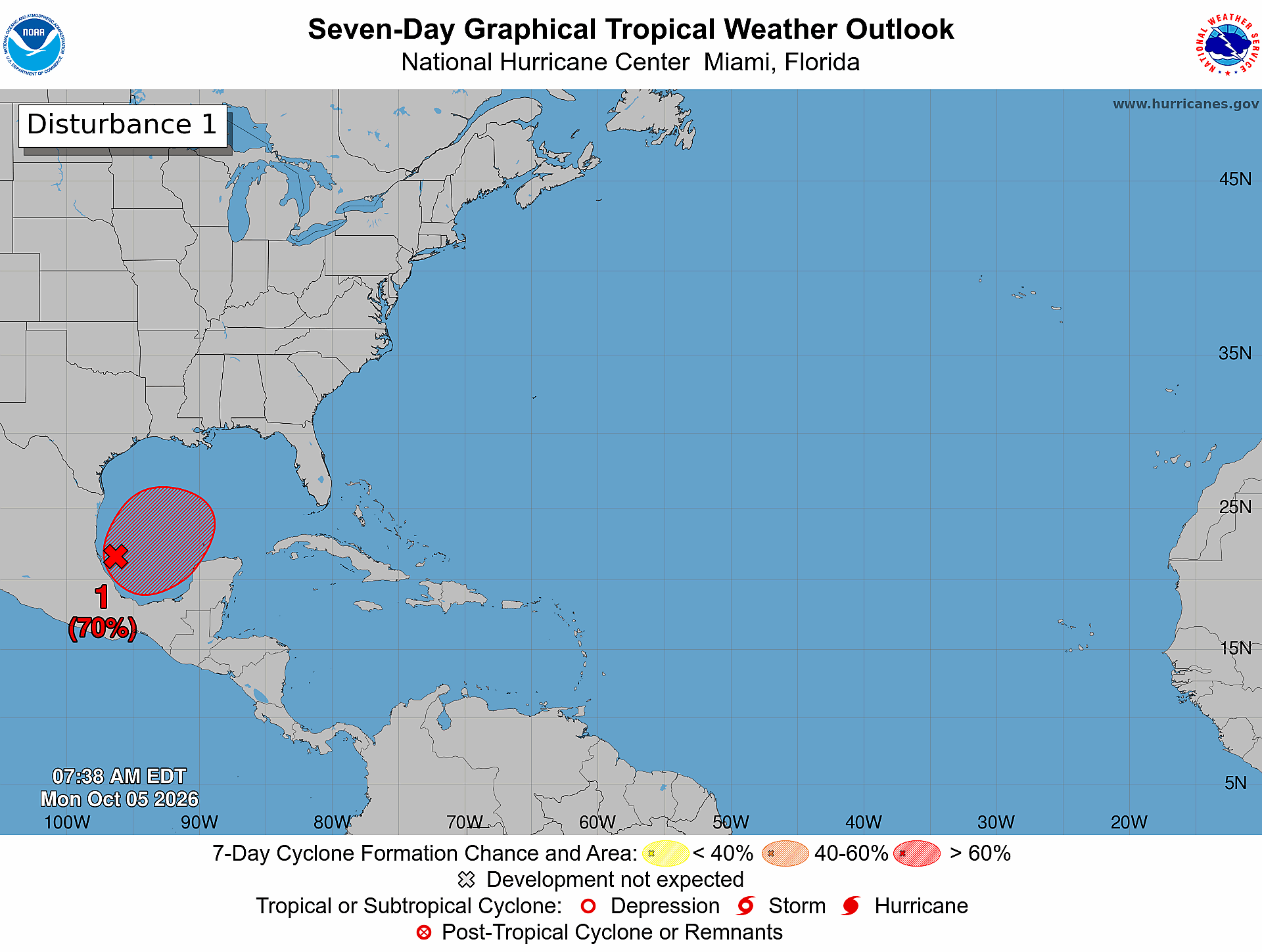
    As meteorologists continue tracking active weather patterns across the Atlantic basin, two separate atmospheric disturbances are currently under close observation, with each carrying a 50 percent probability of strengthening into a tropical cyclone over the coming seven days, according to official forecasting updates.

    The first disturbance, officially labeled AL95, is a disorganized low-pressure system positioned several hundred miles to the southeast of the North Atlantic island territory of Bermuda. Forecasters note that gradual further strengthening is possible for this system, with potential to develop into a short-lived tropical depression or named tropical storm within the next three to five days.

    Current projection models show the system tracking generally northward, eventually shifting to a north-northeastward course that will keep it well to the northeast of Bermuda throughout its lifecycle. The National Hurricane Center’s odds for cyclone formation hold steady at 50% for both the 48-hour and seven-day forecasting windows for AL95.

    The second disturbance in the basin is a tropical wave that is scheduled to exit the western coastline of Africa later on Monday. Forecasters predict that a distinct area of low pressure will likely form in association with this tropical wave early this week, as it moves out over the warm Atlantic waters.

    Climate and atmospheric conditions across the eastern Atlantic are forecast to be marginally favorable for slow development of this system, with the highest chance of tropical depression formation falling between the middle and end of the coming week. This second system is projected to maintain a generally westward track across the eastern and central tropical Atlantic, moving at a steady clip of 15 to 20 miles per hour. Its formation odds stand at just 10% over the next 48 hours, rising to a 50% chance over the full seven-day window.

    Local authorities and forecasters are urging residents of Antigua and Barbuda, as well as communities across the broader Caribbean region, to keep up with continuous official weather updates as both systems evolve over the coming days, to stay prepared for any potential shifts in track or strength.

  • Dominica strengthens efforts to build more climate-resilient agriculture

    Dominica strengthens efforts to build more climate-resilient agriculture

    Against a backdrop of growing climate uncertainty across small island developing states, Dominica has advanced its long-term goal of climate-resilient, eco-friendly agriculture through a cross-regional sustainability initiative supported by German development funding. The collaborative project, which brings together agricultural stakeholders from across Latin America and the Caribbean, centers on transforming on-the-ground soil and water management practices to help farming communities adapt to shifting climate patterns while cutting harmful environmental impacts from traditional agricultural activities.

    Leading implementation on the ground is Dominica’s Division of Agriculture, which has rolled out the Integrated Soil Conservation and Soil Fertility Improvement Demonstration Project, a targeted program built exclusively to meet the needs of local smallholder and commercial farmers. Unlike broad policy frameworks that lack practical application, this initiative prioritizes hands-on learning, connecting farmers directly with proven techniques to boost natural soil nutrient levels, slow or stop widespread soil erosion, and adopt production methods that align with long-term environmental protection goals. At its core, the project balances two critical priorities for the island nation: raising overall agricultural productivity to support food security and rural livelihoods, while protecting the long-term health and productive capacity of Dominica’s limited agricultural land assets.

    To cap off the project’s core technical phase, a team of agricultural specialists from Argentina’s National Institute of Agricultural Technology (INTA) conducted an official three-day working visit to Dominica from August 12 to 14, 2026. During their mission, the INTA experts delivered customized technical guidance to local agricultural extension officers and participating farmers, sharing evidence-based soil management approaches refined through decades of research and field testing across diverse South American agricultural landscapes. Their knowledge sharing focused on actionable strategies that can be adapted to Dominica’s unique tropical soil and climate conditions to maintain healthier, more productive farmland over time.

    As the final scheduled technical field mission under the regional initiative, the INTA visit marks a key milestone in Dominica’s broader efforts to build agricultural resilience to climate change and embed sustainable land management into mainstream farming practices across the island. Project organizers and local agricultural officials note that the techniques and strategies shared during the visit will provide a lasting foundation for ongoing scaling of sustainable agriculture across Dominica, supporting the nation’s goals of climate adaptation, environmental protection, and food security for years to come.

  • VES: Miljoenen voor het AZP, maar waar blijft de gezondheidswinst?

    VES: Miljoenen voor het AZP, maar waar blijft de gezondheidswinst?

    In a new analysis published this week in its quarterly magazine *INZICHT*, the Association of Economists of Suriname (VES) has raised critical governance questions about public healthcare investment, following the Simons administration’s latest large-scale funding commitment to the country’s flagship Academic Hospital Paramaribo (AZP). The government recently announced it would allocate more than 635 million Surinamese dollars (approximately $12 million) to the hospital, earmarked for major renovation works including the Thoracic & Cardio Coronary Care Unit, the hospital’s west wing, the emergency department, the clinical chemistry and microbiology laboratory, and the hospital mortuary.

    This new injection of funding comes just months after the government pledged a minimum of 60 million SRD during AZP’s 60th anniversary celebrations. That earlier commitment was dedicated to expanding operating capacity, increasing intensive care unit beds from 16 to 21, upgrading the neonatal intensive care unit, renovating emergency services, and expanding specialized nursing capacity. The latest funding continues a pattern of substantial public investment in AZP that stretches back to the previous Santokhi administration. Between 2022 and 2025, the government allocated significant budgets to renovate operating theaters, intensive care units, emergency departments and laboratories, purchase new medical equipment, and develop specialized care units including cardiology, pediatric oncology, and maternal and child care. International funding has supplemented national investment: $2.4 million for renovations and laboratory upgrades, 900,000 euros for a new cardiology unit, and 4.5 million euros for cancer radiation treatment equipment.

    As the country’s primary tertiary care provider, AZP handles an enormous volume of patients: it delivers 65% of all secondary care in Suriname and 100% of the nation’s highest-complexity tertiary care. On an average day, the hospital conducts 2,000 outpatient consultations, treats more than 100 patients in the emergency department, and has more than 500 admitted inpatients. While these volume figures demonstrate the massive scope of AZP’s services, VES argues they tell the public nothing about the actual quality of care delivered — the core issue at the center of ongoing public debate.

    The key gap VES identifies is a total lack of publicly available data connecting the hundreds of millions in public investment to measurable improvements in patient health outcomes. To date, there is no independent, comprehensive public evaluation that systematically links the large inflow of funding to tangible health results. Nor is there a public quality dashboard that tracks progress on standard, internationally recognized outcome indicators for each medical specialty. This creates a stark transparency asymmetry: the government and hospital are fully transparent about financial inputs — total investment amounts, renovation projects, new construction and equipment purchases — but offer no public insight into the social and health outcomes these inputs have produced.

    Without systematic public reporting of health outcomes, VES argues, parliament, civil society and funding partners cannot assess whether the large-scale investments have actually delivered measurable improvements in population health. For a leading academic medical center, VES outlines a minimum set of performance indicators that should be published regularly: volume of care by medical specialty, risk-adjusted mortality rates, complication rates, hospital-acquired infection rates, 30-day hospital readmission rates, waiting times, patient-reported outcome measures (PROMs), patient-reported experience measures (PREMs), cost per treatment, and international benchmarking against peer institutions.

    Since 2020, VES has consistently highlighted the need for greater transparency, efficiency and public accountability in Suriname’s healthcare sector. The association argues that for years, national health policy has overemphasized physical infrastructure and equipment investment without parallel structural reforms to healthcare organization and workforce policy. Financial injections without fundamental governance and operational reforms, VES claims, have created a vicious cycle of rising costs with insufficient improvements in care quality. To address this, VES has repeatedly called for an independent comprehensive financial audit of the entire healthcare sector, including the State Health Fund, all public and private hospitals, pharmaceutical supply chains, and other healthcare providers.

    VES supports a full systemic reform centered on integrated care pathways and specialized expert centers, which create end-to-end care chains — from prevention and diagnosis through treatment, aftercare and rehabilitation — organized around specific patient conditions. This model allows for more efficient allocation of resources, improves collaboration between care providers, and makes it easier to measure and compare clinical results. The approach aligns with global value-based healthcare principles, which center health gains for patients rather than the volume of services delivered.

    The core question for Suriname, VES emphasizes, is not whether AZP deserves additional public funding — it is whether successive governments have required sufficient public accountability for the social returns of these investments. To address the current transparency gap, VES proposes that all future public investments in healthcare be tied to three non-negotiable conditions: first, an independent comprehensive financial audit of the entire healthcare sector; second, a national reform program built around integrated care pathways and outcome-based funding; and third, an annual public quality and performance report that publishes internationally comparable indicators for clinical quality, patient safety, care accessibility and resource efficiency.

    Only when public investments are systematically tied to transparent quality and outcome indicators will Suriname shift to a healthcare system that is driven by patient value rather than service volume, the association concludes. This shift is the essence of good governance and the foundation of lasting, sustainable reform for Suriname’s healthcare system.

  • Electoral Office clarifies timing of claims and objections under new law

    Electoral Office clarifies timing of claims and objections under new law

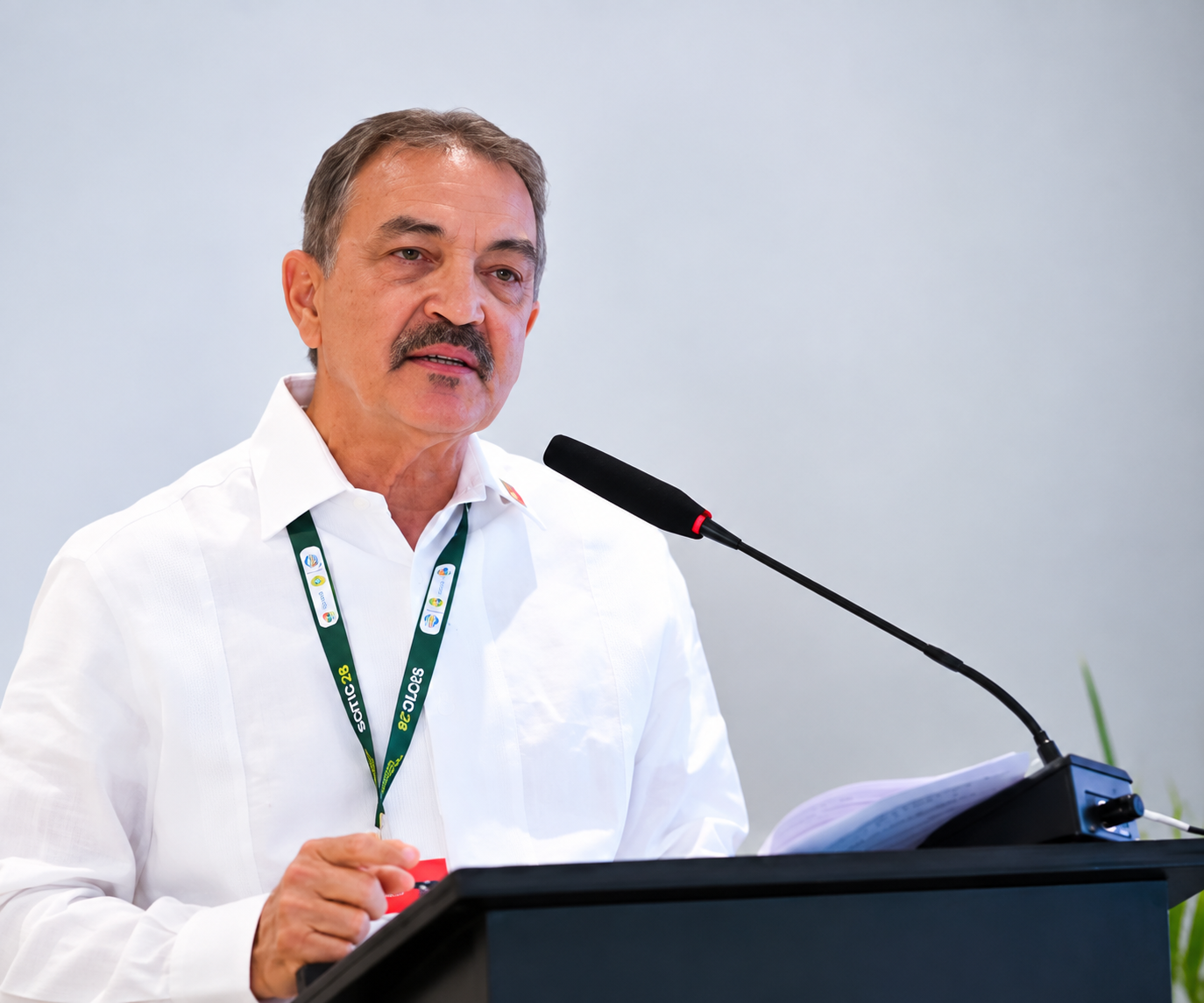
    As an upcoming election moves steadily closer, the top official of the national electoral body has stepped forward to clear up widespread confusion over the agency’s legal powers to address disputed voter claims and objections during the pre-election period. Speaking to assembled journalists at the Electoral Office’s headquarters on August 20, 2026, Chief Electoral Officer Anthea Joseph outlined the hard legal boundaries that limit her team’s work once an election is formally called. Joseph explained that under the newly enacted Registration of Electors Act 2025, specifically Section 24(2), the agency is barred from launching or conducting any investigations into claims or objections submitted after the official election writ is issued and before voting concludes on polling day. This legally mandated pause, she emphasized, is not a procedural oversight or a failure to act, but an explicit rule set by the nation’s legislature to streamline pre-election operations and avoid last-minute disruptions to voting preparations. Joseph confirmed that the restriction is temporary, and full investigative powers will be restored to the Electoral Office immediately after polling day. At that point, the agency will resume work on all outstanding claims and objections in line with its legislative mandate. The official clarification comes as the Electoral Office continues its incremental preparations for the upcoming vote, with all work being carried out strictly in adherence to the timelines and operational limits laid out in the nation’s electoral legislation. Joseph’s public statement was widely interpreted as a proactive move to pre-empt public criticism and misinformation about the office’s responsibilities in the final lead-up to the election.

  • Paul Quinn Back in Hospital After Health Setback, Family Says He Is Improving

    Paul Quinn Back in Hospital After Health Setback, Family Says He Is Improving

    One of Antigua and Barbuda’s most recognizable veteran broadcasters, Paul Quinn, is now showing encouraging signs of improvement after being readmitted to a medical facility this week, as he continues his long road to recovery following a devastating major stroke late last year.

    According to a statement released by Quinn’s family, the well-known media personality was transferred to the hospital on Thursday afternoon after clinicians detected three concerning health complications: abnormally low blood pressure, an irregular cardiac rhythm, and aspiration pneumonia. These new issues emerged just months after Quinn suffered the severe stroke that has kept him in recovery since November 10, 2024.

    In an update shared with the public Friday, Quinn’s relatives reported that the 78-year-old broadcaster has responded positively to the targeted medical interventions he has received since being readmitted. Calling on the wider community that has long supported Quinn throughout his career to continue standing with him during this challenging time, the family asked for continued prayers and well-wishes.

    “He is doing a lot better now. Please keep him in your prayers,” the family said in a brief, heartfelt statement to local media.

    Quinn has built a decades-long legacy in Antigua and Barbuda’s media landscape, most notably for his long tenure at Observer Radio. There, he co-hosted the station’s flagship and widely popular talk show “Voice of the People”, a program that became a staple of daily local discourse for thousands of listeners across the twin-island nation, giving a platform to ordinary citizens to share their concerns, opinions, and experiences.

    Since Quinn first suffered his severe stroke late last year, the outpouring of support for the veteran broadcaster has been widespread across Antigua and Barbuda. Former on-air colleagues, long-time listeners, community leaders, and other members of the public have all shared messages of support, hope, and solidarity with Quinn and his family as he works through his extended recovery process.

  • Nieuw gerechtsgebouw Nickerie wordt vandaag opgeleverd; zittingen vanaf oktober

    Nieuw gerechtsgebouw Nickerie wordt vandaag opgeleverd; zittingen vanaf oktober

    On August 24, Suriname marks a key milestone in its judicial infrastructure upgrade, with the official handover of a purpose-built new courthouse in Nieuw Nickerie, located along Mohamed Jasin Nasrullahstraat. The facility is scheduled to begin hosting full court sessions starting this October, bringing an end to decades of inadequate housing for the district’s judicial operations.

    Harish Monorath, Suriname’s Minister of Justice and Security, is set to lead the handover ceremony, capping off months of construction and final preparations for the project. Speaking to local outlet Starnieuws ahead of the event, Monorath confirmed that all core structural construction work on the building has been completed, meeting all required standards for official handover. A small set of final outfitting tasks remains to be finished before judicial staff can move into the space: these include paving the public parking lot and installing custom court furniture and security infrastructure across the facility.

    The new building replaces the district’s current courthouse, which Monorath noted is nothing more than a repurposed residential home ill-suited to formal judicial proceedings. Unlike the outdated converted space, the new facility is a purpose-built, modern justice center designed to support all types of court activities, from routine small claims hearings to high-profile criminal trials.

    This infrastructure upgrade aligns with a broader national push to expand judicial capacity across Suriname, aimed at reducing case backlogs and improving access to justice for all citizens. Vice President Gregory Rusland previously announced to the National Assembly that he signed official authorization documents on July 30 for the appointment of 15 new judges across the national judiciary. The remaining procedural steps — including the president’s formal appointment resolution, official swearing-in, and onboarding of the new judicial officers — are still pending, but preparatory work is already underway following the approval of the authorization missives.

    According to Rusland, national judicial leadership has already received formal notification of the authorization, allowing planning for the new judges’ deployment to move forward. Current projections expect the 15 new judicial officers to begin active service starting in October, matching the timeline for the opening of the new Nieuw Nickerie courthouse.

    For residents and legal practitioners in western Suriname, the combined upgrades are expected to deliver long-overdue improvements to local justice services. Beyond the obvious benefit of better, more dignified facilities for conducting hearings, the new courthouse and expanded judicial capacity will streamline court operations, reduce waiting times for case resolutions, and make judicial services more accessible to communities across Nickerie and the broader western region of the country.