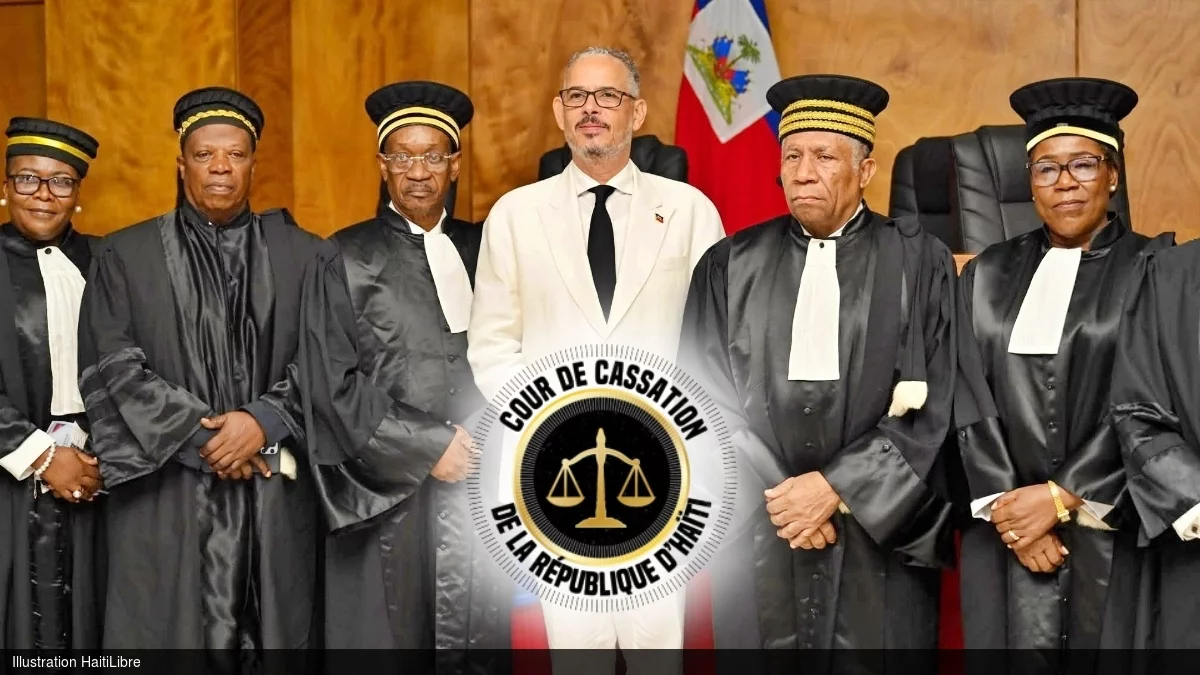
On October 5, 2026, Port-au-Prince played host to a landmark ceremonial opening of the 2026-2027 Haitian judicial year, held at the Court of Cassation located on the city’s iconic Champ-de-Mars. The event brought together a broad cross-section of Haiti’s legal and political leadership, including senior government officials, sitting magistrates, delegates from the Haitian National Police (PNH) and the Armed Forces of Haiti (FAd’H), as well as diplomatic and consular representatives from the international community. Prime Minister Alix Didier Fils-Aimé headlined the list of dignitaries in attendance.
In his opening address to the assembled guests, Jean Joseph Lebrun, who serves as both President of the Court of Cassation and head of the Superior Council of the Judiciary (CSPJ), delivered an annual performance review for the 2025-2026 judicial term. He outlined key operational metrics from the preceding year, noting that the Court of Cassation had issued 286 binding decisions, the nation’s five regional Courts of Appeal had handed down 249 rulings, and all Courts of First Instance (TPI) across the country had collectively processed more than 6,300 individual cases.
Prime Minister Fils-Aimé used his keynote remarks to center the 2026-2027 judicial year on two core priorities: systematic reform and operational efficiency. He stressed a foundational truth for Haiti’s ongoing efforts to stabilize its public institutions: “There is no lasting security without a strong justice system.” In his remarks, he reiterated the urgent need to build a judicial framework that is truly independent, accessible to all Haitian citizens, and fully committed to upholding and protecting the rights of the population.
The Prime Minister used the high-profile ceremony to announce a series of transformative changes set to reshape Haiti’s legal landscape. Most notably, he confirmed that a long-awaited new Penal Code and updated Code of Criminal Procedure will officially enter into force across the country on January 1, 2027. Fils-Aimé characterized the two updated legal texts as cornerstone reforms that will drive the long-overdue modernization of Haiti’s judicial system, bringing the country’s legal code into alignment with contemporary global standards.
In addition to the upcoming legal overhauls, the Prime Minister highlighted a series of immediate action steps already underway to address longstanding flaws in the current system. These include targeted interventions to tackle the crisis of prolonged pre-trial detention, which has plagued Haitian justice for decades. As part of these interventions, authorities have already secured the release of multiple unlawfully detained individuals in Jacmel and Port-au-Prince. Criminal assizes at the Port-au-Prince Court of First Instance have also resumed, marking the end of an eight-year suspension of regular criminal trials. Two new specialized judicial units have also begun operations in the capital, designed to streamline processing of high-priority cases and reduce systemic backlogs.