博客

  • CARICOM SG, Secretariat officials engage with honorary diplomats ahead of International Day for Women in Diplomacy

    CARICOM SG, Secretariat officials engage with honorary diplomats ahead of International Day for Women in Diplomacy

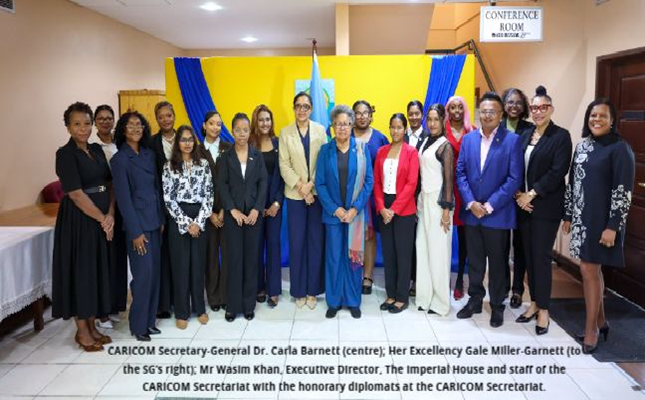
    Ahead of the 2026 International Day for Women in Diplomacy, Caribbean Community (CARICOM) Secretary-General Dr. Carla Barnett welcomed a cohort of 12 young women to the organization’s headquarters in Turkeyen, Greater Georgetown, Guyana on June 23 for a dedicated engagement session as part of the annual “Diplomat for a Day” initiative.

    Hosted locally by Guyana’s The Imperial House, the program is designed to open doors for young Guyanese women to gain hands-on insight into diplomatic work by giving them the chance to shadow heads of diplomatic missions. This year’s iteration drew participants aged 17 to 30 from across the country, including students from local secondary schools, the University of Guyana, and early-career professionals from Guyana’s public sector agencies. The initiative received backing from multiple regional and international diplomatic bodies, including the High Commission of Belize, the High Commission of the Republic of Trinidad and Tobago, the Embassy of Suriname, the Embassy of Mexico, and the Inter-American Institute for Cooperation on Agriculture.

    During their afternoon meeting with Dr. Barnett and other senior CARICOM officials, the young participants held open conversations about the role of women in diplomatic careers. The senior leaders shared personal anecdotes and lessons from their own professional trajectories, giving the emerging leaders a raw, firsthand look at life in multilateral diplomacy. Beyond the leadership discussion, the group also took part in specialized informational sessions tailored to their interests. Michele Small-Bartley, CARICOM’s Programme Manager for Youth Development, walked the participants through regional youth-focused opportunities, most notably the CARICOM Young Professionals Programme, which creates pathways for early-career professionals to work within the community’s institutions. Later, Gladys Young, Director of the CARICOM Single Market, led an interactive session breaking down the structure and goals of the CARICOM Single Market and Economy, helping the young diplomats understand the core economic integration work that anchors the community. The visit concluded with a guided educational tour of the CARICOM Secretariat campus to familiarize the group with the organization’s day-to-day operations.

    The young honorary diplomats were accompanied on the visit by Her Excellency Gale Miller-Garnett, High Commissioner of Belize to Guyana, and Wasim Khan, Executive Director of The Imperial House, which organizes the program.

    The International Day for Women in Diplomacy, marked annually on June 24, has a clear tie to Guyana’s own diplomatic leadership. The global observance was first established in 2022 during the 79th Session of the United Nations General Assembly, through a UN resolution co-sponsored by Guyana, creating a formal global recognition of women’s underrepresented contributions to international diplomacy and peacebuilding.
  • New CVQ pathway opens for PTFTC-TCL grads

    New CVQ pathway opens for PTFTC-TCL grads

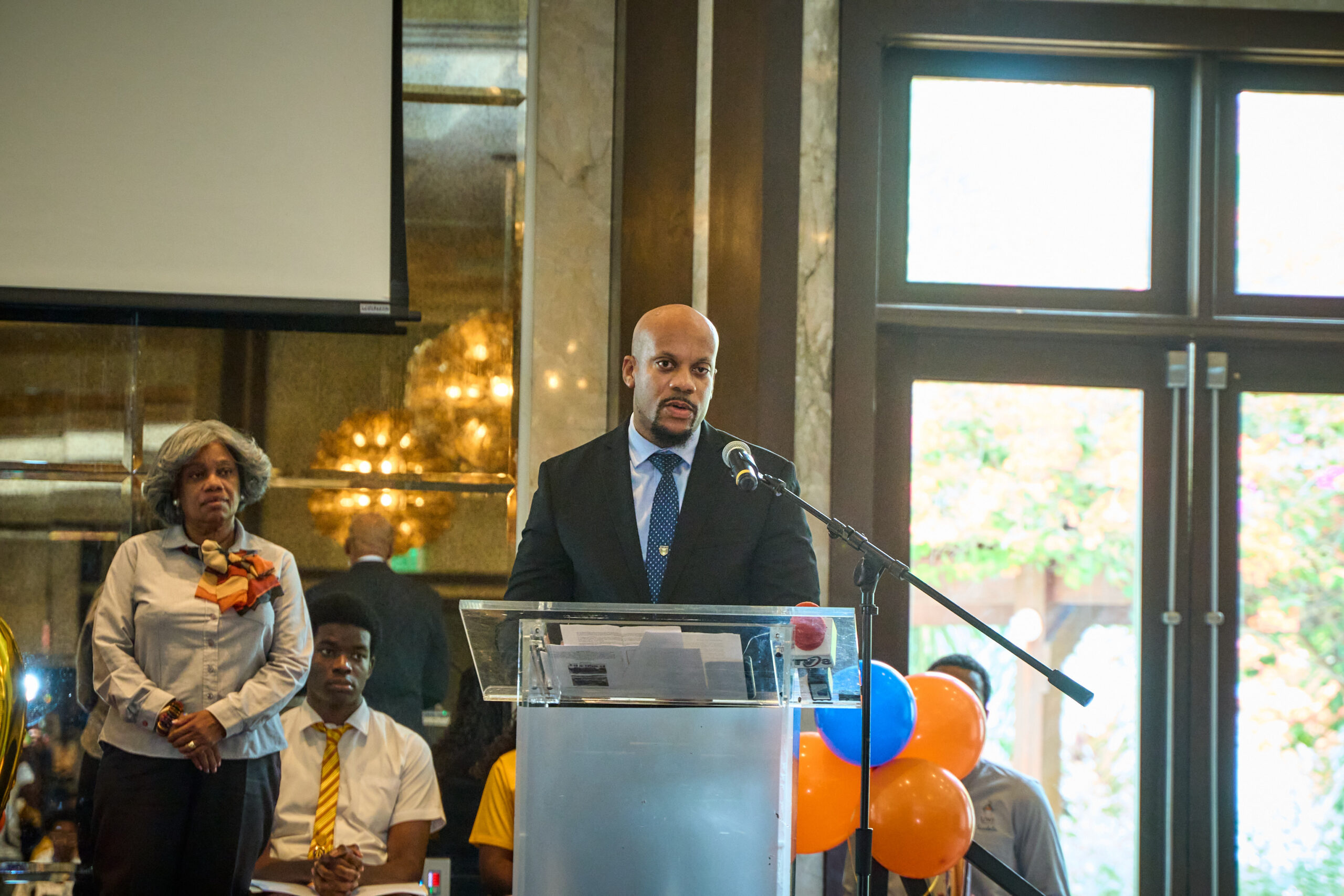
    Barbados’ Technical Vocational Education and Training (TVET) Council has announced a major upgrade to the long-running Preparing Today for Tomorrow’s Challenges, Transforming Children’s Lives (PTFTC-TCL) initiative, announcing that all new participants enrolling in the programme starting this September will earn formal certification recognized under Caribbean Vocational Qualification (CVQ) regional standards. The announcement was made by Akil Thompson, the TVET Council’s technical officer for programme development, during the programme’s 10th anniversary recognition ceremony held at Sandals Royal Barbados, where Thompson addressed more than 300 attending students.

    Prior to this policy shift, programme completers only received a general certificate of participation. Under the updated framework, all new enrollees will complete formal competency assessments aligned with both national and regional occupational and employability standards, in addition to building structured professional portfolios to document their learning, skill growth and ongoing professional development. Thompson emphasized that this alignment transforms the soft skills students gain in the programme — including personal branding, business etiquette and interpersonal communication — into a tangible, resume-ready credential that holds formal recognition across the Caribbean region.

    CVQs are standardized credentials validated by the CARICOM regional bloc, designed to confirm that candidates demonstrate the skills and knowledge required to meet established regional occupational standards. One of the key benefits of regional CVQ recognition is its role in facilitating the free movement of skilled labor across CARICOM member states. Thompson explained that workers holding a valid CVQ can cut through much of the bureaucratic red tape and regulatory barriers that often slow professional relocation when pursuing job opportunities in other Caribbean countries.

    The new certification falls under the TVET Council’s Core Skills qualification framework, which outlines six foundational competencies split into core and wider skill categories. The three core competencies include communication, application of numerical concepts, and information and communication technology (ICT) literacy. The three wider, transferable competencies are problem-solving, collaborative teamwork, and ongoing self-directed knowledge and skill development. Under the new framework, PTFTC-TCL participants will earn certification for specific competency levels: working with others at Levels 2 and 3, communication at Levels 1 and 2, and problem-solving at Levels 1 and 2.

    Thompson noted that while the TVET sector commonly labels these foundational competencies as “employability skills,” their value extends far beyond helping graduates secure jobs. “These are skills for life,” he stated, underlining that the updated programme will not only boost participants’ employment prospects but also equip them with long-term tools for personal and professional success across all areas of life. The TVET Council has collaborated closely with PTFTC-TCL programme coordinators throughout the upgrade process to bring the initiative in line with regional standards, marking a significant milestone in the programme’s 10-year history of transforming children’s and young people’s outcomes in Barbados.

  • Lucy’s Straw Hat: A mirror held up to our society

    Lucy’s Straw Hat: A mirror held up to our society

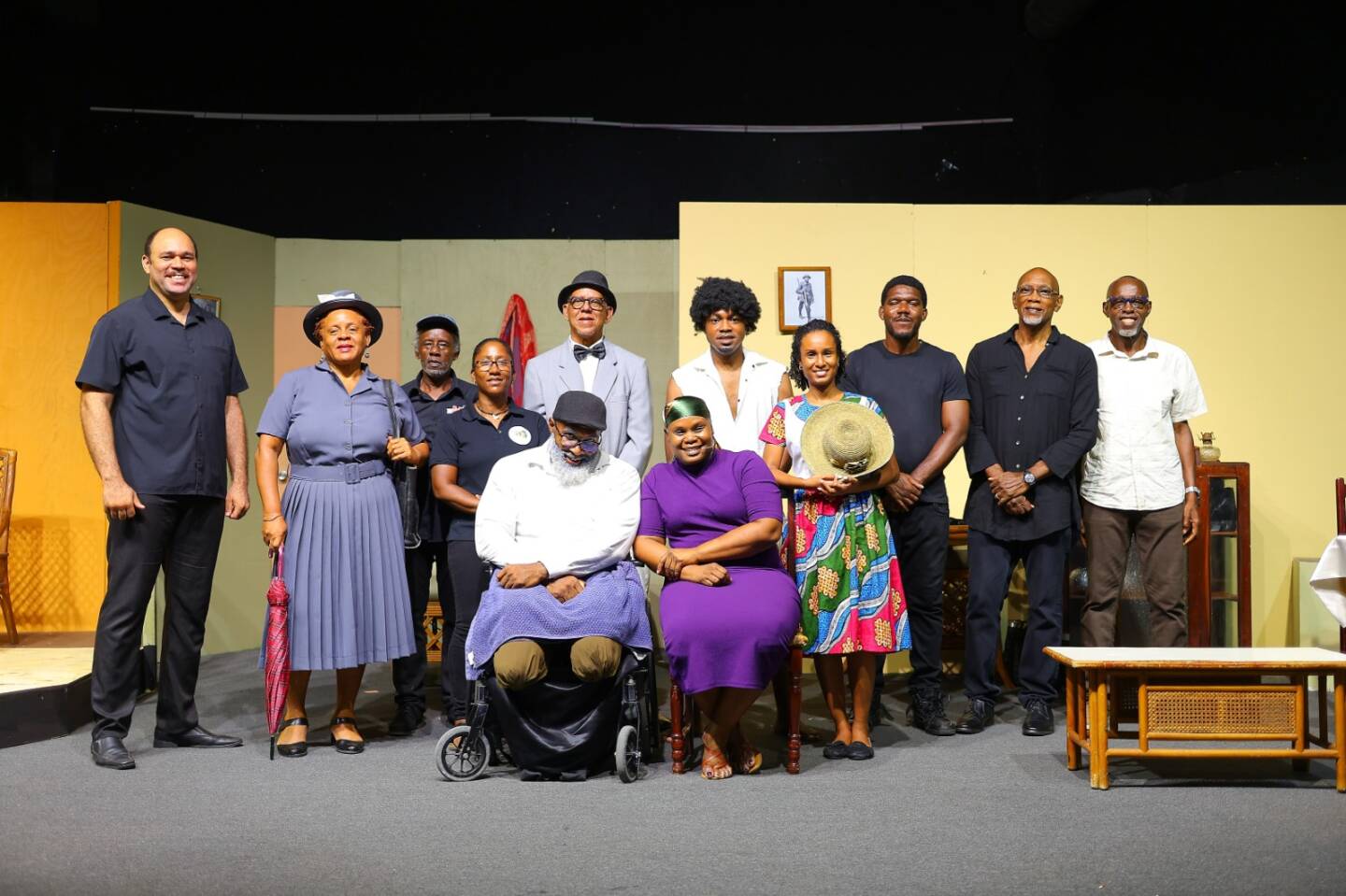
    When we talk about transformative theatrical work that does more than entertain, *Lucy’s Straw Hat* immediately rises to the top of the conversation. Far from being just a night of stage performance, this production from the Heritage Theatre Company acts as a piercing mirror held up to modern society, laying bare the full spectrum of human experience: our deepest flaws, raw grief, quiet resilience, and unshakable hope for what comes next.

    Penned and helmed by Chris DeRiggs, a veteran creative whose decades of work have long inspired contributor Adrian Harford (who is also DeRiggs’ nephew), *Lucy’s Straw Hat* carves out a unique place among the playwright’s already impressive body of work. Where many stage productions aim only to delight audiences for a couple of hours, this production reaches past the fourth wall, tugs at the soul, and invites viewers to sit with uncomfortable, unaddressed truths that are too often pushed to the side of public conversation. From the first table read, Harford notes, the emotional weight of the script was palpable – a rising tide that never recedes, even after the final curtain falls. DeRiggs’ storytelling pushes far past the limits of conventional narrative, delivering a work that lands with a deeply personal, resonant impact for every audience member.

    At the core of the story is the tragic final voyage of the MV Island Queen, a historical event that DeRiggs weaves into a sweeping exploration of interconnected human themes. As audiences follow the narrative, they are pushed to grapple with layered questions: What does family obligation really mean? Do we ever truly get a second chance to right our wrongs? What responsibility do governments and media outlets hold when disaster strikes? Beyond these public questions, the play digs into intimate themes too: the gap between what we say and what we mean, the meaning of enduring love, the consequences of cutting corners on safety, and the freedom that only forgiveness can unlock.

    What makes the production particularly immersive is its ability to turn the stage itself into a living, breathing character. The performance space transforms into a rolling ocean, carrying audiences through swells of grief, periods of quiet reflection, and moments of bright, enduring hope. Every scene unfolds with intentional softness that makes its ultimate impact hit harder, every line of dialogue lingers in the mind long after it is spoken, and every performance from the cast sparks conversations that will continue to develop among viewers long after they leave the theater.

    As a member of the Heritage Theatre Company himself, Harford extends gratitude to every person who contributed to bringing the production to life. He praises the cast for turning written dialogue into vivid, lasting memories; the backstage crew, the unsung architects who craft theatrical magic out of sight and out of mind; the front-of-house team, who greet every guest with warmth and hospitality; and the entire extended Heritage company family for their collective work to make the vision a reality.

    For Harford, Heritage Theatre Company is far more than just a group of artists putting on plays. It is a living, beating heart for cultural preservation, a steady lighthouse cutting through the fog of collective forgetfulness to guard important stories for future generations. The company’s work reminds us that culture is not a dusty relic to be locked away in an archive, but a living, warm flame that must be carried forward and passed from one generation to the next.

    In closing, Harford offers a hopeful wish for the production: that *Lucy’s Straw Hat* remains a timeless, impactful work forever etched into the collective memory of everyone who experiences it. He offers congratulations to his uncle Chris and the entire Heritage team, emphasizing that when the company takes the stage, forgotten history finds its voice again. Long live the work of Heritage Theatre Company, he writes – one love.

    *Disclaimer: NOW Grenada holds no responsibility for opinions, statements, and content shared by contributing writers. To report abusive content, please follow the official reporting channel on the site.*

  • Notities uit de behandelkamer: De regen kwam onverwacht

    Notities uit de behandelkamer: De regen kwam onverwacht

    The annual rainy season in Suriname is no unforeseen event. Every student learns about the country’s distinct seasonal patterns in school, the national Meteorological Service issues advance warnings, and even long-time residents mentally prepare for wet conditions months ahead. Yet year after year, when the heavy downpours arrive, the widespread chaos they trigger still catches communities off guard. As a healthcare worker working in a local clinic, these disruptions are visible from the very start of the rainy season. Patients cancel appointments or fail to show up entirely because their yards and homes are submerged under floodwater. Others arrive hours late after impassable roads forced them to abandon their vehicles halfway to the facility. Temporary parking lots turn into makeshift ponds, turning what should be a quick trip to the hospital into an unexpected, logistically challenging expedition. Even routine procedures such as blood draws become unnecessarily complicated. Access roads to off-site testing laboratories are frequently rendered unusable, and some collection sites face flooding themselves. What was supposed to be a standard check-up gets pushed back not out of patient negligence, but simply because reaching the care facility has become impossible. The impact of unmanaged flooding stretches far beyond the healthcare sector, however. Flooded homes leave residents with water-damaged furniture, destroyed electrical appliances, and the unplanned burden of cleaning and rebuilding. For households already struggling to make ends meet, these unexpected repair costs push budgets even further out of balance, leaving a costly bill the rainy season leaves behind that many cannot afford. Food prices for fresh vegetables and other staple groceries have also spiked in the wake of repeated flooding. For many Surinamese families, accessing affordable nutritious food was already a major challenge; seasonal flooding only makes that burden much heavier. On top of economic strains, flood conditions create ideal breeding grounds for a range of health hazards. Standing water is the perfect environment for mosquito breeding, driving up the risk of mosquito-borne diseases across affected communities. Floodwater also increases exposure to dangerous infections such as Weil’s disease, which spreads when people come into contact with water contaminated by rat urine. To add to the list of problems, the rising floodwaters drive unwanted wildlife — including rats, cockroaches, and even snakes — out of their natural habitats and into dry residential homes, turning living spaces into unexpected refuges for displaced wildlife. It is important to acknowledge that individual residents bear some responsibility for reducing flood risk. Improper disposal of waste in drainage trenches and canals is a common contributor to blockages, and unkempt residential yards can make flooding worse. A clogged drainage system can often trace its origin back to a single plastic bottle or plastic bag discarded carelessly. But individual responsibility is only one piece of the puzzle. Building and maintaining a flood-resilient Suriname is first and foremost a public responsibility. The government bears the core duty of ensuring routine maintenance of drainage canals, sewer systems, and other flood management infrastructure. This work should not wait until streets are already submerged; it needs to happen long before the first heavy rains of the season arrive. As the old saying goes, an ounce of prevention is worth a pound of cure — and this principle applies as much to public governance as it does to healthcare. As a physician, I would far rather prevent high blood pressure than treat the life-threatening complications that result from uncontrolled disease. I would rather manage diabetes early to prevent kidney failure than intervene after irreversible damage has been done. Prevention requires advance planning, consistent ongoing maintenance, and sometimes upfront investments whose benefits only become visible years down the line. Flood management works exactly the same way. A well-maintained, fully functional drainage system rarely makes headline news. But a flooded residential neighborhood does. This may be the core challenge we face. Too often, governments and communities only invest in infrastructure after a crisis has already developed and become visible to the public. But effective governance, just like effective healthcare, centers on stopping problems before they ever start. The rainy season was never unexpected. Only our preparation for it was.

  • TAG Building Men Session – July 05, 2026

    TAG Building Men Session – July 05, 2026

    A new community development initiative aimed at supporting young male growth has announced its upcoming session, open to adolescents and young adults across the region. Organized by the Turn Around Agenda (TAG) under its Building Men program, the event is scheduled to take place on Sunday, July 5, 2026, kicking off at 4:30 p.m. local time.

    The session, which targets young people between the ages of 11 and 21, will be hosted at Antioch Baptist Church, located within the Lime Kiln Commercial Development area. Organizers confirmed that all eligible young men within the target age range are welcome to attend the session, which is designed to foster personal development, skill-building, and community connection for participants. The official notice of the event was first published on Thursday, June 25, 2026 at 7:48 p.m., giving interested attendees and their families more than a week to plan for participation.

  • Jamaica Opposition Legislator Urges Special Minimum Wage for Tourism Workers

    Jamaica Opposition Legislator Urges Special Minimum Wage for Tourism Workers

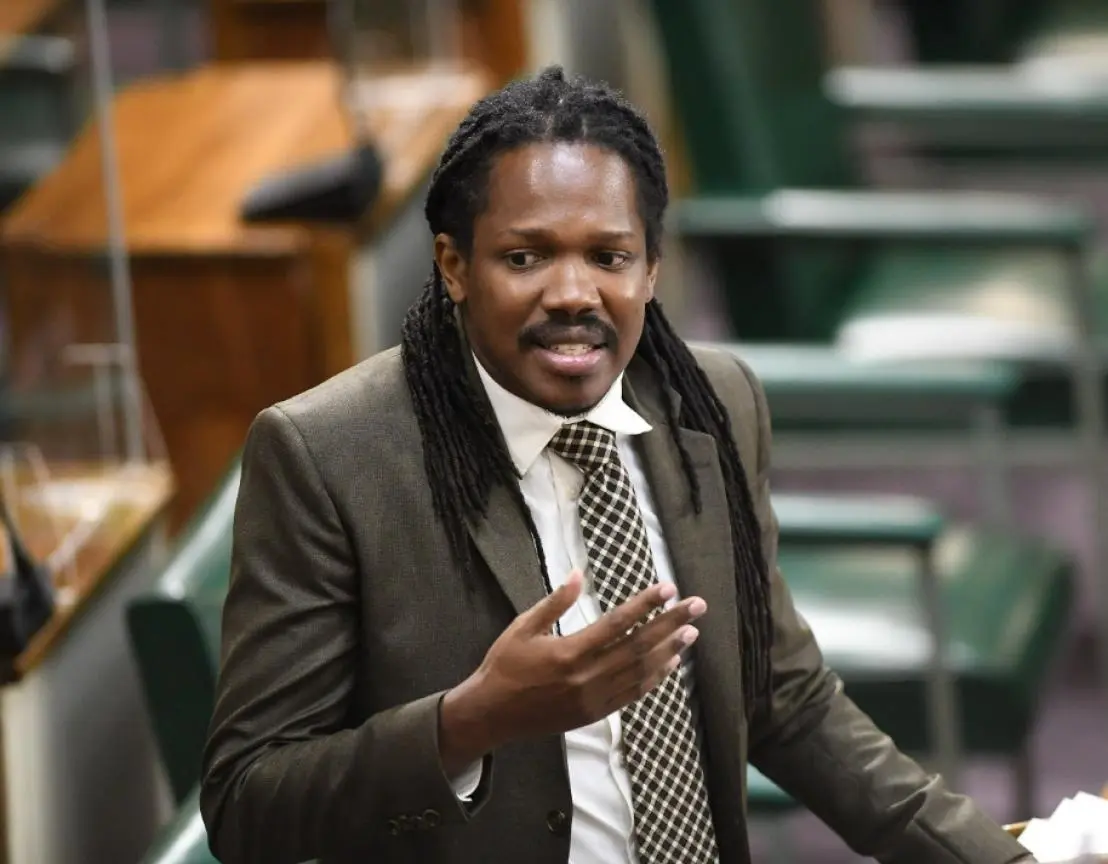
    During a Tuesday sitting of Jamaica’s parliament, opposition legislator Damion Crawford has called on the national government to carve out a separate, special minimum wage for workers in the country’s critical tourism sector, arguing that the unique demands and working conditions of the industry justify targeted policy action.

    Crawford framed the proposal as a core component of equitable national development, noting that tourism stands as one of Jamaica’s largest GDP contributors and foreign exchange earners. The call comes just after the country’s Lower House passed an order to raise the general national minimum wage by JMD $1,000, lifting the weekly 40-hour workweek rate from $16,000 to $17,000. This general increase is set to take effect on July 1, 2026, but Crawford says tourism workers deserve additional, tailored consideration that the general adjustment does not provide.

    In his address to parliament, Crawford outlined a series of distinct financial and professional burdens that fall disproportionately on tourism employees across the country. Unlike many general workers, tourism staff often face irregular, unpredictable shift schedules that regularly extend into late-night or early-morning hours—periods when commuting is not only higher risk, but also more costly, he explained. Additionally, most major tourism hubs across Jamaica carry significantly higher cost of living for local residents, a market reality that pushes up daily expenses for workers without any corresponding adjustment to their base pay.

    Beyond tangible financial burdens, Crawford also highlighted the largely uncompensated emotional labour that is a core requirement of most tourism roles, a factor he said is rarely accounted for in industry wage structures. “One of the number one reasons for burnout in the hotel sector is emotional labour,” he noted, explaining that workers are often required to maintain a constant friendly demeanor even when faced with customer disrespect, and must prioritize guest needs over their own basic needs like eating on schedule.

    This is not the first time wage disparities for Jamaican tourism workers have sparked public attention. Just two years ago, widespread industry protests erupted driven by anger over persistently low pay and widespread job insecurity across the hotel sector. At the time, one hotel maintenance worker interviewed by *The Jamaica Gleaner* reported earning an average of just $37,000 per fortnight, and joined other workers in calling for legislative changes to lift industry-wide remuneration standards.

  • Soca Power to Ignite Opening Night of St. Kitts Music Festival

    Soca Power to Ignite Opening Night of St. Kitts Music Festival

    BASSETERRE, St. Kitts – The Caribbean’s longest-running and most anticipated annual music celebration, the 28th St. Kitts Music Festival, officially launched its three-day run on the evening of June 25, 2026, with opening night dedicated entirely to the infectious, high-energy rhythms of soca music. A curated lineup of top-tier local, regional, and international soca talent is set to open the festival with the iconic vibrant “Jump Up” energy that has become a beloved tradition for the event’s opening night.

    This year’s opening night roster features some of the biggest global names in soca, headlined by Trinidad and Tobago’s international soca superstar Voice, and the legendary “King of Soca” Machel Montano. Sharing the stage with these globally recognized acts is St. Kitts’ own homegrown soca powerhouse Rucas H.E., who organizers and fans alike expect to deliver an electrifying, crowd-pleasing set that highlights the nation’s local musical talent.

    As one of the Caribbean’s most prestigious annual music events, festival organizers are projecting a strong, engaging opening to this year’s gathering. Beyond showcasing world-class soca music, the festival carries key economic value for St. Kitts, with tourism officials projecting it will drive a significant boost in visitor arrivals during what is typically a slower off-peak season for the local tourism industry.

    T’Vanna Wharton, Permanent Secretary of St. Kitts’ Ministry of Tourism, publicly praised the collaborative work of the Ministry of Tourism and St. Kitts Tourism Authority teams to pull off the world-class event. She emphasized that the festival serves as a powerful demonstration of the small island nation’s global ambitions, noting that despite the Federation’s small geographic size, its vision for cultural and tourism leadership is expansive. “The St. Kitts Music Festival tells the world that although we are a small nation, our vision is large. We can stand on the stage with the best in the world and hold our own. We can welcome guests from every corner of the globe and make them genuinely feel that there is nowhere else they would rather be,” Wharton stated in her remarks.

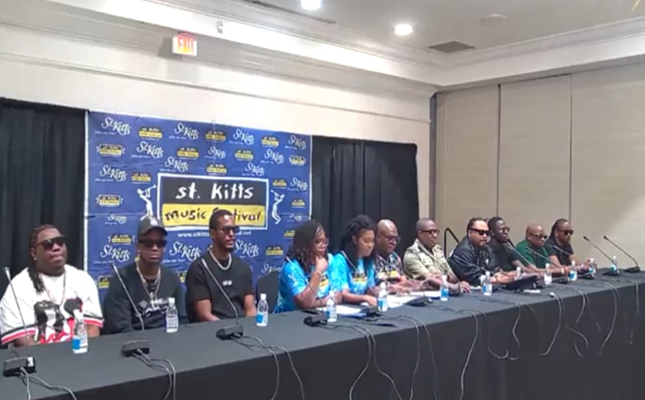
    During a pre-festival press conference held at the St. Kitts Marriott Resort, multiple headline artists shared their excitement about returning to the St. Kitts stage, promising attendees unforgettable, high-energy performances that honor soca’s vibrant cultural roots.

    To ensure a safe and enjoyable experience for all attendees, local law enforcement has outlined clear public safety protocols for the festival venue at Warner Park Cricket Stadium. Assistant Commissioner of Police Travis Rogers urged all patrons to leave all weapons—including legally licensed firearms—at home, clarifying that even license holders will not be allowed to bring weapons into the venue, and any prohibited firearms discovered at entry will be seized by authorities.

    Outlining other venue rules, Rogers shared that attendees will be permitted to bring a maximum of five pre-rolled cannabis joints into the stadium, in line with local recreational cannabis regulations. However, a number of items remain strictly prohibited, including flammable liquids, full-face masks, and air horns. “We just want a peaceful festival and ensure that everybody is safe,” Rogers explained of the security measures.

    The 2026 St. Kitts Music Festival will run through June 27 at the Warner Park Cricket Stadium, bringing three straight nights of world-class music to attendees from across the globe.

  • Policeman used teddy bear in killing of Cuban woman

    Policeman used teddy bear in killing of Cuban woman

    On Thursday, June 25, 2026, senior law enforcement investigators in Guyana confirmed that a serving Guyana Police Force constable has admitted to carrying out the premeditated killing of a 26-year-old Cuban national working in the country’s public health sector.

    Twenty-year-old Randy Thomas, the suspect in the case, laid out a detailed timeline of his actions to investigators, confirming the killing was planned in advance ahead of the fatal encounter. According to Thomas’s confession, he purchased rope from a local Chinese-run supermarket in his home village of Mahaica, located on Guyana’s East Coast Demerara, days before the planned meeting with the victim, Dailen Paneque Gómez.

    The pair arranged to meet on June 18, 2026, the same day Gómez disappeared while en route to her scheduled shift at the Mon Repos Health Centre. After meeting in the community of Enmore, the pair traveled together in Thomas’s personal vehicle to the remote Enmore Backdam area. Thomas told investigators that a casual discussion in the car quickly escalated into a heated argument, claiming Gómez became furious and attacked him before he killed her.

    In his confession, Thomas described the chilling details of the murder: he placed a teddy bear against Gómez’s head before firing an unlicensed firearm to kill her. After the shooting, he used the pre-purchased rope to bind her body, dragged the remains into a dense thicket of bushes in the backdam, and left the corpse hidden there. Following the murder, Thomas systematically disposed of all evidence linking him to the crime:

    He threw the murder weapon, an unregistered gun, into separate bushes near the backdam, discarded the teddy bear along the access road leading to the remote area, tossed Gómez’s mobile phone and the spent bullet casing over a bridge in the Unity community on East Coast Demerara, and returned to his Mahaica residence to clean every trace of evidence from his vehicle using hand sanitizer.

    Gómez was officially reported missing to authorities on June 19, one day after her disappearance. Following Thomas’s arrest and confession, he led law enforcement officers directly to the thicket where he had dumped her body, closing a key gap in the missing person investigation that quickly turned into a homicide probe.

    The case has sent shockwaves through Guyana, drawing attention to the safety of foreign healthcare workers serving in local public health facilities and raising questions about oversight of serving police personnel accused of violent crime.

  • Antigua’s Party Stand Culture Helped Transform World Cricket, Dehring Says

    Antigua’s Party Stand Culture Helped Transform World Cricket, Dehring Says

    The landscape of international cricket has been deeply shaped by a singular cultural tradition hailing from the Caribbean island of Antigua, according to leading cricket industry figure Chris Dehring. In a recent reflection on the evolution of modern cricket, Dehring, a veteran administrator who has played a key role in shaping major global cricket events, highlighted the outsized impact of Antigua’s famous Party Stand culture, a fan-driven phenomenon that redefined how audiences engage with the sport.

    Unlike traditional cricket viewing areas that prioritized quiet, orderly spectating, the Party Stand at Antigua’s iconic Sir Vivian Richards Stadium (and its predecessor, the old Antigua Recreation Ground) emerged as a raucous, inclusive space where fans blended celebration, music, and unbridled passion for cricket. Attendees would arrive armed with steel drums, colorful flags, and infectious energy, turning every match into a collective Caribbean-style festival that transcended the sport itself. What started as a local fan tradition quickly caught the attention of global cricket audiences and administrators, spreading a new model of fan engagement across the international circuit.

    Dehring emphasized that this cultural innovation pushed cricket’s governing bodies to rethink how they structure matchday experiences for fans worldwide. Before the rise of the Party Stand, top-level cricket was often seen as a formal, reserved sport, particularly in traditional cricketing nations. Antigua’s approach proved that creating space for joyful, participatory fan culture could boost viewership, attract younger audiences, and make the sport more accessible to casual fans beyond its core base.

    “This wasn’t just a party – it was a transformation of what cricket could be,” Dehring noted in his comments. “Antigua’s fans showed the world that cricket doesn’t have to be stuffy to be world-class. They brought a vitality and warmth that made the sport feel more human, more connected to the communities that love it.”

    The ripple effects of Antigua’s Party Stand culture can be seen today in fan zones, music innings breaks, and interactive fan experiences at major cricket events from the ICC Cricket World Cup to the Indian Premier League. What began as a local Caribbean tradition has become a core part of modern global cricket’s identity, proving that small regional cultural innovations can drive lasting change on the international stage.

  • Hot New Luxury Estate Hits the Market at Jumby Bay Island

    Hot New Luxury Estate Hits the Market at Jumby Bay Island

    A new ultra-luxury private estate has hit the high-end travel market, bringing an unparalleled level of opulence to the exclusive Jumby Bay resort destination. Named Coco Beach, the sprawling nine-bedroom property spans five sprawling acres of prime coastal land, boasting an unbeatable 200 feet of secluded private beachfront that offers guests total privacy and unobstructed access to the ocean.

    The estate is packed with world-class leisure and lifestyle amenities designed to meet the demands of discerning high-net-worth travelers. A 75-foot infinity pool overlooks sweeping panoramic ocean views, while dedicated on-site courts for both padel and tennis provide active recreation options without ever leaving the property. A fully equipped private wellness center caters to guests looking to maintain their fitness and relaxation routines, and a standalone cottage converted into a private cinema offers intimate entertainment for groups.

    With enough space to comfortably host up to 20 guests, the estate is tailored for large family vacations, exclusive group retreats, or high-end private events. To ensure a seamless five-star experience, a full team of dedicated professional staff is permanently based on the property, including private chefs that craft custom menus, experienced butlers to attend to every guest request, and full-time housekeepers to maintain the immaculate space.

    Beyond the estate’s own extensive offerings, guests also receive full access to all shared amenities across Jumby Bay, including the resort’s award-winning restaurants, a full range of guided ocean water sports activities, and additional wellness facilities.

    Coco Beach is now open for reservations, with weekly rental rates starting at $32,000. The final pricing adjusts based on travel season and current booking availability, matching seasonal demand fluctuations common in luxury resort markets.