博客

  • Government advances Passenger Information and Passenger Name Record Bill, 2026

    Government advances Passenger Information and Passenger Name Record Bill, 2026

    According to Grenada’s Ministry of Legal Affairs, the 2026 Advance Passenger Information and Passenger Name Record Bill marks a critical milestone for the country, strengthening border management protocols, expanding national security capabilities, deepening regional security cooperation, and ensuring that all passenger personal data is handled in line with globally recognized data protection principles and international best practices.

  • Harris Paints Makes History with Launch of Quantum Dry™

    Harris Paints Makes History with Launch of Quantum Dry™

    A Caribbean-based paint manufacturer has made a landmark breakthrough in the global coatings industry, launching what experts are calling the world’s first single-base dry tinting system for decorative paint that promises to raise the bar for colour accuracy, operational efficiency and environmental sustainability.

    Harris Paints, headquartered in Barbados, pulled back the curtain on its new Quantum Dry system at a launch event held this week at the company’s corporate office. The launch comes four years after the firm first revolutionized regional and global paint production with its pioneering Quantum i12 single-base colour system, a Caribbean-born innovation that redefined colour consistency for the industry.

    The original Quantum i12 platform, which has been widely adopted by paint retailers across Antigua, was the first industry system to use a single base formula to produce cleaner, more vivid and reliably consistent colours than traditional multi-base alternatives. The success of that initial innovation led Harris Paints to spin its Quantum technology portfolio into a dedicated subsidiary, The Quantum Corporation, which has since expanded the platform with a proprietary artificial intelligence-powered colour matching tool and now licenses its technology to paint manufacturers across the globe. Today, paints produced using Caribbean-originated Quantum technology are sold as far as Italy and Bangladesh, with new market expansions planned in the coming year.

    Quantum Dry, the latest iteration of the company’s single-base platform, leverages specialized solid pigment pearls developed by Vibrantz Technologies, a global leader in advanced materials and colour solutions, to tint single-base paint. This marks a sharp break from traditional made-to-order architectural paints, which rely on liquid colourants for tinting. According to Quantum Corporation leadership, the new dry pearl system delivers meaningful upgrades to three core pillars of paint production: colour accuracy, batch-to-batch repeatability, and environmental sustainability.

    “The beauty of dry tinting lies in its fundamental simplicity,” said Angelo Vincenzi, co-CEO of The Quantum Corporation. “Precision control of liquid colourants to guarantee consistent performance requires a huge array of complex technical workarounds. Vibrantz has engineered a unique process that encapsulates pure, water-free pigment into a solid dry pearl. This makes the entire Quantum Dry system cleaner, simpler, and far more resilient to operational variables, and we see enormous untapped potential for this technology across the global industry.”

    Dry pigment pearl tinting has grown in popularity across the global paint sector in recent years, particularly in European markets where environmental regulatory standards have grown increasingly strict. Until this launch, however, dry pigment technology was only available for traditional multi-base tint systems, and had not been adapted for the streamlined single-base approach that Quantum pioneered.

    “Dry tinting is widely recognized as one of the most important forward-looking directions for the entire paint industry,” added Antonio Vasconcellos, the other co-CEO of The Quantum Corporation. “Quantum Dry represents a fundamentally more sustainable approach to tinting paint. By cutting down on unnecessary additives, rolling out more easily recyclable packaging, and shrinking the overall carbon footprint of the tinting process, the system dramatically reduces environmental impact without any compromise to paint or colour performance. In fact, the specialized dispensing process for the dry pearls actually delivers more accurate and repeatable colour results than traditional liquid tinting, building on the already unique advantage of our Quantum i12 single-base framework.”

    Don Gooding, Colour Delivery Manager for the Harris Paints Group, emphasized the tangible operational benefits that the original Quantum i12 system has already delivered to regional paint retailers, noting that the new dry technology will build on those gains. “Quantum i12 was a true game-changer for our business. It allowed us to offer retailers across the Caribbean major operational advantages and huge efficiency gains, from lower inventory and storage requirements to simpler stock management, all while maintaining exceptional colour performance standards,” Gooding explained. “It streamlined and simplified the entire colour production process, and it’s delivering better results than ever for colour consistency and colour matching. We are incredibly proud to be the first paint supplier in the world to partner with Quantum and Vibrantz to bring this new dry technology to single-base tint systems, and we are eager to refine its integration across our operations as we scale.”

    Harris Paints will first roll out the new Quantum Dry tinting system in its most eco-conscious product line: Ulttima Pure Zero VOC Interior Flat Emulsion, which will be the first commercial product available with the new tint technology. Initially, the system will only be available at the company’s Wildey retail location in Barbados, as the team executes a deliberate phased rollout plan to ensure long-term performance, colour consistency, and scalable production.

    “This launch is not just another new product rollout for us—it’s a historic first step, and it reinforces Harris Paints’ track record of bringing first-to-market innovation to the global paint industry,” Gooding noted. “This innovation also highlights how Quantum technology has allowed Harris to expand its global footprint dramatically. With Quantum Dry, we aren’t just launching a new colour system—we’re helping shape the future of sustainable paint technology for the entire world.”

  • OP-ED: In an uncertain global trading order, is the WTO still relevant to the Caribbean?

    OP-ED: In an uncertain global trading order, is the WTO still relevant to the Caribbean?

    In the wake of the WTO’s 14th Ministerial Conference (MC14) held in Yaoundé, Cameroon this past March, critics have lined up to label the gathering a failure, a broken effort, and a total flop. Against a backdrop of roiling global trade tensions – from Washington’s controversial “reciprocal tariffs” that have upended market predictability to oil price shocks stemming from the ongoing conflict in Iran and disruptions to shipping through the Strait of Hormuz – questions about the very relevance of the World Trade Organization have reemerged with new urgency. But in a June 2026 analysis from the Shridath Ramphal Centre (SRC) Trading Thoughts series, trade expert Alicia Nicholls makes the case that even with its well-documented flaws, the rules-based multilateral trading system overseen by the WTO remains an irreplaceable lifeline for small developing economies, particularly those across the Caribbean.

    For most people across the Caribbean, even many in the private sector, WTO negotiations based in Geneva have long felt like an abstract, distant process. Many in the region associate the organization only with past disappointments: the decades-long EC Bananas dispute that ended preferential European Union market access for African, Caribbean and Pacific (ACP) commodity exporters, and Antigua and Barbuda’s high-profile victory over the United States in an online gambling dispute that Washington has largely refused to implement. It is no surprise that these experiences left a bitter legacy for many stakeholders in the region.

    Still, it is easy to overlook the quiet, consistent value the WTO has delivered for global trade over the past three decades. Built on the foundation of the earlier General Agreement on Tariffs and Trade (GATT), the WTO’s negotiated rules have sustained a relatively predictable, smooth trading framework that has benefited countries of all sizes for decades. These common rules make cross-border access to imported goods and services simpler for consumers and businesses, and guarantee exporting producers a baseline set of fair market access conditions when selling abroad. For decades, the WTO’s dispute settlement system also provided a widely respected neutral forum for resolving trade conflicts without resorting to unilateral power plays.

    MC14’s lack of substantive progress, however, lays bare just how much accumulated strain the 31-year-old multilateral institution is currently grappling with. As the WTO’s highest decision-making body, the Ministerial Conference, convened every two years, brings together trade ministers and senior delegates from all member states to forge agreements on core multilateral trade priorities. This year, the only outcomes adopted in Cameroon were minor procedural decisions that had already been finalized during pre-conference negotiations in Geneva, leaving major policy initiatives deadlocked.

    Conference leaders highlighted three modest takeaways from the week of talks. First, members reaffirmed the long-running Doha Development Agenda mandate to support better integration of small economies into global trade, approving a new mandate for the WTO Secretariat to conduct factual analysis of barriers facing small economies. This research could lay the groundwork for more inclusive policies to help these countries tap into global trade flows down the line.

    Second, members agreed to move forward with operationalizing long-standing special and differential treatment (S&DT) provisions embedded in the Agreement on Sanitary and Phytosanitary Measures (SPS) and the Technical Barriers to Trade (TBT) Agreement. These provisions are designed to give developing countries extra time and policy flexibility to build domestic capacity to meet food safety and product standards, but they have long been criticized as overly broad and vague, making them effectively unenforceable in practice. How this operationalization will actually be carried out remains to be seen.

    Third, ministers agreed to continue negotiations on the second phase of fisheries subsidies disciplines (known as Fish II), which aim to curb subsidies that drive overcapacity and overfishing. The core WTO Fisheries Subsidies Agreement was finalized at MC12 and entered into force in September 2025, but additional rules targeting harmful subsidies remain to be negotiated. For small island developing states (SIDS) like those across the Caribbean, fisheries are a critical pillar of both livelihoods and national food security. While the renewed commitment to continuing talks is a welcome procedural step, meaningful progress will require negotiating strong rules that rein in harmful subsidies from large economies while protecting the policy space small vulnerable economies need to support their domestic fishing sectors.

    Beyond these modest outcomes, all of the most critical, high-stakes issues facing the WTO remained unresolved when delegates left Yaoundé. A decades-long moratorium on imposing customs duties on electronic transmissions, which has been in place and regularly renewed since 1998, expired after members failed to reach consensus on extending it. The lapse opens the door for WTO members to impose new tariffs on digital products including e-books, streaming films and music. The broader WTO Work Programme on E-commerce, which was tied to the moratorium’s renewal, was also sidelined as a result.

    Another long-running problem remains unsolved: the ongoing paralysis of the WTO Appellate Body, the institution’s highest trade dispute appeals body, which has been crippled for years by Washington’s repeated refusal to approve new judge appointments. Without a fully functioning dispute settlement system, the vacuum created by inaction is increasingly filled by power-based unilateralism. A small group of member states including Barbados have launched an interim workaround called the Multi-Party Interim Appeal Arbitration Arrangement (MPIA), but this arrangement remains only a temporary stopgap, not a permanent solution.

    The conference also failed to reach agreement on a proposed package of measures to support Least Developed Countries (LDCs) integrate into the global economy – a matter of direct importance to the Caribbean Community (CARICOM), which counts Haiti as an LDC member. For the first time since it was instituted in 2001, the moratorium on non-violation and situation complaints under the Trade-Related Aspects of Intellectual Property (TRIPS) Agreement, which protected developing country policy space around intellectual property regulation, also lapsed. Additionally, the Investment Facilitation for Development Agreement, which six CARICOM states have participated in negotiating, was once again blocked from being formally adopted into the WTO’s legal framework.

    Despite these glaring shortcomings from MC14, Nicholls argues that it would be a mistake to write off the WTO entirely, particularly from the perspective of small Caribbean states. The WTO is far from perfect, but it still offers far more protection for small economies than the alternative: a global trading system ordered purely by raw power, where large nations can set the terms to benefit their own interests. Crucially, the WTO is the only major multilateral economic rule-making forum where small states hold formal equal status alongside the world’s largest economies. Beyond negotiating and enforcing trade rules, it also serves as a unique convening platform for member states to address cross-cutting trade-linked challenges from climate change to public health – a role it fulfilled during the COVID-19 pandemic, when it provided a space for countries to coordinate on trade-related pandemic response measures. This core value is why the SRC continues to bring its Masters in Trade Policy students to Geneva every year to study the WTO’s operations firsthand.

    MC14’s underwhelming outcome has undoubtedly eroded further confidence in the WTO’s negotiating capacity, but Nicholls notes that disappointing ministerial outcomes are not unprecedented for the institution. When members can summon the necessary political will to compromise, progress is still possible. Even the most vocal critics of the WTO continued to participate in MC14, and the growing queue of small jurisdictions seeking WTO accession – including Curaçao, which is currently in the process of joining – demonstrates that the organization is still viewed as a valuable institution to be part of, even for the smallest economies.

    Looking ahead, as Caribbean states continue to engage with the WTO and support efforts to reform the multilateral trading system, Nicholls outlines four key recommendations for the region to protect its interests. First, regional leaders must guard against “wolf in sheep’s clothing” reform proposals that would erode core protections for small economies. Any WTO reform must not weaken core guarantees including most favoured nation (MFN) treatment, the legally embedded right to special and differential treatment, and consensus-based decision-making, which gives small states a voice in outcomes. It is also critical that Caribbean states continue to prioritize issues of regional interest including agriculture reform, fisheries subsidies, digital trade, food security, and trade-linked climate action in all reform discussions.

    Second, the region must sustain coordinated cooperation through the CARICOM Ambassadors’ Caucus based in Geneva, and continue building cross-group coalitions with the ACP group, the G90, the group of Small Vulnerable Economies, and other like-minded negotiating blocs within the WTO to amplify the region’s voice.

    Third, there is an urgent need for greater transparency around the negotiating positions Caribbean states take in WTO talks. The ultimate goal of participating in the multilateral trading system is to deliver benefits for domestic businesses and improve living standards for the region’s people. If other WTO members publish public explanations of their negotiating priorities, Caribbean citizens, businesses and researchers deserve equal access to information about what their delegations are advocating for on their behalf.

    Finally, the region should increasingly leverage the domestic analytical capacity that already exists within the Caribbean. The University of the West Indies, and specifically the Shridath Ramphal Centre, is well positioned to provide CARICOM delegations with evidence-based, independent analysis on emerging trade issues to support regional negotiating positions.

    In conclusion, the question of whether the WTO still matters to the Caribbean in today’s fractured global trading order has a clear answer: yes. The WTO and the broader multilateral trading system are under unprecedented strain, but they are far from dead. For Caribbean states, the path forward is to continue deliberate engagement to push for meaningful reforms that make the system work better, while protecting the core rules and principles that already give small economies a critical measure of protection. The alternative to a rules-based order is a power-based system where small states would have even less voice, less leverage, and far fewer safeguards to ensure that trade delivers shared benefits for their people. For small states, an imperfect rules-based system is still far better than no rules-based system at all.

    Alicia Nicholls, B.Sc., M.Sc., LL.B., is Junior Research Fellow at The Shridath Ramphal Centre for International Trade Law, Policy and Services at The University of the West Indies, Cave Hill.

  • Facebook and IG are currently down for millions of users

    Facebook and IG are currently down for millions of users

    Thousands of Meta platform users across the globe have reported sudden, unexpected access disruptions, with many saying they were automatically logged out of their personal and professional accounts without warning. Other users have shared that they encountered persistent error codes when trying to load feed pages, send messages, or use core platform features, leaving them unable to connect with contacts or access their stored content.

    Independent technology analysts who reviewed the widespread user reports have clarified that outages of this nature are most often temporary service disruptions, rather than permanent account issues or security breaches. To resolve the access problems for individual users, experts suggest a range of quick at-home fixes: reloading the affected web page, fully closing and restarting the Meta mobile application, clearing the browser or app’s cached data, or simply waiting for Meta’s engineering team to restore full service on the backend.

    As of the time this report was published, Meta has not issued any official public statement addressing the outage, nor has the company shared details on what caused the disruption, how many users were affected, or an estimated timeline for full service restoration.

  • BIMAP to launch hands-on workplace safety training

    BIMAP to launch hands-on workplace safety training

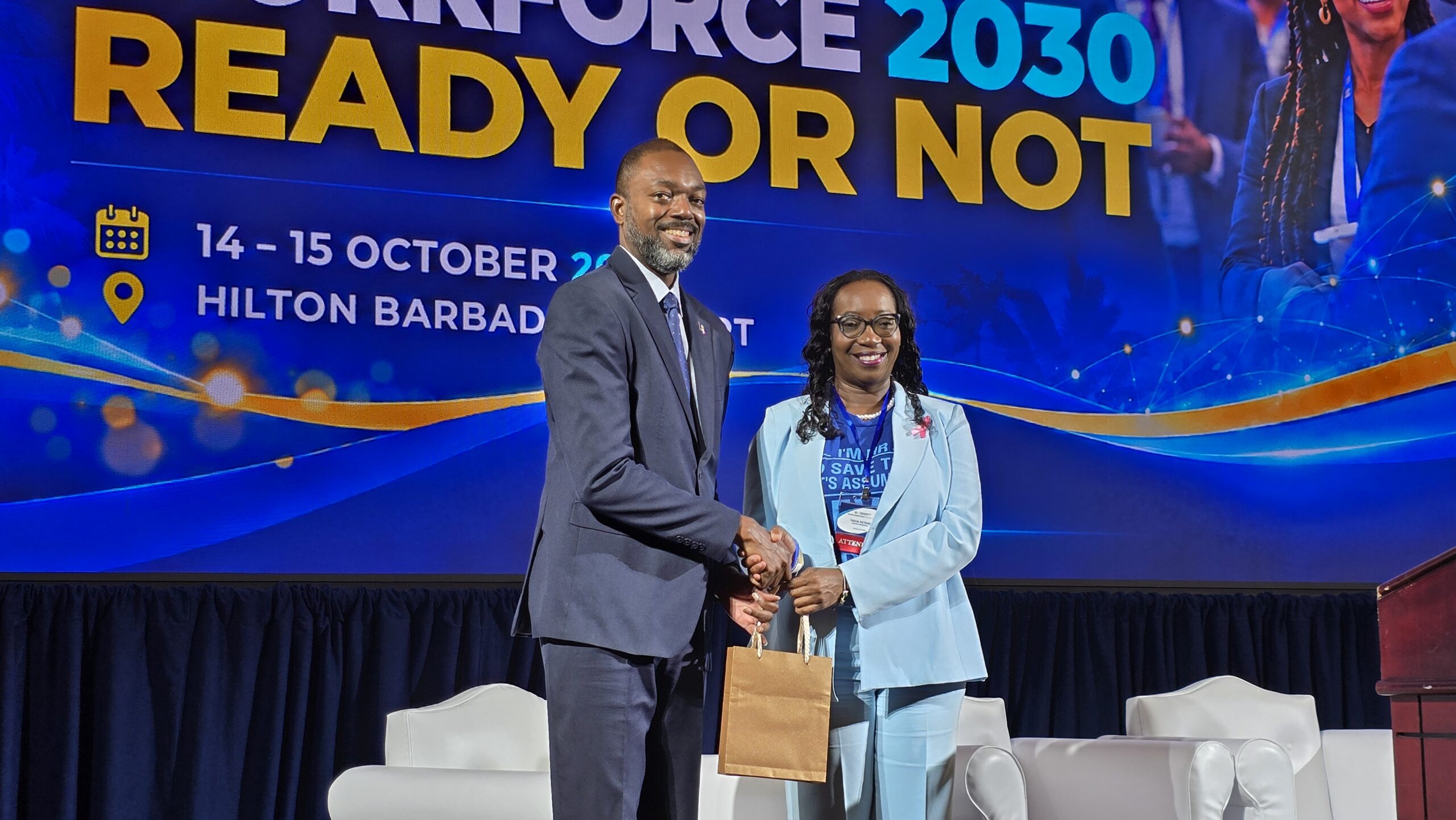
    Starting this September, Barbadian workers across multiple industries will gain access to new specialized hands-on training focused on hazardous waste management and industrial workplace safety, launched through a multi-party partnership between the island nation’s National Transformation Initiative (NTI), the Barbados Institute of Management and Productivity (BIMAP), and global U.S.-based online learning platform Coursera. The collaboration was formalized Thursday during an official agreement signing that marked a key step forward for the country’s efforts to upgrade workplace safety standards.

    BIMAP Executive Trustee Andrea Burgess outlined the unique structure of the upcoming programme in comments following the signing, noting that certified expert facilitators and purpose-built safety equipment will be brought in from Canada to support in-person instruction. Unlike generic safety training, this curriculum is designed to build proactive, preventive skills to help workers respond to on-site emergencies involving hazardous materials, with the end goal of creating safer work environments that reduce preventable accidents and harm.

    Burgess explained that the new initiative builds on a 2021 online-only safety training pilot BIMAP previously ran. This updated iteration combines flexible online foundational learning from aligned Coursera courses with intensive, in-person practical skill-building that was missing from the earlier remote programme. The hands-on component, led by BIMAP’s trained team, will allow workers to practice using safety and hazardous waste treatment equipment directly, rather than only learning through theoretical online modules.

    Addressing ongoing public concerns about elevated workplace fatality risks and weak safety protocols in Barbados’ construction sector, NTI Director Dr. Allyson Leacock emphasized that the partnership was built to align with the real-world needs of the island’s workforce. The training is designed to equip all levels of staff, from front-line on-site workers to senior executives and frontline supervisors, with contextually relevant knowledge that lets all employees complete their daily tasks safely and effectively.

    Leacock added that this September safety training is just one component of a broader, industry-focused workforce development agenda BIMAP is rolling out across Barbados later this year. Burgess noted that BIMAP has identified a growing national demand for practical, skills-first workforce training across a range of critical industrial areas, not limited to workplace safety – extending to advanced equipment operation, cutting-edge industrial technology, and ongoing upskilling to match evolving workplace needs.

  • Department of Culture to Host Soca and Calypso Adjudicators’ Training Workshop

    Department of Culture to Host Soca and Calypso Adjudicators’ Training Workshop

    Antigua and Barbuda’s Department of Culture, operating under the Ministry of Creative Industries, has announced a specialized training workshop for Soca and Calypso competition adjudicators, scheduled for Saturday, June 20, 2026. The event will take place on the campus of the Antigua and Barbuda College of Advanced Studies at the Harrison Centre, marking a key step in the department’s long-running mission to bolster the professionalism, integrity and public trust in the country’s iconic Carnival judging processes.

    Running from 9 a.m. to 3 p.m. on the scheduled date, the workshop will welcome both sitting adjudicators who oversee the island nation’s most high-profile Carnival contests—including the widely popular Soca Monarch, Party Monarch and Calypso Monarch competitions—and emerging candidates hoping to join judging panels in future events. Over the course of the day, participants will build practical skills in core judging competencies, ranging from standardized scoring methodologies and consistent rubric application to nuanced performance analysis and proactive implicit bias awareness.

    Leading the training will be Kimdale Mackellar, an experienced cultural practitioner and adjudication specialist with deep expertise in Caribbean performance arts. Mackellar will guide attendees through a deep dive into the key assessment criteria that shape competition outcomes, covering everything from lyrical depth and musical composition to originality of work, stage presence, audience connection, thematic communication and overall performance quality.

    Unlike traditional passive training formats, the workshop will center on interactive, hands-on learning to help participants put new skills into practice immediately. Scheduled activities include small-group discussions on common judging challenges, supervised mock adjudication exercises, cross-adjudicator calibration sessions, audio and video analysis of past performances, side-by-side score comparison activities, and one-on-one guided feedback sessions to address individual growth areas.

    As Carnival continues to grow in cultural significance and draw increasing public and tourism attention across the Caribbean, the Department of Culture has emphasized that consistent, transparent judging is more critical than ever. The department notes that the workshop is rooted in a core priority: ensuring every person sitting on a competition judging panel has a complete, up-to-date mastery of official judging criteria, and can apply those standards fairly, uniformly and transparently across all performances.

    Through capacity-building initiatives like this specialized training, the Department of Culture is working to systematically strengthen the institutional frameworks that underpin Carnival competitions, with the goal of ensuring all artistic achievements are evaluated consistently, objectively and to the highest professional standards.

    Individuals interested in participating in the workshop or seeking additional logistical details are invited to contact the Department of Culture directly by phone at 562-9606 for more information.

  • CDB VP says honesty shown by SVG gov’t is ‘rare’

    CDB VP says honesty shown by SVG gov’t is ‘rare’

    At the closing cocktail event for the first day of the Development Partners Round Table in Villa on Tuesday, Caribbean Development Bank (CDB) Vice President Isaac Solomon delivered high praise to the Government of St. Vincent and the Grenadines (SVG), highlighting the small island nation’s rare combination of confidence, clarity, and humility in its engagement with international development partners. Solomon emphasized that this open, collaborative approach has already laid critical groundwork for impactful external support — but stressed that progress now depends on translating verbal commitments into tangible on-the-ground action.

    Solomon noted that convening a round table of this scale does not occur by chance. Such events, he explained, only come together when a national government demonstrates the confidence to welcome external scrutiny, the clarity to lay out a cohesive national development vision, and the humility to acknowledge it cannot address complex challenges alone. “That combination is rarer than it should be. I think it deserves recognition,” he told attendees.

    The CDB delegation, Solomon added, was particularly struck by the candor and rigor of the morning presentations delivered by SVG Prime Minister Godwin Friday and the country’s Finance and Investment Ambassador Kevin Hope. Unlike many engagements with development partners that either downplay obstacles or become overwhelmed by them, Solomon said the SVG administration offered an unflinching, grounded, and analytically rigorous assessment of the country’s current position. Officials plainly named key challenges: persistent fiscal pressures, the heavy burden of climate vulnerability, and deep-seated structural constraints shaped by SVG’s geography and history as a small island developing state. At the same time, the government refused to frame these barriers as insurmountable, instead laying out a coherent, nationally owned development vision that provides a clear framework for partners to align their support around.

    This openness from the SVG side set a productive tone for cross-partner discussions, Solomon observed. In response to the country’s clear direction, development partners in attendance made concrete commitments, held substantive talks about coordination, and forged a shared sense of collective purpose — outcomes Solomon described as far from trivial. He credited both the SVG government and the local United Nations team for creating the conditions for this collaborative dialogue.

    From CDB’s institutional perspective, Solomon confirmed that SVG’s development priorities and reform trajectory align closely with the bank’s own core strategic goals of inclusive economic growth, climate resilience, and investment in human capital. This alignment, he stressed, is not valuable because it validates CDB’s internal framework, but because it allows the bank to deliver genuinely useful support tailored to SVG’s self-defined needs. “When a country has defined its own direction with this degree of clarity, a development bank’s job becomes more straightforward. It becomes one of deploying our instruments in service of that direction, not in competition with it. That is the kind of partner we intend to be,” Solomon said.

    Moving beyond discussions of institutional alignment, Solomon warned that the complex challenges SVG faces cannot be solved by financing alone. In today’s more challenging global economic landscape, meaningful progress requires the right policy tools, coordinated action across partners, and sustained political will to see long-term reforms through. He noted that this political will is clearly present in SVG, and it is now the responsibility of development partners to match that commitment with equivalent energy and action.

    Solomon pointed out that the global operating environment has grown significantly more hostile for small island developing states (SIDS) over the past five years, marked by soaring financing costs, shifting geopolitical alliances, and an accelerating frequency of extreme climate events. These pressures impact SIDS far more severely than large economies, which can absorb shocks that smaller nations cannot. For SVG, Solomon said this reality is not abstract: the country is still navigating the long recovery process following the 2021 eruption of La Soufriere, and the significant fiscal compression that followed the disaster, as it works to shift from post-eruption recovery to long-term transformation and resilience building.

    Crucially, Solomon noted that SVG is uniquely well-positioned to capitalize on the current global moment, as the international community reconsiders how it supports climate-vulnerable small states. Global debates around the Bridgetown Initiative — a Barbados-led push to overhaul the global financial system, allowing developing nations to address climate change without taking on unsustainable debt — and broader reforms to the global development finance architecture have created a new opening for SIDS to shape global policy. SVG lived experience with climate shocks gives the country a powerful, evidence-based voice in these negotiations, and its transparent, collaborative governance style makes it a strong leader in this space, Solomon added.

    Responding to Prime Minister Friday’s opening observation that SVG’s development needs are too large and multi-faceted for any single institution to address, and that success depends on partners aligning their contributions to deliver more than the sum of their parts, Solomon pushed back against the idea that this gap is a weakness. “This is not a gap to apologise for. It is simply the nature of small island development finance,” he said. The core question, he argued, is whether partners can organize effectively to meet that reality — and the first day of the round table demonstrated that this is possible.

    Despite the positive momentum, Solomon reminded attendees that the ultimate success of the round table will be measured by tangible improvements in the lives of ordinary Vincentians, not just productive dialogue. He reaffirmed CDB’s commitment to supporting SVG beyond financing, offering ongoing policy dialogue and advocacy for the country’s priorities in broader international forums. “We come to this as a leading voice and also as a committed partner, grateful for the invitation and clear about the responsibility that comes with it,” he said. Closing out the first day of discussions, Solomon called the event a success: “This has been a good day — a day that began with honesty about the challenges ahead, moved through serious substantive conversations, and ends here among partners with a sense of shared purpose.”

  • US hits Cuba with more sanctions, hints at military action again

    US hits Cuba with more sanctions, hints at military action again

    On Thursday, the United States government unveiled a fresh round of economic restrictions targeting Cuba, with the island nation’s state-owned oil and gas conglomerate, Cuba Petróleo (Cupet), bearing the brunt of the new measures. U.S. Secretary of State Marco Rubio made the announcement, claiming the company controls assets that were illegally seized from U.S. property owners decades ago.

    Beyond the sanctions designation, Rubio placed full responsibility for Cuba’s ongoing national energy crisis squarely on the country’s ruling leadership. He argued that while ordinary Cuban citizens have endured crippling fuel shortages and widespread power outages driven by years of underinvestment in critical energy infrastructure, the island’s communist leadership has siphoned off energy resources for personal gain.

    “Cuban officials resell thousands of barrels of this already scarce fuel on unregulated secondary markets, hoard the majority of available energy supplies for the country’s military, intelligence services and repressive state apparatus, and deliberately ration access to power as a tool to enforce social control over the population,” Rubio alleged during the announcement.

    This latest action comes as Cuba continues to grapple with the cumulative economic pressure of a more than 60-year U.S. trade embargo that has gutted the country’s ability to import essential goods, including fuel. Washington has long maintained pressure on Havana to overhaul its existing economic and political systems, and the new sanctions mark a further escalation of that long-running campaign.

    The penalties also arrive alongside a sharp uptick in aggressive military rhetoric from U.S. officials. Just one day before the sanctions announcement, U.S. Secretary of Defence Pete Hegseth conducted an official visit to the U.S. Naval Base at Guantanamo Bay, a facility that has remained a point of contention between the two nations for decades. During his tour of the base, Hegseth did not rule out the possibility of direct U.S. military action against Cuba, issuing a stark warning to Havana against making what he called a “wrong decision” that would create a threat the U.S. would be forced to respond to militarily.

  • NTI, BIMAP, Coursera seal partnership to boost skills, jobs

    NTI, BIMAP, Coursera seal partnership to boost skills, jobs

    On Thursday, three organizations – Barbados’ National Transformation Initiative (NTI), the Barbados Institute of Management and Productivity (BIMAP), and U.S.-based for-profit online learning platform Coursera – formalized a five-year strategic partnership designed to reshape the Caribbean nation’s education system and workforce development landscape.

    The new Memorandum of Understanding (MOU) cements a collaboration that has already delivered tangible results for Barbadian workers and learners since NTI first partnered with Coursera in May 2021. BIMAP was the first domestic institution to embrace the initiative, integrating Coursera’s global digital content into its local training programs from the earliest stages.

    Reflecting on the partnership’s growth to date, NTI Director Dr. Allyson Leacock highlighted the rapid expansion of access and uptake: from just 1,600 completed certifications in 2021, the initiative has now crossed 60,000 certifications, with more than 201,000 total course enrollments and over 51,000 active learners on the national platform co-integrated with Coursera. Under the new expanded agreement, the partners will roll out a customized 40-hour digital training protocol to upskill public sector workers, with the goal of building a forward-thinking public service that leads change rather than falling behind.

    Dr. Leacock emphasized that boosting national productivity is the central mission of the expanded collaboration, framing the work as critical to Barbados’ long-term sovereignty and economic resilience. “For a small nation like ours with no natural oil reserves and limited land area, productivity is not just a metric on a spreadsheet – it is national sovereignty. It lets us hold our own on the global stage and pay our own way. For individual workers, productivity means dignity: it is the difference between a family just getting by and a family getting ahead,” she explained.

    She noted that the partnership aligns directly with the government’s “Mission Barbados” national development agenda, centering worker empowerment and inclusive digital transformation. “A truly fully digital Barbados is not just one with fancy technology. It is one where no one is left behind,” Dr. Leacock added.

    One of the key lessons the NTI learned over its first five years of collaboration with Coursera is that standalone certification is not enough to move the needle on employment outcomes. For too long, many Barbadian workers’ learning journeys ended with a certificate, never translating to better jobs, higher wages, or new small business opportunities. Dr. Leacock noted that education providers and employers have long operated in separate spheres, and the NTI is positioned to bridge that communication gap. The new five-year agreement aims to close this divide by directly linking upskilling programs to tangible workplace opportunities.

    “NTI and Coursera bring world-class digital learning content to the table, but BIMAP brings connections to the local business community, employers, small business owners, and on-the-ground real-world workplace challenges that need solutions,” Dr. Leacock explained. “Together, we close the loop: turning learners into earners, skills into jobs, and completed courses into meaningful contributions from active Barbadian citizens.”

    To kick off the expanded partnership, Dr. Leacock announced three pilot initiatives that will launch and wrap up within the first 90 days. The pilots include upskilling a local coconut vendor to grow their roadside trade into a linked value-added segment of Barbados’ tourism development program, leadership training for frontline retail supervisors to help them manage whole teams rather than just individual shifts, and hands-on hazardous waste disposal and industrial safety training for frontline workers, hosted on BIMAP’s real training equipment to ensure workers can return home safely every day. The partnership will also explore practical applications of artificial intelligence to boost local productivity and solve everyday industry challenges.

    BIMAP Executive Trustee Andrea Burgess outlined the institute’s key contributions to the collaboration: its existing relationships with local and regional employers, expert training facilitators, hands-on practical training infrastructure, and decades of regional development expertise. “We are ready to serve as a core part of this delivery engine for national transformation, and eventually regional and even international transformation, all with a constant focus on improving productivity. Our shared goal is to help Barbadian learners move from learning to earning through the combined strength of NTI, Coursera, and BIMAP,” Burgess said.

    Burgess explained that under the new agreement, Coursera content will be progressively integrated directly into BIMAP’s credentialed programs, rather than operating as a separate standalone offering. “This integration lets learners benefit from both global cutting-edge expertise from Coursera and local contextualized facilitation, assessment, and workplace connection from BIMAP,” she noted. The integrated model offers multiple flexible pathways: Coursera courses can count toward full BIMAP degree programs, serve as prerequisite preparation for program entry, or allow learners to waive foundational coursework and shorten their time to completion, depending on alignment of learning outcomes.

    Jennifer Campbell, special advisor for higher education at Coursera, reaffirmed that expanding accessible learning opportunities for all remains the platform’s core mission. “What stands out to me is seeing how lives are being transformed: from learners who took a chance on a new course to faculty who have embraced new training models. Right now, every single person in Barbados has access to these opportunities, and it is an honor for Coursera to be part of this work,” Campbell said. She also pledged that Coursera will continuously update its content to reflect global labor market demands, emerging technologies, and the latest skills data to ensure it remains relevant to Barbadian workers’ needs.

  • Skerrit urges patience as geothermal plant commissioning continues amid power outages

    Skerrit urges patience as geothermal plant commissioning continues amid power outages

    Dominica’s Prime Minister Roosevelt Skerrit has issued a public call for patience from customers of Dominica Electricity Services (DOMLEC), following widespread recent power disruptions tied to the ongoing commissioning of the country’s landmark geothermal power plant.

    Addressing reporters during a Wednesday press conference, Skerrit highlighted that Dominica has made history as the first country in the Caribbean region to integrate geothermal energy into its national power grid. As a trailblazer in this regional energy transition, he emphasized, the nation is navigating uncharted technical and logistical territory that comes with being the first mover.

    “The geothermal facility is still in its commissioning phase, which involves extensive testing, fine-tuning of equipment, and full system integration before it can launch into full commercial operations,” Skerrit explained. “I am not downplaying the disruption and inconvenience these rolling outages have caused for households and businesses across the country. But these growing pains of recent weeks are the necessary price we pay for pioneering a new energy future for our nation.”

    Once all commissioning work is finalized, Skerrit outlined the transformative long-term benefits the project will deliver for Dominica. Consumers will see reduced electricity rates, the national power supply will gain far greater reliability, and the country will cut its heavy dependence on costly imported fossil fuels that have long left its energy market vulnerable to global price volatility.

    Since the plant began initial power generation in March, Skerrit confirmed that temporary service interruptions have stemmed from technical challenges inherent to testing and integrating brand-new energy infrastructure into the existing national grid. Crucially, he added, every issue that has emerged during the testing process has already been identified, targeted, and fully resolved as part of standard commissioning protocols.

    Beyond the main geothermal generation facility, commissioning work is also progressing on a suite of associated critical infrastructure: a new 33-KV underground transmission line, the Fond Cole substation, and an on-site battery energy storage system. All these components must work in perfect synchronization to form a fully functional, integrated national power system, Skerrit noted.

    The Dominican government remains fully confident in the geothermal project and its ability to deliver sustained, long-term benefits to the country, the prime minister reaffirmed. “While we recognize the frustration caused by recent outages, rolling out a project of this scale requires rigorous, meticulous testing to guarantee that when it enters full commercial service, it operates safely, reliably, and efficiently for decades to come,” he said. Skerrit closed by thanking the Dominican public for their ongoing understanding and patience as the project nears completion.