博客

  • Onesvie urges stronger seismic preparedness after Venezuela earthquakes

    Onesvie urges stronger seismic preparedness after Venezuela earthquakes

    In the wake of deadly seismic activity in neighboring Venezuela, the Dominican Republic’s National Office for Seismic Evaluation and Vulnerability of Infrastructure and Buildings (Onesvie) has issued a renewed urgent call for sustained investment and action around earthquake preparedness across the country. The recent tremors that rocked Venezuela, which left multiple fatalities and widespread destruction of public and private infrastructure, have served as a stark reminder of the persistent seismic risk faced by the Caribbean region, and highlighted critical gaps the Dominican Republic must address to protect its population.

    Onesvie officials emphasized that ongoing, systematic assessment of the nation’s critical infrastructure — including healthcare facilities, educational institutions, and all public government buildings — remains one of the country’s top public safety priorities. The agency has reaffirmed its ongoing commitment to rolling out a multi-pronged strategy to boost national resilience, including mandatory structural safety inspections for at-risk buildings, hands-on training programs for emergency response teams and community leaders, and large-scale public awareness campaigns designed to educate Dominican residents on how to prepare for, respond to, and recover from major seismic events.

    Alongside its domestic call to action, Onesvie also issued a formal statement of solidarity with the Venezuelan people, who have borne the brunt of the recent quakes’ destructive impact. The agency expressed its deepest condolences for the lives lost to the disaster, and extended full support to Venezuelan public authorities and local emergency response teams as they work to clear rubble, provide aid to displaced communities, and advance long-term recovery and reconstruction efforts across affected regions.

  • Report identifies major gaps in Dominican-Haitian border migration management

    Report identifies major gaps in Dominican-Haitian border migration management

    A collaborative assessment carried out by the Dominican Republic’s National Migration Institute (INM) and the World Bank has uncovered major systemic shortcomings in how migration is regulated along the shared border between the Dominican Republic and Haiti, pointing to a series of overlapping issues that put fair legal processes at risk. These flaws span from fragmented coordination between different government bodies to overly broad discretionary power granted to enforcement officials, substandard infrastructure for deportation operations, and confusingly mixed oversight responsibilities between military and civilian institutions.

    The geographic and operational landscape of the border itself adds layers of complexity to the management challenge, the report confirms. Spanning a long, porous divide, the boundary counts more than 31 official crossing points, supports more than 15 binational commercial markets, and is complemented by at least 16 unregulated informal entry points. This mixed ecosystem creates a dynamic space where both legal and unregistered migration and cross-border trade operate side by side, weaving interconnected economic and social ties between communities on both sides.

    To illustrate just how deeply integrated these border economies are, the study notes that close to 2,000 Haitian workers cross through the Pedernales checkpoint every single day. The vast majority of these laborers take up jobs in the Dominican Republic’s construction and agricultural sectors, a pattern that underscores the mutual economic reliance that shapes daily life for populations living near the border, even amid ongoing governance challenges.

    Beyond structural coordination issues, the research team behind the report also called attention to operational gaps that weaken migration enforcement and leave vulnerable populations at risk. These include inconsistent deployment and use of biometric identification technology, a general lack of adequate specialized training for frontline migration enforcement staff, and alarming substandard living and processing conditions at deportation transit centers. These poor conditions disproportionately harm marginalized groups, particularly women and migrant children held in these facilities.

    To address the full scope of these shortcomings, the report puts forward a clear set of actionable recommendations. It calls for a shift toward more coordinated, data-driven migration policies that cut through institutional fragmentation, renewed efforts to strengthen cross-agency collaboration, and expanded opportunities for local border communities to participate in governance planning. The report frames these reforms as a balanced path to improve overall border governance, while upholding both the Dominican Republic’s national security priorities and fundamental due process protections for all people impacted by migration enforcement.

  • Mining leads Dominican economy with 9.7% growth through May

    Mining leads Dominican economy with 9.7% growth through May

    Against a backdrop of widespread global market volatility stoked by simmering geopolitical tensions, the Dominican Republic’s mining sector has emerged as an unexpected powerhouse driving national economic growth, new official data reveals. Citing figures released by the Dominican Central Bank, Energy and Mines Minister Joel Santos announced that mining outpaced every other productive sector in the country between January and May 2026, posting a robust year-to-date expansion of 9.7%. This strong performance has been a critical bulwark for the country’s broader economy, which recorded a solid overall growth rate of 4.2% through the first five months of the year even as many peer nations struggle to maintain stable expansion amid global headwinds.

    Breaking down monthly performance, Santos shared that mining activity grew 6.4% year-over-year in May 2026 alone, pushing the sector into second place among the country’s top-performing industries, trailing only construction. The consistent uptick in output has been driven by rising production of high-demand commodities, including gold, silver, and raw construction materials, cementing the sector’s status as a foundational pillar of the Dominican economy. Beyond output growth, mining continues to deliver outsized benefits to the country through its key contributions to cross-border exports, foreign exchange inflows, and public sector revenue.

    In addition to its financial contributions, the minister emphasized that the mining industry stands out as a reliable creator of high-wage employment for Dominican workers, even during periods of international economic turbulence. Looking back at 2025 full-year results, mining exports exceeded $2.5 billion, with gold accounting for the largest share of that total. For the country’s public finances, the sector delivered approximately 45 billion Dominican pesos in tax revenue in 2025, a significant injection that has strengthened the government’s fiscal position and supported public spending on domestic programs.

  • 4.9 magnitude earthquake shakes Punta Cana

    4.9 magnitude earthquake shakes Punta Cana

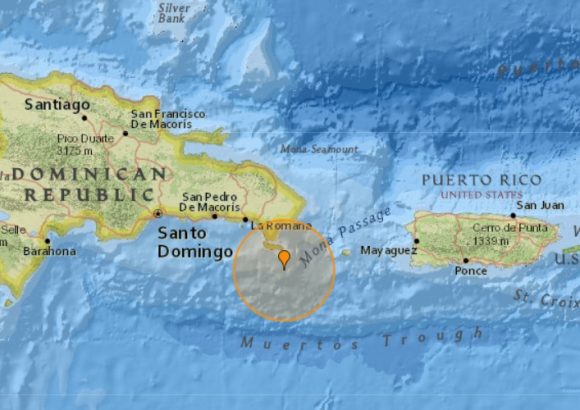
    A moderate 4.9-magnitude earthquake hit the waters south of Boca de Yuma in the Dominican Republic’s eastern La Altagracia province on Friday local time, according to data released by the U.S. Geological Survey (USGS). The seismic event was recorded at 12:06 p.m. local time, with a relatively deep hypocenter sitting 90 kilometers, or 56 miles, below the Earth’s surface. Its epicenter was positioned roughly 52 kilometers off the southern coast of the Boca de Yuma community.

    Shaking from the quake was widely felt across the eastern half of the Dominican Republic, including the popular tourist hub of Verón-Punta Cana. The tremor was also detected across the Caribbean in Puerto Rico, where dozens of local residents reached out to officials to report feeling the shaking. In the immediate aftermath of the earthquake, regional authorities moved quickly to issue public updates: no tsunami advisory or warning was triggered by the event, and as of initial assessments, there have been no reports of human injuries or widespread structural damage to infrastructure.

  • Charles Mackey receives US leadership award

    Charles Mackey receives US leadership award

    Decades of dedicated volunteer work across Bahamian sports, cultural development, and youth empowerment have earned veteran talk show host and community organizer Charles Carlos Mackey the prestigious Outstanding Servant Leadership Award from White House Prayer for Our Nations, a private non-governmental organization. The recognition was presented earlier this month during the group’s 28th anniversary celebration held in Arlington, Virginia.

    For Mackey, the host of the long-running radio program *The Best of Sports World* on ZNS, the honor is far more than a personal accolade—it is a validation of a life guided by unwavering faith, a value that has shaped every major choice from his childhood growing up in segregated Daytona Beach, Florida, to his decision to relocate permanently to The Bahamas in 1984.

    “I said to myself ‘GOD, this is a grand slam. All the things I’ve done, I know that this is the work you chose for me. I’m walking this path with you all the way,’” Mackey shared in an interview with The Tribune. “I’m just following in your footsteps, because I know you will always stand with me.”

    Born to a Bahamian father and a mother from Georgia, Mackey’s early life in the American South was marked by direct encounters with systemic racism that forged his commitment to service. He vividly recalled an incident from childhood when a group of white men surrounded members of his local Black church, hurled vile racial slurs, and blocked the congregation’s exit until a police lieutenant who knew his father intervened to escort the group to safety. “The same kind of hatred you see on television with Dr. King? I lived that when I was just six years old,” Mackey said.

    Mackey went on to attend Florida Agricultural and Mechanical University (FAMU), where he played collegiate baseball and graduated with a bachelor’s degree in Physical Education and Health. He later pursued professional baseball stints across the Dominican Republic, Puerto Rico, and Caracas, Venezuela, before completing a master’s degree in guidance counselling and education from Bowie State College. Following years of work in rehabilitation and counselling services in the United States, Mackey felt a calling to serve young people in The Bahamas, and made his permanent move to New Providence in 1984.

    Within months of arriving, Mackey drew on his U.S. rehabilitation experience to help launch the Dean Granger Centre, a halfway house for men transitioning out of addiction during The Bahamas’ severe national drug crisis of the 1980s. In 1990, he organized a landmark visit of FAMU’s world-famous Marching 100 marching band to New Providence, an outreach effort that ultimately secured full athletic and academic scholarships for three Bahamian students to attend the university. He went on to support youth football clinics hosted by leading historically Black colleges and universities, expand grassroots track and field development programs, and launch a series of cross-cultural exchange initiatives between The Bahamas and U.S. institutions.

    In 2010, Mackey led a coalition of local arts leaders to pitch a proposal for a unified national performance band to then Minister of Youth, Sports and Culture Charles Maynard. That collaborative effort eventually grew into the Bahamas All Star Band, which has helped dozens of emerging Bahamian musicians secure competitive music scholarships at U.S. colleges and universities.

    Throughout his decades of service, Mackey emphasized that public recognition has never been the driving force behind his work. His core mission, he says, has always been rooted in connecting The Bahamas to the broader global community. “If I cannot take The Bahamas to the world,” he said, “I’m gonna bring the world to The Bahamas.”
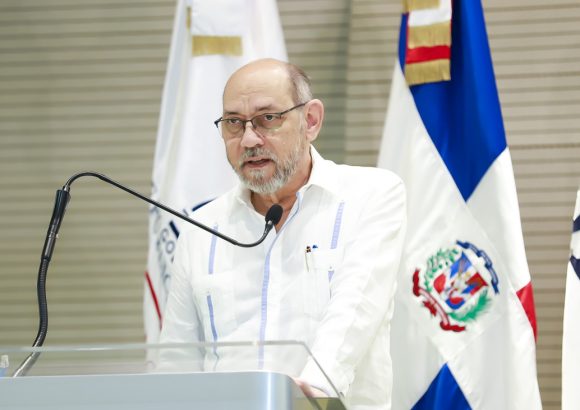

  • United to add seasonal flights between Houston and Santo Domingo

    United to add seasonal flights between Houston and Santo Domingo

    United Airlines has announced a strategic expansion of its route network across Latin America and the Caribbean, introducing a new seasonal air connection between Houston, Texas, and the Dominican Republic’s capital city of Santo Domingo. The new service is scheduled to launch ahead of the 2026-27 Northern Hemisphere winter travel and holiday period.

    Operations will run from December 18, 2026, to January 3, 2027, with three weekly rotations operated using fuel-efficient Boeing 737 MAX 8 aircraft. The carefully crafted schedule is designed to maximize convenience for connecting and local travelers alike: outbound flights from Houston’s George Bush Intercontinental Airport will depart in the afternoon and touch down in Santo Domingo that same evening, while return flights from the Dominican capital will depart early the next morning. This timing enables seamless connections through United’s Houston hub for passengers traveling to and from hundreds of destinations across North America, Europe, and Asia.

    Industry analysts note that the move reflects United Airlines’ data-driven approach to matching capacity with seasonal demand shifts. The temporary winter route is being rolled out specifically to accommodate the sharp annual spike in travel during the year-end holiday season, when leisure getaways and family reunification trips reach their annual peak. Beyond meeting seasonal demand, the new connection underscores United’s recognition of Santo Domingo’s growing status as a multifaceted high-traffic destination that draws both business visitors, leisure tourists, and family travelers throughout the year. The carrier also reaffirmed the central role that its Houston hub plays in its global network strategy, as one of the largest and most well-connected international transfer points in the United States.

    This expansion marks the latest in a series of targeted route adjustments United has rolled out to strengthen its presence in the fast-growing Latin American and Caribbean travel market, which has seen consistent recovery and growth in passenger volumes following global travel restrictions. For both outbound travelers from the U.S. looking for a warm winter getaway and Dominican travelers connecting to global markets, the new route adds more travel options and improved connectivity during the busiest travel period of the year.

  • Tourism industry calls for review of Dominican waste management bill

    Tourism industry calls for review of Dominican waste management bill

    In Santo Domingo, the Dominican Republic’s leading tourism and hospitality industry body has sounded a call for reconsideration after the national Senate greenlit amendments to the country’s General Law on Comprehensive Solid Waste Management and Co-processing. The Dominican Republic Hotel and Tourism Association (Asonahores) argues that the newly approved proposal lacks the rigorous technical evaluation and cross-sector consultation that such impactful legislation demands before being enacted.

    At the core of the industry’s concerns is the bill’s introduction of new mandatory financial contributions from private businesses. According to Asonahores, the text of the legislation provides no public access to supporting technical studies, sector-wide impact assessments, or transparent calculation methodologies that would back up the specific fee levels outlined in the amended law.

    Aguie Lendor, Asonahores’ Executive Vice President, clarified that the tourism sector does not oppose progress on environmental stewardship. The industry fully backs initiatives that boost solid waste management and advance the transition to a circular economy, Lendor noted. However, he stressed that any new regulatory framework must be built on objective, proportional, and fair standards that deliver the legal certainty businesses need to plan and operate effectively.

    Asonahores has united with a coalition of six major industry groups spanning the hospitality and tourism supply chain to push for changes to the legislation. Joining the call are the Dominican Association of Restaurants (Aderes), the Association of Casual and Fast Food Establishments (Adecor), the Dominican Association of Travel and Tourism Agencies (Adavit), the National Association of Rent A Car (Andri), and tourism investment group Inverotel.

    The united coalition is calling on national authorities to redesign the proposed contribution system to align with the actual type and volume of solid waste each individual business or industry generates. They are also asking policymakers to formally recognize the significant investments many private companies in the sector have already made to develop in-house recycling and sustainable waste management programs. The coalition reaffirmed their open commitment to collaborative work with the Dominican government to craft final legislation that delivers on three core goals: meaningful environmental protection, technical robustness, and long-term economic sustainability for all affected sectors.

  • Germany’s Embassy in the Dominican Republic launches 21st Master of the Ocean

    Germany’s Embassy in the Dominican Republic launches 21st Master of the Ocean

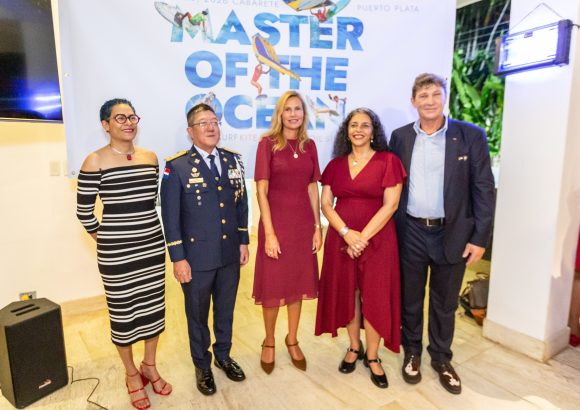
    The German Embassy in Santo Domingo has officially kicked off preparations for the 21st iteration of Master of the Ocean, a world-renowned international watersports competition set to run from September 16 to 20, 2026, in the coastal Dominican town of Cabarete. The launch ceremony, hosted at the official German Residence in the Dominican capital, drew a cross-section of attendees including senior Dominican government officials, private sector stakeholders, elite watersports athletes, corporate sponsors, and collaborative partners, all gathering to mark the next chapter of an event that has shaped Cabarete’s cultural and recreational identity for over 20 years, while standing as a lasting symbol of the warm, cooperative friendship between Germany and the Dominican Republic.

    German Ambassador to the Dominican Republic Maike Friedrichsen opened the ceremony by outlining the multi-faceted value of the long-running competition beyond athletic competition. She emphasized that Master of the Ocean delivers widespread benefits, from growing global interest in watersports to advancing sustainable event practices, fostering cross-cultural exchange between Germany, the Dominican Republic, and visiting nations, and driving inclusive community development in coastal regions across the country. Ambassador Friedrichsen also extended special recognition to Marcus Böhm, the event’s German founder and a long-term Cabarete resident, crediting his vision and dedication for elevating a local contest into a globally recognized initiative that unites people from diverse backgrounds through a shared passion for aquatic sports.

    Beyond announcing the 2026 competition dates and details, the launch event also spotlighted the complementary Safe Coasts Dominican Republic 2026 initiative, a public safety project headed by local marine conservation non-profit Happy Dolphins DR. The program aims to provide professional safety certification for 60 new lifeguards posted at high-traffic tourist coastal destinations across the country. Its inaugural training cohort will include officers from the Dominican Tourism Police (POLITUR) and staff from Viva Miches, and is implemented in formal partnership with the Dominican Ministry of Tourism (MITUR), POLITUR, Viva Resorts by Wyndham, and CASFL. Core goals of the project include raising national water safety standards at popular recreational beaches and creating new formal employment opportunities for local community members.

    To further highlight the event’s cross-cultural mission and international character, the 2026 edition of Master of the Ocean will also feature a guest performance by popular German DJ Luka Pawelski. Backed by a growing network of both national and international collaborative partners, Master of the Ocean continues to function as a unique platform that elevates Dominican coastal tourism, grows the global profile of the nation’s watersports community, and delivers measurable positive social impact across regions that host the event each year.

  • Gibson and co-accused’s constitutional motion to halt ongoing trial rejected

    Gibson and co-accused’s constitutional motion to halt ongoing trial rejected

    A high-stakes procedural battle in the Bahamian judicial system has concluded with the Court of Appeal upholding a lower court’s decision, rejecting an eleventh-hour attempt by five defendants — Adrian Gibson, Joan Knowles, Jerome Missick, Peaches Farquharson, and Elwood Donaldson — to bring their ongoing criminal trial to an early end. The appeal stemmed from the trial judge’s earlier refusal to grant the group’s requests for a mistrial, the dismissal of the seated jury, and the judge’s own recusal from the case, a ruling the five defendants argued had violated their constitutionally protected right to a fair trial.

    The defendants put forward a series of grievances to back their challenge: they claimed procedural irregularities during the jury selection and empanelment process, that the official 2023 approved jury list had never been disclosed to the defense, that one juror held an undisclosed connection to the prosecutor’s office that created implicit bias, and that the trial judge herself had demonstrated apparent bias against their side.

    In a unanimous ruling, a three-justice panel comprising Justices Evans, Charles, and Kokaram found that none of these claims rose to the level required to justify constitutional court intervention while the criminal trial was still in progress. The panel characterized the defendants’ constitutional motion as an impermissible collateral attack on active ongoing criminal proceedings, noting that all the issues raised could be addressed through standard trial procedures or, if the defendants are ultimately convicted, through a formal appeal after a verdict is reached.

    Writing for the panel, Justice Kokaram clarified that the defendants’ complaints were not disputes over the existence of constitutional rights, but rather disagreements over the conduct of the trial — and that no extraordinary circumstances existed that warranted immediate constitutional review. The court specifically addressed the defendants’ key claim that seven of the nine seated jurors were not drawn from the official 2023 approved jury list, confirming that the assertion of fact was accurate but that the irregularity did not justify halting the trial. Justices emphasized the trial judge acted well within her authority to reject the request to dismiss the entire jury, and any challenge to the jury’s composition can be raised in a standard post-conviction appeal. The court also noted that no argument had been made that any individual juror selected was unqualified to serve.

    The panel similarly dismissed the bias claim tied to the juror’s alleged connection to the Director of Public Prosecutions (DPP) office, pointing out that the defense never filed a formal application on this issue with the trial judge before launching their appeal. Claims that the trial judge had already formed a closed mind on the case and should have stepped down were also rejected, with the court finding the allegation had not been sufficiently proven, and could also be raised in a post-trial appeal if needed.

    The defense’s complaint that the DPP had failed to disclose the approved jury list was dismissed outright as a non-starter. The court noted the full jury list is a matter of public record, and the defense never submitted a formal request to the DPP for a copy. Justices added that in constitutional claims challenging alleged state conduct, the Attorney General, not the DPP, is the proper responding party.

    In its closing remarks, the court issued sharp criticism of the repeated procedural delays that have slowed the case, noting the trial has been pending since 2023 and this appeal has only added more unnecessary hold-up. The ruling reaffirmed a core principle of judicial procedure: constitutional motions cannot be used to interrupt ongoing criminal trials unless truly exceptional circumstances are present. “There has been no alleged constitutional breach that is so significant that will justify a departure from the well-worn investigation by an appellate court of any alleged miscarriage of justice,” the panel concluded.

  • Rotary and Coakley donate new EKG machine to Rand hospital

    Rotary and Coakley donate new EKG machine to Rand hospital

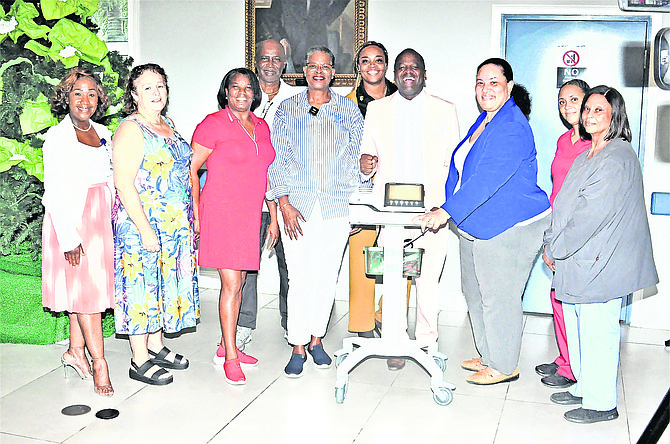
    On the island of Grand Bahama, a critical gap in cardiac care at Rand Memorial Hospital has been closed, thanks to a joint community donation from the Rotary Club of Grand Bahama and local enterprise Coakley International. The two organizations formally presented a brand-new $7,000 electrocardiogram (EKG) machine to the public hospital during a ceremony on Thursday, ending a weeks-long disruption to one of the facility’s most essential diagnostic services.

    The gap in service opened weeks earlier, when the hospital’s aging existing EKG machine suffered an irreversible breakdown. Without functioning equipment to detect cardiac irregularities, clinical teams were left without a core tool to evaluate patients presenting with chest pain and other heart-related symptoms. Adelecia Campbell, senior assistant administrator at Rand Memorial Hospital, reached out directly to the Rotary Club for support, drawing on the organization’s long history of standing with the hospital through crises and community needs.

    Campbell emphasized in remarks at the presentation that the new machine is far more than an incremental upgrade for the facility. “Our old equipment was worn down after years of constant use, just like any medical device that sees daily use,” she explained. “This new model is far more advanced, and it restores a service that is absolutely central to our daily operations. When a patient arrives with chest discomfort, our physicians depend on EKG results to map out next steps—whether that means immediate treatment or a referral to a cardiac specialist. This machine directly shapes the care we can deliver to our community.”

    Campbell also highlighted the Rotary Club of Grand Bahama’s unwavering commitment to the hospital in the years following Hurricane Dorian, which devastated the island in 2019. “They have stood with us every step of the way through every crisis, and we could not be more grateful for their partnership,” she added.

    Shane Coakley, chief executive officer of Coakley International—a Bahamian private real estate investment firm currently working to acquire the historic Ginn properties in West End—said his company jumped at the chance to step in when the Rotary Club reached out. After an initial approach to another potential donor fell through, Rotarians turned to their long-time community partner, and Coakley International immediately agreed to split the cost of the equipment.

    “As a Bahamian company rooted in this community, we see giving back as a core part of our mission, not an afterthought,” Coakley said. “Every year, we set aside dedicated funding to support local nonprofits, children’s programs, healthcare providers, and community initiatives. This donation is just the first of many investments we plan to make in Grand Bahama as we grow our presence here.”

    Rotary founding member and past president Christine Van der Linde noted that two additional local businesses stepped up to make the donation possible: Bahamas Medical and Surgical Supplies secured a discounted rate for the machine, and the Mail Boat Company covered the cost of transporting the equipment to the island. The partnership reflects a broader pattern of local collaboration to address gaps in public healthcare on the island, turning a critical service disruption into an opportunity to improve care for generations of patients.

    The donation was celebrated by hospital staff and community leaders gathered in the hospital’s main foyer, marking the end of weeks of uncertainty and the start of enhanced cardiac care for Grand Bahama residents.