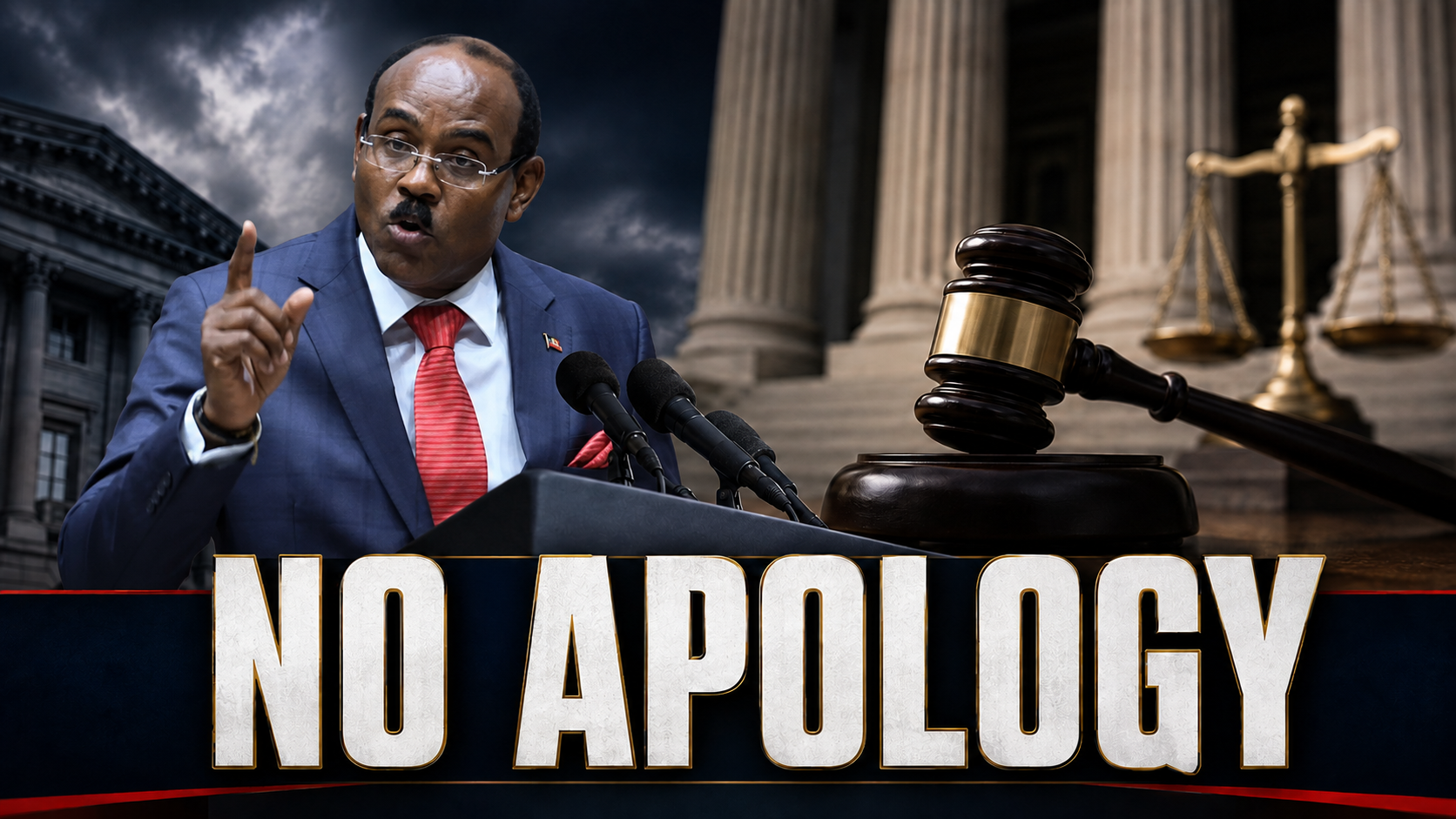
Antigua and Barbuda Prime Minister Gaston Browne is standing firm amid growing backlash over his contentious remarks targeting the country’s judiciary, making clear he has no intention of issuing the public apology that critics have demanded. In a recent appearance on the *Browne and Browne Show*, the nation’s top leader doubled down on his position, dismissing calls for a retraction of his comments in blunt terms.
“Come with your foolishness about apology and so on; it will not be forthcoming,” Browne told listeners. He went on to clarify that his critiques were never aimed at a single specific court ruling, nor were they meant to interfere with the outcome of any pending individual case. Instead, he emphasized that his comments were intended to shine a spotlight on long-standing systemic issues that he says plague the country’s criminal justice system: overly lenient sentencing practices, persistent problems with repeat offenders, and the high rate of dismissed criminal cases.
Even if his words have made members of the judicial branch uncomfortable, Browne says that outcome was intentional, and he remains unapologetic for sparking the conversation. “If you all felt as though that I rattled you all because of what I said, I make no apologies about it,” he stated. “It is what I meant to do.”
In a direct challenge to his critics who have accused him of disrespecting a specific judicial officer, Browne has demanded that those calling for an apology first name the member of the judiciary he is alleged to have offended. He noted that his decision to speak out publicly did not come out of nowhere: it was prompted by repeated concerns raised by law enforcement officials across the country who have long flagged the issues of soft sentencing and repeat offenders slipping through the cracks of the justice system.
Addressing core arguments around judicial independence, Browne pushed back against the narrative that his criticism crosses a constitutional line. He argued that the principle of judicial independence does not shield the courts from legitimate public scrutiny, and he is calling for open, structured dialogue between three branches of government: the judiciary, the executive branch he leads, and Parliament. The goal of these talks, he says, would be to advance much-needed reform to the criminal justice system.
To move the process forward, Browne revealed that he has already sent a formal letter to the nation’s chief justice. In the correspondence, he proposed the creation of a specially convened expert panel that would conduct a comprehensive review of sentencing guidelines and other systemic weaknesses that have been identified in the current criminal justice framework.