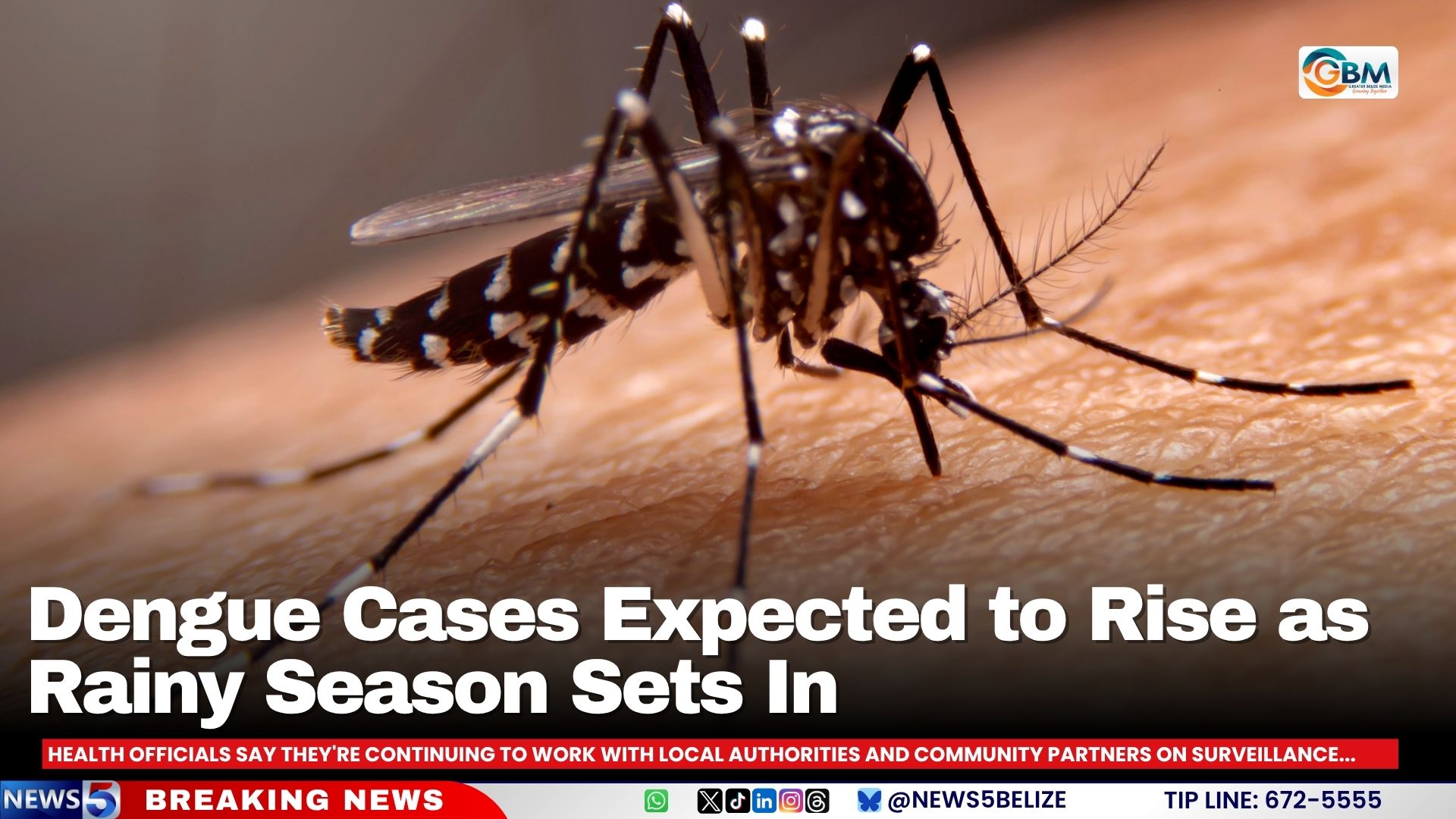
As daily rainfall becomes consistent across Belize, public health officials have issued an urgent warning to residents: the warm, wet conditions created by the rainy season create the perfect environment for dengue virus transmission, and case numbers are projected to climb in the coming weeks.
The Ministry of Health and Wellness is leading a public outreach campaign urging all Belizeans to take proactive steps to eliminate mosquito breeding grounds on their personal property before a preventable pest problem turns into a widespread public health crisis.
Dengue, a viral infection spread exclusively by female Aedes aegypti mosquitoes, relies on standing water to complete the insect’s reproductive cycle. Public health experts note that these mosquitoes can breed in even tiny volumes of trapped water – as little as the amount held in a discarded bottle cap. Common breeding sites around residential properties include unused old tires, empty aluminum cans, clogged storm drains that do not drain properly after rainfall, and overgrown, unkempt yards that collect standing water.
Symptoms of a dengue infection vary widely from person to person. Most patients experience mild to moderate reactions that include high fever, intense persistent headaches, severe joint and muscle pain, and characteristic skin rashes. In severe, untreated cases, however, the infection can progress to life-threatening complications including internal bleeding and acute respiratory distress. Health officials emphasize that anyone who develops these symptoms should seek immediate professional medical care, rather than delaying treatment to see if symptoms resolve on their own.
Beyond eliminating breeding sites, the Ministry of Health has outlined a set of simple, everyday precautions residents can take to reduce their risk of being bitten. These include regularly applying CDC-recommended insect repellent, wearing long-sleeved clothing and long pants during the mosquito’s peak feeding hours at dawn and dusk, and ensuring windows and doors have intact screens to block mosquitoes from entering indoor living spaces.
Health authorities confirmed that they are already working in close coordination with municipal governments, local community organizations, and other stakeholders to expand nationwide dengue surveillance and implement large-scale mosquito control measures across the country. Despite these ongoing systemic efforts, officials stress that individual action remains the most critical line of defense, repeating their core public appeal: every Belizean should take time today to check their yard for standing water.