博客

  • UN Summit opens with urgent call to restore the world’s degraded lands

    UN Summit opens with urgent call to restore the world’s degraded lands

    The 17th Conference of the Parties to the UN Convention to Combat Desertification (COP17) kicked off on Monday in Ulaanbaatar, Mongolia, uniting over 10,000 stakeholders from across the globe to confront three interconnected planetary crises: accelerating desertification, widespread land degradation, and intensifying drought events.

    Running for two weeks under the unifying slogan “Restore the land, restore hope,” the summit brings together delegations from all 197 member parties of the convention, alongside senior government officials, business executives, and civil society leaders to collaborate on actionable solutions. For host nation Mongolia, the urgency of the issue hits close to home: Prime Minister Nyam-Osoryn Uchral opened the summit by highlighting that roughly 80% of the country’s total territory already suffers from damaging soil degradation. In his opening address, Uchral pushed global parties to move past non-binding past pledges and deliver tangible, on-the-ground outcomes. He outlined three core priorities for global action: scaling up targeted investment in large-scale and local land restoration initiatives, expanding the meaningful participation of frontline local communities and traditional pastoralists who depend on healthy land for survival, and integrating cutting-edge science and innovative technologies into restoration strategies.

    Yasmine Fouad, Executive Secretary of the UN Convention to Combat Desertification, echoed this call for urgent action, warning that ongoing land degradation and drought are already placing critical systems at risk globally. She emphasized that these environmental threats are already undermining global food production, destabilizing potable water supplies, and eroding the economic resilience of vulnerable communities worldwide. Fouad made clear that the core mission of COP17 should be to rebrand itself as an “implementation summit,” one that translates years of international climate and land commitments into measurable, verifiable progress that improves outcomes for people and the planet.

    Over the course of the summit, delegates will tackle a broad, interconnected policy agenda that covers drought preparedness and mitigation, cross-border management of sand and dust storms, large-scale land restoration target setting, sustainable financing mechanisms, resilient food systems, integrated water management, climate-induced migration linked to land degradation, and equitable land rights for Indigenous and local communities. UN data underscores the scale of the crisis: an estimated 3.2 billion people around the world already face daily impacts from land degradation, drought, and the cascading crises they trigger.

    The summit’s second week, running from August 24 to 28, will feature high-level engagement, with ministers and other senior government leaders taking part in cross-border dialogues and issue-focused thematic sessions. A key priority for negotiators during this period will be finalizing a long-awaited legally binding global framework on drought. Negotiations on this framework were not completed at the 2024 COP16 held in Riyadh, leaving delegates in Ulaanbaatar to resolve outstanding differences and deliver a final agreement to guide global action.

  • Asonahores calls for sargassum solutions that benefit tourism

    Asonahores calls for sargassum solutions that benefit tourism

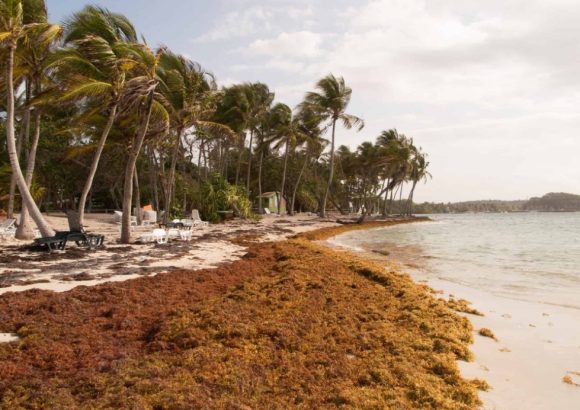
    SANTO DOMINGO — As the Caribbean region grapples with one of its most persistent marine ecological challenges, a leading tourism industry official in the Dominican Republic is pushing for a holistic, community-centered approach to tackling the growing sargassum invasion threatening the nation’s iconic coastlines. Aguie Lendor, Executive Vice President of the Dominican Hotel and Tourism Association (Asonahores), has emphasized that any long-term strategy to address the influx of brown seaweed along the country’s shorelines must deliver shared benefits to both the $10 billion-a-year tourism sector and the local coastal communities that depend on healthy marine ecosystems for their livelihoods.

    In a public interview on the popular local morning news program *El Despertador*, Lendor issued a clear warning: climate and ocean current projections indicate that exceptionally large volumes of sargassum will drift to Dominican shores by 2026, making urgent, proactive planning non-negotiable to mitigate damage to popular beaches and ecologically sensitive coastal zones. Without sustained, coordinated action now, she argued, the incoming seaweed surge could erode the country’s reputation as a top tropical travel destination and disrupt the daily lives of residents who live along affected coastlines.

    Already, many private tourism operators have moved ahead with independent mitigation measures to protect their guest-facing beachfronts. Lendor confirmed that a large number of the country’s major hotels have deployed layered containment systems, including dual offshore barriers engineered to block massive clumps of sargassum from reaching the recreational beaches used by tourists. While these private efforts have proven effective for individual properties, Lendor noted that they do not solve the broader, nationwide problem, highlighting the need for coordinated public sector leadership.

    She added that a dedicated inter-ministerial government cabinet is currently assessing a range of potential long-term management solutions, from innovative harvesting technologies to offshore diversion strategies and commercial repurposing of collected sargassum for products like fertilizer, biofuel, and construction materials. Throughout the evaluation process, Lendor stressed, policymakers must center a balanced approach that prioritizes both the economic needs of the tourism industry — which supports more than half a million jobs across the country — and the health, safety, and economic well-being of local coastal communities and the general public. Any successful strategy, she argued, cannot protect tourist beaches at the expense of leaving residential and public coastlines buried under tons of rotting seaweed.

  • Five Haitians injured in DGM vehicle accident in San Juan

    Five Haitians injured in DGM vehicle accident in San Juan

    A mid-morning road collision on one of the Dominican Republic’s major highways has left five Haitian migrants and one driver injured, disrupting an operation to transfer irregularly positioned foreign nationals to the country’s border for deportation.

    The incident unfolded just after 8:40 a.m. on Tuesday at the San Juan intersection, which sits along the busy Francisco del Rosario Sánchez highway. The two vehicles involved were both owned and operated by the Dominican Republic’s General Directorate of Migration (DGM), tasked with moving people who entered or stayed in the country without valid immigration documentation.

    Preliminary information from the DGM confirms the crash was triggered by a sudden tire blowout on the lead vehicle. When the first vehicle slowed abruptly after the tire failure, the driver of the following DGM truck reacted quickly, slamming on brakes and swerving to avoid impact, but could not prevent a collision with the rear end of the disabled first vehicle.

    Five Haitian nationals being transported in the collision suffered minor injuries, and the driver of one of the two vehicles also required medical attention. Responding teams from the Dominican Republic’s National Emergency Care System arrived swiftly at the scene, transporting all injured people to the Dr. Alejandro Cabral Regional Hospital for treatment. Local authorities have confirmed that as of initial assessments, every person affected by the crash is in stable condition.

    While the collision caused significant material damage to both DGM vehicles, emergency response teams cleared the roadway quickly to restore full traffic flow. Once road safety was reestablished and all injured parties were cared for, DGM officials resumed their planned migration operation.

    In total, 304 Haitian nationals were being transported by the two vehicles ahead of the crash. The DGM confirmed that the uninjured migrants continued their journey to the Carrizal border crossing in Elías Piña, where they were scheduled to be formally transferred to Haitian border authorities as planned.

  • Bahamian dad seeks answers after teen son drowns in US

    Bahamian dad seeks answers after teen son drowns in US

    A devastating accidental drowning has claimed the life of a 16-year-old Bahamian-American teenager, a skilled and passionate swimmer whose death has left his family grappling with shock and unanswered questions about the tragedy that unfolded on a popular Michigan lake.

    Kaden Dean Smith was enjoying a family gathering at Gun Lake, located in Orangeville Township, when he went missing while swimming on August 12. After a two-day search conducted by local emergency crews, his body was recovered from the lake on August 14 by response teams working with Michigan State Police out of Barry County. Initial official records note the teen was last seen swimming on the evening of August 12.

    For Kaden’s father Audley Dean, a resident of Grand Bahama with years of professional experience in the diving industry, the tragedy feels unfathomable. He describes his son as a confident, experienced swimmer who spent countless hours in and around water, and who knew Gun Lake well from regular family trips to the area. He says he has yet to receive a clear, full account of the incident; Kaden’s mother, who was at the gathering when the accident occurred, was too overwhelmed by distress to share a detailed timeline of events.

    Dean shared that Kaden was swimming with a group of friends when trouble struck as the teen was heading back to shore. “They tried to get to him in time,” Dean said in an interview, his voice heavy with grief.

    Born in the U.S. to an American mother and Bahamian father, Kaden maintained a deep, meaningful connection to his father’s home in Grand Bahama. That bond grew even stronger during a summer visit just last year, when Kaden spent months staying with Dean on the island. The pair spent nearly all their free time together on local beaches, with Dean never once worrying about his son’s water safety thanks to his proven swimming ability and the teen’s obvious love for the ocean.

    “It was awesome,” Dean recalled of their time together, pulling out photographs of the pair’s summer outing. He had hoped this annual trip would become a beloved family tradition, with Kaden returning to Grand Bahama every one to two years to reconnect with his Bahamian roots.

    Now, Dean is left to reconcile his deep confidence in his son’s skills with the sudden loss. He reflected on the unforgiving, unpredictable nature of open water, a truth he has learned from decades of working around the ocean that makes this tragedy no less devastating.

    “It’s just one of those freaky things,” he said. “The ocean and water in general just don’t respect anybody, I can tell you that. I mean, I’ve watched people drown in shallow water. It’s tough.”

  • GB mom overcomes stage two breast cancer

    GB mom overcomes stage two breast cancer

    For 30-year-old Desire Sands of Grand Bahama, the past year has been defined by parallel grief and grit: just seven months after laying her mother to rest following a breast cancer battle, she received a diagnosis of stage two breast cancer herself. Now, after months of grueling treatment, Sands is celebrating the milestone of being declared cancer-free, a win she calls nothing short of a second chance at life.

    When Sands received her diagnosis in April 2025, her daily routine shifted dramatically. What had been days spent playing with her three-year-old young son turned into a grueling cycle of regular trips from Grand Bahama to New Providence, where she underwent chemotherapy appointments at Princess Margaret Hospital’s Oncology Clinic. Through every step of the treatment process, she carried the memory of her mother, who had lost her own fight with the same genetic-linked disease just months prior.

    The life-changing confirmation of her remission came on August 10, when a close friend accompanied her to a routine appointment with her oncologist on Grand Bahama. As her care provider reviewed her pathology reports and blood work, he delivered the news Sands had waited months to hear: she was officially cancer-free. “My initial reaction was emotional because that’s something I’ve been waiting to hear,” Sands shared in an interview. “I’m still processing it honestly, and I was excited to give the good news to the same persons I gave the bad news to when I first got diagnosed.”

    Sands says the clean bill of health feels like a new beginning, an opportunity to live with even more intentionality than she did before her diagnosis. Her oncologist echoed that sentiment, encouraging her to pursue new goals from going back to school to learning a new skill, reminding her it was finally time to embrace the next chapter.

    But Sands’ road to remission was far from easy. A person living with sickle cell disease, she faced amplified complications during her final four rounds of chemotherapy. The powerful treatment triggered severe joint pain that was hard to distinguish from a sickle cell crisis, leaving her struggling to cope with unrelenting discomfort. She was admitted to hospital twice during this period, and at one point required three blood transfusions to stabilize her health.

    Even at her lowest points, however, Sands never allowed fear of death to take root. “I never allowed negative thoughts to overwhelm me,” she explained. “Anytime something happened I just took it as “I’m not going to rush my process” even though I wanted to be done quickly.”

    One of the hardest parts of her journey, she said, was maintaining a sense of strength for her young son, who often noticed when she was fatigued or unwell. Sands made a deliberate effort to explain her illness to her son in age-appropriate terms, and he soon developed a gentle understanding of what she was going through. After treatments, he would kiss her treatment port and check in to ask how she was feeling. That small, consistent support kept her going, she said: “I know I needed to keep going for him because he saw me at my lows and I wanted him to see the good too.”

    Sands credits her unwavering faith in God as a core source of strength throughout her battle, alongside the support of friends and family. Cancer has touched multiple generations of her family, and even as she grieved her mother’s death while fighting her own diagnosis, she said her mother’s memory remained a constant inspiration.

    Now stepping into what she calls her new chapter, Sands wants to share a message of hope with other women navigating breast cancer treatment. Too often, she said, society frames a cancer diagnosis as an automatic death sentence, and doesn’t celebrate enough the stories of people who fight and win. But that narrative doesn’t have to hold, she said: “Cancer isn’t a death sentence. Once you lean on God’s strength and do as your doctor says your journey will be a good one.”

  • I LOVE DR: Dominican premium spirits launch at Las Américas Airport

    I LOVE DR: Dominican premium spirits launch at Las Américas Airport

    A bold new premium spirit brand rooted in Dominican culture and local flavors, I LOVE DR, has marked its official entry into the travel retail sector with a launch event at Las Américas International Airport (AILA) in Santo Domingo. The collection is now available across the travel retail network operated by global travel retail leaders Avolta and its local subsidiary Dufry Dominicana.

    Developed and manufactured entirely in the Dominican Republic by homegrown firm Ziantix Group, the I LOVE DR line features four distinct spirit varieties, each crafted to highlight iconic local ingredients: Peanut, Coconut, Cherry, and Mango. Most notably, the brand’s Peanut expression claims the title of the world’s first blue peanut liqueur, a one-of-a-kind innovation that sets the collection apart from other artisanal spirits on the global market.

    The public launch was timed to coincide with celebrations of Dominican Restoration Day, held under the overarching theme “I LOVE DR celebrates Dominican identity with you.” The launch event showcased Dominican cultural heritage, featuring live performances of traditional folk music, cultural displays, and complimentary tasting sessions that let attendees sample all four varieties of the new spirit collection.

    Under the partnership between the two companies, Ziantix Group owns full development and production responsibilities for the spirit line, while Avolta and Dufry Dominicana hold exclusive rights to distribute and market I LOVE DR across all Dominican travel retail channels. That means travelers can find the collection at Avolta and Dufry locations at all major airports and seaports across the Dominican Republic, giving international and domestic visitors easy access to a premium, locally made product that encapsulates Dominican national identity.

    Julio Astacio, chief executive officer of Ziantix Group, emphasized that the core mission of the brand extends far beyond selling spirits. The collection was intentionally created to serve as a cultural ambassador, carrying Dominican identity to consumers across borders. “I LOVE DR was born so that Dominican culture can travel,” Astacio explained, adding that the entire collection acts as a tangible, flavorful representation of the country’s rich culinary traditions, cultural heritage, and national pride.

  • PM blasts overtime amid grid overhaul

    PM blasts overtime amid grid overhaul

    Amid a summer of crippling, widespread power outages that have upended daily life for thousands of Bahamians, Prime Minister Philip “Brave” Davis has delivered a candid national address acknowledging no immediate end to disruptions, while laying out a sweeping multi-year plan to rehabilitate the country’s crumbling electricity system and confronting a growing overtime scandal at state-owned Bahamas Power and Light (BPL).

    Weeks of persistent interruptions, capped by a July 30 island-wide blackout across New Providence and five straight days of power cuts in parts of western New Providence, forced Davis to address public anger over unreliable service that has left residents sleeping in cooled cars, discarding tons of spoiled groceries and spending hundreds of dollars on emergency generator fuel. In his remarks, the prime minister refused to offer empty guarantees of restored service overnight. “I am not going to stand here and tell you that every light will stay on tomorrow,” he stated plainly, noting that decades of neglected infrastructure have created a crisis that cannot be resolved overnight.

    A core focus of Davis’ address was the explosive overtime controversy that has roiled BPL in recent days, after Tribune reporting revealed three senior employees in BPL’s Fuel and Performance Department collected a combined $601,295 in overtime between May 2025 and April 2026. Two of those workers earned more than $200,000 each in overtime alone, with some monthly overtime checks exceeding $20,000. Davis specifically called out records showing one employee logged 18 hours of work on Christmas Day, followed by 24 straight hours of work for three consecutive days — a total of 90 hours over four days.

    Calling the arrangement a blatant abuse of public funds, Davis argued it is impossible for any worker to safely perform critical utility work after working 24 straight hours for three days in a row. “It is not fair to the ratepayer, who funds every dollar. And it is not fair to the honest worker, whose profession is tarnished by it,” he said. The prime minister emphasized that the blame lies with a broken system of management oversight that persisted across multiple previous administrations, not BPL’s frontline workforce. “The overwhelming majority of BPL’s workers are decent, skilled Bahamians who keep our lights on and go out in storms when the rest of us are told to stay inside,” he noted. “This is not about them. This is about a system that permitted this type of abuse.”

    New overtime regulations imposed by the administration have already sparked a confrontation with the Bahamas Electrical Workers Union, which has filed a formal trade dispute and instructed members to only work scheduled standard hours until the conflict is resolved. Union president Kyle Wilson has accused the government of using the overtime scandal to distract from its own failures to resolve the electricity crisis, a charge the prime minister implicitly rejected by tying the abuse to longstanding systemic mismanagement.

    Turning to the broader power crisis, Davis outlined a clear timeline for restoring generation capacity and upgrading the country’s transmission and distribution network, which he noted has been pushed to breaking point by record heat, surging demand that has broken peak usage records twice this summer, and infrastructure that largely predates Bahamian independence. When his administration took office, more than 60 percent of generation capacity in New Providence and 80 percent in the Family Islands required replacement, Davis said, with BPL carrying more than $500 million in debt, $100 million in unfunded pension obligations, and facing an estimated $500 million in critical upgrades needed to avoid total system collapse. For years, BPL has relied on costly rented generation capacity — costing more than $40 million annually — to patch gaps left by its ageing, failing fleet.

    Davis clarified that the July 30 island-wide blackout, which lasted seven hours or more in many communities, was not caused by a generation shortage, but by an underground cable fault that triggered a critical transformer failure at Blue Hills. He explained that underground faults are far more difficult and time-consuming to locate and repair than overhead line issues, noting that crews often have to excavate and trace faults section by section. “It is not an excuse. It is an explanation, because you are entitled to know why – although it does not ease the misery we all felt,” he said.

    In the near term, Davis confirmed that the Blue Hills GT2 generator, out of service since spring, is returning to operation alongside a battery storage system designed to ease strain during evening peak demand periods. Two engines at the Clifton Pier generation facility are scheduled to be back online by the end of September, with a Blue Hills turbine undergoing major inspection returning to service in the first quarter of 2026. The administration plans to begin phasing out 40 megawatts of expensive rented generation in January 2026, but only after permanent replacement capacity has been tested and confirmed operational. All failed substation equipment, transformers and switchgear that failed this summer are being fully replaced rather than patched, Davis added, and remote monitoring systems will go live at Clifton Pier by the end of 2025, followed by Blue Hills, allowing crews to diagnose faults faster using real-time data.

    Longer-term infrastructure plans include the first phase of a new liquefied natural gas (LNG) generation facility coming online by the end of 2025, which will scale to 190 megawatts of cleaner, lower-cost gas-fired capacity by late 2027. A 40-year-old natural gas pipeline will be replaced, and new combined-cycle generation plants at Blue Hills are scheduled to be commissioned in 2027 and 2028. Davis said the overhaul will eventually cut fuel costs for power generation to a fraction of current levels, but warned that temporary disruptions are still likely as old infrastructure is decommissioned and new systems are connected. “There will be setbacks. There will be equipment failures,” he said.

    The Bahamas Grid Company, which manages transmission and distribution for New Providence while BPL handles generation, has already completed a $130 million upgrade that included new steel poles, larger power conductors, protection devices, fiber communications, a looped transmission system and three new high-voltage substations. Those substations reached mechanical completion in July and are now in final testing. Davis said work completed in 2025 has already reduced outage frequency by 45 percent and outage duration by 35 percent compared to historical averages, but acknowledged that those gains have not been felt by all residents amid this summer’s severe disruptions. “Those gains are real. But the outages Bahamians are experiencing now are also real,” he said, noting that the upgrade process remains incomplete and benefits have not been evenly distributed across all communities.

    In addition to generation and transmission upgrades, Davis announced plans to reform rules for residential solar systems, working alongside the Utilities Regulation and Competition Authority, BPL, consumer advocates and local solar installers to simplify application processes, set predictable approval timelines, expand access to bi-directional meters, and clarify policies for compensating homeowners for excess power supplied back to the grid. The administration will also accelerate the rollout of advanced smart meters that allow for faster outage detection and give consumers more detailed data on their energy use.

    Davis framed the electricity overhaul as the most difficult infrastructure challenge the Bahamas has faced in its 50 years of independence, rejecting the longstanding practice of patching failed equipment and renting temporary generation to simply get through another summer. “We are not here to manage decline. We are not here to defend the status quo,” he said. Acknowledging that Bahamians have already waited far too long for reliable power, he ended with a commitment to leave a vastly improved system for future generations: “What we inherited is not what we will leave behind.”

  • ITSC and ONDA partner to strengthen copyright and intellectual property education

    ITSC and ONDA partner to strengthen copyright and intellectual property education

    In a formal ceremony held at the Santo Domingo campus of the Higher Technical Community Institute (Instituto Técnico Superior Comunitario, ITSC), two leading Dominican institutions have launched a new collaborative effort to embed intellectual property and copyright education across academic communities. The inter-institutional cooperation agreement, signed by ITSC rector José Ramón Holguín Brito and National Copyright Office (Oficina Nacional de Derecho de Autor, ONDA) director general José Rubén Gonell Cosme, marks a coordinated push to build literacy around intellectual property protection among students, teaching staff and institutional employees.

    Beyond a symbolic signing, the agreement lays out a concrete roadmap for joint action over the coming years. The two institutions will partner to deliver a full slate of public educational programming, including industry conferences, hands-on skills workshops, academic seminars and national awareness campaigns. All initiatives will center on three core themes: upholding copyright protections, nurturing creative output, and fostering a culture of innovation across Dominican society. Additional pillars of the partnership include cross-institutional knowledge sharing, co-development of impact-driven projects, and coordinated outreach to promote the responsible, legal use of copyrighted and intellectual assets across all sectors.

    Speaking at the event, Rector Holguín Brito framed the partnership as a critical step to align Dominican higher technical education with the evolving needs of the national economy. He emphasized that creativity and innovation are not abstract academic values, but core drivers of sustainable national development, and that integrating intellectual property training into technical education will better prepare graduates to contribute to that growth. For his part, ONDA director Gonell Cosme noted that early, accessible education is the most effective tool to build long-term respect for creators’ rights. This initiative, he explained, will introduce copyright concepts to young Dominicans early in their academic careers, laying the groundwork for a more ethical and innovative creative economy.

    The signing ceremony concluded with an inaugural academic conference titled “Copyright, Creativity and Innovation,” delivered by Wilkins Santana Abreu, the official leading ONDA’s academic coordination and planning division. The opening talk set the tone for the partnership’s upcoming programming, highlighting the interconnected relationship between strong copyright frameworks, increased creative output, and broad-based innovation across national economies.

  • Juan Manuel Méndez assumes leadership of INTRANT

    Juan Manuel Méndez assumes leadership of INTRANT

    Santo Domingo, Dominican Republic – A new chapter began for the country’s national transportation governance on Monday, as retired Major General Juan Manuel Méndez García was sworn in as the new executive director of the National Institute of Transit and Land Transportation (INTRANT).

    Méndez García’s appointment was formalized through Decree 551-26, issued by Dominican President Luis Abinader. In his first public remarks after taking office, the new director emphasized that tackling the nation’s persistent traffic and transportation challenges will not be a quick fix, requiring coordinated effort across multiple levels of government, private transport service operators, and the general public.

    During the official swearing-in ceremony, Méndez García laid out his core policy priorities: he committed to retaining and expanding the successful, results-driven programs launched by his predecessor while implementing targeted improvements where gaps exist. Beyond institutional adjustments, he called for a nationwide cultural shift around road safety, urging all road users to embrace compliance with traffic regulations as a fundamental civic duty.

    In addition to his new role at INTRANT, Méndez García confirmed he will continue leading the Directorate of Out-of-Hospital Emergency Care Services (DAEH). He brings decades of high-stakes public leadership experience to the transportation post, having previously served more than 20 years at the helm of the country’s Emergency Operations Center (COE), where he coordinated national responses to countless disasters and public emergencies.

    Eduardo Estrella, the Minister of Public Works and Communications, who administered the oath of office to Méndez García, praised the new director’s long track record of dedicated public service. Estrella reaffirmed that the full support of the Abinader administration will be behind Méndez García as he undertakes the challenges of his new position.

    Outgoing INTRANT executive director Milton Morrison extended well wishes to his successor, noting that the agency is being transferred in far stronger institutional shape than when he took office two years prior. During Morrison’s tenure, INTRANT achieved a series of major milestones, including sweeping overhauls of internal procedures and institutional governance, as well as three ISO certifications covering quality management, anti-bribery systems, and regulatory compliance.

  • Abinader swears in new Army, Air Force and Police chiefs

    Abinader swears in new Army, Air Force and Police chiefs

    On a Monday official ceremony held at the Dominican Republic’s National Palace in Santo Domingo, President Luis Abinader officially swore in a slate of newly appointed top leaders across the country’s military, police and presidential security apparatuses.

    The high-profile inauguration event covered seven key senior positions spanning the nation’s armed forces and national law enforcement. Beyond the top commanders of the Army and Air Force, and the new director general of the National Police, the ceremony also formalized the appointments of the new Inspector General of the Armed Forces, the Deputy Minister of Defense for Military Affairs, the chief of the Presidential Security Corps (known locally by its Spanish acronym Cusep), and the commander of the Presidential Guard Regiment.

    All appointments were formalized through Decree 557-26, which was issued by the presidency on August 16. The official order named General Enmanuel Marcelino Souffront Tamayo to the post of Air Force Commander General, Major General Jimmy Arias Grullón as the new Army Commander General, and General Rafael Ernesto Rodríguez García to lead the National Police as its director general.

    Completing the roster of new senior appointees, the decree appointed Major General Jorge Iván Camino Pérez as Inspector General of the Armed Forces, Major General Delio Buenaventura Colón Rosario as Deputy Minister of Defense for Military Affairs, Brigadier General Guillermo Caro Cruz as head of Cusep, and Brigadier General Rafael Raimundo Ramírez Tejeda as commander of the Presidential Guard Regiment. This leadership reshuffle updates the top command of the Dominican Republic’s core national security institutions, aligning the command structure with the administration’s current governance priorities.