博客

  • Derde helft WK 2026: Curaçao schrijft geschiedenis op vierde toernooi-dag

    Derde helft WK 2026: Curaçao schrijft geschiedenis op vierde toernooi-dag

    The 2026 FIFA World Cup, expanded to 48 teams for the first time in tournament history, enters its fourth day of group stage action on June 14 with a lineup of matches that blends historic firsts, high-stakes elite competition and underdog storytelling. Headlining the day’s schedule is a much-anticipated Group F showdown between three-time World Cup runners-up Netherlands and Asian powerhouse Japan, while Group E play will see history written as tiny Curaçao becomes the smallest nation ever to compete at the men’s World Cup, kicking off its debut against four-time champion Germany. Four matches total will take place across host cities in the United States and Mexico, each carrying critical points for teams looking to advance to the knockout round.

    The headline clash of the day is Netherlands vs. Japan at Dallas’ AT&T Stadium, kicking off at 17:00 local time, a fixture widely ranked among the must-watch group stage matches of the entire 2026 tournament. Netherlands, which fell in the World Cup final in 1974, 1978 and 2010, has carried a long-standing hunger to claim the sport’s biggest international prize for decades, and that pressure sits firmly with the 2026 squad under manager Ronald Koeman. Though the iconic 1988 Dutch golden generation won the UEFA European Championship, it never translated that success to a World Cup title; today’s squad, stacked with elite talent including Virgil van Dijk, Memphis Depay, Tijjani Reijnders and Cody Gakpo, is widely seen as having the quality to end the country’s runner-up drought. “We put a lot of pressure on ourselves,” Koeman said ahead of the opening group match. “We want to go far in this tournament. We have a strong squad, and we know what we need to improve to have a real shot at the title. But we take it one match at a time – right now, all our focus is on Japan, and this will be a tough game.”

    Japan, however, has proven it can upend elite European opposition at the World Cup, most notably when it upset both Germany and Spain in the 2022 group stage in Qatar. Known as the Samurai Blue, Japan has never advanced past the Round of 16, having fallen at that stage four times in previous tournaments, and will be without star captain Wataru Endo for this fixture. Still, manager Hajime Moriyasu’s side features dynamic playmakers including Ayase Ueda, Takefusa Kubo, Junya Ito and Daichi Kamada, and the side is targeting a historic first run to the knockout quarterfinals. “We know this is a very tough group, and Netherlands has the best talent in the world,” Moriyasu said. “Our first goal is to get out of this group stage, but we know how hard the road will be.” Netherlands enters the match as the favorite to top Group F, which also includes Sweden and Tunisia.

    The biggest historic milestone of the day will come before that clash, as Curaçao kicks off its first ever World Cup finals against Germany at Houston’s NRG Stadium at 14:00 local time. With a population of just over 150,000 people and a total land area of just 443 square kilometers, this small Caribbean island nation will claim the record for the smallest country ever to qualify for a men’s World Cup, and is one of four debutant nations at the expanded 2026 tournament. The Curaçao squad draws heavily on players of Curaçaoan descent from the Dutch football diaspora, and is managed by 78-year-old Dick Advocaat – who is also set to make history as the oldest head coach ever to lead a side at a World Cup finals.

    Far from approaching the match as a mere ceremonial debut, Advocaat says his side is ready to challenge the four-time world champions. “We are small compared to Germany, but we will make this a difficult game for them, and we are a hard side to beat,” Advocaat said. “We have nothing to lose. Expectations are low outside our locker room, but we believe we can surprise people. Just being here is incredible for our players and our entire country, but we also want to show what we are capable of.” Germany enters Group E as the favorite to top the table, which also includes Ivory Coast and Ecuador.

    The day’s third fixture will see Ivory Coast face Ecuador at Philadelphia’s Lincoln Financial Field at 20:00 local time, a Group E match analysts see as evenly matched, with both sides holding realistic chances to pick up three points. Closing out the day’s action is a Group F clash between Sweden and Tunisia at Estadio Monterrey in Guadalupe, Mexico, kicking off at 23:00 local time. Sweden is returning to the World Cup finals after missing out on qualification for the 2022 tournament in Qatar, and enters the match as the favorite to claim all three points – though as every football fan knows, anything can happen on match day.

    Full 2026 FIFA World Cup Matchday 4 Schedule:
    1. Germany vs Curaçao (Group E) – NRG Stadium, Houston, 14:00
    2. Netherlands vs Japan (Group F) – AT&T Stadium, Dallas, 17:00
    3. Ivory Coast vs Ecuador (Group E) – Lincoln Financial Field, Philadelphia, 20:00
    4. Sweden vs Tunisia (Group F) – Estadio Monterrey, Guadalupe, 23:00

  • Investor says SVG’s cruise traffic could ‘triple within 5 to 7 years’

    Investor says SVG’s cruise traffic could ‘triple within 5 to 7 years’

    St. Vincent and the Grenadines (SVG) has taken a major step toward transforming its cruise tourism sector after the government signed a memorandum of understanding (MOU) with Global Ports Holding (GPH), the world’s largest independent cruise port operator, to launch a 30-year concession for the redevelopment of the Kingstown Cruise Terminal. The deal paves the way for up to EC$250 million in infrastructure investment, unlocking what GPH leadership calls massive untapped potential in the Caribbean island nation.

    The agreement was formalized in Kingstown on Wednesday by SVG Prime Minister Godwin Friday and GPH Chairman Mehmet Kutman. With a global footprint that includes leading cruise ports in high-traffic destinations such as Puerto Rico and Nassau, Bahamas, GPH brings decades of experience expanding cruise sector growth for emerging Caribbean economies.

    Kutman argued that SVG remains significantly under-marketed as a cruise destination, a gap he attributes to underdeveloped existing infrastructure and limited industry brand recognition that has suppressed potential demand. He noted that while SVG’s natural appeal as a tourist location is already established, the current lack of supporting infrastructure and targeted marketing has prevented the destination from reaching its full potential in the global cruise market.

    To address this gap, GPH plans to leverage its long-standing industry relationships with major cruise lines, global marketing reach, and infrastructure investment capital to position SVG as a top Caribbean stop. Kutman projected that once infrastructure upgrades are completed, annual cruise passenger traffic to SVG could triple within five to seven years.

    GPH’s track record in the region backs up this optimistic projection. In The Bahamas, for example, when GPH took over port operations in 2019, annual passenger volume hovered between 2 million and 3 million. This year, the country is on track to welcome 6.7 million cruise passengers, with numbers set to climb to 8 million next year, cementing The Bahamas’ position as the world’s largest transit cruise port. Per-passenger spending has also surged: when GPH acquired the Nassau concession, average visitor spending stood at $56 per person. Today, that figure has reached $128 per passenger, the highest in the Caribbean, with a long-term target of $150 to $200 per person.

    Currently, SVG faces similar challenges to those The Bahamas overcame. SVG Tourism Minister Camillo Gomes (quoted alongside GPH leadership in the announcement) noted that SVG currently records one of the lowest per-passenger spending rates among Eastern Caribbean cruise destinations, averaging under 300,000 passengers annually and just $59 in per-person spending. He attributed low spending to an underdeveloped on-land product, adding that the partnership with GPH will prioritize improving shore excursions and local visitor activities to encourage longer stays and higher spending that directly benefits SVG communities.

    A core principle of GPH’s plan for SVG is its “community-first” operating philosophy, which emphasizes hiring local staff and partnering with local small businesses rather than bringing in outside workers or external operators. Kutman stressed that GPH does not intend to take over local commercial operations; instead, the company will provide training, access to financing, and operational support to help local businesses grow alongside the expanding port. He added that GPH never imports workers to manage or run port operations, emphasizing that all roles at every level will be filled by local SVG residents, and that community satisfaction is the company’s top priority.

    Prime Minister Friday echoed this commitment, noting that a recent visit to GPH’s Nassau operations during a Caribbean Development Bank meeting confirmed that the community-first model works in practice. “Everybody we dealt with, from the very top to all the middle-level people, they were Bahamians, and they were very proud to tell us that they are born and bred Bahamians,” Friday said. He added that many of the commercial spaces at the Nassau port were designed as small, affordable units for local small business owners to sell local products, proving GPH prioritizes creating opportunities for local operators rather than large corporate tenants.

    In discussions about improving SVG’s investment climate, Friday said the government is focused on streamlining unnecessary bureaucratic red tape while upholding the rule of law and full transparency. He noted that cruise tourism is a competitive industry, with destinations around the Caribbean vying for cruise line partnerships, making an investor-friendly climate a key competitive advantage. “When we talk about making the destination investor-friendly, it’s to make it so that we eliminate unnecessary red tape… and that we are a country of the rule of law… everything is transparent and above board,” Friday said. He added that his core mandate throughout negotiations was protecting SVG’s national interest and securing the maximum possible benefit for the country and its people, a goal the government pursued openly throughout the process.

    Kutman acknowledged that while SVG is overall an investor-friendly destination, the negotiations for the Kingstown concession were among the most rigorous GPH has ever conducted, a testament to the SVG government’s commitment to protecting national interests.

  • Young Jamaicans encouraged to engage in policy discussions and to drive innovation

    Young Jamaicans encouraged to engage in policy discussions and to drive innovation

    MONTEGO BAY, St James – Against the backdrop of the 11th Biennial Jamaica Diaspora Conference, a senior government official has made a forceful case for centering young Jamaicans – both domestic residents and members of the global diaspora – in the island nation’s policy development and growth agendas. Speaking at the opening commencement session held at the Montego Bay Convention Centre on the event’s opening day, Alando Terrelonge, Minister of State in Jamaica’s Ministry of Foreign Affairs and Foreign Trade, laid out a clear vision for expanded youth participation in shaping the country’s future.

    Terrelonge opened his remarks by celebrating the strong representation of young professionals, students, and emerging leaders in attendance at the four-day gathering, which runs from June 15 to 18 under the overarching theme “Diaspora Partnerships: Rebuilding a More Climate-Resilient Jamaica”. He referred to these young attendees as Jamaica’s “young kings and queens”, stressing that their active involvement in national efforts is non-negotiable for meaningful progress.

    The state minister emphasized that young people bring unique, irreplaceable value to national problem-solving: they carry the creative drive, relentless energy, and unfiltered fresh perspectives required to tackle not only Jamaica’s most urgent domestic challenges, but also pressing shared issues facing the global community. “The future we seek to build belongs to you,” Terrelonge told the young audience. “It belongs to your ideas, your creativity, and energy, which are indispensable to that effort.”

    Against the backdrop of an increasingly interconnected and complex global landscape, Terrelonge argued that young Jamaicans must be intentionally empowered to contribute across four critical pillars: policy design, entrepreneurial innovation, technological advancement, and sustainable development initiatives. To unlock this potential, he said, the government and broader stakeholders must consistently build intentional pathways that open doors for youth, regardless of whether they live on the island or abroad as part of the diaspora.

    Crucially, Terrelonge pushed beyond the common practice of token youth consultation, noting that genuine engagement requires far more than just hearing young voices. Young people must be integrated directly into decision-making processes, he insisted, so their input directly shapes the policies and initiatives that will define Jamaica’s long-term trajectory. “Your voices must not only be heard but actively incorporated into the decisions that shape our future,” he said.

    Terrelonge highlighted the biennial diaspora conference itself as a model of the kind of opportunity that should be expanded for young leaders. The event brings together hundreds of stakeholders, including diaspora members, government policymakers, private sector leaders, global development practitioners, and innovators, creating space for cross-community dialogue that would not otherwise happen. This exposure to a wide range of diverse perspectives and lived experiences, he explained, helps young people build the skills, connections, and professional networks they need to drive impact at both the national and global level.

    He urged all attendees – especially young participants – to make the most of the conference’s full slate of programming, including plenary discussions, skills-focused workshops, and structured networking sessions. Meaningful, long-lasting partnerships that drive real change often grow out of intentional dialogue and collaborative problem-solving, he noted, and the conference is designed to foster exactly those kinds of connections.

    In closing, Terrelonge framed youth empowerment as a foundational priority for Jamaica’s long-term success. Investing in the next generation of leaders, he argued, is the only way to guarantee that Jamaica remains resilient in the face of emerging challenges, competitive in the global economy, and innovative in its approach to national development.

    Hosted this year in St James, the 11th iteration of the conference brings together a diverse cohort of stakeholders united around two core goals: advancing inclusive national development and strengthening Jamaica’s capacity to adapt to and withstand the impacts of climate change. The gathering provides a dedicated space to co-design actionable solutions that leverage the resources, expertise, and connections of the global Jamaican diaspora to support progress on the island.

  • McKay Security pleased with performances of sponsored teams vying for Jamaica Football Championship

    McKay Security pleased with performances of sponsored teams vying for Jamaica Football Championship

    A dramatic, last-minute contest unfolded at Jamaica’s Xpress Sports Complex on Sunday, as two late penalty kicks ended in a 1-1 draw between home side York United and visiting Browns Town FC, a result that has left the Jamaica Football Championship (JFC) playoff qualifying race wide open.

    Jason McKay, chief executive of McKay Security — the event’s lead corporate sponsor — says he could not have asked for a more exciting showcase of the competitiveness his sponsorship aims to foster. Both York United and Browns Town entered the playoff round after claiming parish league titles, each earning a J$1 million incentive from McKay Security for their victories. York won the St Thomas Major League, while Browns Town took home the Kingston and St Andrew Football Association Championship crown.

    The match lived up to pre-game hype, delivering all the tension fans hoped for right until the final whistle. In the 90th minute, York looked set to secure all three points when Kemar Beckford converted a penalty to put the home side up 1-0. But Browns Town had other plans: Nataf Tomlinson stepped up to the spot in the fourth minute of stoppage time and slotted home the equalizer, splitting the points and keeping both teams in the qualifying hunt.

    McKay, who had just presented York with their J$1 million winners’ cheque on Friday, says he is cheering on all three McKay Security-incentivized teams in the playoff series. “I am really excited that the McKay Security-sponsored teams are giving no quarter in their quest to qualify for the Jamaica Football Championship,” he said. “This is exactly the intent of the $1m sponsorship. We want teams to give their all, and that is exactly what we are seeing.”

    After two matches, York sits atop the three-team South-Eastern regional group with two points, following a 0-0 draw against St Catherine Major League champions Cedar Grove last Wednesday. Browns Town and Cedar Grove trail with one point each, and both hold games in hand as the home-and-away round-robin plays out. Only the top finisher from the South-Eastern group will advance to next season’s JFC, the second tier of Jamaican football sitting directly below the country’s Premier League. Three other group winners from the North-Eastern, Central, and Western regions will also claim spots in the next season’s competition.

    Alfred Wilson, an executive with York United, recalled the club’s history in top-tier qualifying, noting the side came just one point short of promotion to the Premier League in a past campaign. That same season, Portmore United and the University of the West Indies earned promotion to the top flight, and York has been working to recapture that form ever since. “McKay Security’s $1 million sponsorship will go a long way in helping us achieve our ambitions of returning to the highest level,” Wilson added.

    Sunday’s playoff action delivered multiple other thrilling contests across the country. In another fixture, Cross United edged Vineyard 3-2 thanks to a late winner from Tyrique Henry in the 90th minute. Rawnie Rampasaul netted a brace for Cross in the 18th and 55th minutes, after Connie Parchment had scored twice to put Vineyard up 2-1 going into halftime. Andre Walcott scored two late goals in the 79th and 83rd minutes to lead Lucea United to a dominant 5-0 victory, while Cooper’s Pen shut out Faulkland FC 2-0. In the North-Eastern regional group, Axum FC rallied from an early deficit to earn a 1-1 home draw against local rival King Football Academy. Chemar Lattibeaudiere equalized for Axum in the 35th minute, canceling out Kaneil Brown’s 12th-minute opener for King Academy.

  • Medical hubs bring relief to Sav, Salt Spring residents as  hurricane recovery continues

    Medical hubs bring relief to Sav, Salt Spring residents as hurricane recovery continues

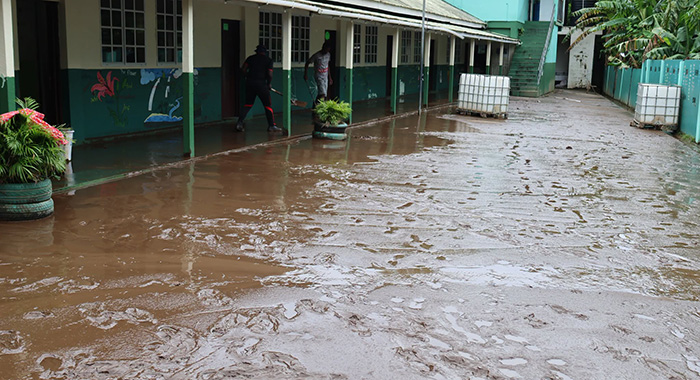
    In the wake of Hurricane Melissa’s destructive passage through western Jamaica, local communities are still navigating the long and difficult road to recovery. To address unmet critical health needs and compounding recovery challenges for storm-impacted populations, cross-sector community partners have launched mobile medical hubs that have already delivered care to close to 200 residents in the hardest-hit regions.

    The outreach initiative is led by Project STAR, in formal collaboration with multiple local and international health and community stakeholders. Services have been deployed directly to two high-need locations: Salt Spring in the parish of St James, and Savanna-la-Mar in Westmoreland.

    Official data released by Project STAR confirms that more than 50 local residents accessed care at the Salt Spring hub, while the Savanna-la-Mar site served more than 140 people, pushing the total number of beneficiaries to just under 200. Saffrey Brown, director of Project STAR, explained that the medical hubs are a core component of the organization’s broader post-disaster recovery framework, focused on lifting up vulnerable groups still struggling with the hurricane’s aftermath. Both targeted communities suffered extensive damage from severe flooding and widespread storm-related disruptions to critical infrastructure, including local healthcare facilities.

    “Every resident who attended the hubs received a full suite of primary healthcare services, ranging from one-on-one medical consultations, blood pressure screenings, blood glucose testing, and body mass index evaluations to targeted public health education,” Brown outlined. “A trained team of licensed healthcare professionals was on-site to deliver care and arrange follow-up referrals for residents requiring additional specialized treatment.”

    At the Savanna-la-Mar site alone, 136 residents registered to receive services. Women made up the large majority of attendees, with 94 female and 42 male residents accessing care. While working-age adults between 20 and 59 years old made up the largest demographic served, the initiative also extended care to 25 senior citizens and 15 children aged 12 and under. Of all registered attendees in Savanna-la-Mar, 96 completed all four recommended core health assessments, and more than 110 residents received consultations with licensed physicians. The hub also offered voluntary confidential screening for HIV and syphilis, which 32 residents opted to complete. Complementary non-medical community education sessions were led by representatives from the Jamaica Constabulary Force, the National Council on Drug Abuse, and the Restorative Justice Programme, covering topics ranging from public safety to substance abuse support.

    Felicia Kelly, chief financial officer and logistician for Integrative Clinics International (ICI), one of the partnering organizations, shared that the overwhelming unmet need created by Hurricane Melissa pushed her group to join the initiative in Westmoreland. With a team of 18 dedicated healthcare professionals, ICI led screenings for prevalent chronic conditions including hypertension and diabetes, in addition to providing general consultations and connecting residents to life-saving essential medications. “We brought our full range of resources to this community to make sure every resident can access the care and medication they need to stay healthy through this difficult recovery period,” Kelly noted.

    Beyond clinical healthcare services, the partnership also delivered critical humanitarian relief supplies to attendees, arranged through support from Global Empowerment Mission (GEM) Caribbean. The organization distributed care packages stocked with non-perishable food, personal hygiene products, and bedding, with priority distribution going to elderly and isolated residents.

    “Supporting public health and health-focused disaster recovery initiatives has been a core priority of GEM Caribbean’s Hurricane Melissa response strategy from day one,” explained Deika Morrison, executive director of GEM Caribbean. “We are grateful to Project STAR for the opportunity to collaborate on this vital work that meets so many immediate needs for our community.”

    Beneficiary residents have widely praised the outreach effort, describing it as a lifeline at a time when stable access to care remains out of reach for many. Krystal Taylor, a resident of New Market Oval in Savanna-la-Mar, shared her gratitude for the opportunity to access free clinical care and medication through the hub. “Getting free medications here today filled me with so much joy — this is real care for our community,” Taylor said. “It means the world, especially right now when so many of us are still working to get our lives back on track after the storm.”

    Brown emphasized that even as broader recovery efforts progress across western Jamaica, consistent access to affordable, basic healthcare remains one of the most pressing unmet needs for thousands of storm-affected residents. The community hub model was intentionally designed to remove common barriers to care, from transportation costs to long wait times at damaged facilities, while connecting local residents to ongoing care and support services. The initiative is part of a larger, long-term community recovery strategy that integrates healthcare access, psychosocial support, public education, and humanitarian aid to support residents as they rebuild their lives and communities in the months following the disaster.

  • Interim injunction barring JLP councillor from going at MP granted

    Interim injunction barring JLP councillor from going at MP granted

    A Jamaican Supreme Court justice has issued an interim court order on Monday blocking a ruling Jamaica Labour Party (JLP) councillor from spreading additional false and defamatory statements targeting the party’s own sitting Member of Parliament for Kingston Central, Donovan Williams.

    The temporary restraining order will remain in effect until July 13, when a judge is scheduled to review legal arguments from both sides and issue a more permanent ruling on the dispute. Confidential court documents related to the order were shared with the Jamaica Observer by an anonymous source close to the ongoing legal proceedings on the same day the injunction was granted.

    The conflict stems from an internal party rift that erupted earlier this year between Williams and Rosalie Hamilton, the JLP councillor for Kingston’s Rae Town Division — a constituency area that falls entirely within Williams’s Kingston Central parliamentary riding. The falling out prompted Hamilton to level a series of damaging allegations against Williams in a series of voice recordings shared internally.

    Hamilton has openly acknowledged sending the voice messages to a private JLP WhatsApp group for party members, but has maintained she never intended the recordings to leak to the public and spread widely across social media platforms. As tensions escalated, the councillor went as far as threatening to actively campaign against the JLP in upcoming parliamentary elections to ensure the party lost the Kingston Central seat.

    Williams formally filed his request for an injunction through his legal counsel, attorney-at-law Rodain Richardson, on March 26, nearly three months before the court’s Monday ruling. The terms of the interim injunction are broad: it explicitly bars Hamilton from creating or distributing any false or defamatory content targeting Williams, across any platform — including social media sites, messaging apps like WhatsApp, and any other public or private communication channel.

    Beyond blocking new statements, the court order also requires Hamilton, acting either personally or through any representatives or associates, to delete and retract all existing defamatory statements about Williams that have already been published or shared online. An additional supplementary order prohibits Hamilton and any connected parties from sharing any court documents, pleadings, evidence or other case-related materials on social media or any other public forum.

    This public dispute first made headlines in late March, when the Jamaica Observer published a report titled “JLP councillor unshaken by demand letter from fellow Labourite.” That initial coverage detailed that Hamilton, a long-tenured JLP official, remained undeterred despite receiving a formal legal demand letter from Williams’s legal team ahead of the injunction filing, after the defamatory voice notes leaked to social media. When approached for comment by the Observer at that time, Hamilton declined to make any public statement on the demand letter.

    Content from the leaked voice notes revealed the depth of Hamilton’s anger at Williams and the JLP. In one recording, she claimed party leadership was plotting to install a new candidate to challenge her in the upcoming JLP councillor nomination race for her seat. She rejected calls to participate in a party run-off vote, and threatened instead to run for re-election as an independent or on an alternate party ticket. “Everything is going in the media. You want a confrontation and me a go give you the confrontation. Mi a wait pon the right time,” she said in the recording.

    In another voice message, she made clear her goal to remove Williams from his parliamentary post, saying: “Mi a go campaign mek you lose. Mi ‘affi get rid a you. You mi ‘affi get rid of, mi nah ask you dat.”

    This is not the only legal action stemming from the inter-party feud: Hamilton has filed her own court action against Williams. Back in March, she submitted a cease and desist request to the court, claiming she feared for her personal safety and demanding that Williams stop all unsolicited contact with her. Williams has strongly denied ever making any unwanted contact with Hamilton, and has stated he will not be blocked from fulfilling his official duties as the elected Member of Parliament for Kingston Central.

  • Jamaica must position itself to take advantage of global advances in science and technology – Terrelonge

    Jamaica must position itself to take advantage of global advances in science and technology – Terrelonge

    MONTEGO BAY, St James — Against a backdrop of accelerating global change across technology, climate action and economic systems, Jamaica’s State Minister for Foreign Affairs and Foreign Trade Alando Terrelonge has laid out a clear roadmap for the island nation: leverage stronger collaboration with its global diaspora and international partners to capitalize on worldwide advances in science, technology and sustainable development.

    Terrelonge shared his vision during opening commencement remarks at the 11th Biennial Jamaica Diaspora Conference, hosted this week at the Montego Bay Convention Centre in St James. He framed rapid global transformation not as a threat, but as a rare opening to drive inclusive national growth and homegrown innovation for Jamaica.

    “Across every continent, we are seeing game-changing breakthroughs in science and technology, forward-thinking new frameworks for sustainable development, and creative partnership models that are rewriting how industries operate and lifting community living standards,” Terrelonge told attendees. “These leaps forward confirm what we have long believed: progress becomes achievable when bold vision is paired with unwavering determination, and when collective action backs national ambition.”

    A core pillar of Terrelonge’s argument centered on the unique strategic value of Jamaica’s diaspora community spread across the globe. He noted that diaspora members hold unmatched potential to bridge Jamaica to global expertise, cutting-edge emerging technologies, untapped international markets and critical new investment streams. Beyond financial and technological links, he added, diaspora leaders have long served as key facilitators of cross-border knowledge sharing and expanded access to global professional and policy networks that can accelerate Jamaica’s development goals.

    Terrelonge emphasized that in an era of increasingly interconnected and complex global challenges, from climate change to economic volatility, innovation cannot thrive in isolation. Meaningful, sustained collaboration across borders and stakeholder groups is non-negotiable for countries like Jamaica to navigate shifting global realities effectively.

    “Our world is undergoing rapid, far-reaching change right now. Technological breakthroughs, economic restructuring, pressing environmental threats, and shifting social norms are all reshaping how we think, live, work, and connect with one another,” he said. “Events like the biennial diaspora conference create irreplaceable space for diverse stakeholders to come together, exchange fresh perspectives, and co-develop practical, actionable solutions to the challenges we share.”

    Moving beyond talk, Terrelonge stressed that the true success of the conference will be measured not by the volume of panels or discussions, but by the tangible action that emerges in the months after the event closes. “The insights and agreements we hammer out here should shape national policy, guide development strategy, inspire new innovation, and deliver real, measurable benefits for all Jamaican people,” he said.

    He urged every conference participant to lean into the week’s activities, including breakout discussions, skills-focused workshops, and structured networking sessions, noting that enduring, impactful partnerships are almost always built through consistent, open dialogue and collaborative problem-solving. This year’s conference runs under the overarching theme “Diaspora Partnerships: Rebuilding a More Climate-Resilient Jamaica”, aligning with global efforts to address climate vulnerability in small island developing states.

    Closing his remarks, Terrelonge expressed measured optimism that the conference will deliver on its promises: it will reinforce long-standing ties between Jamaica and its diaspora, while opening new avenues for productive engagement that benefit the island nation for years to come.

  • Uruguay held 1-1 by Saudi Arabia at World Cup

    Uruguay held 1-1 by Saudi Arabia at World Cup

    MIAMI, United States (AFP) — On a scorching hot Monday in South Florida, Uruguay delivered a dominant attacking display against Saudi Arabia but was forced to walk away with a 1-1 draw, throwing the balance of Group H at the World Cup into thrilling uncertainty.

    The deadlock between Uruguay and Saudi Arabia came just hours after one of the most stunning upsets in the history of the men’s World Cup, when European champions Spain could only manage a scoreless 0-0 draw against tournament debutants Cape Verde in the same group.

    Playing in stifling, sweltering conditions that tested the endurance of every player on the pitch, Uruguay controlled large stretches of possession and created the majority of clear scoring opportunities. However, a resilient defensive performance from Saudi Arabia kept the South American side from converting more than one of their chances, securing a share of the points that upends early group stage expectations.

    Back-to-back drawn results across the group’s opening two matches mean that all four teams still have a realistic shot at advancing to the knockout round, with standings deadlocked early on and no side able to claim an early advantage. What was already anticipated to be a competitive group has become one of the most compelling storylines of the tournament’s opening stage, with every upcoming group match set to carry massive stakes for all sides involved.

  • World Cup ref cleared over ‘white supremacist’ gesture, says FIFA

    World Cup ref cleared over ‘white supremacist’ gesture, says FIFA

    In a recent development out of Los Angeles, global soccer governing body FIFA has issued a formal exoneration for Australian World Cup referee Shaun Evans, closing an investigation into allegations that he displayed a white supremacist hand gesture during a live televised match. The incident unfolded during Sunday’s international fixture between Germany and Curacao, where Evans was serving in the role of support video assistant referee. A broadcast frame captured Evans holding his right thumb and index finger together to create a closed circular shape, a positioning that online social media users quickly linked to a hand signal associated with far-right extremist factions. The widespread social media attention immediately prompted FIFA to launch a formal probe into the conduct of the official, who had been named to the 2022 Qatar World Cup referee panel. Within 24 hours of the allegation emerging, the FIFA Independent Disciplinary Committee completed its review and announced it had uncovered no evidence that Evans violated the organization’s disciplinary code. Responding to the controversy, Evans released a public statement pushing back on the interpretation of his hand movement, emphasizing the action was entirely accidental. He explained that the position of his hand was the result of an involuntary, subconscious muscle twitch, and that he had no awareness he was making the shape while on duty during the match. Evans went on to stress that he never intended to communicate any hateful ideology, signal affiliation with an extremist group, or make any intentional symbolic statement whatsoever. He acknowledged that the visual matched a gesture widely recognized as a hate symbol, and expressed regret that the incident sparked confusion and concern, but stood firm in his assertion that the action was completely unintentional. The swift closing of the case brings an end to a brief but intense controversy that divided opinion among soccer fans and observers online, with many arguing the social media rush to judgment overlooked alternative explanations for the innocuous hand movement.

  • Inflation rises to 5.4% as food, restaurant and energy costs climb

    Inflation rises to 5.4% as food, restaurant and energy costs climb

    KINGSTON, Jamaica — Jamaica’s cost of living pressures accelerated sharply in May 2026, pushing the country’s annual inflation rate up to 5.4% as households faced steeper bills for staple groceries, restaurant dining, utility services and transportation, official data released by the Statistical Institute of Jamaica (Statin) shows.

    The month-over-month consumer price jump came in at 1.5% in May, marking a complete reversal of the 0.3% contraction recorded in April and representing the steepest single-month increase in consumer costs since November 2025. This upward shift pushed the 12-month inflation rate — measured between May 2025 and May 2026 — up from the 4.3% reading recorded in April. While the current figure still falls within the Bank of Jamaica’s official target band of 4% to 6%, it now sits uncomfortably close to the upper limit of the central bank’s tolerance range.

    Food inflation emerged as the dominant force behind the overall price increase. The Food and Non-Alcoholic Beverages category registered a 1.9% monthly price jump, fueled almost entirely by sharp increases in locally grown fresh produce. Key staples including tomatoes, cabbage, carrots, ripe bananas and pineapples all saw double-digit proportional increases over the month, pulling the overall index for vegetables, tubers, plantains, cooking bananas and pulses up 4.8%. The fruit and nuts subcategory rose even faster, posting a 4.7% monthly increase. Smaller but still notable increases were recorded for fish and seafood (1.2%) and meat products (0.9%).

    Beyond grocery shelves, Jamaican consumers also faced significant price hikes when dining out. The Restaurants and Accommodation Services segment saw a 5.7% monthly surge, with the overwhelming majority of this increase traced to higher costs for meals purchased away from home.

    Housing and utility costs also contributed to the upward trend. The Housing, Water, Electricity, Gas and Other Fuels division recorded a 0.7% monthly increase, driven largely by elevated electricity rates. This upward pressure was partially offset by a temporary reduction in water supply and sewage service charges across much of the country.

    Transportation costs added another layer of pressure to household budgets, rising 0.9% month-over-month. The increase stemmed from higher retail petrol prices and a 3.1% jump in the ongoing cost of operating private passenger vehicles.

    The inflationary increase impacted all regions of Jamaica, but rural households bore the brunt of the price hikes. Statin data shows rural areas recorded a 1.7% monthly inflation rate, outpacing the 1.5% increase seen in other urban centers and the 1.3% rise in the densely populated Greater Kingston Metropolitan Area.

    Over the 12-month period ending in May 2026, cumulative food price inflation reached 8.7% — far outpacing the overall headline inflation rate of 5.4%. The most dramatic annual increase was recorded in the fruit and nuts category, which has soared 34.3% over the past year. Vegetables, tubers, plantains, cooking bananas and pulses have risen 10.4% year-over-year, while fish and seafood prices are up 11.7% from May 2025. Annual price increases for the Restaurants and Accommodation Services segment hit 6.9%, while transportation costs are up 3.1% over the same period.

    Notwithstanding the sharp May increase, Statin noted that the overall consumer price index remains 0.2% lower than its peak level in December 2025, a residual effect of broader price declines recorded in the first months of 2026. In absolute terms, the All-Jamaica Consumer Price Index rose to 149.6 in May, up from 147.4 in April.