博客

  • Grenada’s Coat of Arms: Visual identity of government

    Grenada’s Coat of Arms: Visual identity of government

    When Grenada gained independence in 1974, it adopted a suite of national symbols to anchor its new sovereign identity, among them the national Coat of Arms (COA). Co-designed by Anthony Conrad George BEM — who also crafted Grenada’s national flag, as outlined in his biography *Beyond Belief* — this emblem stands as the visual representation of the Grenadian government’s authority and the country’s public identity on the global stage.

    Across other Commonwealth nations, the coat of arms is widely recognized as a core marker of national sovereignty, reserved almost exclusively for official government use. In the United Kingdom, the Royal Coat of Arms serves as the foundational symbol of the national government’s identity, bringing consistent branding to government departments and public bodies, and ensuring all official entities are universally recognized as legitimate parts of the state and treated with appropriate institutional gravity. Jamaica’s official styling rules mandate that the national COA be positioned in prominent locations: the top left, top right, or center of all official documents, with department-specific logos placed either at the bottom center or directly below the COA in the top left corner. Australia’s official guidelines go a step further, requiring the national COA to always hold greater visual prominence than any other graphic, image, or text on official materials, and banning its use on content that features political party logos. For the UK’s Royal Coat of Arms, rules require that it always be paired with the relevant department or organization name at the top of all official communications, never altered, distorted, or modified, and given equal visual weight to partner logos when used in co-branding initiatives.

    Trinidad and Tobago’s government guidelines echo this priority, stating that the national COA “takes precedence over all other government sub-brands.” The country’s comprehensive, 30-plus-page rulebook sets clear parameters for the use of secondary ministry logos, custom organizational logos, and partnership logos to prevent these elements from conflicting or competing with the national COA. The framework also holds individual government agencies accountable for any violations of the official policy.

    In Grenada, the legal foundation for national symbol governance already exists: the *National Emblems and National Anthem of Grenada (Regulation) Act* grants the Prime Minister the authority to create binding regulations for the proper use of national emblems and the national anthem across all contexts. Yet unlike peer nations, Grenada has never adopted formal, standardized guidelines to ensure consistent, professional visual branding across all government departments and agencies.

    This lack of clear rules has led to widespread irregularities in how the COA is used in official government communications. Multiple ministries and their subsidiary divisions have adopted custom sub-branding, with the COA placed incorrectly or inconsistently across documents and press releases. In many cases, headers labeling content as a “Press Release” or “News Release” hold greater visual prominence than the name of the responsible line ministry — such as the Ministry of Planning, Ministry of Youth, or Ministry of Tourism — while in other instances, the ministry name or the COA itself is omitted entirely.

    For example, the Division of Culture falls under Grenada’s Ministry of Tourism, Creative Economy, and Culture, the Grenada Office of Creative Affairs (GOCA) is part of the Ministry of Planning and Economic Development, and the Division of Youth sits within the Ministry of Youth and Sports. But official releases from the Division of Culture have circulated with two different formats: one including the COA and one omitting it entirely. GOCA and Division of Culture logos have also been used without either the COA or the parent ministry name, incorrectly implying these bodies are standalone independent agencies.

    Other common issues include the COA being placed in direct visual conflict with ministry sub-brands, partnership logos, or event logos, with no consistent positioning across materials. In one case, the COA was repurposed as a decorative stamp for a collaborative event, placed over a patterned background that drastically reduced its visual prominence. The official Grenada government website only notes that the COA “appears on all official documents generally in black and white or, on more important occasions, in colour,” and for decades, individual ministries and departments have been left to use the emblem according to their own discretion. While these inconsistencies are not a new problem, the gradual emergence of new, unapproved design iterations of the COA has further eroded the national symbol’s authority and significance.

    Every official document that bears the Grenadian COA speaks on behalf of the national government, shaping how the administration and the country are perceived by both domestic audiences and the international community. The article’s author argues that the Prime Minister — or an official body designated by him — must urgently develop and implement formal guidelines to standardize the use of the national Coat of Arms, for both current and future versions of the emblem. These rules would cement a consistent, professional visual identity for the government across all official communications, covering all government initiatives and public services, and should be paired with regular compliance audits to ensure adherence. Without this action, the author warns that the continued incorrect and inconsistent use of the national Coat of Arms could eventually lead to legal or diplomatic complications for Grenada.

    This contributor commentary does not necessarily reflect the views of NOW Grenada. The outlet does not take responsibility for opinions, statements, or content shared by guest contributors.

  • St Kitts’ Jahzara Claxton named Player of T20I Series after Zimbabwe sweep – Associates Times

    St Kitts’ Jahzara Claxton named Player of T20I Series after Zimbabwe sweep – Associates Times

    A rising star from St. Kitts and Nevis has cemented her place in international women’s cricket after a standout all-round performance that propelled the West Indies Women’s national team to a dominant 3-0 T20I series sweep over Zimbabwe, earning her the well-deserved title of Player of the Series.

    Twenty-year-old all-rounder Jahzara Claxton, who hails from Sandy Point, St. Kitts, delivered consistent game-changing contributions across all three matches, finishing the tournament with a combined total of 73 runs and seven critical wickets to anchor the West Indies’ clean sweep victory.

    Claxton’s tournament run got off to a stunning start in the opening match on October 3, her first appearance on the senior T20 International stage. The young all-rounder put on a charismatic, high-energy performance, claiming two key Zimbabwean wickets that helped restrict the visiting side to just 16 runs. She followed up her dominant bowling with an unbeaten 31 runs to seal the win for the West Indies, and was rightfully named Player of the Match for her breakout debut.

    She continued her impressive form in the second fixture on October 5. While she only notched four runs with the bat, Claxton delivered another devastating bowling performance, picking up three wickets that again limited Zimbabwe’s batting to a low total of 14 runs, setting up her team for a second straightforward victory.

    In the series-closing third match on October 7, Claxton stepped up with the bat to anchor the West Indies innings, scoring 38 runs before adding two more wickets to her tournament tally for just 35 runs conceded. The all-round performance locked in the West Indies’ third consecutive eight-wicket win, completing the sweep and highlighting Claxton’s ability to impact the game in every department.

    The historic achievement has drawn praise from across St. Kitts and Nevis. Foreign Affairs Minister Dr. Denzil L. Douglas publicly congratulated Claxton in a social media post on Facebook, calling on the nation to celebrate her landmark international success.

    Claxton’s consistent, standout performances across the series have not only brought home a series win for the West Indies, but also solidified the reputation of St. Kitts and Nevis as a breeding ground for elite international cricket talent. The young all-rounder’s breakthrough tournament marks a source of national pride for her hometown Sandy Point and the entire federation of St. Kitts and Nevis.

  • Dames-linked boat captain jailed six years for cocaine

    Dames-linked boat captain jailed six years for cocaine

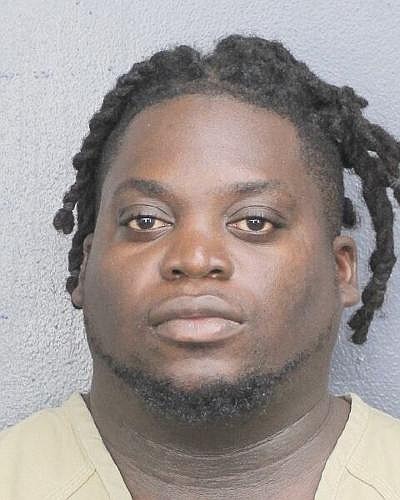
    A Bahamian boat captain, Malcolm Goodman, who was at the center of a high-profile drug arrest controversy earlier this year involving a vessel co-owned by former Bahamian National Security Minister Marvin Dames, has been sentenced to six years in a Florida federal prison — a term far shorter than the maximum penalty allowed by law and less than what federal prosecutors had initially requested.

    United States District Judge Melissa Damian handed down the sentence Wednesday, following Goodman’s guilty plea to one count of possession with intent to distribute cocaine. The 31-year-old’s sentence fell below the 9-to-11-year range recommended by both prosecution and defense under federal sentencing guidelines. While the offense carries a mandatory minimum 10-year sentence and a maximum of life imprisonment, Goodman’s plea agreement qualified him for a reduced sentence under a federal provision that allows leniency for eligible offenders.

    Goodman’s conviction caps months of court proceedings and public debate over his business ties to Dames, a former Deputy Commissioner of Police who served as national security minister in the previous Minnis administration of the Bahamas. Goodman was first taken into custody on February 11, when U.S. Coast Guard officers intercepted his 45-foot vessel, the M/V Reel Xperience, roughly four miles off the coast of Fort Lauderdale, Florida. Goodman was the only person on board; the vessel had departed from New Providence, and he told authorities he had been at sea for approximately seven hours.

    According to a sworn affidavit from Jose Alvarez, a taskforce officer with the U.S. Department of Homeland Security, a routine customs search turned up brick-shaped packages of cocaine stashed in the vessel’s common area and a stateroom. The packages, which totaled roughly 200 kilograms and were wrapped in cellophane, were visible without requiring an extensive search. Officers also found approximately 248 bottles of cough syrup stored in a plastic bin. Authorities have stated that Goodman voluntarily admitted responsibility for the drugs before being read his Miranda rights, and later declined to answer questions without his attorney present.

    Goodman initially entered a plea of not guilty to two charges: possession with intent to distribute a controlled substance, and importation of a controlled substance. After months of plea negotiations, however, he struck an agreement with prosecutors and changed his plea to guilty on July 15. As part of the deal, prosecutors agreed to drop the importation charge. The agreement also required Goodman to cooperate fully with authorities, disclose full details of the offense, and assist in asset forfeiture proceedings for property gained through illegal activity.

    Ahead of sentencing, Goodman’s defense attorney, Jay Allen White, pushed Judge Damian to issue a sentence well below the recommended guidelines range, arguing that Goodman had turned to drug trafficking out of financial desperation rather than long-term criminal ambition. In court filings, White explained that his client had accumulated significant debt while trying to support his young son and grandmother. He also noted that aspects of the operation suggested Goodman was not an experienced drug trafficker: the cocaine was left in plain sight, he did not attempt to conceal the vessel’s movements, and he made no effort to evade law enforcement. White added that Goodman had not received any advance payment for transporting the drugs, and had only agreed to the trip based on a promise of payment after delivery.

    The defense submitted 16 character references from family members, friends, religious leaders, and former colleagues, all of whom described Goodman as a hardworking father and experienced maritime professional with no prior criminal record. The nature of Goodman’s business connection to Dames became a major point of public controversy following his arrest. In a September sentencing submission, White revealed that Goodman had invested $20,000 of his own savings in 2023 to acquire a 30% stake in Reel Xperience Boat Charters LLC, the company that co-owned the vessel alongside Dames.

    This account contradicts Dames’ earlier public statements, in which he described Goodman as primarily an employee that he and his wife had helped establish professionally. Dames has previously said the business arrangement did not begin until 2024, and has maintained that neither he nor his wife had any knowledge of, participation in, or benefit from Goodman’s criminal activity. He has also stated that they never authorized or approved any unlawful conduct, and would cooperate fully with any official investigation. Back in April, Dames noted that he had not been questioned in connection with the case, and compared the situation to allowing an employee to use your vehicle without knowing they are transporting illegal items. Dames and his wife had also moved to recover the vessel, on which they were still repaying a large outstanding loan. In response, U.S. prosecutors later notified the court that they would no longer seek permanent forfeiture of the vessel.

    The case drew significant political attention in the Bahamas because Dames was running as the Free National Movement’s candidate for Mount Moriah at the time of Goodman’s arrest. To date, Dames has consistently denied any involvement in the drug trafficking operation, and no charges have been filed against him in connection with this case.

  • Impetigo fears force closure of two more primary schools

    Impetigo fears force closure of two more primary schools

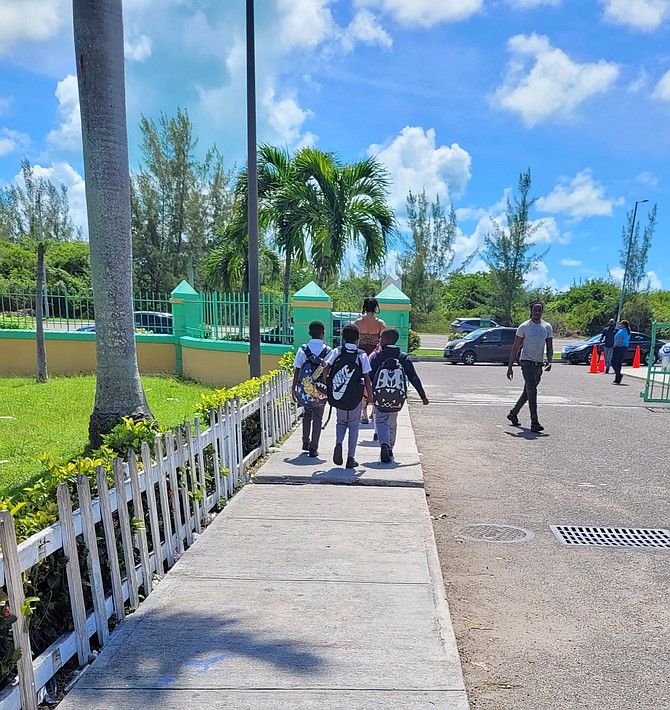
    A growing public health scare has forced the early closure of two additional public primary schools in the Bahamas, sparking widespread frustration among parents and exposing sharp rifts between school administrators and teaching staff over poor communication protocols.

    Sadie Curtis Primary School and EP Roberts Primary School both dismissed students early Wednesday and will remain shuttered through the long National Heroes Day weekend, with classes scheduled to resume next Tuesday, the country’s Ministry of Education, Science and Technology has confirmed. The shutdowns mark the third and fourth public schools impacted by suspected impetigo outbreaks in less than a week, following earlier closures at Gambier Primary School and Samuel Guy Pinder Comprehensive School in Spanish Wells.

    The crisis unfolded after teaching staff at both institutions raised formal complaints that school leaders failed to keep them updated on the spread of suspected infections, prompting multiple union interventions and mass staff walkouts by midday Wednesday. For parents of students at Sadie Curtis Primary, the lack of official communication created chaos: dozens of caregivers told reporters they only learned of the early dismissal through secondhand alerts from other parents or social media group chats, with no direct notification sent by the school administration.

    One mother, who only discovered the shutdown when she arrived on campus to drop off lunch for her son, shared her frustration with reporters. “If I didn’t come to bring my little boy lunch, I would have never known what was going on, and he would have been here all day,” she said. “That ain’t fair.” Another parent with two children aged five and eight at the school confirmed she received an alert about the closure via a phone call from another parent, while a third caregiver said she only saw notice of the early dismissal in a parent community group chat. By Wednesday afternoon, crowds of parents were still arriving at the campus, parking along roadsides and inside the school compound as uniformed students waited for pickup behind the main courtyard gate.

    Vernon Rogers, area vice-president of the Bahamas Union of Teachers (BUT), explained that staff had already flagged multiple suspected cases of impetigo, scabies, and other contagious skin rashes to administrators at Sadie Curtis, but grew frustrated after repeated requests for transparent updates went unanswered. Teachers gathered in the staff room at 8:45 a.m. to request a formal briefing from the school principal, but Rogers alleged the principal refused to address their concerns. “The teachers are finding out after the fact, rather than being proactive, and so that has created a problem in the school today,” Rogers said. Following the unsuccessful meeting, teachers contacted union representatives and signed out at noon, invoking Article 15.9 of their industrial agreement, which protects staff from unsafe working conditions that threaten health and safety.

    Alexander Burrows Jr, president of the Bahamas Public Services Union, which represents roughly 15 custodial and clerical workers at Sadie Curtis, said his organization received reports of three suspected impetigo cases at the school, though the cases have not been formally confirmed by health officials. The union encouraged its members to leave the campus after the staff walkout. Burrows added that while administrators confirmed a professional company would conduct a full deep cleaning of the campus, he has been unable to connect with the principal or district superintendent to discuss the response to the outbreak. He stressed that open cooperation between administrators and unionized employees is critical to addressing workplace health concerns effectively.

    At EP Roberts Primary School, Keysha LaRoda, president of the Bahamas Educators, Counsellors and Allied Workers Union, said her organization first raised concerns about the outbreak with the Ministry of Education on Tuesday. She noted that initial cleaning had already been completed at the school, but the work did not cover the entire campus. After union representatives pushed for further action, the ministry agreed to order a full deep cleaning of both EP Roberts and Sadie Curtis, leading to the decision for early dismissal at both institutions.

    LaRoda took a public stance against the decision by BUT members to invoke Article 15.9, arguing that unions should follow established escalation procedures laid out in their industrial agreements. Her members signed out at their regular midday lunch break, and she said she would have advised against triggering the health and safety provision because the ministry had already finalized plans to close the schools. “They have already done the resolve so that schools could be dismissed, you give time for the parents to come pick up your children,” she said.

    Union officials have also offered conflicting accounts of the number of suspected cases at Sadie Curtis Primary: Burrows cited three unconfirmed cases, while LaRoda put the number at four. As of Wednesday, the Ministry of Education had not released an official count of suspected infections. The outbreak has already impacted other schools across the country: Gambier Primary, which closed earlier this month over suspected impetigo and was cleared to reopen this coming Monday after a deep clean, saw new suspected cases reported on Tuesday, prompting BUT president Belinda Wilson to urge teachers to walk off the job.

    Deputy Prime Minister and Minister of Education, Science and Technology Chester Cooper outlined the government’s response Wednesday, saying officials are working to contain the spread of the infection while minimizing disruption to student learning. Cooper confirmed that impetigo is highly contagious but not life-threatening, and deferred further public health guidance to the Ministry of Health. “The Minister of Health advises that it happens this time of year generally,” Cooper said. “It’s of great annoyance and could be painful, but it’s not life-threatening, so we want to make sure that we’re not losing instructional time for the majority of our students by trying to really curtail the spread in schools.”

  • Two men acquitted of Grand Bahama double murder

    Two men acquitted of Grand Bahama double murder

    After six years of lingering legal uncertainty hanging over their lives, two Bahamian men walked free from the Supreme Court in Grand Bahama on Wednesday, after an eight-member jury delivered not guilty verdicts on charges of a high-profile 2020 double murder. Trevor Reckley Jr. and 23-year-old Shamaz Brown, who was just 15 when he was first charged, were cleared of murdering Kim Smith and Denny Rolle – two men gunned down in a broad-daylight public shooting on Freeport’s Limewood Lane on May 11, 2020. The jury returned its 6-2 not guilty decision after closed-door deliberations, concluding a weeks-long trial that exposed serious allegations of coercive police misconduct during the investigation.

    Prosecutors from the Office of the Attorney General had argued that Reckley acted as the getaway driver, providing a firearm and driving Brown and a third accused suspect, Dillon Williams, to the attack site in a dark Honda Accord just after 3 p.m. According to the Crown’s narrative, Denny Rolle was standing on the street near a parked blue Ford Focus when gunfire erupted from the sedan. Rolle was struck multiple times and succumbed to his wounds later in hospital, while Kim Smith, who was inside the vehicle at the time, died at the scene of the attack.

    The prosecution’s case relied heavily on two key pieces of testimony: a claimed confession from Brown, and witness testimony from Williams, who told investigators he saw Brown open fire on the two victims. But both defendants forcefully denied any involvement in the killings from the beginning of the trial, and Brown made explosive allegations of abuse by police while in custody. He told the court that after he was taken into custody as a minor, officers at the Criminal Detective Unit repeatedly slapped him, punched him in the abdomen, and placed a plastic bag over his head to coerce him into confessing to a crime he said he had no part in. Reckley similarly rejected all prosecution claims, denying he drove the co-accused to the scene, provided a weapon, or encouraged the attack.
    Following the delivery of the verdict, Justice Andrew Forbes formally discharged both men, thanked the jury for their service, and confirmed the pair were free to leave custody. Speaking to reporters outside the courthouse, both men described the acquittal as a massive weight lifted after half a decade of disruption to their lives.

    Brown, who just turned 23, noted the case had hung over him from the middle of his teenage years, blocking him from building a stable adult life. “I feel amazing just to know I get off something that I had nothing to do with,” he told reporters. “I just thank God. He brought me from far, He stayed with me from the start. This is a new beginning for me.” Brown acknowledged he has a separate, unrelated legal matter pending, but emphasized it was nothing compared to the gravity of the double murder charges he just cleared. He also repeated his allegations of police coercion after the verdict, saying “That’s a normal thing they do – they beat you when they can’t get you to confess. They will try to beat it out of you, to make you lie on yourself.”

    Reckley echoed that sense of relief, while also outlining the personal and professional damage the six-year case caused. “I feel I would have gone further if I didn’t have this obstacle in my way,” he said. “I lost my job and everything, and now I could finally go back to my life and tell people what happened. This is one of the sweetest things you could ever experience.” Reckley also extended sympathy to the families of the two victims, while reaffirming his innocence: “I really feel sorry for the victims’ family, but I am an honest man. I didn’t know nothing of the crimes.” He thanked his family for standing by him throughout the long legal process.

    Defense attorneys celebrated the verdict, while also calling for systemic changes to Bahamian policing practices to root out coercive interrogation tactics. Ryszard Humes, Reckley’s lawyer, said the defense team had identified critical gaps and weaknesses in the prosecution’s evidence from the start. “We’re happy with the verdict today,” Humes said. “We had significant concerns about gaps in the evidence led by the prosecution, and my client consistently denied any involvement. We believe the jury reached the correct decision.”

    Krystal Newman, Brown’s defense counsel, raised broader concerns about repeated allegations of improper police conduct in criminal investigations across the country. She noted that defense attorneys regularly encounter clients who claim they were pressured into making false confessions or statements, and argued that this coercive practice should not be accepted as standard procedure. “Such conduct should not be accepted as routine policing, and we need further training to ensure all officers follow proper investigative procedures,” Newman said. “You cannot build a case on things that are not true, and you cannot gather a confession through those sorts of violent means.”

    The case marks the end of a six-year legal saga that began when Reckley and the then-minor Brown were charged within days of the 2020 shooting. Sean Smith represented the Attorney General’s Office throughout the trial proceedings.

  • Cancer concern over poison in mangroves

    Cancer concern over poison in mangroves

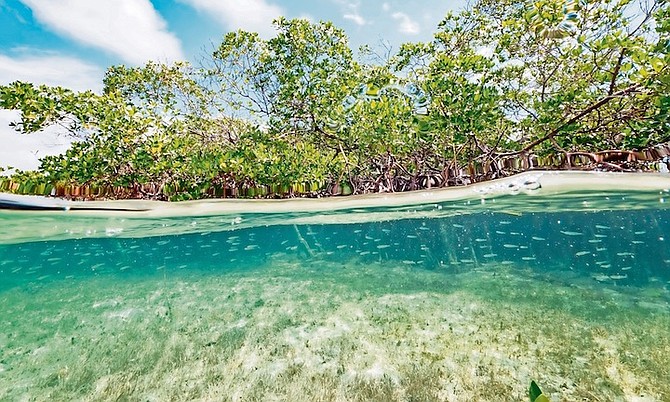
    A landmark new study led by researchers from the University of The Bahamas has uncovered alarming levels of the toxic, cancer-linked heavy metal cadmium in mangrove sediment along East Grand Bahama, with some concentrations exceeding international reference benchmarks by more than 700 times. The findings, set for official publication October 20 in the *International Journal of Bahamian Studies*, have prompted urgent calls for targeted public health precautions at the most contaminated sites and exposed that heavy metal pollution in Bahamian coastal mangrove ecosystems may be far more widespread and severe than scientific communities previously recognized.

    To conduct their investigation, the research team – led by lead author Antonio Cadet and including Veronica Toppin, Tamia Hamilton, Carlton Watson, and Williamson Gustave – collected 48 sediment core samples from 12 sampling sites across two distinct study zones: East Grand Bahama and Dover Sound. Dover Sound was chosen for its proximity to existing industrial operations and waste management facilities, while East Grand Bahama was selected as a comparative less-industrialized control site. Samples were extracted from the top 20 centimeters of sediment and processed for heavy metal analysis at the university’s on-campus Soil and Complex Matrix Laboratory.

    The results defied initial research expectations. Across East Grand Bahama, the average cadmium concentration reached 442.58 milligrams per kilogram of sediment, dwarfing the study’s reference benchmark of just 0.6 milligrams per kilogram. At the most polluted locations, cadmium levels hit more than 700 times the reference value. In Dover Sound, by contrast, the average concentration was 25.64 milligrams per kilogram, and cadmium was undetectable at three of the site’s five sampling points. Beyond cadmium, the team also found elevated levels of antimony above reference thresholds at both study sites, while copper concentrations exceeded safe benchmarks in Dover Sound.

    When compared to similar coastal and mangrove heavy metal studies conducted around the world, the cadmium concentrations recorded in East Grand Bahama were substantially higher than almost all previously documented cases. To assess potential human health risks, researchers applied the standardized risk screening framework developed by the United States Environmental Protection Agency (EPA), which models exposure through three common pathways: accidental ingestion of contaminated sediment, inhalation of fine sediment particles, and direct dermal contact.

    Under this assessment, every calculated cancer risk estimate linked to the observed cadmium concentrations surpassed the EPA’s threshold for potential concern for both adults and children. For non-cancer adverse health effects, the average estimated risk exceeded the EPA’s safety threshold for children, and the highest recorded concentrations also crossed the threshold for adult risk. Children are identified as a particularly vulnerable population because their smaller body mass translates to higher proportional exposure to toxic substances relative to their size.

    The research team emphasized that these risk estimates are based on standardized exposure assumptions, and the study does not confirm that any local resident has already developed cancer or other illness as a result of the contamination. Additionally, the analysis focused exclusively on mangrove sediment, not on fish, shellfish, or other local seafood, leaving critical unanswered questions about potential cadmium exposure through the coastal food chain.

    Ecological risk assessments found that most sampling sites qualified as “very high risk,” a classification driven almost entirely by the extreme cadmium concentrations. Interestingly, a combined pollution index averaging concentrations of all tested heavy metals did not classify either study area as universally polluted. Researchers warned that this aggregate measurement is deeply misleading, as it can hide extreme localized contamination of individual toxic metals, making it unreliable as a standalone indicator of environmental danger.

    The study also notes that the true scale of cadmium enrichment may be even greater than reported. Because The Bahamas currently lacks locally established baseline reference values for heavy metals in mangrove sediment, the research team relied on reference data from Cuban soils. Cuban soils are primarily clay-based, which naturally retain heavy metals more effectively than the carbonate-based sediments that are characteristic of Bahamian coastlines. This means local baseline cadmium levels in The Bahamas are almost certainly lower than the reference values used, so the gap between natural background levels and the recorded contamination is larger than the study’s current calculations indicate.

    To date, the exact source of the cadmium contamination remains unconfirmed. Researchers have outlined multiple plausible anthropogenic (human-caused) contributors, including untreated industrial discharge, improper municipal and commercial waste disposal, and stormwater runoff that carries contaminated material into coastal ecosystems. Local public concerns about widespread illegal dumping around Freepont were also noted, with electronic waste flagged as a potential source of cadmium, arsenic, and other heavy metals. Another possible contributing factor is Hurricane Dorian, the catastrophic storm that devastated Grand Bahama in 2019. Researchers hypothesize that widespread flooding and storm surge could have redistributed existing contaminated material across the coastline, but without pre-hurricane baseline sediment data, they cannot confirm Dorian’s role in the current contamination levels.

    This study is the first peer-reviewed, published investigation of heavy metal contamination and its associated ecological and human health risks in Bahamian mangrove sediment. Prior Bahamian environmental research has examined heavy metal levels in cave sediments, coastal shark populations, seagrass beds, and Abaco marinas, and a recent comprehensive review of Caribbean heavy metal pollution did not include data from The Bahamas. The research team stresses that their findings underscore an urgent need for long-term, sustained monitoring of heavy metal contamination – particularly for cadmium and antimony – and the urgent development of local reference baselines tailored to The Bahamas’ unique carbonate sediment ecosystems. They also recommend expanding similar pollution surveys to other Bahamian islands and conducting detailed follow-up assessments at the three most contaminated East Grand Bahama sites to clarify the actual extent of human exposure.

    The research is published amid growing global concern over the rapid decline of mangrove ecosystems, which provide critical coastal storm protection, habitat for commercial and endangered species, and carbon sequestration services, but face growing pressure from unregulated development and pollution. Global data indicates that approximately 35 percent of all the world’s mangrove ecosystems have been lost since the mid-20th century. Researchers say their findings will provide critical data to inform local environmental management and national policy development, including the country’s long-term Vision 2040 development framework.

    The study was funded by the Wilson Grant and The Nature Conservancy, and will officially launch to the public on October 20, with a presentation of findings at the Harry C Moore Library auditorium on the University of The Bahamas campus. The event is open to all members of the public.

  • Mom condemns son’s public humiliation over bike theft

    Mom condemns son’s public humiliation over bike theft

    A widely circulated series of videos documenting the public shaming of a 9-year-old boy caught stealing a bicycle has sparked intense online debate, after the child’s mother spoke out against the excessive, degrading treatment her son endured at the hands of vigilantes.

    Charliece Saunders, a single mother raising eight children, does not deny her son’s wrongdoing — she has already punished him for the theft herself — but argues that no child deserves to be suspended from a fence, recorded, and have his humiliation shared across social media for public entertainment. The entire incident unfolded on a Monday earlier this year, when surveillance context captured the theft play out. An adult man had locked his bicycle outside a local corner store before stepping inside to shop. A group of teenage boys had gathered nearby with their own bikes, and Saunders’ 9-year-old, who was waiting on the handlebars of one of the older boys’ cycles, seized the opportunity to steal the parked bicycle and ride off with the group.

    It did not take long for the group to be confronted by a man who had tracked them down. In a second video titled “Culprit Caught”, the man films the group as the other boys immediately turn on the 9-year-old, pointing him out as the thief while jeering and laughing. The aggressor grabbed the child by the arm, threatening that he would be “locked up” for his actions. A third video that circulated online showed the boy crying, hanging from a residential fence by the back of his shirt, as the person recording mocked his distress.

    When the incident took place, Saunders was working a shift at a local fast-food restaurant, where employees are banned from using personal cell phones on the clock. It was not until she returned home that she was able to see the viral footage, and learned that her son had already come home that day without telling her about the public punishment he had faced.

    Saunders explained that her son has repeatedly fallen in with a group of older boys who take advantage of his young age and willingness to follow direction, despite her constant efforts to keep him separated from the group. She noted this is not the first time the group has convinced him to participate in theft: he was previously involved in stealing a motorbike alongside the same crew. “They never should have hung him on the fence,” Saunders stated in an interview. “They should have brought him to me and let me know what he did instead of hanging him on the fence and recording it and posting it like it’s a joke. I can see on the video they persuading him to move the bike. But then now it’s only him on social media but it was a lot of them together when it happened.”

    The hard-working mother pushed back against unspoken online criticism that her son’s behavior stemmed from inadequate parenting. Though raising eight children alone comes with significant financial and logistical challenges, Saunders says she works hard to provide for all of her kids, with support from extended family, and her son’s poor choices do not reflect a lack of care or attention at home. “I just want the public to know I’m not a bad mother,” she said. “Anything my children want they get, but he’s just easy to be persuaded.”

    Days after the initial incident went viral, a second viral moment reignited public debate: a video surfaced showing a man gifting the 9-year-old a brand-new bicycle for his upcoming birthday, while the boy was at home with his grandmother and uncle. The public gesture split online opinion: some argued that giving a bicycle to a child who had just stolen one rewarded bad behavior, while others countered that the boy had already faced far harsher punishment than he deserved. Saunders again questioned the need to share the moment publicly, saying she would have preferred any act of kindness to remain private rather than being posted online for clout. Since the incident, Saunders has punished her son by banning him from leaving the house for recreational outings, and she does not plan to let him ride the new gifted bicycle any time soon.

  • Mother’s last embrace with only son before fatal motorcycle crash

    Mother’s last embrace with only son before fatal motorcycle crash

    A Bahamian family is grappling with unfathomable grief after a sudden roadside collision claimed the life of 37-year-old motorcyclist Tyrone Paul, leaving behind two young sons and a mother clinging to the memory of their final, unanticipated goodbye.

    Betty “Rochelle” Mader, Paul’s mother, shared that just 24 hours before the October 5 crash, her only son had carried her luggage through the airport and pulled her into a warm embrace. That hug, a routine act of love between a mother and son, would be their last. The following morning, just after 8 a.m. south of John F Kennedy Drive on Gladstone Road, Paul’s motorcycle collided head-on with a Subaru traveling in the opposite direction, killing him at the scene.

    Originally from Grand Bahama, Paul had relocated to New Providence just over a year prior. He leaves behind 13-year-old Tyrone and 11-month-old Tyre, who is set to mark his first birthday on October 21. For Mader, the deepest pain lies in all the milestones her son will never get to experience, and the childhood his youngest child will spend without a father.

    “I don’t get to see him walking down the aisle. His children don’t see that. Him not being there for his children, the baby will never know him,” Mader said in an interview shared with local media.

    Paul, who was widely known to his loved ones as “T”, had been riding motorcycles for roughly 14 years, earning a reputation as an experienced rider. While Mader never fully supported her son’s passion for motorcycling, she respected his autonomy as an adult and accepted his choice.

    Preliminary findings from local police indicate Paul was traveling northbound when he entered the southbound lane, striking the oncoming Subaru. The force of the impact threw Paul from his red and white Honda 650 onto the pavement, where he succumbed to his injuries. First responders found Paul unresponsive near his motorcycle, and the other driver’s Subaru sustained extensive front-end damage.

    In a surprising act of grace amid her grief, Mader said she is grateful to the other driver involved, who remained at the scene and even prayed with her son before emergency services arrived. She told reporters she hopes to meet the person one day to express that gratitude in person. “That was truly a blessing. That is someone that I would like to meet,” she said.

    Beyond the details of the crash that ended his life, Mader wants the world to remember her son as the charismatic, caring connector who bound communities and families together. Throughout his childhood and teenage years, Mader often opened her home to as many as six of Paul’s friends at a time, many of whom remain close to the family decades later.

    “He built foundations for people by building communities, drawing families together, and those people are still in our lives today,” Mader said.

    She described Paul as a loyal, respectful, and dependable person whose larger-than-life personality lit up every room he entered. “When he entered the room, he was the star. No matter what it was that was taking place in his life, he was like the star. He was like the crackerjack, the smile, the gift in the box.”

    For Mader, the most cherished memories are not grand events, but quiet, honest conversations the pair shared over the years. Paul always encouraged his mother to speak openly about her troubles, and even when their discussions grew tense, he never dismissed her feelings. Those small moments, she said, were the foundation of the unbreakable trust they shared.

    The tragedy has also left Mader with a urgent lesson to share with others: that no one knows when their last moment with a loved one will come, so it is critical to prioritize people over possessions and cherish every second together.

    “You don’t know the last one. That’s why we have to truly embrace every minute, every moment, and value people and not things,” she said.

    Today, Mader is coping with her loss one day at a time, drawing comfort from the memories she shared with her son and the countless lives he touched during his too-short life. When asked what she would say to Paul if she could speak to him one more time, Mader’s voice softened as she returned to the bond that shaped both of their lives.

    “That’s my baby, man. That’s my baby. That’s my baby no matter what,” she said. She added that she always made sure Paul knew how proud she was of him, and that he would always have his mother’s support. “I always reminded him I’m proud of him. No matter what, his mommy got him. That’s something he knows, ‘mommy got you’.”

  • Grand Bahama residents demand action, not more promises

    Grand Bahama residents demand action, not more promises

    As Bahamas Prime Minister Philip Davis prepares for a major public address focused on Grand Bahama, local residents and community leaders are growing increasingly frustrated with broken promises and delayed action, calling for concrete, time-bound plans for two transformational projects at the heart of the island’s economic recovery: the redevelopment of Grand Bahama International Airport and the Grand Lucayan resort. For years, the Davis administration has repeatedly assured the public that work on these high-stakes initiatives is moving forward, but little visible progress has materialized, eroding public trust and leaving residents uncertain about the island’s economic future. Back in January 2025, Davis announced that the first phase of the airport redevelopment — a $100 million investment critical to boosting tourism and visitor access — had entered the ground preparation stage. Just months later, in May 2025, the government signed a heads of agreement with developer Concord Wilshire for an $800 million overhaul of the long-stagnant Grand Lucayan resort. Yet despite these high-profile announcements, questions around actual construction timelines and completion dates have lingered, fueling widespread discontent. Former Cabinet minister Peter Turnquest, one of the most vocal critics of the government’s approach, emphasized that Grand Bahama needs far more than vague updates on isolated projects. He argued the island is still waiting for a cohesive, overarching strategy to reverse economic decline, revitalize its struggling tourism sector and diversify into new industries as traditional industrial activity continues to contract. “What we really do not need to hear is more of the same,” Turnquest said. “What we need to hear is solid plans, solid developments that are in train with timelines that we can all understand and plan around.” Turnquest pointed to the island’s collapsed golf sector as a stark example of unaddressed decline, noting that what was once a six-course industry has been completely wiped out. He also questioned the broader economic benefits of ongoing cruise port developments, arguing that self-contained on-board facilities often keep tourist spending confined to cruise lines rather than flowing to local small businesses and operators. Beyond tourism and infrastructure, Turnquest highlighted a years-long delay in the construction of a new local clinic, which has remained unfinished for six to seven years. Residents still have no clarity on what services the facility will offer once complete, including whether it will provide inpatient care, and the lack of accessible specialized care — such as chemotherapy and cataract surgery — is not only harming residents’ health but also driving away potential investors and second-home buyers, he added. Local residents echoed Turnquest’s frustration, with many singling out the airport redevelopment as their top priority. Sarah Kirkby, a Grand Bahama resident, said the current temporary terminal and substandard passenger facilities remain a major turnoff for visitors, and called on Davis to deliver a clear completion date rather than another empty announcement. “I sincerely hope he is not coming simply to make another announcement about an announcement — like the hotel project that was announced, knocked down, and then patched up a few days later,” Kirkby said. She stressed that Grand Bahama’s consistent contributions to the national treasury deserve greater urgency from the central government, arguing that a fully functional upgraded airport and sufficient hotel inventory are non-negotiable foundations for supporting local small businesses. “A meaningful announcement for Grand Bahama would be a firm commitment, with a firm timeline, to finally get our airport completed,” she said. For resident Don Martin, the airport delays and the ongoing cost of living crisis — particularly sky-high fuel prices and persistent inflation — are the most pressing issues facing everyday residents. He said repeated government assurances have failed to deliver even basic clarity on when major projects will be finished, leaving residents feeling disillusioned. “If you ain’t doing something with gasoline and you ain’t showing me the blueprints for the airport and some other things, I really don’t care,” Martin said. Shavonne Munnings, a Grand Bahama taxi driver who relies on cruise ship passengers for most of her income, shared that poor air access has been compounded by unfair port transportation policies that favor large tour buses over local taxi operators. Munnings explained that many drivers go multiple cruise ship calls without picking up a single fare, sometimes waiting two to four days between jobs. “You wait almost two up to four boat days to get a job,” Munnings said, calling on the government to revise cruise port transportation rules to give local drivers a fair shot at earning a living. Not all local leaders expressed frustration, however. Veteran unionist Michelle Dorsett struck a more optimistic tone, noting that the government’s ongoing outreach to the Grand Bahama Port Authority and efforts to attract new investment represent positive steps forward. She acknowledged that large-scale development projects inherently take time, but stressed that residents need to see tangible, visible progress at both Grand Lucayan and Port Lucaya in the near term. Dorsett also emphasized that any new economic investment must benefit the entire community, not just a small group of large corporate investors. Benefits need to extend to straw vendors, frontline hospitality workers, sanitation staff and local small business owners, she said, adding that her hope is that new investment will lift living standards across the island rather than concentrating gains among a small elite.

  • Wanted: Chidi Uzomba

    Wanted: Chidi Uzomba

    Law enforcement authorities in Barbados are turning to the public for critical support as they hunt for a Nigerian national identified as Chidi Uzomba, who is currently a person of interest in an active serious criminal investigation.

    The Barbados Police Service confirmed in an official appeal that investigators require Uzomba to undergo questioning to advance progress on the ongoing case. Per the instructions issued by police, if Uzomba locates the appeal, he is instructed to turn himself in at any Barbados police facility, and is permitted to bring a legal representative of his own choosing to accompany him during the process.

    Community members and any members of the public who hold information about Uzomba’s current location are urged to reach out to authorities immediately through multiple dedicated channels. Tips can be submitted to the national police emergency hotline at 211, the anonymous Crime Stoppers hotline at 1-800-8477, or by visiting the closest local police station in person. Law enforcement officials note that any information provided will help speed up the investigation and ensure the process moves forward fairly and efficiently.