博客

  • Grenada’s Accountant General to chair regional public financial management engagement

    Grenada’s Accountant General to chair regional public financial management engagement

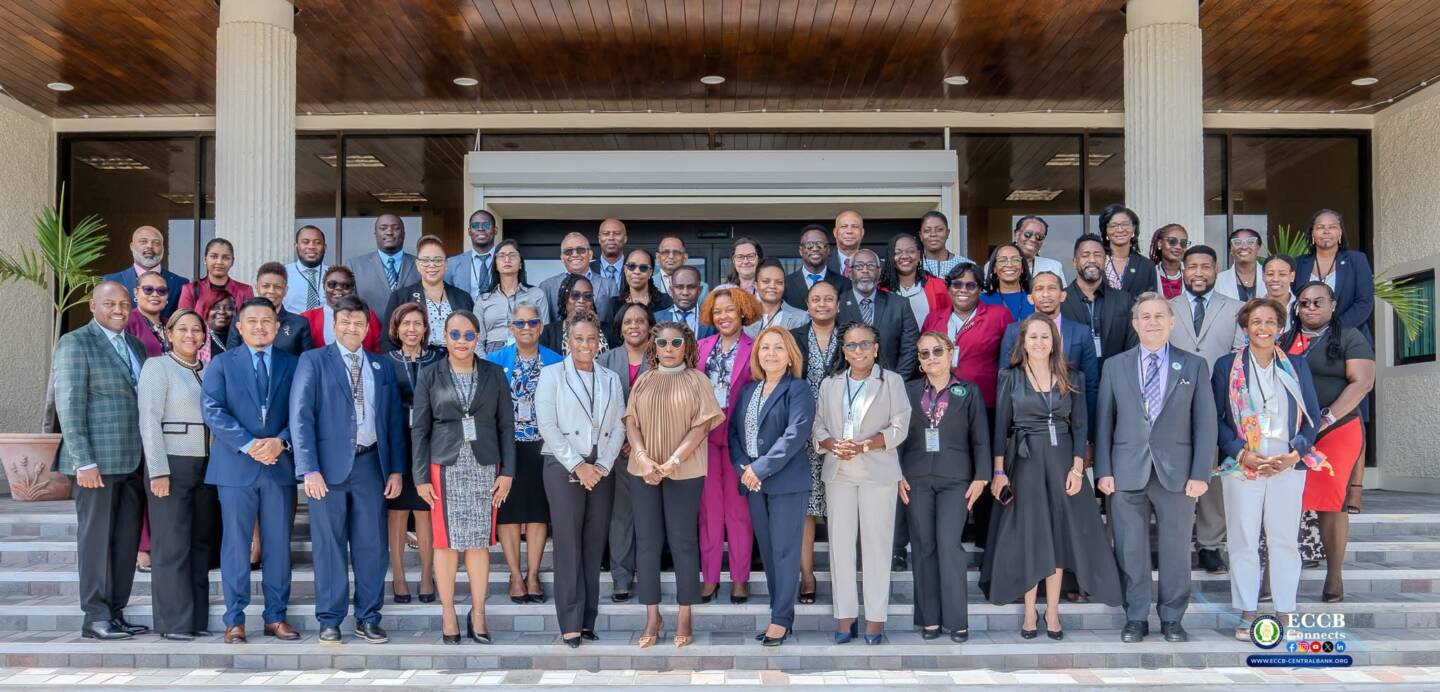
    From June 29 to July 1 2026, the Eastern Caribbean Central Bank (ECCB) headquarters in St Kitts and Nevis played host to a landmark regional gathering: the 2026 Caribbean Public Financial Management (PFM) and Public Expenditure and Financial Accountability (PEFA) Roundtable. Representing Grenada at the event was Natika Bain-Charles, the country’s top accounting official who also took on a new leadership role for the pan-Caribbean initiative during the roundtable.

    Bringing together accountants general from 19 Caribbean nations alongside seasoned public financial management practitioners, international development partners, leading regional institutions and specialized technical experts, the three-day roundtable was designed to confront shared systemic challenges and unlock collaborative opportunities to reinforce public financial management frameworks across the entire Caribbean region. The centerpiece of the opening day was two high-stakes components: the official Caribbean Accountant General Network Council Meeting and the long-awaited formal in-person launch of the regional network itself.

    Bain-Charles, who was formally appointed as Chairperson of the network’s Executive Committee during the gathering, led the council meeting through pivotal discussions that shaped the organization’s vision, core mission and long-term strategic trajectory. The meeting also included a knowledge-sharing exchange with the Forum of Governmental Accounting of Latin America (FOCAL), where representatives shared insights from FOCAL’s decades of work advancing regional cooperation, technical skills development, and cross-border dissemination of best practices across Latin America.

    Though the network was formally established during a virtual inaugural assembly held on December 10 2025, following months of iterative discussion among regional accounting leaders, public officials and international development partners, the St Kitts and Nevis launch marked its official entry into operational work. To date, 21 Caribbean countries have formally signed on to membership in the collaborative body.

    The network was founded to fill a critical gap in regional governance: it provides a structured, sustained platform for cross-border cooperation, peer-to-peer learning, targeted capacity building, and the exchange of specialized information and technical expertise between accountants general across the Caribbean. Beyond knowledge sharing, the organization also aims to drive greater harmonization of public sector accounting standards, operational practices and standardized terminology across all member states, streamlining regional financial cooperation.

    Addressing attendees at the official launch on June 29, Bain-Charles emphasized the historic nature of the moment. “Your presence at today’s historic launch is an indication of a shared commitment among Caribbean Accountant Generals and our Development Partners to build resilient public institutions, strengthen public financial management, and foster a community of practice that will benefit not only our respective countries but all Caribbean Citizens,” she said.

    Beyond the network’s founding activities, the full three-day roundtable program also included a dedicated Caribbean Public Financial Management Forum and a two-day intensive PEFA workshop. The workshop is designed to deepen participants’ understanding of the PEFA assessment framework, its core methodology, and how it can be leveraged to design and implement impactful public financial management reforms across member states.

    In her opening remarks to the PFM Forum, Bain-Charles framed the gathering as a turning point for regional financial governance. “Today marks a defining moment in the evolution of public financial management in the Caribbean, bringing us together as custodians of our region’s financial integrity, united by a common purpose. I encourage you to share your experiences and ideas on how we can further strengthen public financial management for the benefit of all Caribbean citizens,” she noted.

    The landmark roundtable and network launch was brought to fruition through a collaborative partnership between the Eastern Caribbean Central Bank, the Inter-American Development Bank, the World Bank, the Caribbean Regional Technical Assistance Centre and the PEFA Secretariat.

    Grenada’s central leadership role in the new network underscores the country’s longstanding commitment to advancing accountability, transparency, institutional capacity and robust financial governance across the Caribbean public sector. In a statement following the launch, Grenada’s Ministry of Finance expressed enthusiasm for the country’s role in the initiative, noting that it welcomes the opportunity to contribute meaningfully to regional dialogue and support the development of stronger, more resilient public financial management systems across the entire Caribbean region.

  • Over 1,300 Deaths Linked to Heatwave in Europe

    Over 1,300 Deaths Linked to Heatwave in Europe

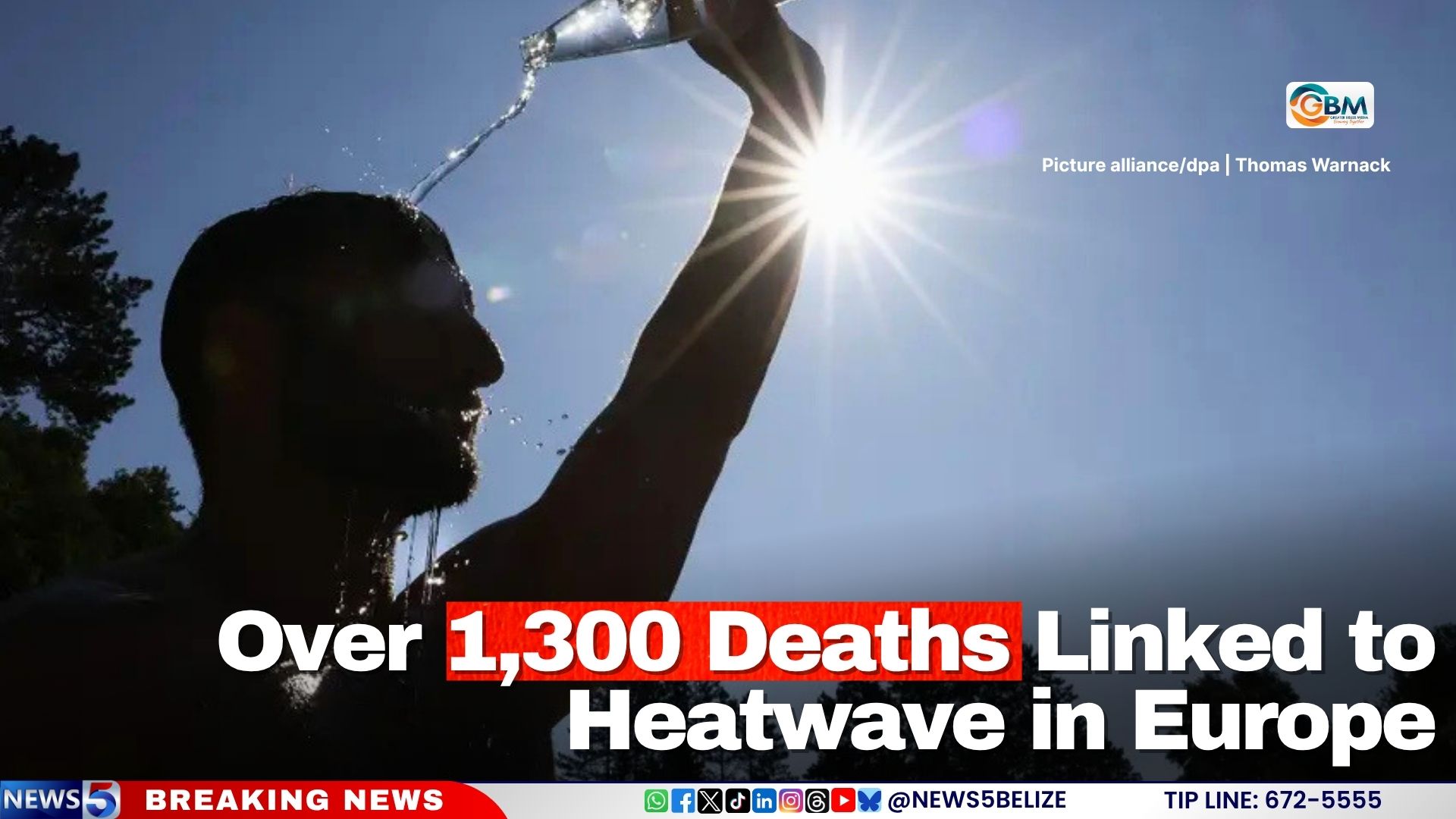
    In what has become one of the deadliest early summer heat events in recent European history, a sprawling extreme heatwave sweeping across the continent has been connected to more than 1,300 excess deaths as of late June 2026, according to global health officials. The World Health Organization’s top leader has sounded an urgent alarm over the deadly conditions, highlighting a critical flaw in European infrastructure that has left populations vulnerable to rapidly climbing temperatures.

    Dr. Tedros Adhanom Ghebreyesus, Director-General of the WHO, shared the warning in a public post on the social platform X, noting that most residential buildings, commercial workplaces and educational facilities across Europe were never designed to withstand the unprecedented high temperatures that climate change has made increasingly common.

    The heatwave has already smashed national temperature records across multiple Central and Western European nations. Germany has marked three straight days of all-time high temperature readings, with a peak of 41.7°C recorded in the country’s eastern region. Neighboring Czechia has recorded temperatures as high as 41.1°C during the event, while Poland hit a new national all-time high of 40.5°C.

    France has seen some of the steepest rises in mortality tied to the heat. The country’s health ministry confirmed that roughly 1,000 more people than the seasonal average have died since just the prior Wednesday. The sharpest increase in fatalities has been among people over the age of 65, and the number of people dying at home has jumped 40% compared to typical periods. French officials have also recorded at least 74 drowning deaths since the heatwave began, most occurring when people attempted to cool off in natural bodies of water like rivers and lakes.

    Meteorologists have explained the extreme conditions are driven by a persistent “heat dome” weather pattern. This phenomenon occurs when a large mass of high-pressure air becomes trapped over a region. The high-pressure system causes air to sink toward the surface, where it compresses and warms up. The system also blocks the formation of cooling clouds, allowing solar radiation to continue heating the ground and push temperatures even higher over time.

  • Derde helft WK 2026: Noorwegen met 2-1 over Ivoorkust nog net naar volgende ronde

    Derde helft WK 2026: Noorwegen met 2-1 over Ivoorkust nog net naar volgende ronde

    A dramatic late finish at the men’s World Cup saw Norway secure a spot in the round of 16 on Monday, courtesy of a late match-winning goal from star striker Erling Haaland that sealed a 2-1 victory over Ivory Coast. With the fixture seemingly on course to go to extra time after both sides had settled into a 1-1 draw, Haaland struck with just four minutes left on the clock to break Ivory Coast’s brave resistance and book his nation’s place in the knockout stage.

    From the opening kickoff, Ivory Coast dominated possession and put together sharp, organized build-up play that forced Norway to drop deep into their own half to avoid conceding an early opener. The African side wasted no time creating their first clear chance: as early as the 7th minute, Nicolas Pépé found himself unmarked behind Norway’s defensive line, but he stumbled the opportunity after being caught off guard by the space he had been afforded. In the 21st minute, Ghislain Konan had another promising opening to put Ivory Coast ahead, but his effort drifted just wide of the right post.

    After the mandatory hydration break, Pépé was handed another golden opportunity, this time from a perfectly weighted through ball by Yan Diomandé. Once again, the winger failed to convert, letting Norway off the hook. Norway’s first clear chance did not come until the 37th minute, when Alexander Sørloth picked out Haaland inside the box, but the Manchester City striker’s header lacked the power needed to beat Ivory Coast goalkeeper Yahia Fofana. Two minutes later, Antonio Nusa broke the deadlock with a well-placed diagonal shot that beat Fofana at his near post, putting Norway ahead 1-0. Haaland thought he had doubled Norway’s lead just moments before halftime, but Ibrahim Sangaré made a critical goal-line block to keep the scoreline at 1-0 going into the break.

    In the second half, Ivory Coast continued to push for an equalizer, and came close in the 55th minute when Pépé’s shot was blocked by Norway’s goalkeeper. The African side finally got their equalizer in the 74th minute, when substitute Ahmad Diollo pulled off a spectacular individual run before finishing with a clinical strike to level the score at 1-1. Over the following 12 minutes, both sides traded half-chances but neither could find a decisive breakthrough, leaving most observers expecting 30 minutes of extra time to decide the winner.

    That was until the 86th minute, when Haaland – who had been largely quiet throughout the match up to that point – was on hand to tap home a low cross from close range, securing a 2-1 win for Norway. The result means Norway progresses to the tournament’s round of 16, while Ivory Coast, despite a valiant and energetic performance, exits the competition, punished for their profligacy in front of goal that saw them waste multiple clear chances throughout the 90 minutes.

  • Jogi uit vergaderzaal gezet na uitlatingen over voorzitter Adhin

    Jogi uit vergaderzaal gezet na uitlatingen over voorzitter Adhin

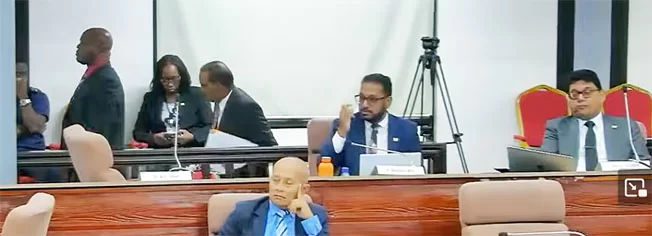
    A scheduled budget debate in Suriname’s National Assembly was abruptly halted Wednesday after a sitting lawmaker refused to comply with a direct order from the body’s top leader, sparking a rare public display of partisan friction that delayed proceedings for nearly an hour.

    The confrontation began when Mahinder Jogi, a parliamentarian from the ruling VHP party, raised unsubstantiated allegations of misconduct against the Management Institute Land Registration and Land Information System (MI-GLIS), a body under the Ministry of Land and Forest Management. During the second round of debate on the ministry’s annual budget, Jogi presented claims based on unsourced information he said he had received, accusing the agency’s new leadership of nepotistic family appointments and unauthorized procurement of an official vehicle. He directed these questions directly to Minister Stanley Soeropawiro, demanding public clarification on the alleged mispractices.

    Assembly Speaker Ashwin Adhin intervened quickly to call Jogi to order, asking the lawmaker to provide documentary evidence to back up his public claims. When Jogi declined to produce proof, noting he only sought answers from the minister rather than making formal confirmed accusations, Adhin ruled that unsubstantiated allegations could not be permitted in official parliamentary proceedings, and ordered Jogi to retract his comments.

    Jogi rejected the speaker’s ruling outright, escalating the confrontation with harsh personal criticism of Adhin’s leadership. In remarks captured on the assembly floor, Jogi publicly labeled Adhin the “worst speaker in [the National Assembly’s] history,” and added an off-mic remark calling Adhin “worthless.”

    Leadership from multiple opposition and ruling party factions rallied to Adhin’s support. Jerrel Pawiroredjo, leader of the NPS opposition faction, joined other assembly members in backing the speaker’s position, emphasizing that parliament has a fundamental responsibility to handle unconfirmed information with extreme care, and that unproven public accusations against public officials violate the body’s procedural rules.

    To defuse the growing tension, Adhin agreed to a recess requested by VHP faction leader Asis Gajadien, who attempted to negotiate a resolution with Jogi behind closed doors. When the assembly reconvened, Jogi still refused to clarify which remarks he was ordered to retract, and declined to comply with Adhin’s order to leave the debating chamber.

    In a move to avoid further public escalation, Adhin declined to call in law enforcement to remove Jogi, out of respect for his status as an elected representative. Instead, he asked the lawmaker’s own party colleagues and Assembly Vice President Ronnie Brunswijk to mediate the dispute. After private talks with Brunswijk, Jogi ultimately agreed to exit the chamber voluntarily, allowing the budget debate to resume its scheduled business.

    The public disruption is one of the most high-profile parliamentary clashes in Suriname in recent months, highlighting growing tensions over procedural accountability and partisan conduct amid ongoing budget negotiations for the 2026 fiscal cycle.

  • Prime Minister Browne Sets the Record Straight on Alfa Nero — U.S. Appeals Court Already Ruled in Antigua’s Favour

    Prime Minister Browne Sets the Record Straight on Alfa Nero — U.S. Appeals Court Already Ruled in Antigua’s Favour

    In a recent public address aimed at ending ongoing speculation around the high-profile Alfa Nero superyacht dispute, Prime Minister Gaston Browne of Antigua and Barbuda has moved to set the record straight, confirming that a U.S. federal appeals court has already issued a ruling that upholds Antigua and Barbuda’s legal position in the case.

    The Alfa Nero, a 269-foot luxury superyacht linked to sanctioned Russian oligarch Andrey Guryev, has been at the center of a tangled international legal battle since Antigua and Barbuda seized the vessel in 2022 and later auctioned it off to a private buyer to recoup unpaid docking and maintenance fees. The auction process drew international attention, and conflicting claims about the legal status of the sale and ownership of the yacht have circulated in global media in recent weeks, creating uncertainty around the outcome of the dispute.

    Addressing these lingering ambiguities, Browne emphasized that the U.S. Court of Appeals for the Eleventh Circuit has formally rejected the challenges brought against Antigua and Barbuda’s actions, handing the Caribbean nation a clear legal victory. The prime minister noted that the ruling reinforces the legitimacy of the seizure and auction process that Antigua and Barbuda pursued after the yacht’s owner abandoned the vessel at the country’s Falmouth Harbor, leaving local authorities to cover hundreds of thousands of dollars in ongoing upkeep costs.

    Browne also pushed back against misinformation that has circulated about the case, stressing that the country followed all appropriate international legal protocols throughout the process. The ruling from the U.S. appeals court, he explained, removes a major layer of legal uncertainty for both the government of Antigua and Barbuda and the new private owner of the superyacht, closing one of the most contentious chapters in the recent international legal battle over assets linked to sanctioned Russian individuals.

  • Two Persons Charged with Teen’s Murder

    Two Persons Charged with Teen’s Murder

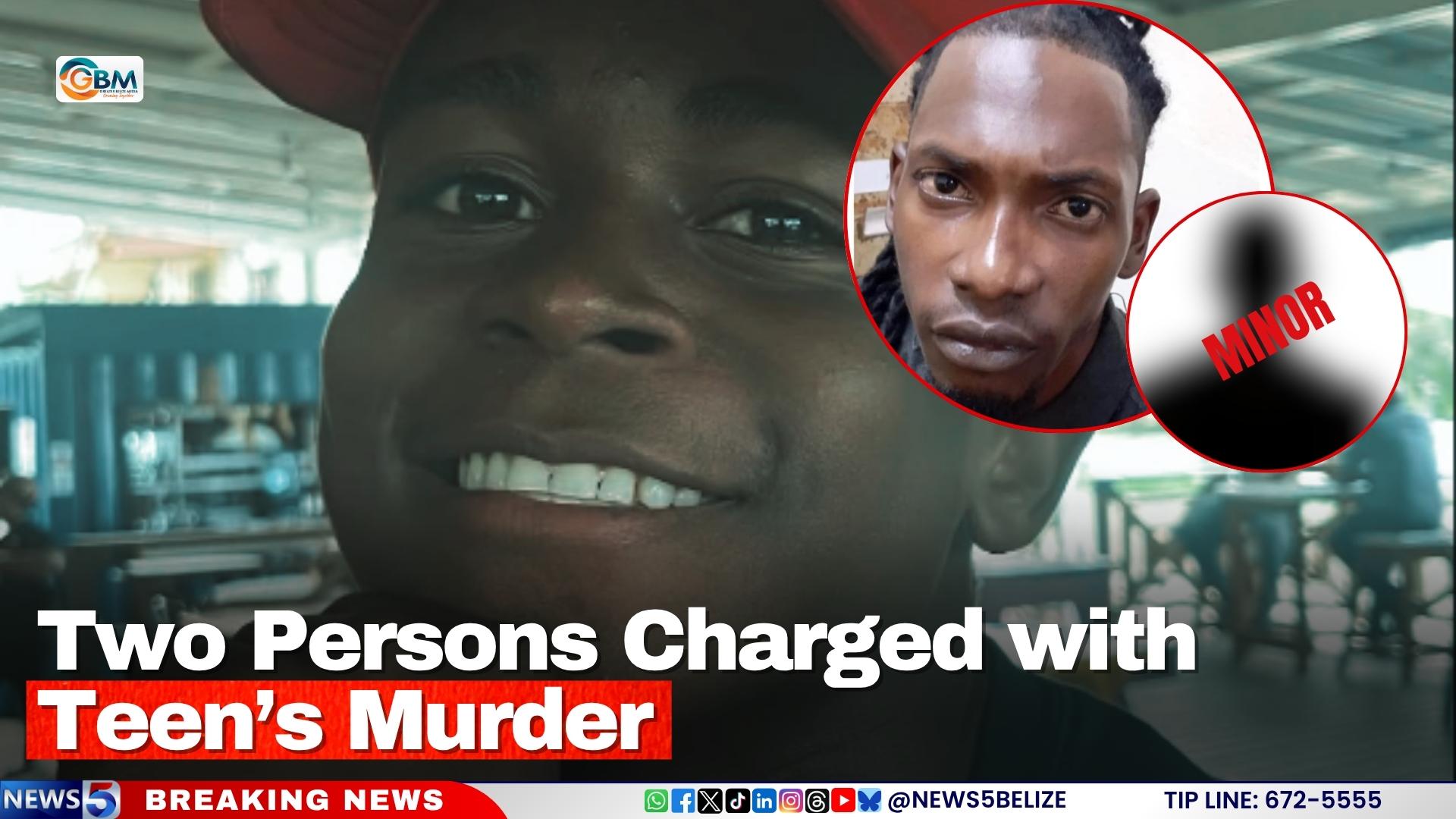
    In a developing criminal investigation out of southern Belize, law enforcement officials have lodged formal murder charges against two people accused in the fatal early morning shooting of 16-year-old Isaiah Norales, who was gunned down while cycling through a neighborhood in Dangriga this past Sunday.

    The two accused are 25-year-old Naheem Bonilla, a local welder and resident of Dangriga Town, and a 17-year-old juvenile male, also from the same community. Belizean law prevents public identification of minor defendants in most criminal cases.

    According to Assistant Commissioner of Police Hilberto Romero, who leads the country’s National Crime Investigation Branch, the deadly violence unfolded just after 5:00 a.m. on Penn Road in the Benguche area of Dangriga. As Norales rode his bicycle through the residential zone, two men traveling on a motorcycle pulled alongside him, and one of the pair fired multiple shots at the teen before fleeing the scene.

    First responders rushed Norales to a local medical facility for emergency care, but his wounds proved fatal, and he was pronounced dead shortly after arrival. Romero told reporters that lead investigators have traced the killing back to a pre-existing personal conflict between Norales and the two accused parties.

    Family members of the victim shared new details about Norales’ short life in an interview with local outlet News Five, explaining that the teen had been orphaned at a young age and had been living with extended family members who worked hard to shield him from dangerous community influences. In a critical break for the investigation, relatives also confirmed that Norales was able to identify his attacker to authorities before succumbing to his injuries.

    The charges mark a major milestone in the early investigation, with legal proceedings expected to move forward in the coming weeks as the court system processes the case against the two defendants.

  • Windies Women exit after semifinal defeat

    Windies Women exit after semifinal defeat

    West Indies’ run at the 2024 ICC Women’s T20 World Cup came to an end at the semi-final stage on Tuesday, as defending champion Australia secured an emphatic eight-wicket victory over the Caribbean side at London’s iconic Oval ground.

    West Indies won the coin toss and opted to bat first, getting off to a blistering start in the mandatory opening Powerplay. By the end of the six overs, the side sat comfortably at 35 runs for no loss, with skipper Hayley Matthews cruising on 28 not out and opening partner Quianna Joseph yet to be dismissed on six. The tone of the innings shifted dramatically in the first ball of the ninth over, however, when Matthews was sent back to the pavilion for a 28-ball 30.

    What followed was a dramatic collapse for the Caribbean outfit: from 47 for one after Matthews’ dismissal, West Indies slumped to 83 for six by the 16th over, reawakening long-standing concerns over the team’s inconsistent middle-order batting. Among the underperforming batters, Joseph managed only 16 runs after her strong start, Chinelle Henry added just 10, and established stars Stefanie Taylor and Jahzara Claxton both recorded ducks.

    The game took an alarming turn before the first ball was even bowled, when veteran all-rounder Deandra Dottin suffered an unexpected medical issue immediately following the national anthem, requiring assistance from teammates to be carried off the field. After receiving extensive on-site medical care, Dottin returned to the dugout by the end of the 14th over, and was able to step out to bat at number eight when West Indies lost their sixth wicket. In a display of remarkable toughness, Dottin hit an unbeaten 26 runs off just 16 deliveries, anchoring a late lower-order recovery that lifted West Indies to a final total of 125 for seven off their full 20 overs. Shemaine Campbelle contributed 22 runs to the final total, while Jannillea Glasgow remained unbeaten on 13 at the other end.

    For Australia, the bowling attack was evenly spread, with Sophie Molineux, Ashleigh Gardner and Georgia Wareham each claiming two wickets apiece to dismantle the West Indies batting line-up.

    Chasing a modest target of 126 for a place in the final, Australia dominated the chase from the outset. The Southern Stars reached the required total in just 13 overs, finishing at 127 for two to seal the win. Opener Beth Mooney led the charge with an unbeaten 61 runs off 36 balls, while all-rounder Gardner – named Player of the Match for her contributions with both ball and bat – hit 35 runs off 20 deliveries. Hayley Matthews and Karishma Ramharack took one wicket each for West Indies, but could not slow Australia’s momentum.

    The result books Australia a spot in an eighth consecutive Women’s T20 World Cup final, extending their unprecedented streak of dominance in the tournament’s modern era.

    In post-match comments, Matthews reflected on West Indies’ campaign, acknowledging the side never found their top form throughout the knockout stage. The Caribbean team won their opening three group-stage matches before dropping their final three group games to scrape into the semi-finals. The captain added that Dottin’s pre-match medical incident was deeply unsettling for the entire squad.

    “To see her almost passing out during the national anthems was a bit scary. But yeah, she was able to come back and also play like that – it speaks volumes to her character,” Matthews said. The skipper explained that the last-minute uncertainty over Dottin’s availability disrupted the team’s batting strategy: “We wanted to put Australia under pressure early, but we weren’t sure if she would be able to bat, so we had to adjust our plan to take the innings deep. It was a difficult situation to navigate.”

    Despite the semi-final exit, Matthews said the squad could leave the tournament with pride. “To get to the semi-finals when we didn’t have any super standout individual performances shows we all chipped in as a team. We have a lot more players stepping up into key roles, and this experience will only make us better going forward,” she added.

  • Whose Job Is It to Protect a Child? This is Belize’s Child Protection Plan

    Whose Job Is It to Protect a Child? This is Belize’s Child Protection Plan

    In a landmark shift toward prioritizing youth welfare over punitive justice, Belize’s National Committee for Families and Children (NCFC), in partnership with UNICEF, launched a transformative five-year national Child Protection and Child Justice initiative on June 30, 2026. The new strategy replaces fragmented, reactive approaches to handling children who interact with the justice system — whether as victims, witnesses, or alleged offenders — with a unified, nationwide coordinated framework.

    The rollout of the initiative coincided with a Child Justice Guidelines Validation Session held in Belize City, where stakeholders gathered to review and approve core operating rules that center privacy, rehabilitation, and diversionary programming. The overarching goal of these guidelines is to steer young people away from cycles of crime and support their successful reintegration into community life, rather than exposing them to the harms of traditional punitive justice processing.

    NCFC Director Shakira Sutherland emphasized that the entire framework is built around centering children’s fundamental rights in every decision-making process. “No matter what role a child has in a legal interaction, their right to protection comes first,” Sutherland explained during the session. “At the end of the day, they are still children, and their rights deserve to be prioritized above all else.”

    A key core protection outlined in the new guidelines is the mandatory withholding of personal identifying information for any child involved in legal proceedings. Sutherland noted that this policy protects both the mental and physical well-being of young people, reflecting the country’s new, serious commitment to holistic child safety. Additionally, the framework places significant emphasis on diversion programmes, currently being finalized by Belize’s Department of Human Services and Community Rehabilitation Department. These programmes are designed to give children in conflict with the law an alternative path to traditional court processing and punishment, focusing on rehabilitation rather than penalty.

    The validation session included input from a broad range of stakeholders, including parents, children, and youth representatives serving as child parliamentarians. Joselynn Campos, one of the participating child parliamentarians, highlighted that the new guidelines fill a longstanding gap in Belize’s youth protection system. For years, Campos noted, children who came into contact with the law were routinely left in more vulnerable positions due to inadequate, improper handling of their cases. “These guidelines help us truly center the experiences and emotions of these young people, and understand the context behind their actions,” she explained. “That’s a critical change that has been needed for a long time.”

    Looking ahead, the next phase of the initiative is full nationwide implementation, a step that Sutherland stressed will require collective buy-in across all levels of Belizean society. Child protection is not the responsibility of a single government agency, she noted: it requires active engagement from parents, local communities, multiple government ministries and departments, and the general public. “This is everybody’s concern,” Sutherland said, framing the new strategy as a shared national commitment to protecting Belize’s most vulnerable young people.

  • Sandals National Learn to Swim Week. We Ready!

    Sandals National Learn to Swim Week. We Ready!

    Grenada is gearing up to host its annual Sandals National Learn to Swim Week between July 6 and 10, capping off a foundational instructor upskilling program that aims to raise the bar for swimming education across the island nation, including its smaller sister islands Carriacou and Petite Martinique. This year’s event brings a major upgrade to local swim instruction: for the first time, Grenadian instructors have completed the internationally accredited Discover Water Swim Instructor Course developed by global governing body World Aquatics.

    The rollout of the program traces back to earlier this year, when the Grenada Amateur Swimming Association (GASA) sponsored Tara Baksh, Grenada’s newly appointed national Discover Water lead, to attend a specialized training conference in Aruba. Baksh returned with full certification to deliver the World Aquatics-endorsed curriculum to local instructors, marking the first time the standardized program has been brought to the country.

    Unlike traditional training that focuses heavily on stroke technique, the Discover Water program takes a holistic approach to building capable, confident swimmers. Beyond core swimming skills, the curriculum trains instructors to embed water safety, survival protocols, critical decision-making in aquatic environments, and confidence-building into every lesson. All participating instructors also completed full CPR certification as part of the training. The program emphasizes modern, child-centered teaching methods designed to make lessons more engaging, fun, and effective for young learners.

    Reflecting on the recent training sessions for local instructors, Baksh highlighted the high level of engagement among participants. “The instructors were engaged, eager to learn, and willing to participate both verbally and practically. I felt I was able to demonstrate how to incorporate fun into every lesson while still teaching children the core swimming skills they need,” Baksh said. She noted that while local instructors already had foundational teaching experience, the program added critical new tools to their practice: “This course has provided them with valuable tools for communicating more effectively with younger swimmers, so they understand what they are doing, why they are doing it, and how to think critically and solve problems in the water.”

    Looking forward, Baksh and local swimming advocates have ambitious plans to embed this global training standard into Grenada’s national swimming ecosystem. She aims to make the Discover Water certification a permanent core requirement for all new swim instructors in the country, through ongoing collaboration with GASA and local non-profit Get Grenada Swimming. Longer-term goals include expanding the child-centered teaching methods to primary schools and after-school programs across all three islands.

    This year’s Sandals National Learn to Swim Week will run from 9 a.m. to 12 p.m. daily across 15 different locations spanning Grenada, Carriacou and Petite Martinique. The event is coordinated by Get Grenada Swimming in partnership with Sandals Grenada, aligned with the organization’s long-running mission to ensure every child in Grenada has access to free swimming training, an essential life-saving skill. For families unable to join during the official event week, additional follow-up lessons will be offered between July 13 and 24 at six participating locations: Grand Anse, Grand Mal, Gouyave, St Mark, Sauteurs, and Grenada Marine in Corinth. These extended sessions are run in partnership with the Ministry of Sports’ Holiday Recreation Programme.

    With a cohort of newly certified instructors, evidence-based global teaching methods, and expanded access across the country, 2025’s Learn to Swim Week is positioned to be the most impactful iteration of the event to date. All lessons offered during the initiative are completely free for participants. Families interested in registering their children can sign up through the official Get Grenada Swimming website at www.getgrenadaswimming.com, or direct questions to the event hotline at 404-5237.

  • Senator Malaka Parker Calls for Comprehensive Reform of Search Warrant Laws to Strengthen Justice, Accountability and Public Confidence

    Senator Malaka Parker Calls for Comprehensive Reform of Search Warrant Laws to Strengthen Justice, Accountability and Public Confidence

    ST. JOHN’S, Antigua — During Monday’s senate debate over the 2026 Magistrate’s Code of Procedure Amendment Bill, opposition Senator Malaka Parker has delivered a forceful call for sweeping, systemic reform of Antigua and Barbuda’s fragmented search and seizure legislation, arguing that balanced, clear statutory frameworks protect both public safety and constitutional rights for all citizens and law enforcement officers alike. Parker stressed that the current regulatory landscape for search warrants is scattered across multiple overlapping statutes, including the national constitution, which already enshrines strict protections against arbitrary searches and unlawful invasions of privacy. While the opposition openly backs efforts to equip law enforcement with robust tools to tackle rising crime, Parker warned that expanding police authority without matching upgrades to procedural safeguards poses a direct threat to the fair administration of justice.