博客

  • Pierre pledges people-centred CARICOM agenda as he prepares to take chairmanship

    Pierre pledges people-centred CARICOM agenda as he prepares to take chairmanship

    As Saint Lucia’s Prime Minister Philip J. Pierre prepares to take the helm of the Caribbean Community (CARICOM), he has put forward a bold, people-first agenda aimed at closing the gap between the regional grouping and the daily lives of ordinary Caribbean citizens. Pierre made his policy priorities public in an official statement released on Monday, just 24 hours ahead of his formal transition into the rotating chairmanship of the 15-member regional integration body.

    In his address, Pierre framed his assumption of the chairmanship as a solemn commitment to the Caribbean people, saying he takes on the role “with humility, determination, and a deep sense of service” to communities across every member state. He emphasized that the core founding principle of CARICOM — that collective action delivers far greater progress than individual nations can achieve alone — is more relevant than ever, as the Caribbean navigates an increasingly volatile and fast-shifting global geopolitical and economic landscape.

    Pierre zeroed in on a critical question that he says will shape all of his work during his tenure: “Many citizens are asking an important question: how can CARICOM make a greater difference in our everyday lives?” That query, he argued, will serve as the north star for his administration of the regional body.

    Under his leadership, Pierre says the top priority will be moving CARICOM beyond high-level meetings and formal declarations, to make the benefits of regional integration tangible in every corner of Caribbean life: from local communities and neighborhood schools to small businesses and family homes, and in the access to opportunity extended to every citizen across the bloc.

    The incoming chair outlined multiple key policy areas where sustained regional collaboration will remain non-negotiable during his term. These include accelerated climate action, shoring up regional food and nutrition security, driving inclusive economic growth, advancing widespread digital transformation, expanding cross-regional trade and foreign investment, and streamlining the free movement of people, skilled labor, services and innovative ideas across national borders within the Caribbean.

    Pierre also placed heavy emphasis on deepening regional unity, noting that the wide diversity of CARICOM’s member states — which range from large island nations to tiny micro-states — stands as one of the integration movement’s greatest strategic assets. “The Caribbean is strongest when we work together, speak with purpose, and respect the voices and contributions of every Member State,” he said.

    The Saint Lucian leader stressed that all regional development efforts must stay rooted in the needs of people, ensuring that citizens from every walk of life see their priorities reflected in CARICOM’s policy agenda and can share in the gains of deeper integration. He also drew a clear connection between sustainable development and public safety, calling for continued cross-border collaboration to build safer communities where all people can “live, work, learn, and thrive in peace and dignity.”

    For Pierre, the ultimate measure of CARICOM’s success is not the number of agreements signed or summits held — it is whether ordinary citizens can actually feel the impact of regional integration in their daily routines. “Because integration that our people cannot feel will not last,” he argued.

    As he prepares to formally assume leadership of the regional body, Pierre laid out his overarching goal: to help build a CARICOM that is “more united, more inclusive, more resilient, and more prepared for the future.” He closed his address with a unifying call to action for the entire region, urging member states to move forward together “from resilience to renewal and revival.”

  • Minister rejects view that youth uninterested in farming

    Minister rejects view that youth uninterested in farming

    For years, conventional wisdom has held that young people across Barbados have turned their backs on agriculture, writing off the sector as an unappealing career path. But the island nation’s top agricultural official is pushing back against that long-held narrative, revealing that months of on-the-ground engagement with producers and educators have uncovered a hidden truth: a growing cohort of young Barbadians are eager to build sustainable careers in farming, if only given clear pathways and structured support to thrive.

    Delivering remarks at the “Looking Forward: Agriculture 2030” colloquium hosted by Barbados’ Ministry of Agriculture and Food and Nutritional Security on Monday, Agriculture Minister Dr. Shantal Munro-Knight called the idea of widespread youth apathy toward agriculture an outright myth. “We have young people every single year who are doing courses at BCC, SJPI and the University of the West Indies. You want to tell me that young people are not interested? Those courses are there,” she told attendees, pointing to consistent enrollment in agricultural training programs across the country’s post-secondary institutions as tangible proof of unmet demand.

    During her months of one-on-one and group meetings with working farmers across the country, the minister said she encountered numerous examples of young producers already building successful operations, naming onion farmer Shimon Agard as a standout example of the untapped potential waiting to be unlocked across the sector. “Young people are interested in agriculture. What is lacking is the strategic pathway for how we provide opportunities for them,” she emphasized.

    To address that gap, Dr. Munro-Knight announced that expanding access to opportunity for young entrants will be a core pillar of the ministry’s ongoing agricultural transformation agenda. A suite of new and expanded initiatives is already in development, starting with a scaled-up national internship program designed to give agricultural students from Barbados Community College, Samuel Jackman Prescod Institute of Technology, and the University of the West Indies hands-on professional experience across all ministry departments and regulatory agencies. The minister has personally committed to opening the program to every eligible student who wishes to participate, guaranteeing a placement for all interested candidates.

    Additional planned programs include a nationwide summer camp focused on introducing teenage youth to farming, agribusiness management, agricultural science, and modern agritech, alongside deeper partnerships with primary and secondary schools to build a culture of agricultural entrepreneurship from an early age. Existing school greenhouses will be redeveloped into hands-on learning hubs, where students will not only grow crops but also manage the full commercial lifecycle of their produce, retaining all revenue from sales to embed practical agribusiness skills within a working student-led model.

    Beyond structural support for new farmers, the minister argued that reconnecting young Barbadians to agriculture requires a national shift in public attitudes toward the sector. “I don’t believe that the average Barbadian has really connected with the value of agriculture,” she said, noting that a public outreach campaign focused on winning “hearts and minds” will be a key component of the strategy to reframe agriculture as a valuable, dynamic career path for young people.

    James Paul, chief executive of the Barbados Agricultural Society and the leading spokesperson for the country’s farming community, threw his support behind the minister’s agenda, but called for deeper, long-term commitment beyond preliminary outreach. Paul warned that efforts to attract young people to agriculture have too often been treated as a symbolic showpiece rather than a core policy priority, arguing that sustained systemic support is required to help new farmers build lasting, profitable operations. “We need to [ensure]… that we have systems in place to support them so that those do not fail and sometimes send a negative message to persons who want to invest in the sector too,” he explained.

    For Dr. Munro-Knight, the work of nurturing the next generation of Barbadian farmers is about far more than expanding career opportunities: it is a critical investment in the country’s long-term food security and agricultural resilience. By shifting public perceptions, opening clear pathways to entry, and building robust support systems, the ministry aims to turn growing youth interest into a stronger, more sustainable agricultural sector for all Barbadians.

  • MMC haalt achterstand in financiële verslaglegging volledig in

    MMC haalt achterstand in financiële verslaglegging volledig in

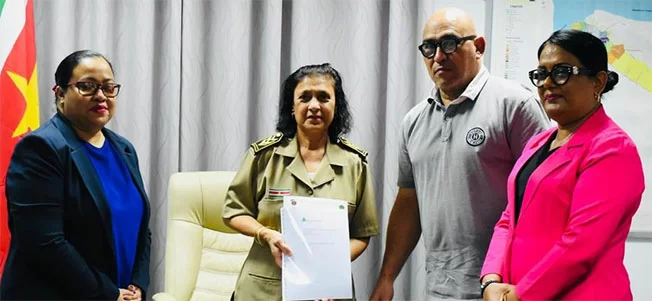
    In a major milestone for institutional accountability and operational improvement, Suriname’s Drs. L. Mungra Medical Centre (MMC) has announced the full elimination of a years-long backlog in its financial reporting, completing all outstanding annual accounts for the 2020 to 2024 fiscal periods in just 10 months. The final 2024 fiscal year statement was formally handed over Tuesday to Nisha Kurban-Baboe, District Commissioner of Nickerie, during an official ceremony held in the district commissioner’s conference room. The document was presented by Heve Sibilo, acting chair of the MMC foundation board, with Zorida Mohamed, interim general director, and Surjbali Singh, interim financial director, in attendance at the event. MMC General Director Antoine Elias confirmed that the hospital will turn its attention to preparing the 2025 fiscal year report starting this coming September. The completion of all five outstanding annual accounts wraps up an intensive, cross-team recovery project that the institution says would not have been possible without close collaboration between MMC’s executive leadership, foundation board, and all finance staff involved in the cleanup effort. Before this project, gaps in up-to-date financial reporting left the hospital without a clear, current picture of its fiscal standing. By resolving these backlogs, MMC now has access to complete, timely financial data that will strengthen organizational transparency and accountability. This solid financial foundation is also set to enable more responsible fiscal management, data-driven strategic decision-making, and further progress in expanding and professionalizing the hospital’s core healthcare services. Leadership from both the executive team and the foundation board has publicly extended gratitude to every staff member and stakeholder who contributed to crossing this finish line. With the reporting backlog fully cleared, MMC marks a critical turning point on its path to becoming a financially stable, fully transparent, and future-ready healthcare institution prepared to serve the Nickerie region for years to come.

  • Integrity Commission To Investigate ‘The Mira MIllions’

    Integrity Commission To Investigate ‘The Mira MIllions’

    In a high-stakes development that has gripped Belize’s political landscape, the country’s Integrity Commission has formally announced it will open an investigation into allegations of improper government payments tied to Oscar Mira, the area representative for Belmopan. The probe stems from a formal complaint filed one week prior by Edward Broaster, the caretaker for the United Democratic Party (UDP) in Belize Rural Central, and centers on suspicious transactions from the Ministry of Defence.

    Broaster’s complaint includes dozens of official invoices documenting payments issued to two entities linked to Mira: Jenny Mira and MP Farms. The filing explicitly alleges violations of Belize’s Finance and Audit Reform Act, a key piece of legislation designed to enforce transparency and accountability in the management of public funds.

    Speaking exclusively to local outlet News 5, Broaster confirmed he received official correspondence from the Integrity Commission confirming receipt of his complaint and the commission’s plan to move forward with a full inquiry. Broaster emphasized that the commission’s willingness to act is a critical validation of Belize’s accountability framework, noting that “the process works” at a time when public interest in the case continues to build. With so much attention from the Belizean public, he added, it was essential for the commission to formally acknowledge the allegations and commit to a full review.

    Despite framing the commission’s decision as a positive step for transparency, Broaster rejected framing the development as a political win. He stressed that the core goal of the complaint has always been to uncover whether public money was handled in accordance with the law, not to score partisan political points. “I am not going to speak to any victory,” Broaster said. “The fact of the matter is that we are alleging the financial act has been breached.” He described the documented payments as deeply irregular, arguing that Belize’s taxpayers have an inherent right to full answers and clear accountability for how their public money is allocated and spent.

    In addition to confirming the investigation, the Integrity Commission has extended an invitation to Broaster to expand and strengthen his complaint. The regulatory body has given Broaster a 30-day window to submit additional supporting evidence and identify relevant witnesses for the inquiry. Broaster said he expects no delays or barriers to meeting this deadline, pointing to the large volume of information that has already entered the public domain over the past several weeks. “I am sure we will be able to gather more evidence and present it to the Integrity Commission,” he added, signaling his confidence in the strength of the allegations moving forward.

  • Veteran farmer: Blame middlemen for high food prices

    Veteran farmer: Blame middlemen for high food prices

    At a major national agricultural policy colloquium held this week, a decades-long Barbadian food producer has issued a stark warning about the unsustainable profit inequality plaguing the country’s agricultural supply chain, arguing that outsized markups taken by middlemen are pushing small-scale and new farmers out of business at an alarming rate.

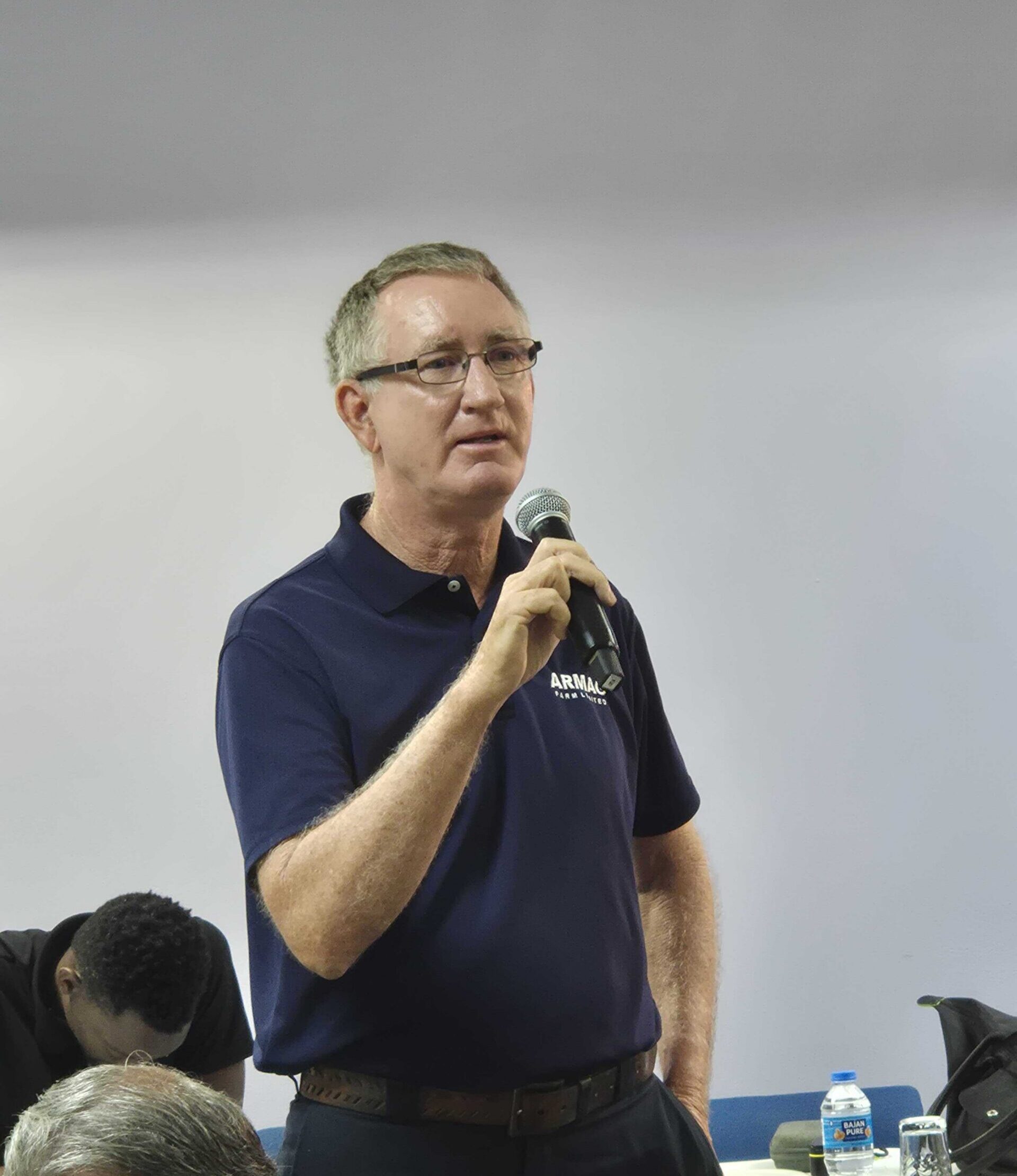
    Richard Armstrong, founder of St Philip-based Armag Farms, which has specialized in yam and sweet potato production for over 40 years, laid out the crisis to delegates at the Ministry of Agriculture and Food and Nutritional Security’s *Looking Forward: Agriculture 2030* forum on Monday. He emphasized that the current distribution model leaves primary producers with far too small a share of the final retail price of their goods, eroding the economic viability of farming across the island.

    “The full value of the food we grow never makes its way back to the farmer working the land,” Armstrong said. “Too much of the profit is siphoned off by intermediaries along the supply chain, while producers bear all the cost and risk.”

    Armstrong noted that the problem is not unique to Barbados, but warned that without urgent intervention, the country will see a growing exodus of farmers, threatening domestic food security. To back his claim, he cited data from a Caribbean Development Bank study showing that only 20 percent of new farming operations survive past their first five years. He also pointed to his own business’s experience: Armag Farms previously expanded into agro-processing, but ultimately abandoned the segment after it became financially unviable, as processors demanded that farmers absorb extra costs to protect processor profits.

    “Agro-processing, pack houses and all the infrastructure people talk about are necessary, but every step along the chain adds cost — and every new player wants their cut of the profit. That cut always comes out of the farmer’s share,” he explained. “For agro-processors to hit their profit targets, the farmer is the one left taking the loss.”

    Armstrong also pushed back against the long-standing policy focus on keeping consumer retail prices low, which he says disproportionately shifts financial pressure onto producers. He shared a recent firsthand example to illustrate the scale of the markup gap: sweet potatoes that left his farm at a farmgate price of $2.62 per pound were later retailed to consumers for nearly $5 per pound, almost a 90 percent markup.

    “Look at that markup. The middleman takes all that extra profit, and the farmer is the one left squeezed,” he said, adding that dozens of young new farmers have confided in him that low farmgate prices have put their entire agricultural careers at risk. “Young producers come to me all the time saying they can’t make a living. They sell their crops to a vendor for pennies on the dollar, then see that same vendor selling the produce in town for four, five, even six times the price they got paid.”

    Senior Ministry of Agriculture officials have echoed Armstrong’s assessment, acknowledging that a significant imbalance exists between farmgate prices and final consumer costs. Sherlock King, the ministry’s Manager of Markets, confirmed that while not all vendors engage in excessive markup practices, the gap between what farmers earn and what consumers pay has reached “huge imbalances.”

    Speaking to Barbados TODAY after the colloquium, King noted that vendors are fully entitled to earn a profit and cover legitimate overheads including transportation, storage and produce spoilage. But he added that vendors have a shared responsibility to balance their own earnings with accessibility of healthy food for consumers, and fair compensation for farmers.

    King said the ministry is not pushing for strict government price controls, instead focusing on educational outreach to help vendors adopt pricing strategies that deliver fair returns for all stakeholders. “The idea is to help vendors understand that if they keep prices reasonable instead of chasing excessive short-term profits, they can move higher volumes of product,” he explained. “When that happens, everyone wins: consumers get affordable healthy food, vendors move more product and earn consistent returns, and farmers get a fairer price that lets them stay in business.”

    King cited other examples of the extreme markup gap, noting that during tomato gluts, farmers sometimes sell produce for as little as 50 cents per pound at the farmgate, only for the same tomatoes to retail for $2.50 per pound to end consumers. The ministry’s intervention, King said, aims to correct this imbalance and build a more sustainable, equitable agricultural supply chain for Barbados.

  • Nun Detained by ICE While Walking to Mass is Released

    Nun Detained by ICE While Walking to Mass is Released

    In a high-profile incident that has reignited debate over U.S. immigration enforcement policies, a Catholic nurse nun detained by U.S. Immigration and Customs Enforcement (ICE) while en route to Sunday Mass in South Texas has been freed from custody, according to reporting from NBC News.

    Sister Leticia Ugboaja was taken into custody on Sunday in McAllen, Texas, a community located just a few miles from the U.S.-Mexico border. At the time of her arrest, she was wearing her formal religious habit and walking to Our Lady of Sorrows Parish to attend the weekly communion service.

    Beyond her religious role, Sister Ugboaja has deep roots in the local South Texas community. She is a professed member of the Daughters of Mary Mother of Mercy congregation, serves as an Extraordinary Minister of Holy Communion at her parish, and works full-time as a registered nurse for the South Texas Health System. Prior to her current role, she spent 10 years working as a certified nursing assistant at DHR Health in nearby Edinburg, caring for thousands of local patients over the course of her decade-long tenure.

    News of the arrest spread rapidly after leaders of the McAllen parish shared details of the incident across social media platforms, drawing widespread condemnation and public attention. The outcry prompted multiple members of the U.S. Congress to intervene, including Representative Monica de la Cruz, who reached out directly to federal ICE and Department of Homeland Security officials to advocate for Sister Ugboaja’s release.

    “We are grateful for the quick response of local representatives who reached out to the Department of Homeland Security to get her released from custody,” said Brenda Riojas, a spokesperson for the Diocese of Brownsville, which oversees the McAllen parish.

    The detention of Sister Ugboaja comes amid a broader expansion of immigration enforcement operations under the second Trump administration, which has increasingly targeted enforcement activities in locations that have long been considered sensitive sites, including houses of worship, schools, and medical facilities. The incident has raised new questions among religious and civil liberties groups about the scope of current enforcement policies and their impact on long-term residents and community leaders across border regions.

  • Antiguans urged to be on the look out for wanted man from St. Kitts

    Antiguans urged to be on the look out for wanted man from St. Kitts

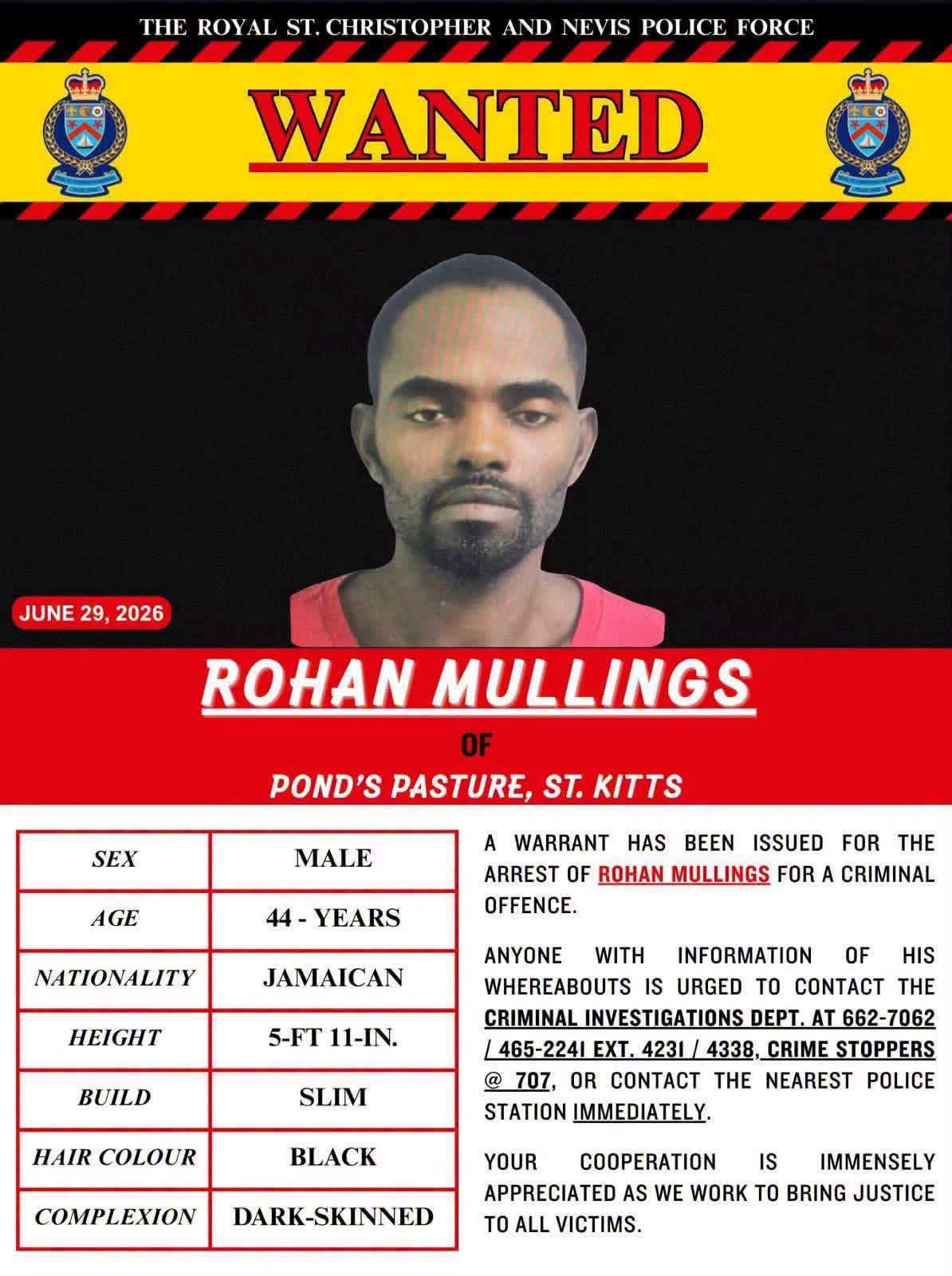
    Law enforcement agencies in the Federation of St Kitts and Nevis have issued an official public wanted notice for 44-year-old Rohan Mullings, a resident of Pond’s Pasture on the island of St Kitts. The bulletin was released as part of an active criminal investigation that is currently ongoing in the country.

    According to credible information from well-placed sources within regional law enforcement, Mullings is believed to have crossed the Caribbean border and is currently residing in the neighboring island nation of Antigua and Barbuda. Local police have issued a clear public warning: any member of the general public who encounters Mullings or recognizes him from the bulletin should not attempt to confront or apprehend him, as he is considered a potentially dangerous person of interest in the case.

    Instead of taking matters into their own hands, authorities are urging anyone with relevant information on Mullings’ current location to share what they know with the appropriate law enforcement entities. Possible reporting channels include the Criminal Investigations Department of the Royal Police Force of Antigua and Barbuda, the regional Crime Stoppers hotline at 800-TIPS (8477), or any staff at the closest local police station.

    To encourage more people to come forward with accurate information without fear of retaliation, law enforcement officials have confirmed that every tip provided will be handled with the strictest possible confidentiality. This policy is designed to protect the identity of witnesses and help advance the ongoing investigation into Mullings’ alleged criminal activity.

  • State to transfer 224 more homes to long-term tenants

    State to transfer 224 more homes to long-term tenants

    Barbados’ House of Assembly has approved a landmark piece of legislation that will transfer ownership of 224 state-constructed residential properties directly to long-term tenant families, marking the second major phase of a national initiative to turn decades of rental occupancy into full outright home ownership. This latest approval pushes the total number of properties transferred under the programme to 428 within just three months, dramatically accelerating a policy push designed to deliver tangible wealth to ordinary households across the country.

    Officially titled the State Acquisition and Vesting of Property Number 2 Bill, the legislation paves the way for title transfers for homes spread across seven residential estates: Eden Lodge, Haynesville, Silver Hill, Deacons Farm, Bonnetts, Grazettes and Wotton. According to Housing Minister Chris Gibbs, this round of transfers will mark the first time residents in areas including Eden Lodge have received formal legal titles to the homes they have occupied for generations.

    The first round of the current accelerated programme, concluded three months prior, transferred ownership of 204 state homes. Combined with this latest batch of 224, the government has moved more than 400 properties into private hands in a single quarter – a pace that Minister Gibbs says outstrips the slow progress of earlier policy efforts.

    Minister Gibbs framed the new legislation as a cornerstone of the government’s commitment to advancing social equity and building lasting intergenerational wealth for Barbadian families. Unlike prior efforts that relied on slow, convoluted administrative processes, the current programme leverages existing constitutional powers to acquire the properties for public benefit and transfer titles directly to eligible residents, cutting through the bureaucratic red tape that delayed past initiatives.

    “This reaffirms the government’s unwavering commitment to place property ownership into the hands of ordinary Barbadians,” Gibbs told the legislative chamber during debate. “Because of this government, housing policy does not end when we build a house. Housing policy is complete when a family owns its home.”

    Gibbs drew a clear contrast between the current administration’s progress and the 2013 Tenanties Transfer of Terraced Units Act, which saw only 597 home transfers completed over the course of 12 years between 2013 and 2025. The current programme has nearly matched that 12-year total in just three months, a shift Gibbs calls a testament to the government’s innovative, people-centered approach to policy.

    “In three months, we’ve reduced that backlog,” Gibbs said. “This administration, this government is about innovative ways to further our agenda to help people, to empower people in this country. We’ve found ways to empower people, and this is but another way to do so, simple but transformational.”

    To address ongoing concerns raised by residents and community stakeholders about public infrastructure and neighboring property rights, the legislation includes explicit protections for community interests. It preserves public access rights to common areas, protects utility corridors and legal easements, and upholds the residential zoning of the affected areas while safeguarding the property rights of adjacent landowners.

    The National Housing Corporation will also provide transitional support to new homeowners as they make the shift from renting to owning, including guidance on routine property maintenance and navigating residential insurance requirements, Gibbs confirmed. He extended recognition to public servants across the Land Registry, the Land and Surveys Department, and the National Housing Corporation for their work verifying resident eligibility and processing the hundreds of new title documents.

    Minister Gibbs added that the government stands ready to introduce a third phase of the programme if needed, to ensure that every eligible resident across the country has the opportunity to gain ownership of their long-term occupied home.

    “Every title we transfer is another Barbadian family moving from tenancy to ownership, from uncertainty to security, from shelter to wealth,” Gibbs said. “Governments are remembered for the buildings that they construct, but the truly transformative governments are remembered for the assets that they place in the hands of their people.”

  • Jaguar Attacks Dogs in Hattieville

    Jaguar Attacks Dogs in Hattieville

    A rogue jaguar has sparked fear among residents of the small Belizean village of Hattieville after carrying out two unprovoked attacks on domestic dogs over a single weekend, leaving one canine dead and prompting wildlife authorities to launch a capture operation. Local residents reported the back-to-back incidents to regional law enforcement and wildlife management officials earlier this week, after the large predator ventured into populated residential areas twice in two days.

    The first encounter unfolded early Friday morning, when the jaguar slipped into a residential yard and targeted a local pet dog. One resident, who asked to remain unnamed, shared that the animal initiated an immediate attack, triggering a vicious struggle that stretched on for between 35 and 45 minutes. By the time the confrontation ended, the dog had succumbed to its injuries. In the chaos of the attack, the jaguar also caused significant damage to a parked vehicle on the property. Initially, the dog’s owners dismissed the commotion as nothing more than a routine scuffle between their pets and a stray neighborhood cat, never expecting a wild big cat had entered their yard.

    Surprisingly, the jaguar returned to the same residential area at roughly the same time on Saturday morning, launching a second attack on a group of domestic dogs. This time, however, the five dogs present banded together to fend off the predator, successfully confronting the jaguar and chasing it off into the surrounding vegetation before it could cause any fatal harm.

    It was not until Monday that villagers formally submitted reports of both incidents to Hattieville Police Department and the Belize Forest Department, the government agency tasked with managing native wildlife and human-wildlife conflict. Officials from the department quickly traveled to the village to assess the situation, and by Tuesday morning, a large cage trap had been deployed at the site of the attacks in a bid to capture the roaming jaguar and resolve the ongoing threat to village residents and their pets. Local authorities have not yet announced any updates on whether the animal has been captured, and residents have been advised to remain vigilant when outdoors, especially during early morning hours when the jaguar has previously struck.

  • Jumby Bay Orders Swift Removal of Seaweed Following Environmental Complaints

    Jumby Bay Orders Swift Removal of Seaweed Following Environmental Complaints

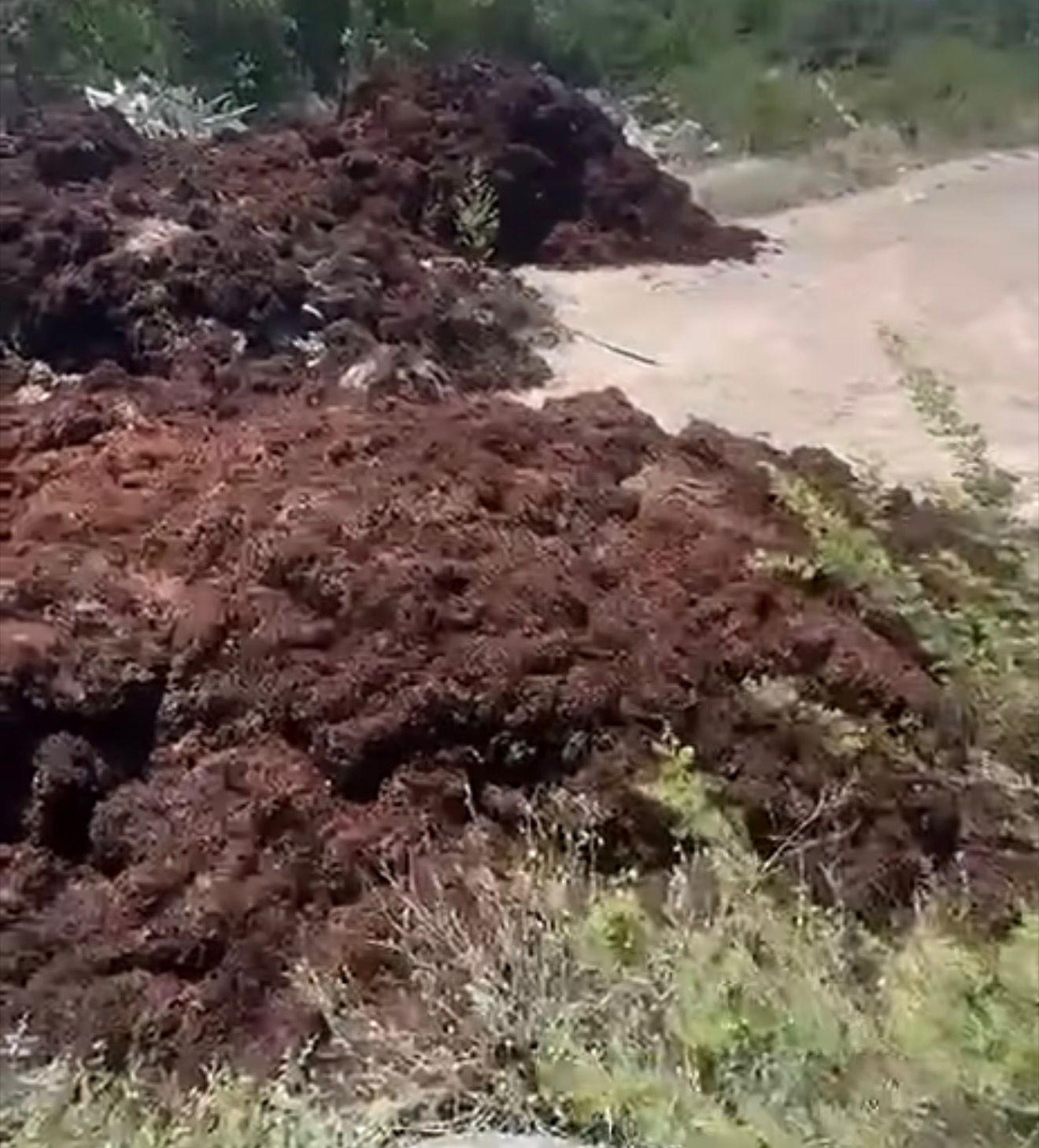
    A popular resort on Antigua has moved quickly to address community anger over improper seaweed disposal, announcing immediate action to clear the illegally dumped material near the town of Parham. Jumby Bay Resort confirmed that it has issued a direct order to its contracted work team to remove the seaweed, a response triggered by widespread concerns from local residents about the environmental and public health impacts of the unregulated dumping. In an official public statement released this week, executive leadership at the resort said the issue was raised in a formal consultation with Rawdon Turner, Antigua’s Minister of Social and Urban Transformation, during a meeting held Tuesday morning. Resort management emphasized that it moved without hesitation as soon as internal leaders became aware of the inappropriate disposal, noting that the contractor responsible for the seaweed transport and placement has been explicitly told to complete the full cleanup without any delay. Beyond the immediate cleanup order, the resort announced that new, stricter monitoring protocols will be put in place going forward to ensure all future operations align fully with Antigua’s national environmental protection standards. In a gesture of accountability, Jumby Bay’s team also formally validated the concerns raised by nearby residents, reaffirming its long-standing pledge to preserve Antigua’s natural coastal ecosystems and nurture collaborative, positive relationships with all neighboring local communities. The resort’s statement comes on the heels of growing public pushback over the dumping, which had spurred widespread community calls not just for removal of the existing seaweed pile, but for tighter regulatory oversight of coastal waste disposal across the island. Sargassum seaweed influxes have become an increasingly common challenge for Caribbean coastal communities in recent years, with improper disposal creating risks of water contamination, foul odors, and harm to local marine habitats when not managed according to official guidelines.