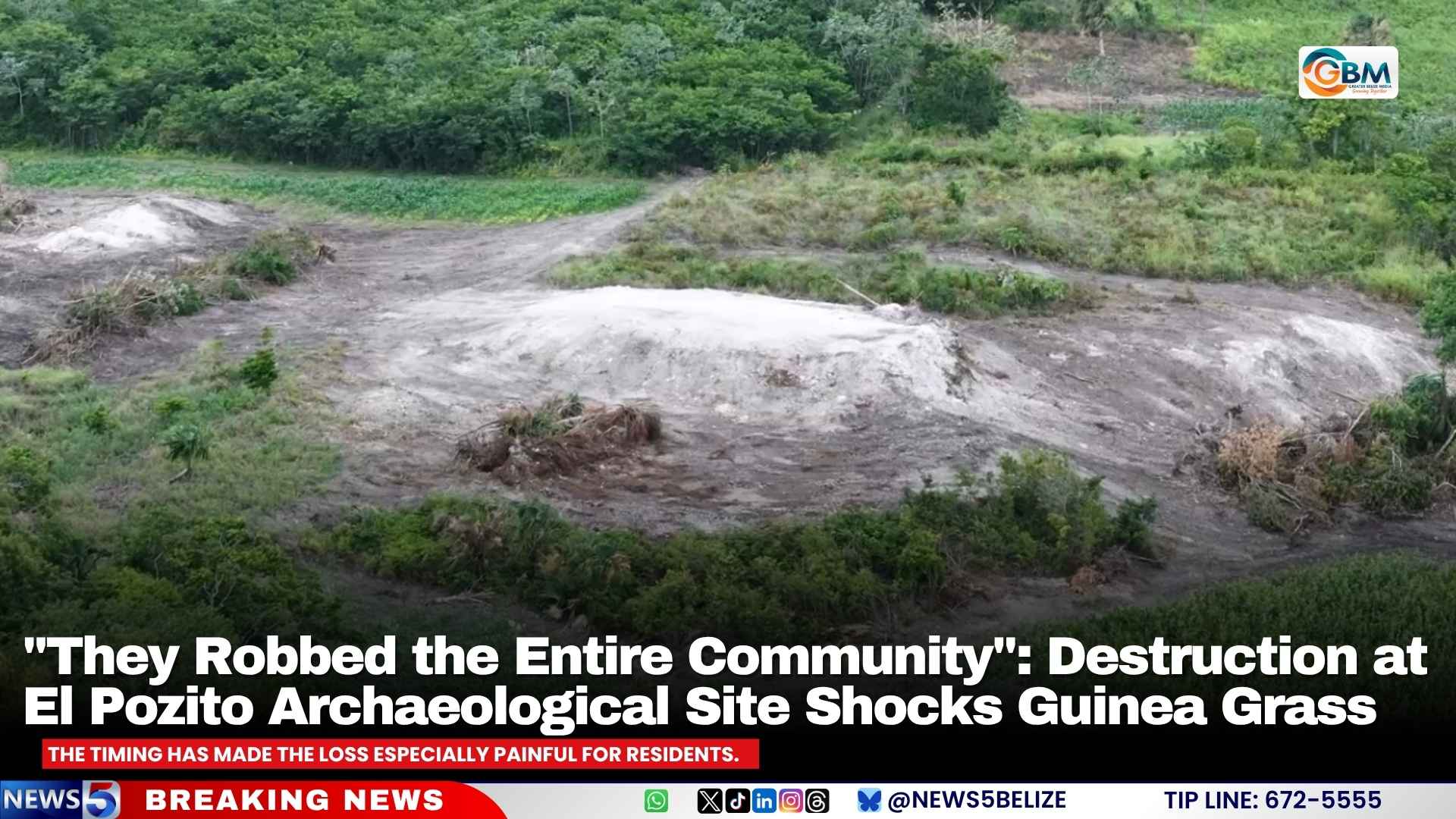
In a devastating blow to cultural heritage and local economic development in northern Belize, the ancient Maya archaeological site of El Pozito, located on the outskirts of Guinea Grass Village in the Orange Walk District, has been extensively destroyed, leaving residents reeling and authorities scrambling to identify the perpetrators.
The scale of the damage was first uncovered earlier this week by a local inspection team led by Mr. Ramos, according to Guinea Grass Village Chairman Benito Uk. In an interview, Uk noted that the site sits amid active agricultural lands, with surrounding plots held by local sugarcane farmers and an adjacent parcel recently purchased by a Mennonite farming operation, leaving open multiple lines of investigation for law enforcement.
What makes the destruction particularly heart-wrenching for the community is its timing: just one month before the damage was discovered, village leaders held a productive planning meeting with archaeological stakeholders to advance a joint preservation and development project for El Pozito. The gathering included Dr. Keith Epicch from the College of East Texas and a technical team from Belize’s Institute of Archaeology, who had outlined a roadmap for community-led development that would put Guinea Grass in control of tourism benefits from the site.
For the largely agriculture-dependent community of Guinea Grass, El Pozito was never merely a collection of ancient ruins. Local leaders looked to the nearby Lamanai Maya reserve, a well-established heritage tourism destination, as a blueprint for transforming the site into a sustainable source of opportunity. Edilberto Romero, Executive Director of Programme for Belize, which manages the Lamanai reserve, explained that the model has already delivered tangible gains to neighboring communities. Beyond direct employment for local residents in tourism and sustainable timber operations, the reserve funds annual scholarship programs and injects more than $1 million annually into the local regional economy – a outcome residents hoped to replicate at El Pozito.
The Northern Maya Association of Belize quickly issued an official statement condemning the destructive act on Thursday, framing the loss as one that impacts all Belizeans. The association emphasized that El Pozito is far more than a collection of archaeological structures: it serves as an unbroken living connection to the Maya ancestors who once inhabited the region, an open-air classroom for Belizean students to learn about their national history, and an irreplaceable part of the country’s shared cultural inheritance.
Uk stressed that the damage is not just an attack on cultural heritage, but a robbery that has stripped an entire community of its future potential. With law enforcement now leading the criminal investigation to identify those responsible, Uk has issued a public call for local residents with any information about the incident to come forward to help hold perpetrators accountable and bring a measure of justice to the village.