
Five standout scholars from Grenada’s T.A. Marryshow Community College (TAMCC) have been recognized with the prestigious Republic Bank Award for Overall Academic Excellence, marking a rare and impressive achievement: each earned a flawless 4.0 grade point average across their full course of study. The accomplished awardees represent a diverse range of academic and vocational programs at the institution: Destiny Antoine, who studied Culinary Arts, Micah Pinnock from the Mechanical Technology program, Jaida Victor of Building Technology, Alyssa Goddard in Natural Science, and Jace Neptune, who completed training in Electrical Installation. In addition to the public honor of the award, each student received a custom commemorative plaque and a $1,000 gift certificate loaded to an e-Free account, a prize that supports both immediate and future financial needs for the young scholars. The formal presentation of the awards took place during TAMCC’s annual Academic Awards ceremony, hosted on July 2 at the Grenada Trade Centre. Peaches George, Acting Manager of Retail Services at Republic House, had the honor of presenting the awards to the five exceptional students on behalf of the bank. Republic Bank’s support of this academic recognition program extends more than 20 years, delivered as part of the bank’s long-running “Power to Make a Difference” community initiative. This sustained partnership between the leading Caribbean financial institution and TAMCC is rooted in a core institutional commitment: to uplift and empower the next generation of Grenadian professionals, and to drive broad, sustainable growth for the country of Grenada by investing in educational excellence. In a statement following the ceremony, Republic Bank (Grenada) Limited extended warm, sincere congratulations to all five honorees, and shared well wishes for continued success in the students’ upcoming academic and professional journeys. This announcement was prepared by a contributor to NOW Grenada, which notes it does not take responsibility for contributor opinions, statements, or third-party media content included in contributed posts, and provides a reporting pathway for any content that violates platform standards.
博客
-

Government to Begin Construction of Two Modern Abattoirs
Antigua and Barbuda Prime Minister Gaston Browne made a key policy announcement Sunday, confirming that construction on two state-of-the-art abattoirs will get underway in the near future. This initiative forms a core component of the administration’s wider national agenda to reinforce the domestic agricultural sector and shore up long-term food security for the country’s population.
Beyond the new abattoirs, Browne outlined that the broader development project includes two other high-priority agricultural undertakings: the Christian Valley agro-tourism initiative and a purpose-built agro-industrial park based in Diamonds. These interconnected projects are designed to transform the country’s agricultural value chain, moving beyond basic production to integrated processing, tourism and industrial activity.
To support the full development of this agricultural hub, the government has allocated Eastern Caribbean $9 million to purchase a 5.5-acre plot of land. This property will be redeveloped into a centralized food distribution and storage facility, equipped with commercial cold storage, dedicated retail space, and purpose-built processing areas to accept fresh produce and meat from small and large-scale local farmers across the country.
Browne emphasized that centralizing the collection and distribution of local goods through the upgraded Central Marketing Corporation (CMC) facility is a critical step to ease the country’s ongoing cost of living crisis. By creating a streamlined pathway for domestic producers to get their goods to consumers, the government aims to cut out unnecessary middleman markups and reduce household grocery costs for local residents.
At its core, the administration’s long-term agricultural strategy centers on expanding domestic production to cut heavy reliance on food imports, while simultaneously opening new, accessible formal markets for domestic farmers and producers to sell their goods. This dual approach addresses both economic and food security priorities, Browne explained.
When complete, the new abattoirs, agro-industrial park, and upgraded CMC hub will work in tandem to modernize Antigua and Barbuda’s entire agricultural sector, while also encouraging a cultural shift among consumers to prioritize purchasing locally grown and produced food over imported alternatives.
-

Navigating the realities of Grenada’s 2026 CPEA results
As early July arrives each year, a distinct mix of pride, nostalgia and eager anticipation rolls across Grenada, Carriacou and Petite Martinique. Graduation season unfolds with tearful goodbyes between classmates and teachers, celebratory certificate ceremonies, and the jittery excitement of young primary school scholars preparing to transition to secondary education. This year, the release of 2026 Caribbean Primary Exit Assessment (CPEA) results brought plenty of positive milestones to celebrate, alongside critical gaps that demand targeted policy and curricular adjustment.
Across the 1,709 students who completed the external assessment this cycle, 93.6% earned an overall score of 50% or higher — a strong baseline outcome for the nation’s primary education system. Language Arts posted the strongest performance among tested subjects, while Social Studies and Science held steady at consistent performance levels. These results confirm that Grenada’s primary school teachers continue to build a resilient foundation for core literacy and critical inquiry skills across the student population.
Even with these overall gains, a deep dive into the data reveals two key areas where administrative and academic reforms are needed, starting with persistent structural challenges in mathematics performance. The national external average for mathematics dropped from 55.16 in 2025 to 52.58 in 2026, a decline that brings the average back near the 2021 low of 49.06 — a result recorded at the height of COVID-19 pandemic classroom disruptions. This trend makes clear that primary-level numeracy struggles are not just a residual effect of pandemic-era learning loss, but a long-term structural issue requiring sustained intervention.
Further analysis also found a notable gap between students’ internal classroom coursework averages in mathematics and their scores on the external standardized multiple-choice exam. One leading hypothesis for this variance is mathematical automaticity: the ability to quickly recall arithmetic facts and solve problems under timed exam conditions. When students move from low-pressure, familiar classroom assessment settings to high-stakes standardized exams, increased cognitive load can erode both confidence and performance. This gap does not mean numeracy skills are entirely lacking, however. Just weeks before the CPEA results release, the power of interactive numeracy learning was on full display at the National Mental Math Quiz, hosted 16 June at the Grenada Boys’ Secondary School auditorium by the Ministry of Education. At the competition, Grade 6 students solved complex arithmetic problems quickly and confidently, proving that numeracy can be engaging, vibrant and high-performing when students get regular opportunities to build and showcase these skills.
Experts and education analysts argue that strengthening national numeracy will require scaling these interactive learning models from annual one-off competitions to daily core classroom practice. Pairing widespread adoption of interactive approaches with broader structural reforms — including early numeracy intervention, targeted professional support for teachers, expanded after-school mathematics programs, and a full review of current assessment alignment — could form the backbone of a national strategy to reverse the recent decline in mathematics scores.
The second critical area for review centers on safeguarding the universal access goals at the heart of Grenada’s Universal Secondary Education Policy, a landmark initiative designed to advance social equity by ensuring no student is locked out of secondary education based on a single high-stakes exam. Even with this strong inclusive framework, 2026 CPEA registration data reveals a small but meaningful anomaly: out of 835 registered female candidates who completed internal assessment requirements, only 833 sat for the final external exam, leaving two students who did not complete the full assessment process. While this small number does not alter national aggregate results, it demands careful investigation in a system built around universal inclusion. Every student matters, and identifying the root causes of these missed assessments is essential to strengthening Grenada’s educational safety nets for marginalized or at-risk students.
A third ongoing policy debate has emerged from the Ministry of Education’s 2023 shift away from public school rankings and top performer announcements. The department moved to publish only decentralized, alphabetized school lists shared directly with individual institutions, a policy designed to reduce harmful hyper-competition, emotional distress and intense psychological pressure on Grade 6 students and school staff. The shift has successfully shielded lower-performing students and schools from public shaming, but it has also created an information gap that hinders targeted intervention. Without public access to aggregated regional and school-level performance trends, policymakers, local communities and education development partners struggle to identify which schools and student groups need additional targeted support. Proponents of greater data transparency note that aggregated public performance data is not a tool for shaming — it is a diagnostic resource that directs after-school programming, targeted funding, teacher training and other interventions to the communities that need them most.
One of the most widely felt unintended consequences of the ranking policy shift has been the loss of national public recognition for Grenada’s highest-achieving students. Under current rules, the nation’s top 10 CPEA performers, even the top three, are not publicly announced. While the policy is intended to protect students at the lower end of the performance spectrum, it inadvertently deprives high-achieving, dedicated students of the national recognition they deserve, while eliminating a key source of inspiration for younger students working toward their own academic goals.
Crucially, education analysts note that the Ministry of Education can restore public celebration of top performers without violating existing education law or compromising its core commitment to equity. When the policy was introduced in 2023, officials cited Section 23 of the Education Act, which classifies individual student academic records as privileged information that cannot be released to the public without written consent. The same legal framework that restricts disclosure also provides a clear solution: voluntary consent.
The ministry could easily add a standard, opt-in consent waiver during annual CPEA registration, or reach out directly to the families of top-performing students after grading is finalized to request permission to publish their names and achievements. By securing explicit consent from students, parents and participating schools, the government can legally and ethically celebrate these outstanding academic achievements on the national stage.
Across all these ongoing conversations, education leaders emphasize that equity and excellence do not need to be competing goals. A strong, inclusive education system fulfills two equally important missions: it supports every student, regardless of their starting point, while also elevating the achievements of top performers to inspire the next generation. Grenada has already built a solid foundation of equity through the Universal Secondary Education Policy, which guarantees access to secondary school for all students. The next step for the nation’s education system is matching its commitment to inclusion with an equally intentional commitment to celebrating excellence and addressing long-standing structural gaps in core learning outcomes.
-

PM Browne Says Booby Alley Redevelopment Nearing Official Opening
Antigua and Barbuda’s flagship urban renewal initiative, the Booby Alley Redevelopment Project, has entered its final construction phase and is approaching its official public opening, Prime Minister Gaston Browne confirmed in a public interview Sunday. Speaking as a guest on the locally produced Brown and Brown Show, Browne framed the transformative neighborhood project as a key pillar of the current administration’s ongoing commitment to upgrading housing access and living standards for low-income and disadvantaged communities across the nation. The prime minister’s update came in direct response to observations from show host Colin O’Neill, who pointed out that perimeter fencing around large sections of the redevelopment site had already been taken down. This visible change signals that last-minute logistical and site preparations are well underway ahead of the project’s inauguration ceremony. For decades, Booby Alley stood as one of Antigua and Barbuda’s oldest informal settlements, marked by substandard, overcrowded housing and limited access to basic infrastructure. Browne emphasized that the completed redevelopment will completely reshape the area, replacing outdated, unsafe structures with quality, permanent housing that meets modern living standards. Beyond the Booby Alley project, the prime minister noted that this initiative works in lockstep with the government’s broader national housing strategy, which includes two other core programs: the Housing Assistance Programme for Indigent People (HAPI) and a series of large-scale affordable housing developments spread across both islands of Antigua and Barbuda. According to Browne, the HAPI program has scaled up its operations significantly in recent months, now delivering multiple completed home builds every month to qualifying families. The administration has set an annual target of constructing no fewer than 50 new homes each year specifically for low-income and indigent households that lack the resources to build safe housing on their own. Looking ahead, Browne announced that a new government-owned concrete block manufacturing plant is scheduled to begin operations within the next 60 days. Once operational, the plant will allow the HAPI program to shift from constructing temporary wooden homes to building far more durable, long-lasting concrete residential structures that can better withstand the Caribbean region’s extreme weather events. At its core, Browne reiterated that all of the government’s housing-focused initiatives share a single central goal: to lift up vulnerable populations by replacing crumbling, dilapidated housing with modern, safe homes, and to expand access to reasonably priced housing options for residents in every corner of Antigua and Barbuda.
-

US Development Finance Corporation to Discuss Potential Financing With Antigua and Barbuda
The prime minister of Antigua and Barbuda, Gaston Browne, announced Sunday that senior representatives from the U.S. International Development Finance Corporation (DFC) are slated to travel to the Caribbean nation later this July for high-level talks centered on potential large-scale funding for key national development initiatives.
In an interview aired on the local Brown and Brown Show, Browne confirmed the bilateral meeting is locked in for July 15. The discussions come as the Antiguan and Barbudan government actively pursues diverse capital sources to advance three priority sectors: affordable housing expansion, scaled-up renewable energy deployment, and major port infrastructure upgrades.
Browne emphasized that the Caribbean nation would gladly accept DFC financing, provided the lending terms align closely with the concessional agreements Antigua and Barbuda has secured from China in past infrastructure partnerships. He laid out clear benchmarks for what the government considers a favorable funding package: a minimum 20-year repayment term, a 2% annual interest rate, and a five-year grace period before principal payments begin.
“If they’re able to match the terms we’ve gotten from China and we can access low-cost capital, we more than welcome that investment,” Browne stated.
The prime minister noted that Antigua and Barbuda has already reaped significant benefits from Chinese concessional financing, which has supported the delivery of multiple transformative infrastructure projects across the country. He added that the government maintains an open, non-exclusive policy toward development partnerships, and stands ready to pursue equitable lending arrangements with any international partner that can meet its terms.
Should the DFC come forward with a favorable offer, Browne revealed the government is prepared to borrow up to $150 million to deepen the expansion of the country’s core port infrastructure. That project would build on recent upgrades to the St. John’s port, transforming it into a major regional transshipment hub serving all member states of the Organisation of Eastern Caribbean States. To accommodate the projected growth in cargo volume, the expansion will require additional land reclamation work and a major increase in container storage capacity.
Browne wrapped up by stressing that access to affordable, long-term development capital is a foundational requirement for advancing Antigua and Barbuda’s national growth agenda, while also allowing the government to maintain disciplined, prudent debt management practices that protect the country’s long-term fiscal stability.
-

Trump says he asked FIFA to review US football star’s suspension; European football slams FIFA’s decision
A last-minute reversal of a red card suspension for U.S. men’s national team star striker Folarin Balogun ahead of the 2026 FIFA World Cup round of 16 clash against Belgium has thrown the tournament into controversy, after former President Donald Trump revealed he personally pushed FIFA to review the initial ban.
Speaking at an event in the Oval Office on Monday, Trump confirmed that he had requested a formal review of the red card ruling from FIFA, after discussions with FIFA President Gianni Infantino, whom Trump called a highly respected figure. The former president emphasized that he did not directly influence the final outcome of the review, saying “I had nothing to do with the decision” after asking for the case to be re-examined.
Balogun, the United States’ top goalscorer at this World Cup with three tournament goals, received an automatic one-match suspension after he was shown a straight red card for a challenge on Bosnia and Herzegovina defender Tarik Muharemovic during the U.S. team’s 2-0 win in the final group stage match. Under standard tournament rules, an automatic suspension for a straight red would have forced Balogun to miss the knockout round matchup with Belgium.
But in an unexpected move announced Sunday, FIFA opted to suspend Balogun’s one-match ban for a 12-month period, invoking a little-used regulation that allows for discretionary suspension of certain disciplinary penalties. The ruling immediately cleared the star striker to feature in Monday night’s do-or-die tie against Belgium, which will decide which team advances to the tournament’s quarterfinals.
Trump publicly backed the reversal, arguing that the original red card was unwarranted. He described the on-field incident as an accidental collision between two competing athletes, saying “it was two great athletes that crashed into each other and got entangled” rather than the violent conduct that warrants a red card. He added that he opposed sidelining one of the American team’s most impactful players over what he viewed as a harsh officiating call. Shortly after FIFA announced its decision, Trump posted on his social platform Truth Social praising the governing body for “doing what was right and reversing a great injustice.”
The decision has drawn fierce backlash from governing bodies across European soccer. UEFA, the continental governing body for European soccer, issued a scathing statement condemning the reversal as “unprecedented, incomprehensible and unjustifiable.” The organization argued that FIFA violated its own rules by granting a discretionary exception to the mandatory automatic suspension that follows a straight red card during the tournament, saying the governing body had “crossed a red line” with the ruling.
UEFA also warned that the decision puts the integrity of global soccer competitions at risk, as it creates a harmful precedent that could force future disciplinary cases to grant similar exceptions for other high-profile players. The Belgian Football Association has also joined the criticism, saying it was shocked by FIFA’s ruling and confirming that it is currently “investigating all potential options” to challenge the outcome. Despite the ongoing controversy, the round-of-16 match between the United States and Belgium is still set to proceed as scheduled on Monday night, with a spot in the World Cup quarterfinals on the line.
-
ABWU Attends Global Tourism Services Conference as Support Grows for Women Workers
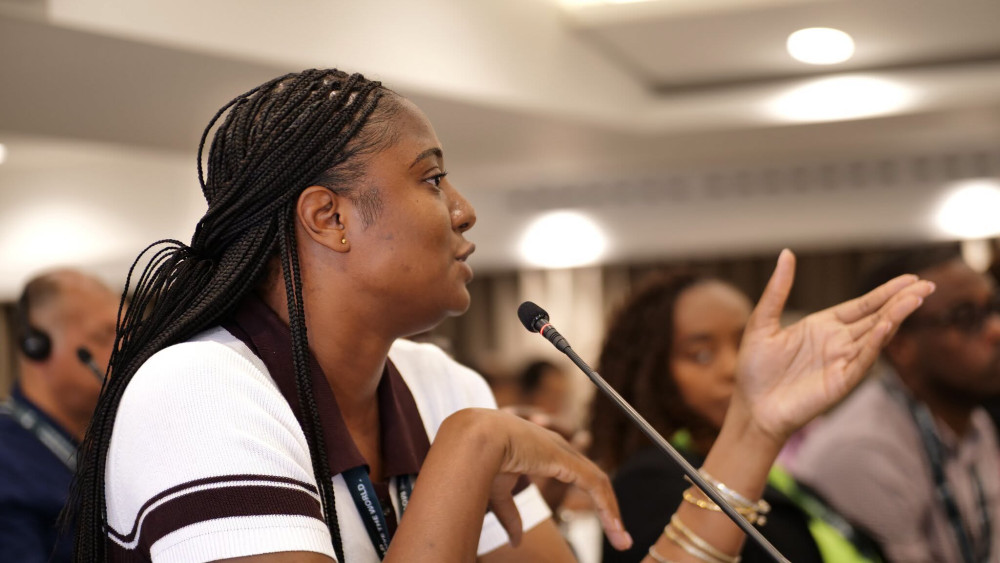
In late June, London played host to the landmark International Transport Workers’ Federation (ITF) Tourism Services Section Conference, where global labor leaders and industry stakeholders gathered to map out a more equitable and sustainable future for the global tourism transport sector. Among the attendees were David Massiah, General Secretary of the Antigua and Barbuda Workers’ Union (ABWU) and Chair of the ITF Tourism Services Section, alongside ABWU Shop Steward Briann Russell.
Opening the two-day gathering, Massiah delivered a stark assessment of the industry’s unaddressed inequalities. He pointed out that while billions in global investment continue to pour into expanding and upgrading tourism infrastructure, the millions of working people who keep the sector running are still systematically left behind.
“Too often, those same workers are the ones facing the greatest insecurity—informal work, low wages, unsustainable working conditions, and increasing pressure from changing business models,” Massiah told delegates, highlighting a systemic gap between industry growth and worker well-being that has persisted for decades.
Gender equity emerged as the central priority of the 2024 conference, with discussions and policy efforts culminating in the official launch of a groundbreaking joint report by ITF and the United Nations: the *Global Report on Women in Tourism Transportation*. The comprehensive new study documents long-standing gender gaps across every stage of employment in the sector, from entry-level recruitment to senior leadership representation. It also lays out clear, actionable recommendations to help employers, governments, and unions build more inclusive, fair, and equitable workplaces across the global tourism transport industry.
Beyond advancing gender equity, conference delegates agreed on a set of core strategic priorities to guide the sector through its ongoing transition to sustainability. These priorities include raising industry-wide Environmental, Social and Governance (ESG) standards, expanding union membership and building organizational capacity for labor groups globally, advancing safety standards for tourism destinations worldwide, and ensuring a just transition that protects worker rights as the sector shifts to lower-carbon operations.
To advance cross-sector collaboration, the conference hosted a dedicated Tourism Industry Event that brought together trade union delegates with representatives from leading global tourism bodies. Participants included officials from UN Tourism, the University of Surrey, the World Travel & Tourism Council, the World Sustainable Hospitality Alliance, and other major industry organizations, all joining to debate shared challenges and opportunities for the global tourism sector.
Speaking to assembled industry and organizational leaders, Massiah emphasized that no single stakeholder group can build a better future for tourism on its own. “The future of tourism cannot be shaped by any one group alone,” he said. “Governments set the framework. Industry drives investment and innovation. Workers deliver the service and the experience.”
Following the London conference, Massiah traveled to Madrid to hold discussions at the UN Tourism Office, continuing diplomatic efforts to align labor priorities with global tourism development goals. Massiah stressed that genuine cross-stakeholder partnership is the only path to turning tourism into a powerful driver of inclusive development—especially for small island developing regions like the Caribbean, where tourism forms the backbone of national economic activity and social progress.
-

Gordon, Robinson capture CARICOM 10K elite titles
The 19th annual Caribbean Community (CARICOM) 10K Run wrapped up an exciting day of competitive distance running on Sunday, July 7, hosted at Saint Lucia’s Daren Sammy Cricket Ground, which served as both the starting and finishing line for the event. The race’s signature gently undulating route created ideal conditions that produced fast finish times across all divisions, drawing more than 300 registered athletes to compete in both 10K and 5K race categories. By the end of the day, Jamaica’s Garfield Gordon and Barbados’ Carlie Robinson claimed the top honors in the men’s and women’s elite invitational divisions, respectively.
For 29-year-old Gordon, the win marked a dramatic turnaround from his 2024 performance, where he took second place as a first-time competitor on his home Jamaican course. Running alongside Alex Ekesa, the defending champion of the open division, Gordon maintained a strong, steady pace throughout the race, crossing the finish line in 30 minutes and 58 seconds to secure the gold medal. He finished well ahead of second-place Odida Parkinson of Guyana and third-place Kamar Thomas of Antigua & Barbuda, both of whom recorded matching times of 35 minutes and 4 seconds.
In the women’s elite invitational race, 39-year-old Carlie Robinson pulled off a thrilling come-from-behind victory to earn her first CARICOM 10K gold medal. Sitting outside of medal contention at the race’s halfway mark, the Barbadian runner found her advantage on the mostly downhill return leg from Rodney Bay Village, building up significant momentum to overtake the leading pack. She crossed the finish line in a personal best time of 39 minutes and 32 seconds, edging out 2023 champion Attoya Harvey of Guyana, who finished second in 40 minutes 24 seconds. 2025 title holder Alexia John of Trinidad & Tobago rounded out the podium in third place with a time of 42 minutes 31 seconds. This marked Robinson’s fourth appearance at the CARICOM 10K, after previous finishes of third place twice and second place once.
“Oh my God, oh my God, I am so happy,” Robinson shared in her post-race interview. “This is my fourth CARICOM race, and I’ve been really wanting to win. I came third, I came third, I came second. I was honestly quite surprised with my time. So yesterday, we did course recon. And we realised, you all have hills in this country. We don’t have them in Barbados. And these are not the real hills? You guys were very kind to give us a ‘flat’ race today. Lots of hills, that’s definitely a weakness for me. So, I was like, I know that that doesn’t play to my strengths, but let’s see what happens. The first half of the race was very tough; that’s where most of the hill work is, and the other girls had a good gap on me. So I was working, working, working, and then I managed to pass them and have a really strong finish, which is what I was hoping for. So I came in under 40 minutes, and I’m very happy.”
Following the race, Gordon was presented with the CARICOM Chairman’s Trophy by Saint Lucia’s Minister for Sports Kenson Casimir, who stood in for CARICOM Chair and Prime Minister Philip J Pierre. Robinson received the CARICOM Secretary-General’s Trophy from Dr. Carla Barnett, CARICOM Secretary-General. Both elite champions took home a prize purse of US$1,000 for their victories.
The open 10K division, which attracted competitors from as far as Kenya and Guadeloupe, saw Alex Ekesa—who currently resides in Trinidad & Tobago—take the men’s title in 30:24, with Cleveland Thomas of Guyana claiming second place. In the women’s open race, French competitor Sunilda Calme secured gold with a time of 38:03, finishing comfortably ahead of second-place Jelesa Wright of Guyana and third-place McKayla Olivier of host nation Saint Lucia.
Host nation Saint Lucia claimed clean sweeps of both the men’s and women’s 5K podiums. US-based Saint Lucian athlete Asa Francis took the men’s 5K title in 17:24, followed by Lufan Fortune in second and Kenrick James in third. In a surprising standout performance, 12-year-old Danielle Lambert claimed the women’s 5K crown with a time of 24:43. She was followed on the podium by Martinique-based teen runner Janicia Joseph in second and Chrysan Florius in third.
In addition to podium awards, the event also presented the inaugural Elma Gene Isaac Award to Esmond Reid, Jamaica’s ambassador to CARICOM. Special recognition was also given to the youngest competitors, Adam Ramdatt and Nadel Joseph, as well as the oldest participating runners, Wendell Samuel and Sherri Sayers.
Sunday’s running event was held as a precursor to the upcoming Fiftieth Regular Meeting of the Conference of Heads of Government of CARICOM, tying regional sport to the bloc’s major diplomatic gathering.
-
FAO training equips Dominican farmers with modern irrigation and crop management skills
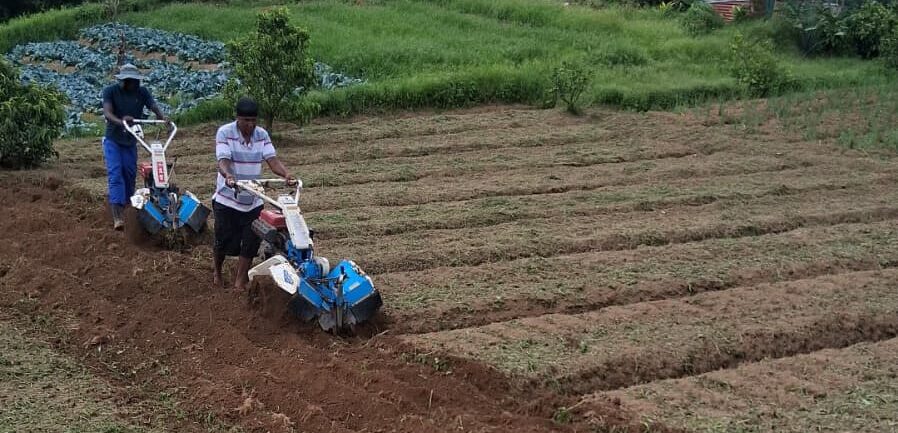
In a targeted push to strengthen Dominica’s agricultural sector and boost long-term farmer livelihoods, more than 50 local producers and agricultural stakeholders have completed hands-on training focused on advancing vegetable output through cutting-edge irrigation, fertigation, and nutrient stewardship practices. Organized jointly by the Food and Agriculture Organization of the United Nations (FAO) and Dominica’s Ministry of Agriculture, Fisheries, Blue and Green Economy, the June 2, 2026, practical workshop was hosted at the One Mile Agricultural Station in Portsmouth, drawing 56 participants that included 29 women and 27 men. Attendees represented a cross-section of the island’s agricultural ecosystem, from smallholder farmers and government extension officers to representatives of sector-supporting organizations.
This training forms a core component of FAO’s ongoing regional initiative, “Improving livelihoods through diversified high-value vegetable crop production in selected agroclimatic zones,” a program designed to help small-scale and commercial producers across Dominica adopt climate-smart, modern production technologies. A key deliverable of the project is the development of 16 demonstration sites across the island’s diverse agroclimatic regions, each showcasing advanced production models ranging from open-field sustainable farming to upgraded greenhouse structures, anti-pest net houses, and improved water and nutrient delivery systems. These demonstration hubs are designed to act as accessible, practical learning centers for local producers and extension staff, with the long-term goals of driving higher crop productivity, cutting resource waste, and lifting household incomes for farming communities.
Led by two seasoned FAO technical specialists – Horticulture Specialist Marcko Theodoracopoulos and Plant Production and Protection Specialist Anne Desrochers, who also served as the project’s Lead Technical Officer – the workshop centered on immediately actionable skills that participants could apply on their own farms right after the training. Attendees gained hands-on experience installing and maintaining drip irrigation infrastructure, formulating and applying soluble fertilizers accurately, and building custom fertigation schedules aligned with specific crop growth stages and unique on-site field conditions.
A core focus of the training was the correct operation and calibration of Venturi fertilizer injectors, low-cost, low-maintenance devices that leverage water pressure to evenly distribute fertilizer solutions through existing irrigation lines. Through a combination of technical lectures, live on-site demonstrations, and guided group practice, participants also worked through solutions for common on-farm challenges, including clogged irrigation lines, uneven water distribution, improper fertilizer mixing, and adapting nutrient and water schedules to shifting crop needs and weather conditions.
Desrochers emphasized that the project’s impact extends far beyond just providing new equipment and infrastructure. “The project is not only providing irrigation, fertigation and protected-cultivation technologies. It is also ensuring that farmers and national technicians have the practical knowledge required to operate these systems effectively and make sound decisions based on crop stage, soil and field conditions,” she explained. “This combination of appropriate technology and strengthened technical capacity is essential for improving productivity, using water and fertilizers more efficiently, and building more resilient vegetable-production systems in Dominica.”
Local agricultural stakeholders echoed Desrochers’ positive assessment of the training. Joanne Williams, Extension Officer for Dominica’s West Agricultural Region, noted that the new skills she gained will directly benefit the farmers and school agricultural programs she supports across the region. “This training provided me with valuable new knowledge that I can apply in the field and share with the schools and farmers I support, particularly to help them reduce production costs while improving profitability,” she said.
Jeffrey Bruney, a farmer and agri-entrepreneur who operates Kubuli Farms, added that access to this hands-on technical training fills a critical gap for local producers. “This training was essential because it introduced farmers to new fertilizers and production systems, helping us to use these technologies effectively, apply the knowledge at our own farms and share it with other farmers,” he said.
The one-day workshop was part of a broader five-day FAO technical mission to Dominica, conducted from June 1 to 5, 2026. Immediately following the training, FAO specialists and local government counterparts traveled to project beneficiary demonstration sites across the island to assess pre-installation preparations for new irrigation and fertigation infrastructure. During the site visits, the joint team evaluated key site characteristics including land preparation progress, water access, drainage capacity, field layout, and planned infrastructure placement. The assessments also mapped any remaining site preparation work and outstanding material requirements, allowing the team to finalize timelines for infrastructure installation.
Looking ahead, FAO reaffirmed its long-term commitment to collaborating with Dominica’s Ministry of Agriculture to strengthen the island’s vegetable sector. The organization says it will continue to support the development of a sustainable, climate-resilient, market-focused agricultural industry through ongoing technical training, access to context-appropriate technologies, and sustained partnership with local farming communities.