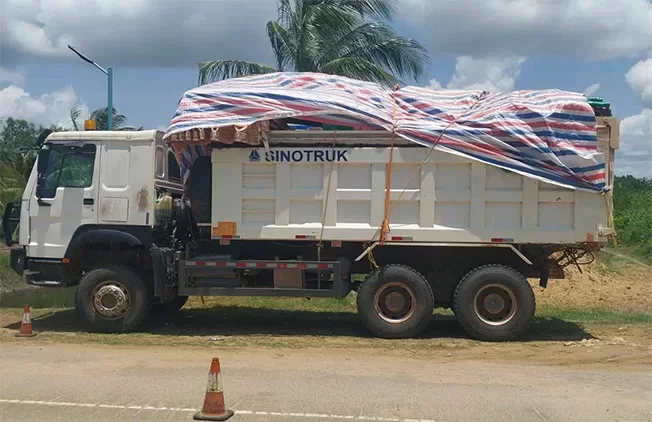
A recent interception of two trucks carrying suspected illegal cyanide at the Burnside checkpoint has triggered widespread concern and rigorous questioning among members of Suriname’s National Assembly, with lawmakers pressing the government for clarity on cross-border smuggling controls, safe storage protocols and unregulated hazardous chemical use in the country’s gold mining sector. The incident, which unfolded earlier this week, has reignited long-simmering tensions over environmental risks, including unresolved questions about a recent mass fish die-off in the Saramacca River that has been linked to toxic runoff from small-scale and illegal gold extraction.
Mahinder Jogi, a legislator from the VHP party, opened the debate by flagging gaps in government handling of seized hazardous materials, pointing to a high-profile prior case where a cache of confiscated mercury stored at a local police station went missing without explanation. Jogi demanded the government confirm whether all legally required protocols have been followed for the newly seized cyanide shipment, including details on how the toxic substance is being secured, what safety protections are in place to prevent accidental leaks or theft, and what violations prompted the seizure of the two trucks in the first place.
Rabin Parmessar, parliamentary leader of the opposition NDP, focused his questioning on systemic failures in border control, noting the shipment entered Suriname from neighboring Guyana through the country’s western border region. While Parmessar praised law enforcement for successfully intercepting the cargo at the Burnside checkpoint in Coronie, he questioned why the unauthorised shipment was not detected earlier along its route through the country. He warned that cyanide is unlikely to be the only hazardous substance being smuggled across the border, noting illegal mercury and other toxic chemicals used in unregulated gold mining also regularly enter Suriname from Guyana, and called on the government to explain how it is policing these illicit flows. Parmessar also reminded the government that the National Assembly has been waiting weeks, if not months, for a full official report on the Saramacca River fish kill, stressing that parliament has not dropped the issue and will continue to hold authorities accountable.
Asis Gajadien, VHP parliamentary faction leader, centered his remarks on the growing prevalence of unregulated cyanide use in Suriname’s interior gold mining sector. He told the assembly that over the past several months, a large number of new mining pits using cyanide for ore extraction have been established in remote interior regions, creating major risks for groundwater and river ecosystems. Gajadien called on the government to ramp up oversight of the sector, placing responsibility for stronger enforcement on the Ministry of Oil, Gas and Environment and the National Environment Authority. He also proposed that modern monitoring tools, including satellite imagery, should be deployed to track unauthorised expansion of mining activity across sensitive interior landscapes.
Lawmakers across party lines extended praise to Surinamese law enforcement for successfully intercepting the two trucks, but united in calling on the government to prioritize secure, compliant storage for the seized cyanide to prevent environmental or public health disasters. The government has confirmed it will respond to all parliamentary questions during an official sitting scheduled for Thursday.