博客

  • Jairam biedt geloofsbrieven aan president van India aan

    Jairam biedt geloofsbrieven aan president van India aan

    On a formal ceremonial day at New Delhi’s iconic Rashtrapati Bhavan on Monday, Hanisha Jairam, the newly appointed Ambassador Extraordinary and Plenipotentiary of Suriname to India, officially submitted her letter of credence to India’s President Droupadi Murmu, formally launching her diplomatic posting in the South Asian nation.

    The credential presentation ceremony was attended by senior representatives from India’s Ministry of External Affairs, alongside core diplomatic staff from the Surinamese Embassy based in New Delhi. Alongside Jairam, five other newly appointed envoys from Gabon, Mongolia, Mozambique, Nicaragua, and The Bahamas also presented their credentials to President Murmu during the same event.

    Following the formal presentation, Jairam held a bilateral meeting with President Murmu, where she underscored the longstanding friendly and strategic partnership binding Suriname and India. She also took the opportunity to mark the 50th anniversary of formal diplomatic relations between the two countries, noting that existing frameworks for bilateral, multilateral, and South-South cooperation create extensive opportunities to deepen collaboration across priority areas.

    Jairam highlighted that the upcoming ninth meeting of the India-Suriname Joint Commission will serve as a critical platform to advance concrete cooperation in key sectors including culture, agriculture, energy, public health, information and communications technology, and institutional capacity building.

    In her welcoming remarks, President Murmu extended warm greetings to Jairam on her appointment, and expressed deep appreciation for the close, people-centered bonds between the two nations. She recalled her 2023 state visit to Suriname, and asked the new ambassador to convey her personal regards to Suriname’s President Jennifer Geerlings-Simons. Murmu also noted the special significance of Jairam’s appointment, pointing to the ambassador’s Indian ancestral roots as a reflection of the deep historical and cultural connections between the two countries.

  • Team Saint Lucia in SKN for ECVA volleyball

    Team Saint Lucia in SKN for ECVA volleyball

    The Eastern Caribbean Volleyball Association (ECVA) has launched its revamped flagship age-group beach volleyball championship this week, bringing top young talent from across the region to the picturesque shores of Frigate Bay, St Kitts & Nevis. In a key adjustment to the tournament structure, the 2026 iteration has shifted from the Under-21 age category — its classification for the previous three years — to an Under-20 format, opening new competition opportunities for emerging junior players.

    Eleven Caribbean territories are competing in this zonal title clash, running from July 10 to 12 in Basseterre, with all play adhering to the latest official competition rules set by the International Volleyball Federation (FIVB). Among the contenders is Saint Lucia, which is fielding both men’s and women’s teams hungry to claim top honors at the regional event.

    On the men’s side, Saint Lucia’s pairing features Peter Emmanuel, a returning experienced player who earned a silver medal at the 2021 U21 Championship, and new partner Lindan Clarke. Emmanuel previously took second place at the same host venue last June alongside former teammate Rio Victor, and he will carry that regional competition experience into this year’s tournament. For the women’s draw, Saint Lucia is represented by Abigail Evans and Aryanna Desir, who are aiming to follow in the footsteps of the nation’s 2025 championship-winning duo Ericka Gaspard and Clio Phillip and bring home another ECVA title.

    Leading Saint Lucia’s delegation is head coach Terry Verdant, who is not only guiding his team but also participating in a specialized coaching education program organized jointly by ECVA and the North, Central America and Caribbean Volleyball Confederation (NORCECA). The tournament itself is co-hosted by the St Kitts Amateur Volleyball Association (SKAVA), ECVA, and NORCECA, with backing from the Association of National Olympic Committees of the Eastern Caribbean States (ANOCES), FIVB, and the St Kitts and Nevis Olympic Committee (SKNOC).

    With matches scheduled across the full day each day of the event, spectators and tourists have abundant access to watch high-caliber junior beach volleyball in one of the Eastern Caribbean’s most scenic coastal locations. ECVA officials framed the 2026 championship as a dual-purpose milestone: a critical development platform for the next generation of Caribbean volleyball talent, and a catalyst to grow local sport tourism in St Kitts & Nevis.

    ECVA President Glenn Quinlan emphasized the long-term value of the annual regional competition in a statement, noting that events like this U-20 championship act as essential stepping stones to move promising athletes from grassroots play to elite international competition. “Each edition strengthens our programmes, exposes our players and coaches to higher standards of competition, and helps to build a sustainable future for volleyball throughout the Eastern Caribbean,” Quinlan explained.

  • CueSports takes pool into schools

    CueSports takes pool into schools

    Barbados’ leading cue sports governing body, CueSports Barbados, is rolling out a targeted grassroots effort to grow the sport among the nation’s youth, anchored by two connected programs: CueConnect and the Pool in Schools initiative. The organization marked a key milestone this week with the handover of a fully outfitted pool table to Grantley Adams Memorial School, a secondary school located in St. Joseph. This donation makes the institution the first educational partner to receive specialized equipment under the new program.

    Daniel Hinds, president of CueSports Barbados, explained that the school-focused initiative grows out of the organization’s long-term vision to embed cue sports in Barbados’ educational landscape, while nurturing sustainable national growth for the discipline. The idea for expanding into schools first took root in 2022, when one of the organization’s members, Davi Davis, launched a youth team called Young Bloods. The team, which remains active today, creates space for young players to compete in local CueSports-sanctioned events, particularly team-format tournaments.

    Building on the success of Young Bloods, the organization worked to formalize a pathway into schools, Hinds said. The connection to Grantley Adams Memorial School came through CueSports Barbados Vice President Sonia Mayers, an alumnus of the institution, who facilitated a meeting with school principal Major Andrew Skeete to pitch the program.

    Major Skeete welcomed the donation and emphasized the excitement among the school’s student body. “We want to express our sincere gratitude. We are a school of firsts and we thank you,” he said in remarks following the handover. “I can assure you the boys and girls will be at school early to put it to good use and we will be looking after it.”

    Unlike one-off donation projects, the Pool in Schools pilot at Grantley Adams Memorial is designed as a sustainable, long-term program, Hinds noted. Before regular student coaching begins, the organization will host a two-day training workshop for two of the school’s teachers in August, covering core pool fundamentals, proper game etiquette, and program management. The goal of the upskilling is to build local capacity at the school, so that school staff can run ongoing sessions independently after the initial launch phase. Following the workshop, CueSports Barbados coaches will lead structured training sessions for participating students at least twice a month to support skill development.

    Looking ahead, CueSports Barbados has already begun laying groundwork to expand the initiative to four additional secondary schools across Barbados: Deighton Griffith Secondary School, Ellerslie Secondary School, Graydon Sealy Secondary School, and St. Leonard’s Secondary School. Hinds stressed that the organization is prioritizing careful, incremental expansion to ensure every participating school has the resources and support to sustain the program long-term.

    For Hinds and the CueSports Barbados team, the initiative is far more than a simple equipment donation. It represents a deliberate investment in young Barbadians, opening new recreational and competitive opportunities for youth, and securing the long-term future of cue sports across the country.

  • Canal upgrades boost hurricane confidence

    Canal upgrades boost hurricane confidence

    For decades, recurrent flooding has been a persistent source of stress and disruption for communities in Sunset Crest, a neighborhood located in Holetown, Barbados. But as the annual Atlantic hurricane season gets underway, locals say they are cautiously optimistic that devastating flood events will be far less likely this year, following targeted infrastructure upgrades and coordinated community action to address long-standing drainage vulnerabilities.

    The region’s chronic flooding issues have long centered on an overloaded, undersized canal that cuts through the residential area. For years, heavy seasonal rainfall would regularly push the canal over its banks, sending rushing water into local streets, driveways and homes. One long-term Jamestown Park resident, who has lived in the neighborhood for 39 years, shared vivid memories of past flood events with local outlet Barbados TODAY, recalling how deep water would cover entire residential avenues, sweep away residents’ trash bins, and cut off access to homes for those caught out by sudden downpours.

    Major improvements began after authorities completed a canal widening project decades ago, which cut serious flood events to nearly zero for roughly 15 years, the long-term resident explained. That dry spell ended only recently, when an unexpected overflow sent water into neighborhood avenues once again – the first major incident in a generation. Though the resident avoided permanent damage to her property, the experience was unsettling, requiring her to scramble out of bed in the early hours of the morning to stack sandbags at her back entrance after a neighbor alerted her to the rising canal levels.

    Even when floodwaters do not breach home foundations, they still upend daily life, making local roads impassable. The resident recalled one incident where she was forced to wade through ankle-deep water to reach her home after leaving the main road, while a neighbor was stranded at a bus stop for hours until her husband could pick her up. These past traumatic events have left a lasting mark on the community: even with new upgrades in place, locals still keep sandbags stocked at the ready and closely monitor weather forecasts whenever heavy rain is predicted.

    One of the worst historic flood events the neighborhood faced was sparked by blocked drainage infrastructure, when accumulated debris trapped water in residential areas. The resident described a terrifying incident where her family held hands to stay upright against rushing floodwaters, and her father injured his leg when the force of the water threw him back as he tried to open a gate to let the water drain out. That memory, she says, is why residents remain jumpy even at the prediction of moderate rain.

    Beyond the completed canal work, the community is still waiting for two key additional improvements: confirmation that the canal has been fully dredged ahead of this hurricane season, and updates on a proposed emergency evacuation route that was discussed during recent community meetings.

    Another local resident, James, noted that conditions have improved dramatically compared to past years, even if some low-lying trouble spots remain. He shared that while he has never had floodwater enter his home, heavy rain regularly causes flooding that snarls traffic near the Rubis Service Station and the intersection by Limegrove, worsening congestion during peak storm events. James’ biggest concern heading into this season is the combination of uncleared drains and high tide, which could push flood levels higher than residents have seen in recent years.

    Like the long-term Jamestown Park resident, James confirmed that past drainage upgrades have delivered clear, noticeable improvements. Though the neighborhood is built on former swamp land, which brings a small risk of structural shifting to homes, he says he has never experienced issues himself. “Whatever it is they’re doing has been working,” he explained, noting that he has only witnessed one major flood since the earlier dredging and drain reconstruction project was completed. His family prepares for storm season by keeping emergency supplies like batteries and candles stocked, and has laminated windows to add extra protection against strong winds.

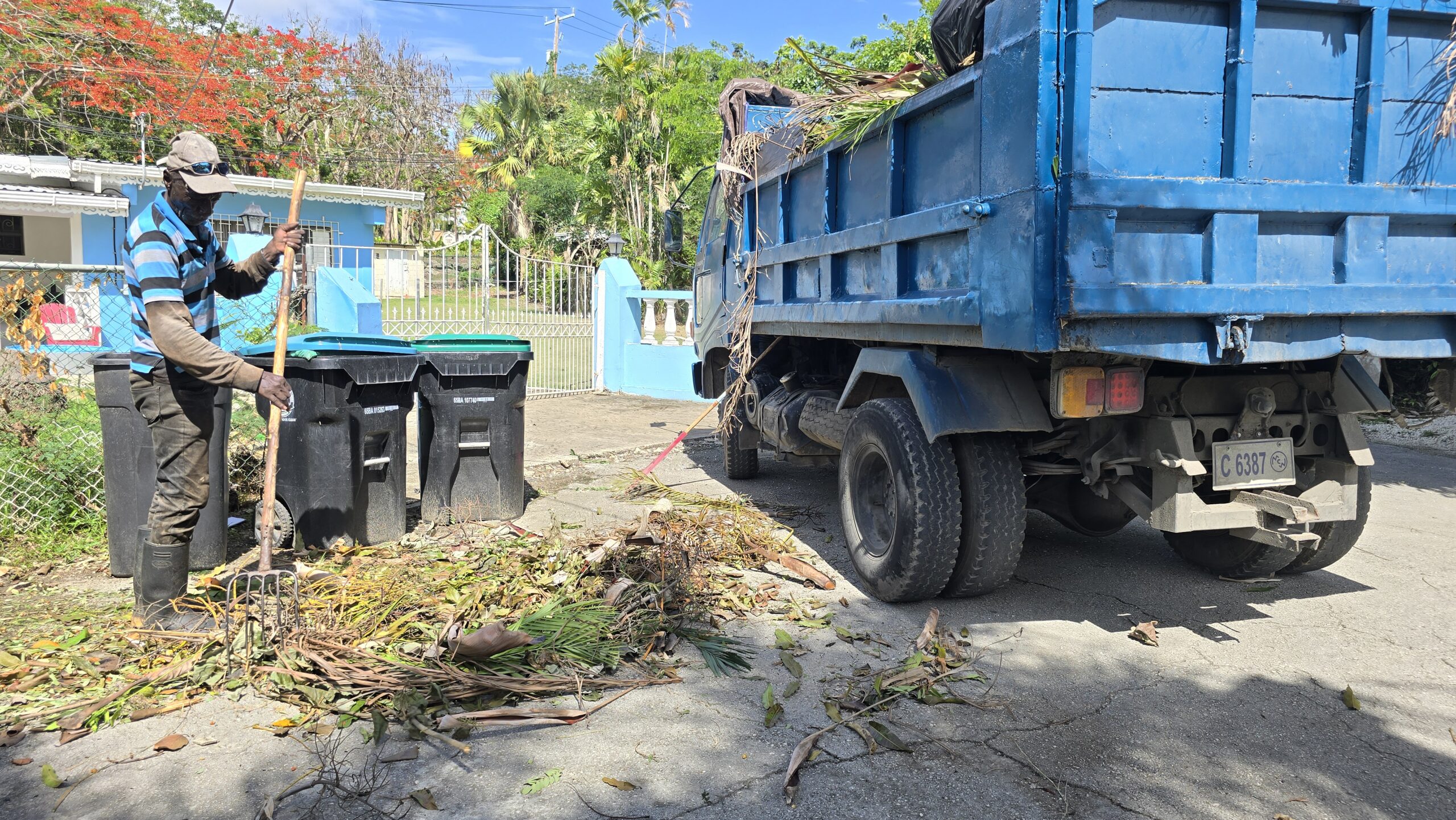
    James’ top unaddressed concern is an abandoned neighboring property with large, unstable trees that could fall and cause severe damage during strong hurricane-force winds. Still, he praised the work of the local community organization, the Sunset Crest Association, which coordinates regular pickup of yard waste and tree cuttings after residents maintain their properties, sending a collection truck around on a weekly or bi-weekly basis to clear debris that could otherwise worsen flood risk or become a hazard during storms. This grassroots collaboration, paired with government-led infrastructure upgrades, has left the community cautiously hopeful they will weather the 2024 hurricane season without the devastating flooding that has marked years past.

  • Nine Years, No Water: Who’s Actually Responsible for Fresh Pond?

    Nine Years, No Water: Who’s Actually Responsible for Fresh Pond?

    For nearly a decade, 30 residents of Belize’s small Fresh Pond community in Burrell Boom have navigated daily life without a single drop of running water to their homes. What should be a basic human necessity has become a constant struggle, with locals forced to rely on haphazard, inconsistent sources to meet even their most basic drinking, cooking, and hygiene needs. Rainwater catchment, occasional donated water supplies, and costly private water deliveries are the only options these families have had to survive year after year.

    Residents recount that they have spent years lodging formal appeals with every level of local authority they can reach: the Burrell Boom village council, national government representatives, and Belize’s main water utility, Belize Water Services Limited (BWSL). Despite repeated promises that a permanent piped water system was in the works and would be delivered imminently, none of these appeals have resulted in tangible action, leaving the community’s crisis unresolved.

    Nayda Escobar, a long-time Fresh Pond resident, described the community’s daily reality in an interview, noting that local reliance falls almost entirely on the generosity of one nearby property owner. “There is only one neighbour that’s been giving us water here for these couple years… He’s the one that’s been giving us the big hand here to everyone, but there are a few families here that have been coming to live and build here, but they go because of the same situation. We don’t have any water,” Escobar explained. She added that the entire community remains united in one simple demand: the installation of a formal, functioning water system that meets their basic needs.

    Another resident highlighted that the hardship intensifies dramatically during Belize’s annual dry season, when rainfall dries up entirely and private water deliveries become even more costly and harder to schedule. What makes this ongoing crisis even more frustrating for residents, they say, is that the community is caught in a confusing jurisdictional dead zone that no government agency or utility will claim responsibility for.

    Locals explain that BWSL considers the community too remote and sparsely populated to justify extending its urban-focused water network, while the Ministry of Rural Transformation does not classify Fresh Pond as sufficiently rural to qualify for its rural development water programs. This bureaucratic limbo has left the community stranded, even as new housing and commercial developments just a short distance away receive full, government-supported water access.

    The community was originally given a firm timeline for the water system: officials promised the project would be fully completed by December 2023. But when that deadline passed, residents say they received no updates, no explanations, and no new timeline. Escobar noted that residents have continued to follow up repeatedly with officials, who only offer vague assurances that they will attempt to arrange temporary water access, with no results to date. After nine years of unmet promises, Escobar says the entire community has grown exhausted of the constant struggle and unfulfilled commitments.

    Local news outlet News Five has reached out to BWSL to request an official comment on the community’s allegations and the ongoing status of the proposed water project. Full additional details from that inquiry, along with extended interviews with residents and responses from relevant government agencies, will be featured during tonight’s 6 PM broadcast of News 5 Live.

  • UN Chief Sounds Alarm as AI Outpaces Global Safeguards

    UN Chief Sounds Alarm as AI Outpaces Global Safeguards

    On July 7, 2026, United Nations Secretary-General António Guterres delivered a stark wake-up call to the global community at the opening of the first-ever UN Global Dialogue on AI Governance held in Geneva, warning that artificial intelligence innovation is racing far ahead of the ability of national governments to put in place effective regulatory guardrails. With the transformative power of AI already reshaping nearly every corner of modern life—from reconfiguring global economies and upending labor markets to swaying democratic election outcomes and reshaping international security—Guterres emphasized that the technology is being widely deployed without the robust, coordinated oversight it demands.

    In his keynote address to delegates representing governments, leading tech firms, and independent research institutions, Guterres stressed a core principle: innovation cannot thrive without clear safeguards. “If AI is to be powerful, it must be governed,” he told attendees, framing urgent global action as non-negotiable to prevent widespread, irreversible harm from unregulated AI systems.

    A central priority of Guterres’ address was protecting vulnerable youth populations, a group he noted has been exposed to untested AI without any comparable safety requirements that apply to other products designed for children. Drawing a comparison to long-established consumer protections, he pointed out that new medications and children’s toys are rigorously tested for safety before reaching young users, but unregulated AI has been integrated into children’s daily lives with no pre-deployment safety checks.

    To close this gap, Guterres proposed the creation of an AI Child Safety Pledge, which would mandate that technology companies verify their AI systems meet strict safety standards before making the tools accessible to minors. The pledge would also require binding safeguards to block AI from generating non-consensual sexually explicit imagery of children, and obligate developers to build systems capable of detecting when a child is in emotional distress and routing them to trained human support providers.

    The two-day UN dialogue, which brings together a diverse cross-section of AI governance stakeholders, does not aim to finalize a binding international treaty in this first session. Instead, delegates will gather to review the landmark first independent global scientific assessment of AI risks and gaps, compiled by a UN-backed expert panel composed of 40 leading researchers from around the world.

    Key findings from the upcoming assessment reveal a stark imbalance in global AI development capacity. Currently, the United States controls approximately 75 percent of the total computing power that powers the world’s top 500 AI supercomputers, while China holds an additional 15 percent, leaving just 10 percent distributed across the rest of the globe. The report also sounds the alarm over a growing global AI divide, warning that most low- and middle-income developing countries are falling far behind in AI adoption, and lack meaningful representation or influence in shaping the future trajectory of the technology.

    While Guterres acknowledged that artificial intelligence carries enormous transformative potential to drive progress in critical sectors including global healthcare, accessible education, and climate action, he closed by stressing that time is running out for coordinated global action. He urged nations to move quickly to establish harmonized global AI standards before the pace of technological innovation outstrips human ability to oversee and steer its development toward collective benefit.

  • Bienvenue à Chalon volleyball, Tevin St Jean

    Bienvenue à Chalon volleyball, Tevin St Jean

    After turning in a standout performance in Croatia’s top volleyball circuit, Saint Lucian talent Tevin St Jean is embarking on the next chapter of his peripatetic professional career, signing with Volley Ball Club Chalon-sur-Saône (VBCC) to become the latest addition to their 2026-2027 roster. The 30-year-old, who hails from the coastal Saint Lucian town of Soufrière, will make his debut in France’s competitive League B this coming season, marking the 11th different club he has joined over the course of his 10-year professional journey.

    St Jean is the fourth new recruit signed by VBCC ahead of the new season, arriving from Croatian side MOK Marsonia (Muški Odbojkaški Klub Marsonia), where his standout form earned him the honor of being named the league’s best middle blocker. Standing at two meters tall, the middle hitter brings a wealth of international experience to his new side, having previously plied his trade across top clubs in Greece, Romania, and Portugal. Beyond his European club commitments, St Jean has also shone on the regional stage, claiming the Best Middle Blocker award at the Caribbean Games during his career.

    For VBCC, which is heading into its second consecutive season competing in the second tier of French professional volleyball, the signing of St Jean is viewed as a pivotal boost to the squad’s prospects. The club finished 11th in the league standings last season, and management has made clear it will rely heavily on the Saint Lucian’s skill and experience to climb the table in the upcoming campaign. In an official statement shared across the club’s social media channels, VBCC highlighted the athlete’s key strengths: “Explosive, powerful in the attack and very effective on the block, he will be a strong plus value in our team to achieve our goals next season.”

    St Jean’s career also carries regional significance, as he is just one of three active professional volleyball players hailing from the small Caribbean island nation of Saint Lucia. He follows in the footsteps of the country’s first pro volleyball export, Julian Bissette, who is currently competing in his 13th professional season and has built a career spanning 12 clubs across four different countries.

  • Workers set for stronger wage protections

    Workers set for stronger wage protections

    On Tuesday, the government of Barbados announced a firm zero-tolerance stance on worker exploitation, tabling a landmark new piece of legislation in Parliament designed to overhaul existing protections, strengthen employee rights and reshape employer-employee relations across the island nation.

    Labour Minister Colin Jordan presented the Protection of Wages Bill to the House of Assembly, marking the latest step in a broader legislative push to expand worker safeguards ahead of the government’s completion of a full, formal national labour code. Aligned with international labour standards, the bill introduces a range of targeted reforms addressing longstanding gaps in wage regulation and worker security.

    One of the bill’s key updates is the formal legal recognition of wire transfers and direct deposits as valid methods of wage payment, alongside a new statutory right for workers to select their preferred financial institution for wage deposits. Jordan confirmed that employers will be prohibited from passing any associated banking transaction fees onto their employees, while existing requirements mandating that employers give workers reasonable access to convert their wages to cash will remain in effect.

    The legislation also significantly ramps up penalties for unethical employer practices around unauthorized wage deductions. For employers that deduct funds from worker paychecks for designated third-party organizations—including the National Insurance and Social Security Service, trade unions, credit unions, banks, and the Barbados Revenue Authority—but fail to remit those funds, the new bill imposes stiff penalties of up to $30,000 in fines or three years of prison time. “If those monies are not paid over, the penalty is $30 000 or up to three years in prison. Then that $40 or $50 can cost you up to $30 000,” Jordan emphasized.

    The bill codifies existing regulations that classify interest charges on salary advances as illegal, and adds a new prohibition on so-called “retention deductions,” a practice where employers withhold portions of wages to offset potential business risks. Longstanding rules capping total deductions for salary advances and overpayments at one-third of a worker’s total wages will remain unchanged. In a flexibility-focused amendment, however, the legislation removes existing restrictions on wage assignments for mortgages and hire-purchase agreements, giving households more room to manage their personal financial obligations.

    Beyond these rules, the bill mandates that all non-statutory wage deductions require explicit written consent from the affected worker. One of the most transformative reforms included in the legislation grants workers preferred creditor status in cases where an employer faces insolvency, receivership or bankruptcy. This change guarantees that unpaid wages will receive priority during the distribution of company assets, ensuring workers do not bear the full brunt of a business’s collapse.

    To improve access to justice for workers facing unfair treatment, the bill streamlines the complaint process, allowing cases to be referred to the Employment Rights Tribunal via the Chief Labour Officer while preserving workers’ right to pursue legal redress through the traditional court system. Jordan stressed that the government itself will be bound by most of the legislation’s provisions, noting that the state has a responsibility to set a benchmark for fair worker treatment across all sectors.

    Alongside the introduction of the Protection of Wages Bill, Jordan announced that upcoming amendments to the Employment Rights Act and the Labour Clauses (Public Contracts) Act are already in preparation, and new standardized pay rates and working condition rules for tourism accommodation workers across the country will be rolled out shortly. “I will shortly be establishing new rates of pay and conditions of work for workers in tourism accommodation across the country,” he said.

    Jordan framed the new legislation as a reflection of the administration’s human-centred approach to national development, which balances expanded worker protections with commitments to boosting long-term productivity. “A bill that seeks to amplify our commitment to protection and production. Protection of those people on whose backs, on whose shoulders the development of our country rests so that given that protection, those people, those individuals, those human beings are able to produce, produce for themselves, produce for their dependents, ultimately to produce for their nation, to produce for our nation,” he explained.

    The minister made clear that the zero-tolerance policy on exploitation applies to all workers in Barbados, regardless of origin—including native-born Barbadians, CARICOM nationals and migrant workers. “We have determined that we will not allow exploitation of workers in this country and when I say exploitation of workers, I’m speaking not just to Barbadian-born, but I’m also speaking to CARICOM nationals; I’m also speaking to migrant workers,” he said.

    Jordan also issued a direct, uncompromising message to employers who argue that the wave of labour reforms has created overly burdensome regulatory requirements for businesses. “There are some employers who believe that we’ve been doing too much with respect to legislation. That it may be becoming too cumbersome to have business. I have a simple message for employers; If your business model does not allow you to treat your workers properly, then shut the place down,” he stated.

    Addressing newly established foreign businesses operating in Barbados, Jordan added that all entities operating within the country are expected to respect local industrial relations norms and occupational safety standards. “In some cases, this disrespect for our traditional values is coming from newcomers… I use this opportunity to say to all those who will come, or those who have come, we expect nothing less than decent approaches to industrial relations and to occupational safety and health,” he said.

    The entire piece of legislation is drafted to align with standards set by the International Labour Organisation (ILO), which were developed through global tripartite collaboration between governments, employer groups and worker organizations. The Protection of Wages Bill forms part of the government’s ongoing work to develop a comprehensive national Labour Code, a core commitment under Barbados’ Decent Work Country Programme 2025-2030, signed in partnership with the ILO. “That labour code is really the ultimate as it relates to consistency of legislation, consistency of definitions…. It is part of our Decent Work Country Programme 2025 to 2030, which we’ve signed with the International Labour Organisation,” Jordan noted.

    Finally, Jordan acknowledged that robust inspection and enforcement mechanisms will be critical to ensuring the legislation delivers tangible change for workers. “The ministry that I have the honour to lead recognises its responsibility to the workers of the country…. We recognise that if there’s to be decent work, then our ministry, its legal department, but also importantly its inspectorate, have a critical role… We commit ourselves to understanding that role and acting in such a way as to make decent work a reality in this country,” he said.


  • Stern John steps down as Saint Lucia’s football head coach

    Stern John steps down as Saint Lucia’s football head coach

    After four years at the helm of Saint Lucia’s national men’s football program, former star forward Stern John has formally resigned from his position as head coach, the Saint Lucia Football Association (SLFA) confirmed in an emailed statement released Tuesday.

    The 49-year-old, who hails from Trinidad and Tobago, leaves behind a decorated playing career that cements his legacy as one of CONCACAF’s greatest finishers. As the all-time leading goalscorer across the Confederation of North, Central American and Caribbean Association Football, John earned 100+ caps for Trinidad and Tobago’s national side, the Soca Warriors, and played a pivotal role in securing the country’s historic 2006 FIFA World Cup qualification — the only time the nation has reached the tournament to date.

    John took over the reins of the Saint Lucia men’s national team, nicknamed the Piton Boyz, in 2021, and his four-year tenure delivered a mixed record of on-pitch results. Across 25 matches in charge, John’s side secured 12 wins and three draws against opponents including 2026 World Cup qualification contenders Curaçao, Grenada, and Barbados, as well as international sides San Marino, St Maarten. The campaign was also marked by high-profile losses, including two defeats to Haiti, and dropped results against Azerbaijan, Cuba, Puerto Rico and Guadeloupe.

    A major focus of John’s tenure was restructuring the national team’s player pool to boost competitiveness. He made the controversial but proactive decision to call up multiple foreign-born and overseas-based players, including experienced defender Terell Thomas and dynamic striker Caniggia Elva, to add depth and quality to the squad. At the same time, he prioritized nurturing young domestic talent, handing valuable senior international opportunities to emerging local players like Eymani Butcher and Yanic Noel.

    Despite these structural changes, a sustained five-match losing streak dating back to October 2024 ultimately led to John’s departure. The SLFA’s president Lyndon Cooper released an official statement thanking the outgoing coach for his service, emphasizing the association’s gratitude for his commitment to growing the Saint Lucian game.

    “On behalf of the Executive Committee and the entire Saint Lucia Football Association, I wish to express our sincere appreciation to Stern John for his dedication, professionalism, and commitment to the Men’s National Team,” Cooper said. “Representing one’s country in any capacity is an honour, and we are grateful for the time, energy, and expertise he invested in advancing our football programme.”

    Cooper added: “Stern John is a true icon of Saint Lucian football. His achievements as an international player brought immense pride to our nation. Throughout his tenure, he conducted himself with professionalism, integrity, and an unrelenting desire to see Saint Lucia succeed regionally and internationally. On behalf of the Executive Committee and the entire football fraternity, I extend our heartfelt gratitude for his invaluable service and wish him every success in the next chapter of his career.”

    While Cooper noted the association is disappointed by John’s choice to step down, it has fully accepted his resignation and respects his decision. Looking ahead, the SLFA’s Executive Committee has already launched the process to find an interim technical leader, and will begin a formal search to appoint a permanent new head coach in the coming weeks. The association has reaffirmed its long-term goal of building a sustainable, competitive national football program that supports emerging talent and grows the sport across Saint Lucia for generations to come.

  • BNSI pushes phased metric move with public campaigns, tools

    BNSI pushes phased metric move with public campaigns, tools

    Half a century after Barbados first launched its transition to the metric system, the island nation’s national standards regulator is calling for an urgent end to the lingering use of imperial pounds in local commerce, warning that incomplete conversion is dragging down trade performance, creating operational friction, and confusing consumers.

    The Barbados National Standards Institution (BNSI) laid out its case this Tuesday, stressing that full adoption of the kilogram as the primary mass measurement unit for all commercial activity is a critical step to modernize the country’s trade practices and cement its standing in the global economy.

    Barbados first kicked off its metric shift back in 1973, joining a broader regional and global push toward standardized international measurement systems. By 1977, the government formalized the transition, passing a new Weights and Measures Act that made metric units the official standard for all government and regulatory use. However, decades on, elements of the old imperial system have stubbornly persisted: while service providers such as fuel stations already sell gasoline by the liter, most retail grocers and traders still list product weights in pounds, creating a patchwork dual measurement system that creates inconsistencies across nearly every sector of the local economy.

    BNSI’s statement points out that even though the kilogram is the globally recognized official unit of mass under the International System of Units (SI), pounds remain embedded in day-to-day local commerce. This ongoing dual usage creates a cascade of avoidable challenges that undercut trade efficiency, complicate business operations, and leave consumers confused.

    Because nearly all major international trading partners operate exclusively on the metric system, Barbadian businesses that rely on pounds for internal operations are forced to spend extra time and resources converting measurements for import, export, and cross-border commercial documentation. These repeated conversions do not just add unnecessary labor costs for packaging, labelling, and record-keeping – they also raise the risk of costly calculation errors and miscommunications between trading partners that can lead to delayed shipments and extra compliance burdens for local exporters looking to access global markets.

    Within Barbados’ own borders, the mixed measurement system creates mismatches between commercial practices and the metric standard already used across the country’s education, science, engineering, and technical industries. For consumers, the discrepancy makes it far harder to compare prices and product sizes across brands that use different units, eroding market transparency. A uniform kilogram-based system would make shopping far simpler, clearer, and fairer, BNSI argues, allowing shoppers to immediately identify which product delivers the best value for money.

    To help the country complete the transition smoothly, BNSI has already rolled out a structured phased strategy to expand metric adoption across all sectors of the economy. The plan includes targeted consultation sessions with industry stakeholders and widespread public awareness campaigns. Since 2023, the regulator has hosted a regular series of stakeholder webinars centered on the theme “Pounds to Kilograms” to answer business questions and address conversion concerns.

    Moving forward, additional support will include practical conversion tools, step-by-step guides, and accessible communication resources to help both businesses and consumers complete unit transitions without disruption. Outreach efforts will also include in-market informational signage, radio advertising, social media campaigns, and local community engagement programs to build widespread buy-in for the shift.

    BNSI emphasized that full conversion to kilograms will deliver long-term, meaningful benefits for Barbados’ economy by aligning the country’s trade rules with globally accepted norms. Widespread adoption of metric measurements will streamline cross-border imports and exports, improve accuracy in all commercial transactions, create consistent measurement standards across all domestic industries, and boost consumer and business confidence in Barbados’ marketplace.