
The Antigua Public Utilities Authority (APUA) has officially identified systemic causes behind a recent escalation in water main breaks across the island. In a public statement released on Monday, February 23, 2026, the authority’s Water Business Unit confirmed that the rising frequency of pipeline ruptures is a direct consequence of two primary factors: critically aging infrastructure and a significant increase in overall water production. The utility explained that substantial sections of the existing distribution network were engineered decades ago and were never designed to withstand the higher volumes and corresponding system pressures of contemporary water output. This combination of antiquated piping materials and intensified operational strain has created a vulnerability, leading to more frequent and disruptive failures. In response, APUA has initiated a comprehensive, phased modernization program targeting its primary water mains. This initiative involves the systematic replacement of old pipes with advanced, high-density polyethylene (HDPE) piping, a material lauded for its superior durability and resistance to corrosion. While these long-term upgrades are underway, the authority has assured the public that dedicated emergency response teams remain on active, daily deployment to swiftly address new leaks and other operational faults. For residents encountering water disruptions or related issues, APUA continues to operate its 24/7 Contact Centre, available at the hotline number 211.
博客
-

Windies’ winning streak ends despite Holder, Shepherd heroics
In a pivotal Super Eight clash at the ICC T20 World Cup, South Africa delivered a stunning blow to the West Indies, handing the co-hosts their first tournament defeat by a convincing nine-wicket margin. The encounter, held at Ahmedabad’s Narendra Modi Stadium on February 26th, featured the tournament’s last two undefeated sides in a high-stakes battle for semifinal positioning.
Electing to field first after winning the toss, South Africa’s bowling attack immediately exploited the West Indies’ batting vulnerabilities. The Caribbean side’s powerplay yielded a respectable 52 runs but at the devastating cost of four crucial wickets—Brandon King, Shai Hope, Shimron Hetmyer, and Roston Chase all fell to aggressive yet ill-advised shot selection against the Proteas’ disciplined attack.
The collapse intensified as the innings progressed, with the West Indies crumbling to 83/7 by the 11th over, facing the prospect of a subpar total. From this precipice of disaster emerged an extraordinary rescue mission from all-rounders Jason Holder and Romario Shepherd. The duo orchestrated a record-shattering eighth-wicket partnership of 89 runs—the highest ever recorded for that wicket in T20 International history. Holder’s powerful 49 runs from 28 deliveries was complemented by Shepherd’s maiden T20I half-century, his 52 coming from just 33 balls, miraculously elevating the final total to 176/8.
South Africa’s response was nothing short of dominant. Openers Quinton de Kock and captain Aiden Markram launched an explosive assault on the West Indian bowling, accumulating 69 runs without loss during the powerplay. De Kock eventually departed for a blistering 47 off 24 balls at 95/1, but Markram continued his masterclass uninterrupted. The skipper remained unbeaten on 82 from just 46 deliveries, featuring six fours and four maximums, as South Africa chased down the target with 19 balls to spare. This comprehensive victory virtually assures the Proteas a place in the tournament’s semifinal stage.
The defeat leaves the West Indies in a precarious position, facing a must-win encounter against tournament favorites India on Sunday at 9:30 PM local time to keep their semifinal hopes alive.
-
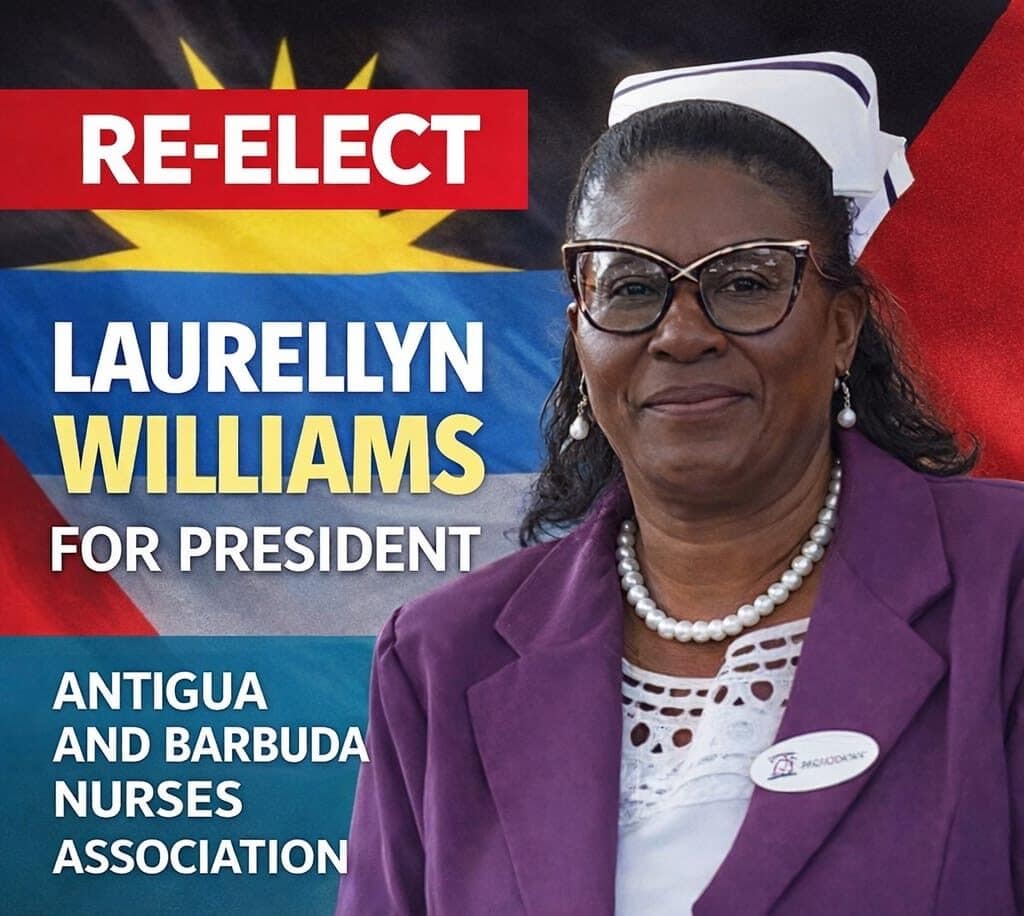
Antigua and Barbuda Nurses Association Appoints New Executive Committee Headed by Laurellyn Williams
The Antigua and Barbuda Nurses Association (ABNA) has formally introduced its newly appointed Executive Committee, marking a significant transition in nursing leadership. This accomplished team of healthcare professionals assumes responsibility for guiding the organization’s mission to enhance medical services, bolster nurse welfare, and champion exemplary patient care standards throughout the nation.
The comprehensive leadership roster features Laurellyn Williams as President, supported by dual Vice Presidents Kesha Willock and Emelda Peters Smith. Administrative functions will be managed by Secretary Eletha George with Wanda Ferris as Assistant Secretary. Financial oversight falls to Treasurer Alden Robins and Assistant Treasurer Petal Adams Nedd, while Oona Cabral-Knight will serve as Public Relations Officer.
Complementing the core leadership, five Executive Officers complete the administrative framework: Mcbert Arthur, Jenita Cuffy, Tanasha Roberts, Sonia Farrell Willock, Michelle Sealey, and Nerissa Skepple Thomas.
The Association has publicly acknowledged the contributions of the departing administration, recognizing their dedication and service to the nursing community. Simultaneously, ABNA has extended warm congratulations to the incoming committee members, emphasizing their commitment to advancing professional development opportunities, strengthening interdisciplinary cooperation, and amplifying nursing perspectives in healthcare policy formulation.
The newly constituted leadership has identified key priorities including the enhancement of continuing education programs, improvement of working conditions for nursing professionals, and strengthened advocacy within the national healthcare landscape. The Association encourages both its membership and public stakeholders to rally behind the new committee as they commence their strategic initiatives aimed at elevating nursing standards and healthcare delivery across Antigua and Barbuda.
-

James returns to Windies squad for Sri Lanka T20Is
Cricket West Indies has announced a 15-player squad for the upcoming Women’s T20 International series against Sri Lanka, featuring the return of Saint Lucian all-rounder Zaida James alongside fellow countrywoman Qiana Joseph. The three-match contest, scheduled from February 28 to March 3 at Grenada’s National Cricket Stadium, marks a critical preparation phase ahead of the ICC Women’s T20 World Cup in the United Kingdom this June.
James, 21, rejoins the squad after demonstrating promising form batting at number three during previous engagements, where she accumulated 89 runs across five matches with a career-best score of 45 against Scotland. With 26 T20I appearances to her name, James brings a balanced skillset of 125 runs and 6 wickets to the lineup captained by Hayley Matthews.
The selection panel has introduced strategic changes following West Indies’ 2-1 ODI series defeat to Sri Lanka. James and Mandy Mangru replace Ashmini Munisar and Shunelle Sawh, while 17-year-old Barbadian batting prospect Eboni Brathwaite receives her maiden senior call-up, replacing Realeanna Grimmond.
This series presents a vital opportunity for the sixth-ranked West Indies to assess their competitive standing against seventh-ranked Sri Lanka, providing crucial insights into squad depth and performance capabilities before the global tournament in June.
-
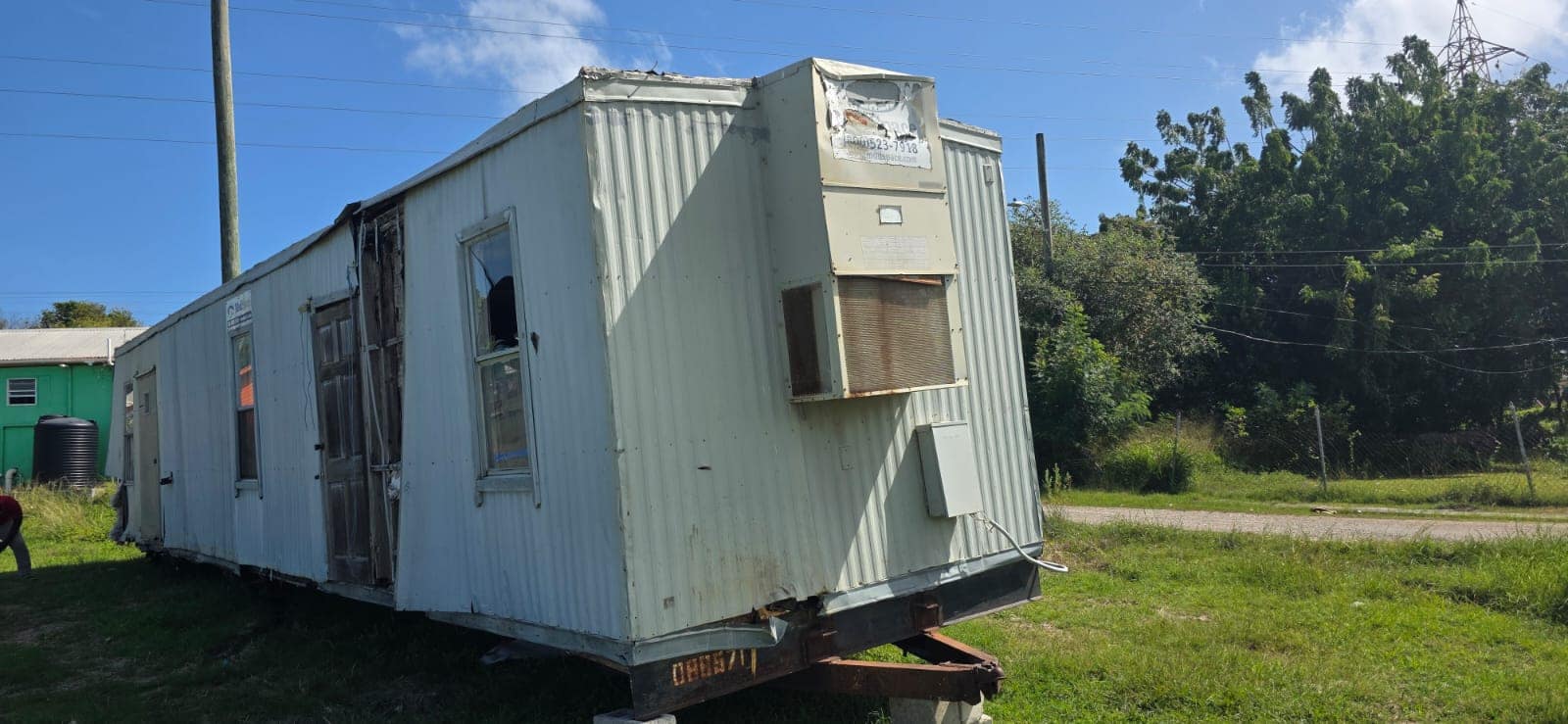
Ministry of Housing Assisting with Refurbishment of Pigotts Sports Club Facility
Substantial renovations are poised to transform the Pigotts Sports Club in St. George, with construction scheduled to initiate imminently following a significant injection of support from the national Ministry of Housing. The announcement was formally delivered by local caretaker Senator Michael Freeland, who confirmed the government’s direct involvement in refurbishing the club’s central administrative structure.
The critical infrastructure upgrade targets the building that functions as the primary operational hub, housing essential office space and dedicated dressing rooms for athletes and administrative personnel. Senator Freeland detailed that the initial phase of structurally repositioning the facility is already underway, with comprehensive restoration works slated to begin in the coming days.
This development is characterized as a direct response to the club’s proactive pursuit of excellence. Freeland emphasized that the organization’s leadership formally requested governmental assistance to modernize its infrastructure, a move that aligns with its core mission to foster athletic growth, discipline, and competitive excellence within the community.
In his official remarks, Senator Freeland extended gratitude to Housing Minister Maria Browne and Senator Rawdon Turner for their pivotal roles in endorsing what he termed a vital community-focused initiative. He further elaborated on the profound societal value of such projects, underscoring the indispensable role of sports in promoting positive youth development and strengthening community bonds. Freeland reiterated his personal commitment to championing the infrastructure needs of local clubs, asserting that robust facilities are fundamental to their success and sustainability.
As a cornerstone institution within the St. George constituency, the Pigotts Sports Club is a key promoter of community health and engagement, primarily through its organized cricket and football programs.
-
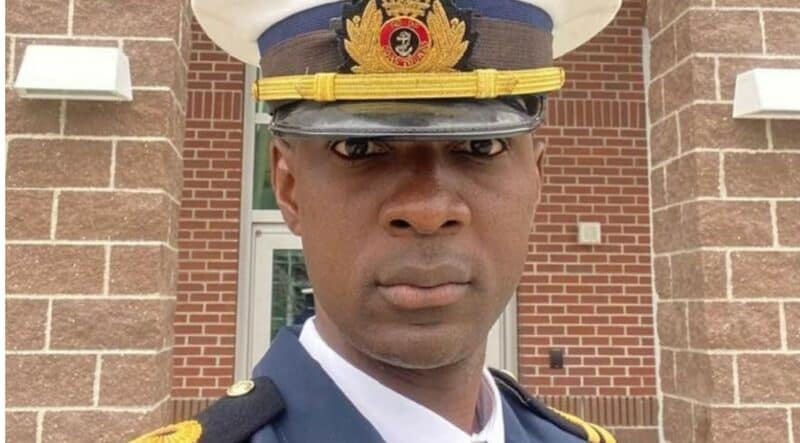
Cross-Examination Raises Serious Questions About Selective Discipline Within the ABDF
A recent military tribunal hearing has cast a harsh spotlight on the disciplinary protocols of the Antigua and Barbuda Defence Force (ABDF), with intense cross-examination revealing what observers are calling significant inconsistencies in the application of military justice. The proceedings, which have garnered considerable attention, centered on the treatment of specific personnel, raising fundamental questions about equity, procedural fairness, and command accountability within the nation’s armed forces.
Legal counsel for the defense engaged in a rigorous line of questioning, systematically challenging the rationale behind certain disciplinary actions. The cross-examination reportedly highlighted apparent discrepancies in how similar infractions were addressed across different units and ranks, suggesting a pattern of selective discipline rather than a uniform adherence to established military codes. This line of inquiry pointed toward potential biases, whether perceived or actual, that could undermine the integrity and morale of the entire force.
The courtroom revelations have triggered a broader discourse on transparency and governance within the ABDF’s command structure. Analysts suggest that the case transcends the individual(s) involved, evolving into a critical examination of institutional culture. The outcome of this tribunal is now widely anticipated, as it is expected to set a consequential precedent for future disciplinary matters and could potentially catalyze calls for a comprehensive review of the ABDF’s justice framework to ensure impartiality and restore confidence among serving members.
-
US wants Caribbean to be part of a new dynamic in the Western Hemisphere
In a significant address to Caribbean Community (CARICOM) leaders during their 50th regular summit, United States Secretary of State Marco Rubio outlined Washington’s vision for a revitalized partnership with the Western Hemisphere. The closed-door meeting served as a platform for Rubio to emphasize shared security concerns and economic opportunities while addressing recent developments in Venezuela.
Rubio identified transnational criminal organizations as the region’s most pressing security threat, noting their funding and power often rival that of nation-states. He described an “interlocked challenge” fueled primarily by narcotrafficking and other illicit activities that ultimately endanger both transit countries and U.S. national security. The Secretary expressed particular alarm at the advanced weaponry these groups possess, much of which originates from the United States, and pledged intensified law enforcement cooperation to disrupt these arms flows.
Beyond security concerns, Rubio highlighted “extraordinary opportunities for economic advancement,” specifically emphasizing energy collaboration. He acknowledged the Caribbean’s energy resources and expressed America’s desire to partner in their responsible development to generate regional prosperity.
Addressing Venezuela’s political situation, Rubio defended U.S. policy despite potential regional disagreements, stating unequivocally that “Venezuela is better off today than it was 8 weeks ago.” He cited the release of political prisoners, closure of the notorious Helicoide prison, and renewed oil revenue distribution for public benefit as evidence of progress under interim authorities led by Delcy Rodríguez. While acknowledging the need for eventual legitimate democratic elections, Rubio framed current U.S. efforts as focused on preventing instability, mass migration, and spillover violence.
The Secretary positioned a potentially “prosperous, free Venezuela” as a future asset for regional energy needs and stability. He conceptualized the Caribbean Basin—including the southern United States—as an integrated zone that should attract inbound investment, with American businesses participating in the region’s economic diversification efforts.
Rubio concluded by framing U.S. and Caribbean security and prosperity as fundamentally interconnected, stating: “We view our security, our prosperity, our stability to be intricately tied to yours.” His personal presence at the summit signaled Washington’s commitment to reinvigorating relationships rather than resetting them, emphasizing longstanding bilateral and multilateral ties. Rubio pledged to make Caribbean engagement a personal priority throughout his tenure, aiming to establish a strong foundation for his successor.
-
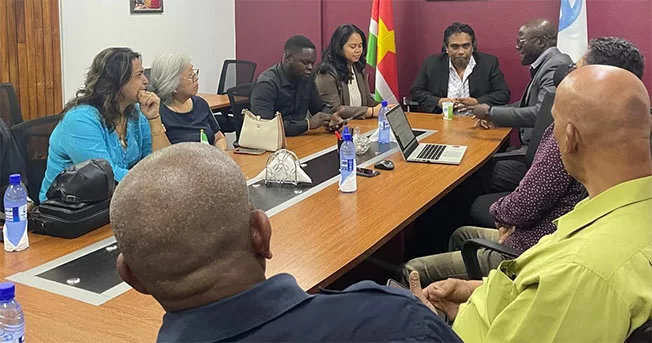
Werk Melkcentrale hervat na overleg met minister Noersalim
Operations at Suriname’s Milk Central have returned to normal following successful mediation efforts by Agriculture, Livestock, and Fisheries Minister Mike Noersalim. The resolution comes after partial work stoppages occurred yesterday when staff expressed dissatisfaction with the sudden departure of Director Monché Atompai.
Minister Noersalim personally engaged with management and employees to address the concerns, emphasizing that the situation did not constitute an industrial conflict. “This is not about an industrial dispute. Not working jeopardizes the company’s stability,” Noersalim stated in comments to Starnieuws. He warned that continued work stoppages would create significant financial losses for the state-owned enterprise.
The ministerial intervention included the presence of Ebu Jones, Chairman of the National Assembly’s permanent committee on LVV matters, demonstrating the government’s commitment to resolving the matter. Operational leadership has been temporarily assumed by Deputy Director Larissa Barden during this transition period.
The personnel unrest stemmed from President Jennifer Simons’ recent decision to terminate the contracts of both Director Atompai and Deputy Director Ritshik Adelaar. These dismissals are reportedly connected to developments regarding contracts signed with the State Health Insurance Fund (SZF).
Minister Noersalim confirmed that stability has been restored, noting: “Everything is calm now. People are working normally.” The resolution prevents further disruption to Suriname’s dairy supply chain while the government addresses underlying administrative concerns.
-

Two in court over messages linked to case against Michael Browne
A significant legal proceeding is unfolding in the High Court involving two individuals charged with transmitting electronic communications containing offensive content about a protected complainant. The case has direct connections to the previously concluded criminal proceedings against former parliamentarian Michael Browne.
The defendants, identified as Jafari Matthews and Jerri-Ann King, both residents of Sea View Farm, face serious allegations of intentionally disseminating objectionable messages without legal justification. According to prosecution details, these electronic communications specifically referenced the high-profile case that resulted in Mr. Browne’s acquittal in 2021. Browne previously served as the All Saints West representative in parliament.
Court documents reveal that the initial charges against Matthews and King were filed in January 2022, with the Magistrates’ Court granting bail under stringent conditions that explicitly prohibited any further defamatory statements against the complainant. The case underwent judicial escalation, being formally committed to the High Court in July 2023.
During a recent hearing held on Friday, court proceedings indicated that while the formal indictment has not yet been formally submitted, judicial authorities anticipate its imminent filing. The presiding justice subsequently scheduled the next hearing for March 6, 2026, allowing substantial time for case preparation. Both defendants maintain their bail status pending future proceedings.
This legal action originates from allegedly malicious online activities that occurred following the conclusion of one of the nation’s most closely monitored criminal prosecutions in recent years. The case highlights growing concerns about digital harassment and the judicial system’s response to protecting victims in high-sensitivity legal matters.
-
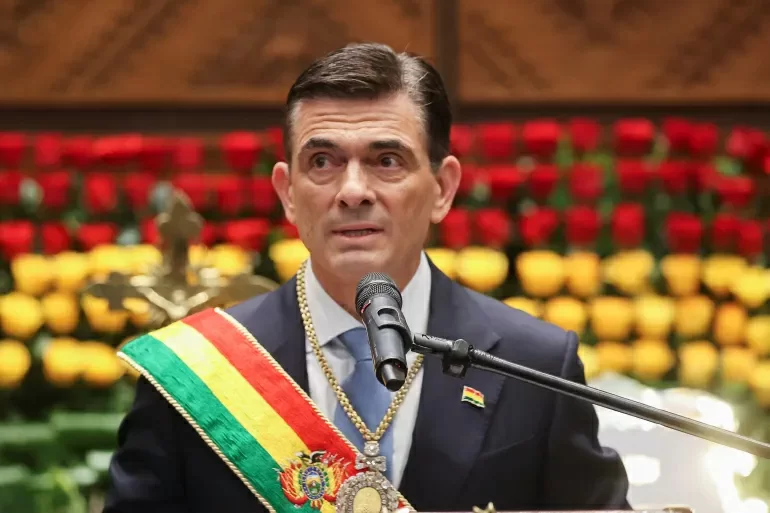
Bolivia herstelt anti-drugsalliantie met VS na bijna 18 jaar
In a significant foreign policy reversal, Bolivia has officially reopened its doors to the U.S. Drug Enforcement Administration (DEA), ending a 17-year hiatus in bilateral narcotics cooperation. The administration of President Rodrigo Paz, who took office in November 2025, has not only moved to restore diplomatic relations with the United States but has also initiated operational collaboration with the DEA to combat drug trafficking.
Bolivian Interior Minister Marco Oviedo confirmed this week that DEA agents are already active within the country, marking a dramatic departure from the policies of former leftist president Evo Morales. “The DEA is in Bolivia,” Oviedo stated to local media. “Alongside this cooperation, we are also working with European intelligence and police organizations.”
The initial focus of these joint efforts will be on enhancing border surveillance and dismantling powerful drug cartels. Oviedo emphasized that this represents just the beginning of Bolivia’s expanded international campaign, noting plans to involve anti-narcotics agencies from neighboring countries as well.
This policy shift nullifies a 2008 decree by Morales, who expelled DEA agents while accusing the United States of using drug enforcement as a tool to pressure Latin American nations into aligning with its political and economic agendas. Morales, who led the Movement Toward Socialism (MAS) party, enjoyed strong support from rural coca-growing regions where the crop represents a vital economic lifeline.
The political landscape shifted dramatically in October 2025 when two right-leaning candidates advanced to a runoff election—center-right candidate Rodrigo Paz of the Christian Democratic Party and former conservative president Jorge Quiroga. Both made repairing relations with the U.S. a cornerstone of their campaigns, viewing it as essential to resolving Bolivia’s severe economic crisis.
Paz, ultimately victorious with 54.9% of the vote, moved swiftly after his November inauguration to normalize diplomatic ties. The U.S. State Department has characterized Paz’s presidency as a “transformative opportunity” for the region, with both countries agreeing to exchange ambassadors for the first time in nearly 18 years.
However, significant uncertainties remain regarding the extent of DEA operations in Bolivia. Leftist leaders like Morales retain substantial support, particularly in highland and rural areas. Bolivian Foreign Minister Fernando Aramayo indicated that negotiations are ongoing to define the specific terms and operational boundaries of DEA activities, with a comprehensive agreement expected within coming months.
This development occurs against the backdrop of intensified U.S. anti-drug campaigns in Latin America under the Trump administration, which has designated multiple major cartels as “foreign terrorist organizations” and employed economic sanctions and military threats to pressure governments in the region. Critics argue these policies have blurred lines between law enforcement and military actions, raising concerns about human rights violations and extrajudicial executions.