博客

  • Dolly Parton, Amerikaanse countrymuziekicoon, is niet meer

    Dolly Parton, Amerikaanse countrymuziekicoon, is niet meer

    Beloved American country music icon Dolly Parton, whose decades-long career shaped the genre and won global acclaim for her masterful songwriting, larger-than-life public persona, and radical generosity, has died at the age of 80. Her publicist confirmed Tuesday that the legendary entertainer passed away peacefully at her home in Nashville, Tennessee.

    In a video statement posted to Parton’s official Instagram account, her nephew Bryan Seaver shared the news with fans, saying: “Dolly lived her life in the light, and now she is in the arms of Jesus, no doubt welcomed by Carl [her late husband], her parents, and countless other loved ones waiting for her in heaven.”
    Seaver also reflected on Parton’s far-reaching impact beyond her discography, noting: “Dolly opened doors for generations of singers, songwriters, musicians, and dreamers from every background and every continent. Through her example, we all learned to believe anything is possible. She never saw a door she couldn’t open, and the barriers she broke made history and changed our world forever.”

    Over a career spanning more than six decades, Parton composed hundreds of original songs, including timeless genre-defining classics such as *Jolene*, *9 to 5*, and *Coat of Many Colors*. Her work earned her a level of critical acclaim and public affection matched by very few modern artists. Born into humble circumstances in a log cabin in rural East Tennessee, Parton rose to global superstardom, defined by her signature towering blonde wigs, glittering stage outfits, and sharp, warm self-deprecating humor that endeared her to audiences across generations and musical genres.

    Parton’s first performances were in her local church, where her grandfather served as a preacher. By age 13, she had already graced the stage of Nashville’s iconic Grand Ole Opry, where Johnny Cash introduced her as “a little girl right here from East Tennessee.” One of 12 children growing up in a working-poor household — where her father left school to work on a farm and struggled with literacy — Parton never forgot her roots. Later in her career, she founded the Imagination Library, an educational charity that mails free books to children from birth across the United States and around the world, opening doors to literacy and opportunity for millions of young people.

    This commitment to giving back only deepened public love for Parton. Following the announcement of her death, fans around the world reacted with heartfelt grief, sharing personal stories of her widespread appeal, consistent warmth, and lifelong habit of quiet generosity. Former U.S. President Donald Trump announced via social media that he has ordered flags to be flown at half-staff for one week in honor of Parton’s life and legacy.

    Kyle Young, CEO of the Country Music Hall of Fame and Museum, where Parton was inducted in 1999, reflected on her enduring impact: “Dolly Parton’s legacy is not fame — it is humanity. She rose out of poverty to become Tennessee’s most cherished ambassador. She shared her wealth for the good of all of us, and poured her soul into every note she ever sang.”

    Throughout her career, Parton earned 55 Grammy Award nominations and took home 10 Grammy wins, making her the fourth most-nominated female artist in the award show’s history. Her influence extends far beyond country music, having opened doors for women in the industry, inspired countless artists across genres, and left an indelible mark on global culture through both her art and her philanthropy.

  • New Roseville to expand community mental health care

    New Roseville to expand community mental health care

    Barbados is moving forward with an ambitious, full-scale reimagining of the former Roseville Halfway House, replacing the shuttered legacy facility with a modern, community-focused mental health program designed to smooth the transition from long-term institutional care to independent living. Health officials detailed the transformative plan during a public consultation held Monday evening at the Lloyd Erskine Sandiford Centre, emphasizing that the new St Peter-based facility is far more than a simple reopening of a closed site.

    “This is not a rebuilding and just a reopening of something that has been closed, but it is a reimagining, a redesign, and a new programme that will be in a new facility,” explained Acting Chief Medical Officer Dr Arthur Phillips, noting that while the project occupies the original Roseville location, every aspect of the facility and its programming has been rethought from the ground up. The original Roseville halfway house closed its doors in 2015, leaving a critical gap in Barbados’ mental healthcare system that officials have long prioritized filling. Currently, a quarter-way house operates on the grounds of the country’s Psychiatric Hospital, but no fully functional halfway facility has been available for years.

    Permanent Secretary Francine Blackman of the Ministry of Health and Wellness framed the initiative as a cornerstone of the government’s push to update Barbados’ approach to mental healthcare, shifting away from centralized institutional care toward a model that centers patient dignity, autonomy, and lasting recovery. The new Roseville facility will act as what Blackman called a “safe, structured bridge” for people living with addiction and other mental health challenges, supporting their reintegration into broader society while helping them build the skills needed for self-sufficiency.

    Beyond core clinical care, the program will create practical opportunities for residents, including training and access to subsistence farming, formal employment, and self-employment. “The construction and operationalisation of this facility is therefore not solely an infrastructure project. It represents an investment in people, recovery, inclusion, and human dignity,” Blackman added.

    Dr Phillips explained that the transitional support provided by a halfway house fills an unmet need for people who have spent years in institutional care. For many, jumping directly from 24/7 institutional care to full independent living is an overwhelming leap, and the structured support of a halfway house dramatically improves outcomes for long-term recovery. While basic treatment, life skills training, and occupational therapy are already available through existing services, Roseville will add the critical intermediate step that has been missing from the care continuum.

    Rehabilitative care will sit at the heart of the new facility’s service model, according to mental health professional Dr Joy Sue. The program will offer a range of evidence-based therapies including occupational therapy, recreational therapy, and psychotherapy, all delivered in a community setting rather than a closed institutional campus — an approach that aligns with the Ministry of Health and Wellness’ long-term vision for mental healthcare reform. Dr Sue did note one key challenge the project must address: current staffing levels are insufficient to support the expanded slate of services, so workforce expansion will be a core priority as the project moves forward.

    To break down isolation and foster connection between residents and the surrounding community, planners are integrating community-facing amenities and activities. Proposed additions include a public basketball court and small-scale livestock rearing projects such as chicken raising, which will not only provide practical work experience for residents but also create natural opportunities for interaction with local neighbors.

    Despite the widespread support for the initiative among health leaders, the project still must navigate two key sets of challenges: social concerns and environmental risks. Consultant Lisa Perch, who is leading social and environmental impact assessments for the project, noted that persistent stigma around mental illness remains a significant social risk that must be proactively addressed throughout development and operation. Perch acknowledged that early community engagement has been limited due to tight project timelines, but outlined plans to ramp up outreach as planning advances. A dedicated community liaison officer will be appointed during construction to maintain open lines of communication between contractors, project leaders, and nearby residents.

    The facility’s coastal location near Six Men’s also brings a unique set of environmental considerations that planners must address. The site is located close to sensitive ecosystems that support turtle nesting, wild land and marine species, and nearby fishing grounds, alongside a local gully system that requires protection. The existing abandoned building on the property is in a state of severe disrepair, with potential hazards including mould and asbestos that will require full assessment and safe remediation before construction can begin. Planners are also accounting for climate-related risks including hurricane-force winds, storm surge, coastal flooding, and wastewater management, as well as the cumulative impact of other recent development activity in the area.

    Currently, the full environmental and social impact assessment remains in draft form, with project leaders soliciting feedback from stakeholders and local community members to refine plans and address outstanding concerns before moving into the construction phase.

  • Greaves caps junior career with top-10 world finish

    Greaves caps junior career with top-10 world finish

    After years of dominating the global junior cycling circuit, 17-year-old Barbadian racer Arielle Greaves is preparing to close one chapter of her athletic journey and open a new one, bringing her relentless drive and proven talent to the senior competitive ranks next year.

    Based in Trinidad due to a lack of dedicated cycling infrastructure in her home country, Greaves wrapped up her junior career on a high note at the recent UCI Junior Track World Championships, held in Belgium from August 19 to 23. Against a stacked field of the world’s top young riders, the Barbadian talent turned in a pair of stellar results: she claimed 10th place in the keirin event and 12th in the sprint, falling just short of qualifying for the final round in the kilo.

    In an interview with Barbados TODAY from the championship venue, Greaves gave her own performance a perfect 10 out of 10, noting the significant resource gap between her and competitors from major European cycling powerhouses like Germany and France. Unlike many of her rivals, who benefit from world-class training facilities, consistent high-level race exposure, and full national program support, Greaves has had to build her career against structural challenges. Even so, the teen rider said she held her own against the best in the world. “The level of competition was quite high because obviously those would have been people from Europe, countries where they would be exposed to higher quality of racing and performance and training. Based off my training and how well I did, I would say that I was quite up to their level however,” she explained.

    Greaves’ path to the world championships has required major personal sacrifice from the young athlete. With no velodrome available for track training in Barbados, she has had to relocate to Trinidad to pursue her elite cycling goals, living away from her family to access the facilities she needs to compete at the highest level. Acknowledging that the separation is difficult at times, Greaves framed the choice as a necessary step toward achieving her big-picture dreams. “That challenge is a little bit hard, but in life you have to make certain sacrifices to get to certain places. So it’s just a sacrifice that I have to make to be as great as being in the top 10 in the world,” she said.

    That sacrifice has already paid dividends, with her top-12 and top-10 finishes at the world championships cementing her status as one of the most promising young track cyclists in the Americas. When the competition wrapped up in Belgium, Greaves planned to return to her home country of Barbados for a well-deserved short break before heading back to Trinidad to resume her rigorous training schedule.

    With her junior career now complete, the ambitious Barbadian is already setting her sights on the next milestone: making her mark on senior cycling when she moves up to the division in 2025. Her first major senior test is already on the calendar: she is scheduled to compete at the upcoming Pan American Games, which will run from July 23 to August 8 in Lima, Peru.

    Off the track, Greaves is using her success to inspire a new generation of young Barbadian athletes, encouraging fellow aspiring riders not to let structural or personal obstacles derail their pursuit of competitive success. She shared a simple but powerful mantra for young competitors facing setbacks: “I would say that consistency is key. If you really love doing something, just stick to it and just follow the process. Not every day will be a good day and not every day will be a bad day, but at the end of the day, we all have small goals and we all get there.”

  • DNL legt drie wetsvoorstellen over grondstoffeninkomsten en investeringen voor aan president

    DNL legt drie wetsvoorstellen over grondstoffeninkomsten en investeringen voor aan president

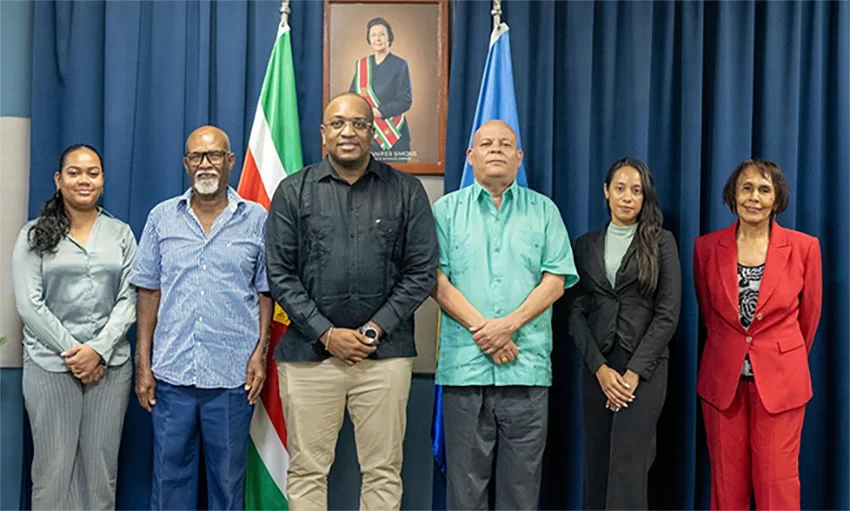
    On August 25, the extra-parliamentary Surinamese political party De Nieuwe Leeuw (DNL) formally delivered three interconnected draft pieces of legislation to Suriname President Jennifer Geerlings-Simons, outlining a framework for more equitable and sustainable management of the country’s lucrative natural resource sectors. The proposals cover the establishment of a national sovereign wealth fund, mandatory local content requirements for large investment projects, and updated regulations on transfer pricing to protect national tax revenue.

    DNL chair Dharmvir Mungra and vice chair Yerry Khoesial presented the full set of drafts to the president during an official meeting. While the sovereign wealth fund proposal is new, the two remaining drafts on local content and transfer pricing had previously been shared with relevant cabinet ministers and the speaker of the National Assembly, Suriname’s legislative body.

    The cornerstone of DNL’s policy package is the proposal for a Sovereign Wealth Fund, which would create a binding legal framework for managing revenue generated from Suriname’s core natural resource exports, including oil, gas, and gold. Under the proposal, a portion of annual resource revenue would be professionally managed and invested as a long-term national asset, designed to deliver benefits to both current and future generations of Surinamese. DNL argues that the fund would also strengthen the country’s overall financial stability by reducing the economy’s exposure to volatile global commodity price swings, a longstanding source of economic instability for resource-dependent developing nations like Suriname.

    The second proposal, focused on mandatory local content, seeks to expand opportunities for domestic Surinamese businesses and workers in large-scale resource and infrastructure projects led by foreign investors. The draft would require foreign firms to prioritize engagement with local suppliers, hire domestic workers, and invest in knowledge transfer to local partners. DNL says the policy will boost national employment rates, accelerate the spread of technical expertise across the domestic economy, and grow the footprint of local business activity in high-value sectors.

    The third proposal targets transfer pricing practices among multinational corporations operating in Suriname. Transfer pricing, the mechanism that sets prices for transactions between affiliated entities of a global company, is often used to shift profits generated in one country to low-tax jurisdictions to reduce overall tax liability. DNL’s draft legislation aims to close existing regulatory gaps to prevent profit shifting out of Suriname, ensuring that profits generated within the country are taxed domestically. The party estimates that stronger rules on transfer pricing will protect and expand Suriname’s national tax base, increasing government revenue for public investment.

    DNL chair Mungra emphasized that the three proposals are designed to work as a cohesive policy package, not standalone initiatives. The overarching goal of the draft laws, he explained, is to align Suriname’s natural resource governance with the country’s long-term sustainable economic and social development goals. Mungra also noted that the regulatory framework is not limited to the country’s fast-growing emerging oil and gas sector: both the local content and transfer pricing rules would apply to all sectors with large domestic and foreign corporate operations, including mining, agriculture, and infrastructure.

    According to DNL, President Geerlings-Simons expressed public appreciation for the party’s proactive policy initiative. Even as an extra-parliamentary party without representation in the National Assembly, DNL notes that it developed the three proposals to contribute to the ongoing national debate about responsible resource management and inclusive economic growth in Suriname.

  • Understanding CTEC modular assessment

    Understanding CTEC modular assessment

    Recent public debate surrounding the Caribbean Targeted Education Certificate (CTEC) has centered on critical questions around academic standards, grading frameworks, and how the program’s modular assessments count toward the final Caribbean Secondary Education Certificate (CSEC) qualification. In an official clarification from the Caribbean Examinations Council (CXC), Registrar and Chief Executive Officer Wayne Wesley, PhD, CMgr, addresses these concerns head-on, working to clear up widespread misconceptions and give regional education stakeholders a transparent breakdown of how the new system operates.

    First and foremost, Wesley emphasizes that CTEC in no way weakens long-held CXC academic standards. The modular assessment model only changes when and how learning is evaluated and accumulated, not the core knowledge, understanding, and skills that students are required to master to earn a CSEC qualification.

    One of the most persistent myths about CTEC is that modular assessments are less rigorous than the traditional single-sitting CSEC examinations. This claim is entirely unfounded, Wesley explains. All CTEC modular assessments are built from the same syllabi, aligned to the same learning objectives, and developed under the exact same assessment specifications that govern traditional CSEC exams. Even the question difficulty and format match what students encounter in full, traditional CSEC assessments, meaning learners must demonstrate the identical level of knowledge, skills, and competency expected of all CSEC candidates.

    Beyond assessment design, the entire grading and quality assurance process remains unchanged. CTEC exams are marked, moderated and graded using the same rigorous systems that have protected the integrity of CXC qualifications for decades: including consistent examiner moderation protocols, psychometric performance analysis, and standardized grading procedures. The level of rigor, objectivity and fairness that regional stakeholders trust remains fully intact. The only meaningful difference is that students can demonstrate their learning progress in incremental, manageable stages, rather than facing a single high-stakes exam at the end of their course of study.

    CTEC’s grading framework is also not an untested new system, but rather builds on long-familiar structures already used across Caribbean education. The Caribbean Advanced Proficiency Examination (CAPE) has reported results by individual modules for decades, and CSEC has long used two parallel grading scales: overall subject grades from I to VI, and profile grades from A to F. CTEC adapts this familiar A-F scale to report performance on individual modules, making it easy for students, parents, educators, employers and tertiary institutions to track a candidate’s progress. Under the system, grades A through D count as acceptable levels of module completion, while E and F indicate the student needs additional development to meet the required standard.

    Each grade comes with a clear descriptive definition that provides actionable feedback: A marks excellent mastery of module content, B indicates good understanding, C stands for fairly good command, D is moderate mastery, E reflects limited understanding, and F marks very limited grasp of key concepts and skills. These descriptors give students and teachers targeted insight into performance gaps, enabling targeted interventions to drive improvement before the final certification is awarded.

    Another key point of public confusion has been how modular grades factor into the final CSEC qualification. Wesley makes clear that individual module grades do not constitute full standalone qualifications. Instead, they act as micro-credentials that document a candidate’s achievement in discrete sections of a full subject, and all module grades are aggregated to calculate the final overall CSEC grade. No single module pass counts as completing the full subject; candidates must successfully complete all required modules to earn a final CSEC subject grade. The recognized overall CSEC grade remains the official final certification for the subject, with the modular pathway acting only as a structured, incremental route for students to build up their demonstrated achievement toward that qualification.

    To protect the integrity of the grading system, strict rules are in place to ensure final grades accurately reflect consistent performance across all areas of a subject. Because the final grade is based on results from every required module, a candidate who earns a D in any module cannot be awarded the highest possible overall grade of I in their final CSEC result. This rule reinforces the core principle that outstanding overall achievement requires strong performance across every component of a subject, preserving the value of a top CSEC grade for employers and tertiary institutions that rely on CXC qualifications to assess candidate ability.

    Unlike the traditional single-exam model, CTEC’s modular framework also offers meaningful flexibility for students to improve their performance. If a candidate is unsatisfied with their grade on a specific module, they can retake that individual module following CXC’s standard registration procedures. This lets students target gaps in their knowledge and improve their performance before the final subject grade is calculated, expanding opportunities for student success without lowering the bar for academic achievement.

    Wesley frames the introduction of CTEC’s modular assessment as a deliberate balance between innovation and institutional integrity, aligned with CXC’s core mission to expand access to certification across the Caribbean without compromising the standards that have earned CXC regional and international recognition. The modular approach does not make qualifications easier, reduce required learning outcomes, or lower academic expectations. Instead, it offers students a more flexible pathway to demonstrate mastery of the same syllabus objectives, meet the same performance standards, and earn the same respected CSEC qualification that the region has relied on for generations.

    The only evolution is how students get to demonstrate their achievement: the unchanging high standards that underpin all CXC credentials remain firmly in place. In sum, CTEC represents a model that preserves the rigor and credibility of Caribbean secondary education qualifications while building new pathways to support greater learner success and higher educational attainment across the region.

  • Stronger Child Protection Starts With Better Trained Social Workers

    Stronger Child Protection Starts With Better Trained Social Workers

    In a collaborative effort to strengthen Belize’s national child protection system, hundreds of frontline social workers and child protection specialists from across the country have begun a targeted training program focused on improving outcomes for vulnerable children facing harm, instability, and displacement.

    Scheduled to equip practitioners with evidence-based tools for high-stakes case management, the training centers on consistent, correct application of the UN-endorsed Best Interest Procedure – a framework designed to center children’s fundamental rights in every decision that impacts their lives. The initiative is co-sponsored by RF&G, and developed in partnership with Belize’s Department of Human Services, which operates under the Ministry of Human Development, Family Support and Gender Affairs.

    Unlike traditional theoretical training, the program uses hands-on practical exercises, real-world case studies, and interactive group discussions to build participants’ core competencies. Trainees are honing skills in individualized needs assessment, early identification of protection gaps, and development of context-appropriate interventions that balance child safety with the preservation of family unity wherever possible.

    Mariya Voloshkevich, Officer-in-Charge for the UN Refugee Agency (UNHCR) in Belize, emphasized that sustainable, effective child protection can only be delivered by properly skilled professionals. “Effective child protection depends on skilled professionals who can assess risks and make decisions that prioritise the rights and well-being of children,” Voloshkevich noted. She added that the upskilling program will directly boost Belize’s capacity to meet the urgent needs of vulnerable children, from those affected by domestic abuse to displaced youth separated from their families.

    Sajid Ali, Representative of UNICEF Belize, echoed this view, noting that strengthened social work expertise is the foundational requirement for timely, child-centered decision-making. “Every child has the right to protection, care, and support, regardless of their circumstances,” Ali said. He confirmed that UNICEF is working alongside UNHCR and local government partners to drive systemic improvements that deliver better long-term outcomes for all children across Belize.

    Shawn Vargas, Director of the Department of Human Services, highlighted that the Best Interest Procedure requires particular care when addressing cases of family separation, custody arrangements, and efforts to reunify separated families. “Children have a fundamental right to family life,” Vargas explained. He stressed that removing a child from their family should only ever be pursued as a last resort, when the move is legally justified, absolutely necessary to protect the child, and proportional to the level of risk they face.

    Looking ahead, UNHCR and UNICEF have committed to continuing their partnership with Belize’s Department of Human Services and other local stakeholders to expand child protection efforts, scale up ongoing training for frontline staff, and advance the rights and well-being of all vulnerable children across the country.

  • Sammy Foundation scores big for Saint Lucian youth

    Sammy Foundation scores big for Saint Lucian youth

    Fresh off wrapping up the home leg of the 2026 Republic Bank Caribbean Premier League (CPL) with his team the Saint Lucia Kings, legendary Saint Lucian cricketer and head coach Daren Sammy did not hang up his athletic ambitions — instead, he traded his cricket bat for a driver to host his fifth annual charity golf tournament at Cap Estate’s iconic Sandals Golf & Country Club. The event, held to benefit his eponymous Daren Sammy Foundation (DSF), brings together sports figures, regional golf enthusiasts and community leaders each year to fund educational and athletic opportunities for young people across the island.

    This year’s iteration drew 57 golfers from across Saint Lucia and the wider Caribbean region, with a star-studded guest list that included CPL Chief Executive Officer Pete Russell, former West Indies cricket captain Daren Ganga, South African international cricket stars Quinton de Kock and George Linde, former Irish international cricketer Niall O’Brien, veteran sports broadcaster Alex Jordan, and Trinidad & Tobago Golf Association President Wayne Baptiste. The turnout reflected widespread support for Sammy’s mission to uplift the next generation of Saint Lucians through targeted investment in education and sports.

    After 18 holes of competitive play, the team division delivered a nail-biting finish that saw three separate teams tie for the lowest net score of 58. Samuel Richelieu and Gordon Julien edged out the competition to claim the first-place title with an stellar net score of -13, while Bertrand Johannes and Keymanie Thompson finished a close second, and Andrew McHale and Kenneth Mathurin rounded out the top three. Mario Reyes and Peter Joe Devaux took fourth place with a net score of 59, and Henix Joseph and Dharmendra Shah completed the top five with a final net score of 60.

    Beyond team competition, the tournament also featured individual skill challenges that showcased local golfing talent. Winston Charles earned the men’s Longest Drive award with an impressive opening tee shot, while Kimberly John took home the same honor in the women’s division. For the Closest to the Pin challenge, Chris Owen and Remy Smith shared the men’s title, with Jenifer Mendes claiming the women’s top spot.

    By the end of the tournament, organizers announced that the event had raised roughly EC$78,000 for the Daren Sammy Foundation — a timely influx of funding, as dozens of DSF scholarship recipients prepare to head back to school for the new academic year. Since its launch, the foundation has centered its work on expanding youth development across Saint Lucia by combining access to educational scholarships and athletic programming, creating long-term opportunities for young people from across the island. The event capped off with a celebratory photo opportunity for the winning team, joined by Sammy, his wife Cathy and his daughter Skai to mark the milestone of another successful fundraiser.

  • Met Office monitoring tropical wave

    Met Office monitoring tropical wave

    Meteorological officials in Barbados have launched continuous monitoring of a newly formed tropical wave located hundreds of miles off the western coast of Africa, noting the system has a strong chance of strengthening into a tropical depression within the coming days. In an official weather advisory released to the public at 5:31 p.m. local time on Tuesday, the Barbados Meteorological Services (BMS) confirmed that current atmospheric and oceanic conditions in the Atlantic are supportive of the system’s gradual development. However, forecasters project that environmental conditions will turn less favorable for further strengthening by the end of the week as the wave moves westward across the basin.

    At present, conflicting model guidance from different forecasting centers has not produced a unified consensus on how strong the system will ultimately become when it enters the eastern Caribbean region later this week. Despite this uncertainty, the BMS has emphasized that regardless of the system’s final intensity, current projected tracks show it will pass far to the north of the island nation of Barbados over the weekend. For that reason, no direct impacts from the tropical system are expected for Barbados or its surrounding waters.

    Looking ahead to weekend conditions across the island, forecasters predict generally warm and seasonable weather, with only isolated, localized showers possible, most likely developing during the warmer afternoon hours. As of the Tuesday advisory, no tropical storm watches, hurricane watches, or any other weather warnings are currently in effect for Barbados. The BMS plans to release its next formal update on the system at 6 p.m. local time on Wednesday, to keep the public informed of any changes to the projected track or strength.

  • Can Stronger School Leaders Change Belize’s Education System?

    Can Stronger School Leaders Change Belize’s Education System?

    In a bold effort to drive systemic improvement across Belize’s education sector, a new 16-week pilot leadership training program has launched in Dangriga, centered on upgrading the skills of school principals and senior administrators from two southern districts. The initiative is a joint collaboration between local education non-profit BUILD – founded by education leader Dr. Louis Zabaneh in 2014 – and Belize’s Ministry of Education, focused on building proficiency in competency-based education, an instructional framework that prioritizes mastery of practical skills over traditional rote learning.

    Fifty education leaders, 25 from Stann Creek District and 25 from neighboring Toledo District, make up the program’s inaugural cohort, bringing on-the-ground perspective from rural and urban schools across both regions. For Dr. Zabaneh, this pilot marks a major milestone in more than a decade of targeted skills training initiatives hosted by BUILD. Since the organization’s launch, it has delivered a diverse range of community-focused training programs spanning from job interview readiness and emotional intelligence development to vocational cell phone repair, delivered in partnership with the Taiwanese Embassy and the International Cooperation and Development Fund (ICDF). The new master’s-level pilot in competency-based education leadership represents an intentional shift toward long-term systemic education reform, Zabaneh explained.

    Program facilitator Dr. Consuela Godfrey outlined the core goals of the training, noting that the curriculum is designed to do more than just introduce new concepts to participating leaders. “We want to build the capacity of our school leaders so that they not only can effectively implement and monitor competency-based education practices within their own schools, but also can deliver the constructive, actionable feedback that helps teachers improve their instruction and move student outcomes forward,” Godfrey said.

    For the host community of Dangriga, the launch of this transformative pilot has been met with widespread local enthusiasm. Dangriga Mayor Robert Mariano emphasized that the program represents a point of civic pride, noting that the benefits of the initiative will extend far beyond the participating administrators to reach all residents served by the districts’ schools. “This work is going to benefit all of our people – the community this program represents, the citizens I represent as mayor, and all Belizeans who rely on our public education system,” Mariano said. “It’s incredibly meaningful that this critical effort is getting its start right here in Dangriga.”

    Over the next four months, the first cohort will complete the structured training curriculum. Following the program’s conclusion in December 2026, organizers will conduct long-term monitoring, tracking the implementation and impact of the school improvement projects developed by participants through the spring 2027 academic semester to measure the program’s effectiveness and inform potential scaling across other Belizean districts.

  • DadliBots Announces All-Girls Team for2026 FIRST Global Challenge in Republic of Korea

    DadliBots Announces All-Girls Team for2026 FIRST Global Challenge in Republic of Korea

    On August 25, 2026, local robotics organization DadliBots from St. John’s, Antigua and Barbuda, announced a groundbreaking milestone for the nation’s youth STEM community: the formation of the country’s first all-female national robotics team, set to compete at the 2026 FIRST Global Challenge held in Incheon, Republic of Korea, from October 7 to 10.

    The five-member team brings together sharp, passionate young innovators, each with a clearly defined role to propel their project forward: Hannah Masson serves as team leader, Audella-Mae James takes on lead engineering responsibilities, Sidea Ambrose is the team’s lead driver, Gyanna Ryan leads programming work, and Neola Noronha handles lead inventory management. Beyond the competitive arena, this historic selection represents a major leap forward for youth robotics development in Antigua and Barbuda, and sends a resounding message to girls across the nation and the broader Caribbean region: STEM, technology, and engineering are fields where they belong and can thrive.

    Elijah James, team mentor at DadliBots, emphasized that the impact of this team extends far beyond the competition itself. “When other young girls see this team representing our country, they will be able to see what they themselves can achieve,” James explained. “No matter what path they choose for the future – whether it’s engineering, architecture, medicine, coding, esports, or an entirely different field – the confidence to create, experiment, and solve problems will open doors they may not even imagine yet.”

    The FIRST Global Challenge is a premier annual, Olympics-style international robotics competition that gathers more than 180 teams of high school-aged innovators from across the globe. Since its founding in 2017, the event has leveraged robotics as a unifying platform to foster cross-border international collaboration, while challenging young innovators to apply cutting-edge science and technology to address some of the world’s most urgent societal and environmental challenges.

    This year’s competition theme centers on the growing global crisis of wildfires, tasking teams with exploring how technology and innovation can improve every stage of wildfire management, from prevention and early detection to emergency response and post-fire community recovery. For Team Antigua and Barbuda, this theme hits close to home: the nation already grapples with regular wildfire events, ranging from seasonal bush fires to recurring blazes at the Cooks sanitary landfill. As they develop their robot, the team is examining how emerging technologies – including connected sensors, automated monitoring systems, advanced robotics, and big data analytics – could help local communities identify wildfire risks earlier and mount more effective emergency responses.

    DadliBots has a long track record of representing Antigua and Barbuda at the FIRST Global Challenge, starting in 2018. The organization also runs popular local initiatives including the BRIGHT Hack Challenge and TechByte STEM Camp. This year’s selection of an all-female team marks a new, transformative chapter in the organization’s work, and aligns with the goals of H.O.W. with Halo – Hope, Opportunity and Well-being through STEM, a new collaborative initiative developed with the Halo Foundation and The LocaL App. The program aims to expand accessible pathways for young people, especially girls, to pursue future-focused STEM education in Antigua and Barbuda.

    For the five student innovators heading to Incheon, the journey is about far more than just building a competition robot. As official STEM ambassadors for their small island nation, they will gain invaluable opportunities to collaborate with young people from every corner of the globe, exchange cultural perspectives and cutting-edge ideas, build lasting international friendships, and showcase the ingenuity and potential of youth from small developing states on one of the world’s largest youth innovation stages.

    In the weeks leading up to their departure for South Korea, the team is working diligently to design, build, program, and test their competition robot, while also carrying out community outreach activities to inspire more local youth to explore STEM. Members of the public are invited to follow the team’s progress, and businesses, organizations, and individual donors interested in supporting the team’s competition trip and the continued expansion of youth STEM programs across Antigua and Barbuda are encouraged to reach out to get involved.