博客

  • Blue Economy Department Launches Ocean Month Art Competition for Young Children

    Blue Economy Department Launches Ocean Month Art Competition for Young Children

    To kick off official programming for Ocean Month 2026, the Department of the Blue Economy has unveiled a one-of-a-kind art competition open exclusively to children between the ages of 7 and 11, centered on ocean conservation and sustainable blue economy themes.

    Organized in partnership with the Ministry of Education’s Education Broadcasting Unit and a coalition of additional community and institutional partners, the competition invites young creative minds to translate their personal understanding of the blue economy into visual art. Participants can choose to create either murals or posters, with encouraged themes ranging from vibrant depictions of native marine life to illustrations of actionable ocean conservation practices.

    According to event organizers, the competition serves two core goals: to foster the creative talent of young people across the region, and to build broader public awareness of the critical role healthy oceans and marine ecosystems play in supporting communities and economic activity. Unlike many youth art competitions that end with a simple award ceremony, this initiative offers a unique lasting opportunity for the top participant: the winning entry will be converted into a full-size public mural that will be displayed in a community space, leaving a permanent legacy of the young artist’s vision and work.

    Submissions for the competition opened to participants on April 13, and the submission window will remain open through to May 7. Following a period of judging, the winner is set to be publicly announced on June 8, which aligns with the annual observance of World Ocean Day, tying the event to a global movement for ocean protection.

    Department officials are actively encouraging parents, primary school teachers, and guardians to guide and support children in entering the competition. They frame the event as more than an art contest: it is a targeted opportunity to nurture the next generation of creative thinkers, innovative problem-solvers, and dedicated environmental stewards who will carry forward the work of protecting the world’s oceans for decades to come.

  • Kia Kirwan to Represent Antigua and Barbuda Wednesday in Caribbean Queen Pageant in St. Maarten

    Kia Kirwan to Represent Antigua and Barbuda Wednesday in Caribbean Queen Pageant in St. Maarten

    The highly anticipated annual Caribbean Queen Pageant is just around the corner, set to kick off this Wednesday on the vibrant island of St. Maarten. One of the most anticipated participants stepping onto the competition stage is Kia Kirwan, who has been selected to carry the hopes and national pride of Antigua and Barbuda in this year’s contest.

    The Caribbean Queen Pageant has long served as a premier cultural event across the region, bringing together talented young women from dozens of Caribbean nations and territories to celebrate Caribbean heritage, leadership, and personal achievement. Beyond the traditional components of beauty competition, the event also highlights contestants’ community engagement work, cultural knowledge, and commitment to advancing social causes across the region.

    As the official representative for her country, Kirwan has spent months preparing for the pageant, engaging in local community outreach, practicing performance routines, and showcasing the unique cultural traditions of Antigua and Barbuda. Organizers of the event have reported strong pre-event turnout, with attendees from across the Caribbean and North America traveling to St. Maarten to watch the competition and celebrate regional culture. For Kirwan, the opportunity to compete is not just a personal milestone, but a chance to shine a global spotlight on the beauty, culture, and community spirit of the twin-island nation she represents.

  • LIVE on DNO from 10:30AM: Inter-Secondary Schools Debating Competition Finals

    LIVE on DNO from 10:30AM: Inter-Secondary Schools Debating Competition Finals

    The stage is set for an eagerly anticipated high-stakes debate grand final in Dominica, where two top secondary school institutions will clash over a pressing piece of proposed legislative reform that touches on the intersection of public accountability and sexual offense legislation. The 2026 competitive debate finals will pit Dominica Grammar School against Wesley High School, with competitors set to argue over the contentious proposition: that Dominica should amend its existing Sexual Offences Act to carve out a limited exception that permits publication of the identities of accused sexual offenders when such disclosure serves the broader public interest.

    This proposed legislative change has sparked significant public discussion across the island nation, as it balances two deeply important priorities: on one hand, the long-standing protection of privacy for accused individuals who are presumed innocent until proven guilty, and on the other hand, growing public demand for greater transparency around sexual offense cases that are of widespread community concern. Proponents of the amendment argue that limited disclosure can enable public awareness, help community members make informed safety decisions, and address gaps in the current legislation that often keep cases of public interest completely out of public view. Opponents, meanwhile, warn that even limited exceptions could risk damaging the reputations of innocent individuals before they have had their day in court, exacerbate the already significant stigma that surrounds sexual offense allegations, and undermine the fundamental principles of a fair justice system.

    For the two competing schools, the final represents the culmination of months of rigorous research, preparation and preliminary debate rounds, with student debaters tasked not only with mastering the nuances of Dominica’s existing legal framework but also with articulating compelling arguments that resonate with the core values of Dominican society. The debate comes amid growing regional and national conversations across the Caribbean about how to modernize sexual offense legislation to better reflect changing public expectations around transparency, while still upholding the fundamental rights that underpin democratic justice systems.

    Observers note that regardless of which school claims the championship title, the event itself shines a critical spotlight on an issue that continues to shape legal and social policy across Dominica, encouraging broader public engagement with legislative reform that has direct impacts on community safety and justice outcomes.

  • COMMENTARY: What Happens When You Get a Poor Report Card?

    COMMENTARY: What Happens When You Get a Poor Report Card?

    Every person who has navigated the formal education system understands the weight of assessments, from small end-of-topic quizzes to high-stakes national examinations. For most, exams are a universal source of dread — yet they remain a universally accepted mechanism to measure academic progress, a necessary evil that paves the way for growth. After years of traversing this landscape of testing, students ultimately learn that these evaluations are designed to build the skills needed to become independent, contributing members of society.

    Central to this process of academic accountability is the report card: a consistent record of performance that documents a student’s progress from one grade to the next, regardless of whether the student agrees with the marks they received. Unlike self-assessment, report cards are graded by independent third parties — teachers — who score work based on observed performance. Report card day is always a day of reckoning: parents learn whether their child has made them proud or squandered a year of opportunity, and grades determine whether a student moves on to the next level or is held back. Being held back, or “stopped down,” carries a heavy social stigma, marking a student out for ridicule from peers.

    This well-known educational process offers a perfect analogy for general elections, argues political commentator Yves Ephraim. Just as students wait for their end-of-year report cards after a term of coursework, politicians who have held office for a full term receive their assessment from the only graders that matter: the voting public.

    Most popular framing of general elections focuses on the slate of new candidates standing for office, but Ephraim argues this perspective misses the core purpose of democratic elections. The fundamental role of a general election, he contends, is not just to pick new leaders — it is to evaluate the performance of the incumbent administration that has held power over the previous term, and decide whether they deserve another term in office. Challenging candidates represent alternative options, but it is impossible to fairly judge individuals who have never held executive power; grading untested challengers alongside sitting incumbents amounts to comparing apples to oranges. Only after a candidate has served a full term can voters produce an evidence-based report card to decide whether they deserve re-election. Even the most experienced sitting leaders had no executive experience before their first election win, after all.

    With this framing in mind, Ephraim has produced a comprehensive 12-year report card for Antigua and Barbuda’s current ruling administration, grading it across three core pillars: delivery of basic government functions, progress on major national initiatives that advance sovereignty, sustainability and self-sufficiency, and protection of individual civil freedoms.

    ### Grading Basic Government Functions
    Ephraim weights basic government functions as follows: policing and crime-fighting (20%), border protection (10%), maintenance of the legal system (15%), citizen empowerment (10%), and public infrastructure (40%).

    On policing, the administration earns low marks: the national police force lacks independence, struggles to solve most non-trivial crimes, and is grossly under-resourced in both equipment and expertise, leaving it unable to curb rising robbery rates. For border protection, the 2010s Antigua Airways scandal and the case of Cameroonian refugees, who were able to enter and exit the country with equal ease despite being granted temporary residency, exposed critical gaps in border security. Little meaningful action has been taken to tighten border controls since that incident, Ephraim notes, raising questions about how porous borders enable gun violence and other criminal activity. The national legal system also continues to languish under persistent underfunding and resource shortages.

    On citizen empowerment, the administration has confused handouts and temporary subsistence jobs with genuine empowerment, Ephraim argues. True empowerment focuses on teaching citizens to “fish” rather than giving them fish, yet current policies have fostered widespread dependency that is particularly visible during this election cycle. For infrastructure, decades of neglect have only been met with last-minute activity ahead of the upcoming election and the hosting of the Commonwealth Heads of Government Meeting (CHOGM). Poor drainage systems across the country stand as evidence of rushed, low-quality work done to meet a political deadline rather than deliver long-term public benefit.

    ### Grading Major National Initiatives
    For key initiatives, the grading breakdown is: water sector reform (15%), foreign direct investment attraction (10%), and new port facilities (60%).

    Before 2014, an estimated 40% of water produced by the Antigua Public Utilities Authority (APUA) was lost to leaks in the country’s aging distribution network. Ephraim notes that basic engineering logic makes fixing distribution leaks the clear top priority for the water sector, as it would deliver the highest return on investment — analogous to a bakery fixing waste in its production process before expanding output. Instead, the government ignored the distribution network and pursued a costly strategy of expanding production through multiple new reverse osmosis plants. This inefficient approach means that to deliver 100 gallons of water to end users, APUA must pump 167 gallons, wasting 67 gallons daily and leaving the country with higher national debt and still no reliable running water for many residents. Most high-profile signature foreign investments, including the YIDA project, never moved past the planning stages. Only the new St. John’s harbour facility earns a passing grade from the author.

    ### Grading Protection of Individual Freedoms
    For civil liberties, the grading breakdown is: personal property rights (0%), cost of living relief (20%), and public access to beaches (0%).

    Since Antigua and Barbuda gained independence in 1981, the current administration holds the unenviable record of widespread violation of individual property rights across multiple high-profile cases from Booby Alley to Barbuda. It also famously coerced citizens into accepting injection of an untested medical substance against their free will during the COVID-19 pandemic. On the cost of living, recent temporary cuts to food tariffs demonstrated that high government taxes are a major driver of rising consumer prices: for example, the cost of a standard quantity of strawberries fell from $35 to less than $15 immediately after tariffs were cut. This proves far more could be done to ease financial pressure on households by cutting taxes and reducing the size of government. Finally, the recent dismissed trespassing charge against a citizen accessing a public beach highlights the administration’s failure to uphold public access rights. The government has failed to act as a guardian of public beach access, instead enabling adjacent private property owners to block public pathways to the coast.

    ### Unintended Consequences of Incumbent Policy
    Ephraim also outlines multiple negative unplanned outcomes of the administration’s 12 years in power: the loss of U.S. visa access for most Antiguans and Barbudans, even for educational travel; unchecked government spending that has doubled the national budget from less than $1 billion in 2014 to more than $2 billion, pushing the country deeper into debt; a steady shift toward becoming a full welfare state; sky-high youth unemployment, demonstrated by the thousands of young people who queued for a single temporary job at the Ministry of Works; and secretive negotiations over a memorandum of understanding to accept deportees from the United States without public consultation.

    After compiling this full 12-year report card, Ephraim concludes that the incumbent administration has failed to earn passing marks, and does not deserve to graduate to another term in office — regardless of the positive self-assessment the government has promoted to voters.

  • Reparations study urged as development blueprint

    Reparations study urged as development blueprint

    As Barbados prepares to launch a landmark government-commissioned study quantifying the economic harm inflicted by centuries of chattel slavery, a senior adviser to the island nation’s government is calling on citizens to reframe the global reparations conversation: rather than viewing it as a fight for individual cash handouts, he argues, the movement must be positioned as a transformative, nation-building strategy to address intergenerational inequality rooted in the transatlantic slave trade.

    Speaking at a pre-launch press briefing held at Accra Beach Hotel, Rodney Grant, programme advisor in Barbados’ Office of Pan-African Affairs and Heritage, laid out the core purpose of the upcoming research. The study, led by economist Dr Coleman Bazelon and executed by Public Interest Experts Incorporated (PIEI) on behalf of the Barbadian government, set out to calculate the total monetary value of uncompensated forced labour extracted from enslaved Africans between the first European settlement of Barbados in 1627 and formal emancipation in 1834.

    Far from being an end goal in itself, Grant emphasized that the data gathered through this research will serve as the foundational evidence for a broader national framework to tackle deep-seated social and economic challenges that persist in Barbados to this day. He rejected the common misperception that the Barbados reparations movement exists solely to secure direct financial payouts from European former colonial powers. Instead, he argued that the process should center on advancing targeted progress across key national priorities aligned with the movement’s 10-point plan, including public health system improvements, expanded educational access, and the restoration of cultural identity stolen under slavery.

    “It makes no sense to talk about getting a million dollars and splitting it across the country… It is about the buildup of our institutional framework. That’s what’s absolutely important,” Grant told reporters. He drew clear connections between centuries of enslavement and nearly every major structural challenge facing modern Barbados, from widespread public health gaps to environmental degradation and persistent wealth inequality. Grant noted that the extraction of resources and forced labour from Barbados fueled the Industrial Revolution in Europe, leaving the island with no domestic industrial base of its own – a legacy that continues to shape its economic vulnerabilities today. He also traced current high rates of diet-related illness, widespread damage to island ecosystems, and unequal land ownership directly to exploitative colonial and slaveholding practices.

    Grant acknowledged that reparations remains a polarizing and sensitive topic for many Barbadians, but insisted that open national dialogue on the issue is no longer avoidable. “We can’t hide from this subject anymore. We must begin to package it in a way that the whole country benefits and not individual by individual,” he said.

    To illustrate his vision for how a complex, longstanding global issue can be turned into actionable policy, Grant pointed to the widely acclaimed Bridgetown Initiative, the high-profile campaign led by Barbadian Prime Minister Mia Mottley to reform the global financial system. The initiative, which has gained widespread international support, seeks to ease crippling debt burdens for climate-vulnerable developing nations and unlock billions in new funding for climate resilience and sustainable development – exactly the kind of structured, inclusive approach Grant says is needed for the reparations movement. “We don’t have all the answers and this is why we have to keep engaging,” Grant added.

    Full details of the reparations study will be unveiled this Wednesday during the official launch of Barbados’ annual Season of Emancipation, an event that will also mark the beginning of a nationwide public engagement process to gather input on how to translate the study’s findings into policy action.

  • Lahore Qalandars Set for Global Stage Return at ExxonMobil Global Super League 2026

    Lahore Qalandars Set for Global Stage Return at ExxonMobil Global Super League 2026

    One of world cricket’s most commercially successful and widely followed T20 franchises, three-time Pakistan Super League champions Lahore Qalandars, have officially confirmed their participation in the 2026 edition of the ExxonMobil Global Super League (GSL), marking their high-profile return to the elite global franchise competition. The upcoming tournament is slated to run from July 23 through August 1, 2026, hosted at the historic Guyana National Stadium, where it will bring together top-tier franchise cricket sides from every major cricketing region to celebrate the highest level of the T20 format.

    This re-entry marks a welcome comeback for Lahore Qalandars, who competed in the GSL’s very first inaugural edition. Their decision to return highlights both the rising global standing of the Pakistani franchise and the growing influence of cross-league international competitions in redefining the future of professional T20 cricket.

    Widely celebrated for building a dynamic, fan-centered brand rooted in consistent on-field excellence, Lahore Qalandars hold the distinction of being the most valuable team in the Pakistan Super League, per an independent valuation conducted by EY MENA (Ernst & Young). This strong reputation and massive global fanbase are expected to bring substantial prestige and worldwide viewership appeal to the 2026 GSL tournament.

    In a statement following the participation announcement, Sameen Rana, owner of the Lahore Qalandars franchise, shared his enthusiasm for the return. “We are delighted to return to the ExxonMobil Global Super League. The inaugural edition was a fantastic platform for high-quality cricket and meaningful global engagement, and we are proud to once again represent Pakistan on this stage,” Rana said. “Lahore Qalandars has always stood for pushing boundaries, and this tournament allows us to showcase our talent, our culture, and our ambition to a global audience. I am particularly excited to bring our exciting Player Development Program talent to the GSL this year.”

    Clive Lloyd, chairman of the Global Super League, echoed Rana’s excitement, emphasizing the value the franchise brings to the tournament. “We are thrilled to welcome Lahore Qalandars back to the Global Super League. They are one of the most dynamic and successful T20 franchises in world cricket, with a passionate fan base and a proven track record of excellence,” Lloyd noted. “Their participation significantly enhances the quality and profile of the tournament, and we look forward to seeing them compete at the highest level once again.”

    As preparations continue for the July kickoff, the GSL has cemented its status as one of the premier global franchise cricket competitions, attracting top playing talent from across the world’s leading cricketing nations. Lahore Qalandars’ full squad for the 2026 tournament will be announced at a later date, the franchise confirmed.

  • Anglican Canon Massiah dies at 79

    Anglican Canon Massiah dies at 79

    One of Barbados’ most venerated senior Anglican religious leaders, The Reverend Canon F. Errington Massiah, has passed away at the age of 79. His death came early Monday morning, following a short stay for medical care at a local hospital, closing a 45-year career of spiritual and public service that left an indelible mark on the Caribbean nation.

    Widely recognized for his straightforward, unfiltered approach to both pastoral care and public commentary, Massiah built a reputation across Barbados for his vibrant oratory style and unflinching willingness to confront pressing social problems that affected everyday citizens. His decades of consistent, dedicated service earned him respect across religious and political circles, and tributes poured in immediately from across the country after news of his passing broke.

    The Right Reverend Michael Maxwell, Bishop of Barbados, described the cleric’s death as a moment of profound sorrow for the entire Anglican Diocese of the nation. “It is with deep sadness that we note the passing of The Rev’d Canon Errington Massiah, one of our retired Anglican clerics who served the Church faithfully and devotedly for over 35 years in active ministry,” Maxwell shared in his official statement.

    Massiah’s journey in ordained ministry began in August 1980, when he was ordained to the diaconate, followed by ordination to the priesthood just 11 months later in July 1981. He cut his teeth in parish leadership early, serving his curacy at three congregations: St Leonard, St John the Baptist, and St Cyprian. In January 1984, he received his first appointment as Priest-in-Charge of All Souls Church, setting the stage for the tenure that would define his career.

    Later that same year, Massiah took up the post of Rector at St Joseph Parish Church, one of the oldest ecclesiastical sites on the island of Barbados. He would hold this role for more than 25 years, ultimately adding responsibility for St Aidan’s at Bathsheba to his portfolio before retiring from full-time active ministry in August 2016. Two years prior to his retirement, in recognition of his decades of outstanding service, then-Archbishop John Holder conferred on him the honorary title of Canon. Bishop Maxwell called the award “a fitting tribute to a life poured out in ministry to both Church and society.”

    Beyond his pastoral work within parish walls, Massiah carved out a prominent role as a public voice on social and religious issues in Barbados. For many years, he penned a regular column titled “Outside the Pulpit” for the *Weekend Nation* newspaper, where he shared thoughtful social commentary and updates on church activities for readers across the country. He also took on a number of public service roles, including serving as Chaplain to the Senate of Barbados during the 2013–2018 parliamentary session, and working as a supervisor for the Caribbean Secondary Education Certificate (CSEC) national examinations.

    Prime Minister Mia Mottley joined Bishop Maxwell in paying tribute to the late cleric, noting that Barbados has lost “a devoted son of the soil…. A faithful priest, a steady shepherd, and a man whose ministry touched both Church and country.”

    Mottley emphasized that over decades of service, Massiah “served with conviction, care and consistency, and many Barbadians came to know him through his long service at St Joseph Parish Church, where he led with quiet strength and deep faith. His life was one of duty, pastoral grace and deep commitment to the people he was called to serve.”

    The prime minister also highlighted Massiah’s contributions to national life outside his religious work, noting that “His role in the life of Parliament, including as Chaplain of the Senate, reflected a ministry that understood the importance of conscience, moral guidance and national responsibility. At a time when this country needs strong religious voices, steady spiritual leadership and men and women who can help call us back to faith, decency and deeper values, his passing will be felt even more keenly.”

    Bishop Maxwell extended his condolences not only to Massiah’s family but to all the congregations he served over his career, “especially the people of the Cure of St Joseph with St Aidan, among whom he served for many years.” He closed his tribute with the traditional Anglican blessing for the departed: “May our departed brother rest in peace, and rise in glory.”

    Massiah is survived by his widow Denise Massiah and their two daughters, Kean and Andrea.

  • NIA Empowers Women Through “Her Future Blueprint: Financial Security for Women 40+” Seminar

    NIA Empowers Women Through “Her Future Blueprint: Financial Security for Women 40+” Seminar

    CHARLESTOWN, Nevis – April 14, 2026 – The Nevis Island Administration (NIA) is moving forward with its ongoing mission to close the gender economic gap, announcing a targeted upcoming seminar designed specifically to boost financial security for women aged 40 and above.

    Organized by NIA’s Department of Gender Affairs, the event, titled “Her Future Blueprint: Financial Security for Women 40+”, carries the core theme “Own Your Future: Women, Wealth & Homeownership”. It is scheduled to run from 5:00 PM to 7:00 PM on May 11, 2026, at the Malcolm Guishard Recreational Park, and registration is now open to interested participants via an online Google Forms portal.

    This initiative is not an isolated outreach effort; it is developed and hosted under the umbrella of Nevis’ National Gender Equality Policy and Action Plan (NGEPAP), a national framework that prioritizes inclusive economic advancement for all groups of women. Event planners designed the seminar specifically to address the unique, often overlooked financial barriers that women over 40 face in Nevis, with a particular focus on marginalized subsets of this demographic: women working in the informal sector, those nearing retirement, and women living with disabilities.

    Despite the significant contributions these women make to Nevis’ society and local economy, the NIA notes that many face persistent systemic barriers that block access to critical financial tools including credit, insurance, and evidence-based long-term financial planning resources. The seminar aims to fill that gap with practical, actionable learning rather than abstract discussion.

    Attendees will take part in interactive, solution-focused sessions covering four key pillars of long-term financial stability: tailored insurance protection, accessible savings and investment strategies, foundational education on loans and credit access, and methods to maximize retirement income. The core goal of the program is to leave participants with both the knowledge and confidence to make informed financial choices, and to take tangible steps toward building personal assets, including homeownership, and achieving full economic independence.

    As part of a broader national strategy to advance gender equity in Nevis, the seminar aligns with government priorities to expand equal access to opportunity, strengthen the economic resilience of women across the island, and support sustainable, long-term livelihoods for all. The Department of Gender Affairs has issued an open invitation to all eligible women in Nevis to register, encouraging them to use the event as a space to evaluate their current financial goals and take proactive steps toward a more secure future.

  • Walker Campaign in Barbuda Centers on Land Rights, Services and Local Control Ahead of April 30 Vote

    Walker Campaign in Barbuda Centers on Land Rights, Services and Local Control Ahead of April 30 Vote

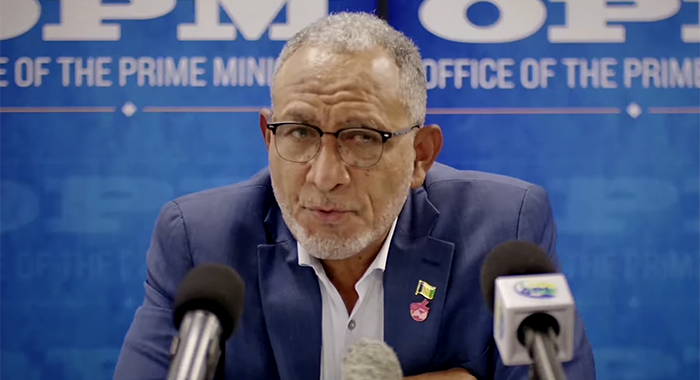
    As Antigua and Barbuda prepares for its April 30 general election, incumbent Barbuda People’s Movement (BPM) candidate Trevor Walker launched his re-election bid at a raucous political rally in Barbuda Monday night, framing his campaign around three core pillars: securing communal land rights, upgrading public services, and expanding local self-governance to a packed crowd of enthusiastic supporters.

    At the top of Walker’s policy platform is the preservation of Barbuda’s unique communal land system, a cornerstone of the island’s cultural identity that campaign speakers argue is indispensable to Barbuda’s long-term economic prosperity. The issue dominated discussion throughout the event, with repeated appeals to voters to mobilize and protect their collective claim to land, ensuring it remains permanently under community control rather than being opened up to external ownership.

    A veteran parliamentarian with decades of legislative experience, Walker emphasized that Barbuda needs a resolute, unwavering voice in national parliament to advance the island’s interests in key government decision-making processes. Addressing the crowd, Walker stressed, “We need a strong, principled representative in Parliament to stand up for Barbuda,” as he urged attendees to cast their ballots to return him to office for another term.

    Beyond land rights, Walker’s campaign platform prioritizes long-overdue upgrades to public health and social support systems. The candidate specifically called for expanded access to critical medical services, including the introduction of on-island dialysis treatment, as well as system-wide improvements to community care networks that serve vulnerable Barbudan residents.

    On the economic development front, the BPM laid out a slate of completed ongoing and proposed infrastructure projects, including ongoing road repair and expansion works, and plans to construct a new multi-purpose community facility. The venue will be able to host hundreds of residents for gatherings, while also serving as a dedicated space for cultural events and community programming.

    Campaign speakers also pushed for greater economic self-sufficiency on the island, encouraging local residents to leverage the island’s abundant communal land to expand domestic agriculture and local food production. The push aligns with the BPM’s broader sustainability goals, designed to reduce Barbuda’s reliance on imported food and strengthen local economic resilience.

    Across every policy area discussed, local control emerged as the unifying theme of the night. Rally speakers and attendees alike emphasized that all development decisions affecting Barbuda must be designed and led by Barbudans, shaped to fit the island’s unique needs rather than imposed by outside political or economic interests.

    The rally also reflected the increasingly competitive tone of the pre-election cycle, with speakers leveling sharp criticism at Walker’s political opponents as all parties scramble to lock in support ahead of polling day. For Walker and the BPM, the April 30 election is being framed as a defining turning point for Barbuda. The party is fighting to retain its single parliamentary seat on a platform that balances the defense of traditional communal land rights with concrete pledges to improve public services and deliver targeted, community-led development.

  • Government Slashes Fuel Taxes and Expands Duty-Free Energy Equipment to Ease Burden on Citizens

    Government Slashes Fuel Taxes and Expands Duty-Free Energy Equipment to Ease Burden on Citizens

    Amid ongoing global economic volatility that disproportionately strains small island developing states, Prime Minister Terrance Drew of St. Kitts and Nevis has announced a targeted package of people-focused policy measures on April 14, 2026. The reforms are designed to deliver immediate relief to households grappling with rising living costs while laying the groundwork for long-term economic resilience and sustainable growth, aligned with the government’s ambitious national transformation agenda.

    In his national address, Drew emphasized that the economic pressures facing the federation are imported challenges stemming from global instability, not domestic mismanagement. “These are not challenges created here, but they are challenges we must face here, together, as a people,” he stated, noting that the government’s response balances disciplined fiscal planning with intentional action to address both near-term hardship and long-term structural vulnerability.

    The policy suite builds on the government’s existing Sustainable Economic Expansion and Diversification (SEED) strategy, which is integrated into the broader Sustainable Island State Agenda (SISA). This framework represents a deliberate, fundamental shift in the country’s economic model: moving from a reliance on vulnerable single sectors to a diversified, durable economy that can better withstand external shocks. Drew framed this transition as a journey “from dependence to durability… from vulnerability to resilience.”

    To deliver immediate cost relief, two key changes to fuel taxation will take effect on April 20, 2026, running through July 31 of the same year. The excise tax on gasoline will be cut by 50 percent, dropping from Eastern Caribbean (EC) $1.95 per gallon to EC$0.98 per gallon, while the Customs Service Charge on gasoline will be halved from 6 percent to 3 percent. Combined, these fiscal interventions represent an estimated EC$1.8 million in foregone government revenue, directed toward lowering fuel costs for households, transport providers, and small businesses across the country. In an additional move to protect consumers from external price hikes, the government will no longer include shipper-imposed surcharges in customs tax and duty calculations, preventing pass-through of these extra costs to retail prices.

    To advance long-term energy security and reduce persistent energy costs for citizens and businesses, Drew also announced full duty-free access for all alternative energy equipment through the end of 2026. Solar photovoltaic systems and other renewable energy infrastructure will be completely exempt from value-added tax, Customs Service Charge, and all import duties. The policy is designed to accelerate the adoption of residential and commercial renewable energy, putting control of energy production in the hands of private citizens and moving the country closer to full energy independence.

    The government will also continue its popular Discounted VAT Rate Days through 2026, with timed events scheduled around major spending periods: Easter, the back-to-school season, and Christmas. Drew noted that these targeted interventions are designed to put direct savings back into household budgets, helping families navigate ongoing global economic turbulence. “These are genuine, targeted interventions to put money back in your pocket… and to help you breathe a little easier in a stormy world,” he said.

    These short-term relief measures are being implemented alongside large-scale structural investments in three core pillars of national resilience: energy infrastructure, water security, and domestic food production. Drew stressed that the government’s entire agenda is rooted in the principles of inclusive growth, resilience, and shared progress, giving a public assurance that “no one will be left behind” as the country navigates uncertainty.

    Calling for national unity and collective responsibility to see the reforms through, Drew emphasized that despite persistent global challenges, St. Kitts and Nevis is moving forward with clear purpose, financial stability, and public confidence. “Transformation is underway,” he affirmed, “and it is advancing well… rooted in the unshakable belief that St. Kitts and Nevis deserves to stand tall among the nations of the world.”