博客

  • Toepassing van aangeleerde landbouwkennis nóg belangrijker dan training

    Toepassing van aangeleerde landbouwkennis nóg belangrijker dan training

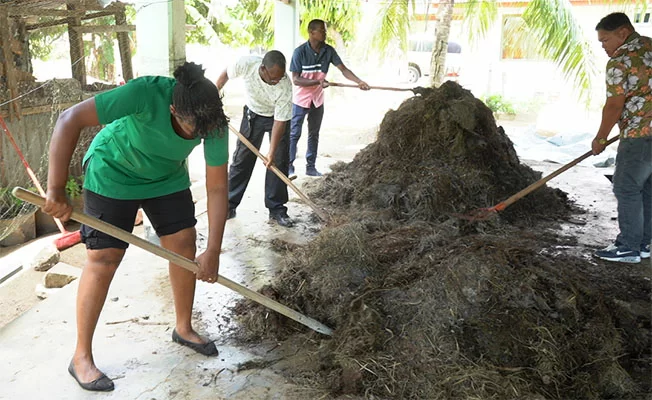
    Coronie, one of Suriname’s most agriculturally significant districts, has successfully concluded an intensive three-month training program on Traditional Compost production, marking a substantial advancement in sustainable farming practices. The program, which commenced on November 20, 2025, focused on mastering the complete process of creating traditional compost, locally known as ‘blaka doti.’

    William Waidoe, Deputy Director of Western Agriculture at the Ministry of Agriculture, Livestock and Fisheries (LVV), emphasized during the closing ceremony that while training remains crucial, the practical application of acquired knowledge holds even greater importance. He highlighted Coronie’s exceptionally fertile soil as ideally suited for agricultural development and reaffirmed LVV’s role as the authoritative body providing essential knowledge transfer to realize this potential.

    A notable aspect of the Coronie training was the overwhelming participation of women, who constituted the majority of attendees. Among them was Leonie Kerseboom-Lynch, a professional midwife who immediately implemented her training by constructing a compost heap alongside her husband to support his agricultural activities. Her primary motivation stemmed from composting’s environmental benefits, noting that the process not only offers sustainable organic waste management but also creates potential revenue streams through surplus compost sales while contributing to cleaner living environments.

    This training initiative forms part of the broader ‘Strengthening of Citrus Production’ project, funded by the Inter-American Development Bank (IDB). The project aims to enhance Suriname’s citrus production capabilities through improved facilities at LVV citrus nurseries and the production of high-quality planting materials. Quality growth medium in plant bags has been identified as essential to this endeavor, prompting the establishment of compost camps and training sessions across various LVV ressort offices, experimental gardens, and nurseries for both ministry staff and interested community members.

    Soesila Ramautar of the Directorate of Agricultural Research, Marketing and Processing (DLOAV), who led the training with her team, expressed considerable satisfaction with the outcomes. This event marked Coronie’s first participation in compost training at this level and represented the final compost training activity within the IDB-funded citrus project framework.
  • Iran’s Supreme Leader Khamenei killed in U.S.-Israeli strikes

    Iran’s Supreme Leader Khamenei killed in U.S.-Israeli strikes

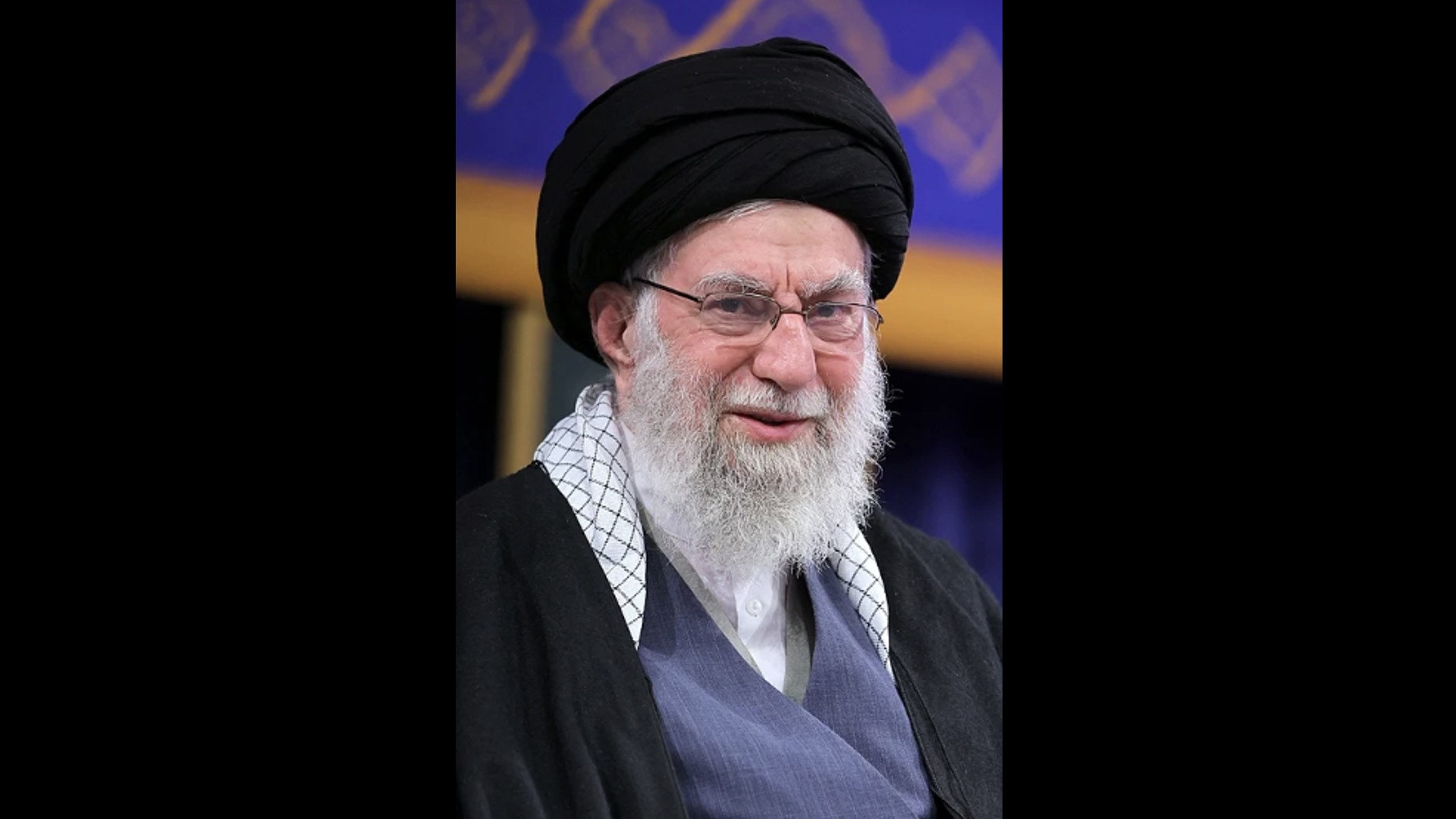
    The geopolitical landscape of the Middle East has been irrevocably altered following the confirmed death of Iran’s Supreme Leader Ayatollah Ali Khamenei in a coordinated military operation conducted by United States and Israeli forces this Saturday. Multiple major news outlets, including USA TODAY, Reuters, and CNN, have verified the demise of the long-serving Iranian leader, citing confirmation from an Israeli intelligence source.

    The strategic strikes, personally authorized and announced by President Donald Trump, specifically targeted Iran’s missile infrastructure. President Trump characterized the offensive as the initiation of ‘major combat operations,’ describing it as an extensive, continuing campaign designed to neutralize what he termed ‘imminent threats from the Iranian regime.’

    In immediate retaliation, Iranian revolutionary forces unleashed a barrage of drone and missile attacks against strategic American and Israeli assets. A significant counterstrike hit a U.S. Naval installation in Bahrain; preliminary reports indicate no casualties among American personnel. Iranian military command issued a stark warning, promising their adversaries would face ‘decisive defeat.’

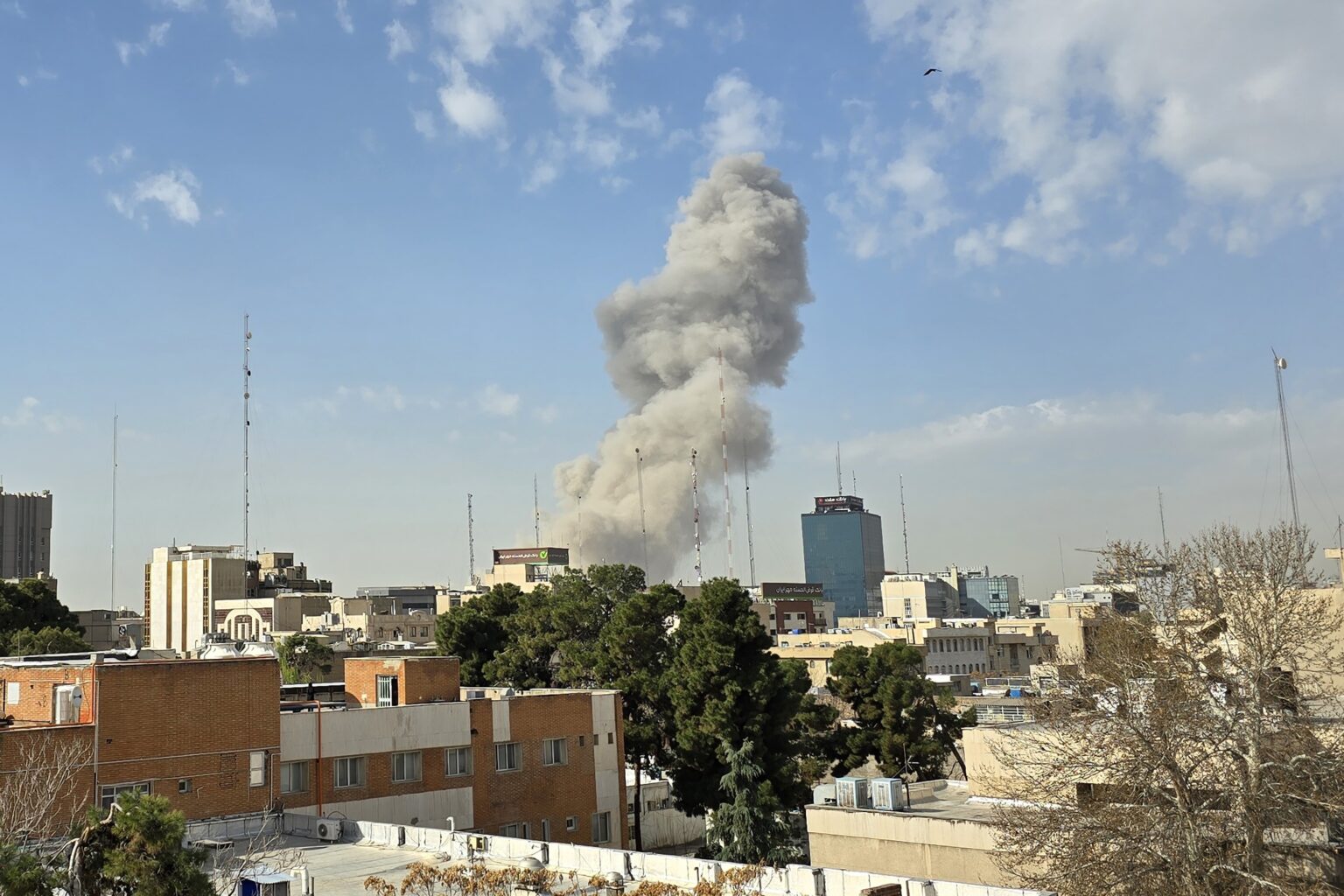
    On the ground in Tehran, distressing imagery depicted plumes of dark smoke ascending over the capital city as civilians scrambled for shelter. Iranian government officials reported a devastating human cost, alleging that a strike on a girls’ school in southern Iran resulted in at least 40 civilian fatalities, highlighting the severe humanitarian consequences of the rapidly intensifying conflict.

    This dramatic military escalation culminates weeks of mounting diplomatic tensions, during which President Trump consistently issued warnings of potential armed intervention should negotiations concerning Iran’s controversial nuclear and ballistic missile programs reach an impasse.

    The assassination of Supreme Leader Khamenei creates an immediate and profound power vacuum within Iran’s complex political structure at a critically volatile time. Regional security analysts are warning that the ensuing fallout possesses the potential to radically reconfigure the balance of power throughout the Middle East, carrying significant and unpredictable implications for international stability and global security apparatus.

  • War powers debate intensifies in US after Trump orders Iran attack

    War powers debate intensifies in US after Trump orders Iran attack

    In an extraordinary constitutional confrontation, key US congressional leaders are accelerating efforts to pass a War Powers Resolution that would curtail President Donald Trump’s authority to conduct military operations against Iran without legislative approval. This development follows unconfirmed reports emerging from Saturday’s coordinated US-Israel strikes suggesting possible casualties among Iranian leadership, including Supreme Leader Ayatollah Ali Khamenei—though neither government has officially commented on these claims.

    The legislative push gains urgency as Iran retaliated with widespread attacks across strategic Middle Eastern locations including Dubai, Doha, Bahrain, and Kuwait—all sites hosting American military installations or maintaining US alliances. Both congressional chambers, including the Senate where Republicans hold a narrow majority, had previously drafted similar war powers legislation well before this weekend’s escalation.

    Congressional sources indicate an imminent debate scheduled for next week that will effectively serve as a referendum on Trump’s controversial pattern of unilateral military decision-making. This constitutional clash represents the most significant challenge to presidential war powers in recent years, echoing similar concerns raised after Trump’s unauthorized strikes that ousted Venezuelan leader Nicolás Maduro nearly two months ago.

    The proposed resolution would legally require the administration to seek congressional authorization within 60 days for any continued military engagement against Iran, invoking the 1973 War Powers Act that has been routinely ignored by multiple administrations.

  • Penner Says Boycott Love FM Interviews…Not the Race

    Penner Says Boycott Love FM Interviews…Not the Race

    A significant dispute has emerged between the Belize Canoe Association and broadcaster Love FM just weeks before the annual La Ruta Maya Belize River Challenge. The conflict stems from an eleventh-hour alteration to the race’s finish line location that association leadership claims was implemented without proper consultation with event stakeholders.

    During a recent meeting with paddlers and supporters, Vice President Elvin Penner proposed a strategic media boycott specifically targeting Love FM interviews while emphasizing continued participation in the race itself. Penner articulated that teams should instead collaborate with alternative media outlets to ensure sponsors and athletes maintain their publicity coverage throughout the event.

    “I suggest we do something like this to make a real stand,” Penner stated, advocating for a unified approach to signal discontent with the decision-making process. He noted that other media organizations would likely follow paddlers regardless of their chosen post-finish gathering location.

    Despite the brewing controversy, Penner provided clear guidance to competitors regarding race protocol: “You started the race, but you need to follow the rules of the race.” He explicitly warned that any violations of the established race regulations could result in disqualification, indicating the association’s commitment to maintaining competitive integrity despite their grievances with event organization.

    The proposed interview boycott represents a calculated protest rather than a full withdrawal from the prestigious event, highlighting the association’s desire to address procedural concerns while preserving athlete participation in Central America’s longest annual canoe race.

  • U-20 World Cup 2027 Qualifier : Grenadiers defeat Saint Vincent and the Grenadines 4-0

    U-20 World Cup 2027 Qualifier : Grenadiers defeat Saint Vincent and the Grenadines 4-0

    In a commanding display of youth football prowess, Haiti’s U-20 national team secured an impressive 4-0 victory against Saint Vincent and the Grenadines on February 28, 2026. The CONCACAF qualifier match, held at Willemstad’s Rinaldo Jean Francisca Stadium in Curaçao, showcased Haiti’s growing dominance in the regional youth football landscape.

    Under the strategic guidance of Cuban coach Raúl González Triana, the Haitian Grenadiers demonstrated exceptional coordination and skill throughout the match. The starting lineup featured a blend of domestic talent and international prospects, with players from Haiti’s Real Hope Academy, Jamaica’s Mount Pleasant, and even Orlando City SC from the United States.

    The match unfolded as a textbook demonstration of offensive efficiency and defensive solidity. Nikolai Oliver Pierre emerged as the standout performer, opening the scoring in the 45th minute with a powerful header and securing his brace just six minutes after halftime with a spectacular long-range effort. Clavens Exantus extended the lead in the 57th minute with another precise header, while Josué Anglade delivered the final blow in stoppage time with a thunderous strike from outside the penalty area.

    This victory marks Haiti’s second consecutive win in the qualifying tournament, maintaining their perfect record in Group D. The team now leads their group with six points, having scored an impressive 11 goals while conceding none. Their performance positions them favorably for advancement to the 2027 FIFA U-20 World Cup, with crucial matches against Guyana and Curaçao scheduled for early March.

    The comprehensive victory not only demonstrates the technical development of Haitian youth football but also highlights the effective leadership of Coach Triana and the growing pipeline of talent emerging from the Caribbean nation’s football academies.

  • SABI Literatuurfestival 2026: lezing over Bea Vianen biedt inzichten in haar literaire loopbaan

    SABI Literatuurfestival 2026: lezing over Bea Vianen biedt inzichten in haar literaire loopbaan

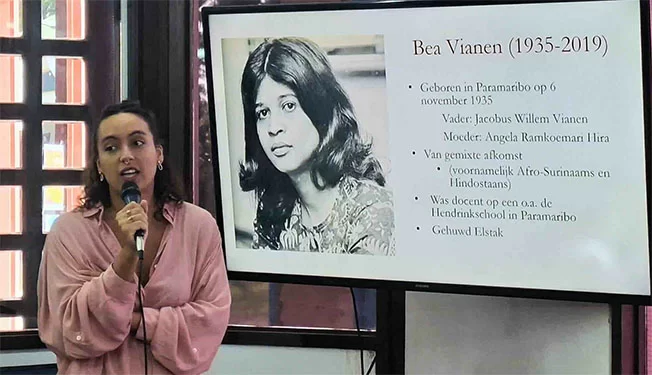
    The SABI Literature Festival 2026 commenced on Friday with an illuminating lecture by literary scholar Thalia Ostendorf focusing on the groundbreaking work of Surinamese author Bea Vianen. The opening event took place at the library of the Anton de Kom University of Suriname, setting the stage for a celebration of Surinamese literary heritage.

    Coco Duivenvoorde, Director of Villa Zapakara, initiated proceedings by outlining the successful reading promotion project recently conducted in collaboration with Skrifi foundation. The initiative included an extensive reading tour reaching children across Paramaribo and multiple districts including Marowijne, Sipaliwini, Brokopondo, Saramacca, Coronie and Nickerie, complemented by a dedicated children’s book festival.

    Ostendorf’s presentation highlighted Vianen’s complex legacy as the first Surinamese woman published by a Dutch publishing house in 1969 – a distinction she characterized as ‘dubious’ given the delayed recognition and the persistent Dutch standards applied to Surinamese diaspora writers. The academic meticulously analyzed Vianen’s complete literary corpus, noting that all but one of her novels are set in Suriname and consistently explore the nation’s multicultural fabric, particularly where cultural tensions create personal and social friction.

    The analysis traced Vianen’s evolving narrative approach across her works: from the constrained adolescence of Sita in ‘Sarnami hai’ (1969), through the political turmoil of ‘Strafhok’ (1970) examining predetermined guilt during civil service strikes, to the boarding school dynamics of ‘Ik eet, ik eet, tot ik niet meer kan’ (1972). Ostendorf particularly emphasized ‘Het paradijs van Oranje’ (1973), which dissects the failed migration dream to the Netherlands, and ‘Geen onderdelen’ (1979), which explores Muslim-Hindu tensions through the lens of a writer returned from Holland.

    The lecture’s second segment revealed Ostendorf’s ongoing biographical research on Vianen, noting the significant challenge posed by the absence of a preserved writer’s archive. The scholar described her painstaking process of locating scattered documents and conducting interviews with those who knew Vianen, particularly within Suriname. The audience responded enthusiastically, with many expressing hope for future lectures on Surinamese literary figures.

    The SABI Literature Festival aims to establish itself as a comprehensive platform showcasing the diverse facets of Surinamese literature, creating space for public engagement, creative dialogue, and artistic innovation beyond comfort zones. This multi-day celebration honors both the richness and ongoing evolution of the nation’s literary tradition, spotlighting writers, musicians, and creators who have shaped and continue to refresh the literary landscape.

    The inaugural program continues with additional events including a musical lecture by Xillan Macrooy across venues including Souposo, Spice Quest, and the Anton de Kom library. The festival is organized by Stichting Skrifi with support from the Dutch Foundation for Literature.

  • Israeli Sources Say Iran’s Supreme Leader is Dead

    Israeli Sources Say Iran’s Supreme Leader is Dead

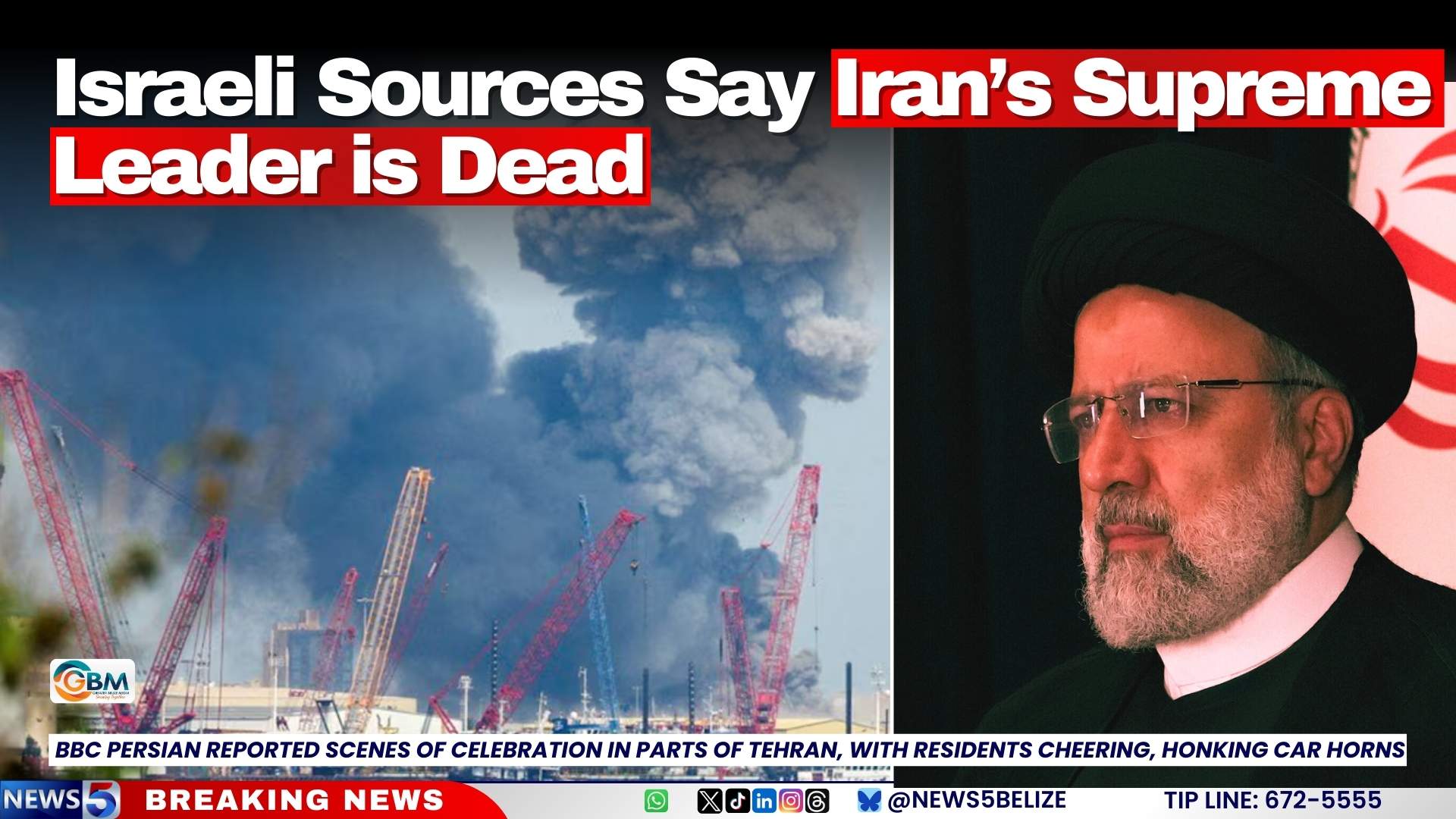
    International tensions escalated dramatically on February 28, 2026, as conflicting reports emerged regarding the status of Iran’s Supreme Leader Ayatollah Ali Khamenei following recent military operations. Israeli officials have circulated unverified claims suggesting Khamenei may have been killed during coordinated U.S.-Israeli strikes on targets in Tehran, while Iranian authorities vehemently deny these assertions, labeling them as psychological warfare.

    Israeli Prime Minister Benjamin Netanyahu stated that there were ‘increasing indicators’ pointing to the Supreme Leader’s demise, though he acknowledged the information remained unconfirmed. A senior Israeli official, speaking anonymously to Reuters, further claimed that Khamenei’s body had been identified among the casualties from the strikes.

    The Iranian government mounted a robust denial campaign, with Foreign Ministry spokesperson Esmail Baghaei assuring international media that both Supreme Leader Khamenei and President Masoud Pezeshkian remained ‘safe and in good health.’ The public relations chief of Khamenei’s office characterized the reports as deliberate misinformation designed to undermine Iranian stability.

    Amid the uncertainty, BBC Persian documented unusual public celebrations in certain Tehran districts, with residents reportedly cheering, sounding vehicle horns, and gathering in streets—behavior suggesting either belief in the reports or opposition sentiment taking advantage of the situation.

    The geopolitical climate remains exceptionally volatile as no independent verification of Khamenei’s condition has emerged. The situation continues to develop with intelligence agencies worldwide attempting to ascertain the truth behind these contradictory accounts while regional stability hangs in the balance.

  • US congressman threatens ‘consequences’ against Jamaica for PM’s Cuba statement

    US congressman threatens ‘consequences’ against Jamaica for PM’s Cuba statement

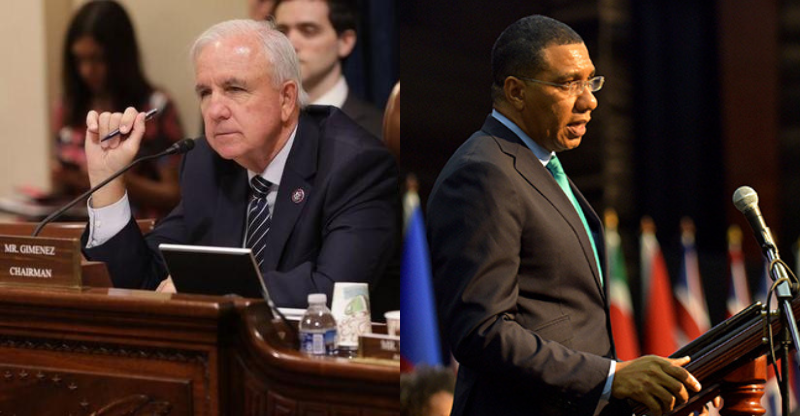
    A significant diplomatic confrontation has emerged between the United States and Jamaica following critical remarks made by U.S. Congressman Carlos Gimenez regarding Jamaica’s stance on Cuba. The controversy originated during the CARICOM Heads of Government meeting in St. Kitts and Nevis, where Jamaican Prime Minister Andrew Holness addressed Cuba’s ongoing economic difficulties, energy shortages, and humanitarian challenges.

    Prime Minister Holness, concluding his term as CARICOM chairman, articulated Jamaica’s commitment to democratic principles, human rights protections, governmental accountability, and market-oriented economic systems. He emphasized Jamaica’s continued solidarity with the Cuban population while advocating for concrete measures that would foster regional stability and mutual economic prosperity.

    The situation escalated when Congressman Gimenez, representing Florida’s 28th congressional district and himself a Cuban immigrant, issued a sharp rebuke via social media. Gimenez accused Jamaica’s ruling Labour Party of providing political cover for what he termed Cuba’s ‘moribund dictatorship.’ He referenced historical tensions by alleging that the Castro administration had previously interfered in Jamaican internal affairs to intensify political divisions and undermine the Jamaica Labour Party.

    Gimenez, who holds positions on the influential House Armed Services and Homeland Security Committees, issued unspecified consequences for Jamaica’s position. While the nature of these potential repercussions remains undefined, the warning carries significant weight given the congressman’s committee assignments and political influence.

    The exchange highlights the ongoing geopolitical tensions surrounding U.S.-Cuba relations and demonstrates how Caribbean nations’ diplomatic positions can trigger strong reactions from U.S. policymakers, particularly those with personal connections to the Cuban diaspora community.

  • Chiquibul Targeted Again as Illegal Loggers Shift to Sapodilla

    Chiquibul Targeted Again as Illegal Loggers Shift to Sapodilla

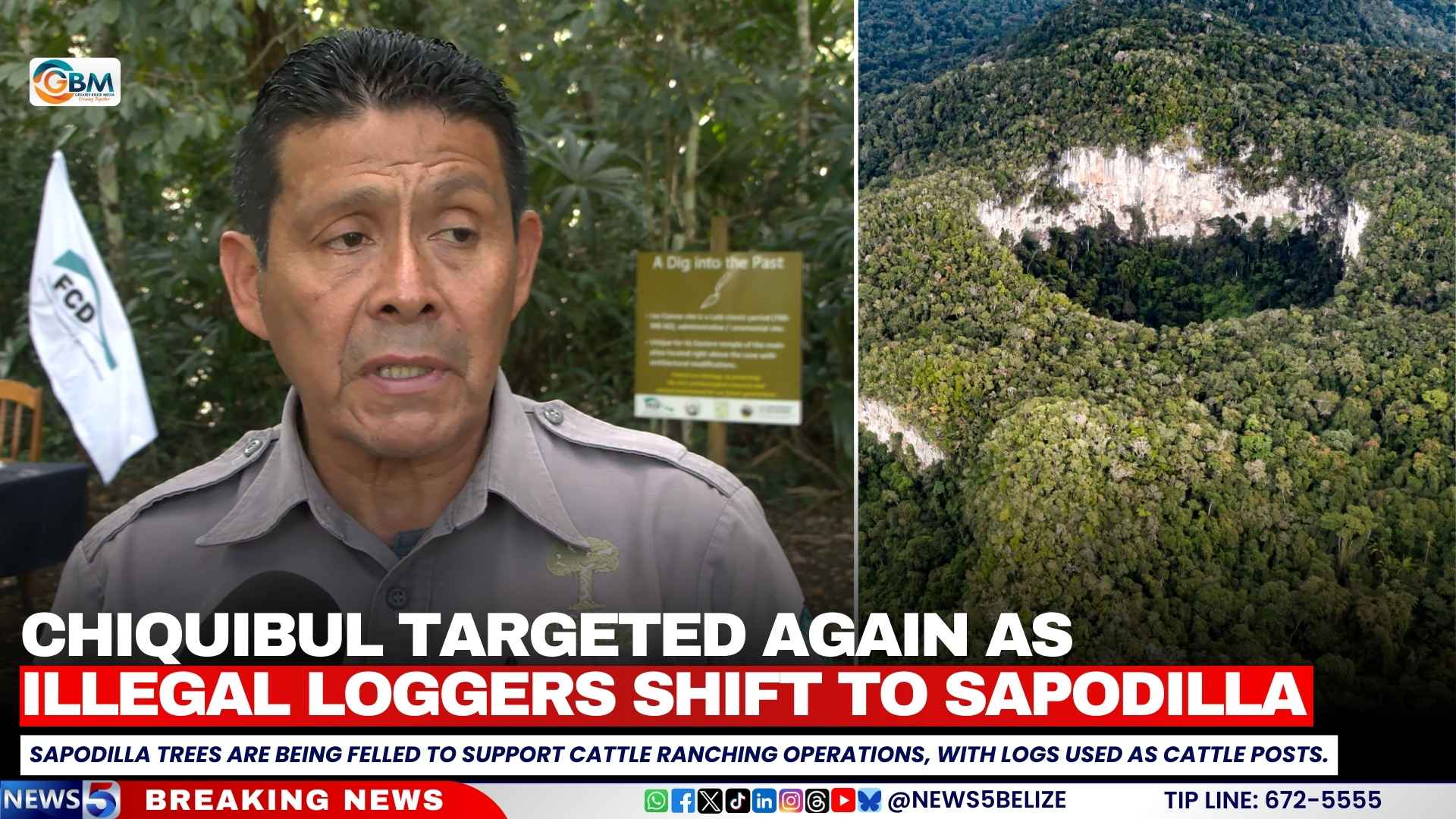
    Environmental authorities in Belize are reporting a concerning resurgence of illegal logging activities along the nation’s western border with Guatemala. Rafael Manzanero, Executive Director of Friends for Conservation and Development (FCD), has issued warnings about renewed incursions into protected forest areas after several years of declining activity.

    According to historical data, the period between 2010 and 2014 represented the peak of illegal logging operations, with estimated timber losses exceeding $50 million from the ecologically significant Chiquibul jungle. During this intense phase, Guatemalan loggers penetrated up to 17 kilometers deep into Belizean territory.

    While enforcement efforts had successfully reduced these incursions over recent years, monitoring agencies have now detected a disturbing reversal of this positive trend. “We are seeing back again a resurgence of illegal activity in terms of illegal logging right now,” Manzanero confirmed during a recent assessment.

    The nature of the logging operations has undergone a significant shift in targeting strategy. Previously focused on high-value timber species including mahogany and cedar, illegal loggers are now predominantly harvesting sapodilla trees. This change reflects adaptation to market demands, with the timber being utilized primarily for construction of cattle posts to support ranching operations across the border.

    The FCD organization is implementing coordinated response measures in partnership with Belize’s Ministry of Border Security to prevent a return to the severe depletion levels witnessed a decade ago. The Chiquibul Forest remains one of Belize’s most critical protected areas, continuously vulnerable to cross-border threats including not only illegal logging but also poaching and unauthorized mineral extraction activities that collectively endanger both biodiversity and national resources.

  • Dominica Cadet Corps hosts intensive training camp to prepare over 20 potential officers for leadership roles

    Dominica Cadet Corps hosts intensive training camp to prepare over 20 potential officers for leadership roles

    The Dominica Cadet Corps (DCC) has launched an intensive weekend training initiative to bolster its leadership capabilities. From February 27th to March 1st, 2026, over twenty Potential Cadet Officers (PCOs) will participate in a comprehensive camp alongside commissioned and non-commissioned officers at the Office of Disaster Management facility in Jimmit.

    This strategic training camp represents a critical phase in the DCC’s ongoing expansion efforts, designed to equip future officers with essential skills for assuming command positions and various operational roles within the organization. The program bridges the gap between theoretical knowledge acquired through virtual sessions since November and practical field application.

    Senior DCC officers will lead the three-day immersive training, focusing on hands-on exercises that complement previous digital instruction on cadet corps operations. The camp simultaneously serves as a professional development opportunity for existing officers to refresh their expertise and leadership competencies.

    As a paramilitary youth organization operating through secondary schools nationwide, the DCC plays a vital role in fostering discipline, civic responsibility, and leadership qualities among Dominica’s youth population. This current recruitment and training drive reflects the organization’s commitment to strengthening its institutional framework and expanding its positive influence across the island.

    Media representatives have been extended a formal invitation to observe and document the training activities, highlighting the program’s transparency and community engagement objectives.