博客

  • Hockey teams included in CAC Games squad

    Hockey teams included in CAC Games squad

    The Barbados Olympic Association has finalized the full roster of its national delegation heading to the 2026 Central American and Caribbean (CAC) Games, set to run from July 24 to August 8 in Santo Domingo, confirming a 201-strong contingent that will include both men’s and women’s national hockey teams.

    Announced in a public release Friday, the latest wave of confirmed participants adds 53 athletes and 11 medical and administrative support staff to the previously announced delegation lineup, rounding out the full team across seven competitive sports: hockey, karate, sailing, shooting, weightlifting, and wrestling. The cohort includes several seasoned veterans who carried Barbados’ flag at the 2023 edition of the regional multi-sport event, including veteran sharpshooter Dave Seale, women’s senior hockey defender Nakisha Downes-Whittaker, and men’s hockey team captain Che Roach, bringing valuable high-stakes competition experience to the young squad.

    Leading the entire delegation is Chef de Mission Dr. Adrian Lorde, with a structured leadership and support team designed to keep athletes primed for peak performance. Mona Alleyne serves as Deputy Chef de Mission, while Glyne Clarke fills the role of delegation administrator. The on-site medical team, a critical component of preparation and recovery for multi-day competitions, is headed by Chief Medical Officer Dr. Ingrid Burrowes, supported by a second physician Dr. Chloe Thompson, four physiotherapists, and two licensed massage therapists.

    In comments following the roster announcement, Dr. Lorde emphasized that a robust behind-the-scenes support network is non-negotiable for delegations competing in large-scale regional events like the CAC Games. “With a delegation of this size, having a strong sports medicine and administrative team backing our athletes is an absolute necessity to manage the significant physical demands of back-to-back competition,” Dr. Lorde explained. “Our medical officers, physiotherapists, and massage therapists rank among the most skilled practitioners in the Caribbean, and their specialized expertise will ensure every member of Team Barbados is fully prepared, healthy, and protected both during competition and in recovery.”

    The full roster of athletes confirmed in Friday’s announcement breaks down as follows: The 16-member men’s hockey team includes Marlon Daniel, Samuel Davis, Khodi Gibson, James Godding, Jerome Harewood, Jules Inniss, Stephen Morris, Taurean Phillips, Che Roach, Ahijah Springer, Dominic Toppin, Tyrese Weekes, Shakeel Wharton, Javier Wharton, Kanye Wharton, and Raghnall Yarde-Deane. The 16-member women’s hockey team features Keimah Alleyne, Kenya Alleyne, Anaya Alleyne-Germain, Takirsha Cambridge, Venessa Chewitt, Sterre De Koning, Nakira Downes, Nakisha Downes-Whittaker, D’Jamila Edwards, Neviandra Greenidge, Aliyah Griffith, Jada Prescod, Reiann Stoute, Iana Strickland, Gabriel Williams, and Ayanna Wilson.

    Single karate competitor Ric-Anne Brathwaite will represent Barbados in that discipline, while four sailors—Amabel Chase, Scott Gittens, Savannah Stuart, and Joseph Whelan—will compete in sailing events. Six shooters, including Dave Seale, will join the lineup: Tesonna Alleyne, Michelle Elliot, Brodella Ramchere, Seale, Calleah Walcott, and Camara Williams. Five weightlifters—Quontana Clarke, Chelsea Goodridge, Daniel Griffith, Elijah-Phoenix Mahy, and Khalil Roberts—will compete in weightlifting, and five wrestlers—Shaquille Agard, Matthew Arindell, Justin Boyce, Emmerson Hurley, and Nathan Pond—round out the confirmed athletic roster.

  • Greene Says Antigua and Barbuda Ready for CHOGM 2026 After National Simulation

    Greene Says Antigua and Barbuda Ready for CHOGM 2026 After National Simulation

    The twin-island Caribbean nation of Antigua and Barbuda has officially announced it is fully prepared to welcome global leaders for the 2026 Commonwealth Heads of Government Meeting (CHOGM), following the completion of a comprehensive nationwide readiness exercise designed to test the country’s operational capacity for the high-stakes international gathering.

    Foreign Affairs Minister E.P. Chet Greene, the country’s top diplomatic official, confirmed the positive outcome of the simulation while currently on official government travel in Peru. Though he was not present on the ground during the exercise held Friday, Greene remained closely connected to the proceedings, receiving real-time live updates and detailed reports from local government and event coordinating officials throughout the day.

    The large-scale drill was structured to evaluate every critical operational domain required to host a major summit of global leaders, ranging from cross-agency security protocols and rapid emergency response systems to complex logistics coordination and timely public communication frameworks.

    In his remarks following the exercise, Greene characterized the simulation as rigorous, a necessary step in preparation, and ultimately a resounding success. He emphasized that the drill served as tangible proof that Antigua and Barbuda has developed the full capability to pull off a major international event of this scale smoothly and effectively.

    Greene extended his gratitude to residents of Antigua and Barbuda for their understanding and patience during the exercise, which required temporary service disruptions in some areas to accommodate the drill. He also offered specific praise to the collective group of stakeholders involved, highlighting the outstanding professionalism and seamless coordination displayed by law enforcement officers, emergency response teams, dedicated CHOGM planning personnel, and national disaster management agencies. Additionally, he commended local media outlets for their consistent, clear work to keep the general public updated on the exercise’s progress and any related impacts throughout the day.

    The minister stressed that the successful completion of this simulation provides clear confirmation that Antigua and Barbuda has already put in place all the required infrastructure, trained personnel, and operational systems needed to successfully host the gathering of Commonwealth heads of government in 2026. When the summit convenes next year, it will bring together leaders from across the 56-nation Commonwealth bloc to deliberate on a wide range of pressing regional and global policy challenges.

  • Fourth time’s a charm: Pollster Wickham toasts aunt’s 100th birthday

    Fourth time’s a charm: Pollster Wickham toasts aunt’s 100th birthday

    Surrounded by close family and lifelong friends, Sylvia Ometa Maxwell — known to all who love her as “Aunt Sylvia” — rang in her 100th birthday on July 9 in a celebration full of warm laughter, shared stories, and cherished moments together. This joyful centenary marks far more than a personal milestone: it adds another entry to the Maxwell family’s extraordinary legacy of longevity, becoming the fourth time a member of the extended family has lived to reach 100 years of age. For her nephew, noted regional pollster and political scientist Peter Wickham, it is also the second 100th birthday he has celebrated with a family member this year alone.

    Wickham shared the full story of his family’s unique record of long life, detailing that this birthday marks the fourth centenarian in their extended lineage. “On Sylvia’s side, she had a sister who lived to 102. On my father’s side, we had an aunt who lived to 107, and most recently another aunt who reached 100,” he explained. “So this is the fourth.” As he paid tribute to his aunt, Wickham highlighted her calm, laid-back temperament that has defined her entire life, crediting it as a core part of her long, healthy life. “Of the four aunts that helped to raise us, she was always the one that was less concerned about everything. If you ever got into trouble, she was the one you preferred to find you because she didn’t worry about a lot. She lived a relatively stress-free life, and we’re grateful to have her with us still.”

    Born in 1926 as the youngest of five children to James A. and Caroline Maxwell, Sylvia has faced hardship from the earliest days of her life: her mother passed away unexpectedly just one year after she was born, leaving her to be raised by her maternal grandmother Golda and her older sister Elaine. Today, she is the only one of her five siblings still alive.

    Sylvia cut her teeth academically at Maude Haynes Private School, before moving on to Queen’s College in 1937, where she quickly stood out as a talented athlete, with netball standing as her particular strength. After completing her education, she built a respected, decades-long career at the West Indies Cane Breeding Station, which operated under the Sugar Association of the Caribbean. She worked her way up through the organization to the senior role of Administrative Assistant, before retiring from her professional duties in 1987.

    Beyond her career, Sylvia built a reputation among loved ones for her wide range of vibrant passions, from travel and cooking experimentation to a lifelong love of fashion that continues to this day. Wickham recalled with fond amusement her legendary endurance when it came to shopping trips, a hobby that required him to tag along as her bag carrier for hours on end. “She was a shopper. That was not of very much interest to me because I would always carry the bags, but she had a significant intestinal fortitude when it comes to shopping. She walked for hours and hours. She loved fashion, and that was her thing. Her wardrobe was quite extensive back in the day.” She was also a dedicated regular viewer of CNN’s iconic weekly fashion program *Style with Elsa Klensch*, and enjoyed testing new recipes in her kitchen for decades.

    What makes Sylvia’s milestone even more remarkable is that she has reached 100 years of age with no diagnosed non-communicable diseases, a healthy outcome that Wickham attributes to both her low-stress approach to life and her consistent commitment to moderation in all things. “She has always had a little bit of pressure, but I often felt it had more to do with diet than with stress, because she didn’t really take on stress. Relatively healthy lifestyle, avoiding excess in many things, and moderation—but she would have a glass of Bailey’s every once in a while. Nothing too excessive.”

    A devout lifelong member of James Street Methodist Church, Sylvia was christened at the congregation the same year she was born, and sat in the same family pew for decades. She currently resides in Wanstead, where she lives with her caregiver Tresha.

  • Regional Agencies Join Forces to Strengthen Caribbean Response to Hurricanes and Disease Outbreaks

    Regional Agencies Join Forces to Strengthen Caribbean Response to Hurricanes and Disease Outbreaks

    On July 6, 2026, two key Caribbean Community (CARICOM) institutions—the Caribbean Disaster Emergency Management Agency (CDEMA) and the Caribbean Public Health Agency (CARPHA)—formalized the extension of their long-standing collaborative relationship with the signing of a renewed Memorandum of Understanding (MOU) aimed at strengthening cross-regional coordination for disaster response and public health emergency preparedness. The updated agreement builds on decades of existing cooperation to streamline joint action across the full cycle of crisis management, from prevention and advance preparation to on-the-ground response and long-term post-emergency recovery.

    For years, the two agencies have partnered to support Caribbean nations through a wide range of crises, from powerful tropical hurricanes to large-scale infectious disease outbreaks. Under CDEMA’s existing Regional Response Mechanism (RRM), CARPHA has long contributed specialized public health technical knowledge during regional emergencies, supporting individual member states with critical services including disease surveillance, laboratory testing support, population health assessments, public risk communication, environmental health interventions, and emergency response plan development.

    Two of the most high-profile examples of this successful collaboration played out in recent years, during the regional responses to Hurricane Beryl in 2024 and Hurricane Melissa in 2025. After both storms caused catastrophic damage across multiple Caribbean island nations, CARPHA integrated its health response teams into the CDEMA-led RRM, deploying technical specialists to conduct rapid needs assessments, inspect the safety of emergency shelters and damaged healthcare facilities, expand regional disease monitoring systems, and deliver evidence-based guidance to local national health authorities.

    Speaking at the signing ceremony, CDEMA Executive Director Elizabeth Riley framed the new MOU as a critical response to the region’s evolving risk profile. “The Caribbean’s risk landscape is changing rapidly. Climate change, increasingly intense weather events, public health emergencies, and other emerging threats demand that we move beyond traditional approaches and strengthen collaboration across sectors,” Riley explained. “This MOU between CDEMA and CARPHA reflects our shared recognition that resilience can only be achieved through integrated action and strong regional partnerships.”

    CARPHA Executive Director Dr. Lisa Indar echoed this sentiment, highlighting the inherent interconnectedness of the two agencies’ core mandates. “Health and disaster management are inseparable,” Indar emphasized. “This MOU brings together CARPHA’s public health expertise and CDEMA’s disaster coordination leadership to strengthen regional preparedness, build more resilient health systems, and better protect the people of the Caribbean from increasingly complex threats.”

    CARICOM Assistant Secretary-General Alison Drayton also offered remarks at the event, noting that the renewed partnership embodies the regional bloc’s core commitment to building collective resilience through cross-agency cooperation. “By combining CARPHA’s technical leadership in health security with CDEMA’s expertise in disaster mitigation and emergency management, we are strengthening the regional architecture that protects Caribbean people before, during, and after crises,” Drayton said.

    The renewed MOU expands and formalizes joint work across multiple priority areas, starting with enhanced operational coordination during active regional emergencies that leverages CDEMA’s authority in overall disaster coordination and CARPHA’s specialized public health technical capacity. Key priorities outlined in the agreement include protecting vulnerable affected populations, integrating public health priorities into all levels of regional disaster planning and response, aligning shared operational standards and evidence-based best practices, and delivering joint capacity-building initiatives through targeted training, large-scale crisis simulation exercises, cross-agency technical exchanges, and centralized knowledge sharing to boost the entire region’s resilience capacity.

    Beyond emergency response, the partnership will also strengthen joint advance planning, systemic capacity building, collective resource mobilization, and day-to-day operational coordination. These improvements will position Caribbean nations to more effectively anticipate and address emerging transboundary threats, while strengthening both regional health security and overall disaster resilience across the bloc.

    As the Caribbean continues to face growing, increasingly interconnected risks driven by climate change and shifting global health patterns, the strengthened CDEMA-CARPHA partnership is expected to improve emergency coordination outcomes, protect the region’s most vulnerable populations, reinforce local and regional health system resilience, and further embed public health priorities into core disaster risk management frameworks. Regional leaders frame the new MOU as a landmark step forward in the long-term effort to build a safer, healthier, and more resilient Caribbean for all residents.

    Established in 1991 as the Caribbean Disaster Emergency Response Agency (CDERA) and reorganized into its current form in 2009, CDEMA serves as CARICOM’s regional intergovernmental body focused on comprehensive disaster management across its 20 participating states. Its core mandate centers on an integrated approach to reducing disaster risk, strengthening community-level resilience, and supporting sustainable regional development.

    CARPHA, CARICOM’s dedicated regional public health agency, serves 26 member states by providing strategic leadership, specialized technical expertise, and coordinated collective action to prevent disease, strengthen health systems, and advance regional health security. Through core work including disease surveillance, laboratory services, public health research, capacity building, and emergency preparedness and response, the agency partners with member states and global stakeholders to protect and improve population health outcomes across the Caribbean.

  • Ministry Agriculture Interns Gain Hands-On Poultry Farming Experience

    Ministry Agriculture Interns Gain Hands-On Poultry Farming Experience

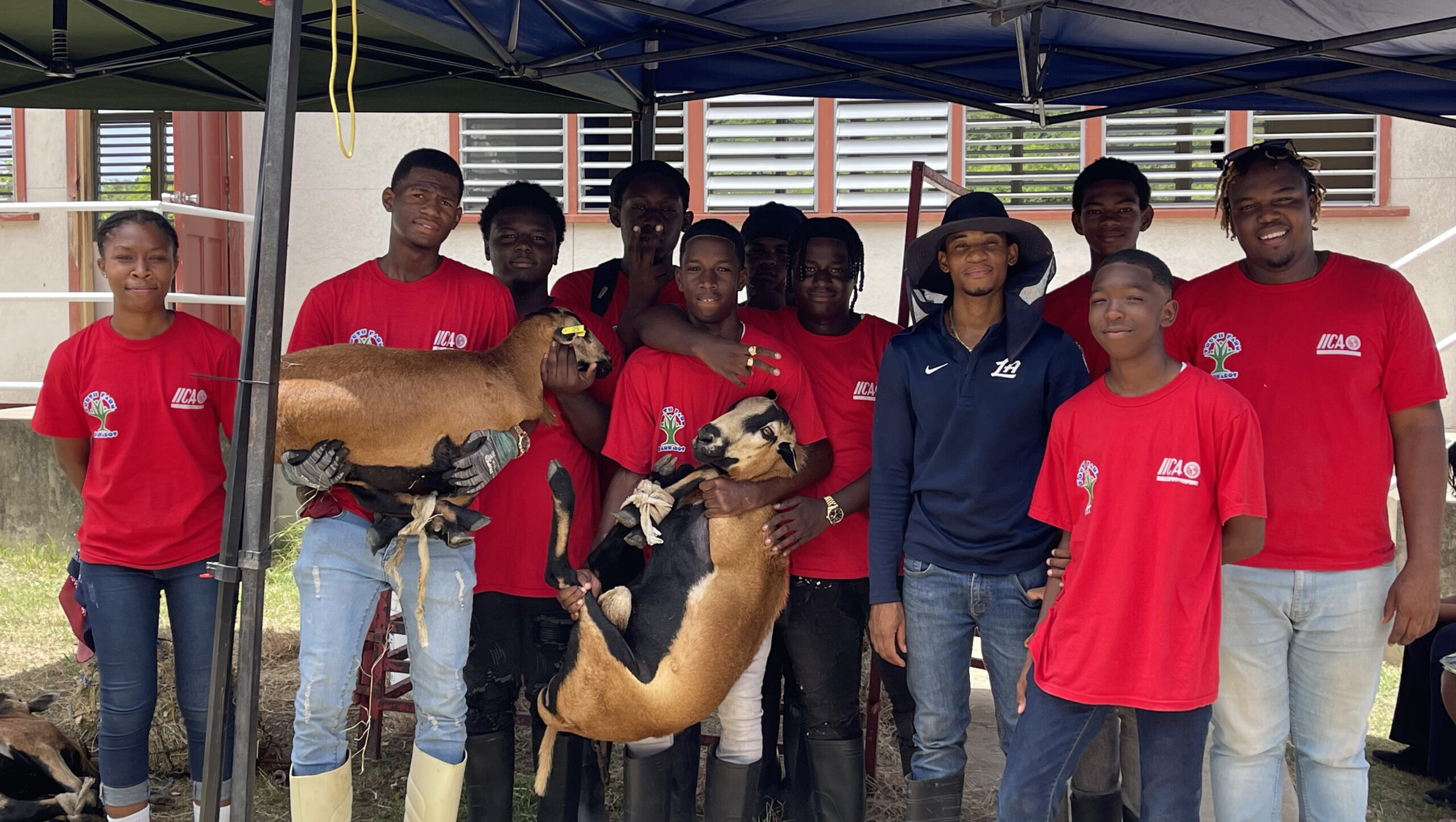
    Antigua and Barbuda’s Ministry of Agriculture is pressing forward with its annual Summer Internship Programme this week, delivering hands-on, immersive learning for young participants through guided educational visits to two distinct local farming operations. The 11th day of the program was dedicated entirely to building practical expertise in poultry rearing and avian management, taking interns first to privately owned Pelle Farm, followed by the educational farm facility of All Saints Secondary School.

    Owned by Kelvin Pelle, a former Agricultural Science educator, Pelle Farm introduced interns to a diverse roster of avian species far beyond the common commercial chicken, including rheas, domestic ducks, and rare black chicken breeds. Experienced farm staff walked the group through species-specific protocols for daily care, nutritional needs, and population management, breaking down the unique requirements of raising each type of bird for commercial or small-scale production.

    After concluding their tour of Pelle Farm, the intern cohort traveled to All Saints Secondary School’s on-site farm, where the school’s specialized agricultural education team led an interactive workshop focused on core poultry production concepts and the critical role of pure breed conservation. During this session, participants examined a wide range of poultry, from quail, pheasants, and partridges to commercial layer hens and broiler chickens. They gained clear insight into the key functional differences between lines bred specifically for consistent egg output and those developed for meat production.

    The workshop also covered advanced foundational topics, including selective breeding practices designed to preserve and enhance desirable genetic traits in poultry flocks. Farm instructors demonstrated a simple, longstanding industry technique that allows producers to assess whether a hen is actively laying eggs by measuring the spacing between the bird’s pelvic bones—wider spacing indicates consistent egg production. Interns also learned a key biological fact about layer chickens: the species is photoperiodic, meaning the length of daily daylight directly impacts laying rates, with longer daylight hours typically driving higher egg output.

    Food safety, a critical component of successful poultry production, was another core focus of the day’s learning. The agricultural team clarified a common industry misconception, explaining that washing raw eggs with tap water actually compromises food safety by stripping away the cuticle, the natural protective coating on the egg shell that blocks bacterial infiltration. Instead, producers and handlers should only gently wipe eggs with a dry cloth when dirt needs to be removed, to preserve the shell’s natural defenses.

    Many participants got the rare chance to safely interact with and handle different poultry birds, allowing them to directly observe avian behavior and temperaments first-hand—an opportunity few entry-level learners get in traditional classroom settings.

    In a statement following the day’s visits, the Ministry of Agriculture outlined the core mission of the Summer Internship Programme: to give emerging agricultural professionals exposure to the full breadth of the sector through experiential, practical learning that builds in-demand technical skills and fosters long-term interest in agricultural careers. The program will continue in the coming weeks with additional on-site field visits and targeted training sessions, all aimed at expanding participants’ understanding of agriculture’s outsize role in supporting Antigua and Barbuda’s national economy and strengthening the country’s domestic food security.

  • 10 Killed in Bahamas Plane Crash as Flamingo Air Flights Suspended

    10 Killed in Bahamas Plane Crash as Flamingo Air Flights Suspended

    On a day meant for national celebration, The Bahamas was plunged into grief on Friday when a small passenger aircraft crashed in North Andros, claiming the lives of all 10 people on board. What should have been a joyous observance of the country’s 53rd Independence Day quickly turned into an official national day of mourning after the crash.

    The aircraft involved in the accident was a Bahamian-registered Cessna 402, operated by domestic carrier Flamingo Air. The plane was mid-route between the capital city of Nassau and the island destination of San Andros when it went down. Emergency response teams were dispatched to the crash site immediately, and official investigations into the exact cause of the tragedy are now underway.

    In the immediate aftermath of the crash, Prime Minister Philip Brave Davis initially told reporters that one person had managed to survive the impact. However, that update was later corrected, with Davis confirming that the injured individual had ultimately succumbed to their wounds, bringing the final confirmed death toll to 10. As of the latest official update, the identities of the victims have not been released to the public, pending notification of all next of kin.

    Speaking at an official press conference shortly after the crash, Davis acknowledged the nation’s collective shock and sadness. “We gather beneath a cloud of great sorrow,” he said. “It has become a day of mourning.” The prime minister extended the country’s deepest sympathies to the families and loved ones of those killed, noting, “To every family that has received the devastating news that someone they love will not be coming home, we offer our deepest condolences.”

    Davis emphasized that investigators are still working to piece together the sequence of events that led to the crash. “At this stage, the facts are still being established, and the relevant authorities are working to determine exactly what occurred,” he stated. “The families affected deserve compassion, privacy, and support as the investigation proceeds.”

    In a precautionary move that came shortly after the fatal crash, the Bahamian Ministry of Energy, Utilities and Aviation announced it had suspended Flamingo Air’s Air Operator Certificate, halting all of the airline’s operations while investigators examine the full context of the crash. The suspension was not issued solely in response to the North Andros crash: the ministry confirmed that two separate aviation safety incidents involving Flamingo Air occurred on the same day.

    Earlier Friday, before the fatal crash, another Flamingo Air plane headed for the island of Mayaguana was forced to turn back to Nassau after the pilot reported a mechanical issue of concern. All passengers on that flight got off the plane safely, but the aircraft subsequently caught fire. No injuries were reported in that second incident. To date, officials have not confirmed whether the two separate incidents are linked, and active investigations are continuing for both events.

  • Para-social workers being trained in hinterland communities

    Para-social workers being trained in hinterland communities

    On Friday, Guyana’s Ministry of Human Services and Social Security officially launched a groundbreaking free training initiative to cultivate paraprofessional social workers, a response to the decades-long shortage of fully qualified social work professionals in the country’s remote interior, or hinterland, communities.

    The Certificate in Paraprofessional Social Services (CPSS) program, launched in Mahdia, Region Eight (Potaro-Siparuni), aims to close a critical service gap that has left marginalized interior communities underserved for years. Speaking at the launch, Human Services and Social Security Minister Dr. Vindhya Persaud framed the program’s first cohort of trainees as pioneers trailblazing a new model of accessible social care for Guyana’s most remote regions.

    For generations, key hinterland regions including Barima-Waini (Region One), Cuyuni-Mazaruni (Region Seven), Potaro-Siparuni (Region Eight) and Upper Takutu-Upper Essequibo (Region Nine) have lacked consistent access to specialized social services, a gap that has harmed outcomes for vulnerable groups across these areas. The new initiative directly advances the Guyanese government’s public commitment to expanding qualified social care coverage across the entire country, where demand for these critical services remains highest in remote interior zones.

    Developed as a collaborative effort between the Ministry of Human Services and Social Security, the Guyana Association of Professional Social Workers (GAPSW), and the accredited University of Guyana, the program delivers no-cost foundational social work training that carries formal academic accreditation. Unlike ad-hoc community outreach, the initiative is designed to create long-term, meaningful career pathways for local hinterland residents, while simultaneously strengthening the country’s overall social services infrastructure. Upon successful completion of the course, graduates will be prioritized for open social services roles across government agencies, including the Childcare and Protection Agency, the central Social Services Department, and the Survivor Advocate Programme.

    Minister Persaud emphasized that the program is far more than a short-term training course: it serves as a permanent launchpad for a lifelong career in social work, empowering local trainees to drive tangible, lasting change within their own communities. “This is more than free training. It is a launchpad into a career in Social Work. So, think about this as a lifelong path, where you will make a tangible impact on the future of the people of your community, your region, and your country,” she told participating trainees.

    The minister also outlined the critical, multifaceted role that social workers play in advancing community well-being, from addressing child protection and family welfare to supporting survivors of gender-based and domestic violence and expanding access to mental health support. Strengthening these frontline services, she noted, is a non-negotiable foundation for building safer, healthier, more cohesive communities across Guyana.

    She further stressed the importance of rigorous professional standards for the new cohort of paraprofessional social workers, including accurate case documentation, adherence to national standard operating procedures, and unwavering ethical conduct. Because social workers often serve as key stakeholders in the national justice system, contributing evidence and support during court proceedings and ongoing case management, upholding principles of integrity, transparency, and accountability is central to the role. “Justice must always be served, and as a social worker, you become part of that wheel of justice. So when you get into this profession, integrity, transparency and accountability is what will drive you further,” Persaud said.

    Framed as a aligned investment paired with Guyana’s ongoing rapid economic expansion, the program reflects the government’s strategy to grow human capital in lockstep with national development. As Guyana experiences unprecedented economic growth driven largely by new offshore oil discoveries, the administration has prioritized ensuring that all communities — including remote interior regions left behind in past development cycles — gain access to the professional services and opportunities they deserve. “This programme is an investment in the education of the people of Guyana. As our country develops, we must ensure our human capacity develops alongside it, so that every community has access to the support and professional services it deserves,” the minister added.

  • Court Grants Interim Injunction Halting Leeward Islands Cricket Board Elections

    Court Grants Interim Injunction Halting Leeward Islands Cricket Board Elections

    In a last-minute ruling that has thrown regional cricket governance into uncertainty, the High Court of Justice of Antigua and Barbuda has granted an interim injunction blocking the Leeward Islands Cricket Board (LICB) from holding its planned annual general meeting and leadership elections set for July 11. The stay on the vote will remain in effect until the court hears a full legal challenge brought by the Anguilla Cricket Association and Carlisle Powell, president of the Nevis Cricket Association.

    Handing down the decision on July 10, one day before the scheduled vote, Justice Jan Drysdale concluded that the dispute raised substantial legal questions that require full adjudication. The judge further ruled that financial compensation would not be a sufficient remedy if the election went forward before the court could resolve the underlying conflict, ordering that the existing governing structure remain unchanged until a full inter partes hearing can be held.

    At the heart of the claimants’ case are multiple grievances over the LICB’s nomination process. The applicants argue that a nomination for candidate Dr. Hodge was improperly rejected on the grounds that his letter of acceptance was submitted late. They emphasize that at no point prior to the rejection did the LICB indicate that this separate acceptance document would be a mandatory requirement for eligibility. Compounding this issue, the claimants state that neither Dr. Hodge nor a second candidate, Kieron Powell, were notified of any perceived issues with their nomination paperwork, nor were they given the opportunity to fix any deficiencies before the final list of candidates was publicly released on July 9.

    In a further challenge to the election’s legitimacy, the claimants’ affidavit questions the eligibility of incumbent LICB president Enoch Lewis. According to the filing, Lewis has held the presidency for roughly 12 consecutive years, a tenure that far exceeds the two-term limit explicitly written into the LICB’s own governing constitution.

    The applicants warn that allowing the disputed election to proceed would cause permanent harm to the board’s democratic standing and erode public and stakeholder trust in the organization’s leadership. Their requested remedies include a full postponement of the election until the entire nomination process can undergo a formal review, or alternatively, a court order requiring that both Kieron Powell and Dr. Hodge be added to the ballot as valid, nominated candidates.

    Justice Drysdale’s injunction applies broadly to the LICB, its current officers, and all authorized agents, banning any action to convene the AGM, hold the election, or enact any results from the vote until the court issues a new order following the full hearing. Procedural timelines have already been set: respondents in the case have until July 15 to submit a responding affidavit, while the claimants will have until July 16 to file their reply. Formal skeleton legal arguments are due by July 20, and the full inter partes hearing is scheduled to begin at 11 a.m. on July 22.

  • Banks DIH Ltd hands over grand prize in “Crown the Road” promotion

    Banks DIH Ltd hands over grand prize in “Crown the Road” promotion

    Guyana’s leading beverage and consumer goods manufacturer Banks DIH Limited has formally concluded its highly anticipated ‘Crown the Road’ customer loyalty promotion, awarding the campaign’s top prize – a brand-new SWM SUV valued at $5.5 million – to Vijay Latchminarine, a resident of East Canefield, Canje, Berbice.

    Running over 10 consecutive weeks from April 10 to June 19 this year, the promotion was structured to reward regular patrons of Banks Beer at 15 participating bars scattered across Guyana. Throughout the campaign, organizers held regular draws that delivered instant $350,000 cash prizes to 15 lucky winners, bringing the total value of secondary consolation rewards to $5.25 million, before the much-awaited grand prize draw for the SUV that served as the event’s centerpiece.

    The awarding of the SUV to Latchminarine marks the successful completion of a campaign crafted specifically to celebrate and acknowledge the long-term loyalty of Banks Beer consumers across the country. Speaking on the wrap-up of the promotion, Lee Baptiste, Sales and Marketing Executive at Banks DIH, emphasized that the initiative was rooted in meeting customers where they already connect with the brand.

    “Crown the Road was about putting Banks Beer where our customers already are, at their favourite bars, enjoying time with friends and giving them a real chance to be rewarded for their loyalty,” Baptiste explained. “Seeing Mr. Latchminarine drive away in the grand prize SUV is exactly the kind of moment we hoped this promotion would create.”

    Banks Beer, the flagship product at the center of the campaign, holds a Monde Selection Gold Quality award and has maintained its position as one of the most popular beer choices among Guyanese consumers. The brand is backed by its parent company’s more than seven decades of proven manufacturing excellence in the region.

    As a cornerstone of Guyana’s consumer goods sector, Banks DIH Limited employs more than 1,600 local workers and holds a dominant position as a manufacturer and distributor of beverages, food items, and household products across the country. Beyond Banks Beer, the company’s extensive brand portfolio includes other well-known local favorites such as GT Beer, Guinness, XM Rum, Coca-Cola, Malta, Icee, and Qik Serv, alongside a wide range of other everyday consumer products. For decades, the firm has anchored its operations in three core priorities: delivering consistent high-quality products, investing in local community development, and supporting the long-term economic growth of Guyana.

  • Geen enkel duurzaam ontwikkelingsdoel ligt op schema voor 2030

    Geen enkel duurzaam ontwikkelingsdoel ligt op schema voor 2030

    Five years ahead of the 2030 deadline for the United Nations’ Sustainable Development Goals (SDGs), the newly released 2026 Sustainable Development Report (SDR 2026) delivers a stark warning: none of the 17 global SDGs are currently on course to be achieved by the target year. The report’s data paints a sobering picture of global progress, noting that only 16.5% of all SDG targets are tracking on schedule globally, 67% are showing only minimal incremental progress, and a full 16% are actually moving backwards. Against this concerning global backdrop, the report also includes a detailed assessment of Suriname’s performance, where the South American nation ranks 78th globally with an SDG score of 70.0, nearly matching the 70.5 average for the Latin America and Caribbean region.

    A key innovation included in this year’s SDR is the addition of retrospectively calculated SDG rankings, a new feature that allows for reliable, cross-country comparisons of national performance across multiple years, filling a longstanding gap in global SDG progress tracking.

    Breaking down Suriname’s results, the report identifies critical persistent challenges alongside notable areas of progress. The country’s largest setbacks are recorded on SDG 2 (Zero Hunger) and SDG 15 (Life on Land), both of which show negative development trajectories. For SDG 2, Suriname grapples with a relatively high national obesity rate of 29%, while SDG 15 progress is undermined by growing pressure on the nation’s biodiversity and terrestrial ecosystems. Suriname also lags behind on SDG 16 (Peace, Justice, and Strong Institutions), with its low score dragged down by poor performance on global corruption perception indices, reflecting ongoing concerns over the quality of governance and public institutional capacity in the country.

    Despite these challenges, the report highlights clear positive gains for Suriname in several key areas. The nation has made consistent progress on SDG 3 (Good Health and Well-being), with life expectancy rising to 73.9 years and child mortality rates continuing to decline. Suriname also scores highly on access to basic infrastructure and services: 99.6% of the population has access to electricity, and 98% has reliable access to clean drinking water. The country has also maintained steady, positive results for gender equality in the labor market.

    Ten years after the SDGs were first formally adopted, the 2026 SDR is calling for a dramatic acceleration of global and national action to get the 2030 agenda back on track. The report outlines eight core priority areas to close the current progress gap, including advancing peace and effective governance, scaling up investment in sustainable development, deepening regional cooperation, developing innovative financing mechanisms for global public goods, and establishing clear international frameworks for emerging technologies such as artificial intelligence and biotechnology. Report authors also argue that the United Nations needs a stronger coordinating role in advancing the global sustainable development agenda.

    For Suriname specifically, the report emphasizes that targeted extra efforts will be required over the coming years in environmental protection, climate adaptation, and public institutional strengthening. It calls for collaborative action across the national government, private sector, and civil society organizations to reverse declines in underperforming SDGs and get closer to the 2030 targets.

    In conclusion, the report underscores that the global sustainable development agenda is at a critical juncture. Without sweeping policy changes and a rapid acceleration of implementation efforts, the globally agreed 2030 SDGs will remain out of reach when the deadline arrives in 2030.