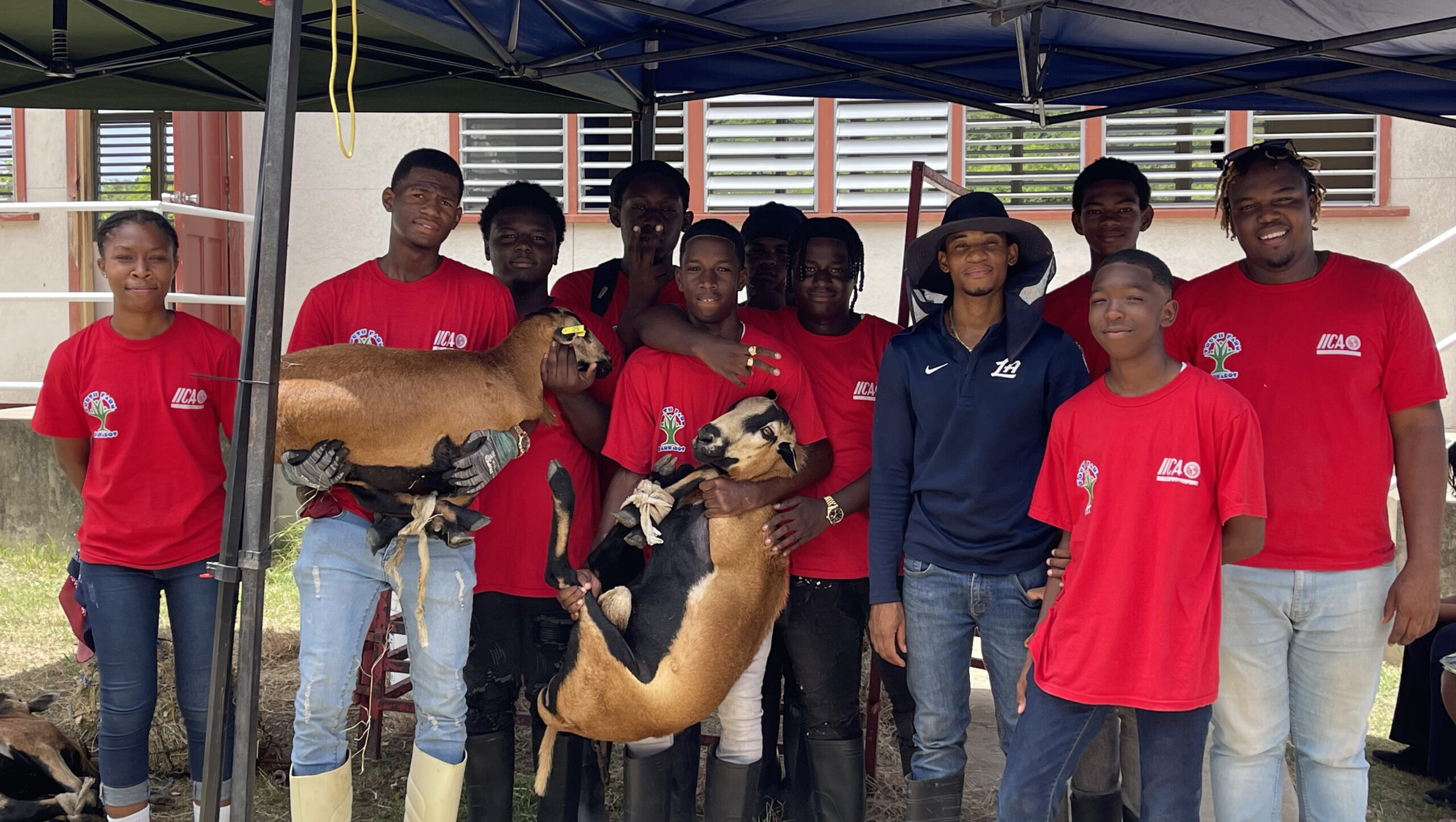
A long-running agricultural skills development initiative in Barbados celebrated its latest cohort of young trainees this week, as 18 aspiring farmers displayed their newly honed livestock and poultry production capabilities at an open day hosted at Alleyne School. The event marked the successful completion of an intensive eight-week training program run by the Inter-American Institute for Cooperation on Agriculture (IICA), which has equipped young people with hands-on farming expertise since 2012.
Of the 18 graduates, eight completed the specialized poultry production track, while the other 10 focused on broader commercial livestock rearing. Beyond the on-site training at the school, the program was designed to blend classroom learning with real-world agricultural experience, giving participants a well-rounded foundation for careers in the sector.
Ryan Barrow, lead instructor for the poultry production module, explained that trainees worked toward earning a Level Two National Vocational Qualification (NVQ) in General Poultry Production while building tangible practical skills. Over the course of the program, the poultry cohort collectively raised more than 100 broiler chickens and gained hands-on experience managing layer hen operations, including daily egg collection. To supplement their on-campus training, participants also took educational field trips to Gale’s Hatcheries and a commercial operating farm in St Lucy, where they observed industry-standard practices firsthand.
Barrow emphasized that the program seeks to challenge outdated stereotypes around agricultural careers, highlighting the sector’s ongoing relevance and economic viability for young people. “Agriculture is a very, very viable career choice. There are many different areas in agriculture that students can get into, and plus it’s all about food – as I always tell my students: ‘No farm, no food,’” he said.
For many participants, the program provided a structured opportunity to grow a pre-existing passion for farming. T’shay Als, a St George-based student who already studies agriculture academically and has previously raised 100 broilers independently, said the training filled critical gaps in her knowledge. “We learned a lot about this course. We learned properly how to take care of chicks, also how to start a business in a way, and also different aspects and different types of chicks,” she explained. Als plans to pursue farming full-time after graduation, and encouraged other young people with an interest in agriculture to join future cohorts. “You get to do fun activities, you know. You’ll meet good people, you know. You’ll also learn a lot, especially if you want to do it as a career,” she said.
Fellow poultry graduate Elisha Lashley, a student at St Leonard’s Boys’ School, said the program expanded his expertise beyond the layer hen rearing he had practiced previously. His biggest takeaway was the critical role of biosecurity in sustainable poultry production, a practice that is foundational to successful commercial operations in Barbados. “What I learned is that biosecurity is very important, and I also learned that agriculture, that poultry production in Barbados, is very important,” Lashley noted. “I’ve been trying to get more layers ’cause I’m more experienced with layers instead of broilers, ’cause this is my first time using broilers, and that’s another good thing about this programme because you can learn a lot of new things.”
Jelani Hunte, instructor for the livestock production track, said his 10 trainees also completed a mix of classroom theory and hands-on field training. Practical sessions covered core commercial livestock skills that are rarely taught in standard secondary education, including piglet castration, dental care, tail docking, hoof trimming, simulated deworming protocols, and ear tagging for livestock identification. Unlike many entry-level training programs, the IICA initiative also integrates entrepreneurship training, and all livestock track participants already operate their own small agribusinesses, Hunte explained.
He added that the program has already succeeded in inspiring participants to pursue farming more seriously, recalling one trainee who approached him after the program’s final week to ask for guidance on accessing land, registering as an official commercial farmer, and sourcing high-quality breeding livestock. “I would say that the guys are enthusiastic and I can see a bright future in farming for the guys,” Hunte said.
The IICA Youth Farm training program is delivered in long-term collaboration with Barbados’ Ministry of Education, the Barbados TVET Council, and Gale’s Hatcheries, with additional support from a network of local agricultural businesses that have backed the initiative since its launch in 2012.