博客

  • US-Iran Tensions Escalate as Naval Blockade Threatens Strait of Hormuz

    US-Iran Tensions Escalate as Naval Blockade Threatens Strait of Hormuz

    On July 14, 2026, a fresh wave of geopolitical volatility is sweeping the Middle East, as rising tensions between the United States and Iran push the two powers closer to a broader military confrontation. The trigger for this latest escalation comes after a fragile ceasefire between Washington and Tehran collapsed, clearing the way for the US to reinstate a naval blockade in waters adjacent to the Strait of Hormuz — one of the world’s most strategically critical maritime transit chokepoints.

    According to a statement from US Central Command, the blockade is scheduled to resume at 4:00 p.m. Eastern Time on the same day the announcement was made. In response to the move, Iranian officials have issued a stark warning: any American strike targeting the suspected underground nuclear facility called Pickaxe Mountain will be met with a devastating, overwhelming counter-response.

    Stretching between the Iranian coast and the Sultanate of Oman, the Strait of Hormuz handles nearly a fifth of the world’s daily oil consumption and a third of global liquefied natural gas shipments, making any disruption to navigation here a shock to the global energy system. Its unique geography, with a narrow shipping lane just miles wide, means it has long been a flashpoint for global geopolitical rivalry.

    Already, the spike in tensions has triggered security disruptions across the Gulf region. Kuwait’s military confirmed it was actively responding to unprovoked hostile aerial attacks within its territory, and security agencies across all Gulf Cooperation Council states have maintained a high-level alert status. The European Union Aviation Safety Agency (EASA) has issued an urgent advisory urging all commercial airlines to avoid flying through the airspace of Bahrain, Qatar, Kuwait, the United Arab Emirates, and large sections of the Gulf of Oman, citing sharply elevated risks of military conflict targeting civilian infrastructure.

    In a sudden policy shift, former US President Donald Trump reversed a planned proposal to impose a 20% reimbursement fee on all commercial cargo passing through the Strait of Hormuz. The fee, initially framed as a way for the US to recoup costs for its regional security operations, drew widespread international condemnation from legal experts and trading nations who argued it would violate long-standing international law governing free passage through global waterways. Trump announced that instead of the fee, Washington will negotiate new bilateral trade and investment agreements with Gulf nations to cover security expenses.

    Global energy markets have already priced in the growing uncertainty, with benchmark Brent crude jumping to its highest level in more than a month as investors brace for potential disruptions to oil shipments. Analysts warn that any prolonged closure or blockade of the strait could send global oil prices soaring, triggering inflationary pressures across major economies and derailing fragile post-pandemic growth trajectories.

  • AG: No Final Agreement Exists on US Third-Country National Transfers

    AG: No Final Agreement Exists on US Third-Country National Transfers

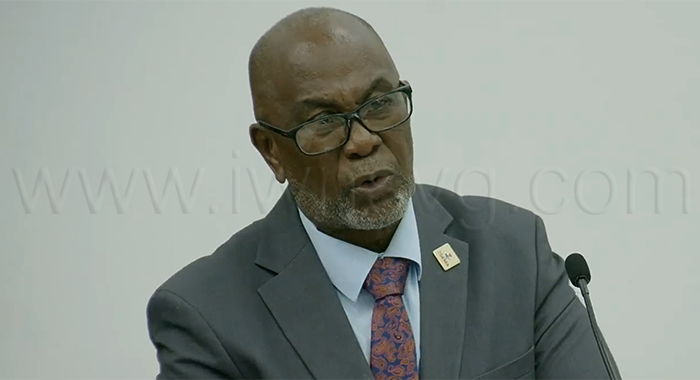
    In a Tuesday address to the Antigua and Barbuda Parliament, Attorney General Sir Steadroy Benjamin moved to clear up widespread misconceptions surrounding ongoing negotiations with the United States over a proposed third-country national transfer framework. Speaking amid growing public and legislative debate over the scope of the proposed deal, Benjamin explicitly confirmed that no binding, final agreement has been signed between the two nations, and that lawmakers are only being asked to greenlight a set of guiding principles to shape future talks.

    Addressing concerns raised during discussion of the government’s resolution, Benjamin pushed back against claims that Parliament was being asked to approve a finalized deal that had already been negotiated behind closed doors. He emphasized that no completed agreement currently exists, framing the current resolution as a procedural step rather than a final vote on a done deal. “The White Paper is not presented as a complete agreement, nor is this House being asked to approve a conclusive operating agreement. None exists,” Benjamin stated to the legislative body.

    Under the terms of the resolution put forward to lawmakers, Parliament would only be granting approval for a foundational framework that outlines the government’s negotiating boundaries, leaving the executive branch – led by the Cabinet – to continue formal discussions with U.S. negotiating teams. Benjamin defended this division of responsibilities, noting that negotiation is an inherent executive function, and that Parliament’s core role in this process is to set the non-negotiable principles and limits that executive negotiators must respect.

    Once the legislative body approves these guiding guardrails, Benjamin explained, the executive branch will conduct all further negotiations within the bounds set by lawmakers. If a final agreement is reached that requires adjustments to Antigua and Barbuda’s existing domestic law, the deal will be brought back to Parliament for further review and the passage of any required enabling legislation.

    A key pillar of the government’s negotiating position that Benjamin highlighted is the protection of Antigua and Barbuda’s full sovereign authority over all immigration matters. He stressed that the Caribbean nation will never cede control over transfer decisions, and will retain the absolute right to approve or reject any individual proposed for transfer. The government’s formal counterproposal to the U.S. requires explicit written consent from Antigua and Barbuda for every transfer, and preserves the country’s right to refuse an individual without being required to provide a justification for the decision.

    Benjamin also outlined additional core conditions that have guided the negotiations from the start. The proposed framework explicitly excludes three categories of people from eligibility for transfer: individuals with prior criminal convictions, people with pending unresolved asylum claims, and unaccompanied minors. Additionally, the government’s position requires that the United States cover 100 percent of all financial costs associated with any transfers that are ultimately approved.

    Closing his address, Benjamin reaffirmed the Antigua and Barbuda government’s unwavering commitment to ensuring that any final agreement reached with the U.S. will fully protect the nation’s sovereignty, align with the country’s Constitution, and strictly adhere to the principles that Parliament ultimately endorses.

  • Fernandez: Antigua Must Strike Balance to Protect Tourism

    Fernandez: Antigua Must Strike Balance to Protect Tourism

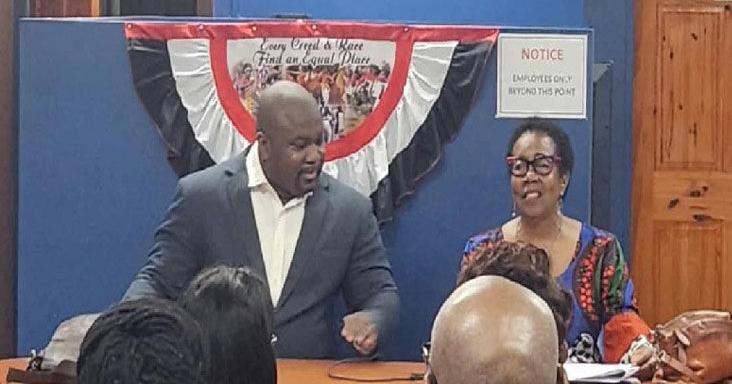
    As the Caribbean nation of Antigua and Barbuda enters sensitive negotiations with the United States over the potential transfer of third-country nationals, its top tourism official has emphasized the urgent need for careful strategic balancing between defending national sovereignty and preserving the country’s economic lifeline: tourism. Tourism Minister Charles Fernandez delivered these remarks during a parliamentary debate on a framework resolution outlining core principles to guide the upcoming talks, warning that a breakdown in negotiations could trigger catastrophic damage to the small island nation’s tourism-reliant economy.

    Fernandez stressed to sitting lawmakers that Antigua and Barbuda cannot dismiss the hard economic realities that define its relationship with the United States, which stands as the country’s single largest source of international tourism. “The point I’m making is yes, might is right,” Fernandez told the legislative body, noting that the country must pursue a pragmatic, measured approach to talks while still upholding its core national interests.

    Current economic data places tourism’s contribution to Antigua and Barbuda’s gross domestic product between 60 and 65 percent, a share that makes protecting the industry from avoidable risk a top national priority. Fernandez outlined a key leverage point the United States holds in the negotiations: Washington has the authority to block U.S. air carriers from operating routes to Antigua and Barbuda, a move that would cut off the primary flow of visitor arrivals to the country.

    That scenario, he warned, would deliver an devastating blow to the national economy. “If we lose our tourism, 60, 65 percent of GDP [would go] down the drain,” he said. The economic fallout would not be limited to large hotel operators, Fernandez added. Thousands of working-class Antiguans and Barbudans employed across the wider tourism ecosystem – including restaurant teams, local tour guides and activity operators, transport workers, and other service providers whose livelihoods are entirely tied to visitor spending – would also see their incomes and job security put at risk.

    Against this backdrop, Fernandez argued that the government cannot take an extreme position on the talks: rejecting negotiations entirely is untenable, nor is it feasible to accept every proposal put forward by Washington. “So it is a balancing act,” he explained. “We have tried to strike a balance whereby we can stand up and say with dignity and pride, this is what we obtained, this is what we asked you to put into the agreement and that is what we’re looking for.”

    To contextualize the challenges small island states face when negotiating with major global powers, Fernandez referenced Antigua and Barbuda’s years-long World Trade Organization dispute over online gaming with the United States. Even after securing a WTO ruling that favored Antigua and Barbuda’s position, the country still faced significant, sustained pressure from Washington, he recalled. That prior experience, he said, clearly demonstrates the unique challenges small nations face in talks with much larger partners, and reinforces the need for a deliberate, strategic approach rather than rash action.

    In addition to laying out his position on the negotiations, Fernandez also criticized Opposition Leader Jamale Pringle for choosing not to participate in the key parliamentary debate. He characterized the negotiation framework as an issue of critical national importance that requires input and perspective from all parliamentary blocs to ensure the best outcome for the entire country.

  • Sexual Assault Case Against Former Police Officer Dismissed

    Sexual Assault Case Against Former Police Officer Dismissed

    In a high-profile court decision handed down on July 14, 2026, a San Ignacio magistrate has dismissed the sexual assault charge brought against former Belize Police Department officer Durmen Dawson, ruling the defendant has no case to answer on that count.

    The proceeding, held at the San Ignacio Magistrate’s Court, saw both Dawson and his accuser, Luanna Gillett, present in the courtroom. While the sexual assault allegation will not move forward to a full trial, Dawson remains required to defend against a lesser charge of harm in subsequent court proceedings. Notably, Dawson appeared without legal representation during this critical hearing.

    The case traces its origins back to a February 14, 2024 incident that unfolded inside the San Ignacio Police Station. At the time of the alleged incident, Gillett was also an active-duty officer with the Belize Police Department. She claimed that Dawson had sexually assaulted her while on department premises. Footage of the encounter, captured by the station’s built-in surveillance system, spread widely across public channels shortly after the incident became public, drawing significant public attention to the case.

    Following the initial allegations, the Belize Police Department launched an internal disciplinary tribunal to investigate the conduct of Dawson. Then-Commissioner of Police Chester Williams confirmed the outcome of that internal process in public statements at the time. The tribunal’s adjudicator found Dawson guilty of the allegation and formally recommended his termination from the force, citing the severity of the sexual assault charge. Williams affirmed that recommendation, and Dawson was officially dismissed from the department after the internal process concluded. Beyond the internal disciplinary action, law enforcement authorities also brought formal criminal charges of both sexual assault and harm against Dawson, leading to the two-year-long court process that culminated in this week’s ruling.

  • Sexual Assault Case Against Fomer Police Officer Dismissed

    Sexual Assault Case Against Fomer Police Officer Dismissed

    In a recent ruling delivered on July 14, 2026, a San Ignacio magistrate has dismissed the sexual assault charge brought against former Belize Police Department officer Durmen Dawson, determining that Dawson has no case to answer on that count.

    Both Dawson and the complainant, Luanna Gillett — herself a former police officer — appeared before the San Ignacio Magistrate’s Court for the latest proceedings. While the sexual assault allegation will not move forward, Dawson remains required to respond to a separate charge of harm stemming from the same 2024 incident. Notably, Dawson appeared in court without legal representation during the ruling.

    The case traces back to an incident that unfolded on February 14, 2024, inside the San Ignacio Police Station. Gillett alleged that Dawson sexually assaulted her while both were serving as members of the Belize Police force. Security camera footage of the encounter was leaked and spread widely across public channels shortly after the incident made headlines.

    Following the initial allegation, the Belize Police Department launched an internal disciplinary tribunal to investigate the claims. The tribunal found Dawson guilty of misconduct, and recommended his termination from the force due to the severity of the sexual assault allegation. Then-Commissioner of Police Chester Williams confirmed to media outlets that he upheld the tribunal’s recommendation, and Dawson was formally dismissed from the department after the internal process concluded. Alongside disciplinary action, criminal charges for both sexual assault and harm were brought against Dawson ahead of the court proceedings.

  • Court authorizes enforcement of U.S. ruling requiring JCE to pay over US$906,000

    Court authorizes enforcement of U.S. ruling requiring JCE to pay over US$906,000

    In a landmark legal ruling out of Santo Domingo, the Third Chamber of the Civil and Commercial Court of First Instance of the National District has cleared the way for a U.S. court judgment to be enforced domestically against the Dominican Republic’s Central Electoral Board (JCE). The ruling orders the JCE to turn over more than $906,000 in damages to U.S.-based firm Latin Events, LLC, compensation for unpaid logistical work the company completed for the electoral body.

    The original judgment at the center of the case came from the U.S. District Court for the Southern District of New York. That court initially awarded Latin Events $838,337.50 for the completed services, and the addition of pre-judgment and post-judgment interest pushed the total owed past the $906,000 mark. Dominican judicial officials reviewed the foreign ruling thoroughly and confirmed that it meets all of the legal criteria for recognition and enforcement laid out in Dominican national law.

    Court records outline the origins of the dispute, which date back to August 2023, when the JCE contracted Latin Events to supply logistical support for institutional events hosted outside of the Dominican Republic. According to the firm’s legal claims, it fully met all requirements laid out in the contract, but the JCE never issued payment for the work. Left with no other remedy, Latin Events moved forward with a lawsuit in the U.S. court system.

    In its assessment of the case, the Dominican court found the U.S. judgment to be a final, binding legal ruling. All required documentation had been properly apostilled for international use and translated per legal standards, and the court confirmed that upholding the ruling would not conflict with Dominican public policy. Judicial documents also note that the JCE received official notification of the U.S. court proceedings at the board’s New York office, but chose not to enter an appearance or mount a defense in the case.

    Following the Dominican court’s decision, Julio Cury, the lead attorney representing Latin Events, highlighted the broader implications of the ruling. Cury emphasized that the judgment confirms Dominican public institutions are not exempt from accountability for contractual agreements they enter into on foreign soil. He also issued a clear warning: if the JCE declines to comply with the payment order voluntarily, Latin Events is prepared to move forward with aggressive enforcement measures, including court-ordered asset seizure and additional legal claims to recover further damages.

  • University of Texas geologists begin study of Dominican Republic’s hydrocarbon potential

    University of Texas geologists begin study of Dominican Republic’s hydrocarbon potential

    A collaborative geological research initiative between the Dominican Republic and the United States has launched a series of on-site field investigations in the Dominican’s southwestern Azua province, focused on unlocking the Caribbean nation’s untapped hydrocarbon resource potential. The project, a formal cooperative venture between the Dominican government and the Bureau of Economic Geology (BEG) at the University of Texas at Austin (UT Austin), brings together leading academic geoscientists and local energy sector specialists to conduct a holistic assessment of the country’s onshore and offshore sedimentary basins.

    Leading the joint expedition are UT Austin geologist Mark Shuster and Dominican energy expert Emilio Núñez. Over the course of their fieldwork, the team has prioritized access to some of the region’s most geologically significant sites, including distinct geological formations across the province and the large Cementos Santo Domingo quarry. At these locations, researchers are conducting detailed studies of the basin’s rock structures, gathering a diverse set of geological samples for laboratory analysis, and measuring key properties that are critical to identifying viable energy reserves. These properties include rock porosity, which determines how much oil or gas a rock formation can hold, and overall mineral composition, which helps contextualize the area’s geological formation history.

    A core focus of the current fieldwork is a set of vintage exploration wells located in the Maleno area. Originally drilled in the late 1930s, these wells have long drawn the attention of geologists and energy investors due to naturally occurring crude oil seeps detected at the site, which signal the possible presence of larger commercial-scale hydrocarbon reserves underground. The current research team is conducting the most detailed modern assessment of these wells to date, updating decades-old data with modern geological measurement techniques.

    All on-site operations are being guided by local geologists from the Dominican Ministry of Energy and Mines (MEM) and technical staff from the country’s National Geological Institute (IGN). During the expedition, the international and local teams have reviewed the full body of data from past exploration efforts in the region, cross-referencing historical findings with new on-site observations to build a more complete picture of Azua province’s complex geological history.

    When completed, the comprehensive assessment is expected to deliver significant long-term benefits for the Dominican Republic. The research will expand and update the country’s national geological database, filling critical gaps in existing knowledge about domestic energy resource potential. By providing accurate, up-to-date geological data, the project will also lay the groundwork for future private and public energy exploration projects, attract targeted international investment in the Dominican energy sector, and support evidence-based policy planning for the country’s energy future.

  • Experts urge stronger building safety to reduce earthquake risk in the Dominican Republic

    Experts urge stronger building safety to reduce earthquake risk in the Dominican Republic

    In a collaborative gathering focused on addressing critical natural hazard risks, leading professionals across structural engineering, disaster risk management, and the insurance sector have laid out a clear call for upgraded building safety regulations and expanded earthquake readiness across the Dominican Republic. The call to action came during the public forum titled “Seismic Vulnerability and Structural Safety in the Dominican Republic,” hosted by the Technological Institute of Santo Domingo (INTEC) with logistical and financial backing from global risk advisory firm MARSH and leading insurance provider MAPFRE.

    The multi-stakeholder event created a shared space for academic researchers, insurance industry leaders, and infrastructure planning specialists to collectively assess the Dominican Republic’s exposure to seismic activity and outline actionable steps to boost the ability of buildings and critical public infrastructure to withstand major earthquakes. Unlike many niche academic events, this forum brought together cross-sector expertise that bridges research, practice, and risk financing, ensuring that proposed solutions address every stage of disaster preparedness from planning to recovery.

    Two leading experts from INTEC, researcher Luis Abbott and geotechnical specialist Dr. Claudia Germoso, used their presentations to underline the urgent need for three core interventions: widespread mandatory assessments of existing structures to map current vulnerability, the mandatory adoption of earthquake-resistant design principles for all new construction, and consistent enforcement of current building code requirements to cut down on preventable damage and protect civilian lives when seismic events occur. They noted that many existing structures across the country were built without modern seismic safety considerations, leaving large populations exposed to unnecessary risk.

    By the close of the forum, all participating stakeholders reached a unified consensus that proactive prevention measures, continuous investment in scientific research, expanded technical training for construction professionals, and investment in purpose-built resilient infrastructure are non-negotiable components of any strategy to improve the country’s ability to respond to and recover from future earthquakes. The event itself is part of a years-long initiative from INTEC to advance evidence-based disaster risk reduction and sustainable development across the Caribbean nation, through a combination of academic research, public education, and cross-institutional partnerships between academia, private industry, and public sector bodies.

  • Fatal Autovía del Este crash involving truck claims at least one life

    Fatal Autovía del Este crash involving truck claims at least one life

    A devastating highway incident unfolded on Tuesday along Spain’s Autovía del Este, when a collision between multiple vehicles claimed at least one life and left several other people wounded, early preliminary law enforcement reports confirm.

    Among the vehicles involved in the crash was a large heavy-duty truck carrying a load of construction materials. As of the latest updates, traffic safety officials have not yet released a definitive count of how many vehicles were impacted by the collision, nor have they shared identifying details of the deceased or injured victims to allow time for next-of-kin notification.

    Immediately after the collision was reported, emergency response teams including fire crews, paramedics and law enforcement officers rushed to the crash site located along the major eastern highway. First responders prioritized extracting trapped passengers and providing urgent on-site medical care before transporting injured parties to adjacent area hospitals for further treatment. Concurrent with rescue efforts, highway maintenance teams worked methodically to clear wreckage from the roadway to restore normal traffic flow as quickly as possible.

    Regional law enforcement officials have formally opened a full investigation to determine the root cause of the crash, with preliminary work focusing on factors including road conditions at the time of the incident, driver error, and potential mechanical failures of any of the involved vehicles. No further updates on the investigation’s progress or the condition of injured victims have been released as of Wednesday morning.

  • Asonahores announces 2026 Tourism Trade Show in Punta Cana

    Asonahores announces 2026 Tourism Trade Show in Punta Cana

    The Dominican Republic Hotel and Tourism Association (Asonahores) has officially locked in dates and a venue for its highly anticipated 38th annual tourism industry trade show, scheduling the 2026 event to run from September 2 to 4 at BlueMall Punta Cana. When the doors open, the exhibition will welcome more than 300 participating vendors, with exhibitors traveling to the event from both across the Dominican Republic and international markets.

    Widely recognized as the Dominican Republic’s flagship business gathering for the tourism sector, the 2026 trade show will highlight products and services from a diverse cross-section of related industries. Attendees and participating vendors will explore offerings spanning food and beverage, hospitality technology, financial services for tourism businesses, commercial furniture, commercial-grade kitchen equipment, and sustainable energy solutions tailored to the sector. This broad showcase underscores the far-reaching economic ripple effects that the $10-billion-plus Dominican tourism industry generates across the entire national economy.

    In comments on the upcoming event, Asonahores President Juan Bancalari emphasized that the trade show fills a critical role in the country’s tourism ecosystem: it acts as a centralized networking platform that connects established businesses, emerging entrepreneurs, local producers, and global suppliers to one of the Dominican Republic’s most dynamic and rapidly expanding economic sectors. Beyond deal-making, Bancalari noted that the event also actively fosters innovation that drives long-term, inclusive economic development across the country.

    Early demand for exhibition space has outpaced expectations, with event organizers confirming that more than 70% of all available booth space has already been reserved by interested vendors. This strong early uptake is a clear indicator of robust private sector confidence in both the event and the continuing growth trajectory of the Dominican Republic’s tourism industry.

    Beyond the core exhibition floor, the 2026 trade show will feature a packed slate of complementary programming and amenities. A longstanding fan favorite, the UNABAR Cup National Barista Competition, will return again this year, showcasing the skills of the country’s top coffee and beverage professionals. Organizers have also upgraded the event’s business lounge, creating a dedicated, refined space for high-level B2B meetings between industry leaders, and expanded digital media coverage to boost brand visibility for every participating exhibitor.

    Sustainability remains a core priority for the 2026 event, with organizers rolling out new initiatives to cut the exhibition’s environmental footprint—most notably a shift to fully digital event materials to eliminate unnecessary paper waste. The show will also continue its longstanding commitment to supporting local creative economies by featuring the work of Dominican artisans throughout the venue.

    The 2026 Asonahores Trade Show has secured backing from key public and private sector partners. The country’s Ministry of Tourism (Mitur) is an official supporter of the event, with major corporate sponsorship coming from leading Dominican financial institutions and energy firms including Banco BHD, Banco Popular Dominicano, Banreservas, and CEPM, alongside other prominent domestic companies.