博客

  • Sir Clarence Edwards Announces Cancellation of Carnival 2026 Performances Due to Illness

    Sir Clarence Edwards Announces Cancellation of Carnival 2026 Performances Due to Illness

    In an official statement released this week, legendary frontman Sir Clarence Leonard Emmanuel Edwards has announced the cancellation of all upcoming scheduled performances with his iconic band Red Hot & Burning Flames, following an unexpected acute medical incident that required urgent inpatient care.

    The veteran performer shared that after extensive discussions with his specialized medical care team and a full round of diagnostic evaluations, clinicians have issued a clear mandate: he must step away from all strenuous performance-related activities for a mandated recovery period of four to six weeks. This clinical recommendation is rooted in a priority to safeguard Edwards’ long-term health and lay the groundwork for a full, sustainable return to live performance down the line.

    Edwards emphasized that the call to cancel shows was one of the hardest he has ever had to make. With the high-demand carnival season just around the corner – a period that traditionally draws some of the band’s biggest live audiences and most high-profile sets – the musician expressed profound regret over the inconvenience and disappointment this announcement will bring to loyal fans, event promoters, and the band’s long-standing industry partners.
    Despite the unexpected disruption to the band’s touring schedule, Edwards said he has been overwhelmed by the outpouring of public support from across the entertainment industry and fanbase. He acknowledged that stepping back from the stage at a peak point in the seasonal calendar is challenging, but stressed that full focus must now turn to prioritizing his recovery. The performer added that he is eager to get back in front of audiences and create new shared live memories as soon as his medical team clears him to return to work.

    Closing his statement, Edwards extended a heartfelt thank you to everyone who has sent well wishes, messages of support, and expressed patience during this period. He noted that the encouragement he has received means more than he can put into words, and every gesture of kindness is deeply appreciated.

  • Man on crutches fears for safety after two break‑ins in three days

    Man on crutches fears for safety after two break‑ins in three days

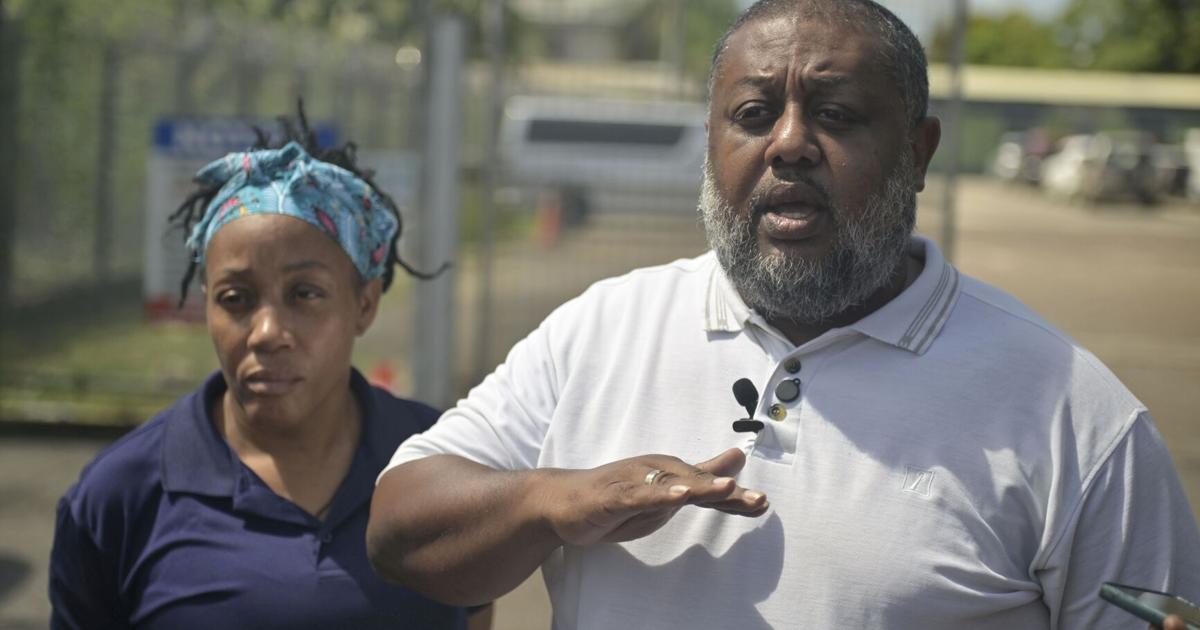
    For a disabled resident of a small community in Saint Lucia, the walls that once offered comfort and safety have become a source of constant terror. Ronnie Philgence, who lives in the Ti Rocher neighborhood of Micoud alongside his 94-year-old mother, has endured two violent home break-ins in the span of just three days – an experience that has left both he and his aging parent traumatized, anxious, and convinced they will be targeted again.

    Philgence, who lives with chronic arthritis and relies on crutches to move around, opened up about his ordeal in an interview with local outlet St Lucia Times. He says that the repeated attacks have shattered any sense of security he once had in his own home, and that his mobility limitations and his mother’s advanced age make his family an obvious target for criminal groups.

    The first invasion unfolded on July 4, when three men wearing face coverings to conceal their identities forced their way past the home’s entry points. Philgence was held at gunpoint while the intruders ransacked every room of the property, searching for valuables. Before fleeing the scene, the intruders made off with roughly 6,000 Eastern Caribbean dollars in cash. After the shock of the first attack faded, Philgence held out hope that the ordeal was over – that the thieves had taken what they wanted and would not return. That hope was shattered just three days later.

    On the second occasion, four masked assailants returned to the home and forced their way inside once again. This time, the intruders stole a range of household electronics, including a television, multiple gaming consoles, and a stereo system. Before driving away, they also stole Philgence’s personal vehicle.

    Law enforcement authorities have since located and recovered the stolen vehicle, but the return of his property has done little to ease Philgence’s fear. Even with the car back in his possession, he remains convinced that his family’s vulnerability makes them a continued target for the same group of attackers.

    “They know we’re vulnerable,” Philgence explained, when asked why he believes the intruders could strike a third time. “I’m afraid of the house. Once it’s nighttime, I get afraid. I’m very scared for my life.”

    As local police continue their official investigations into both break-in incidents, Philgence says he has one simple, unmet wish: to be able to feel safe and at peace in his own home once again.

  • Argentina shocks England 2-1 to advance to the World Cup final against Spain

    Argentina shocks England 2-1 to advance to the World Cup final against Spain

    In a semifinal clash that will go down in World Cup folklore, Argentina pulled off one of the most dramatic late turnarounds in modern tournament history, scoring two goals in the final seven minutes to topple England 2-1 at Atlanta’s Mercedes-Benz Stadium and secure a spot in the 2026 FIFA World Cup final against Spain.

    The game got off to a bruising, cagey start, with both sides prioritizing defensive solidity over attacking flair in the opening 45 minutes. The two heavyweights combined for 19 fouls in a physical first half that ended goalless, with neither managing to force a single save from either goalkeeper.

    The deadlock finally broke in the 54th minute, when winger Anthony Gordon tucked home a clinical finish from Morgan Rogers’ precision cross, putting England ahead and putting defending champions Argentina on the brink of elimination. For the next 30 minutes, England clung to their lead, with goalkeeper Jordan Pickford turning in a man-of-the-match performance between the sticks, making a string of spectacular saves to shut down a wave of Argentine attacks. For England, it looked like the nation’s 60-year wait for a return to the World Cup final was finally coming to an end, the first since their iconic 1966 home triumph.

    But Argentina’s never-say-die attitude turned the tide late. The equalizer arrived in the 85th minute, when captain Lionel Messi teed up midfield star Enzo Fernández just outside the 18-yard box. Fernández curled a spectacular long-range strike past the outstretched gloves of Pickford, leveling the score and forcing a stunned England side into panic mode.

    As the clock ticked into second-half stoppage time and extra time loomed on the horizon, Messi once again orchestrated the decisive play. The Argentine captain sent a pinpoint cross to the back post in the 92nd minute, where substitute Lautaro Martínez rose above his marker to nod home the match-winning header, completing the incredible comeback.

    With the historic semifinal victory, Argentina advances to the July 19 final at East Rutherford, New Jersey’s MetLife Stadium, where they will face Spain. The South American side is now just one win away from making history: a victory would see them become the first nation to win back-to-back World Cup titles since Brazil achieved the feat in 1958 and 1962. For England, however, the result is yet another devastating semifinal heartbreak, extending the nation’s agonizing wait for a second World Cup crown, a drought that has stretched all the way back to their 1966 victory.

  • Derde helft Wk 2026: Argentinië verslaat Engeland en speelt WK-finale tegen Spanje

    Derde helft Wk 2026: Argentinië verslaat Engeland en speelt WK-finale tegen Spanje

    The 2026 FIFA World Cup semi-final clash between Argentina and England delivered a rollercoaster of drama at Atlanta Stadium on Wednesday, as the defending champions pulled off a stunning late turnaround to secure a 2-1 victory and book their spot in the tournament’s final. For nearly 85 minutes, England looked on course to reach the title decider, but two goals in the closing stages from Enzo Fernández and Lautaro Martínez flipped the script, sending Argentina through to face Spain in Sunday’s championship match.

    From the first whistle, both global football powerhouses approached the high-stakes encounter with extreme caution, unwilling to cede any ground to their opponents. The opening 45 minutes unfolded as a tightly contested tactical battle, where defensive discipline and organized team shape dominated play. Both backlines held firm under pressure, clearing nearly every dangerous chance that came their way, and the two sides went into the half-time break locked at 0-0, leaving all to play for in the second half.

    The complexion of the game shifted dramatically after the interval, as England emerged from the dressing room with renewed attacking intensity and quickly reaped the rewards. In the 55th minute, Morgan Rogers threaded a clever, incisive pass through Argentina’s defense to put Anthony Gordon clear one-on-one with the goalkeeper. Gordon kept his composure under immense pressure, slotting the ball home to put England 1-0 up, sending the pro-English crowd into celebration and sparking hopes of a first World Cup final appearance for the nation in recent years.

    But defending champions Argentina refused to accept defeat, led by their iconic captain Lionel Messi, who ramped up the pressure on England’s defense minute by minute. Argentina dominated possession deep in English territory, and chances began to pile up as Gareth Southgate’s side was forced into a deep, defensive block, barely able to launch meaningful counterattacks to relieve the pressure.

    The equalizer finally arrived with five minutes left on the clock, and it was Messi who created the opening. The 39-year-old found a gap between England’s defensive lines, playing a perfectly weighted pass to Fernández, who hit a clinical finish beyond England goalkeeper Jordan Pickford to level the score. Most spectators expected the match would go to extra time, but Martínez had other plans deep into stoppage time. Once again, Messi was the orchestrator, delivering a pin-perfect cross into the penalty area that Martínez converted with a flawless first-time finish.

    The final whistle sparked jubilant scenes among Argentina’s players and fans, while England’s squad were left devastated after coming so close to a final spot. Two late goals turned a certain elimination into a dream ticket to the World Cup final in the space of just seven minutes.

    For Argentina, the victory sets up a chance to defend their world title on Sunday, against a Spanish side that earned their final spot with a 2-0 semi-final win over France on Tuesday. The final will be a clash between two of the most technically gifted football nations on the planet, a matchup that many football fans had dreamed of before the tournament began.

    Messi, who produced a match-winning performance with two assists, is now on the cusp of making history. A victory on Sunday would see him claim a second consecutive World Cup title, capping off an already legendary international career in fairy-tale fashion. Spain, for their part, will be fully focused on ending a 16-year wait for a second World Cup crown, and will leave everything on the pitch to claim the sport’s biggest prize.

  • OPINION: How Argentina used war, disease, enslavement, racial ideology, immigration policies, census practices, to erase blacks

    OPINION: How Argentina used war, disease, enslavement, racial ideology, immigration policies, census practices, to erase blacks

    For tourists strolling the tree-lined avenues of Buenos Aires, Argentina’s carefully curated national image is immediately apparent: public celebrations, school textbooks, and official tourism branding all position the country as Latin America’s most distinctly European nation. What this dominant narrative omits, however, is a foundational community that once made up nearly a third of the capital’s population, leaving a centuries-long legacy of erasure that is only now being confronted.

    Historians estimate that between the colonial era and the early decades of Argentine independence, people of African descent accounted for up to 30% of Buenos Aires’ total population, with some neighborhoods holding even higher concentrations. Enslaved Africans and their free descendants contributed to nearly every layer of early Argentine society: they constructed iconic colonial churches, fought in independence militias, worked as skilled artisans, agricultural laborers, and domestic servants, shaping the cultural and economic foundations of the new nation. Today, Afro-Argentines make up less than 1% of the national population, a dramatic shift that cannot be reduced to a single catastrophic event.

    According to historians, the transformation of Argentina into a widely recognized ‘white nation’ was a gradual, deliberate process woven together by demographic change, systemic discrimination, cultural assimilation, and intentional historical erasure. After gaining independence from Spain in the early 19th century, Argentina’s ruling class and leading intellectuals framed European immigration as the key to national progress and ‘civilization.’ President Domingo Faustino Sarmiento, one of the country’s most influential early leaders, spearheaded this movement, and the 1853 national constitution enshrined policies to encourage mass European settlement. Between 1870 and 1910, millions of Italian and Spanish immigrants arrived in Argentina, reshaping the country’s demographic makeup.

    While mass European immigration was not explicitly designed to displace Afro-Argentines, scholars note that it went hand in hand with a state-led project to build a national identity centered exclusively on European ancestry, erasing the contributions of African and Indigenous peoples. George Reid Andrews, the preeminent scholar of Afro-Argentine history, has documented how this image of a uniformly white Argentina became one of the country’s most powerful and enduring national myths.

    A series of interconnected historical events accelerated the demographic decline of the Afro-Argentine community. Thousands of Black men were conscripted to fight in Argentina’s wars of independence, with military service often promised as a path to freedom for enslaved people—but combat casualty rates were devastatingly high. Later 19th century conflicts, most notably the 1864–1870 Paraguayan War, claimed the lives of hundreds more Afro-Argentine soldiers serving in the national army.

    Beyond war, public health crises disproportionately devastated Black communities. The 1871 yellow fever epidemic, which swept through Buenos Aires, hit overcrowded, low-income neighborhoods where most Black residents were concentrated far harder than wealthier, majority-white areas, killing thousands. Even the gradual abolition of slavery, while a long-overdue legal reform, did little to address structural inequality: most formerly enslaved Afro-Argentine families remained trapped in economic marginalization for generations.

    Demographic shift alone does not explain the near-total invisibility of Afro-Argentines in national narratives. Over decades, many Afro-Argentines married outside their community, and successive generations often chose to identify as white or mestizo in a society that granted significant social and economic advantages to those perceived as white. Official census practices reinforced this erasure: for more than a century, Argentina’s national census did not include a specific question to identify respondents of African descent, cementing the false narrative that Black Argentines had simply vanished. As historians put it, Afro-Argentines did not disappear—they were actively made invisible. Anthropologist Erika Denise Edwards has detailed how official state narratives systematically erased Black identity while framing European ancestry as the core of Argentine nationhood.

    Unlike the formal, legal systems of racial segregation that defined 20th century South Africa and the United States, Argentina’s brand of racism operated through subtle, sustained exclusion. Afro-Argentines were systematically cut out of school curricula, omitted from public monuments, and left out of national independence celebrations. For generations, their foundational role in building the country received no official recognition, and this cultural invisibility became one of the most durable forms of racism. The myth that ‘Argentina has no Black people’ became so deeply ingrained that most Argentines born before the 1980s grew up with no knowledge that their country was once home to a large, vibrant African-descended community.

    In recent decades, that narrative has begun to shift, driven by grassroots organizing from Afro-Argentine activist groups that have spent decades campaigning to recover their lost history. In response, the Argentine government has introduced modest reforms: it now includes a question on African ancestry in national censuses, established a national holiday to honor Afro-Argentines, and funds public initiatives to recognize the community’s contributions. Scholars emphasize that these steps are critical to correcting historical injustice, but they cannot fully undo more than a century of intentional omission.

    For researchers of race and national identity across the Americas, Argentina’s experience offers a vital global lesson: racism does not only operate through explicit segregation or mass violence. It can also be embedded in national mythology, selective collective memory, immigration policy, and cultural exclusion, gradually erasing entire communities from official history. Across North and South America, millions of descendants of enslaved Africans played central roles in building modern nations, only to be marginalized and omitted from dominant public narratives. Argentina stands as one of the clearest examples of how nations can construct a unified identity by elevating one group’s heritage while deliberately minimizing the contributions of another. The story of Argentina’s erased Black population is ultimately not just about demographic decline—it is a case study in how national memory is curated, who gets to be included in national identity, and how entire communities can be rendered nearly invisible despite shaping a country’s history from its founding.

  • Antigua and Barbuda co-hosts U.S. Global Maritime Security Symposium focused on sanctions enforcement

    Antigua and Barbuda co-hosts U.S. Global Maritime Security Symposium focused on sanctions enforcement

    Against a backdrop of growing global concerns over illicit weapons proliferation and unregulated shadow maritime activity, the Caribbean nation of Antigua and Barbuda has welcomed international stakeholders for a landmark three-day gathering focused on advancing collective maritime security and sanctions enforcement. Held from July 13 to 15 in the country’s capital St. John’s, the Global Maritime Security and Sanctions Enforcement Symposium was organized through a joint partnership between the U.S. Department of State and Antigua and Barbuda’s Department of Marine Services and Merchant Shipping (ADOMS).

    Per an official statement released by the U.S. Embassy based in Bridgetown, the symposium drew a diverse cohort of over 26 national delegations, bringing together representatives from ship registries, national maritime regulatory authorities, leading international organizations, and global maritime security coalitions. One key participating body was the Registry Information Sharing Compact (RISC), an international initiative dedicated to fostering open and efficient information exchange between ship registries worldwide.

    Core discussions at the event centered on strengthening cross-border coordination to uphold global nonproliferation rules and enforce U.S.-led sanctions targeting rogue regimes. These measures are specifically designed to block such regimes from exploiting global shipping networks to generate illicit revenue that could fund activities deemed a threat to international and U.S. national security.

    According to officials from the U.S. Department of State, enhanced international collaboration creates significant barriers to sanctions evasion. Tighter coordination not only discourages commercial companies and maritime service providers from engaging with unregulated ‘shadow fleet’ vessels that operate outside standard compliance frameworks, but also curbs the ability of weapons proliferators to secure funding for their illicit programs.

    Meeting participants and organizing officials emphasized that the symposium delivered tangible progress beyond dialogue, forging stronger cross-border and cross-sector partnerships that will boost the effectiveness of future maritime security and sanctions enforcement efforts across the globe.

  • India, Antigua and Barbuda Review Bilateral Cooperation Ahead of CHOGM

    India, Antigua and Barbuda Review Bilateral Cooperation Ahead of CHOGM

    Amid growing diplomatic engagement across the Commonwealth bloc, India and Antigua and Barbuda have convened high-level talks to assess and expand their bilateral cooperation, with key conversations centering on upcoming preparations for the biennial Commonwealth Heads of Government Meeting (CHOGM). The discussions took place against the backdrop of a working visit by India’s senior diplomatic representative to the Caribbean nation, which centered on the observance of the 12th International Day of Yoga.

    Per official statements released by the High Commission of India, which is based in Guyana and covers the Eastern Caribbean region, Acting High Commissioner Manoj Kumar led the Indian delegation during the visit. Over the course of his trip, Kumar held structured meetings with a cross-section of senior Antigua and Barbuda government leaders, spanning the country’s Minister of Education, Commissioner of Sports, and Director General of the Ministry of Foreign Affairs. These meetings allowed both sides to exchange views on priority areas of mutual interest, moving beyond preliminary talks to concrete planning for collaborative action.

    Beyond preparations for CHOGM, the two sides delved into deepening long-standing partnerships in two key people-centric areas: sports development and educational exchanges. Both nations reaffirmed their commitment to expanding cooperation in capacity building initiatives, a core pillar of India’s engagement with small island developing states across the Caribbean. The latest round of discussions forms part of a continuous, iterative process of diplomatic engagement between New Delhi and St. John’s, designed to strengthen mutual trust, expand collaborative opportunities, and deepen the overall bilateral diplomatic relationship ahead of the major Commonwealth gathering.

  • Power Cuts Again? BEL’s Backup Plan is Controlled Blackouts

    Power Cuts Again? BEL’s Backup Plan is Controlled Blackouts

    Residents across Belize are bracing for potential scheduled power disruptions this summer, as the nation’s main electricity provider prepares contingency measures to stabilize the national grid amid looming supply shortfalls from Mexico.

    Belize Electricity Limited (BEL) announced this week that controlled, timed power outages will be implemented as a last-resort precaution if Mexico’s state-owned national utility Comisión Federal de Electricidad (CFE) follows through on its warning of reduced electricity exports to Belize. CFE has notified BEL that growing domestic energy demand across Mexico’s own power network will leave it with less capacity to supply power to neighboring Belize, creating an expected gap in Belize’s available electricity supply starting as early as this month.

    To prevent a widespread, unplanned total grid collapse that would leave millions without power for far longer, BEL says controlled rolling load shedding will be carried out between 6:00 p.m. and midnight, when domestic energy demand in Belize peaks. The planned outages are expected to impact residential and commercial areas across six districts: Orange Walk, Corozal, Belize, Cayo, Stann Creek and Toledo.

    The looming supply gap comes as BEL works to accelerate long-term efforts to cut Belize’s reliance on imported power. The utility has already opened negotiations with three major independent domestic power producers — BABCO, Belcogen and Santander — to ramp up local generation capacity in the immediate term. For the longer term, BEL is advancing plans to expand grid-connected solar energy generation across the country, which will further reduce dependence on cross-border imports.

    In a June 3 interview with local outlet News 5, BEL Executive Chairman Lynn Young outlined the company’s emergency stopgap measure: the deployment of a 20-megawatt temporary generating unit near Mile Eight on the George Price Highway. “We are renting about twenty megawatts of generation that we are putting in place… so that in the event CFE cannot supply, we can meet it,” Young explained in the interview.

    Originally, the emergency generation unit was scheduled to arrive in Belize this month. However, global shipping disruptions tied to ongoing international armed conflict have delayed delivery, pushing the expected arrival of the unit to between mid- and late-August. Until the unit is installed and operational, BEL confirms that controlled rolling blackouts will remain the primary contingency to keep the entire national grid stable if CFE cuts export volumes.

  • Flood Warning Remains in Effect as Tropical Wave Brings More Heavy Rain

    Flood Warning Remains in Effect as Tropical Wave Brings More Heavy Rain

    As of July 15, 2026, a continuous flood warning remains active across multiple regions of Belize, as meteorological and emergency authorities prepare for a new round of intense rainfall expected to exacerbate already dangerous flood conditions over the coming two days.

    The unstable weather pattern driving this ongoing risk is a passing tropical wave, which has already dumped large volumes of rain across the country. Forecasters confirm that excessive precipitation tied to this system will sustain existing flood conditions throughout central, western and southern swathes of Belize for the next 24 to 48 hours.

    The warning specifically targets Regions 9, 11 and 13, with the highest level of concern focused on small communities sited along the eastern slopes of the Maya Mountains. In these areas, rapid, unpredictable flash flooding remains a major threat to public safety. Emergency management officials have issued a formal advisory urging all local residents to keep close track of updated weather bulletins, avoid unnecessary travel in high-risk zones, and remain prepared to evacuate at short notice if conditions deteriorate.

    Hydrology teams across the country are conducting continuous monitoring of river and lagoon levels to track changes in real time. As of the latest update, the Sibun River at Freetown Sibun is still sitting at official flood stage, with water levels only marginally lower than the record levels recorded during Hurricane Mitch, one of the most destructive storms to hit the region in modern history. The Belize River has shown signs of gradual improvement, with water receding at the More Tomorrow and Double Run monitoring points, while Crooked Tree Lagoon remains below normal water levels. Both the Sittee and Temash Rivers are seeing falling water levels, though the Temash River still holds levels well above the seasonal average.

    In southern Belize, the Sarstoon River continues to run higher than normal. The Moho River remains above average at the Jordan monitoring station, and is only slightly below normal at Blue Creek South, while Gales Point Lagoon also holds above-average water levels. Most other major water bodies across the country, including the Rio Hondo, Mopan, Macal, Monkey, Deep and Rio Grande rivers, are currently at or below normal seasonal levels. The New River is an exception, with water levels ranging from below to above normal across different stretches of its course, depending on location.

  • Antigua and Barbuda Commonwealth Games Association Announces 12-Member Team for Glasgow 2026

    Antigua and Barbuda Commonwealth Games Association Announces 12-Member Team for Glasgow 2026

    The Antigua and Barbuda Commonwealth Games Association has officially unveiled its finalized 12-athlete delegation set to compete at the 2026 Commonwealth Games, a multi-sport event scheduled to run from July 23 to August 2 next year in Glasgow, Scotland. This iteration of the Games will feature a condensed program of 10 total sports, with Antigua and Barbuda securing representation across four core athletic disciplines.

    Leading the delegation as Chef de Mission is Karen Joseph, with Eric Henry serving as team assistance and welfare officer. Boxer Alston Ryan has been selected to carry the nation’s flag as flag bearer, while rising swimming star Aunjulique Liddie will act as the nation’s baton carrier. Senior leadership of the association, including President Hon. E. P. Chet Greene and General Secretary Cliff Williams, are both confirmed to attend the event to support the team. The full delegation will be on-site in Glasgow for the duration of the Games, from July 22 through August 2, with individual athletes arriving ahead of their scheduled competition start dates to acclimate to the venue and conditions.

    Breaking down the squad by discipline, track and field leads with five athletes under the management of Kesswin Anthony. Sprinters Soniya Jones, Geolyna Dowdye, and Dwayne Fleming are set to contest both the 100m and 200m races, while experienced sprinter Cejhae Greene will focus his efforts on the 100m event. Rounding out the athletics contingent is Christopher Johnson, who will compete in the men’s shot put.

    The boxing team, managed by Ralston Ryan, fields two competitors: Alston Ryan in the 63.5kg weight class and Zalaan Jan in the 80kg division. Swimming is the second-largest discipline with four athletes, managed by Wayne Mitchell. Jadon Wuilliez will compete in the 50m and 100m breaststroke alongside the 50m freestyle, while Ethan Stubbs-Green has qualified for five events: the 100m and 200m butterfly, 100m, 200m, and 400m freestyle. Aunjulique Liddie will race the 50m and 100m freestyle as well as the 50m and 100m butterfly, and Bianca Mitchell completes the swimming squad with entries in the 50m and 100m freestyle. The final discipline, track cycling, is represented by Atiba Quildan, managed by St. Clair Williams, who will compete in the 1000m time trial, sprint, and keirin events.

    In an official statement following the announcement of the squad, General Secretary Cliff Williams extended congratulations to all selected athletes and supporting officials. “This talented and dedicated group will proudly wear Antigua and Barbuda’s colours in Glasgow,” he said. “We wish them every success and look forward to strong performances on the international stage.” The association also publicly thanked all athletes, coaching staff, support personnel, and organizational partners for their hard work and commitment in the months leading up to the Games. Additional updates regarding team preparation progress, travel departure details, and adjusted event schedules will be released to the public in the coming weeks.