博客

  • Broki uitgeschakeld voor Carrbbean cup na doelpuntloos gelijkspel tegen Delfines del Este

    Broki uitgeschakeld voor Carrbbean cup na doelpuntloos gelijkspel tegen Delfines del Este

    Suriname’s top domestic football club SV Broki has seen its 2026 Concacaf Caribbean Cup campaign come to an early end, after a hard-fought 0-0 home draw against Dominican Republic side Delfines del Este FC left it unable to qualify for the tournament’s next round. The match was played on Wednesday evening at Paramaribo’s Franklin Essed Stadion, delivering a frustrating result for the Surinamese champions that had fought to keep their qualification hopes alive.

    Despite the draw earning SV Broki its first point of the group stage, the single point was not enough to keep the club in contention for a top-two finish that would secure progression. After three completed group matches, Broki holds just one point, meaning even a win in its final remaining group fixture can only push its total to four points. Current group standouts Violette AC and Club Sando FC both sit on six points already, with one match left to play each, locking in Broki’s mathematical elimination from qualification for the next stage.

    The most notable talking point of the match was Broki’s dominant run of play that never translated to goals. For most of the 90 minutes, the home side controlled the tempo of the game and carved out multiple clear chances to break the deadlock, but none of their attempts found the back of the net. Official match statistics show Broki claimed 54% of total possession and registered 13 total shots towards goal – but none of those efforts actually tested the opposing goalkeeper, landing on target. For their part, Delfines del Este only put two shots on target all match, and also failed to score, leaving both sides sharing the single point from the goalless stalemate.

    A controversial incident in the closing minutes of the match added to Broki’s frustration. Late in the second half, Delfines del Este forward Luis Almonte made contact with Broki goalkeeper Nevon Esperansie’s head with his boot during a challenge, leaving the keeper stunned and grounded on the pitch for several minutes. Referees did not issue a red card for the collision, a decision that drew unspoken frustration from the Broki camp.

    Earlier in the fixture, Broki player J. Naana received a yellow card for a foul on an opposing player, and shortly after that incident, Broki manager Sérgio Rodrigues was sent off with a red card. Officials have not yet released an official explanation for the dismissal of the head coach, leaving the specific trigger for the decision unconfirmed to the public.

    Broki will still wrap up its group stage commitments next Wednesday, 9 September, with a final home fixture at Franklin Essed Stadion against group leader Violette AC. While the Suriname club can no longer qualify for the knockout stage, the result of the final match could still reshape the final group standings for other contending sides. For Broki, the final match will now be an opportunity to end its Caribbean Cup run on a positive note, after seeing its qualification dream cut short earlier than expected.
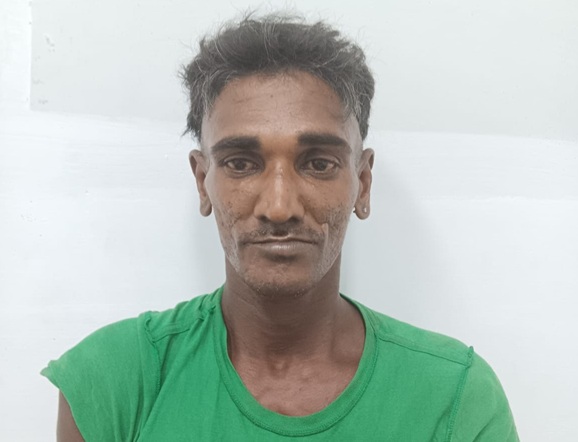

  • Suspected Demerara River bridge cable thief caught

    Suspected Demerara River bridge cable thief caught

    A major breakthrough in the high-value copper cable theft case at Guyana’s Bharrat Jagdeo Demerara River Bridge has seen the primary suspect arrested Wednesday night, with law enforcement intercepting him as he allegedly prepared to steal more cable infrastructure from the site, according to a senior authoritative source familiar with the investigation.

    The arrested individual, a Guyanese national, was found disguised as an authorized bridge maintenance worker when he was detained, the source confirmed. He was wearing a standard industry safety helmet and high-visibility reflective vest to avoid drawing suspicion, and was also in possession of specialized cutting equipment intended to remove additional cable from the bridge structure.

    Official confirmation from the Guyana Police Force was not immediately available when the media requested comment on the arrest. However, multiple informed sources told Demerara Waves Online News that after being spotted by bridge staff and responding officers, the suspect attempted to evade capture by hiding in a restricted maintenance zone located on the bridge’s high span.

    Wednesday’s arrest unfolded roughly 10 days after police first publicly announced the theft, which took place between midnight on August 23, 2026, and 9 a.m. on September 1, 2026. The stolen infrastructure consists of 90 feet of four-conductor heavy-duty cable, with each conductor rated at 350 thousand circular mils (kcmil). Authorities have valued the stolen cable at a total of 1.62 million Guyanese dollars.

    The theft itself was only discovered by bridge management and on-site staff by accident on August 31, when a planned lighting tribute to neighboring CARICOM nation Trinidad and Tobago failed to activate. Bridge crews had attempted to illuminate one side of the crossing in the colors of Trinidad and Tobago’s national flag to mark the country’s independence anniversary, but the outage caused by the stolen cable revealed the crime.

    Investigative sources have noted that the operation to remove and transport the extremely heavy copper cable required coordinated logistics, suggesting that additional accomplices are still at large. The suspect is currently in custody as authorities continue their probe to identify and locate other individuals involved in the initial theft.

  • Was Pollard’s Defeat Decided Before Convention Day?

    Was Pollard’s Defeat Decided Before Convention Day?

    Fresh off a closely contested People’s United Party (PUP) convention held in Belize City on Sunday, August 30, 2026, two major narratives have emerged to unpack the upset victory of Deputy Mayor Eluide Miller over favored candidate Allan Pollard: claims of exorbitant, outcome-determining campaign spending, and growing speculation over a shifting power balance within the party’s influential Eastern Caucus.

    Miller’s campaign was backed by senior PUP figure Anthony Mahler, the Pickstock Area Representative and PUP Deputy Leader for the Eastern Caucus, who this week pushed back hard against widespread rumors that millions in unaccounted campaign spending secured Miller’s win before convention delegates ever cast their ballots. In a blunt response to media claims of massive spending, Mahler dismissed the multi-million-dollar narrative as irresponsible nonsense.

    Mahler clarified that his own on-the-ground spending on convention day amounted to less than $1,500, a sum he said covered only basic costs like food for campaign volunteers. While he acknowledged that pre-convention organizing incurs unavoidable costs — from branded campaign T-shirts to volunteer mobilization — he rejected assertions that spending reached anywhere close to the seven- or eight-figure sums circulating in public discourse. “If you have one thousand T-shirts out there at twelve dollars, that’s $12,000. How it reach two million dollars? How it reach a million dollars?” Mahler questioned, pushing back on media framing of the race.

    Far from being decided by last-minute spending, Mahler emphasized that Miller’s victory was locked in long before convention day, forged through months of relationship-building and solid political alliances that held through the final vote. He also highlighted Miller’s own relentless work ethic, noting the candidate put in 16-hour days on the campaign trail for months leading up to the convention.

    The second major talking point following the result is speculation over a growing power rift between Mahler and senior PUP leader Cordel Hyde, who publicly backed Pollard in the contest. Miller’s win has led many political observers to frame Mahler as an emerging power broker in Belize City politics, challenging Hyde’s long-held dominance over the PUP’s Eastern Caucus, widely considered the most powerful voting bloc in the country.

    Mahler once again rejected this narrative, emphasizing he has no interest in challenging Hyde’s standing as Belize City’s top political leader. “Honorable Cordel Hyde has won, I believe, five or six times. Jules Vasquez said, I win one and a half times. And that’s fine. He is the boss of the city. I will continue to follow him,” Mahler stated.

    He explained that his support for Miller stemmed not from a power grab, but from his formal responsibility as Deputy Leader of the Eastern Caucus: a role he says requires him to support colleagues across the caucus regardless of internal differences. Mahler noted he has campaigned alongside and supported fellow PUP politicians across all Belize City constituencies in the lead-up to the 2025 general elections, framing that work as a core fiduciary and political responsibility, not a power play. He added that his commitment to party teamwork stems from his background in sports, where collective success always takes priority over individual ambition.

    Senior PUP figure Francis Fonseca has echoed calls for party unity, saying he expects Hyde to rally behind Miller and the entire PUP ticket ahead of the general election scheduled for March 2027.

    This report is based on a transcribed transcript of an evening television newscast from Belize.

  • BEL Owes CFE More Than Thirty Million Dollars

    BEL Owes CFE More Than Thirty Million Dollars

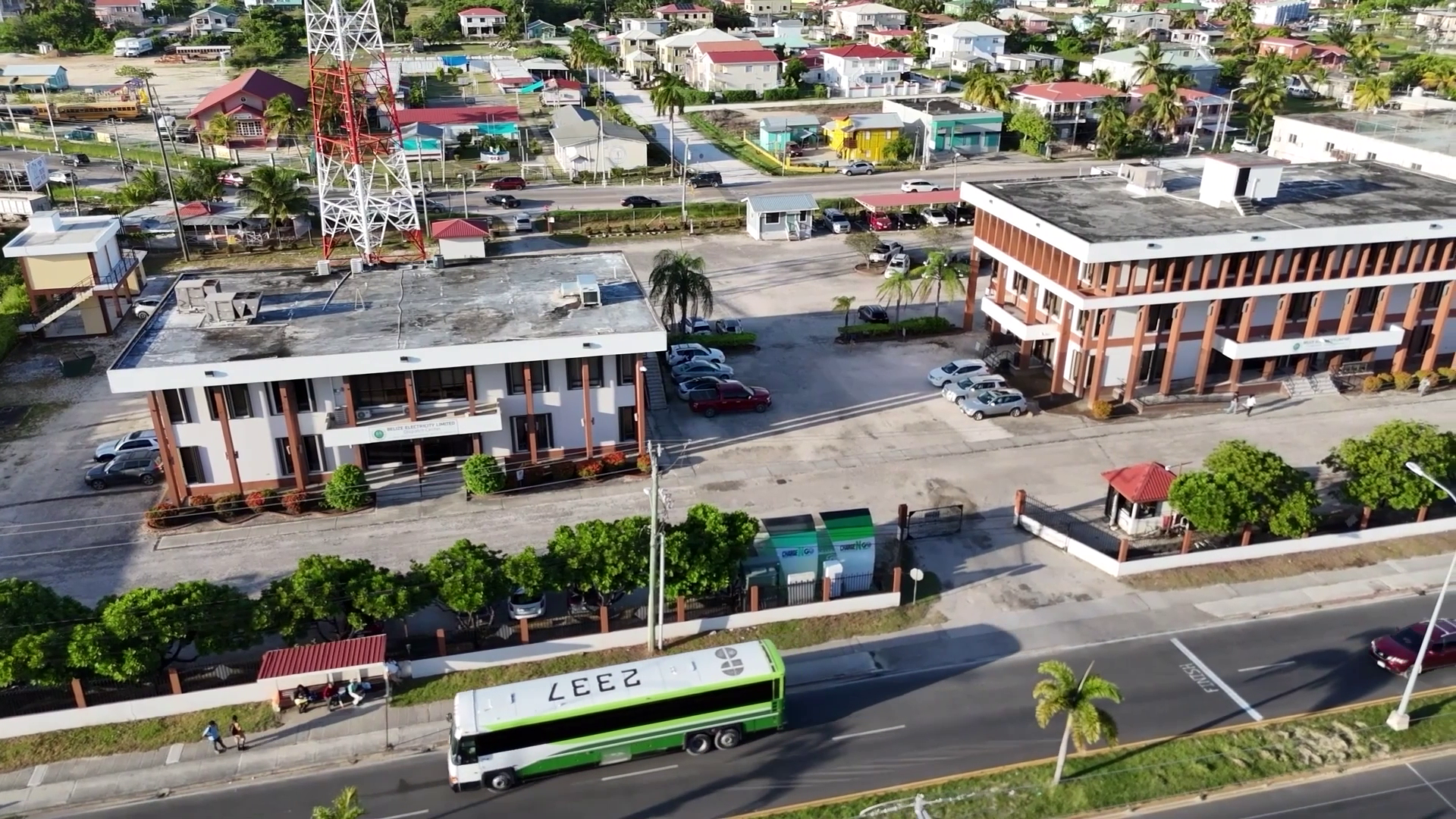
    As of September 2, 2026, Belize’s primary electricity provider, Belize Electricity Limited (BEL), is confronting mounting financial and operational challenges that have put the nation’s power supply in the national spotlight. In a recent disclosure, BEL Executive Chairman Lynn Young confirmed that the state-owned utility owes more than $30 million to Mexico’s Comisión Federal de Electricidad (CFE), its cross-border energy supplier, and has already drawn on multiple government-backed interventions to cover partial payment obligations.

    Local reporters have since pressed Prime Minister John Briceño to disclose the full cumulative amount of taxpayer funds that his administration has injected into BEL to keep the grid operational. However, Briceño declined to share a specific total, framing government support not as a bailout, but as a strategic investment in a critical public asset.

    In his remarks, Briceño drew a parallel between supporting BEL and repairing a broken taxi engine: rather than abandoning the vehicle, owners invest to fix it to keep it running. He explained that global energy price hikes have driven up procurement costs significantly, and the government has chosen to absorb these increased costs instead of passing them directly onto residential and commercial consumers across Belize. Looking ahead, the Prime Minister noted that the investment will lay the groundwork for a transition to cheaper solar energy, with several private renewable energy firms already in negotiations with BEL to bring new solar capacity online within six to 12 months at rates far below current imported power costs.

    Beyond its mounting debt, BEL is also warning of an imminent power supply gap that could destabilize the national grid within the next 12 months. The utility reports that growing domestic electricity demand is now approaching the country’s total available generation capacity, creating a urgent need to secure additional emergency power supplies. To speed up this procurement process, BEL has formally requested that the government declare a national energy emergency.

    The request is still working its way through official regulatory channels. Dr. Leroy Almendarez, CEO of Belize’s Ministry of Public Utilities, outlined the structured approval process required before any emergency procurement can move forward. Before Cabinet can issue an emergency declaration, the Public Utilities Commission (PUC), the nation’s independent energy regulator, must first complete a full review of BEL’s request. If Cabinet approves the declaration, the PUC will then issue a formal order authorizing BEL to launch emergency power procurement, with full regulatory oversight to ensure transparency and accountability throughout supplier selection and negotiation. Almendarez emphasized that BEL cannot unilaterally select suppliers or enter into contracts without regulatory approval, addressing concerns about lack of oversight in emergency processes. For any projected power shortfall that extends beyond the initial emergency period, Almendarez added that additional stakeholder consultations will be held at the appropriate time.

    This report is a transcribed version of an evening television newscast focused on Belize’s current energy landscape.

  • Can Government Understand Struggling Belizean Families?

    Can Government Understand Struggling Belizean Families?

    A heated public debate over the growing cost-of-living crisis in Belize has erupted between a union-aligned senator and the nation’s prime minister, turning a discussion of household financial strain into a clash over whether elected officials remain connected to the struggles of ordinary families. The exchange, which took place during a press question-and-answer session on September 2, 2026, has placed renewed focus on the government’s response to skyrocketing everyday expenses as Belizean households struggle to balance rising fuel, energy and grocery costs against stagnant salaries.

    Union Senator Glenfield Dennison opened the criticism, arguing that government officials who receive taxpayer-funded fuel allowances cannot possibly grasp the daily challenges working Belizean families face when trying to stretch limited incomes to cover basic needs. “Officials insulated from these direct costs simply cannot understand what it means to choose between refilling your gas tank to get to work or paying for your child’s school supplies,” Dennison’s argument implied, framing the affordability gap as one that disconnected public officials fail to address because they do not experience it themselves.

    Prime Minister John Briceño pushed back forcefully against the claims, rejecting the assertion that he and his administration are out of touch with the financial pressure weighing on Belizean households. In a tense exchange with reporter Paul Lopez, Briceño defended his deep connection to communities across the country, noting that he has traveled more extensively across Belize than most other political figures, interacting directly with residents in their homes and neighborhoods to see their challenges firsthand.

    Briceño also pushed back on the narrative that his personal financial success means he has forgotten his humble origins. Recalling an interaction he had as opposition leader with a student at Galen University, he shared that the student once made a similar claim that he could not understand what it meant to rely on public transit. Briceño responded by recounting his early career, when he hitchhiked to work and ran errands before building financial stability through decades of public service. He emphasized that politicians who fail to understand the needs of constituents will eventually be voted out of office, giving leaders a direct incentive to stay connected to public struggles.

    Beyond defending his connection to working families, Briceño also unveiled a concrete policy proposal to ease household financial strain: his administration will submit a cabinet proposal to eliminate the Goods and Services Tax (GST) on residential electricity bills up to $200. The measure is projected to benefit roughly 100,000 consumer accounts, delivering immediate relief to families grappling with soaring energy costs. Briceño emphasized that the government is acting as aggressively as it can with limited public resources to address the crisis.

    The prime minister then issued a direct challenge to Dennison, urging the senator to spend time walking through struggling rural and urban communities, speaking with residents who lack reliable access to basic services like electricity, clean water, and passable roads. “When he can walk in our shoes, then he can talk,” Briceño said, arguing that until Dennison engages directly with the full scope of challenges facing Belizean communities, he has no standing to accuse the government of being disconnected.

    When reached for comment following the prime minister’s remarks, Dennison responded via text message, acknowledging the high pressure of the prime minister’s role and noting that the emotional response was understandable. “Regrettably, he and I will have to agree to disagree, and the Belizean people will decide if he understands,” Dennison said, leaving the final judgment up to the voting public.

    This report is a transcript of an evening television broadcast, with all Kriol-language statements transcribed using a standardized spelling system for accuracy.

  • PM Briceño Weighs in on Oscar Mira’s Cabinet Future

    PM Briceño Weighs in on Oscar Mira’s Cabinet Future

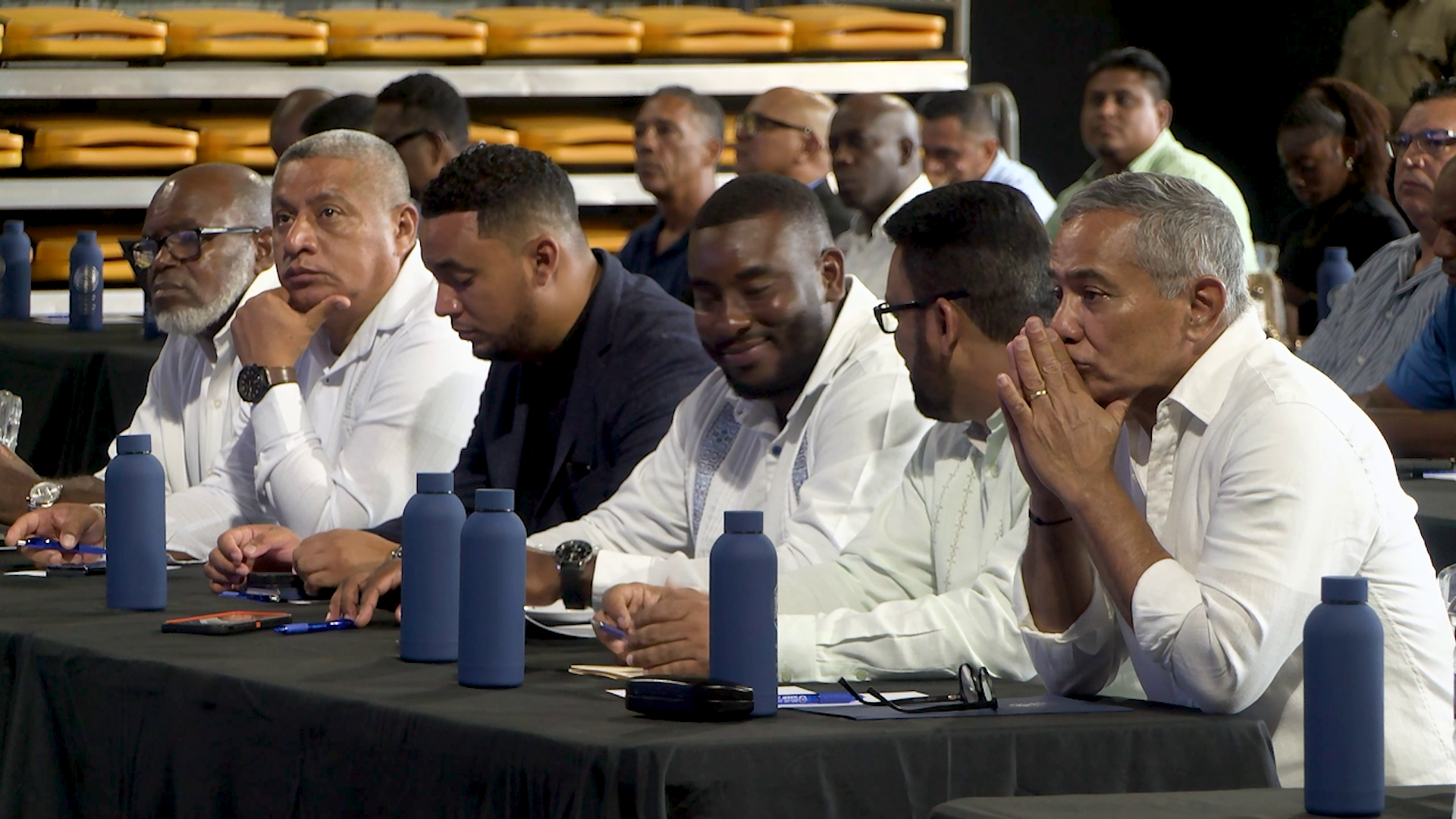
    Speculation is swirling around Belizean politics this week following a series of high-profile public appearances by Oscar Mira, the sitting area representative for Belmopan, who has been absent from senior government roles for an extended period. Mira’s renewed visibility at multiple official and public events has fueled widespread rumors that he is laying the groundwork to rejoin the national Cabinet, prompting political reporters to press Prime Minister John Briceño for clarity on the matter during a public appearance on September 2, 2026.

    When asked directly whether Mira was preparing for a political comeback to the Cabinet, Briceño pushed back on the timeline of speculation, noting that discussions of a return are moving faster than current circumstances warrant. The prime minister reaffirmed Mira’s standing as the duly elected representative for Belmopan, emphasizing that Mira continues to carry out his core duties serving constituents in the district and contributes to the work of the incumbent government. Briceño welcomed Mira’s ongoing work on behalf of both Belmopan residents and the administration, stopping short of confirming any imminent plans to reappoint him to a Cabinet post.

    In response to a follow-up question about the scope of Mira’s role at the current event Briceño was attending, the prime minister clarified that Mira was present in his official capacity as an area representative, noting that all sitting district representatives had been extended an invitation to attend the gathering. Briceño cut the press interaction short, noting he was already running more than an hour late for a scheduled Cabinet meeting in Belmopan, joking that the Cabinet secretary would be alarmed by his extended absence while his ministerial colleagues waited for the session to begin.

    Parallel to the political speculation over Mira’s future, the Office of the Auditor General of Belize is moving forward with a formal investigation into the financial operations of the country’s Ministry of Defense. Auditors have now entered the interview phase of the probe, engaging with relevant stakeholders and current and former ministry officials to gather information about the fiscal practices under review.

    This report is adapted from a transcript of an evening television news broadcast, with all translated statements from Kriol language speakers rendered using a standardized spelling system for accuracy.

  • Cabinet’s Decision Could Send NTUCB Marching

    Cabinet’s Decision Could Send NTUCB Marching

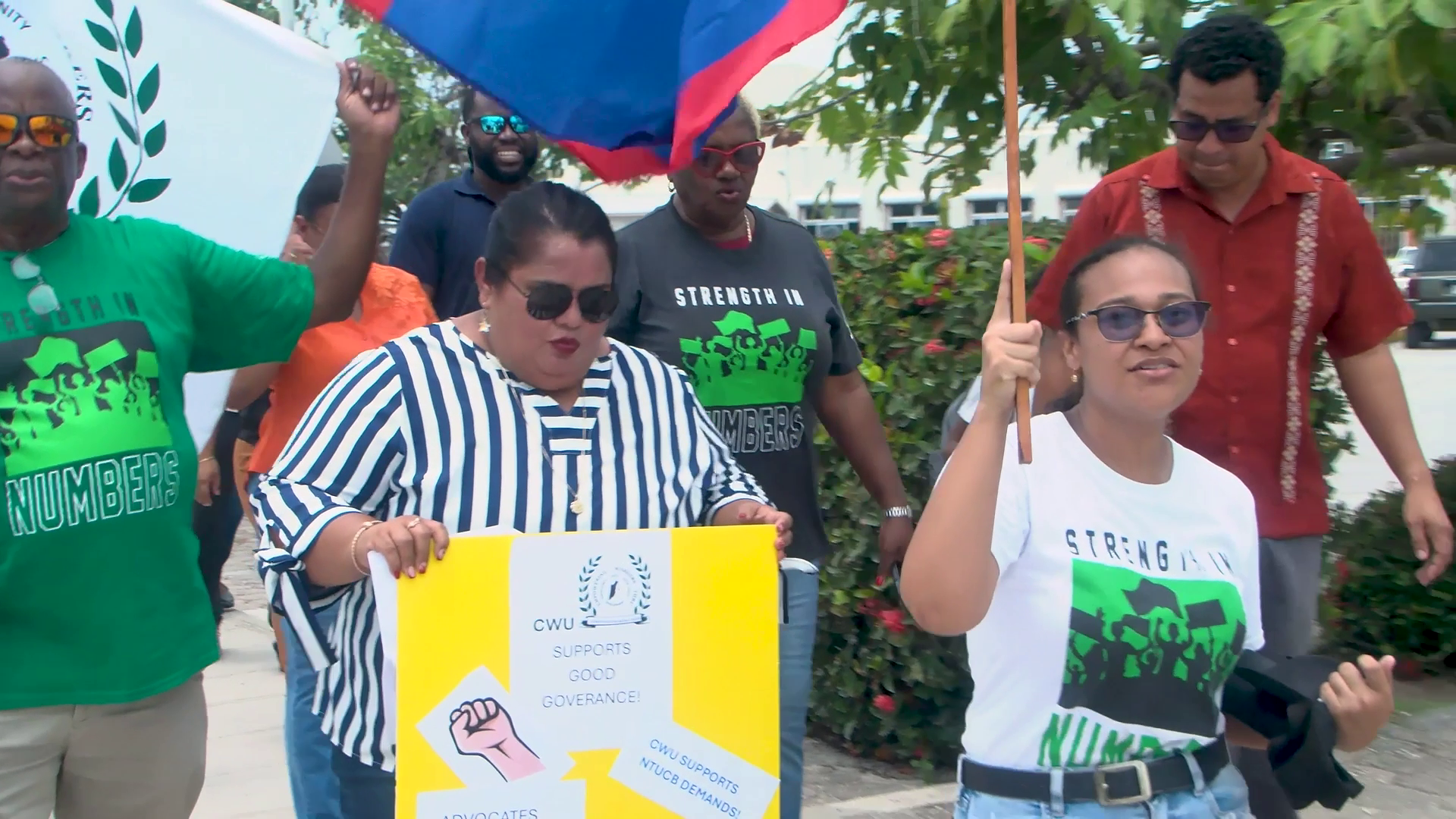
    As of September 2, 2026, the government of Belize is navigating a mounting standoff with the nation’s largest labor organization, as the National Trade Union Congress of Belize (NTUCB) and its allied social partners have delivered 11 core demands to the Cabinet, with a nationwide mass protest hanging in the balance depending on the administration’s reply.

    Prime Minister John Briceño formally brought the full list of union demands to Wednesday’s Cabinet meeting, confirming that the government will issue an official, formal response to the NTUCB through written correspondence once internal deliberations conclude. Rejecting calls for an immediate rushed answer within 24 hours, Briceño acknowledged longstanding friction in the relationship between his administration and the labor body, taking public responsibility for the fractured ties and pledging concrete steps to rebuild trust and collaboration moving forward.

    “I recognize that we have work to do to build a stronger, more productive relationship with NTUCB,” the prime Minister stated during the meeting. “I take responsibility for where we stand today. We already have designated four officials, including the DMP and three Cabinet ministers, to serve as direct liaisons between the government and the union. To address their request for quarterly meetings, I am committed to restructuring our engagement framework to accommodate more regular, substantive dialogue moving forward.”

    While labor leaders wait for the official government response, low-level grassroots mobilization is already underway across Belize. The NTUCB has organized a series of small, spontaneous demonstrations outside multiple government ministries and statutory bodies across the country, signaling the organization’s readiness to escalate to a full national shutdown and mass march if the Cabinet fails to meet their core demands.

    This report is adapted from a transcript of a televised evening newscast, with language rendered consistent for clarity in this format.

  • Cabinet Meeting Holds Key to Looming Bus Crisis

    Cabinet Meeting Holds Key to Looming Bus Crisis

    A potential disruptive shutdown of Belize’s public bus system has been pushed back from the brink after the nation’s Cabinet greenlit a long-requested fuel subsidy for bus operators, in a last-minute development that brings relief to thousands of daily commuters across the country.

    The standoff began when the Belize Bus Association (BBA) threatened industrial action over skyrocketing diesel costs, which have crossed $15 per gallon and placed severe financial strain on service providers. The association agreed to postpone its planned protest earlier this week only after the government committed to bringing its subsidy request to a full Cabinet vote on September 2, 2026.

    In comments ahead of the meeting, Prime Minister John Briceño acknowledged the legitimacy of the bus operators’ demands, while affirming that any group in the country retains the right to industrial action as long as it does not disproportionately harm fellow citizens. Briceño noted that the government had already taken steps to reduce tax burdens on diesel to lower operating costs, and expressed cautious optimism that a mutually acceptable agreement could be reached to avoid a repeat of this year’s earlier public transport shutdown.

    “We recognize they are struggling, and we do not want them to pass that burden on to our consumers,” Briceño said in his address ahead of the vote. “I believe we will find common ground where there will be no need for them to strike, and they can continue to operate and provide essential services for citizens.”

    Shortly after the Cabinet concluded its session, senior media outlets confirmed with both BBA President Phillip Jones and the Director of Transport at the Ministry of Transport that the subsidy request had received full approval. Full details of the subsidy package, including funding allocations and implementation timelines, will be released in a comprehensive special report during Thursday’s national newscast.

  • EBS verhoogt tarieven voor kookgas per 1 september

    EBS verhoogt tarieven voor kookgas per 1 september

    On September 1, 2026, N.V. Energiebedrijven Suriname (EBS), Suriname’s national energy utility, rolled out the latest quarterly scheduled adjustment to domestic propane cooking gas tariffs, implementing targeted price increases that exclusively affect two common cylinder formats, the company confirmed in an official announcement.

    Under the new pricing structure, the cost of a 28-pound propane cylinder will rise from 508 Surinamese dollars (SRD) to SRD 535. Per the current ministerial decree governing the tariff adjustment program, this marks the final scheduled price increase for this cylinder size. For the 14-kilogram composite cylinder, the tariff will climb from SRD 530 to SRD 556.50, with one additional incremental adjustment set to take effect on December 1, 2026 before pricing reaches its final level.

    These incremental price hikes are a core component of a national policy launched in 2023 to phase out long-standing government subsidies on cooking gas. The framework for the gradual subsidy drawdown was jointly agreed and formalized in August 2023 by Suriname’s Ministry of Economic Affairs, Entrepreneurship and Technological Innovation (EZOTI) and the Ministry of Natural Resources (NH), and was codified in Ministerial Decree No. 1099/23 dated August 31, 2023.

    The Surinamese government designed the phased tariff adjustment approach to gradually align domestic cooking gas prices with the actual market-based cost of production and distribution, rather than relying on large one-off price shocks that would disproportionately impact household budgets. According to EBS, this transition is a critical step toward securing a long-term sustainable, uninterrupted, and reliable supply of cooking gas for consumers across the country.

    Not all propane products will see further price increases under the current regulatory scheme, EBS emphasized. All other gas products have already reached their final tariff levels under the subsidy phase-out program, and no additional hikes are planned for these SKUs for the remainder of the current regulatory framework. The products with locked-in final pricing are: 20-pound cylinders at SRD 369.24, 40-pound cylinders at SRD 699.98, bulk gas at SRD 18.90 per liter, 10-kilogram composite cylinders at SRD 400, and 22-kilogram composite cylinders at SRD 880.

  • Aaron Gamboa Out as Special Patrol Unit Commander

    Aaron Gamboa Out as Special Patrol Unit Commander

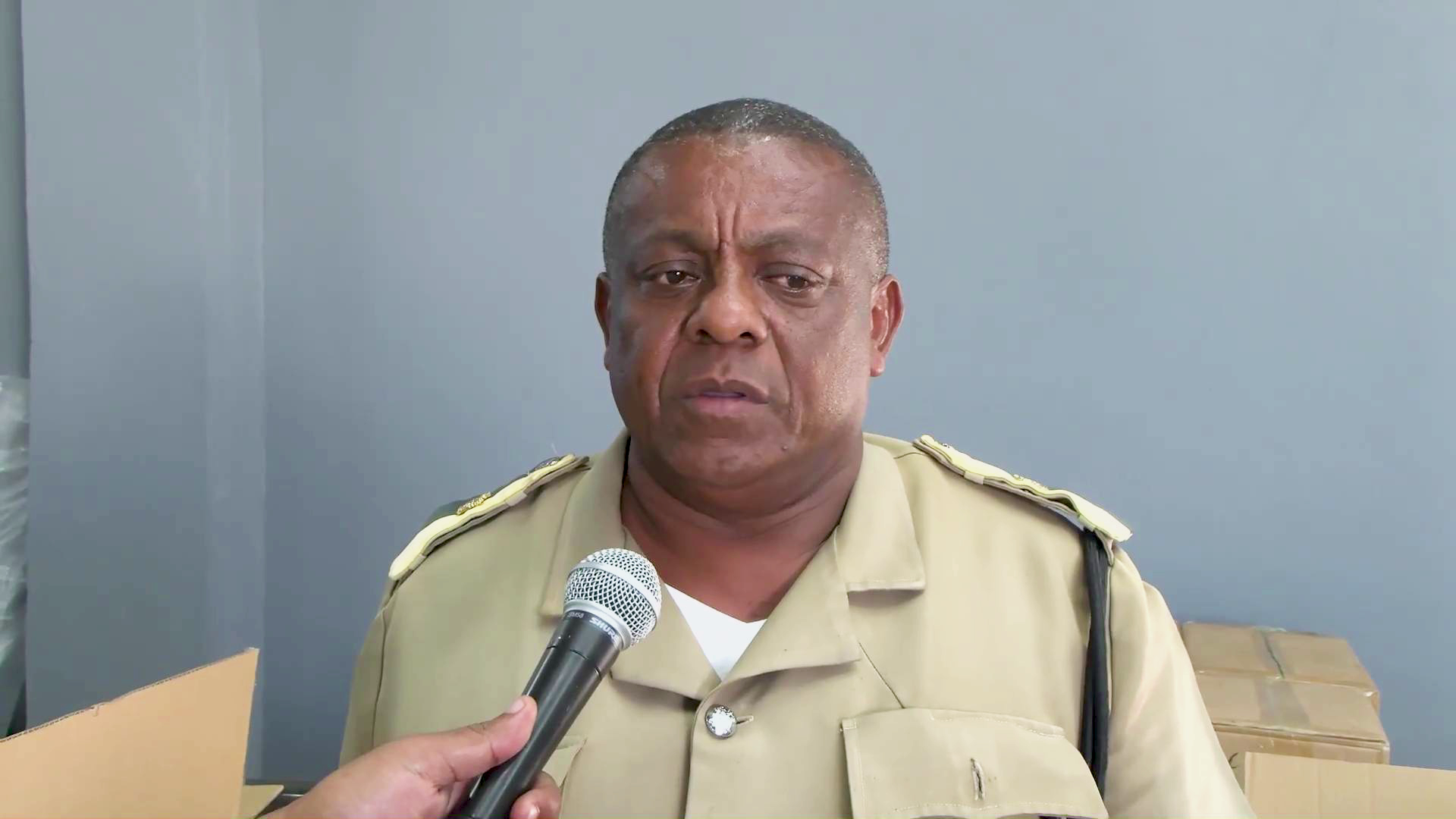
    In a sudden leadership shake-up of the Belize Police Department that has drawn public attention, Assistant Superintendent Aaron Gamboa, who led the Special Patrol Unit for nearly 10 years, has been removed from his post with immediate effect. This personnel change is part of a broader restructuring of the department’s senior leadership pushed forward by Home Affairs Minister Julius Espat.

    Following Gamboa’s removal, official reports confirm he has been reassigned to a new role at the National Operations Office, and an interim commander has already been appointed to take over leadership of the elite Special Patrol Unit. As the restructuring unfolded, questions quickly emerged regarding the level of involvement Prime Minister John Briceño had in the decision to replace Gamboa, and how much advance knowledge he held of the specific personnel changes.
    When pressed by reporters on these points, the prime minister acknowledged that Espat had previously informed him of planned restructuring across the police department, but said he had not been given details on which specific officers would be reassigned. “Minister Espat has been carrying out a number of changes, shaking up the Belize Police Department, and we need that. We can’t keep doing business as usual,” Briceño told reporters. “I will need to speak with him for more details, but I am confident he has solid reasoning behind this personnel change.”
    Reporters also brought up a widespread circulating rumor that claimed Briceño had ordered Espat to avoid making changes connected to the high-profile Budna case. Briceño flatly denied the claim, telling reporters to disregard unsubstantiated gossip. “Don’t listen to rumors. You can ask me the question directly. Did I tell him? No, I did not tell him,” he stated.
    This report is adapted from a transcribed broadcast evening newscast, edited for clarity and context for online readers.