博客

  • Tropical Storm Bertha Set to Hit Louisiana Coast Wednesday

    Tropical Storm Bertha Set to Hit Louisiana Coast Wednesday

    As the 2026 Atlantic hurricane season continues its early progression, communities across the U.S. Gulf of Mexico coast are rushing to complete emergency preparations ahead of Tropical Storm Bertha’s expected landfall this Wednesday.

    The storm picked up strength on Tuesday while traversing the northeastern quadrant of the Gulf of Mexico, with the U.S. National Hurricane Center currently recording maximum sustained winds of 60 miles per hour. Forecasters have pinpointed Plaquemines Parish, Louisiana as the most likely area where Bertha will make its first landfall, after which the system is projected to gradually weaken as it moves inland.

    To alert residents and local authorities to incoming hazards, the National Weather Service has issued a Tropical Storm Warning spanning more than 600 miles of coastline: the alert stretches from the Bay/Gulf County border in western Florida all the way to the Terrebonne/Lafourche Parish line in southern Louisiana. Areas further west, including the major city of New Orleans, Lake Pontchartrain, Lake Maurepas, and the coastal stretch extending from the Terrebonne/Lafourche line to the Vermilion/Cameron Parish line, remain under a Tropical Storm Watch, with officials warning conditions could deteriorate rapidly in these zones.

    The National Hurricane Center has outlined the primary threats facing vulnerable low-lying coastal communities: total rainfall accumulations between 2 and 6 inches, which raises a high risk of life-threatening flash flooding, wind gusts exceeding the 39 mile per hour threshold for tropical storm classification, and a storm surge capable of pushing ocean water up to four feet above normal tide levels in exposed coastal areas.

    Bertha marks only the second named storm of the 2026 Atlantic hurricane season, coming less than one month after Tropical Storm Arthur formed over the basin in June, making this an on-track start to the year’s hurricane activity according to seasonal forecasting models.

  • Campaign removes milestone one million pieces of plastic from Commonwealth waterways

    Campaign removes milestone one million pieces of plastic from Commonwealth waterways

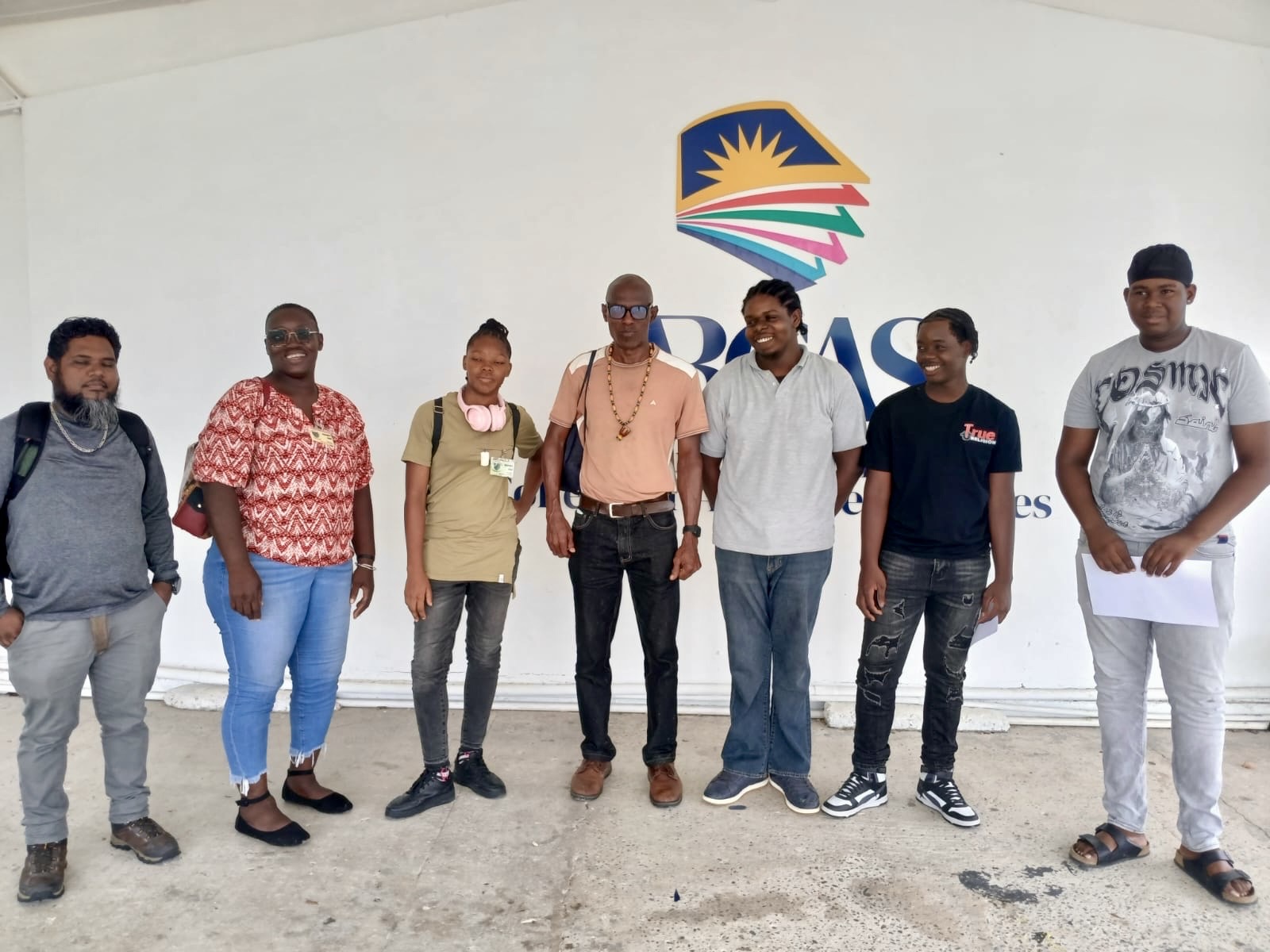
    Ahead of the 2026 Commonwealth Games in Glasgow, a pan-Commonwealth ocean conservation initiative has crossed a transformative milestone, removing more than one million pieces of plastic waste from vulnerable waterways across 56 member nations.

    The landmark one-millionth piece of plastic was pulled from the banks of Scotland’s River Clyde during a community-led clean-up, marking the end of the campaign’s parallel journey with the King’s Baton Relay, the Royal Commonwealth Society (RCS) announced in an official press release. This achievement caps off more than a year of coordinated collective action spanning the globe, bringing together local communities, environmental nonprofits, and governmental bodies around a shared goal of curbing marine plastic pollution.

    The Commonwealth Clean Oceans Plastics Campaign first launched in October 2024 during the Commonwealth Heads of Government Meeting (CHOGM) held in Samoa. Months later, organizers paired the initiative with Commonwealth Sport’s King’s Baton Relay, which was officially inaugurated by King Charles III on Commonwealth Day 2025. Over the relay’s 500-day route that reached every sovereign member nation of the Commonwealth, local communities organized and joined clean-up events and long-term conservation projects designed to intercept plastic waste before it reaches open oceans and protect critical freshwater and coastal ecosystems.

    By the end of the relay’s journey, the initiative had mobilized a coalition of more than 50 partner organizations and rallied over 15,000 individual volunteers across all Commonwealth regions. In total, participants pulled more than 23,000 kilograms of plastic debris from rivers, coastlines, estuaries, and other waterways—preventing more than one million individual plastic items from entering the global ocean system.

    Organizers emphasize that this milestone carries outsized meaning for the most vulnerable member states that bear the brunt of plastic pollution’s harm. The Commonwealth as a bloc controls roughly one-third of the world’s total ocean area, and nearly half of its 56 member nations are Small Island Developing States. These nations face a disproportionately heavy burden of damage from marine plastic, which harms critical tourism and fishing industries, damages coastal infrastructure, and threatens public health, even as they have the least access to resources for waste management and pollution mitigation.

    Janet Cooper OBE, Chair of the Royal Commonwealth Society, celebrated the achievement during the Glasgow commemoration: “One million pieces of plastic removed from Commonwealth waters is a remarkable milestone, and one I am immensely proud to mark here in Glasgow. The Commonwealth Clean Oceans Plastics Campaign has shown the power of collective action, and what impact can be made when communities work together. To the thousands of volunteers and the many partner organisations across the Commonwealth who have dedicated their time and energy to make this possible, thank you.”

    As one of the RCS’s flagship environmental programs, the campaign does not focus solely on immediate clean-up results: it also works to connect cross-border communities and build global awareness of the accelerating plastic pollution crisis. To document the journey and commemorate the one-million-piece milestone, the RCS has launched a new public digital gallery that showcases photos, stories, and data from clean-up events across the Commonwealth, highlighting the on-the-ground contributions of volunteers and local communities that made the milestone possible.

    The Royal Commonwealth Society is a decades-old global network of individuals and institutions focused on advancing equitable, sustainable development for all Commonwealth citizens. Through its work in youth empowerment, public education, and high-level international advocacy, the organization promotes shared values of equality, educational access, and environmental stewardship across the bloc’s 56 member nations.

  • Appeal Denied: Cayo Murder Conviction Stands

    Appeal Denied: Cayo Murder Conviction Stands

    On July 21, 2026, Belize’s Court of Appeal delivered a landmark ruling dismissing an appeal against a 2021 murder conviction, leaving Dean Galvez’s life sentence for the 2018 fatal shooting of Ronnie Omar Cassasola Jr. intact.

    The fatal incident traces back to the night of May 5, 2018, at the Pedrigal Bar in San Mateo, Cayo District, where a confrontation erupted between Dean Galvez, his companions, and members of the Cassasola family and their associates. When the groups left the bar, tensions did not de-escalate as the Cassasola group traveled home. According to prosecution allegations, Galvez pulled a firearm and opened fire, withdrew from the scene, then returned to fire a second volley of shots. Cassasola Jr. ultimately died from a gunshot wound sustained in the attack.

    Galvez was convicted of murder in 2021 during a judge-alone bench trial, where no jury was seated. His appeal to the higher court centered on multiple claims of legal error during the original trial, chief among them arguments that the trial judge improperly relied on eyewitness identification evidence to secure a guilty verdict.

    Five witnesses who had personal prior knowledge of Galvez testified that they identified him as the shooter, noting they observed him at a distance of 20 to 30 feet under clear street lighting at the time of the shooting. Galvez repeatedly denied any involvement, telling the court he was not present at the scene when the shooting began, and had fled to take cover elsewhere after hearing gunfire. While an alibi witness for the defense largely backed up Galvez’s account of his whereabouts that night, a key inconsistency over whether Galvez had jumped a fence while fleeing weakened the alibi, a gap the original trial judge cited in discounting the defense’s claim.

    In his appeal arguments, defense counsel Norman Rodriguez laid out multiple grounds to overturn the conviction. He argued the trial judge incorrectly ruled that eyewitness evidence was strong enough to prove guilt beyond a reasonable doubt. He pointed to forensic evidence showing the fatal bullet was fired from behind the victim, and claimed the trial judge failed to draw a critical legal distinction between identifying an unknown suspect and recognizing a person already known to witnesses. Rodriguez also challenged the judge’s finding that lighting conditions were sufficient to support reliable identifications, and noted that no formal identification parade was conducted before trial.

    Director of Public Prosecutions Cheryl-Lynn Vidal, leading the prosecution’s response to the appeal, pushed back against these claims. She emphasized that the original trial judge had fully complied with long-standing legal safeguards for eyewitness identification known as the Turnbull guidelines. Vidal also noted that all five witnesses had known Galvez for a long time before the shooting, and that favorable lighting and unobstructed lines of sight made their recognition of Galvez reliable.

    The appellate court’s ruling delved deeply into the legal framework governing identification evidence, walking through the core requirements of the Turnbull principles. These guidelines mandate that trial judges explicitly warn of the risk of misidentification even when witnesses appear honest and convincing, and require close scrutiny of key factors including observation distance, lighting conditions, how long the witness had to observe the suspect, and prior familiarity with the person in question.

    The appellate panel also addressed a key procedural question: how these identification safeguards apply differently in a judge-alone bench trial versus a conventional jury trial. The court clarified that a judge sitting without a jury does not need to recite every legal principle in formal, explicit terms, as long as the overall reasoning of the ruling demonstrates that all core legal issues were properly considered and addressed.

    After a full review of the original trial judge’s written ruling, the appellate judges found that the lower court had properly followed all required safeguards. The trial judge had explicitly noted the risk of mistaken identification for the record, individually examined lighting conditions, observation distance, and the duration of each witness’s view of the shooter, conducted an in-person visit to the crime scene to assess visibility and sightlines, and explicitly weighed all inconsistencies in the evidence—including one witness’s failure to initially mention seeing Galvez draw the weapon—before concluding the identification evidence remained reliable.

    On the contested issue of the missing formal identification parade, the court ruled that the absence of this procedure does not automatically render a conviction unsafe. In this specific case, all eyewitnesses already knew Galvez personally, and the case relied on recognition of a known individual rather than identification of an unknown stranger, making a formal parade of limited procedural value. The court also confirmed that the trial judge did not treat the in-court “dock identification” of Galvez as independent proof of guilt, only as consistent confirmation of the witnesses’ earlier out-of-court recognition of the defendant.

    With all appeal arguments rejected, Galvez’s 2021 murder conviction and life sentence will stand, closing a years-long legal process stemming from the 2018 Cayo District shooting.

  • Assemblee dringt aan op hardere aanpak na toename verkeersdoden

    Assemblee dringt aan op hardere aanpak na toename verkeersdoden

    On July 21, members of Suriname’s National Assembly issued a urgent call for the national government to ramp up traffic law enforcement, driven by a steady upward trend in traffic-related deaths that has disproportionately claimed the lives of young people across the country.

    Lawmakers across party lines are pushing for sweeping changes: increased daily visible police presence on roads, more frequent speed limit checks, and harsher punitive action against unlicensed drivers and repeat traffic offenders. Krishna Mathoera, a VHP party legislator leading the push, emphasized that most road crashes stem from reckless road user behavior rather than vehicle technical faults, noting that these incidents leave widespread damage, long-term trauma and inconsolable grief in their wake. “The only effective way to change dangerous driving habits is through consistent enforcement and intervention,” Mathoera stated, calling for expanded traffic police units, more intensive patrols, and a higher number of official citations for violations.

    Mathoera pointed to a troubling mismatch in official data from the Public Prosecution Service: while traffic fatalities continue to climb, the total number of citations for traffic offenses has actually fallen. She argued that the government must implement daily, sustained checks until deadly crash rates are reduced to manageable levels. Her concerns have been echoed by other Assembly members, including Vice President Ronnie Brunswijk of the ABOP party. Brunswijk drew attention to a recent fatal pedestrian crash in Moengo as a tragic example of the ongoing crisis, noting that reckless excessive speeding is particularly rampant within built-up residential and urban areas.

    The parliamentary debate also centered on assigning clear accountability for traffic enforcement. Brunswijk argued that responsibility cannot fall exclusively on the Minister of Justice and Police, noting that police leadership, from the corps commander down to regional commanders, share an obligation to deploy personnel and organize regular checks. Jerrel Pawiroredjo, leader of the NPS parliamentary faction, clarified that criticism is targeted at policy failures, not individual officials. “We are not attacking the person, we are challenging the policy,” he said, while adding that the minister bears ultimate political accountability for the performance of the ministry and national police corps.

    In response to the calls for action, Minister of Justice and Police Harish Monorath reported that the national traffic enforcement team inspected 328 vehicles in the first two weeks of July, with regular patrols also carried out by general duty police units. But Mathoera rejected these figures as woefully insufficient, calculating that this averages out to just 50 vehicle checks per day nationwide – a number she said could be matched in a single hour at one busy intersection near the National Assembly building itself. “These are not results we can accept,” she said, stressing that the public needs to see and feel a constant visible police presence on roads.

    Minister Monorath acknowledged that more action is needed, pointing out that officers issue daily fines and seize unregistered or unlicensed vehicles, but framed traffic safety as a shared responsibility between the government and broader society. He noted that poor street lighting, damaged road surfaces, insufficient speed bumps, and low public awareness of traffic rules all contribute to unsafe road conditions.

    Parliamentarians also put forward proposals to expand public traffic education, including reinstating mandatory structured traffic lessons in primary schools and running recurring public awareness campaigns on radio and other media. The idea of using unmarked police vehicles and motorcycles to catch reckless drivers was also raised. Monorath confirmed that police already run educational programs in schools, but these will be expanded after the national budget is approved, freeing up additional resources for intensified traffic education.

    In closing, lawmakers emphasized that improving road safety cannot be achieved with statistical tweaks alone. They called for a holistic approach combining consistent visible police patrols, upgraded road infrastructure, expanded public education, and strict, consistent penalties for dangerous driving behavior to reverse the rising tide of preventable road deaths.

  • 41 bodies from MV Barima tragedy recovered

    41 bodies from MV Barima tragedy recovered

    As of Tuesday afternoon, July 21, 2026, Guyanese authorities have issued an updated official statement on the tragic sinking of the passenger vessel MV Barima, confirming that recovery teams have pulled 41 bodies from the crash site and successfully rescued 77 people since the disaster unfolded Saturday night.

    The incident occurred shortly after 11 PM on Saturday, roughly 10 miles off Guyana’s Essequibo Coast. The MV Barima, an 87-year-old vessel, sank while carrying an estimated 179 people on board, including 18 crew members. In the three days since the sinking, multi-agency search and rescue efforts have continued non-stop around the wreckage zone, with 16 vessels currently deployed to support operations.

    To increase the chance of locating any remaining missing people, officials have ordered a 400-square-mile expansion of the official search area, which now stretches as far north as Waini Point. As of 1 PM Tuesday, 14 additional bodies had been recovered on the day alone, with the first retrieval of Tuesday’s operations occurring at 10:15 AM, according to data from the Maritime Rescue Coordination Centre (MRCC).

    French and local dive teams are continuing underwater searches directly at the wreck site to locate additional victims and any remaining debris. Work is already underway to identify recovered remains, with family members currently assisting with identification processes at Suddie Hospital. Authorities have issued a formal directive to all stakeholders involved in the recovery effort: any remains recovered during search operations must be transferred immediately to the custody of the Guyana Police Force at its designated facility at the Charity River Dam to streamline identification and next-of-kin notification processes.

  • Belize Offers Help to “Brothers and Sisters in Guyana”

    Belize Offers Help to “Brothers and Sisters in Guyana”

    In the wake of one of Guyana’s deadliest maritime disasters in modern history, the Central American nation of Belize has extended a hand of support to the South American country, offering material aid and standing in solidarity with affected communities following the capsizing of the MV Barima ferry.

    Belize’s Minister of Foreign Affairs Francis Fonseca publicly confirmed the country’s outreach in an interview on the local current affairs program *Open Your Eyes* on Monday, noting that Belize has already made contact with Guyanese leadership to offer assistance. “We’ve reached out… and expressed our solidarity and asked them how we can provide any meaningful material support in any way,” Fonseca told the program. “President Ali is a good friend of Belize, so we’re praying for our brothers and sisters in Guyana.”

    The deadly incident unfolded last Saturday, when the passenger ferry capsized mid-voyage while traveling between Georgetown, Guyana’s capital, and the far-flung community of Port Kaituma. Initial accounting of those on board proved inaccurate after 32 rescued survivors were found not to be listed on the vessel’s official passenger manifest, pushing the updated total of people on the ferry to 179—far higher than first reported.

    As of Monday’s update from Guyanese authorities, recovery teams have recovered 27 bodies and pulled 69 survivors from the water, while 83 people remain unaccounted for as search operations continue. Guyana’s Minister of Public Works Juan Edghill has labeled the incident the country’s worst marine disaster in decades.

    In a development that has raised serious questions about the incident, Guyanese law enforcement has taken the ferry’s captain and at least one additional crew member into custody. Both tested positive for marijuana, and authorities have launched a formal investigation into potential crew negligence, specifically looking into the circumstances that allowed the vessel to leave port drastically overcrowded.

    Guyanese President Irfaan Ali has personally visited survivors and grieving family members receiving care at local hospitals, calling the encounter a “deeply emotional experience.”

    Belize’s gesture of support is not the first regional humanitarian action the country has joined in recent weeks. Just a month prior, Belize stood alongside other member states of the Caribbean Community (CARICOM) to deliver emergency aid to Venezuela in the aftermath of twin destructive earthquakes that struck the country.

  • Empowering Young Women to Dream Big, Lead Boldly & Break Barriers

    Empowering Young Women to Dream Big, Lead Boldly & Break Barriers

    In a landmark step toward closing the gender gap in male-dominated innovation fields, Belize’s Ministry of Education, Culture, Science and Technology wrapped up its first-ever nationwide Girls in STEAM Festival over the weekend in San Ignacio. Backed by the Inter-American Development Bank (IDB) through its global Skills for the Future initiative, the event brought hundreds of young female students from across the country into hands-on learning experiences designed to reshape their understanding of what they can achieve in science, technology, engineering, arts and mathematics.

    The festival was structured in two sequential phases, starting with a week-long residential camp for upper-level primary school students. A total of 17 institutions from every region of Belize participated, with more than 300 girls enrolled from Standards 4 through 6. Dr. Consuelo Godfrey, the program’s lead consultant for Girls in STEAM, explained that the introductory camp was built around one core mission: to demystify STEAM fields for young learners before they internalize harmful gender stereotypes about technical work. “The goal was for those girls to be exposed to all aspects of STEAM: Science, Technology, Engineering, Arts and Mathematics,” Godfrey noted, emphasizing that early exposure is critical to encouraging long-term interest in these career paths.

    Following the primary school camp, a two-week secondary-level camp launched with a deeper focus on integrating practical technology across every STEAM discipline. To help students see STEAM work as tangible, accessible part of everyday life in Belize, organizers arranged immersive site visits to local industry and innovation hubs. Participants toured key locations including the Esquivel Apiary in Corozal, Hydro Belize’s Chalillo Dam in Cayo, the women-led clean energy network Solar Sisters in San Pedro Columbia, and the T.R.E.E.S. environmental research organization along the Hummingbird Highway. Keila Mai, a female STEAM professional who spoke to the secondary camp participants, shared actionable advice for young women entering male-dominated fields: “Every time I felt like an outsider or felt that heavy weight of a male-dominated field, I leaned into my curiosity. Curiosity leaves no room for fear.”

    The festival closed with a public showcase of the original projects developed by the participating students, followed by an award ceremony to honor the most innovative and impactful work. Yolanda Gongora, Belize’s Chief Education Officer, reflected on the transformational vision behind the event, noting that its purpose extends far beyond teaching technical skills like coding, robotics, or artificial intelligence. “When we first envisioned this programme at the Ministry of Education, Culture, Science and Technology, our ambition extended far beyond teaching coding, robotics or artificial intelligence. We set out to create something transformational: an extracurricular programme that would inspire girls to see themselves not simply as users of technology, but as innovators, creators, scientists, engineers, entrepreneurs and leaders,” Gongora said.

    Karla Gonzalez, the IDB’s resident representative in Belize, echoed that optimism, noting that closing the gender gap in STEAM will benefit not just individual women, but Belize’s entire economy and research ecosystem. “Belize, like the rest of the world, needs more women studying maths and science and leading research, and who knows, in the future maybe we will get a Nobel Prize,” Gonzalez said. Organizers have announced plans to make the Girls in STEAM Festival an annual event, expanding participation to more schools across the country in coming years.

  • Canadian wildfire smoke expected to pass over Caribbean; Antigua air quality remains good

    Canadian wildfire smoke expected to pass over Caribbean; Antigua air quality remains good

    A cross-continental air quality incident is unfolding this week, as smoke from Canada’s persistent wildfire season is on track to drift thousands of miles south to reach the northeastern Caribbean, according to the Antigua and Barbuda Meteorological Service (ABMS). However, the national weather agency has moved to reassure residents that the hazy plume will not trigger meaningful declines in local air quality. In an official air quality advisory published Tuesday, ABMS noted that latest atmospheric modeling suggests the smoke mass has already reached upper atmospheric layers over the region. The plume is projected to continue its westward trajectory, moving across the northern Caribbean and the Bahamas by the end of Wednesday. Even as the smoke moves through the broader Caribbean basin, air quality measurements across Antigua and Barbuda still rank in the World Health Organization’s “Good” category, and forecasters project this stable, healthy condition will hold steady throughout the plume’s passage. While the Canadian wildfire smoke will have little tangible impact locally, Antigua and Barbuda is already bracing for the next potential air quality challenge: a significant influx of Saharan dust that is forecast to arrive in the region starting Thursday. ABMS confirmed that it will maintain continuous monitoring of atmospheric and air quality conditions, and will issue additional public updates whenever new developments require it.

  • Firefighters Respond to Blaze Near Airport Road

    Firefighters Respond to Blaze Near Airport Road

    Emergency response teams are currently working around the clock to bring an unsanctioned blaze under control along Mahico Drive, a residential thoroughfare situated just steps from the heavily traveled Airport Road. The incident was first brought to public attention when witnesses spotted dense plumes of dark smoke billowing from the affected area, prompting immediate calls to local fire dispatch.

    Multiple emergency crews were dispatched to the scene within minutes of the initial report, and first responders have remained on site to coordinate containment efforts as of the latest update. Investigators have not yet pinpointed the origin or cause of the fire, and municipal officials have declined to share concrete details about the total area impacted by the blaze.

    In a reassuring preliminary statement, authorities confirmed that there have been no immediate reports of civilian or first responder injuries linked to the fire. Additionally, no damage has been recorded to adjacent homes, commercial buildings, or infrastructure near the site of the blaze. As the situation remains fluid and response operations continue, officials are working to gather more details about the incident and will issue formal updates to the public as new information is confirmed.

  • NAGICO Insurances and GSL launch historic developmental scholarship

    NAGICO Insurances and GSL launch historic developmental scholarship

    Caribbean cricket is set to receive a major boost for emerging talent, as the ExxonMobil Guyana Global Super League and regional insurance leader NAGICO Insurances have partnered to launch a groundbreaking developmental scholarship for the 2026 tournament. This first-of-its-kind opportunity, launched under the league’s Super We platform, has selected 21-year-old St Maarten batting all-rounder Michael Palmer as its inaugural recipient. Palmer will join the tournament’s home franchise, the Guyana Amazon Warriors, for the upcoming event.

    Unlike standard observation programs, this scholarship immerses rising young players in the full high-performance culture of professional cricket, giving them hands-on experience alongside some of the top regional and international cricketers competing in the tournament. For NAGICO Insurances, which is headquartered in Palmer’s home country of St Maarten, this initiative marks a continuation of the firm’s longstanding commitment to youth development and the expansion of cricket across the Caribbean region.

    “At NAGICO, we believe that one of the greatest investments we can make is in the potential of young people,” said Kyria Ali, CEO of the NAGICO Group. “This initiative is about more than giving talented youth a chance to watch elite cricket; it is about giving the opportunity to experience it from the inside, to share a dressing room with some of the world’s best players, observe the professionalism and discipline that define success, and return home inspired to pursue their own dreams.”

    Ali emphasized that as a homegrown Caribbean company, NAGICO takes particular pride in launching this trailblazing program, with plans to expand the partnership with the Global Super League in coming years. “We believe that this experience can ignite passion, build confidence, and help shape the next generation of Caribbean sporting talent. Sometimes, a single opportunity can change the course of a young person’s future, and we are honoured to work alongside the Global Super League team to help make that possible,” she added.

    Sir Clive Lloyd, chairman of the ExxonMobil Guyana Global Super League, welcomed the partnership, framing the scholarship as a foundational investment in the future of Caribbean cricket. “One of the key objectives of the ExxonMobil Guyana Global Super League is to create opportunities that extend beyond the matches themselves. We are delighted that NAGICO Insurances has partnered with us to provide this developmental scholarship, which will give one talented young cricketer invaluable exposure to a professional environment. Initiatives like this help ensure that the next generation of Caribbean players is equipped to carry our rich cricketing legacy forward,” he explained.

    The scholarship adds a new, impactful legacy component to the 2026 ExxonMobil Guyana Global Super League, reinforcing the tournament’s dual mission of delivering world-class elite competition and nurturing the next wave of Caribbean cricket talent. The 2026 tournament is scheduled to run from July 23 to August 1 in Guyana, where reigning champions Guyana Amazon Warriors will defend their title against top international franchises: Lahore Qalandars from Pakistan, Desert Vipers from the United Arab Emirates, Perth Scorchers XI from Australia, and the San Francisco Unicorns from the United States.

    Founded in 1982, the NAGICO Group is one of the Caribbean’s leading insurance providers, offering property and casualty coverage, life and health insurance, and customized risk solutions to clients across the region. Headquartered in Philipsburg, Sint Maarten, the firm holds an A- Excellent Capital Adequacy Rating from AM Best, cementing its position as one of the region’s most financially stable and trusted insurers.