博客

  • Afreximbank, Government of St Kitts and Nevis sign hosting agreement for AfriCaribbean Trade and Investment Forum (ACTIF2026) – Realnews Magazine

    Afreximbank, Government of St Kitts and Nevis sign hosting agreement for AfriCaribbean Trade and Investment Forum (ACTIF2026) – Realnews Magazine

    In a landmark move designed to strengthen economic bonds across the Atlantic, the African Export-Import Bank (Afreximbank) has formally signed a hosting agreement with the government of St Kitts and Nevis for the fifth iteration of the AfriCaribbean Trade and Investment Forum, slated to run July 29–31, 2026 at the St. Kitts Marriott Beach Resort, Casino & Spa in Basseterre.

    The signing ceremony marks a mutual commitment to deepening long-standing collaborative ties between African and Caribbean nations, with both parties framing the 2026 forum as a critical step toward advancing shared development goals. Dr George Elombi, Afreximbank’s President and Chairman of the Board of Directors, emphasized that the upcoming gathering will bring African and Caribbean stakeholders together to address common development hurdles and reaffirm dedication to strategic initiatives that drive collective self-determination and economic self-reliance. “Through ACTIF2026, we will identify priority projects and programmes and dedicate ourselves to effective execution. This will be the pathway to our shared economic development,” Elombi stated.

    For St Kitts and Nevis, the opportunity to host the premier AfriCaribbean economic event represents more than a diplomatic win—it positions the small island nation as a strategic hub for cross-Atlantic investment. Prime Minister Dr Terrance M Drew shared that the government is deeply honored to welcome delegates from across global Africa, noting that the agreement underscores the country’s unwavering commitment to expanding Africa-Caribbean economic linkages. “We are not just a beautiful destination; we are a gateway for investment, a hub for enterprise, and a proud partner in the Renaissance of Africans,” Drew said. He added that ACTIF2026 will act as a powerful catalyst for new trade and investment flows, generating inclusive opportunities for local and regional businesses and communities, and building long-term collaborative pathways that will benefit current and future generations across both regions.

    Attendees of the 2026 forum can expect a robust schedule of engagement, including targeted panel discussions on regional trade integration, dedicated sessions to explore underutilized investment opportunities, structured networking opportunities with public and private sector leaders, and deep dives into existing initiatives designed to boost cross-regional economic cooperation. As a convened platform by Afreximbank, ACTIF has established itself as the leading space for mobilizing capital, forging actionable public-private partnerships, and accelerating inclusive economic integration between the African continent and Caribbean nations. It will bring together heads of government, institutional investors, private sector CEOs, development finance leaders, emerging entrepreneurs, and diaspora stakeholders to map out resilient growth strategies for Global Africa amid ongoing global economic uncertainty.

    The 2026 forum builds on a track record of tangible, impactful outcomes from previous ACTIF events. In 2025, the forum secured five cross-Caribbean deals totaling $291.25 million across three nations, with investments spanning trade and investment finance, corporate finance, project preparation, and export development. Afreximbank’s growing footprint in the Caribbean also underscores the long-term momentum of its engagement: since opening its regional office in Barbados two years ago, the institution has approved more than $700 million in critical financing across the CARICOM region, supporting a diverse range of priority projects including climate adaptation infrastructure in Saint Lucia, sports and tourism development in Barbados, small and medium enterprise financing in the Bahamas, sustainable tourism projects in Grenada, and energy development initiatives in Suriname.

  • Traditionele leiders Marowijne- en Lawagebied vragen betrokkenheid bij grensakkoord

    Traditionele leiders Marowijne- en Lawagebied vragen betrokkenheid bij grensakkoord

    On April 15, traditional leaders from five Indigenous and tribal communities along the Marowijne and Lawa Rivers gathered in Paramaribo, the capital of Suriname, to issue a joint declaration calling for their formal inclusion and full recognition of their inherent rights amid ongoing negotiations to implement the border agreement between Suriname and French Guiana.

    The communities involved — the Kali’na, Lokono, Aluku, Paamaka and Wayana peoples — have inhabited the riverine border lands for multiple generations, making them the first-hand witnesses to the growing cross-border challenges threatening their way of life.

    In their statement, the leaders outlined the daily crises their communities face: unchecked river pollution, rampant illegal gold mining, widespread deforestation and surging transnational criminal activity. These overlapping threats have already eroded their natural habitats, undermined local food security, and put the long-term survival of their villages at risk. “When the rainy season comes, all the waste and pollution washes up onto our riverbanks,” the declaration noted, emphasizing that communities bear the direct brunt of unregulated cross-border activity.

    The leaders clarified that they do not oppose moving forward with the existing border framework reached between Suriname and France, in contrast to a recent petition calling to halt all proceedings on the agreement. They explicitly distanced themselves from that petition, stressing that long-term residents of the border region deserve a seat at the table, not a stoppage of negotiations.

    Instead, the leaders are calling for clear, binding commitments and robust cross-border cooperation between the two nations to restore order, strengthen security, and protect the ecologically and culturally vital border region. Without clear regulations and enforced rule of law, the area will descend into chaos, they warned.

    Beyond security and environmental protection, the declaration underscores three core demands for the further development and implementation of the border agreement: First, the full legal recognition of Indigenous and tribal rights to their traditional territories, their distinct cultures, and their traditional ways of life. Second, guaranteed participation in all decision-making processes that impact their communities. Third, the preservation of cross-border social, cultural and familial ties that have existed for centuries between communities on both sides of the artificial international border.

    As traditional authority figures for the border region, the leaders emphasize that their perspectives, shaped by generations of living on and caring for the land, must be heard and meaningfully integrated into national decision-making on the border issue. In particular, they seek to act as active partners in developing and executing initiatives to maintain security and public order along the border.

    The statement concluded with a reaffirmation of the leaders’ willingness to engage constructively in the process, to advance solutions that protect their traditional homelands, secure long-term stability for the border region, and build a sustainable future for their communities. The declaration was signed by top traditional leaders from all five represented communities, including Granman Ipomadi Pelenapin of the Wayana, Granman Simeon Glunder of the Aluku, and Jona Gunther, chair of the Kali’na and Lokono of Lower Marowijne, among others.

  • Quiz : Did You Know ? #15

    Quiz : Did You Know ? #15

    In the 15th installment of HaitiLibre’s popular “Did You Know?” general knowledge quiz series, published April 15, 2026, readers are invited to explore a little-known linguistic and economic fact that underpins the entire global financial system: the origins of modern currency terminology.

    The quiz’s featured fun fact breaks down the linguistic roots of two key financial terms. First, the word “fiduciary” traces its lineage back to the Latin noun fiducia, which directly translates to “trust” — a core concept that still anchors modern monetary systems today. This stands in stark contrast to the gold standard that dominated global finance until the 20th century. Under that historic system, every paper banknote issued carried a tangible guarantee: holders could theoretically exchange their note for a fixed, specific weight of gold or another precious metal, tying the currency’s value directly to a physical commodity.

    Today, the global economy relies on what is known as fiat money, a term that also draws from Latin, originating from the phrase “fiat,” meaning “let it be done.” Unlike gold-backed currency, the value of fiat money does not come from the material it is made of (paper or digital code, for that matter) — instead, its worth is derived from two sources: an official state decree that designates it as legal tender, and the ongoing trust that the public holds in its ability to be exchanged for goods and services. When that public confidence collapses, the result is hyperinflation, a catastrophic economic event where currency loses value so rapidly that banknotes become more useful as fuel for heating than as a medium of exchange, a stark example of what happens when trust evaporates.

    Despite this risk, proponents of the system note that fiat money carries significant benefits for modern economic management: it grants central banks the flexibility to adjust monetary policy in response to shifting economic conditions, altering the total money supply in circulation to counter recessions, curb inflation, or support growth. This system, built on an implicit but critical social contract between governments, central banks, and the public, forms the very foundation of modern global finance and international trade.

    This educational fun fact is pulled directly from the answer explanation sheets for HaitiLibre’s QuizHaitiLibre platform, an interactive general knowledge hub that launched to the public earlier this year. The platform invites users to test their own knowledge or challenge friends, covering a wide range of topics spanning Haitian current affairs, culture, history, and global issues. For users seeking a more rigorous challenge, the platform’s expert-level menu offers a curated selection of advanced themed quizzes across dozens of subjects.

    As of its most recent monthly update on April 8, 2026, the platform has added 28 brand new quiz games to its library, with new content rolling out every month. All of the platform’s exclusive games are free to access, require no user registration, and are designed to accommodate all age groups and knowledge levels. Every quiz offers three distinct difficulty tiers — normal, intermediate, and advanced — and is fully available in both French and English to serve a broad audience.

    Readers and knowledge enthusiasts can access the full platform, explore the 15th “Did You Know?” quiz, and browse past installments of the series at the official QuizHaitiLibre website.

  • In the final farewell: Fidel

    In the final farewell: Fidel

    Six and a half decades after one of the most defining opening acts of Cold War tensions in the Caribbean, Cuba’s official newspaper Granma has revisited the haunting, inspiring story of Eduardo García Delgado, the young revolutionary militiaman killed in pre-invasion air strikes that paved the way for the failed Bay of Pigs invasion. The commemoration centers on a historic page from the 1961 revolutionary newspaper *Revolución*, published on April 17 that year as a tribute to García Delgado, who lost his life just two days prior in coordinated bombings of Cuban airports. Before drawing his final breath, the young fighter scrawled a single name in his own blood across a surface: Fidel, a reference to revolutionary leader Fidel Castro. Granma’s tribute, published ahead of the 65th anniversary of the invasion in April 2026, republishes a moving poetic tribute to García Delgado that captures the raw ideology and sacrifice of the early Cuban Revolution. The verse honors García Delgado as a young working-class patriot who staked his future on the promise of a new sovereign Cuba: “He was young, in his hands lay the future of a new land. He was poor, he knew the sweat that is reaped with a weary back and empty pockets. He was a patriot; Cuba, the Revolution, were for him a reality.” The poem confirms the circumstances of his death, noting he “died torn apart by Yankee shrapnel At dawn on April 15.” The historic newspaper page holding this tribute comes from Granma’s institutional archives, retained as a permanent record of the human cost of the 1961 conflict between the Castro revolutionary government and U.S.-backed opposition forces that launched the Bay of Pigs invasion. The 1961 pre-invasion bombings targeted Cuban air infrastructure to weaken the revolutionary government’s defenses ahead of the amphibious landing by CIA-trained Cuban exiles on April 17. García Delgado’s final act, immortalized in the commemorative reporting, has become a lasting symbol of revolutionary loyalty and personal sacrifice in Cuban national memory. The image of the original 1961 *Revolución* newspaper page, preserved in Granma’s archives, accompanies the new tribute to the fallen militiaman.

  • Experts urge the use of all renewable energy sources

    Experts urge the use of all renewable energy sources

    On Tuesday, April 15, 2026, Cuban President Miguel Díaz-Canel Bermúdez, who also serves as First Secretary of the Central Committee of the Communist Party of Cuba, held a high-level meeting with leading energy transition experts and scientists to review years of collaborative progress between the nation’s higher education institutions and government ministries on advancing renewable energy development.

    The meeting, moderated by Deputy Prime Minister Eduardo Martínez Díaz, brought together key senior officials including Deputy Prime Minister Inés María Chapman Waugh, Minem (Ministry of Energy and Mines) head Vicente La O Levy, MES (Ministry of Higher Education) leader Walter Baluja García, and CITMA (Ministry of Science, Technology and Environment) director Armando Rodríguez Batista. Additional university leaders joined the discussion remotely via videoconference to share on-the-ground insights from their local projects.

    The initiatives under review are coordinated by the National Group of Universities for Renewable Energy Sources and Energy Efficiency, known locally by its Spanish acronym GNUFRE. The collaborative network was founded in 2019, five years after Cuba approved its landmark national Policy for the Prospective Development of Renewable Energy Sources and the Efficient Use of Energy through 2030. What began with seven founding institutions from Sancti Spíritus, Villa Clara, Havana, the Technical University of Havana (CUJAE), Oriente, Cienfuegos and Matanzas has since expanded to include all Cuban higher education institutions with existing renewable energy research capacity. Today, beyond research and development, GNUFRE supports public consultation for the proposed national Energy Transition Law and accompanying regulations, and leads the higher education system’s cross-institutional energy transition project. The network is the formal backbone for collaborative work between the Ministry of Energy and Mines and the Ministry of Higher Education to leverage domestic resources and homegrown technology for clean energy production.

    During the meeting, GNUFRE coordinator Dr. Manuel Alejandro Rubio Rodríguez, a professor at the Marta Abreu Central University of Las Villas, presented a slate of near-term actionable projects spanning multiple renewable energy pathways. One of the flagship initiatives showcased was the Martí Project, Cuba’s first domestic effort to produce biomethane for transportation via covered lagoon biodigesters. Additional biogas-focused projects include the Managuaco biogas initiative, which aims to build a distributed network of Cuban-manufactured biodigesters to supply livestock-derived biogas for household use; the La Pastora demonstration project, which retrofits a wastewater treatment system with a Cuban-designed hybrid biodigester fitted with a rubber membrane; and a recovery project for the biodigester at the Heriberto Duquesne sugar mill.

    Dr. Rubio also outlined a broad proposal to develop the full value chain and market for solid biofuels made from domestic forest biomass, including wood chips and pellets. The plan prioritizes deploying these fuels for industrial ovens, residential cooking, construction material production, and process steam generation. Drawing on Cuba’s existing Bioenergy Atlas and proven experience using biomass burners in rice mills, working groups are currently finalizing regulatory frameworks that include incentives to draw private and community stakeholders into the supply chain.

    The meeting devoted particular attention to a transformative proposal for Cuba’s sugar industry: a new technology and operating model that reimagines the sector as a core pillar of the nation’s energy transition. Under the plan, the restructured sugar industry would leverage surplus biomass to generate flexible, sustainable baseload electricity to support the broader transition away from fossil fuels. The reoriented sector would be fully self-sufficient in fuel, using domestically produced biomethane and alcohol, and could also provide fuel for heavy transport vehicles that are not easily electrified. Additionally, the model would generate protein byproducts to support domestic meat production, linking Cuba’s top two national priorities: energy sovereignty and food security.

    Following nearly an hour of in-depth debate among attendees, President Díaz-Canel highlighted the depth of existing technical expertise and accumulated practical experience across the country’s renewable energy research community. He stressed, however, that greater cross-institutional and cross-ministerial integration is critical to move these projects from pilot stages to widespread national adoption. Remarking that food and energy are the nation’s two most urgent priorities, Díaz-Canel noted the deep interconnectedness of the two goals, echoing the link laid out in the sugar industry proposal. He called on the Minem-MES partnership to accelerate efforts to unify all ongoing initiatives and deliver tangible progress on renewable energy adoption across the country.

  • The workshop commemorating the 65th anniversary of the first major defeat of imperialism in the Americas began

    The workshop commemorating the 65th anniversary of the first major defeat of imperialism in the Americas began

    On Tuesday, a landmark academic workshop launched at Havana’s Fidel Castro Ruz Center, bringing together senior Cuban political, military and historical leaders to commemorate the 65th anniversary of Cuba’s victory at the Bay of Pigs, a defining defeat for foreign imperialist intervention. The event is also part of broader national activities marking the battle’s anniversary and the centennial birth anniversary of Fidel Castro Ruz, Cuba’s iconic revolutionary Commander-in-Chief.

    The opening session drew senior representatives from across Cuba’s governing institutions, including Yuniasky Crespo Baquero, head of the Ideological Department of the Central Committee of the Communist Party of Cuba. Attendees also included leaders from the Cuban state, national government, Union of Young Communists, Ministry of the Interior, and Revolutionary Armed Forces (FAR).

    From the opening moments of the gathering, participants reached a unified consensus: convening the workshop 65 years after the 1961 military victory is a deliberate act of reaffirmation. The freedom Cuba secured through that battle, attendees agreed, must be defended actively every single day, and the example of the people’s resistance in 1961 continues to guide the nation’s current path forward.

    The workshop’s opening keynote address, titled *The United States Armed Forces and the Mercenary Invasion of Playa Girón: The Naval Base at Guantánamo*, was delivered by Dr. René González Barrios, director of the Fidel Castro Ruz Center. In his remarks, Barrios broke down the dynamics of the 66-hour battle, noting that the Cuban victory rested on two core strengths: innovative tactical deployment, and a seamless fusion of the revolutionary forces’ experience in irregular combat with conventional warfare tactics.

    Turning to the contemporary global landscape, Barrios noted that today’s geopolitical order is defined by shifting power alignments among major global powers and the gradual decline of U.S. imperial influence. He pointed to the outcome of recent U.S.-backed military aggression against Venezuela, including attempts to oust the nation’s legitimately elected president, as evidence that any new interventionist adventure in the Americas—including against Cuba—would face the same failed outcome. Barrios added that the 32 Cuban fighters who lost their lives in the Bay of Pigs battle demonstrated to the world the unwavering resolve of Cubans: they fight without fear, certain of eventual victory and rooted in the invincible power of their ideological convictions.

    After the keynote, attendees screened *Death to the Invader*, a vintage Latin American newsreel produced by the Cuban Institute of Cinematographic Art and Industry (ICAIC). A panel discussion followed in the venue’s La Plata multipurpose room, featuring three targeted presentations on different dimensions of the 1961 invasion. Andrés Zaldívar Diéguez, president of the Provincial Executive Committee of the Cuban Union of Historians (UNHIC), opened the panel with an overview of the background of Operation Pluto, the codename for the U.S.-backed invasion plan. Colonel Raidel Vargas Ortega, representing the FAR Center for Military Studies, followed with an analysis of the structure of the U.S.-organized mercenary brigade and the full details of the invasion plot. Finally, Pedro Etcheverry Vázquez, director of the State Security Center for Historical Research, presented on the parallel counter-insurgency campaigns Cuban forces waged against pro-invasion militias in April 1961.

    The opening day of the workshop concluded with the launch of a new edited volume, *Bay of Pigs: 65 Years After That Socialist April*, published by Ocean Sur and compiled by Elier Ramírez Cañedo, Deputy Head of the Ideological Department of the Communist Party Central Committee. Ramírez Cañedo explained that the volume is designed primarily to educate younger generations of Cubans, but will offer valuable insight for general readers as well. The book integrates original speeches by Fidel Castro Ruz, rare archival images, and a detailed day-by-day chronology of the 1961 invasion and its aftermath. Ramírez Cañedo emphasized that the work is intended not as a static memorial to past victory, but as a living resource to encourage further historical research. “We should not treat this history as a talisman of the past,” he said, “but as a mobilizing force to transform the present.”

  • Bondsvoorzitter BBS Biswan ontslagen na manipulatie examencijfers rekruten

    Bondsvoorzitter BBS Biswan ontslagen na manipulatie examencijfers rekruten

    In a disciplinary action announced this Tuesday, Suriname’s Minister of Justice and Police Harish Monorath has immediately removed Elio N. Biswan, chair of the Security and Assistance Service Suriname (BBS) union, from his post. The termination, categorized as a severe disciplinary penalty, was issued in full compliance with Suriname’s current civil service legislation.

    An internal probe conducted by the BBS Interim Management Team (IMT) uncovered serious professional misconduct on Biswan’s part during his 2024 tenure as secretary of the examination committee for the BBS 2023 basic training program. Investigations confirm that Biswan independently and intentionally altered failing grades of multiple trainee recruits to passing marks. This manipulation allowed the candidates to bypass required requirements for exemptions or retests, and incorrectly marked their training as successfully completed.

    Beyond altering existing scores, the investigation found Biswan had pre-promised recruits he would adjust their results, and even went so far as to fabricate official grade transcripts that did not match the original assessments submitted by training instructors. IMT investigators have classified these actions as a grave breach of institutional integrity and a clear case of abuse of public office.

    In response to the uncovered irregularities, the IMT has moved to correct the process, granting all affected recruits the opportunity to take official re-examinations so they can properly and legitimately complete their mandatory training.

    Minister Monorath determined the proven violations were severe enough to warrant the harshest possible disciplinary outcome, with the termination executed under Article 61 Paragraph 1 Subsection j and Article 69 Paragraph 2 Subsection e of Suriname’s Personnel Act.

    As of Wednesday morning, it remains unclear whether additional criminal proceedings will be launched against Biswan following the conclusion of internal disciplinary handling.

    Shortly after receiving his termination notice at approximately 11:00 PM Tuesday, Biswan called an urgent emergency general membership meeting for Wednesday morning. In his announcement, Biswan claimed the dismissal was an attempt to silence him, arguing the action was retaliation for his public criticism of current BBS leadership.

  • Dominican Republic and Suriname advance energy and hydrocarbon cooperation

    Dominican Republic and Suriname advance energy and hydrocarbon cooperation

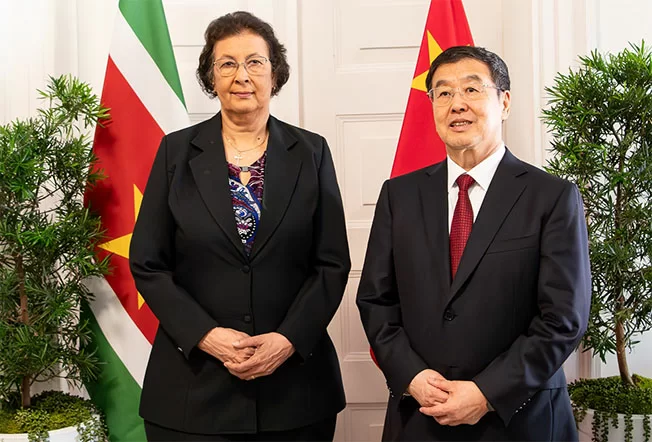
    In a recent high-level diplomatic gathering held in Santo Domingo, senior officials from the Dominican Republic and Suriname have moved forward with collaborative discussions focused on expanding joint work in hydrocarbon development and the broader energy sector. The meeting brought together Joel Santos, the Dominican Republic’s Minister of Energy and Mines, and Melvin Bouva, Suriname’s Minister of Foreign Affairs, where parties centered their dialogue on opportunities for joint oil and gas exploration, as well as potential partnerships in mining and large-scale energy initiatives. These talks unfold against a backdrop of rapid transformation in the Caribbean and Latin American regional energy landscape, where nations are actively reworking their energy strategies to balance security needs, climate goals, and economic growth.

    During the discussions, Minister Santos shared key updates on the Dominican Republic’s domestic energy plans, confirming that the country will launch its second competitive oil exploration bidding round this coming November. The initiative is designed to draw foreign and domestic investment into the country’s energy sector, shore up long-term national energy security, and deliver more comprehensive data on the full scope of the Dominican Republic’s untapped hydrocarbon reserves. Crucially, the bidding round will be structured to adhere to strict sustainable development practices and full transparency requirements, aligning with global standards for responsible resource extraction.

    Beyond non-renewable resource development, Santos also highlighted the Dominican Republic’s significant progress in transitioning to a cleaner energy system. He noted that renewable energy sources now account for more than one-quarter of the country’s total electricity generation, a milestone that has helped build a more diverse, climate-resilient national energy mix that reduces reliance on imported fossil fuels.

    Both delegations reaffirmed their shared commitment to deepening bilateral relations beyond the energy sector, with plans to explore expanded cooperation across a range of strategically important areas. In addition to energy and mining, the two governments are looking to advance collaboration on sustainable development priorities, with cross-ministerial participation from officials overseeing transport, tourism, digital communications, and international trade. This broad-based approach to partnership reflects both nations’ desire to unlock mutual economic benefits and strengthen their positions in the evolving regional and global energy market.

  • USA : Minister Paulemon presents Haiti’s vision for its healthcare system

    USA : Minister Paulemon presents Haiti’s vision for its healthcare system

    In a keynote address delivered at George Washington University on April 14, 2026, Sandra Paulemon, Haiti’s Minister of Planning and External Cooperation, laid out the Caribbean nation’s ambitious blueprint for transforming its healthcare system during an academic exchange hosted by the university’s Institute for African Studies. The event centered on critical intersections between public health outcomes and sustainable public financing strategies for vulnerable nations grappling with widespread instability.

    Paulemon opened her presentation by painting an unflinching picture of Haiti’s current health landscape, detailing long-standing structural barriers that have left millions without reliable access to care. She outlined the Haitian government’s incremental but ongoing work to expand, strengthen, and sustain healthcare access, with a deliberate focus on reaching marginalized and low-income communities that have historically been excluded from comprehensive services. At the core of the government’s agenda, she emphasized, is a deep-seated commitment to building a healthcare system that is resilient to ongoing shocks, equitable across all population groups, and fully sovereign, while upholding fundamental human dignity and advancing social justice for all Haitians.

    A major focus of the minister’s remarks centered on the disproportionate crisis facing women and girls in Haiti, who face widespread threats of sexual violence, exploitation, and coercion at the hands of active armed gangs operating across the country. Paulemon drew international attention to the acute vulnerability of displaced women who have fled their homes amid ongoing violence: many have survived severe abuse, carry deep psychological trauma, and face almost insurmountable barriers to accessing routine medical care, specialized psychosocial support, and formal protection services. She also noted the parallel crisis facing young boys in affected communities, who are regularly targeted for forced recruitment by gangs, robbing them of their childhood and eliminating any clear path to a stable, hopeful future.

    Against this backdrop of ongoing crisis, Paulemon argued that the domestic mobilization of resources for public health takes on urgent new meaning. She explained that sustained domestic investment would allow the Haitian state to expand its core capacity to protect, treat, and support the nation’s most vulnerable groups, including survivors of violence, at-risk children, and entire communities displaced by ongoing insecurity. Far from being a narrow social policy concern, she framed health financing as a foundational tool for advancing national stability, expanding social protection, and strengthening the nation’s overall resilience to overlapping crises.

    Paulemon also outlined the central coordinating role of her Ministry of Planning in aligning disparate resources from national, bilateral, multilateral, and humanitarian partners into a single cohesive strategy aligned with the Haitian government’s stated strategic priorities. She stressed that a core mandate of her department is to improve alignment between external donor funding, national public health priorities, and sector-specific strategies led by relevant Haitian state institutions, most notably the Ministry of Public Health and Population. This coordination, she argued, is critical to reducing fragmentation and ensuring that all invested resources advance national, rather than external, goals.

    Throughout her address, the minister reaffirmed the Haitian government’s commitment to collaborative partnership with both domestic stakeholders and international allies to build a healthcare system that can meet the population’s evolving needs, particularly for the most marginalized groups. She emphasized that this work must be rooted in the principles of national sovereignty, coordinated action, and effective public service delivery. A key long-term goal, she added, is to gradually reduce Haiti’s overreliance on external aid, building a self-sustaining health system that can address ongoing gaps with a targeted focus on survivors of gender-based violence and vulnerable youth.

    In closing, Paulemon underscored the urgent need to expand access to integrated physical and mental health care, scale up psychosocial support for violence survivors, and strengthen protection and economic reintegration programs for affected communities. Ensuring that no Haitian is left behind, ignored, or forgotten amid ongoing crisis is not only a core responsibility of the Haitian state, she argued, but a shared global commitment. “Together, through alignment, coordination, and unwavering commitment, it is possible to guarantee genuine protection, effective access to care, and tangible dignity for the Haitian people,” she concluded.

  • Bodemprocedure 8 decembermoorden gestart; vijf families dienen geen vordering in

    Bodemprocedure 8 decembermoorden gestart; vijf families dienen geen vordering in

    A landmark full civil procedure case against the state of Suriname, filed by 10 family groups of victims of the infamous December 8 murders, officially got underway in court this Tuesday. After a brief opening presentation of the case before the judge, legal representatives for both sides exited the courtroom, with lead counsel for the victims’ surviving relatives Hugo Essed stopping to speak with reporters to outline the details of the historic proceeding.

    Essed emphasized that this is not a fast-track summary proceeding, but a full substantive civil trial that will examine the core merits of the families’ claims. Against expectations for a years-long delay, he noted that the case launched with far greater speed than anticipated, and projects that a final court ruling could be delivered within roughly 12 months.

    In total, 60 family members of the 10 slain victims – including prominent public figures John Baboeram, Cyril Daal, Edmund Hoost, Rudie Kamperveen, Harrie Oemrawsingh, Leslie Rahman, Cornelis Riedewald, Jiwansing Sheombar, Jozef Slagveer and Somradj Sohansingh – have joined the collective lawsuit against the Suriname state. The claimants are demanding three core outcomes: official public rehabilitation of the victims’ reputations, a formal public apology from the Suriname government, and financial compensation for the harm they have suffered. Per participating family, the claims total 500,000 euros for material damages and an additional 750,000 euros for non-material harm stemming from the killings.

    Beyond compensatory damages, the families are also seeking 250,000 Surinamese dollars per family to cover court and legal representation fees. To enforce any potential ruling in their favor, they have additionally requested a daily penalty payment of 500,000 Surinamese dollars per family for every day the state fails to comply with the court’s final judgment.

    A notable detail emerging from the opening day is that five additional families of victims connected to the 1982 massacre have opted not to join the legal action. Essed told reporters that he has no insight into what led these families to decline participation, noting that all surviving heirs were extended a formal invitation to join the claim. “All heirs were given the opportunity to participate in this action. I cannot say why some chose not to take part; as counsel for the participating families, I have had no contact with the unrepresented families,” Essed explained.

    He added that outreach to all surviving relatives was coordinated through the Organization for Justice and Peace (OGV), which first shared detailed information about the planned legal proceeding with families more than a year ago. Collecting the required legal documentation, including proof of inheritance and formal power of attorney from all claimants, took longer than initially projected to complete, contributing to the gap between initial planning and the launch of the trial.

    Essed also laid out the legal foundation for holding the Suriname state directly liable for the killings. “The murders were carried out by individuals acting in their capacity as state officials and government functionaries, using state-owned resources and infrastructure, including weapons and military facilities belonging to the National Army of Suriname. That direct connection makes the state co-liable for the killings,” he argued.

    Under Suriname’s legal framework, if the court finds the state liable for damages, the government would then have the right to pursue separate claims to recover those funds from the perpetrators of the massacre or their heirs. Essed, however, cautioned that this path would be largely unworkable in practice, as most of the individuals directly involved in the killings are not believed to hold significant personal assets that could be seized to cover the damage awards.