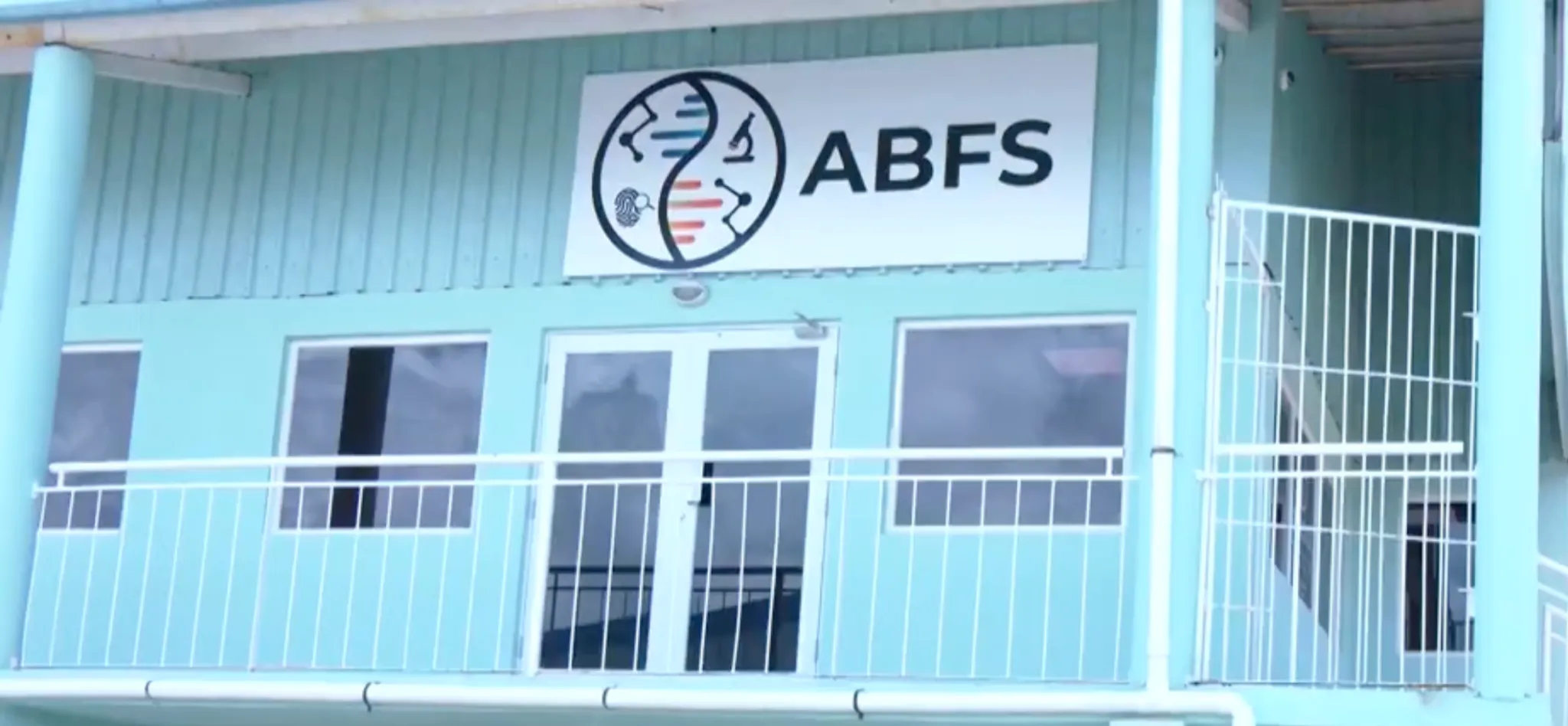
A high-stakes legal conflict over the mothballed Stake Bank cruise port development project has moved forward in London’s courts, even as uncertainty about the project’s future continues to roil stakeholders in Belize. At the heart of the dispute are founding developers Michael and Melita Feinstein, who have launched a legal claim against prominent Honduran businessman Guillermo Bueso Anduray. The Feinsteins allege that Bueso leveraged his substantial influence over Belize’s Atlantic Bank to illegally seize control of the multimillion-dollar infrastructure project and force the original founders out of the venture. The claimed damages in the case exceed 10 million British pounds, equivalent to roughly 27 million Belize dollars. To date, the court has not yet begun to examine the substantive merits of the founding pair’s allegations. Instead, the proceedings have been held up by a foundational jurisdictional challenge: Bueso’s legal team has argued that the English court has no authority to adjudicate the dispute at all, pausing any review of the core claims. A consent order issued by the court in March confirms that both parties have agreed to extend existing filing deadlines in the case. All formal legal submissions are scheduled to be completed by September, with a public hearing on the jurisdiction question expected to take place before the end of 2026. This London-based proceeding is the latest chapter in a years-long conflict that has already been fought through Belize’s national court system and multiple international arbitration panels. For the foreseeable future, the fate of one of Belize’s most controversial planned development projects remains unresolved. As the legal fight unfolds overseas, no final ruling on the project’s ownership or future is on the immediate horizon, leaving the stalled initiative in continued limbo.
博客
-

How Intelligence Stopped the Neuland Drug Flight
On April 14, 2026, new details have emerged of a major drug plane interdiction operation in Neuland, Belize, revealing that the successful bust was not a random stroke of luck, but the culmination of months of deliberate intelligence work, seamless inter-agency coordination, and critical cross-border partnership with United States law enforcement entities.
Following a joint public briefing held by Belize’s combined law enforcement teams this week, officials have pulled back the curtain on the operational workflow that led to the intercept. Belize Police Commissioner Dr. Richard Rosado emphasized that the operation dismantles the narrative that the country serves as an unchallenged transit hub for transnational drug trafficking networks.
“This successful operation sends a clear message: Belize is not an open transit route for illegal narcotics,” Rosado stated in the briefing. “We have built out the full capabilities to detect, track, and intercept illicit shipments, backed by robust intelligence and strong global partnerships. We have the tools and the coordination to get the job done.”
When asked about the level of support provided by U.S. counterparts, Rosado confirmed that American agencies were involved at every stage of the operation, from the initial intelligence gathering that flagged the suspicious flight through to the final arrest of the individuals involved. Under Belize’s current counter-narcotics framework, any confirmed alert of an illicit trafficking movement triggers an automatic referral to the Joint Interagency Coordination Committee (JIAC), which brings together all relevant national security entities including the Belize Police Department, Belize Defense Force, Belize Coast Guard, and the national Customs Department. Rosado noted that this operation marked a landmark demonstration of this coordinated system working in perfect unison.
Belize Coast Guard Commandant Captain Gregory Soberanis also detailed his service’s role in the operation, reaffirming the branch’s ongoing commitment to deepening collaborative ties with national partner agencies. “The Belize Coast Guard remains fully dedicated to strengthening our partnership with the Police Department and the Belize Defense Force,” Soberanis said. “This is a relationship we will continue to build on, as we work side by side to guarantee the safety and security of all Belizean citizens.”
The successful intercept highlights the growing effectiveness of Belize’s counter-narcotics infrastructure, and underscores the critical role of both inter-agency coordination and international cooperation in disrupting transnational drug trafficking operations before illicit substances can enter regional supply chains.
-

Arrival of the GSF Commander-in-Chief in Haiti
In a landmark step toward restoring national stability amid Haiti’s ongoing gang violence crisis, the senior leadership of the multilateral Gang Suppression Force (GSF) touched down in the Caribbean nation this week, marking the official start of coordinated security operations across the country.
On Tuesday, April 14, 2026, Haiti’s top national police leadership formally welcomed the GSF delegation at the General Directorate headquarters of the Haitian National Police (PNH). Vladimir Paraison, the PNH Acting Commander-in-Chief, led the reception alongside members of the PNH High Command, while the visiting GSF contingent was headed by Major General Erdenebat Batsuuri of the Mongolian Armed Forces.
The closed-door working meeting focused exclusively on hammering out logistical and strategic details for the GSF’s upcoming operational rollout across Haitian territory. Major General Batsuuri was joined in the delegation by senior military officers from two other contributing partner nations, Sri Lanka and Chad, and he confirmed in remarks after the meeting that additional countries will also commit personnel and resources to the international security mission.
This initial high-level visit is framed as a core preparatory milestone for the GSF’s phased deployment across Haiti. A key priority of the talks was strengthening on-the-ground coordination mechanisms between the international force and local PNH units, which have been struggling to contain widespread gang activity that has displaced hundreds of thousands and crippled basic governance in recent years.
To contextualize the mission, the GSF operates under a clear offensive mandate: its primary objectives include dismantling and neutralizing violent armed gang groups, securing critical national infrastructure that is essential for the delivery of basic services, and providing direct operational support to overstretched Haitian police forces. Beyond offensive action, the force will also work to consolidate control over and stabilize areas that the PNH has already reclaimed from gang control, laying the groundwork for a gradual, nationwide restoration of public safety.
The arrival of the GSF leadership comes after months of international diplomatic and logistical preparations to address Haiti’s deepening security emergency, representing the most substantive international intervention to resolve the country’s crisis in recent years.
-

FLASH – Devastating floods leave at least 12 dead in Northwest Haiti
Between April 11 and 13, 2026, torrential downpours unleashed catastrophic flash flooding across Haiti’s Northwest Department, leaving at least 12 people dead, dozens missing, and more than 2,500 families displaced across three hard-hit municipalities: Port-de-Paix, Saint-Louis du Nord, and Anse-à-Foleur.
Torrential rainfall swelled multiple regional rivers, including the major Rivière des Trois Rivières, sending rushing floodwaters into low-lying communities and saturating already vulnerable soil. Haiti’s Civil Protection Directorate has warned that the emergency is far from over, maintaining the highest level of vigilance amid ongoing threats of additional landslides and flash flooding if forecast rain continues to hit the region.
Preliminary data from the Departmental Directorate of Civil Protection confirms that all 12 confirmed fatalities occurred in the first, third, and fourth rural sections of Saint-Louis du Nord, where victims were either killed by landslides or swept away by fast-moving floodwaters. Multiple serious injuries have been documented, and search operations continue for an undetermined number of missing people, including local fishermen and residents living along riverbanks in Anse-à-Foleur.
Displaced residents have been forced to evacuate their damaged homes, taking shelter with extended family members or in makeshift temporary emergency shelters. Local officials have already issued an urgent appeal to Haiti’s central government for critical aid supplies, including emergency food rations, clean drinking water, hygiene kits, and sanitation infrastructure, warning that a lack of these resources could spark a secondary public health crisis in flood-stricken communities.
Infrastructure damage across the region is extensive. More than 1,200 residential properties have been flooded, with low-lying neighborhoods in Port-de-Paix such as La Saline and Haut-Gallois suffering severe structural damage to dozens of homes. The key intercity highway connecting Port-de-Paix to Saint-Louis du Nord is now impassable in multiple stretches due to landslides, while multiple smaller bridges and culverts have been structurally compromised by flood force. The Ti Rivyè bridge, a critical regional crossing, was completely destroyed by rushing waters.
Local public services have also been brought to a halt: all schools and health centers across the three affected communes have been flooded with mud, leaving the facilities inaccessible and cutting off residents from basic education and medical care. The region’s agricultural sector, a core source of livelihood for thousands of small-scale producers, has suffered near-total ruin. Fertile agricultural plains surrounding Anse-à-Foleur and Saint-Louis du Nord remain submerged, wiping out this season’s entire harvest of bananas, corn, and beans. Hundreds of head of livestock, including cattle, goats, and pigs, have been swept away, representing an irreversible financial catastrophe for small farming households that rely on these animals for income and food security. Many key irrigation canals are now clogged with sediment and flood debris, a barrier that will delay the recovery of agricultural activity long after floodwaters recede.
While the Civil Protection Directorate and local non-governmental organizations continue working to assess full damage and unmet humanitarian needs, access to remote communities in Anse-à-Foleur remains severely limited. Saturated ground and debris blocking rural access roads have slowed search and rescue operations and prevented aid from reaching some of the hardest-hit populations.
-

Government Seeks Funds for National Fire Service Headquarters
For decades, one critical infrastructure gap has undermined the operational effectiveness of Belize’s National Fire Service: the service has never had a purpose-built, centralized national headquarters to coordinate its activities across the country. This longstanding absence has created cascading challenges, from fragmented inter-station coordination and subpar standardized training to limited capacity for vehicle and equipment maintenance, all of which have dragged down departmental morale over the years.
Successive national governments have publicly recognized the urgent need for a centralized headquarters facility, and numerous blueprints and political pledges have been put forward over time. However, the initiative has remained stalled at the planning stage, never moving to actual construction. Today, while the project has not been completely abandoned, funding remains the single largest barrier to breaking ground, even with a suitable plot of land already secured.
The allocated site sits along Lake Independence Boulevard, adjacent to the Eleanor Hall Building in a readily accessible area. Disaster Risk Management Minister Henry Charles Usher confirmed that the administration still views the headquarters as a key priority under its national development initiative Plan Belize, but domestic budget allocations for the upcoming cycle do not include the funds required for construction. To move the project forward, the government is now reaching out to international partners for financial and logistical support.
In a public statement confirming the government’s approach, Minister Usher emphasized that the facility will serve as a permanent operational home for the National Fire Service, addressing critical unmet needs. “We don’t have the domestic funds to undertake this project right now,” Usher explained. “We already have the land set aside right next to the Eleanor Hall Building, so we are actively seeking external funding. Our hope is to form a partnership with the U.S. Embassy in Belize to secure the resources needed to build the headquarters.”
He went on to outline the core functions the new facility will fulfill, noting that it will provide dedicated space for national-level training programs, a centralized mechanical unit for fire truck maintenance and repair, and a coordination hub for emergency response across Belize. “The National Fire Headquarters is an essential investment to ensure our fire service has all the resources it needs, and a permanent base to operate from,” Usher said. “It is a key part of Plan Belize, and we are committed to getting it built. It just isn’t included in this year’s budget. Rest assured that once we secure the funding and set a construction timeline, the public will be the first to receive that update.”
This report is a transcribed excerpt from an evening television newscast, with all non-English remarks formatted using a standardized spelling system for accessibility.
-

Henry Charles Unaware of Fire Department’s Media Dodge
As Belize enters the hottest, driest phase of its annual dry season, the threat of destructive wildfires and residential blazes has spiked once again — creating an urgent need for clear public communication and transparent updates from emergency responders. But over recent months, a puzzling pattern has emerged: frontline firefighters have repeatedly turned down requests for media interviews, even in the aftermath of large-scale fire incidents. This consistent silence has sparked growing public debate over whether the lack of outreach is a deliberate institutional policy, leaving communities underserved with critical safety information at a high-risk time.
Local journalists recently pressed Henry Charles Usher, Belize’s Minister of Disaster Risk Management, directly on these growing public concerns, asking explicitly whether a formal ban on media engagement for fire department personnel was in place. Usher told reporters he had no prior knowledge of any such directive, and flatly denied that any official policy prohibiting firefighters from speaking with press outlets exists.
Amid the rising danger, Usher acknowledged that the country is already facing a sharp uptick in fire activity. “We are seeing a lot of bush fires, certain forest fires. We’re seeing a lot of residential fires as well, so it’s still an ongoing effort to make sure that we are able to respond to those as best as we can,” he said.
When pressed again to confirm whether a no-comment policy was active, Usher reaffirmed that he was hearing the allegation of a formal media ban for the first time during the interview, and pledged to launch an internal inquiry to get to the bottom of the consistent refusals. He did, however, offer a potential explanation for the trend, noting that existing investigative protocols may be driving the silence.
Under Belize’s current procedures, when a fire is suspected to be arson or another criminal act, the fire department conducts an initial scene investigation before passing all findings to the police service, which takes over as the lead investigating agency. In these cases, Usher explained, frontline firefighters at the scene are not in a position to share formal conclusions about the cause of the blaze, as that responsibility falls to police lead investigators.
“So maybe that’s the case, but certainly it’s not a policy for them not to speak to the media,” Usher emphasized.
This report is adapted from a transcribed evening television newscast, with transcribed Kriol language comments standardized to consistent spelling for published distribution.
-

Communication Breakdown Clouds Caye Caulker Police Station Plans
A planned new police station for the small Belizean island of Caye Caulker has escalated from a local community disagreement to a growing political controversy, after recent electoral redistricting shifted the island into the Fort George parliamentary constituency, drawing regional political attention to the conflict. While local residents do not oppose the construction of a new police facility itself, widespread frustration has emerged over the lack of transparent engagement and early consultation from central authorities, turning procedural disagreements into a test of local governance. Henry Charles Usher, the elected Area Representative for the newly reconfigured Fort George constituency, has confirmed he is closely tracking the evolving situation as community concerns continue to mount. In comments carried on local broadcast news, Usher acknowledged that critical missteps from the start of the planning process created the current rift. “I certainly agree that there was a lack of communication in the beginning,” Usher stated. “I do believe that the duly elected village council should have been consulted. There should have been a meeting to discuss the plans.” Usher emphasized that the core project itself enjoys broad support, noting that a modern, upgraded police presence is a needed addition for the island community. “I don’t necessarily think that it’s a bad idea what is happening. I think that the police station will be built. Whether it is built there or built somewhere else, the island will be getting a modern police station,” he explained. The representative also noted that local residents have raised separate requests for additional public amenities, including a new visitor welcome center, and that these priorities will require separate, dedicated discussion with community leaders. “Now, if you want to look at other amenities at the island that the residents of Caye Caulker are looking at, ’cause I’ve heard that they’re speaking about a welcome center or something to that effect then certainly that discussion has to happen,” Usher said. “But where the police station is built is less important than the fact that it’s going to be built. And I think that is important. But in the beginning, that information should have been communicated and there should have been a proper dialogue with the relevant authorities out there.” This report is adapted from a transcribed evening television news broadcast, with all quoted content retained in its original context for accuracy.
-

Belize Tackles One of Hurricanes’ Deadliest Threats
As the 2026 Atlantic hurricane season draws near, the small low-lying Central American nation of Belize has brought one of hurricanes’ deadliest and most underrecognized hazards — storm surge — to the top of its regional climate adaptation agenda. This week, Belize is hosting a three-day high-level international workshop in Belize City, uniting leading meteorologists, national disaster response managers, and climate resilience experts from across the globe to refine storm surge forecasting and early warning capabilities for coastal communities throughout the Caribbean.
Storm surge, the rapid rise of seawater pushed inland by a hurricane’s strong winds, is responsible for roughly half of all hurricane-related fatalities in the Atlantic basin, and it poses an existential risk to low-lying coastal nations like Belize. The country has carried the collective memory of devastating storm surge damage for more than half a century, ever since Hurricane Hattie destroyed most of Belize City’s coastline in 1961, leaving hundreds dead and reshaping the nation’s urban development. Today, as climate change accelerates sea level rise and intensifies the strength of tropical cyclones, the threat of catastrophic storm surge has grown more urgent than ever.
The workshop, supported by long-term global partners including the U.S. National Hurricane Center (NHC) and the University Corporation for Atmospheric Research, builds on a 10-year regional capacity-building initiative to bring advanced storm surge modeling to vulnerable Caribbean nations. Belize was one of the first countries in the region to gain access to this cutting-edge modeling technology, which simulates potential storm surge impacts across the country’s varied coastline topography.
Ronald Gordon, Belize’s chief meteorologist, explained that the modeling framework does not focus on long-term climate projections; instead, it generates hundreds of synthetic hurricane scenarios that test how different storm intensities, forward speeds, and approach angles would interact with Belize’s unique coastal terrain to produce storm surges of varying heights. Over a decade of refinement, the models have become far faster, more geographically detailed, and more accessible to national forecasters across the Caribbean, thanks to U.S. government funding through the NHC.
Jamie Rhome, deputy director of the NHC, outlined the core goals of the week-long gathering: training local teams to identify at-risk communities before a storm forms, pre-position emergency resources, and issue accurate, timely warnings when a threat emerges. Technological advances have transformed the pace of capacity building, he noted: where it once took two to three years to deploy customized modeling systems for a single country, experts can now roll out the tools far more quickly, allowing the initiative to scale across the entire Caribbean region at an accelerated rate.
For Belize’s disaster leadership, the workshop also offers a critical opportunity to learn from recent real-world experience. Henry Charles Usher, Belize’s Minister of Disaster Risk Management, highlighted that delegates from Jamaica — which suffered a direct hit from Category 5 Hurricane Melissa just one year prior — are sharing on-the-ground lessons about storm surge impacts and response. “This gathering lets us draw from the hard-won experience of our neighbors,” Usher said. “Our goal is to use this advanced modeling and early warning technology to keep our communities informed, protect lives and property, and help our nation recover faster if a major storm strikes.”
Workshop organizers and participants stress that stronger scientific data and clearer, faster communication of warnings will be the deciding factor between life and death when the next major storm makes landfall. As climate change amplifies hurricane risk across the Caribbean, regional collaborative efforts like this initiative have become an essential tool for building climate resilience in the world’s most vulnerable coastal nations.
-

Government meets today with Leonel Fernández to address global crisis
In the Dominican capital of Santo Domingo, a high-stakes cross-party gathering is set to take place Thursday evening, bringing top government officials together with former head of state Leonel Fernández and senior leadership of the opposition People’s Force party. The core purpose of the closed-door meeting, hosted at the Global Democracy and Development Foundation starting at 6:00 p.m., is to outline the full parameters of President Luis Abinader’s national preparedness initiative, which has been developed to shield the country from fallout linked to escalating international tensions between the United States, Israel, and Iran.
The official government delegation will be led by José Ignacio Paliza, Minister of the Presidency, and will include two senior advisors, Magín Díaz and Eduardo Sanz Lovatón. Details of the planned consultation were officially verified by Omar Fernández, spokesman for former president Leonel Fernández, confirming that both government technical experts and opposition policy specialists will participate in the discussion.
This cross-sector dialogue forms a central pillar of the Abinader administration’s broader strategy to build unified national consensus around risk mitigation. The government is working to shore up domestic resilience ahead of any potential economic and social shocks that could ripple out from the worsening geopolitical standoff in the Middle East. Prior to this meeting, administration officials already held an identical consultation session with another former Dominican president, Danilo Medina, and key representatives from the Dominican Liberation Party, one of the country’s largest opposition blocs. The ongoing series of conversations reflects a deliberate push to include all major political, economic, and social stakeholder groups in national preparedness planning, rather than advancing policy unilaterally.
-

Chief Meteorologist Debunks Viral Heatwave Warning
A false warning claiming an extreme, record-breaking heatwave is imminent in Belize has spread rapidly across social media platforms, sparking unnecessary anxiety among local residents already adjusting to the elevated temperatures of the annual dry season. To counter the misinformation, the country’s top meteorological official has stepped forward to correct the record and guide the public toward reliable weather updates.
Ronald Gordon, Belize’s Chief Meteorologist, clarified in an official briefing that while the nation is currently in its annual hot season, official forecast models do not predict extreme heat or record-breaking temperatures over the coming four days. “We are in the typical hot season, however, looking out for the next four days based on our forecast, we are not looking at extreme heat,” Gordon explained. “We are gonna be warm and we expect that, but we are not looking at extreme heat. I know that there was an article published on social media, didn’t come from us, indicating there’ll be a heat wave and extreme heat. We’re not looking at extreme heat and we’re not looking at any record breaking for the next, at least four days.”
Gordon also provided context on Belize’s recent heat trends, recalling that 2024 saw the most extreme recent heat event, with temperatures exceeding 100 degrees Fahrenheit for multiple consecutive days. While 2025 brought a small number of heatwave events, they were far less severe and frequent than the 2024 heat event, he added.
Looking ahead through the end of April and into early May, Gordon confirmed that long-term climate patterns do indicate heatwaves are likely to occur in the coming weeks. “We do expect that from climatology, that is the average over many years, that going into May, we will get some heatwaves,” he said. “We can say that definitely we will get some, and we cannot say when for sure at the moment, but we will get some heatwaves before the end of this month and into early May.”
The chief meteorologist urged Belizeans to only seek weather information from official national meteorological sources to avoid falling prey to misinformation that can spread quickly through unvetted social media posts. Even though no immediate extreme heat is on the horizon, residents are still encouraged to prepare for gradually warming conditions as the dry season progresses.