博客

  • Piton Boyz learn Nations League fate

    Piton Boyz learn Nations League fate

    Despite a lingering vacancy in the head coaching role, Saint Lucia’s senior men’s national football team, nicknamed the Piton Boyz, has locked in its competitive path for the next two years, with the full fixture map confirmed for the 2026-27 iteration of the Concacaf Nations League (CNL).

    The fifth edition of Concacaf’s flagship regional national team competition will unfold across four international match windows, kicking off in the September-October 2026 FIFA fixture period, continuing with additional group-stage matches in November 2026, and concluding with knockout rounds in March 2027. On July 23, the official group draw ceremony took place in Miami, Florida, where Saint Lucia, competing in CNL’s League B this cycle, learned the identity of its three Group B opponents: Barbados, Bermuda, and Guadeloupe.

    Saint Lucia will play a total of six group-stage matches between September and November 2026, per the official fixture layout published by Concacaf. All of the Piton Boyz’ September fixtures will be hosted in Bermuda, before the team returns to its home ground for October matches. The group phase will wrap up in November with two away matches hosted in Guadeloupe.

    Currently ranked 166th in the official FIFA Coca-Cola Men’s World Rankings, Saint Lucia will open its 2026-27 CNL campaign against a familiar opponent, Barbados, on September 25. Ranked 179th globally, Barbados—nicknamed the Bajan Tridents—holds the lowest position in the four-team group. Recent form data shows that dating back to the middle of 2024, Barbados has claimed only five wins from its last 15 international matches, alongside three draws. The two sides last faced off in June 2025 during the second round of 2026 FIFA World Cup Qualifying, where Saint Lucia secured a narrow 2-1 victory over the Tridents.

    Four days after their opening match, on September 28, Saint Lucia will face off against Bermuda’s Gombey Warriors. Ranked 167th in FIFA rankings—just one spot below Saint Lucia—the two nations have not met since 1990, when Bermuda earned a 2-0 win in that lone prior encounter.

    Analysts widely view Saint Lucia’s back-to-back October matches against Guadeloupe, scheduled for October 2 and 5, as the toughest tests of the group stage. Though Guadeloupe is not a FIFA member and therefore holds no official global ranking, the side was the highest-seeded team entering the draw, marking it as the group’s favorite to top the table. This upcoming series will mark the second time the two sides have clashed in CNL competition: during the 2023-24 CNL cycle, Saint Lucia claimed a 2-1 home win over Guadeloupe, but fell 0-2 in the away reverse fixture.

    The head coaching position that led Saint Lucia to recent success remains unfilled, as the Saint Lucia Football Association confirmed its split with former manager Stern John just over two weeks before the Miami draw. During his tenure, John guided the Piton Boyz to a second-place group finish in the 2024-25 CNL cycle, including a notable upset win over higher-ranked Curaçao, and led the side to qualify for the 2023 Concacaf Gold Cup preliminary round.

    For this 2026-27 cycle, the incentives for topping Group B are clear: the first-place team will secure automatic qualification to the 2027 Concacaf Gold Cup, which will be hosted in the United States. They will also earn promotion to League A for the subsequent CNL cycle and advance to the League B semifinals scheduled for March 2027.

  • Antiguan Chef Nadine Anthony Joins International Judging Panel for Caribbean Baking Awards

    Antiguan Chef Nadine Anthony Joins International Judging Panel for Caribbean Baking Awards

    One of the Caribbean’s most anticipated culinary competitions is getting underway today, as the judging phase of the annual Caribbean Baking Awards officially kicks off. This year’s contest has raised the bar for excellence, assembling a diverse, world-class panel of judges that blends top regional culinary talent with a high-profile celebrity judge from the United States, bringing unmatched expertise and global standards to the evaluation process.

    The panel features leading baking and culinary professionals from across the Caribbean region: celebrated Chef Nadine Anthony represents Antigua and Barbuda, acclaimed Chef Dominic Dart brings expertise from his Trinidad and Tobago-Guyana roots, and distinguished Chef Kareem Brooks joins from Sint Maarten. Rounding out the elite judging team is celebrity Chef Lincoln Alexander, hailing from the United States, whose addition underscores the competition’s commitment to upholding rigorous, international-level evaluation standards for all participating bakers.

    For Chef Nadine Anthony, the opportunity to serve alongside such a distinguished group of industry leaders is a meaningful career milestone. “I am deeply honored to collaborate with some of the best culinary minds in the business, including celebrity Chef Lincoln Alexander,” she shared. “I look forward to growing my own craft and refining my professional approach as I evaluate the incredible baking artistry presented by this year’s competitors.”

    Shanda Webster-Glasgow, founder and CEO of the Caribbean Baking Awards, emphasized what the ongoing development of the competition means for the regional culinary scene. She noted that the consistent support the event has received from the government and people of Antigua and Barbuda makes clear the nation’s unwavering commitment to advancing culinary excellence across the region. That support, she added, has also helped solidify Antigua and Barbuda’s growing influence in the Caribbean’s fast-expanding baking industry, creating new opportunities for bakers across all Caribbean nations to showcase their skills on a global stage.

  • Colombian Passport Among Items Seized as Police Recover Illegal Firearm, Three Arrested

    Colombian Passport Among Items Seized as Police Recover Illegal Firearm, Three Arrested

    St. John’s, Antigua and Barbuda – July 25, 2026 – The Royal Police Force of Antigua and Barbuda has escalated its proactive, coordinated crime reduction initiatives across both islands of the nation, launching a multi-unit sweep designed to disrupt ongoing criminal networks, remove illegal weapons from communities, and bolster overall public safety for residents and visitors alike.

    Over a 48-hour period starting July 23, specialized units from across the force – including the Criminal Investigations Department Task Force, the Gang and Guns Suppression Unit (GAGSU), the K-9 detection unit, and the Forensic Evidence Recovery Unit (FERU) – collaborated to execute a series of targeted interventions. These operations spanned multiple residential and public communities, encompassing court-authorized search warrants, roving mobile patrols, fixed vehicle checkpoints, and intelligence-driven tactical exercises tailored to local crime patterns.

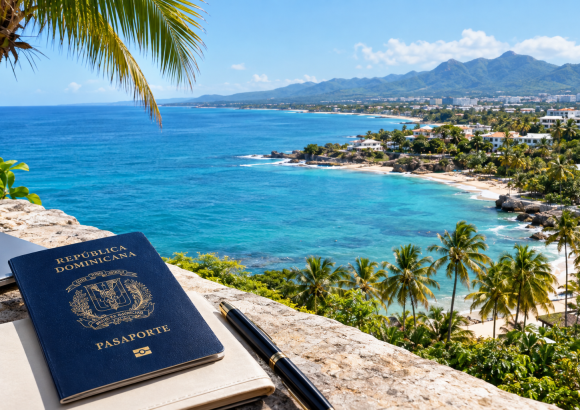
    One of the most significant seizures came during a targeted operation in the community of Collins, where law enforcement officers recovered an unregistered firearm alongside multiple rounds of matching ammunition. Investigators also seized additional evidence tied to the ongoing case: a Colombian passport and a mobile cellular device. Two people were taken into custody following the operation, and both face charges related to illegal possession of unlicensed firearms and ammunition.

    Authorities carried out additional court-ordered search warrants at three other locations: East Bus Station, Cashew Hill, and Golden Grove. These operations yielded one additional arrest and a separate haul of evidence connected to active ongoing investigations, the police force confirmed.

    In a formal statement released via the Royal Police Force’s Office of Strategic Communications, the department’s senior administration emphasized that the current surge in operational activity is not a temporary measure tied to the upcoming Carnival festivities. “These heightened patrols, intelligence-led operations, stop-and-search exercises, and search warrant executions will continue long after the Carnival season concludes,” the statement noted, framing the expanded efforts as a core component of the force’s long-term national strategy to reduce violent crime, dismantle criminal organizations, and embed sustainable public safety across Antigua and Barbuda.

    The police force is calling on all members of the public to partner in these crime-fighting efforts, urging residents to remain alert to unusual activity in their communities and to report any suspicious behavior to law enforcement immediately to help prevent crimes before they occur.

  • Mitur: Recovering the Russian market is a priority for Dominican tourism

    Mitur: Recovering the Russian market is a priority for Dominican tourism

    The Dominican Republic’s tourism sector has made reclaiming its pre-pandemic, pre-conflict Russian tourist market a top strategic priority, according to the nation’s Minister of Tourism David Collado. In comments reported by local outlet Acento, Collado outlined the significant barriers that have blocked the resumption of full travel ties between the Caribbean nation and Russia, the most pressing of which are overflight restrictions imposed by the United States and Europe. These restrictions have derailed plans to launch direct air routes between the two countries, eliminating the most efficient travel option for Russian visitors.

    In the period after direct connections were halted, indirect travel via Cuban airspace offered a limited workaround for Russian tour operators and travelers. Collado confirmed, however, that shifting circumstances in Cuba have now made this indirect route unviable, leaving the Dominican Republic without a reliable pathway to welcome large volumes of Russian tourists. Despite these challenges, the minister noted that Russian travel industry players have remained engaged, with consistent communication reaching Dominican authorities from operators eager to restart packaged travel to the country’s popular beach and resort destinations.

    Collado also highlighted a small win for the nation’s international tourism recovery, confirming that commercial air operations between the Dominican Republic and Venezuela have officially resumed. Even with this progress, he emphasized that restoring access to the Russian market remains a non-negotiable priority for the sector. Prior to the suspension of air links, the Dominican Republic welcomed roughly 500,000 Russian tourists annually, making Russia one of the largest source markets for the country’s tourism-dependent economy.

    The sharp drop in Russian visitor numbers stems from a convergence of multiple overlapping factors beyond just airspace restrictions. The ongoing military conflict between Russia and Ukraine has reshaped global travel regulations for Russian operators and travelers. Additionally, long-haul flight operations face sustained economic and logistical headwinds, Russian airlines face broad international sanctions that limit their operations, and shifting economic conditions in both Russia and the Dominican Republic have added further complexity to restarting the market. With Russia located more than 11,000 kilometers from the Caribbean nation, developing a workable travel solution will require creative navigation of ongoing geopolitical and economic barriers.

  • Fire at Puerto Plata hotel under control; tourism returns to normal

    Fire at Puerto Plata hotel under control; tourism returns to normal

    In the Dominican Republic’s Puerto Plata province, a blaze that broke out at the Senator Hotels & Resorts complex has been fully extinguished, brought under control by the swift, coordinated action of multiple local emergency and public safety agencies. This update was shared by Atahualpa Paulino, regional director for the northern zone of the Dominican Republic’s Ministry of Tourism (Mitur).

    Paulino clarified key details to ease public and tourist concern: the section of the complex impacted by the fire was an unoccupied, shuttered hotel building that had no guests staying on-site at the time of the incident. As a result, there have been zero reported fatalities or injuries linked to the blaze. Critically, the fire did not spread to the complex’s two operating properties — Senator Bachata and Senator Puerto Plata — both of which remain open and continue welcoming guests as usual, with all regular services uninterrupted.

    In his official remarks, Paulino extended public gratitude to every agency and group that contributed to the emergency response. The full roster of participants includes the Maimón and Puerto Plata Fire Departments, Dominican Civil Defense, Tourist Police (Politur), the National Police, the Dominican Republic Air Force (FARD), the National Emergency and Security System 9-1-1, Ambar Rescue, Maimón municipal district mayor Divison Sánchez, and on-site staff from Senator Hotels & Resorts. Paulino emphasized that the rapid cross-agency coordination was the key factor that allowed response teams to get the fire under control quickly, limiting risk to people and preventing the blaze from spreading to adjacent active tourist facilities.

    In a formal statement, Paulino reaffirmed that both the Maimón municipal district and the broader Puerto Plata province remain safe, fully functional tourist destinations. All tourism and hospitality operations across the region are continuing as normal, while designated investigative authorities launch a formal probe into the cause of the fire and conduct a full assessment of the material damage sustained by the closed property.

  • Retailers indicate that sales for Father’s Day have decreased over the years

    Retailers indicate that sales for Father’s Day have decreased over the years

    In the lead-up to Father’s Day in Greater Santo Domingo, Dominican Republic, foot traffic in commercial plazas and retail stores has ticked upward in recent days — but both shoppers and business operators agree that total sales remain well below the averages recorded in years before the current economic downturn.

    As shoppers browsed city streets for gifts on the Saturday before the holiday, the most common refrain centered on the crippling impact of skyrocketing living costs, which has turned the annual tradition of gift-giving into a far more challenging expense than it was a decade ago. Normally, the week leading up to Father’s Day brings packed crowds to commercial areas across the capital, but widespread price hikes have forced consumers to be far more deliberate about where they spend their limited budgets, cutting back on non-essential purchases even for loved ones.

    Inside most retail outlets, foot traffic remains notably sparse, with many aisles holding only two to three shoppers at a time. Jennifer Mariñez, a sales associate at a local apparel store, noted that while foot traffic has picked up gradually from Friday, overall sales are moving far slower than in previous cycles. She added that an emerging trend of last-minute shopping has taken hold in recent years, with many consumers delaying purchases until the final hours before the holiday.

    The pressure of upcoming back-to-school expenses has further dampened Father’s Day spending, according to local shoppers. Ana Rosado, a mother and wife who toured multiple shopping districts including Duarte Avenue and Luperón Street looking for a gift, confirmed that most stores have seen drastically lower customer volumes. She pointed out that demand for school supplies has already outpaced Father’s Day gift purchases, as families prioritize mandatory education costs over holiday celebration spending.

    Shifting cultural trends also play a role in softening retail sales, according to some consumers. Rafael Montero, a father of three, said he increasingly prefers shared memorable experiences over material gifts for Father’s Day — a preference that he says is growing across Dominican families. “You have to adapt to the times,” Montero explained, noting that many families now opt for home-cooked meals, day trips, or other shared activities instead of purchasing physical presents.

    Even with these broader shifts, traditional apparel remains one of the most popular gift categories for shoppers who do choose to buy physical presents. Shirts, basic t-shirts, socks, and undergarments top the list of most sought-after items, holding steady as a go-to choice for consumers who want to give a tangible gift to their fathers or partners.

    Staff at a Duarte Avenue clothing store told local outlet Listín Diario that they expect a late rush of customers to boost end-of-day sales, matching the annual pattern seen in past Father’s Day celebrations. Business so far has been slower than a typical workday, they confirmed, but the team remains optimistic that consumer traffic will pick up as the workday ends. They noted that most early shoppers have been couples buying gifts for partners, and that the traditional late surge of children purchasing gifts for their fathers is still expected to arrive before closing, which could bring a much-needed boost to final holiday sales numbers.

  • As evening falls, Santiago changes its pace

    As evening falls, Santiago changes its pace

    When the golden glow of sunset softens the Caribbean heat over Santiago, the second-largest city in the Dominican Republic shifts into a new, relaxed rhythm. The constant hum of traffic still beats beneath the city’s surface, but it is no longer the only sound defining urban life. Now, it mingles with the whir of bicycle tires, the soft scrape of roller skates on paved walkways, the steady thud of joggers’ shoes, and the warm, overlapping laughter of families gathering in open green spaces.

    Long celebrated for its colonial history, vibrant Spanish-colonial architecture, world-renowned Creole gastronomy, and the iconic Monument to the Heroes of the Restoration, this city nicknamed the “Heart City” is cultivating a new, people-centered identity: a place where daily movement and community connection in public spaces have become core to urban life. Across the city, once-underused parks, tree-lined ecological corridors, and purpose-built recreational areas are no longer just routes to get from one place to another. They have evolved into daily meeting grounds that bring together generations, from toddlers learning to walk to retirees out for a leisurely stroll, all united by the shared goal of staying active while enjoying their city.

    Central Park, widely regarded as Santiago’s premier hub for outdoor activity, is a perfect example of this shift. On any given afternoon or weekend, visitors can spot groups of walkers circling paved paths, joggers pushing through a training session, cyclists navigating gentle loops, skaters practicing new tricks, fitness enthusiasts completing functional workout routines, and families spread out on picnic blankets catching up after a busy week.

    Just a few kilometers from the busy city center, the shaded trails winding along the banks of the Yaque del Norte River offer a quieter alternative. Framed by dense native vegetation and cooled by constant river breezes, these paths draw runners, cyclists, and casual walkers eager to escape the roar of downtown traffic and connect with natural scenery while completing their daily workouts. Even the city’s most iconic landmark, the Monument to the Heroes of the Restoration, has become a beloved fitness spot: its wide, sloping steps draw endurance trainers looking for a challenging stair workout, while the tree-dotted grounds surrounding the monument are perfect for gentle stretching and group activities. At the Professor Eugenio de Jesús Marcano Botanical Garden, visitors combine physical activity with nature engagement, wandering through curated plant collections as they get their daily steps in.

    For local residents, these public spaces offer far more than just a place to break a sweat. They have become living community centers where new friendships take root, neighborhood bonds are strengthened, and long-term healthy habits are normalized across age groups.

    One shining example of this community building is the free weekly outdoor yoga group that meets in Central Park. Organized via a WhatsApp community group, the gathering brings together yoga enthusiasts of all skill levels every Sunday morning, and the session is open to anyone who wants to join, no experience required. “There’s no registration, no membership fee – you just need to show up on the day to join the class,” explained Encamicarla Espinal, a young regular participant. “It’s such a welcoming way to start the weekend.”

    The yoga group is far from the only organized community making use of the city’s public spaces. Local running clubs, cycling collectives, and roller skating groups all use social media to coordinate group training sessions, share lesser-known scenic routes, and welcome new residents and beginners to join their activities, turning solo exercise into a social event.

    Every single afternoon, Santiago’s parks and riverside walkways bring together people from every walk of life: young professionals training for an upcoming marathon, office workers unwinding after a long day at their desks, parents chasing their toddlers around playgrounds, and retirees out for a gentle stroll to clear their heads. Enmanuel Mejía, a local father who brings his four-year-old son to Central Park regularly, summed up the appeal: “I love bringing him here. He gets to play in a safe, open space while I catch up on work or just take a minute to breathe. It works for both of us.”

    In reimagining its public spaces as hubs for connection and wellness, Santiago has demonstrated that urban open areas can be far more than decorative greenery. They are foundational to community well-being, turning individual exercise into a shared experience that brings the city closer together.

  • Forced labor: What products could be blocked by Customs following Donald Trump’s sanctions?

    Forced labor: What products could be blocked by Customs following Donald Trump’s sanctions?

    A new chapter in trade and labor regulation has opened in the Caribbean following the Trump administration’s recent decision to implement a 12.5% additional tariff on imports from the Dominican Republic. The U.S. move was rooted in claims that the Dominican government has failed to take sufficient action to address widespread forced labor in the country’s key sugarcane sector. In direct response, Dominican authorities have rolled out a formal regulatory framework to bar all goods produced wholly or partially through forced labor from entering its national market.

    The new policy is codified in Decree 502-26, signed and publicly released on the evening of Thursday, July 23. The legislation grants broad enforcement authority to the Dominican Republic’s General Directorate of Customs (DGA), tasking the agency with implementing the import ban and conducting investigations into suspected violations.

    While the decree does not outline a pre-approved list of banned goods, U.S. Department of Labor (USDOL) findings have long flagged sugarcane and sugar-derived products from the Dominican Republic as high-risk for forced labor inputs. USDOL first added Dominican sugarcane produced with forced labor to its List of Goods Produced with Child Labor or Forced Labor back in 2009. Multiple subsequent reports have confirmed that exploitative conditions remain pervasive across the country’s entire sugarcane sector, impacting plantations operated by private corporations, state-owned entities, and small independent producers alike.

    According to USDOL’s public analysis, the most vulnerable workers in Dominican sugarcane production are people of Haitian origin or descent, who are often subjected to living and working conditions that meet international definitions of forced labor. These sugarcane inputs are then used to manufacture a wide range of goods for export and domestic consumption: raw sugar, refined sugar, molasses, rum, bagasse, and furfural are the primary Dominican exports at the center of the debate. Beyond these core products, research indicates that forced labor-derived sugarcane inputs could also end up in beverages, confectionery, baked goods, processed foods, animal feed, paper, pulp, construction materials, biofuels, industrial chemicals, and pharmaceutical products.

    Trade data illustrates the deep economic ties between the two countries: the U.S. imports nearly all Dominican raw sugar exports and the majority of its molasses exports, purchasing more than $131 million worth of raw Dominican sugar in 2023 alone. The European Union, by contrast, imports 100% of Dominican furfural production.

    Under the terms of the new Dominican decree, DGA officials have the power to enact provisional protective measures while formal investigations are ongoing. These interim actions include suspending customs clearance for suspicious shipments, temporarily detaining suspected goods, and implementing any other steps necessary to stop high-risk products from entering the domestic market before a final ruling is issued. These measures apply even to shipments that have already departed for the Dominican Republic, are currently in Dominican ports, or are undergoing pre-import customs processing as of the decree’s entry into force.

    The legislation also mandates the creation of a centralized national administrative registry of products banned from import. DGA will maintain an up-to-date record of all goods that have been formally barred via final administrative decision, with entries including detailed supply chain information: producer and manufacturer identity, supplier details, production facility locations, country/region of origin, and other data to help authorities trace the origin of suspicious shipments and enforce the ban. The registry will be updated regularly to reflect new rulings, modifications or revocations of existing bans, and any other changes that impact its content. The framework explicitly notes that only products formally added to the registry are banned, with no blanket restrictions applied to unconfirmed goods or suppliers.

    To clarify the scope of the policy, the decree aligns its definition of forced labor with standards set by the International Labour Organization (ILO). The ILO defines forced labor as any work performed involuntarily, under the threat of some form of punishment or coercion. Common coercive tactics include physical violence and intimidation, withholding of identity documents to trap workers, and manipulated debt arrangements that leave workers unable to leave their positions. Under the 1930 ILO Forced Labor Convention, three core elements must be present to classify work as forced labor: the performance of work or service in any economic sector (including the informal economy), a threat of punishment for non-compliance or escape, and a lack of genuine voluntariness on the part of the worker. The ILO emphasizes that forced labor can impact adults and children across a wide range of sectors, but also clarifies that poor working conditions alone do not automatically meet the definition of forced labor.

    The Dominican Republic’s new import ban comes in direct response to the Trump administration’s updated global trade tariffs, which were announced by the Office of the United States Trade Representative (USTR) led by Jamieson Greer. The new tariff schedule grew out of Section 301 trade investigations launched by USTR in March 2025, which sought to determine whether other countries’ policies on forced labor-made goods harm U.S. workers and businesses. The 12.5% tariff on the Dominican Republic replaces a temporary 10% global tariff implemented by the Trump administration earlier this year, which expired on July 25 2025. This new round of tariffs marks the next phase of the trade war the Trump administration has driven since April 2025.

    Under the new schedule, the U.S. imposes a 10% additional tariff on imports from 17 global economies and a 12.5% tariff on others, with variable rates for some partners depending on product type. In Latin America, Mexico, Guatemala, Honduras, and El Salvador face the 10% rate, while Costa Rica, Panama, and the Dominican Republic fall into the 12.5% category. All 27 member states of the European Union face a combined 10% tariff. Other major affected economies include India, Japan, South Korea, Taiwan, Switzerland, Canada, and the United Kingdom, with variable rates based on product and origin. Notably, China, which has long been the target of U.S. trade tariffs, does not appear on the new list, facing separate, higher specific tariffs instead.

  • The Government announces that construction of the Amber Highway will begin next month

    The Government announces that construction of the Amber Highway will begin next month

    SANTO DOMINGO — In a major announcement for economic development in the Dominican Republic’s northern zone, Vice President Raquel Peña confirmed Saturday that construction on the long-awaited Amber Highway infrastructure project is slated to kick off in August. The transformative route will cut travel time between the high-population provinces of Santiago and Puerto Plata to under 30 minutes, with targeted goals of accelerating tourism, cross-regional commerce, logistics efficiency, and broad-based economic expansion across the 14 provinces that make up the country’s northern region.

    Peña shared the update with reporters following a joint expanded working meeting hosted by the Association of Merchants and Industrialists of Santiago (ACIS), which gathered representatives from allied regional institutions, leaders from across Cibao provinces, and Eduardo Estrella, the head of the Ministry of Public Works and Communications (MOPC), alongside other key stakeholders.

    “We are very pleased with the start of this project,” Peña told attendees, noting that the highway will unlock widespread benefits, sustained growth, and long-term development for the entire northern corridor. She emphasized that Santiago and the broader Cibao region are currently undergoing a period of robust economic and urban expansion, which has created urgent demand for upgraded infrastructure to meet growing population needs for mobility, interregional connectivity, and development support. The vice president also extended gratitude to the local private sector for its ongoing collaboration on the initiative, confirming that the national government is prioritizing public works investments that underpin regional growth through the construction and expansion of roads, bridges, and other critical infrastructure assets.

    According to MOPC Minister Estrella, the project is currently in the final pre-construction phase, with contract signing and stakeholder socialization underway with the firms that won the competitive bidding process. Back in early July, the Amber Highway Consortium SRL — a joint venture made up of four leading domestic construction firms: Ingeniería Estrella, Rizek Constructora, Magna, and Constructora Mar — secured the bid for the highway’s design and construction, awarded by the national RD Vial Trust.

    To speed up project delivery, Estrella explained, three simultaneous construction fronts will be established: one working northbound from Santiago toward Puerto Plata, a second working southbound from Puerto Plata toward Santiago, and a third operating from the route’s midpoint, cutting total build time by leveraging coordinated multi-point work.

    During the ACIS working session, Estrella also outlined the full slate of ongoing public infrastructure projects the government is rolling out across Santiago and the broader northern region, all designed to improve interregional connectivity, enhance road safety, and boost the global competitiveness of the Cibao area. Key priority projects highlighted include the expansion of the Navarrete ring road to four lanes, the widening of the existing Santiago-Licey highway, and new road connection works linking Moca and other nearby population centers.

    On ongoing national paving programs, Estrella noted that MOPC currently has multiple work brigades operating simultaneously across Santiago, Puerto Plata, San Francisco de Macorís, and other northern provinces. He added that due to ongoing national budget constraints and global increases in construction material costs, all infrastructure interventions are being rolled out according to evidence-based technical priority criteria, to ensure the needs of communities across the entire country are addressed in a balanced, equitable manner.

    ACIS President Marcos Santana, for his part, framed the cross-sector meeting as a sign of strong collaborative momentum. He noted that the participation of representatives from the northern region’s core productive, commercial, industrial, and service sectors demonstrates the clear commitment of the business community and organized civil society to work in coordinated partnership with the national government to advance initiatives that drive inclusive development across the Cibao region. Saturday’s gathering was organized in direct response to concerns raised by regional leaders during a prior working meeting held last week at the Vice President’s offices in the National Palace, putting collaborative problem-solving into action on a tight timeline.

  • Cabarete ready to host the surfing competition of the 2026 Central American and Caribbean Games

    Cabarete ready to host the surfing competition of the 2026 Central American and Caribbean Games

    CABARETE, Puerto Plata – One of the Caribbean’s most renowned water sports hubs has officially wrapped up all preparations to welcome elite regional surfers for the upcoming surfing competitions at the Santo Domingo 2026 Central American and Caribbean Games. Known globally as the Caribbean’s undisputed “wind capital”, Cabarete Beach has finalized upgrades to its logistical infrastructure and purpose-built competition zones, putting the finishing touches on plans to host more than 71 athletes hailing from countries across the Central American and Caribbean region.

    Local governing bodies and the event’s international organizing committee have issued official confirmation that every critical component of the event meets the strict requirements set by global surfing governing bodies. This includes robust security protocols, a panel of certified international judges, and purpose-built athlete areas designed to support competitors throughout the tournament.

    What sets Cabarete apart as a competition venue is its one-of-a-kind natural conditions: consistent trade winds and reliable swells create the ideal high-stakes technical environment that will push athletes to deliver their best performances across all tournament categories. The games will feature both men’s and women’s divisions across three competitive surfing formats: Shortboard, Longboard, and Stand-Up Paddle (SUP) Surf.

    Beyond the thrill of competition, this major regional sporting event carries long-term benefits for the local tourism economy. Organizers project that the tournament will put Cabarete and the broader Puerto Plata province in the global spotlight, cementing their reputation as a world-class water sports destination and attracting thousands of domestic and international visitors in the years to come. Already, official pre-competition training sessions are underway in Cabarete’s waters, kicking off the official countdown to the start of medal competition.