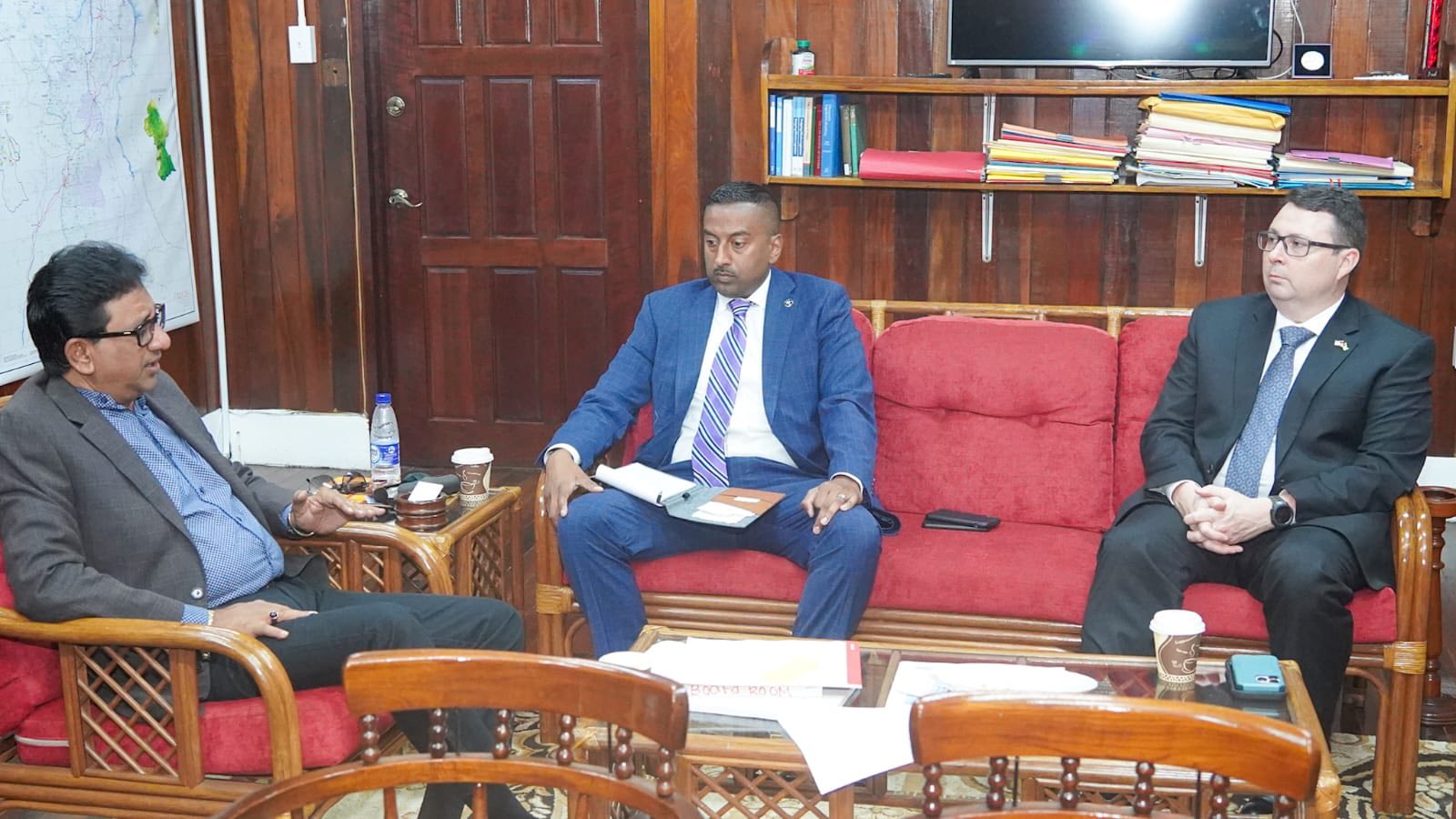
In a tense courtroom proceeding held on Thursday, the senior leader of the Guyana Police Force’s Special Branch intelligence division has confirmed that he deliberately destroyed original operational records documenting a private meeting between a U.S. Marshals Service official and two Guyanese businessmen wanted for extradition to the United States.
Senior Superintendent Prem Narine, the GPF’s chief intelligence officer, told the court that he shredded the physical record books containing details of the October 31, 2025 interaction between U.S. Marshal Sandy Rao and Azruddin and Nazar Mohamed, then burned the remains at Special Branch headquarters back in January 2026. The meeting took place shortly after the Mohameds were taken into custody by Guyanese authorities.
Narine pushed back against allegations from defense counsel Siand Dhurjon that the alternative documents presented to the court were not the authentic operational records from the date of arrest. When Dhurjon pressed him to confirm he intentionally eliminated the original record of the day’s events, Narine flatly rejected the claim.
When questioned about whether any existing institutional rule or formal written order mandated the destruction of these records, Narine defended his actions by claiming he was bound to destroy any materials he deemed classified. “Anything I consider that is a secret and should be destroyed, I do that….And for it to remain that way, I destroy it,” Narine told the court. He initially cited his status as a signatory to Guyana’s Official Secrets Act as justification, but later backtracked, stating he would need formal legal guidance to confirm whether his actions were aligned with national law or internal police policy. He added, “I would have to get some legal advice on how to answer that. I’m not sure. I don’t know if I’m allowed to answer that.”
Prosecutor McKenzie, representing the state, told the court he had no clear understanding of what Narine meant by his explanation of the document destruction. Chief Magistrate Judy Latchman also publicly pushed back on Narine’s initial justification, noting that the head of Special Branch cannot be a signatory to a national act of parliament.
In additional testimony delivered during Thursday’s hearing, Narine confirmed that he had explicitly approved Rao’s request for a private one-on-one discussion with the Mohamed brothers. The conversation took place while Narine remained in visual range, but he intentionally positioned himself out of earshot of the exchange. Critically, Narine admitted that this private meeting between a U.S. federal agent and the detainees was never logged in the official station diary of Guyana’s Brickdam Police Station. He also told the court he has no knowledge of what was discussed during the closed conversation.
Azruddin and Nazar Mohamed are currently wanted by U.S. authorities to stand trial in a Florida federal court on multiple felony charges including wire fraud, mail fraud, and money laundering. The U.S. Marshals Service is the lead U.S. federal law enforcement agency tasked with fugitive apprehension and international extradition coordination.
Earlier in the day, the defense team advancing the Mohamed brothers’ case had argued that the extradition effort amounts to political persecution. The legal team claimed that Azruddin Mohamed, the elder of the two, is a key financial backer of We Invest in Nationhood (WIN), a political movement led by his son, giving authorities a political motive to expedite the men’s transfer to the U.S.
Lead prosecutor Glenn Hanoman has repeatedly raised formal objections to what he frames as repeated, deliberate tactics by the defense to push back the extradition hearing as far as possible, expressing deep concern over ongoing delays to the legal process.