
Newly released mid-year crime statistics from the Royal Bahamas Police Force paint a concerning picture of shifting crime trends in the country, revealing a dramatic 125% jump in domestic-related incidents over the first six months of 2026 compared to the same period the year prior. Total domestic cases have surged to 825 this year, up from just 366 in the first half of 2025 – a sharp acceleration from 2025’s already concerning 16% year-over-year increase, which saw cases rise from 317 in 2024. What makes this year’s jump particularly notable is that dozens of subcategories of domestic harm have recorded triple-digit percentage increases, signaling a widespread escalation of intimate partner and family-related violence. Breaking down the data, domestic-related assaults have climbed 118% from 94 incidents to 205, while assaults involving deadly weapons have skyrocketed 267%, jumping from only three cases to 11. Requests for emergency protection and assistance from police have spiked 254%, growing from 35 to 124, and public disturbances linked to domestic conflict have risen 200% from 17 to 51. General domestic incident reports have jumped 173% from 48 to 131, and cases of grievous bodily harm have increased 133% from three to seven. Non-lethal harm cases have more than doubled with a 106% increase from 50 to 103, death threats have risen 102% from 42 to 85, property damage linked to domestic conflict has grown 74% from 31 to 54, harassment has increased 54% from 13 to 20, and general threats of harm are up 38% from 16 to 22. On the fatal side, this mid-year period saw two domestic-related murders, double the one recorded in the first half of 2025, while attempted murders held steady at one case. Only a small handful of domestic incident categories saw declines: fighting fell 25% from eight to six cases, threats of arson dropped 50% from two to one, zero domestic-related woundings were recorded compared to one last year, and trespassing cases remained unchanged at two. Alongside the surge in domestic incidents, police data also confirms a 13% increase in overall sexual offenses, rising from 87 cases in the first half of 2025 to 98 in 2026. This increase reverses the encouraging downward trend recorded in 2025, when sexual offenses fell 30% from 125 cases in 2024’s first half to 87. Within sexual offense statistics, reported rapes increased 12% from 25 to 28, and unlawful sexual intercourse cases rose 19% from 57 to 68. The only decline in this category was seen in attempted rapes, which fell 60% from five to two. Demographic breakdowns of the 2026 rape data reveal stark disparities: all 28 reported rape victims were female, 86% (24 victims) were under the age of 36, 18% (five victims) were tourists, 11% (three cases) were linked to domestic relationships, and in 36% of cases (10 incidents), the victim already knew the person accused of the attack. All identified rape suspects were male, 46% (13 suspects) were under 36, and 11% (three suspects) were tourists. Police note that single rape cases can sometimes involve multiple suspects, so these numbers do not represent a one-to-one ratio of cases to suspects. For unlawful sexual intercourse cases, 93% of the 68 victims were female and 7% were male. A striking 96% of victims knew their alleged attacker, and more than half (57%) of all incidents took place inside a private residence. Looking back at 2025’s mid-year data, that period’s decline was broad: rapes fell 24% from 33 in 2024 to 25 in 2025, attempted rapes dropped from six to five, and unlawful sexual intercourse cases fell 34% from 86 to 57, making 2026’s reverse in that trend all the more notable for law enforcement and public safety advocates.
博客
-

Turio launches specialized tourism academy in Dominican Republic
On Wednesday, Santo Domingo welcomed a groundbreaking new addition to its professional education landscape with the official launch of Turio, an academy purpose-built to advance specialized training and professionalization for the Dominican Republic’s critical tourism sector.
Unlike traditional tourism education models that center almost exclusively on hotel operations, Turio has been designed to cast a wider net, addressing the full spectrum of diverse segments, specialized roles, and growing activities that make up the modern Dominican tourism ecosystem. Its curriculum is built to fill critical gaps in existing training offerings, adapting to the sector’s rapid evolution in recent years.
All of Turio’s training programs are structured to be practical, up-to-date, and tailored to the specific needs of three core groups: existing industry companies, active tourism professionals, and emerging entrepreneurs entering the space. The academy’s course catalog covers a wide range of high-demand areas, including tourism strategy and management, daily sector operations, hospitality services, commercial management and distribution channel development, tourism technology, industry innovation, and sustainable tourism practices. It will also roll out flexible, role-specific modules targeted to individual tourism segments, ensuring learners gain skills directly applicable to their specific career paths.
The launch ceremony was hosted at the JW Marriott Santo Domingo, drawing a cross-section of key tourism stakeholders in attendance. Turio’s co-directors Yahir Asjana, José Cedeño, and Sarah María joined industry representatives, academic leaders, tourism association members, working professionals, and students for the day’s events. The agenda included an official institutional presentation of the academy’s mission and structure, a public panel discussion exploring the future of tourism workforce development, and a networking session that connected industry firms, educational institutions, potential partners, and aspiring learners.
Speaking at the launch, co-director Yahir Asjana emphasized that Turio represents a fresh, forward-thinking proposal for Dominican tourism training. The academy’s core mission, he noted, is to make targeted professional development accessible and aligned with the needs of an industry that is growing increasingly diverse, technology-driven, and specialized every year. Ultimately, Turio aims to cultivate a new generation of tourism professionals whose skills directly match the evolving demands of one of the Dominican Republic’s most economically important industries.
-
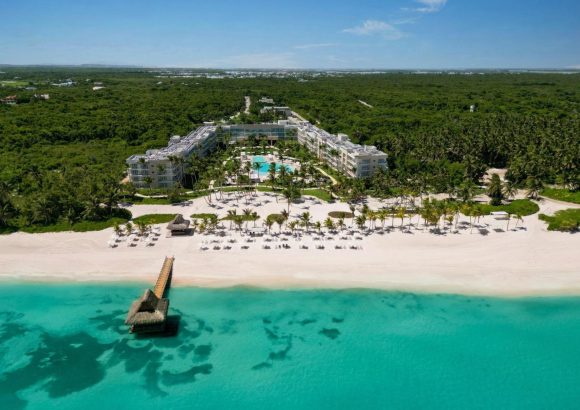
Punta Cana Forum 2026 to bring Dominican leaders together to discuss the country’s future
Next week will mark a landmark milestone for public and cross-sector dialogue in the Dominican Republic, as GALA Media Group prepares to launch the very first edition of the Punta Cana Forum 2026. This exclusive, invitation-only gathering will bring together a diverse cross-section of the nation’s most influential voices: sitting government officials, senior political leaders, top corporate executives, veteran media professionals and prominent public opinion shapers, all convening to unpack the most pressing challenges and untapped opportunities facing the Caribbean nation today.
Organized around the forward-looking theme “The Country That Is Coming,” the 2026 forum centers its discussions on five core priority areas: sustained economic development, large-scale infrastructure expansion, attracting and retaining foreign and domestic investment, strengthening national public institutions, and elevating the perspectives of the Dominican Republic’s rising generation of political leadership.
The event will open with two in-depth thematic panels covering the foundational pillars of long-term national progress, before wrapping up with a spotlight on youth political leadership featuring a book launch and a targeted roundtable discussion.
The first panel, titled “Infrastructure and Investment: Engines of Dominican Economic Development,” will be led by moderator Nairobi Viloria. Confirmed panelists include Public Works Minister Jean Luis Rodríguez, Hostos Rizik, director of national highway authority RD Vial, Milagros De Camps Germán, Sustainability Director for regional energy leader InterEnergy Group, and prominent economist Richard Medina. During this session, participants will dive into the long-term policy frameworks and capital investments required to maintain steady, inclusive economic growth, draw new international capital flows to the country, and develop infrastructure projects aligned with multi-decade national development goals.
The second panel shifts focus to the regulatory environment, with the theme “Legislation and Legal Security: Foundations for Investment and Development.” Veteran journalist Roberto Cavada will moderate the discussion, which brings together a roster of legal and policy experts including Yorlin Vázquez, Charles Mariotti Jr., Carmen Ligia Barceló González, Liz Mieses, Rogelio Antonio Genao and Natanael Concepción. Attendees will tackle long-delayed legislative reforms and examine what legal safeguards are needed to boost investor confidence, reinforce institutional stability, and strengthen the rule of law across the country.
To close the full day of dialogue, the forum will host the official launch of *Young Politician*, a new book by author Andrés Vander Horst. Dominican Republic Culture Minister Roberto Ángel Salcedo will introduce the book ahead of a moderated roundtable conversation centered on the next wave of Dominican political leadership. Award-winning journalist and author José Luis Taveras will lead the discussion, which features rising political figures Omar Fernández, Juan Garrigó, Gloria Reyes and Johnny Pujols. The conversation will explore how this new generation of leaders is reimagining governance in a rapidly changing political landscape, one increasingly shaped by social media, artificial intelligence, and the rise of new political actors outside the traditional party system.
In a statement ahead of the event, GALA Media Group emphasized that the Punta Cana Forum was created to fill a critical gap in national public life: a structured, neutral space for open dialogue, critical analysis, and collaborative problem-solving focused on the Dominican Republic’s economic, political and social future. The inaugural 2026 edition has secured backing from four major Dominican groups, with Grupo Puntacana, Grupo Dupla, CEPM and United Petroleum all stepping in as official sponsors of the event.
-

Dominican Republic hosts Parlatino Special Commission on the Caribbean
SANTO DOMINGO – A landmark regional parliamentary gathering has kicked off in the Dominican Republic’s capital, as the Latin American and Caribbean Parliament (Parlatino) formally launched the latest session of its Special Commission on the Caribbean this Thursday. Hosted at the Hugo Tolentino Dipp Hall of the Dominican Chamber of Deputies, the two-day meeting brings together elected legislators from across the Caribbean basin to confront the unique set of challenges facing the small and medium-sized nations of the region.
At the opening of the session, Chamber of Deputies President Alfredo Pacheco took the stage to underscore the strategic significance of the Dominican Republic serving as host for this important dialogue. Pacheco, who holds multiple key regional leadership roles including vice president of the Forum of Presidents of Legislative Bodies of Central America, the Caribbean Basin and Mexico (FOPREL) and secretary of Parlatino, framed the gathering as a critical step forward for Caribbean integration.
In his opening remarks, Pacheco emphasized the rich complexity that defines the Caribbean region. Stretching from Spanish-speaking island nations to English-speaking territories, and from former French colonies to Dutch constitutional entities, the Caribbean carries a patchwork of distinct colonial histories, cultural identities, and evolving political and legal institutions. This inherent diversity, Pacheco noted, makes sustained, structured dialogue between regional legislators not just useful, but essential.
Against this backdrop of varied national contexts, Pacheco argued that a permanent, dedicated parliamentary forum creates the stable space needed to keep communication open between countries with differing political and legal traditions. Through consistent engagement, he added, regional lawmakers can build the trust and mutual understanding required to craft and implement lasting, inclusive regional agreements that address shared priorities.
Over the course of the two-day session, participating legislators are set to leverage this convening platform to share on-the-ground perspectives, coordinate policy approaches, and deepen institutional parliamentary cooperation across the full spectrum of issues impacting Caribbean communities. Organizers and participants alike frame the session as a key step toward building a more cohesive, collaborative regional bloc capable of addressing common challenges more effectively.
-

Anadegas to disconnect Verifone at 780 gas stations on September 25
In the Dominican Republic, a major standoff between fuel retailers and global payment technology provider Verifone is set to escalate later this month, after the National Association of Gasoline Retailers (Anadegas) formally announced a coordinated disconnection of the company’s electronic payment systems across all 780 of its affiliated stations starting September 25. The industrial action comes after years of growing frustration over what retailers describe as unsustainably high processing costs that eat into already thin profit margins.
Anadegas president Juan Elías Pérez explained that station owners are currently forced to cede 27% of their total gross profits to Verifone for payment processing services, a burden that has become financially unmanageable for small and medium-sized retail operations across the country. The sweeping decision to disconnect services was not made lightly: Pérez confirmed that the plan received unanimous approval from all of Anadegas’ regional branches, and leadership at both the national and local level has been holding ongoing consultations with affiliated station owners to finalize logistics for the nationwide action in the lead-up to September 25.
The association has acknowledged that third-party mediation efforts have already been attempted to resolve the dispute, with both the Dominican Minister of Industry, Commerce and MSMEs and the executive director of Pro Consumidor, the country’s national consumer protection agency, stepping in to facilitate negotiations. However, those talks have failed to deliver a resolution that meaningfully addresses the core concerns raised by fuel retailers, pushing the group to move forward with its planned disconnection.
Pérez added that the National Federation of Merchants has already publicly thrown its support behind Anadegas’ demands for fairer payment processing costs. He has also issued a call to action for other retail sectors across the Dominican Republic, including hardware stores, auto parts vendors, appliance sellers and small grocery chains, to draw attention to what he says is a widespread problem impacting nearly all businesses that accept card and digital payments.
“Out of 34 countries where Verifone operates, we pay the highest processing fees in the entire region,” Pérez noted. “That is not a burden we are willing to accept any longer from anyone.”
Throughout this week, Anadegas has planned a series of regional meetings and mobilization activities to update station owners on the plan and coordinate logistics for the upcoming disconnection. The organization stressed that support for the industrial action is massive across its 780 affiliated locations, with members remaining fully united in their demands for lower costs. Despite the planned separation from Verifone’s services, Anadegas has repeatedly emphasized that it remains open to good-faith negotiations, and still holds out hope that a last-minute agreement can be reached that establishes fairer, more sustainable pricing conditions for fuel retailers across the country.
-

Abinader launches “RD Inteligente” AI program to train one million Dominicans
On a Thursday event held in Santo Domingo, Dominican Republic President Luis Abinader officially unveiled RD Inteligente, an ambitious national artificial intelligence literacy initiative designed to close the digital skills gap by training 1 million local residents in foundational and practical AI applications. This government-led project, implemented through the Technological Institute of the Americas (ITLA), centers on democratizing access to AI education across all segments of Dominican society, positioning the country to adapt to the shifting demands of a fast-growing digital global economy.
At the launch ceremony, Abinader emphasized that AI literacy should not be an exclusive skill reserved for specialized technology professionals. Instead, he argued, AI tools and knowledge should be available to every citizen, regardless of their occupation or background. “We don’t want to turn a million Dominicans into programmers. We want a million Dominicans to be better at what they already know how to do,” the president explained, framing the program as a tool to enhance existing professional capabilities rather than retrain the entire workforce for new tech roles.
RD Inteligente is designed to serve a broad cross-section of Dominican society, with outreach targeting groups ranging from secondary and tertiary students, job seekers, and small business owners to public sector employees, working professionals, K-12 educators, national security and defense personnel, parents, and the general public. The curriculum will focus on applying AI to core areas of daily life and work, including formal employment, academic learning, and small business entrepreneurship.
José Ignacio Paliza, Dominican Minister of the Presidency, noted that artificial intelligence has transitioned from a distant futuristic concept to a transformative current technology that is reshaping how people across the globe work, learn, launch new ventures, and address everyday challenges. Paliza highlighted the progress the Dominican Republic has already made under its existing National Artificial Intelligence Strategy (ENIA), including the development of the local Center of Excellence in Artificial Intelligence (CEIA-RD). He added that growing interest from major global technology firms such as Google and NVIDIA serves as clear confirmation of the country’s expanding potential as an attractive hub for tech investment, innovation, and specialized AI talent development.
Ultimately, the program’s broader mission is to strengthen national digital competitiveness, foster more inclusive economic growth, and build a robust knowledge-based economy that can leverage AI to benefit all Dominican citizens, rather than leaving large portions of the population behind in the global AI transition.
-

Soufrière, Vieux Fort North secure SPFL midweek wins
The Saint Lucia Semi-Professional Football League’s Tier 1 delivered two dramatic midweek fixtures on Wednesday at Francis Baba Lastic Grounds, with two underperforming squads turning in standout performances to climb the standings, while two struggling sides extended their losing skids. The evening of competition kicked off with hosts Gros Islet welcoming fifth-place Soufrière, a match that would end up marking Soufrière’s most lopsided victory of the entire season to date, finishing with a final score of 5-1. The goals started early, with Jardel Philip breaking the deadlock for Soufrière just three minutes into play. By the end of the first half, the visiting side had doubled their advantage, after Gros Islet defender Brandon Eugene deflected the ball into his own net in stoppage time before the break. After halftime, Gros Islet looked poised for a comeback when substitute Jahlil Evans netted a 54th-minute goal to cut Soufrière’s lead in half. That momentum was short-lived, however: Darrel Francis restored the two-goal buffer for the visitors just eight minutes later, slotting home in the 62nd minute. The pressure continued to mount for Gros Islet, and a second own goal came in the 76th minute, this time from Aramis Gilbert, pushing the score to 4-1 in favor of Soufrière. Things went from bad to worse for the hosts in the 83rd minute, when defender Samaiel Louisen was issued a red card for denying a clear goal-scoring opportunity outside the 18-yard box, leaving Gros Islet to play out the final minutes with 10 men. Just one minute after the red card, Soufrière substitute Christian Alexander capitalized on the numerical advantage to score the team’s fifth and final goal, sealing the dominant win. The three points lifted Soufrière to a total of 11 points on the season. For Gros Islet, the defeat marked their fifth loss in seven league matches, leaving the side mired in eighth place in the 10-team Tier 1 standings with just six points. The second match of the night brought another close, high-scoring battle between Vieux Fort North and Mabouya Valley, which ended with a 3-2 win for Vieux Fort North that saw them climb into the top four of the league table. Like the first fixture, this match opened with an early goal: Maius Stanislaus put Mabouya Valley on the board first just two minutes into kickoff, taking an early lead. It would take nearly 30 minutes for Vieux Fort North to find an equalizer, with Christopher Gilbert netting in the 30th minute to level the score 1-1 heading into halftime. The second half belonged to Vieux Fort North forward Kim Augustin, who scored two unanswered goals to seize control of the match, finding the back of the net in the 69th minute and again in the 83rd minute to put his side up 3-1. Even with six minutes of stoppage time added at the end of the match, Mabouya Valley only managed one late consolation goal, from substitute Alton Joseph in the 96th minute. Vieux Fort North held firm through the final seconds to secure all three points. The win pushed Vieux Fort North into fourth place in the standings, tied on 12 points with third-place La Clery. Mabouya Valley, by contrast, remained stuck in ninth place with just five points on the season. The Tier 1 action is set to continue on Thursday night, with a match that could shake up the top of the table: Dennery will face off against Central Castries, and a win for Dennery would see them overtake current first-place side Vieux Fort South to claim the top spot in the league. Central Castries have had an up-and-down season so far, having dropped three consecutive matches earlier in the campaign before bouncing back to win two of their last three outings.
-
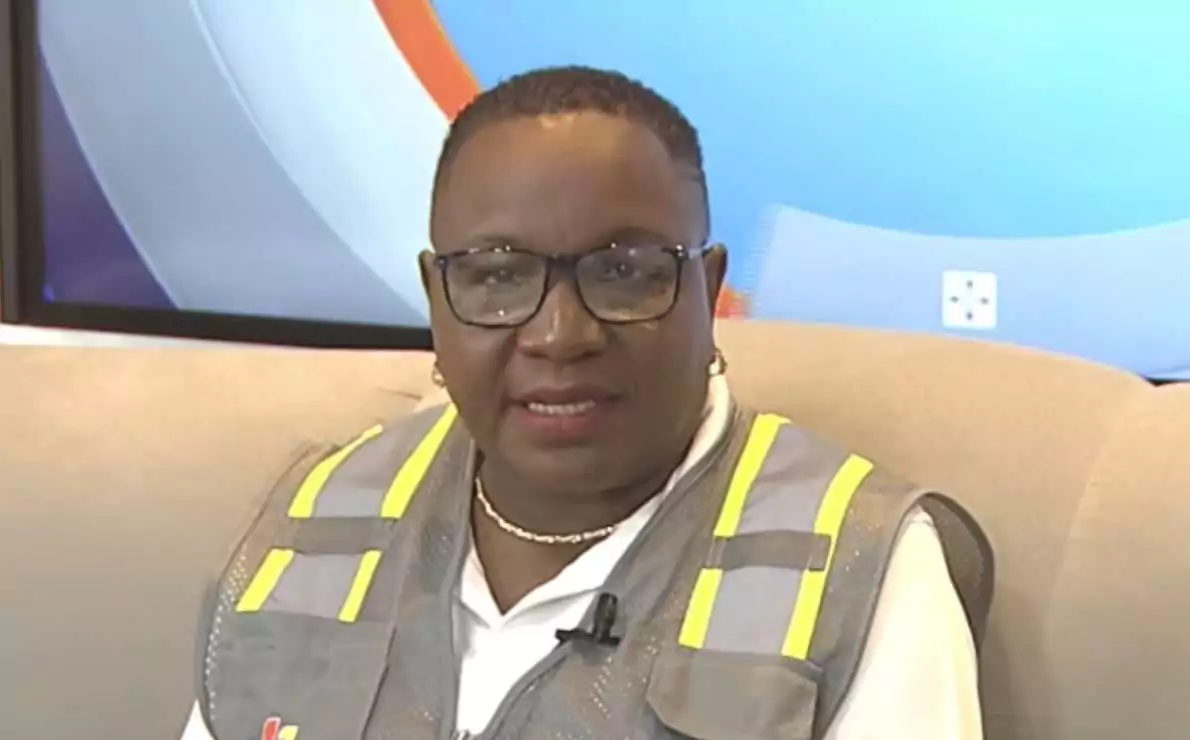
Census Office Warns of Possible Legal Action as Residents Resist National Count
The completion of Antigua and Barbuda’s long-awaited 2025 Population and Housing Census is facing growing headwinds, as persistent noncompliance from a segment of residents continues to throw up major barriers for frontline enumerators, national census officials confirmed this week.
Deputy Census Officer Tracelyn Joseph detailed the range of challenges field teams have encountered since enumeration work kicked off earlier this year. In multiple communities across the twin-island nation, workers have faced outright refusal to answer census questions, intentional efforts by residents to avoid contact, and even coordinated attempts to hide participation – with some people reportedly coaching family members to tell enumerators they are not home. Joseph added that even outreach outside residential properties has failed to win cooperation from a subset of holdouts, with these residents turning down participation when approached in public spaces.
Amid these widespread difficulties, however, there have been small signs of progress. Joseph noted that a number of residents who initially rejected involvement have softened their stance over time, choosing to cooperate after multiple return visits from enumerators.
Even as the field team works to win voluntary participation, officials are reminding the public that census participation is not optional. Under Section 17 of Antigua and Barbuda’s 2013 National Bureau of Statistics Act, all residents are legally required to complete the census. Those who fail to provide the requested information face severe legal penalties: fines of up to $10,000 Eastern Caribbean dollars, a prison sentence of up to two years, and an additional $1,000 fine for every day noncompliance continues after a conviction.
Joseph stressed that if widespread resistance does not abate, enforcement action will eventually be required to bring the census to a successful close. She also pushed back against common concerns that have driven nonparticipation, emphasizing that all individual data collected during the enumeration process is protected by strict confidentiality rules. No information will ever be released in a format that identifies individual respondents, she confirmed.
Census leadership has set a target of wrapping up the entire national enumeration exercise by the end of 2025. This is not the first setback the 2025 census has faced, however. Field operations have already experienced multiple delays since launching earlier this year, including a mandatory temporary pause during the country’s general election period earlier in 2025.
Officials reiterate that the final census data will serve as a foundational resource for the country, supporting evidence-based research, advancing educational initiatives, and shaping long-term development planning and government decision-making across every sector in Antigua and Barbuda.
-

St. John’s Rural South Constituents Celebrate MP Daryll Matthew on His Birthday
Residents of the St. John’s Rural South constituency and members of the surrounding local community have come together to send heartfelt birthday greetings to their elected Parliamentary Representative, the Honorable Daryll Matthew.
As Matthew marks this personal milestone, constituents have publicly recognized his steady leadership, unwavering commitment to representing the community’s interests, and the consistent dedication and care he has demonstrated both in his role as their local representative and in his position as the national Minister of Education.
Beyond expressions of gratitude, the community has shared warm hopes for Matthew’s year ahead. They extend wishes that this new chapter of his life brings him sustained strength, sharp wisdom, excellent health, and abundant joy. The community expressed their hope that Matthew is able to spend his special day surrounded by loved ones, celebrating in a way that brings him the greatest personal fulfillment.
The message of celebration and good will closes with a collective birthday greeting, signed by all constituents and community members of St. John’s Rural South.
-
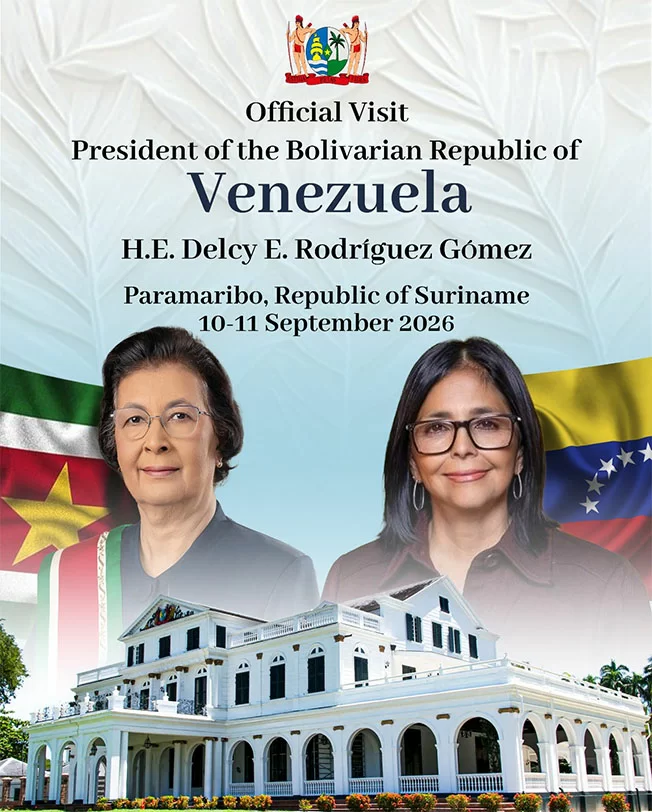
Suriname en Venezuela willen samenwerking op meerdere terreinen verdiepen
On Friday, Acting Venezuelan President Delcy Rodríguez will kick off an official visit to Suriname at the invitation of Suriname’s President Jennifer Simons, a long-planned diplomatic engagement that comes as the two neighboring nations mark five decades of formal diplomatic relations. Details of the high-level visit, which was not formally announced to the public earlier this week, have now been released by Suriname’s government, outlining a packed agenda focused on expanding cross-sector collaboration.
According to Suriname’s Communication Service, Rodríguez will lead a full Venezuelan delegation to the talks, where top topics on the discussion table include enhanced cooperation in agriculture, fisheries, hydrocarbons, transportation connectivity, tourism, education, and institutional capacity building. Beyond bilateral sectoral partnerships, the two heads of state will also exchange views on pressing regional and global issues, and coordinate strategies to advance shared national interests within regional blocs and multilateral international forums.
Suriname’s government notes that the milestone of 50 years of diplomatic ties is being leveraged not just to reaffirm the long-standing positive relationship between the two countries, but also to deepen existing collaboration and unlock new opportunities for joint economic and technological development. Any agreements reached during the visit are intended to lay out a clear, forward-looking path for sustainable, results-focused cooperation between the two nations moving forward. While officials have confirmed that multiple bilateral agreements will be signed during the visit, no further details on the specific content of these pacts have been released to date.
Preparations for the visit have been underway for weeks, with Venezuelan security personnel already arriving in Suriname ahead of Rodríguez’s trip to coordinate security arrangements. This visit was originally scheduled for June 23 of this year, but the engagement was ultimately postponed with no public explanation given by the Surinamese President’s Cabinet at the time.
Rodríguez has served as Venezuela’s acting president since January 2025. Previously holding the post of vice president, she assumed the role of interim head of state following the capture and extradition of sitting President Nicolás Maduro to the United States during a U.S. military operation.