博客

  • Guatemala’s Tourism Invitation or Sovereignty Statement?

    Guatemala’s Tourism Invitation or Sovereignty Statement?

    In a development that has reopened old wounds from a decades-long unresolved territorial disagreement, Guatemalan tourism billboards displayed across Belize have ignited fierce public and political debate, leaving the Central American neighbors navigating a fresh diplomatic rift. Placed across multiple communities in Belize, the advertisements carry the seemingly innocuous slogan “Guatemala Welcomes You with Open Arms” — but for many Belizeans, the messaging carries far more loaded implications than a simple invitation for a weekend getaway. The controversy lands against a decades-long background: Guatemala has maintained a long-standing territorial claim over the entirety of Belize, a dispute that has defined bilateral relations for generations and remained a sensitive flashpoint for national identity on both sides of the border.

    Belize’s sitting Prime Minister John Briceño has stepped in to address the growing public anxiety, striking a measured tone amid the backlash. Briceño acknowledged that the wording of the slogan has understandably stoked fears among Belizean citizens, who have interpreted the phrase as a subtle political assertion of Guatemala’s territorial claim rather than a neutral tourism pitch. The prime minister confirmed that while he accepts official assurances from Guatemalan authorities that the campaign is solely intended to draw Belizean travelers to Guatemalan tourist destinations, he agrees that adjusting the slogan would be a sensible step to eliminate unnecessary confusion and ease growing tensions. Briceño emphasized in his public comments that Belizean national sovereignty is non-negotiable, stating firmly that the idea of Belize becoming part of Guatemala is completely out of the question. He also noted that most Belizean travelers typically choose Mexico as a cross-border vacation destination, making the new Guatemalan tourism push an unusual development regardless of its wording.

    The opposition has taken a far harder line on the issue, rejecting the government’s moderate approach entirely. Opposition Leader Tracy Panton issued a staunch condemnation of the billboards, arguing that the campaign is nothing short of deliberate political provocation dressed up as tourism promotion. Panton insisted that the Belizean government must treat the incident as the political act it is, rather than dismissing it as a simple miscommunication.

    This report is adapted from a transcribed evening television news broadcast, with original Kriol language statements converted to standard English spelling for publication.

  • Two Families Grieve as Couple’s Deaths Remain Unexplained

    Two Families Grieve as Couple’s Deaths Remain Unexplained

    In the quiet community surrounding Hillview Park in Santa Elena, Cayo District, a routine parental duty gone wrong has sparked a devastating mystery that has left two families shattered and local residents searching for clarity. The alarm was first raised when Michael Williams, 31, and Delisha Estrada, 21, failed to drop off their child at school as scheduled, prompting worried relatives to check the couple’s residence. What they found on that September day was a grim discovery: the bodies of the two young parents, found in an advanced state of decomposition, leaving investigators with few immediate clues to their final moments.

    Authorities from the Belize National Crime Investigations Branch confirmed that the couple had last been seen by friends and family the prior Saturday, and their disappearance went unreported until the missed school drop-off several days later. ACP Hilberto Romero, head of the investigations branch, told reporters that police are still working to reconstruct an accurate timeline of events, including how long the bodies lay undiscovered before the family’s fateful visit.

    To date, investigators have not confirmed a cause of death, nor have they ruled out any potential scenarios. While official forensic testing is still pending, conflicting accounts and preliminary observations have fueled uncertainty around the case. Delisha Estrada’s family has publicly stated they believe she was a victim of foul play, citing preliminary reports of head injuries to the young woman and the discovery of a poisonous substance near Williams’ body at the scene. Her aunt shared in a phone interview with reporters that those close to Estrada are adamant she never would have died by suicide, adding that unconfirmed rumors circulating through the community have only deepened their pain.

    Forensic teams initially planned to conduct an on-site examination of the remains to allow the families to move forward with funeral preparations as quickly as possible. However, after a preliminary assessment, experts determined a full post-mortem autopsy was required to pinpoint the cause of death, and the remains were moved from the scene for further testing.
    “The doctor visited the scene and made an analysis. At this time we are awaiting the postmortem examinations to determine the cause of death,” Romero told reporters.

    Multiple sources close to the case, including anonymous local residents and Estrada’s own family, have confirmed that police had previously received multiple reports of domestic abuse involving the couple. Estrada’s mother, Locett Vanega, told reporters she was aware her daughter had experienced domestic violence, but could not speak to what led to her death. A handwritten note left at the scene by Williams has added another layer of complexity to the investigation: according to Estrada’s aunt, the short note claims Williams was trying to protect his son from what he described as bad-minded behavior from Estrada’s family.

    As investigators await the results of the autopsy to confirm official cause and manner of death, the pair’s families are already moving forward with preparations to lay the two young parents to rest. For now, unanswered questions far outnumber confirmed facts, leaving a tight-knit community in shock and two grieving families waiting for closure.

  • Julius Espat’s Crime-fighting Record Earns PM’s Praise

    Julius Espat’s Crime-fighting Record Earns PM’s Praise

    BELIZE CITY, BELIZE – September 15, 2026 – Lasting economic progress can only take root when communities and families feel secure within their own borders. That is the core message from Belize Prime Minister John Briceño, who has reaffirmed that citizen safety remains one of the top priorities of his current administration, while publicly recognizing Police Minister Julius Espat for driving meaningful, measurable improvements across the Belize Police Department.

    In a public assessment of the nation’s evolving security landscape and ongoing work to address persistent threats, Briceño outlined the tangible upgrades rolled out by the government over the last two months to strengthen the force’s crime-fighting capacity. Among the key investments are 15 new operational vehicles allocated to the Police Department, a widespread expansion of closed-circuit surveillance cameras placed at high-traffic, strategic locations across the country, and targeted initiatives to boost the morale of frontline police officers.

    These investments have already translated into measurable results, Briceño confirmed. The national conviction rate for crimes processed by the Belize Police Department has now reached an unprecedented 80 percent, a new record for the nation. Since the beginning of 2026, law enforcement has also seized large quantities of illegal narcotics being trafficked through the region: 1,372 kilograms of cannabis, 582 kilograms of cocaine, plus additional hauls of methamphetamine, hashish, crack cocaine, and heroin.

    Briceño emphasized that these results are more than just statistics — they demonstrate the government’s unwavering commitment to blocking drug cartel activity from operating within Belize’s borders, and protecting all Belizean citizens from the harms of drug trafficking, addiction, and the violent crime that accompanies the illicit drug trade.

    This report is adapted from a televised evening news broadcast, with direct transcription of official remarks. The full unedited newscast is available to view via the original publication’s online platform.

  • Oscar Mira Re-emerges Alongside Senior PUP Officials

    Oscar Mira Re-emerges Alongside Senior PUP Officials

    Three months after stepping down from his cabinet post amid an ongoing procurement audit at the Ministry of Defense, former Belizean Home Affairs Minister Oscar Mira has made an unexpected return to the public spotlight, reigniting intense speculation about his potential reinstatement to government.

    On September 15, 2026, political observers and the public began scrambling for answers after Mira appeared at a public event alongside top-ranking leaders of the ruling People’s United Party (PUP). His sudden re-emergence comes as the first official audit report into the defense ministry procurement practices is slated for release before the end of September, timing that has amplified rumors of a quick return to cabinet.

    Mira agreed to step aside from his role on June 15, 2026, at Prime Minister John Briceño’s request, to allow auditors to conduct an independent, unimpeded investigation into procurement activities at the Ministry of Defense, a portfolio that had been overseen in part by Mira’s ministry. Since that announcement, Mira had largely retreated from public view and cut off most political appearances, leading many to question whether his leave would become permanent.

    This week, reporters pressed Prime Minister Briceño directly on whether Mira is poised to reclaim his cabinet position, and whether the interim role currently filled by Senator Julius Espat, who has publicly confirmed he is willing to hold the position permanently, would become a permanent appointment. Briceño declined to confirm any future plans, noting that cabinet appointments fall exclusively within the prime minister’s prerogative.

    “Well, I think you’re asking something that it is a prerogative of the prime minister. When that time comes, I will let you know,” Briceño told reporters, leaving both political insiders and the public guessing about Mira’s political future ahead of the audit’s release.

    This report is a transcribed adaptation of an evening television newscast originally published online, with all non-English remarks transcribed according to standardized spelling conventions.

  • Internet Expansion Reaches Seventy-Eight Thousand Students

    Internet Expansion Reaches Seventy-Eight Thousand Students

    In a landmark year for Belize’s education sector, the government is rolling out sweeping investments aimed at supporting the country’s largest ever generation of learners and aligning education outcomes with national workforce demands. By September 2026, Belize has recorded a historic high enrollment of 101,506 students across pre-primary through university levels, taught by 6,044 educators across 646 educational institutions. This unprecedented growth in student numbers has prompted targeted investments across multiple key areas of education, starting with critical digital infrastructure.

  • A National Symbol Takes Root in Burrell Boom

    A National Symbol Takes Root in Burrell Boom

    Deep in the quiet community of Burrell Boom, along the tree-lined banks of Belize River, a locally owned resort has woven Belize’s national identity into every corner of its property – starting with its name. For Black Orchid Resort, drawing inspiration from the country’s iconic national flower is far more than a branding choice; it is a celebration of the natural heritage and unyielding spirit that defines Belize.

    The black orchid has held a special place in Belizean national culture since 1981, when it was officially named the country’s national flower immediately following Belize’s independence. Revered for its understated, intricate beauty and remarkable ability to thrive with minimal intervention in Belize’s tropical climate, the flower quickly became a national symbol of strength, resilience, and quiet beauty – qualities that mirror the Belizean people themselves. Today, businesses across the country draw on this iconic symbol for their own identities, but few have embraced the flower’s core characteristics as fully as Black Orchid Resort.

    The resort’s origin story of its name began long after it first opened its doors to visitors in 2005. Owner Douglas Thompson initially launched the property under a different brand: Belize R Us. It did not take long for early guests to point out that the name felt disconnected from the local culture, with a distinctly North American tone that clashed with the resort’s Belizean identity. Encouraged by that feedback, Thompson set out to find a new name that would feel authentically rooted in the country he called home.

    “Once I started operation as Belize R Us, our first few guests gave feedback that the name was too North American and suggested that I come up with a more Belizean name,” Thompson explained in an interview with News Five’s Britney Gordon. “And so I searched for a name and came up with the idea of the Black Orchid. Once I searched the web and found that nobody else had that name, I went ahead and registered it as the name of the hotel.”

    What makes the black orchid such a fitting symbol, beyond its status as a national icon, is its one-of-a-kind resilience. Unlike many orchid species that demand careful, constant maintenance to bloom, the black orchid thrives in Belize’s damp, shaded riverine forests with almost no intervention. It grows naturally on the trunks of large trees, requiring only well-drained roots and just the right amount of moisture to produce small, striking blooms nearly 12 months a year.

    “Fortunately, an orchid doesn’t require a lot of water. As a matter of fact, you gotta make sure that they don’t get too wet and too soggy to maintain themselves,” Thompson said. “And so, very little care is required for the black orchid. Some orchids require significant attention, but the black orchid itself, so long as you keep the root dry, you don’t want it to get soggy, it will bloom. And they bloom at different times. Different plants, the same plant but different growths, would bloom separate months, so you could have them blooming all year round.”

    That commitment to working with Belize’s natural environment, rather than against it, extends to every part of the resort’s operations. Situated directly along the Belize River, surrounded by lush tropical forest and abundant native wildlife, Thompson has centered the resort’s business model on sustainable, eco-friendly practices that align with the black orchid’s low-impact way of life. Even beyond growing dozens of black orchids across the property – hung from tree branches in coconut husk planters that provide the perfect balance of moisture and drainage to help the flowers thrive – the resort prioritizes local, natural offerings for its guests.

    From handcrafted natural drinks made exclusively for the resort to an on-site wellness center that uses native herbs to address common health conditions including diabetes and hypertension, every element of Black Orchid Resort is designed to honor Belize’s natural and cultural heritage. Thompson says that for international visitors, catching a glimpse of the rare black orchid in bloom is often a highlight of their stay.

    “Our international guests always want to see the black orchid. And it’s a very small flower, but if you take a picture of it and blow it up, then you will really see the intricate parts to it,” Thompson said.

    Even through extended periods of dry weather, the resort’s grounds remain lush and vibrant, a testament to both the natural resilience of the black orchid and Thompson’s careful, low-impact stewardship of the land. For Thompson, that enduring ability to thrive in variable conditions is exactly what makes the black orchid such a powerful symbol for Belize – and for his resort. It is more than a name; it is a promise to honor the values of resilience, natural beauty, and authentic Belizean identity that the flower has represented for more than 40 years.

  • Diesel Surges Past Fifteen Dollars a Gallon

    Diesel Surges Past Fifteen Dollars a Gallon

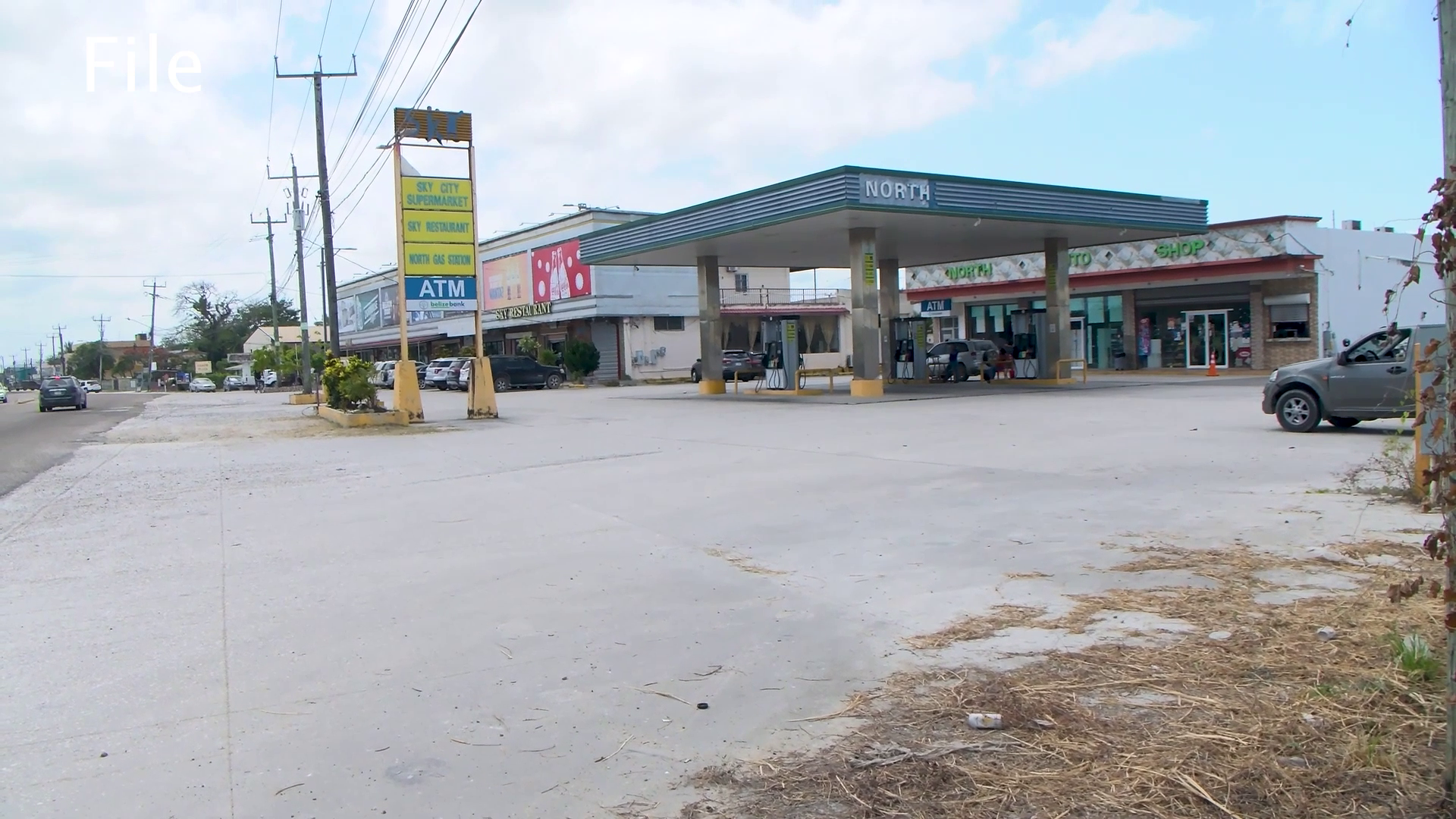
    September 15, 2026 — A crippling spike in diesel prices has pushed the national average well above $15 per gallon in Belize, sending ripple effects through the entire economy that threaten to raise costs for everyday consumers far beyond just private motorists. What began as sticker shock at fuel pumps has expanded into a broad economic pressure point: public and private bus operators, freight companies, logistics firms and small businesses that rely on diesel to move people and goods across the country are already absorbing sharp cost increases, with many expected to pass these extra expenses onto shoppers and commuters in the coming weeks.

    As public frustration mounts, demands for government intervention to ease the burden have grown louder. In comments to reporters this week, Belize Prime Minister John Briceño confirmed that administration officials are actively reviewing a range of potential relief measures to address the crisis. But the prime minister also issued a stark warning about the difficult trade-offs facing the government: revenue from fuel taxes forms a critical backbone of funding for public services and national social programs, leaving policymakers walking a tight rope between delivering relief to citizens and maintaining long-term government fiscal sustainability.

    Briceño explained that for decades, successive Belizean governments have relied on fuel import excise taxes as a stable, easily administered source of public revenue. Unlike more complex tax streams that require extensive enforcement, fuel imports are straightforward to track and tax, creating a predictable stream of funding for core government priorities. “When a million gallons of fuel enter the country, we know exactly how much revenue we can collect,” Briceño noted, pointing to the inherent reliability of the tax.

    The government has already adjusted fuel taxes to offset prior price increases, Briceño confirmed, revealing that these previous cuts have already cost the national government more than $40 million in lost revenue. The prime Minister said he would meet with the financial secretary within 48 hours to evaluate what additional relief is feasible given the current fiscal landscape.

    To put Belize’s crisis in global context, Briceño noted that extreme diesel prices are not unique to the small Central American nation: some locations in California already sell diesel for more than $15 per gallon, while prices in Miami top $13 per gallon. He added that large economies like the U.S. benefit from massive import volumes that create more buffer for revenue, a advantage Belize cannot match as a smaller market.

    Briceño emphasized that the government shares the public’s frustration and would eliminate fuel taxes entirely if it were fiscally possible, noting that the revenue funds non-negotiable core programs ranging from public education and healthcare to critical infrastructure development across the country. “If we could scrap the tax and still keep all these vital services running for the Belizean people, I would do it happily,” he said. “But we need this revenue to keep the government functioning. We have to balance our commitment to delivering relief to citizens with our responsibility to maintain long-term financial stability for the nation.”

    This report is adapted from a televised evening newscast transcript, with all statements verified and formatted for online publication.

  • Marketing Board Explains the High Cost of Basic Produce

    Marketing Board Explains the High Cost of Basic Produce

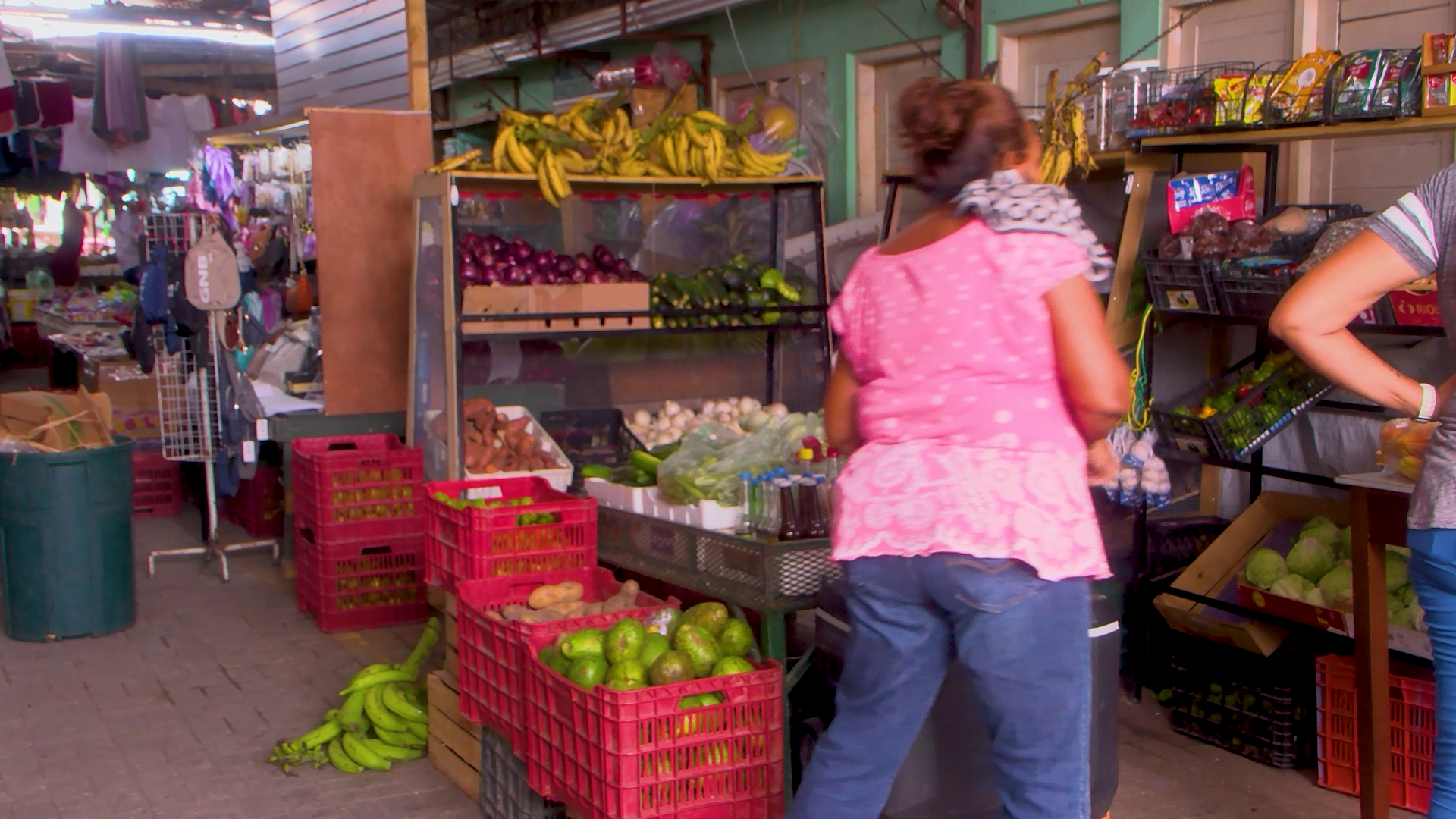
    On September 15, 2026, tensions over rising food costs in Belize have come to a head at Michael Finnegan Market, where local vendors are sounding the alarm over what they call exorbitant pricing for staples including onions and potatoes from the Belize Marketing and Development Corporation (BMDC). As the sole authorized importer of specific agricultural goods from Mexico, BMDC controls the supply chain that moves these products from international producers to local wholesalers, and ultimately to the retail vendors who serve shoppers at community markets. Vendors report they are caught in an unsustainable financial squeeze: they are forced to pay inflated costs for inventory from BMDC, but consumers are unwilling to accept the corresponding price hikes that would let vendors recoup their expenses. Now, BMDC’s top leadership is breaking its silence to explain the root causes of the price surges that have left producers, vendors and consumers alike struggling. In an official response to vendors’ complaints, BMDC Administrator Valentin Carrillo outlined two core factors that have pushed acquisition costs far higher than 2025 levels. The first major driver is dramatic shifts in the Mexican peso-U.S. dollar exchange rate. Last year, the exchange rate hovered around 8.5 pesos to the dollar; as of 2026, the rate has shifted to 7.8 pesos per dollar. That 60-cent difference per dollar translates to an almost 10% increase in purchasing costs for imported goods before any other markup is added, Carrillo explained. The second major factor impacting prices is the growing fallout of climate change, which has disrupted agricultural production on both sides of the Belize-Mexico border. Unfavorable weather conditions have reduced overall crop yields for staple produce, while input costs for planting and maintaining crops have also jumped, forcing producers to raise their base selling prices. Carrillo also addressed concerns about produce quality, noting that BMDC imports new shipments twice a week specifically to maintain the freshest possible inventory for local markets. He acknowledged that extreme heat, which has hit 38 degrees Celsius in the region, creates storage challenges: staple crops like onions and potatoes require consistent cool storage between 7 and 8 degrees Celsius, and warming during final distribution to market stalls can accelerate spoilage, compounding vendors’ challenges. Beyond explaining price shifts, Carrillo reaffirmed BMDC’s unique role in Belize’s food supply chain: the national Ministry of Agriculture designated the corporation as the only authorized importer for these Mexican goods, a policy put in place to enforce consistent quality standards for food sold to Belizean consumers. This report is a transcribed version of an evening television newscast, with all Kriol-language statements rendered using a standardized spelling system for accessibility.

  • Extensive Riverbank Clearing Raises Erosion Fears, DOE Investigates

    Extensive Riverbank Clearing Raises Erosion Fears, DOE Investigates

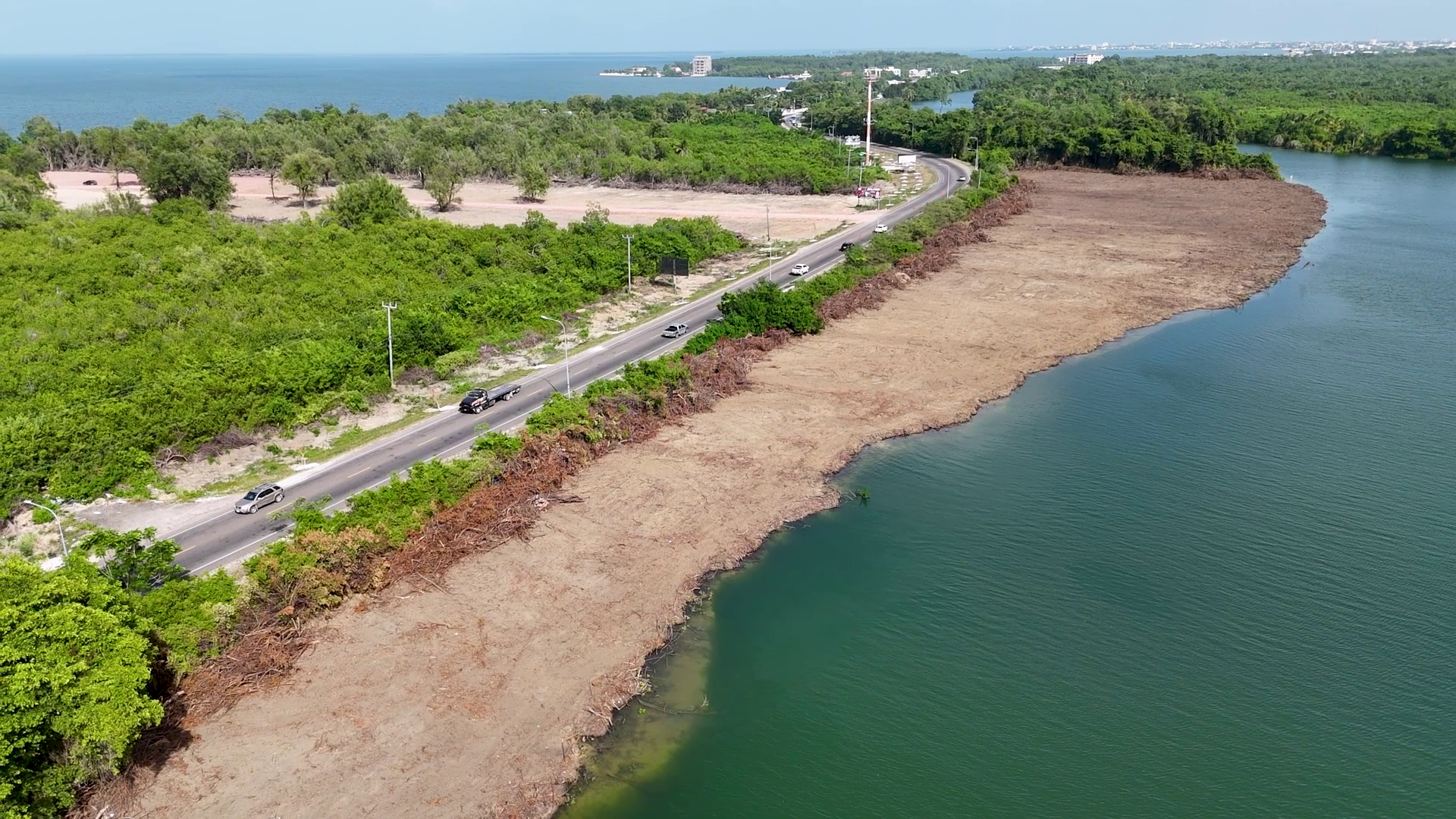
    In a development that has raised urgent red flags among environmental experts and local authorities, a seven-acre riverside property along the Belize River has been completely stripped of all vegetation between the water’s edge and the embankment of the Philip Goldson Highway, triggering widespread fears of accelerated riverbank erosion and irreversible damage to the local riparian ecosystem. The incident, located at the 6.5-mile mark of the major highway, is now the subject of a formal joint investigation by three of Belize’s top government agencies: the Department of the Environment (DOE), the Forest Department, and the Lands Department.

    In a surprising turn of events, the property’s owner, Sanju Chulani, told reporters he only requested a light clearing to improve visibility of the land plot, and was stunned by the full extent of vegetation removal carried out by his contracted crew. Chulani’s account has added an extra layer of complexity to the ongoing investigation, which is focused on two core goals: assessing the full environmental damage caused by the clearing, and determining whether any existing environmental or land use regulations were violated in the process.

    Anthony Mai, Chief Environmental Officer at the DOE, confirmed that a cross-departmental inspection team has been assembled to assess the site. “We are aware of the issue, and we have put together a team that will go out and conduct a full on-site inspection. Representatives from each of the three agencies are participating, and we will be able to share further updates once the assessment is complete,” Mai stated in a press briefing.

    When questioned about Belize’s longstanding 66-foot reserve requirement for riparian land, Mai explained the historical and ecological context of the regulation. He noted that in earlier decades, land titles were often issued all the way to the water’s edge, but the passage of the Lands Act formalized a requirement for private landowners to leave an undisturbed 66-foot buffer from the high-water mark of any water body. Crucially, this 66-foot reserve is officially classified as crown public land, not private property, Mai clarified.

    The original purpose of the buffer was to create a public easement, ensuring all Belizeans could retain access to and enjoyment of the country’s waterways, rather than allowing private owners to block public access. Over time, scientific research has also confirmed the buffer’s critical ecological functions: it prevents riverbank erosion, filters runoff pollution, and supports native riparian biodiversity. In particularly sensitive environmental zones, Mai added, required buffers can extend as far as 200 feet from the water edge to protect fragile ecosystems.

    Mai explained that while the buffer regulation is formally outlined in the Lands Act, the DOE enforces the requirement through the environmental clearance process for development projects. When a project receives environmental approval, the DOE creates a binding environmental compliance plan — a formal contract signed with the developer that outlines all buffer protection requirements and other environmental rules. Investigators are currently working to determine whether any regulations were broken in this case, and what enforcement actions may be required once the inspection is complete.

  • Global Economy Squeezes Belize Tourism Industry

    Global Economy Squeezes Belize Tourism Industry

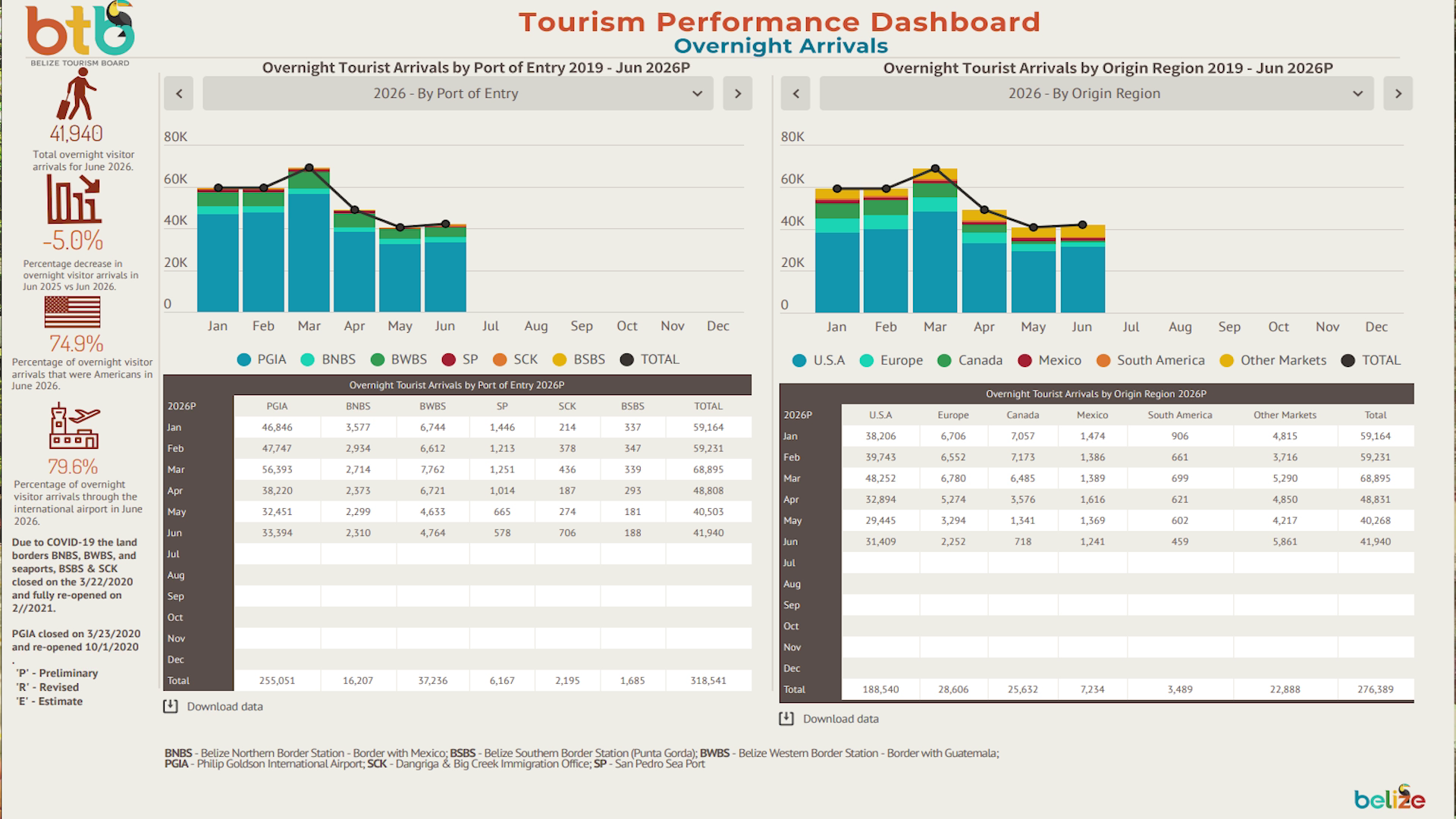
    As Belize’s vital tourism sector prepares to enter its annual peak travel window, it is grappling with unexpected softening in visitor numbers that industry leaders attribute to broader global economic headwinds. Official industry data shows that overnight tourist arrivals in June dropped approximately 5% when compared to the same month in 2025, and the slowdown extended through the following months, with August recording one of the steepest declines in incoming travelers this year.