博客

  • Eugene Thompson’s Eviction is Followed by Devastating House Fire

    Eugene Thompson’s Eviction is Followed by Devastating House Fire

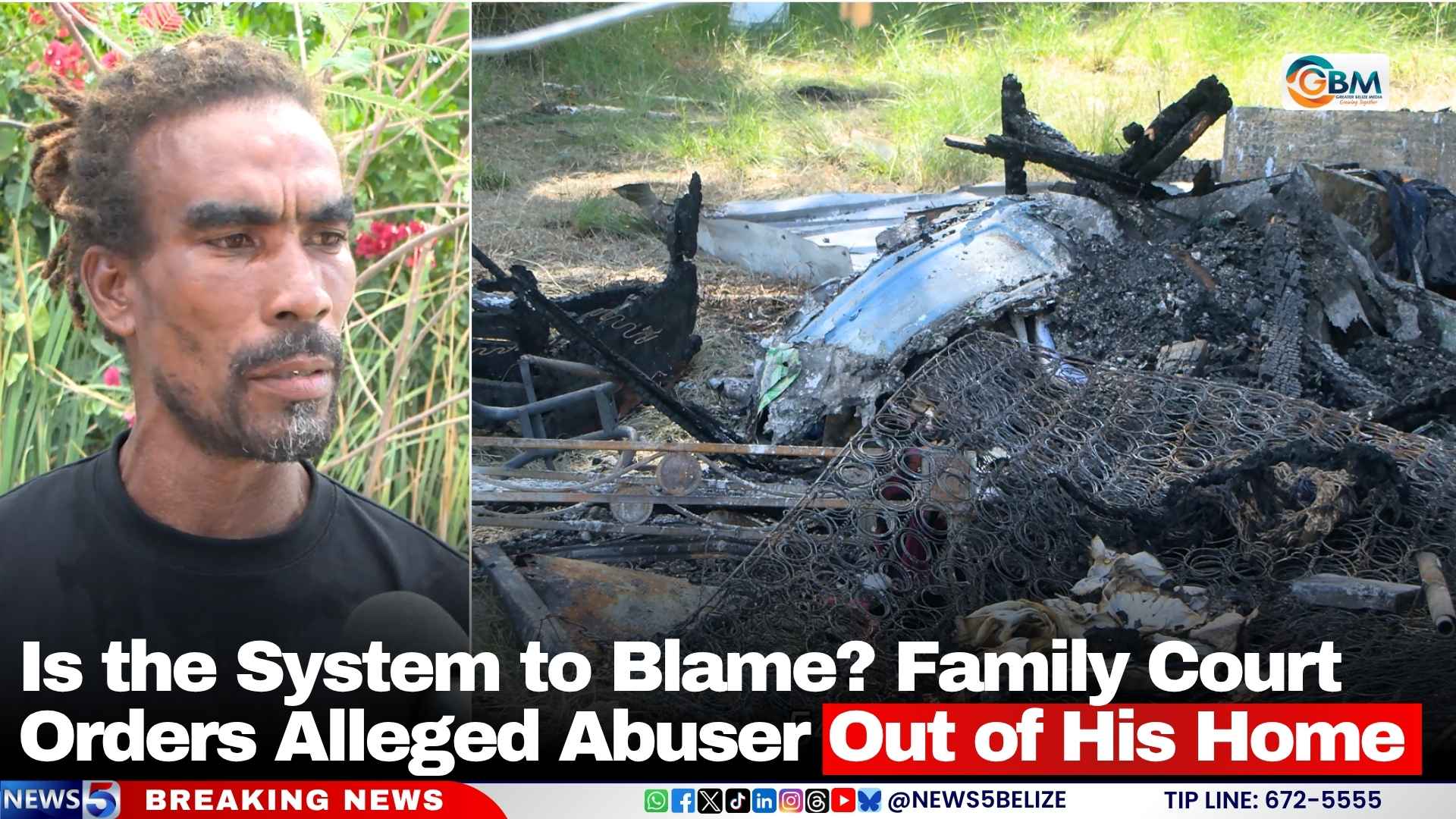
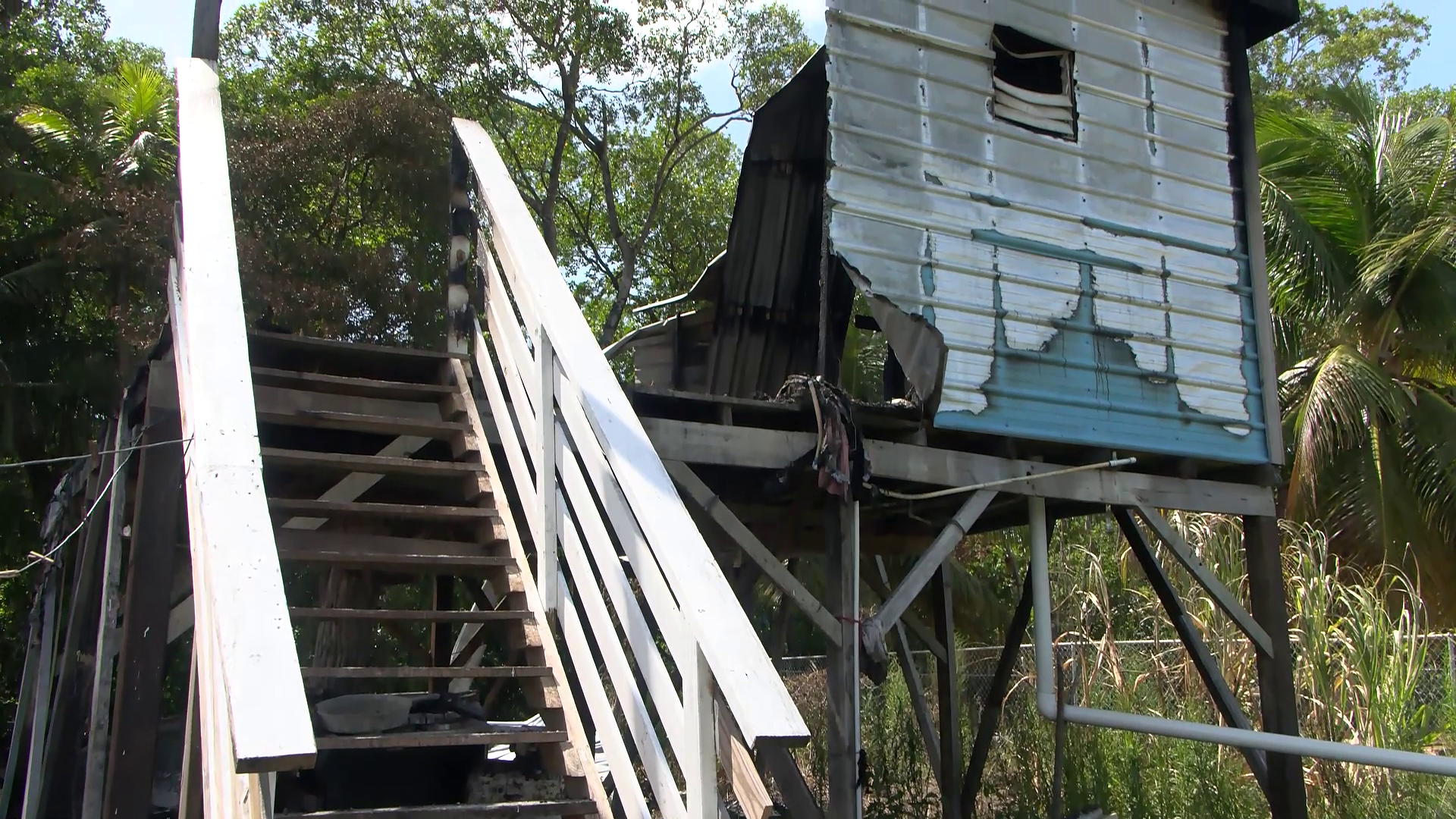
    In a devastating turn of events that has sparked public outcry across Belize, a Belama resident who was forcibly evicted from his self-built home just 24 hours earlier has watched his entire life’s work burn to the ground. As of September 17, 2026, 54-year-old Eugene Thompson is now homeless, unemployed, and demanding accountability from authorities, after an intentionally set blaze destroyed the $45,000 property he spent five years constructing with his own hands.

    Thompson’s nightmare began one day prior, when a Belize Family Court granted an eviction order that removed him from the property on behalf of Ashema Chang, his former common-law partner of just six months. Chang had filed a petition seeking protection from Thompson, which under Belizean family law allows magistrates to order the accused party to vacate the shared residence to allow the complainant to remain. In an interview with News Five reporter Britney Gordon, Thompson argued the eviction was unjustified, saying the court never attempted to hear his side of the dispute before ordering him out of the home he alone built.

    “In family court, they evict me because my common-law gone to court for a summons regarding my house, which doesn’t concern her at all,” Thompson explained, speaking in Belizean Kriol. “They put my common-law into my house for no reason. Just evict me out of my own home that I built. Not even come to me to try figure out what was happening. Just evict me.”

    Just 24 hours after Thompson was forced to leave, the property went up in flames. Investigators with the Belize Police Department have since released a wanted poster for Chang, who is being sought for questioning in connection with the suspected arson. Thompson maintains that if he had not been evicted, he would have been on-site to stop the fire before it destroyed everything.

    “Yes, because I was trying to avoid this. I went to court. I cried to them. I pleaded to them. Literally shed my tears and nobody tried to help me in the situation. I would still have my house,” he told Gordon.

    Over the five years Thompson lived on the property, he poured more than $45,000 of his own earnings into construction materials, furniture, and household appliances. Before the fire, he made a steady living selling homemade street food including patties, conch fritters, and cakes to local residents. His neighbors, who have long relied on his small business, are now standing with him, calling on the government to intervene.

    “He’s an old neighbor of mine but I have always known him to be a hard-working person. I know he has his little history, he’s not a perfect person, but for me personally I believe the system failed this young man because they evict him from his own house,” one concerned neighbor told News Five. “I just sincerely sorry for him and I sorry for the loss of his home and I just beg and plead with the government now, please, help this man build back a house even if its just a simple one bedroom one bathroom place.”

    Local attorney Dickie Bradley, who specializes in Belizean family law, confirmed that the eviction order granted to Chang falls within the existing powers of the country’s family courts. Protection orders, he explained, are explicitly designed to prioritize the safety of complainants, most often women and children, who report domestic abuse or threats. When a complainant has no alternative housing, Bradley noted, courts routinely order the accused to vacate the shared property immediately.

    “A magistrate can try as best he or she can under the law to protect a person who has gone to the court for protection,” Bradley explained in a phone interview. “That protection usually is that the abuser is not to be near to the victim, the complainant. The second order that is usually applied for or would be offered by the court to the victim is that if she has nowhere to go, she can remain in the house and the abuser can be ordered to leave immediately. Get a police and go and get the clothes you need and anything else you need and leave the premises and not to go back there for a certain period.”

    Despite the devastating outcome, Thompson has rejected a temporary shelter offer from the Belize Department of Human Services. The fire victim, who describes himself as a self-sufficient, working man who has never relied on public assistance, says temporary housing does not address the root of his loss. He is now calling on the government to fund the full reconstruction of his home to replace what he lost.

    “I am not a beggar. I am not a street person. I am a normal human being, civilized,” Thompson said. “If you can’t accommodate me in the situation the way it is, because you made this happen, build back my house for me the way it was. That makes sense.”

    The case has reignited public debate across Belize over the balance between protecting vulnerable domestic violence survivors and protecting the property rights of accused parties who own their homes, with many residents questioning whether the eviction order was appropriate given Chang’s six-month relationship with Thompson and his sole ownership of the property. As the investigation into the fire continues, Thompson remains without a permanent home, waiting for authorities to act on his demands.
  • NTUCB to GOB: None of Our Demands Met

    NTUCB to GOB: None of Our Demands Met

    A major standoff has emerged between Belize’s largest umbrella labor organization and the national government after the body of unions confirmed that none of its 11 core policy demands were addressed in full by the Cabinet, setting the stage for further negotiations as consultations are ongoing with industry affiliates and social partners.

    The National Trade Union Congress of Belize (NTUCB) issued a preliminary public statement this week reacting to a three-page formal letter from Prime Minister John Briceño, which outlined the Cabinet’s official position on a slate of proposals the union body submitted to the government in August. According to the NTUCB, a number of its demands were entirely omitted from the government’s response, and no proposal was accepted in the exact form it was presented. The union also noted that the Prime Minister’s reply arrived 18 days after the August 28 deadline the organization had set for a government response.

    Rather than releasing a full point-by-point rebuttal immediately, the NTUCB announced it is currently holding internal consultations with its governing council, affiliated trade unions, the Joint Social Partners coalition and other key stakeholders. A comprehensive official written response will be published once these consultations are completed.

    For its part, the September 15 letter from the government breaks down the Cabinet’s position across all proposed demands, marking some as outright rejected, while leaving space for further talks on others, alongside proposed timelines and alternative policy approaches. Prime Minister Briceño emphasized in the correspondence that while the government cannot agree to every demand put forward by the unions, it remains committed to collaborative engagement through ongoing consultation.

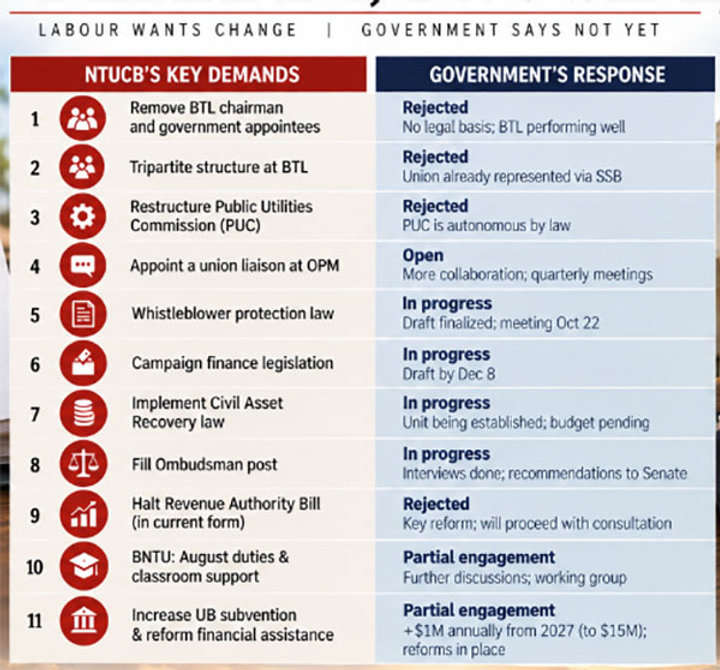
    One of the clearest points of contention centers on governance of Belize Telemedia Limited (BTL), the country’s leading telecommunications provider. The NTUCB had formally called for the removal of BTL’s Chairman and all government-appointed board members, a request the Cabinet rejected outright. Government officials argued that there is no legal standing under Belize’s existing company law to force the removal of the board leadership. They also pointed to BTL’s record-breaking profit performance in the most recent financial year, noting that the collapsed attempt to acquire rival provider Speednet Communications did not constitute sufficient justification to dismiss the entire board.

    The Cabinet also rejected the NTUCB’s proposal to implement a tripartite governance structure for BTL, arguing that union representation is already secured on the board through the Belize Social Security Board, making further restructuring unnecessary. This reasoning was directly challenged by the NTUCB, which accused the government of misrepresenting both the nature of the existing union-aligned seat and the government’s own authority to restructure the board. The current disagreement follows weeks of rising tension over BTL’s proposed Speednet acquisition, which the Cabinet announced it would not support back in August, prompting the NTUCB’s original demand for board leadership changes.

    A second major rejection came on the NTUCB’s call to restructure the Public Utilities Commission (PUC). In his letter, the Prime Minister cited the PUC’s statutory status as an autonomous regulatory body, whose core functions and decision-making powers are designed to operate free from inappropriate external political influence. He added that PUC commissioners are already appointed through a bipartisan process: the Governor General makes appointments on the Prime Minister’s advice, following formal consultation with the Leader of the Opposition. On this basis, the government concluded it could not support the proposed restructuring.

    On the demand for a dedicated union liaison position within the Office of the Prime Minister, the government expressed more openness but stopped short of creating a new role. Instead, Briceño proposed deepening collaboration through the existing Joint Unions Negotiating Team and scheduled quarterly formal meetings between union leadership and the government.

    On several good governance-focused demands put forward by the NTUCB, the Cabinet did not reject the underlying policy goals, instead outlining that reform work was already in progress with clear timelines for completion. For the Protected Disclosures Bill, the government confirmed it has reviewed feedback from both the NTUCB and the Belize Chamber of Commerce and Industry, and a Cabinet-approved final draft has been sent back to both organizations for a final review. The Minister of Governance has scheduled a stakeholder meeting on the legislation for October 22.

    Campaign finance reform legislation is also currently being drafted, with the government confirming that the Minister of Governance plans to submit the finalized bill to Cabinet for approval by December 8. Once approved, the draft will be shared with social partners and other relevant stakeholders for input. For the implementation of the Civil Asset Recovery and Unexplained Wealth Act, the government reported that work is underway to establish a dedicated Civil Recovery Authority Unit within the existing Financial Intelligence Unit (FIU). The FIU and partner agencies are currently assessing infrastructure needs and reviewing Belize’s legislative and operational frameworks to support the new unit, while a final operational budget is being put together.

    The government also reaffirmed its commitment to upholding the independence of the Office of the Ombudsman, confirming that the process to fill the long-vacant ombudsman post is moving forward. Interviews for the position have already been completed, and the bipartisan Ombudsman Reports Committee is expected to submit its nomination recommendations before an appointment resolution is tabled for a vote in the Senate.

    Another high-stakes disagreement revolves around the proposed Revenue Authority Bill 2026. The NTUCB has called for the legislation to be scrapped in its current form, but the Cabinet refused to halt the process, arguing that the creation of a Semi-Autonomous Revenue Authority is a critical step to improve the effectiveness and transparency of national revenue collection. The Prime Minister’s letter cited a recent sovereign credit rating review from Standard & Poor’s, which criticized Belize for failing to make progress on long-delayed revenue reforms. Cabinet argued that pulling the legislation would be economically counterproductive and could harm Belize’s sovereign credit outlook. That said, the government pledged to work alongside the Public Service Union and Tax Department employees to manage the transition process and address legitimate employee concerns through administrative adjustments.

    Cabinet also issued separate responses to demands raised specifically by the Belize National Teachers’ Union (BNTU). On the issue of mandatory August professional development duties, the Ministry of Education said it is open to negotiating the timing and structure of continuing professional development requirements. The Ministry noted that teachers can already apply for up to 10 days of exemption from August duties, and proposed establishing a joint working group with the BNTU to review the policy further. On the BNTU’s demand for a dedicated classroom resource allowance, the Ministry expressed willingness to hold talks but did not commit to a cash payment. It pointed out that the government has rolled out phased classroom material packages to schools over the past three years, and future discussions will determine whether additional support should be delivered in cash or in-kind, as well as the scope of coverage and sustainable financing.

    For demands related to the University of Belize (UB), the government confirmed that the institution’s annual government subvention has grown from $7.6 million in 2020 to $10 million in 2026. When student financial assistance is included, the government’s total annual investment in UB currently sits at approximately $14 million, with cumulative investment since 2020 topping $73 million. The administration has also committed to increasing the annual subvention by $1 million per year starting in 2027, until it reaches a total of $15 million annually.

    As things stand, the NTUCB has made clear that it does not view the Cabinet’s response as adequate to meet its original demands. The organization’s latest statement reaffirms that multiple proposals were entirely unaddressed, and no demand was approved in the form the unions submitted. In the coming weeks, the NTUCB will continue consultations with its affiliates and social partners before releasing its full, formal response to the government’s position.

  • Immigration Officers Strengthen Border Screening Skills

    Immigration Officers Strengthen Border Screening Skills

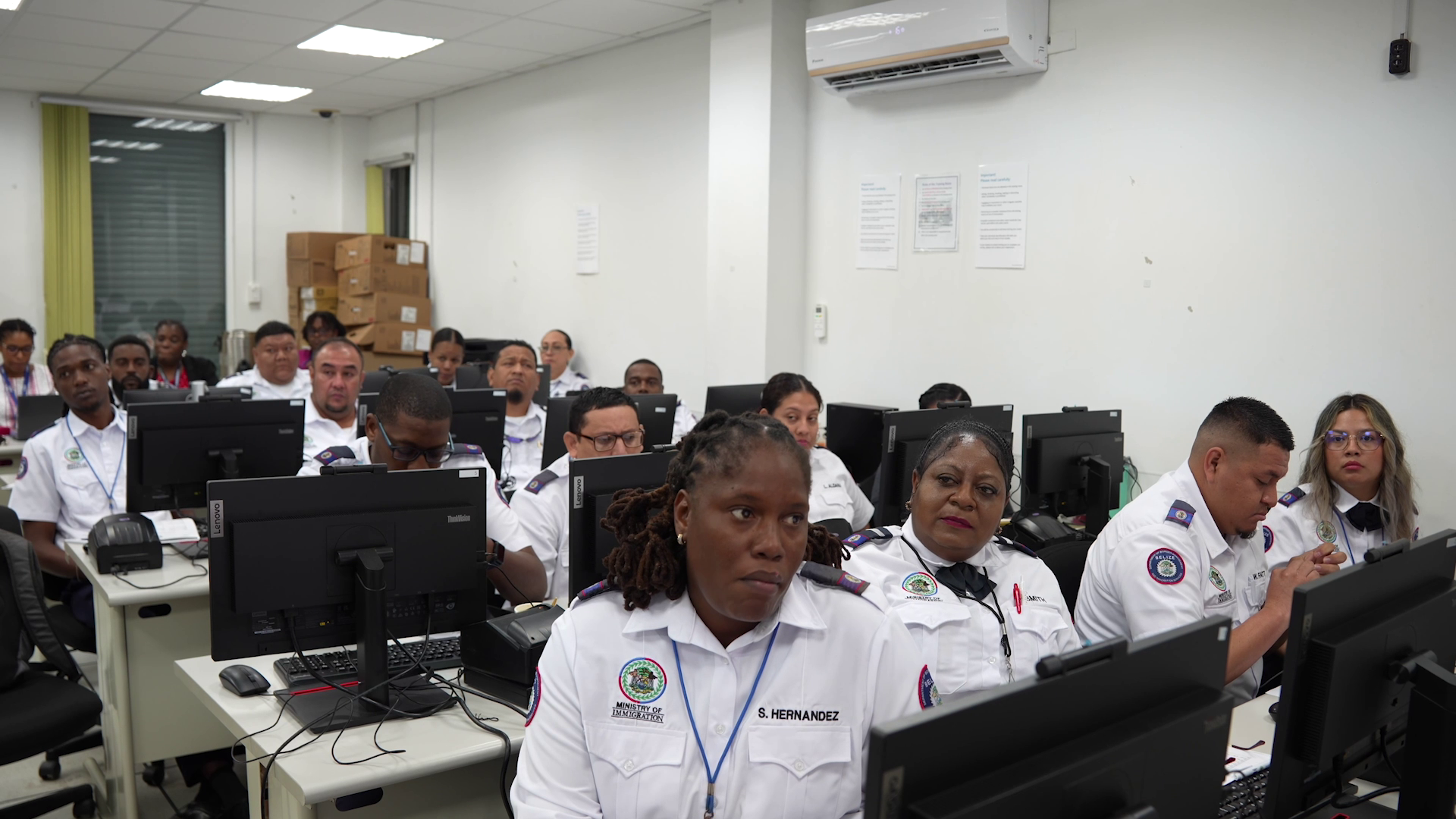
    In a major push to upgrade Belize’s cross-border travel management and national security infrastructure, 125 of the country’s immigration officers are currently undergoing specialized training to master the MIDAS digital traveler information platform, the core system that processes every individual entering or exiting the nation. The initiative, led by the International Organization for Migration (IOM) with full funding from the European Union, forms a key part of a broader regional project to strengthen security and management along Belize’s southern and western borders.

    All travelers passing through Belize’s ports of entry already go through a mandatory screening process that verifies personal documentation, tracks cross-border movement, and flags potential security risks. The new training program is designed to standardize and elevate officers’ proficiency across every function of the MIDAS system, covering end-to-end processing of both arrivals and departures, best practices for sensitive personal data protection, protocols for conducting in-depth secondary inspections, and frameworks for resolving irregular or unusual travel cases.

    Alongside the skills training, technical experts deployed for the initiative have also conducted a comprehensive evaluation of the MIDAS system itself, following recent upgrades to the platform’s hardware and the successful integration of Advance Passenger Information data. This assessment will lay the groundwork for the next phase of the project: the production of a detailed report that maps unaddressed technical gaps, outlines targeted corrective actions, and proposes actionable strategies to boost the system’s long-term operational efficiency.

    Lawrence Thompson, Director of Border Management for Belize, emphasized that the standardized training will deliver a consistent, clear set of operational procedures for immigration officers working across all of the country’s ports of entry, eliminating inconsistencies and streamlining traveler processing while strengthening security outcomes.

  • NEMO deputy director urges rethink of school uniform policies as heat rises

    NEMO deputy director urges rethink of school uniform policies as heat rises

    As climate change drives more frequent and intense extreme heat events across the Caribbean, a top disaster management official is calling for a long-overdue reevaluation of the region’s long-standing traditional school uniform policies, arguing that low-cost adjustments can deliver much-needed relief to students without the massive price tag of universal school air conditioning.

    Princess Khodra, Deputy Director of Saint Lucia’s National Emergency Management Organisation (NEMO) and a former educator, laid out this proposal during discussions marking the launch of a new climate change impact study commissioned by UNICEF. Khodra says that outmoded traditionalism has held the region back from turning climate data into actionable, low-cost policy changes that can immediately improve children’s daily lives, even when large budgets are not available.

    Pointing to uniform policy as a clear, accessible example of systemic adaptation, Khodra explained that for generations, Caribbean schools have required students to wear heavy, formal uniforms including long overalls, thick black socks, dark leather shoes, and neckties — garments rooted in cultural tradition that have become dangerous amid record-breaking heat. She noted that even today, some Caribbean schools (outside of Saint Lucia) still enforce these rigid requirements, refusing to relax rules even when temperatures soar.

    “Because air conditioning every school building across the region would require massive public investment that many small island nations simply cannot afford, a minor policy adjustment to allow lighter, cooler uniforms creates an immediate, tangible benefit for students at almost no cost,” Khodra explained. “Adaptation doesn’t have to start with expensive overhauls; small, creative changes can deliver life-changing relief.”

    Already, schools across Saint Lucia have begun rolling out low-cost adaptations to help students cope with rising heat. Saint Mary’s College now permits students to take water breaks as needed, and some teachers hold outdoor classes in the shade of large trees when temperatures peak. At Aux Lyons Combined School, a teacher has set up a dedicated “hydration corner” to keep students hydrated, while Ave Maria Girls’ Primary has added extra water breaks to daily schedules and shortened physical education classes during heat waves.

    Uniform changes are already under discussion at these local institutions. Saint Mary’s Principal Neal Fontenelle said the school is prepared to adopt lighter uniform options if high heat persists, and Ave Maria Girls’ Primary Principal Valerie St Helene-Henry highlighted lightweight, breathable fabrics and lighter color palettes as simple, effective adjustments.

    The push for change is not isolated to Saint Lucia: across the Caribbean, education systems are already moving to implement heat-friendly uniforms. At Princess Margaret Secondary School in Barbados, first-year students started the 2026 academic year in newly redesigned heat-adapted uniforms, which Education Transformation Minister Chad Blackman described as purpose-built for the region’s consistently hot climate. The reform was implemented after regional temperatures hit 33 degrees Celsius last year, prompting authorities to seek low-cost student protection measures. Early feedback has been positive: students told local outlet Barbados TODAY they find the new garments far more comfortable, and one parent praised the lighter, breathable material as a welcome change amid rising temperatures.

    Khodra’s concerns were echoed by UNICEF specialists during a media workshop held after the launch of the climate study. Dr. Lisa McClean-Trotman, UNICEF’s Social and Behaviour Change Specialist for the Eastern Caribbean Area, named restrictive, heavy uniforms as one of multiple key hazards children face during periods of extreme heat and drought, alongside poorly ventilated classrooms, school closures caused by water service disruptions, and physical education held during the hottest hours of the day. These conditions do not just cause discomfort: they increase risks of dehydration (which impairs learning ability), heat stress, and water-borne illnesses when schools do not have enough clean water for regular handwashing.

    For small island developing states like those across the Caribbean, which bear a disproportionate share of climate change impacts despite contributing very little to global greenhouse gas emissions, Khodra emphasized that creative, low-cost solutions are the most accessible path to immediate adaptation. “We don’t have large national coffers to fund massive infrastructure overhauls, but we do have the creativity to reimagine long-standing policies to protect our children,” she said. “It’s time to move past tradition for tradition’s sake and turn climate data into action that works for everyone.”

  • NEMO director urges rethink of school uniform policies as heat rises

    NEMO director urges rethink of school uniform policies as heat rises

    As record-breaking high temperatures continue to grip the Caribbean, climate and emergency management leaders are calling for a long-overdue reevaluation of traditional school uniform policies, arguing that simple, low-cost adjustments can bring critical relief to students without the massive price tag of universal air conditioning across school campuses.

    Princess Khodra, director of Saint Lucia’s National Emergency Management Organisation (NEMO) and a former educator, laid out this proposal during stakeholder discussions held to mark the launch of a new climate impact report commissioned by UNICEF. Khodra argues that the region’s deep-rooted attachment to long-held cultural traditions has become a barrier to turning climate research into actionable, people-centered policy—even when those changes require little to no upfront investment.

    She points to mandatory school uniforms as a clear, accessible example of how policy adaptation can address worsening heat conditions. For generations, Caribbean students have worn uniforms rooted in regional tradition, many of which include heavy garments like formal ties, thick overalls, and requirements for dark black socks and leather shoes. Despite the growing intensity of seasonal heatwaves, Khodra notes that many schools across the region (outside of Saint Lucia) still enforce these strict uniform rules with no exceptions for extreme weather.

    “A simple revision on a governmental level of uniform policy can help to translate climate data into a tangible action that immediately impacts a child, because it costs enormous sums of money to air condition every school across the region,” Khodra explained. “Just a slight adjustment to uniform requirements may deliver immediate, meaningful benefits to students without placing an unsustainable financial burden on public budgets.”

    Khodra’s call for change aligns with already ongoing shifts at schools across Saint Lucia, where administrators have rolled out small, heat-focused adjustments to support student well-being. Saint Mary’s College now permits students to take water breaks whenever they need relief, and some educators have moved outdoor lessons to shaded areas under trees. At Aux Lyons Combined School, a teacher has set up a dedicated “hydration corner” for students, while Ave Maria Girls’ Primary has added extra water breaks to the daily schedule and occasionally shortened physical education classes held during peak heat.

    Uniform changes are already under discussion at these local institutions. Neal Fontenelle, principal of Saint Mary’s College, noted that the school would consider adopting lighter uniform designs if extreme heat conditions continue. Valerie St Helene-Henry, principal of Ave Maria Girls’ Primary, pointed to lightweight breathable fabrics and lighter garment colors as accessible, low-cost alternatives to traditional uniform designs.

    This shift toward heat-adapted uniforms is already gaining traction elsewhere across the Caribbean. In Barbados, first-form students at Princess Margaret Secondary School began the 2024 academic year in newly redesigned uniforms that Education Transformation Minister Chad Blackman described as “fit for purpose in a hot climate.” The policy change was implemented after regional temperatures climbed to 33 degrees Celsius, pushing education authorities to prioritize student protection from heat-related risks. Early feedback from the change has been positive: students told local outlet Barbados TODAY that the new designs are noticeably more comfortable, and one parent praised the lighter, more breathable material as a welcome adjustment amid rising temperatures.

    Khodra’s concerns about child vulnerability to extreme heat were echoed by UNICEF specialists during a post-launch media workshop focused on climate impacts. Dr. Lisa McClean-Trotman, UNICEF’s Social and Behaviour Change Specialist for the Eastern Caribbean Area, identified restrictive, heavy traditional uniforms as one of multiple key hazards facing children during periods of drought and extreme heat. She also highlighted other systemic risks, including poorly ventilated classroom infrastructure, school closures triggered by water service outages, and scheduled recess and sports activities held during the hottest hours of the day. These conditions not only disrupt learning but also put children at heightened risk of dehydration, heat stress, and water-borne illness when handwashing water supplies run low.

    For Khodra, adapting to the region’s changing climate does not need to start with multi-million dollar infrastructure overhauls. Instead, she argues that Caribbean nations can leverage creativity and flexible policy thinking to deliver immediate gains for vulnerable communities.

    “We also have to be creative in how we think and in how we apply that data and translate it into policy that can affect action,” Khodra said. “Because we know we’re not rich. But we are creative.”

  • Climate plans fail to track investment in children – study

    Climate plans fail to track investment in children – study

    A landmark new analysis from UNICEF has uncovered a major oversight in national climate strategies across six Eastern Caribbean nations: current frameworks lack the targeted monitoring tools needed to confirm that climate-focused investments are delivering tangible benefits to children. The assessment, titled *Child-Centred Climate Analysis for Building Resilience*, examines climate plans in Barbados, Dominica, Grenada, St Kitts and Nevis, Saint Lucia, and St Vincent and the Grenadines. While all six countries reference child-relevant sectors including education, healthcare, clean water access, agriculture, and social protection in their official national climate blueprints, researchers found no nation has integrated child-specific performance indicators, measurable outcome goals, or result-tied adaptation commitments into their planning. This absence of targeted tracking mechanisms creates significant barriers: it becomes impossible to verify whether climate funding is reaching child-centric programs, and governments cannot prove measurable returns to international climate finance providers that fund much of the region’s climate action. Beyond missing child-focused metrics, the study also documented widespread gaps across multiple core areas: climate monitoring infrastructure, disaggregated data that breaks down climate impacts by age, systematic tracking of policy rollout, transparent monitoring of climate finance flows, comprehensive insurance coverage data, and concrete evidence of meaningful youth engagement in climate policy design. Researchers emphasize these are not mere gaps in academic research – insufficient data undermines governments’ ability to build evidence-based cases to secure additional international climate financing, creating a vicious cycle of under-resourcing for child-sensitive action. In response to these findings, the study puts forward 49 targeted recommendations to strengthen child protection against escalating climate shocks and hazards. The proposed actions cover four broad priority areas: anticipatory pre-disaster action, shock-responsive social protection systems, structural resilience building, and reformed climate and disaster financing. Specific proposals range from climate-smart agricultural systems and drought-tolerant crop production paired with farmer peer learning networks, to psychological first aid training for teachers and community leaders, and explicit dedicated provisions for children in disaster risk financing frameworks. Following consultations with government officials, regional bodies, and local youth networks, three of the 49 actions have been selected for urgent implementation over the next 18 to 24 months, chosen for their high potential impact on child well-being and their feasibility to fund and execute. Clive Murray, climate change and disaster risk reduction programme specialist at UNICEF’s Eastern Caribbean Area Office, explained the prioritization process in an interview with Barbados TODAY. “All 49 proposed actions were presented and discussed, and the prioritization process focused on identifying the actions that offer the most practical, financeable, and child-protective entry points for regional governments in the short to medium term,” Murray said. The first top priority mandates setting aside a defined, guaranteed share of national disaster risk financing for child-critical services, including primary education infrastructure, primary healthcare facilities, nutrition programs, and social protection schemes. While most regional countries already use disaster risk management tools such as contingency funds and parametric weather insurance, none currently include explicit carve-outs for child-focused needs. The second priority calls for pre-negotiated, pre-approved continuity protocols for education and heat-related public health that activate automatically when hurricane warnings are issued or regional temperature thresholds hit. Proposed measures under this framework include pre-positioning learning materials in secure locations, rolling out remote learning capacity, adjusting school schedules to avoid extreme heat, mandatory hydration protocols, and alternative child-friendly shelter arrangements when existing facilities are unsafe. The third priority focuses on building youth-led peer support networks to address the psychosocial trauma that follows climate disasters, including rolling out psychological first aid training for teachers, healthcare workers, community and religious leaders, and youth advocates, plus implementing trauma-informed support programs when schools reopen after extreme weather events. Researchers note that all three priority initiatives are intentionally designed to integrate child-focused protections into existing national climate and disaster systems, rather than requiring governments to build new frameworks from scratch. Despite the clear design of the proposals, Murray warned that advancing implementation will require overcoming two key barriers: persistent fiscal constraints and fragmented inter-agency coordination. “The biggest obstacle is financing, given the persistent fiscal constraints faced by regional governments,” Murray said. He outlined several existing financing avenues that governments can leverage to fund the priorities, including parametric catastrophe coverage from the Caribbean Catastrophe Risk Insurance Facility, catastrophic risk drawdown facilities offered by the World Bank and Inter-American Development Bank, and dedicated climate action funding from the Green Climate Fund and Adaptation Fund. Beyond funding, Murray noted that disjointed coordination across government agencies creates operational hurdles, adding that unified national climate plans that explicitly embed child-sensitive measures into sector-level strategies and align them with overarching national climate policy can resolve this gap. The study was officially launched in Saint Lucia on a Wednesday this week, and the launch was followed by a two-day capacity-building workshop hosted by UNICEF and the Caribbean Disaster Emergency Management Agency for regional media professionals, aimed at improving reporting on child and climate issues across the Eastern Caribbean.

  • Dwayne Bravo, Ian Bishop inducted into Republic Bank CPL Hall of Fame

    Dwayne Bravo, Ian Bishop inducted into Republic Bank CPL Hall of Fame

    The Caribbean Premier League (CPL), sponsored by Republic Bank, has marked a historic milestone for the T20 cricket competition with the launch of its official Hall of Fame, welcoming two of West Indies cricket’s most recognizable figures as the first honorees. In a celebratory gala dinner hosted at the Hilton Barbados on September 15, 2026, Dwayne Bravo and Ian Bishop were formally inducted into the elite group, capping decades of transformative contributions to the regional tournament.

    Bravo, a star all-rounder who became a fan favorite across the league’s history, received the inaugural Sir Garry Sobers Award, the highest honor of the new Hall of Fame, reserved for playing inductees. The award itself carries deep legacy: it is named for Sir Garry Sobers, the West Indian cricket icon universally hailed as the greatest all-rounder in the sport’s history, and bears his name with formal approval from the Sobers family. The award was presented to Bravo by Daniel Sobers, representing the legendary cricketer’s family.

    Over his celebrated CPL playing career, Bravo earned his place among the tournament’s greats. He retired from competitive play having claimed 129 wickets, and lifted five CPL championship titles as a player with the Trinbago Knight Riders. He added a sixth title to his collection just one year prior, in 2025, when he led the side to victory as head coach.

    The second inaugural inductee, Ian Bishop, was honored in the non-playing category, in recognition of his decades of work behind the microphone as one of cricket’s most beloved commentators. Bishop has been a core part of CPL’s broadcast team since the tournament’s very first edition launched in 2013, and his distinctive insight and passionate delivery have helped bring the league’s signature “Biggest Party in Sport” atmosphere to millions of cricket fans across the Caribbean and the entire globe. Today, he is widely regarded as one of the most respected voices in international cricket commentary.

    In remarks from the ceremony, CPL CEO Pete Russell spoke to the significance of the two inductions, noting that the Hall of Fame was created specifically to honor contributors of the caliber of Bravo and Bishop. “Their contribution to this competition, on the field and behind the microphone, has helped build CPL into the phenomenon it is today, and it was a privilege to welcome them into this inaugural class,” Russell said.

    Beyond the inductions, the gala night also served a charitable purpose: the event supported prostate cancer awareness programming run by the Sir Clive Lloyd Healthcare Foundation. Looking ahead, the CPL has confirmed that two new inductees will be added to the Hall of Fame each year, building on the legacy established by Bravo and Bishop. As the league continues to expand its reach across the Caribbean and grow its profile as one of the top T20 competitions on the global cricket calendar, the Hall of Fame will stand as a permanent tribute to the athletes and personalities who have shaped its success.

  • Shadab hat-trick downs Warriors

    Shadab hat-trick downs Warriors

    On September 17, 2026, Antigua & Barbuda Falcons etched their name into Caribbean Premier League (CPL) history, becoming the first side to secure a spot in this year’s Republic Bank CPL title decider after a blistering nine-wicket demolition of Guyana Amazon Warriors at Bridgetown’s Kensington Oval. The lopsided result marks the second-fastest victory in the tournament’s 13-year history, a win fueled by a devastating collective bowling performance that saw Pakistan star Shadab Khan claim a stunning hat-trick, with fellow spinner Sufyan Moqim picking up four wickets of his own to bowl the Warriors out for a paltry 76 all out. A brutal 16-ball 49 from all-rounder Rahkeem Cornwall extinguished any hope of a last-minute Guyana comeback, capping off what observers have already dubbed the performance of the 2026 tournament.

    Falcons skipper won the toss and opted to put the Warriors in to bat, a strategic call aligned with recent pitch trends at Kensington Oval, where batting conditions have consistently improved as matches progress, making preserving wickets a higher priority than piling on early runs. The Warriors appeared to execute the plan perfectly through the mandatory PowerPlay, reaching 34 for the loss of just one wicket, leaving many expecting a competitive middle-order batting display to build a challenging total.

    That narrative collapsed almost immediately after the first six overs, as the Falcons’ high-quality spin attack – the core of their success through this tournament – clicked into gear. Moqim drew loose shots from top-order batters Glenn Phillips and Mohammad Haris first: Phillips failed to generate enough power on a heave to deep mid-wicket and was caught, while Haris feathered a thin edge through to wicket-keeper Amir Jangoo and walked off without waiting for the umpire’s decision.

    Moqim’s breakthrough turned the match over to Shadab, who delivered one of the most iconic spells in CPL history in just his second over. The leg-spinner unleashed three consecutive perfectly disguised googlies to rip through the Warriors’ middle order, claiming a hat-trick that left the opposition reeling. First, Shimron Hetmyer miscued a drive straight to long on. Next, Mehidy Hasan Miraz was trapped leg before wicket, with the on-field decision standing firm after a review. The final, clinical delivery beat Quentin Sampson all ends up, crashing through his defences to clip the top of off-stump, triggering wild celebrations from the Falcons’ fielders. In the space of six deliveries, the Warriors had collapsed to 45 for 6, their tournament prospects in tatters.

    The wickets kept tumbling as Moqim returned to the attack in the following over, picking up two more: Khary Pierre was bowled, while Shai Hope fell LBW, leaving the Warriors adrift. Shadab picked up his fourth wicket shortly after, with veteran spinner Imran Tahir departing for a single run, leaving just the lower order to offer resistance. A late flurry from Romario Shepherd, who hit two crisp boundaries, offered only a brief distraction, as Shamar Springer wrapped up the innings to leave the Warriors all out for 76, setting the Falcons just 77 to win for a place in the final.

    If the Falcons’ bowling was dominant, their batting was ruthless from the first delivery. Rahkeem Cornwall came out swinging, refusing to let the Warriors build any pressure. Even with captain Imran Tahir turning to spin to slow the run rate, Cornwall carved through the attack, treating Tahir, Miraz and Pierre to a sequence of powerful, perfectly placed shots through the PowerPlay. The all-rounder raced towards the fastest half-century in CPL history, just one run short of Andre Russell’s record after only 14 balls, before falling just short, caught by Hetmyer off Tahir’s bowling for 49. His devastating innings had already done the damage, leaving openers Evin Lewis and Amir Jangoo needing just 27 more runs to win with nine wickets in hand.

    Lewis, who had ceded most of the strike to Cornwall through the early innings, picked up right where his teammate left off. Playing through cramp, the experienced opener hammered 21 runs off just six deliveries from pace bowler Shamar Joseph after a bowling change. Jangoo chipped in with a single boundary off four deliveries, before Lewis hit the winning runs in just the 32nd over of the chase, wrapping up one of the most dominant wins in CPL playoff history.

    With the victory, the Falcons will enter Sunday’s 2026 CPL final in devastating form, still waiting to learn who their opponent will be. For the Guyana Amazon Warriors, the defeat means they face a do-or-die knockout match against the Kingsmen in the final eliminator on Saturday night, with the winner earning the right to face the Falcons for the CPL crown.

  • Is the System to Blame? Family Court Orders Alleged Abuser Out of His Home

    Is the System to Blame? Family Court Orders Alleged Abuser Out of His Home

    A controversial eviction order handed down by Belize’s Family Court has ignited public debate over the fairness of the country’s domestic protection system, after a man who spent five years building his own home was forced to vacate just one day before the property was completely destroyed by fire.

    Eugene Thompson, the 52-year-old affected resident, had poured more than $45,000 of his savings into construction materials, furniture and household appliances for the home he built from the ground up. His eviction came amid a dispute with his six-month common-law partner, Ashema Chang, who filed for a protection order that led the court to order Thompson out of the property.

    Local senior attorney Richard “Dickie” Bradley clarified that the Family Court does hold the legal authority to issue such eviction orders even when the respondent is the legal owner or long-term occupant of the property. Under Belizean domestic violence protection regulations, Bradley explained, the core purpose of a protection order is to separate the alleged abuser from the complainant. If the complainant has no alternative place of residence, the court can legally require the accused party to leave the property immediately, regardless of property ownership.

    What makes the case so contentious is the tragic turn of events that followed Thompson’s eviction. Just 24 hours after he was forced out, a fire broke out on the property that burned the entire structure and all of Thompson’s personal belongings to ash. Now, law enforcement officials have issued a wanted poster for Chang, who is being sought for questioning in connection with the suspicious fire.

    Thompson has publicly pushed back against the court’s ruling, saying he was evicted from his self-built home without any meaningful investigation into the claims against him. He maintains that if he had been allowed to remain in the property, he could have stopped the fire before it destroyed his home and life savings. Longtime neighbor Linda Marquez, who has bought local produce from Thompson for more than seven years, has publicly backed his calls for intervention, saying “the system failed this young man” by forcing him out of the home he worked years to build.

    So far, the Belizean Human Services Department has offered Thompson temporary emergency accommodation, but the displaced resident says this is not enough. He is now calling on the government and relevant agencies to provide financial and material support to help him rebuild his lost home and restore his livelihood. The case has prompted broader discussion across Belize about whether existing domestic protection regulations strike the right balance between protecting complainants and preserving the property and due process rights of the accused.

  • Water project targets 20 schools

    Water project targets 20 schools

    Against the backdrop of escalating climate-driven water stress across the Eastern Caribbean, the island nation of Saint Lucia is putting the final touches on a targeted infrastructure project that will bring reliable water access to at least 20 of its most water-deprived primary and secondary schools. The initiative grew out of a crisis that left dozens of educational institutions without consistent water access for five consecutive days, prompting government agencies to collaborate on a solution rooted in new climate vulnerability research.

    Onika Benn, in-country facilitator for the Nationally Determined Contribution (NDC) Partnership embedded within Saint Lucia’s Department of Sustainable Development, shared details of the proposal last Wednesday, following the regional launch of UNICEF’s landmark Child-Centred Climate Analysis for Building Resilience. The landmark report assesses climate risks and their disproportionate impact on children across six Eastern Caribbean nations, with Saint Lucia one of the core contributing countries.

    Benn emphasized that actionable insights from the UNICEF analysis have already been integrated into government programming, starting with the urgent school water access project. “Many may not fully grasp the severity of the water crisis we are still navigating here in Saint Lucia,” Benn explained during post-launch discussions. “Multiple schools reported going a full five days without enough water to meet basic needs, which forced us to move quickly to address this gap.”

    In response to the crisis, the Department of Sustainable Development partnered with the country’s Department of Education to design a targeted intervention focused on the hardest-hit regions. The finalised project concept will ensure all participating schools have a five-day reserve of water, delivered through a network of installed water storage tanks and solar-powered pumping systems that rely on renewable energy to operate, even during power outages linked to extreme weather. Financial and technical support for the initiative has already been pledged, and the project is moving toward implementation.

    This school water project is just one component of a broader national effort to help Saint Lucia’s education sector build long-term resilience to climate-related hazards. The Department of Sustainable Development is currently advancing the second phase of its Green Climate Fund National Adaptation Plan readiness project, which will develop national data and child-inclusive climate indicators to build a case for targeted climate investment. A key focus of this next phase is expanding psychosocial support for children coping with climate stress, a gap highlighted in the UNICEF analysis.

    Over the next two months, national officials will refine a full concept note to submit to the Green Climate Fund, covering three core priorities: strengthening education delivery during natural hazards, expanding training and psychosocial support services for students, teachers and school counsellors, and expanding sustainable water infrastructure across more educational institutions. This work is aligned with a pre-existing education sector adaptation strategy and action plan tailored to the specific needs of children and young people in Saint Lucia’s education system.

    Beyond infrastructure and policy, Saint Lucia has prioritized centering youth voices in national climate action through longstanding collaboration with UNICEF. In 2023, UNICEF funded a national youth climate engagement project to ensure children and young people have formal representation in the country’s NDC process, with youth leaders designing the structure of their own participation. Benn highlighted the work of youth climate activist Kezia St Brice, who led a team of young advocates that visited schools across the country to deliver climate literacy education to more than 800 students. Following that outreach work, St Brice was selected to represent Saint Lucia’s youth at the United Nations Climate Change Conference held in Baku, Azerbaijan.