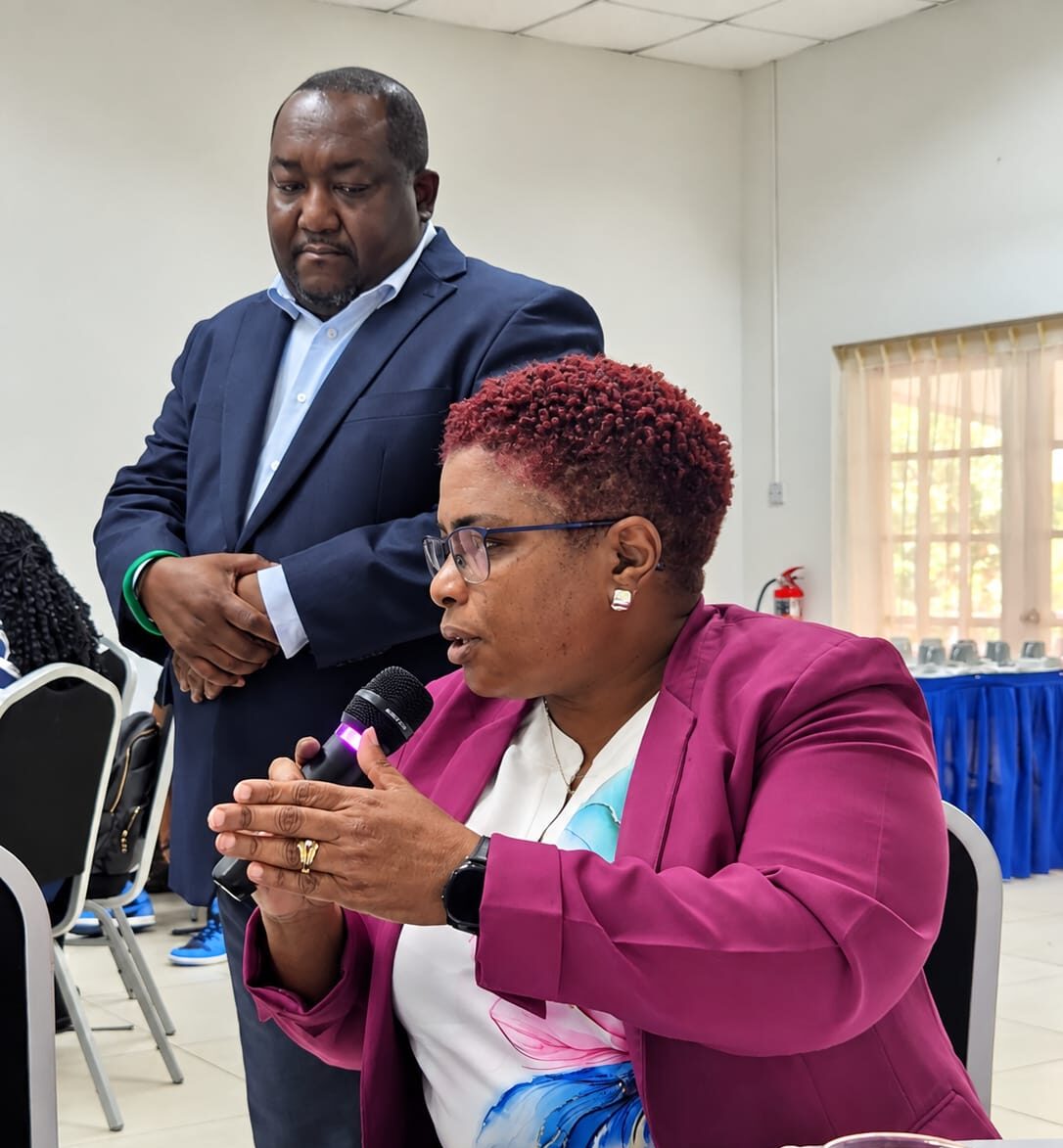
As climate change drives more frequent and intense extreme heat events across the Caribbean, a top disaster management official is calling for a long-overdue reevaluation of the region’s long-standing traditional school uniform policies, arguing that low-cost adjustments can deliver much-needed relief to students without the massive price tag of universal school air conditioning.
Princess Khodra, Deputy Director of Saint Lucia’s National Emergency Management Organisation (NEMO) and a former educator, laid out this proposal during discussions marking the launch of a new climate change impact study commissioned by UNICEF. Khodra says that outmoded traditionalism has held the region back from turning climate data into actionable, low-cost policy changes that can immediately improve children’s daily lives, even when large budgets are not available.
Pointing to uniform policy as a clear, accessible example of systemic adaptation, Khodra explained that for generations, Caribbean schools have required students to wear heavy, formal uniforms including long overalls, thick black socks, dark leather shoes, and neckties — garments rooted in cultural tradition that have become dangerous amid record-breaking heat. She noted that even today, some Caribbean schools (outside of Saint Lucia) still enforce these rigid requirements, refusing to relax rules even when temperatures soar.
“Because air conditioning every school building across the region would require massive public investment that many small island nations simply cannot afford, a minor policy adjustment to allow lighter, cooler uniforms creates an immediate, tangible benefit for students at almost no cost,” Khodra explained. “Adaptation doesn’t have to start with expensive overhauls; small, creative changes can deliver life-changing relief.”
Already, schools across Saint Lucia have begun rolling out low-cost adaptations to help students cope with rising heat. Saint Mary’s College now permits students to take water breaks as needed, and some teachers hold outdoor classes in the shade of large trees when temperatures peak. At Aux Lyons Combined School, a teacher has set up a dedicated “hydration corner” to keep students hydrated, while Ave Maria Girls’ Primary has added extra water breaks to daily schedules and shortened physical education classes during heat waves.
Uniform changes are already under discussion at these local institutions. Saint Mary’s Principal Neal Fontenelle said the school is prepared to adopt lighter uniform options if high heat persists, and Ave Maria Girls’ Primary Principal Valerie St Helene-Henry highlighted lightweight, breathable fabrics and lighter color palettes as simple, effective adjustments.
The push for change is not isolated to Saint Lucia: across the Caribbean, education systems are already moving to implement heat-friendly uniforms. At Princess Margaret Secondary School in Barbados, first-year students started the 2026 academic year in newly redesigned heat-adapted uniforms, which Education Transformation Minister Chad Blackman described as purpose-built for the region’s consistently hot climate. The reform was implemented after regional temperatures hit 33 degrees Celsius last year, prompting authorities to seek low-cost student protection measures. Early feedback has been positive: students told local outlet Barbados TODAY they find the new garments far more comfortable, and one parent praised the lighter, breathable material as a welcome change amid rising temperatures.
Khodra’s concerns were echoed by UNICEF specialists during a media workshop held after the launch of the climate study. Dr. Lisa McClean-Trotman, UNICEF’s Social and Behaviour Change Specialist for the Eastern Caribbean Area, named restrictive, heavy uniforms as one of multiple key hazards children face during periods of extreme heat and drought, alongside poorly ventilated classrooms, school closures caused by water service disruptions, and physical education held during the hottest hours of the day. These conditions do not just cause discomfort: they increase risks of dehydration (which impairs learning ability), heat stress, and water-borne illnesses when schools do not have enough clean water for regular handwashing.
For small island developing states like those across the Caribbean, which bear a disproportionate share of climate change impacts despite contributing very little to global greenhouse gas emissions, Khodra emphasized that creative, low-cost solutions are the most accessible path to immediate adaptation. “We don’t have large national coffers to fund massive infrastructure overhauls, but we do have the creativity to reimagine long-standing policies to protect our children,” she said. “It’s time to move past tradition for tradition’s sake and turn climate data into action that works for everyone.”