
As Trinidad and Tobago moves forward with a landmark national security plan to confront rising violent and gang-related crime, Prime Minister Kamla Persad-Bissessar has moved to reassure compliant residents that the sweeping new seven-district security framework poses no threat to ordinary citizens. The new framework, formalized under the proposed Special Operations Bill 2026, will deploy specialized dedicated police units across the country authorized to carry out targeted crackdowns against organized gangs, armed suspects and violent criminal networks, and parliamentary debate on the legislation is scheduled to kick off at 10:30 a.m. local time today ahead of a final vote.\n\nThe Prime Minister confirmed that all outstanding questions about the new legislation will be addressed during floor debates in both the lower and upper houses of parliament, emphasizing that the bill is expected to pass successfully, with daily life across the country continuing largely uninterrupted for law-abiding residents. Drawing on past policy success, Persad-Bissessar pointed to the previously implemented state of emergency, which she described as highly effective at curbing crime, and expressed confidence that the new Special Operations strategy will deliver equally strong results. When asked about the bill’s provision for establishing restricted “closed areas” in high-crime hotspots, the Prime Minister noted that policymakers will rely on empirical data to guide any such designations, adding that it remains too early in the process to determine how long any potential closed area would remain in effect.\n\nA review of the legislation by local outlet *Trinidad Express* confirms that the bill will remain in force for a full two years starting from the date it is officially proclaimed by the President. Structurally, the new bill draws heavily from the earlier Zones of Special Operations (ZOSO) Bill, which failed to gain enough parliamentary support to pass earlier this year. Unlike the previous proposal, however, the current iteration does not require a special supermajority to pass, meaning it can be approved with a simple majority of sitting lawmakers.\n\nThe legislation divides the entire country into seven distinct special policing districts, covering every populated region of both Trinidad and Tobago. District 1 includes Port of Spain, Diego Martin and San Juan/Laventille; District 2 covers Arima and Tunapuna-Piarco; District 3 encompasses Sangre Grande and Mayaro-Rio Claro; District 4 includes Chaguanas and Couva-Tabaquite-Talparo; District 5 covers San Fernando and Princes Town; District 6 includes Point Fortin, Siparia and Penal-Debe; and the entire island of Tobago makes up the seventh district.\n\nEach of the seven districts will be led by a dedicated Head of Special Operations, selected by the Commissioner of Police from officers holding at least the rank of Superintendent. Before formalizing the appointment, the Commissioner is required to consult with the Prime Minister, who retains the power to reject a candidate after consulting with relevant cabinet ministers and the Chief of Defence Staff. All personnel selected for special operations duties, including both police officers and participating military personnel, must complete mandatory training in human rights protocols, rules governing the use of force, community engagement practices and conflict de-escalation strategies.\n\nThe legislation also allows for the Trinidad and Tobago Defence Force to support police operations, though any military deployment must be formally requested by the Commissioner of Police. Each district receiving military support will have a Head of Military Assistance, appointed by the Chief of Defence Staff from officers holding at least the rank of Major. Similar to the police appointment process, the Chief of Defence Staff must consult the Prime Minister before making the appointment, and the Prime Minister can reject the nomination after consulting relevant ministers and the Commissioner of Police.\n\nTo ensure accountability and coordinated action, the Commissioner of Police and Chief of Defence Staff are required to develop joint formal protocols governing police-military collaboration, including clear systems for verifying the identity of all participating personnel. Separate standard operating procedures (SOPs) must also be created for both police special operations and military assistance, with any personnel found violating SOPs facing disciplinary action.\n\nClocked in at 26 clauses plus a formal schedule, the bill authorizes targeted special operations that can be carried out by police alone or with military backup, and grants authority to declare areas facing extreme criminal activity as closed areas. Within these designated zones, police receive expanded powers to conduct warrantless searches, seize evidence, and make arrests and detentions. Authorities are also permitted to implement cordons and curfews, and require any person entering or exiting the area to hold a valid entry/exit permit.\n\nThe President holds the sole authority to declare a zone within a special operations district a closed area, and can only do so if presented with reasonable evidence that escalating violent crime – including homicides, shootings, kidnappings and gang activity – or the widespread possession of illegal firearms, ammunition, explosives or other weapons poses a direct threat to public safety and peace. The power can also be invoked if gangs have seized control of, or are actively intimidating, a local community, and only after ordinary law enforcement measures have proven unable to restore public safety and order.\n\nAny closed area declaration is issued as an executive Order that is subject to negative resolution by the House of Representatives, meaning lawmakers can vote to annul the order if they choose. Within seven days of issuing the declaration, the President must provide the Speaker of the House with a formal statement outlining the specific justifications for the order. While the House can annul the declaration at any time, no annulment motion can be introduced more than once every three months.\n\nOnce a closed area is declared, the district’s Head of Special Operations can implement physical access restrictions via barriers, roadblocks and other containment measures. With the exception of a small group of explicitly exempted officials, no person may enter or exit a closed area without a valid permit. Exempted individuals include the President, Prime Minister, cabinet ministers, members of parliament, Tobago House of Assembly members, municipal councillors, the Chief Justice and sitting Supreme Court judges, the Commissioner of Police, Chief of Defence Staff, district special operations commanders, and on-duty police and military personnel traveling to or from their assignments.\n\nViolating the permit requirement, or failing to comply with permit conditions without a reasonable excuse, carries a maximum penalty of a TT $50,000 fine and one year of imprisonment. Police may also establish internal and perimeter cordons around specific sites within closed areas using roadblocks and barriers; the Head of Special Operations is required to issue immediate public notice of any cordon, clearly marking its boundaries and outlining requirements for people inside and those seeking entry, with formal notice published in the official government Gazette within three days.\n\nThe President also holds authority to impose a curfew within a closed area, requiring all residents to remain inside their properties during specified hours unless they qualify for an exemption or hold a valid curfew permit. Breaching a curfew order carries the same maximum penalties as violating permit rules: a TT $50,000 fine and one year of imprisonment.
博客
-

Warm, vochtig en een mix van zon en wolken
# Weather Forecast for Suriname: September 18 Brings Steamy Warmth and Isolated Rain Chances
Released on September 18 at 04:52, this official weather forecast outlines conditions across Suriname for the day, highlighting the typical late-season warm and humid pattern that has defined the current period.The day kicks off across most regions carrying the seasonal traits that have become common at this time of year: already mild warmth paired with high atmospheric moisture, building steadily through the morning hours. By early morning, temperatures across low-lying areas quickly climb toward 28°C, with relative humidity holding steady around 80% that creates a close, brooding feel across outdoor spaces. A layer of broken cloud cover softens the force of the early sun, holding back the most intense heat for the first half of the day. In the capital city of Paramaribo, the opening hours of Friday September 18 will bring a shifting mix of bright sunshine and scattered cloud cover.
The afternoon shift will bring the day’s most intense heat, with thermometers climbing steadily across the entire country. In Paramaribo, forecasts predict highs will reach a sweltering 37°C, while other inland and regional areas including Onverwacht will see nearly matching highs around 36°C. High humidity remains the norm through the afternoon, with bright sunlight breaking through puffy cumulus cloud banks. Light wind will blow from the northeast to east for most of the day, doing little to offset the steamy conditions.
While most of the country will stay dry through the day, there is a small chance of short, cooling rain showers for some regions. Paramaribo is expected to remain entirely dry all day, with overnight temperatures holding at a mild 26°C after the daytime heat. For regions such as Smalkalden, the chance of afternoon precipitation climbs to roughly 60%, though any rain that develops is expected to be quick, intense thunderstorms that pass through the area rapidly, clearing out quickly after they arrive.
As evening approaches and night falls, temperatures will gradually cool to a low of 26°C across most populated areas. Even with the dropping thermometer, high humidity will remain locked in around 80%, leaving a sticky, muggy feel for evening outdoor activities. Light easterly winds will continue through the overnight hours, with little change in speed or direction.
-
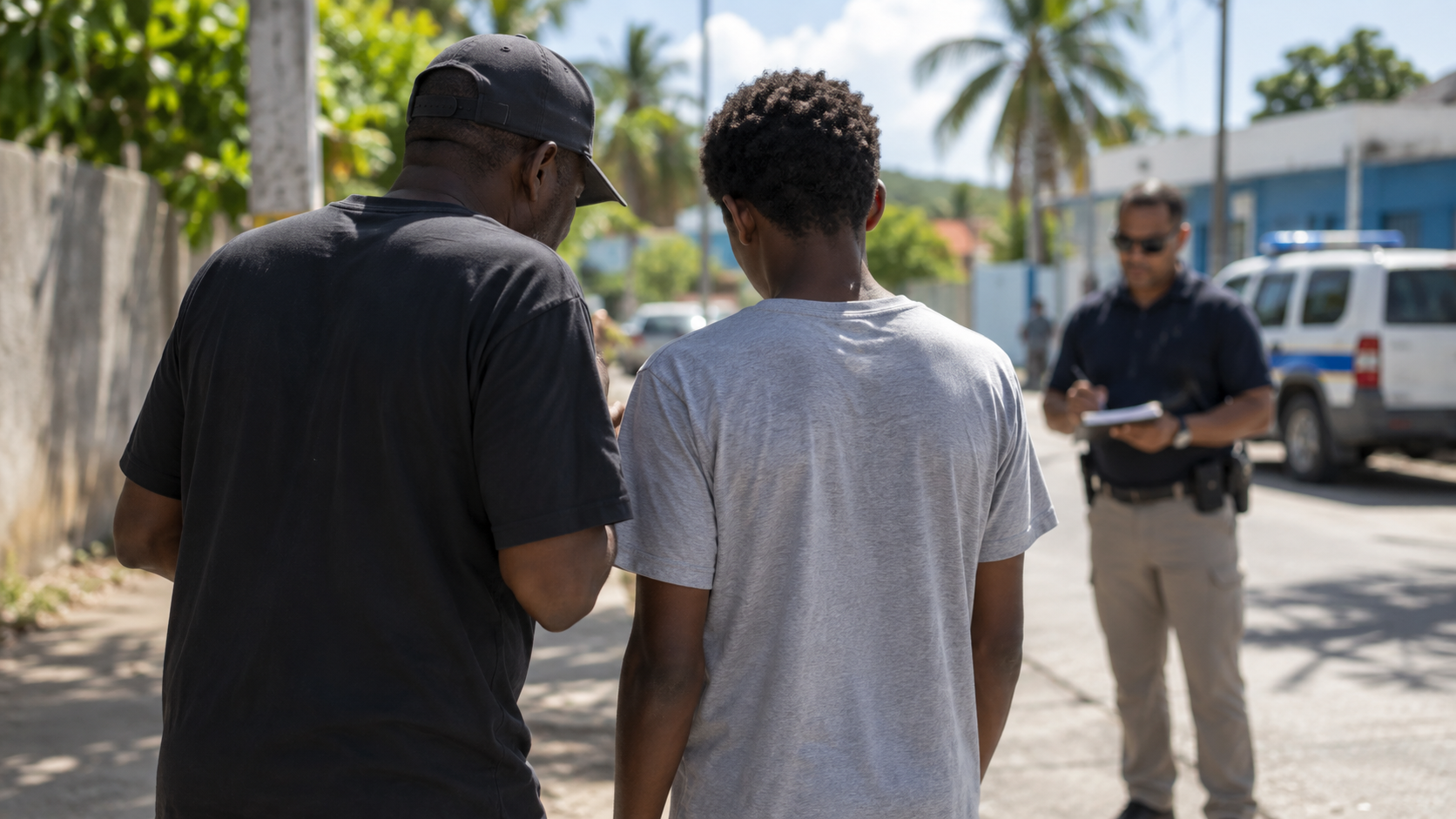
Police Investigating Possible Links Between Adult Criminals and Juvenile Offenders
Authorities in Antigua and Barbuda have launched a formal investigation into a troubling potential link: that adult actors are recruiting and manipulating minors to participate in firearm-related offenses and other high-severity criminal acts. The update on the inquiry was shared publicly by Director General of Communications Maurice Merchant during a post-Cabinet media briefing held Thursday, when Merchant was pressed for details on rising youth involvement in illegal activity across the nation.
Merchant told reporters that law enforcement is currently working to unpack a key question: are juveniles carrying out these crimes acting on their own initiative, or are adults behind the scenes encouraging or directing their criminal behavior? According to Merchant, investigating teams have already identified specific connections between minors and adult actors that could help crack open multiple open criminal cases. However, he cautioned that no further specifics can be released at this stage, as the details remain sensitive and premature disclosure could jeopardize the ongoing probe.
To protect the integrity of the investigation, Merchant declined to name any suspects, whether adult or juvenile, and also did not elaborate on the specific cases that are under active review. He did note that law enforcement has grown particularly concerned about the pattern of repeat offending among juvenile criminals.
As an example, Merchant referenced a recent arrest made in connection with a major felony; court documents for that individual showed a long record of serious criminal activity dating back to when the suspect was still a minor. This case, among others, has prompted the national Cabinet to take unprecedented action: officials have ordered a full top-to-bottom review of the country’s Child Justice Act, to reevaluate whether minors accused of gun crimes and other serious offenses should still qualify for diversion programs that steer them away from formal adult court proceedings.
The Attorney General’s Office has received formal instructions to conduct a comprehensive analysis of the existing legislation, with a specific focus on restricting access to diversion for juveniles charged with the most severe offenses. The end goal of the review, Merchant explained, is to create clearer guidance for both law enforcement and judicial bodies on when minors accused of firearm-related or other serious crimes should be processed and tried through the adult criminal justice system.
At this stage, no official timeline has been released for the completion of the review. Policymakers have indicated that additional details and potential updates could be presented to the public when the Antigua and Barbuda Parliament convenes for its next session on September 28.
-

Tourism strengthens MICE Strategy with SITE membership and first Certified Incentive Specialist
The global tourism industry is making strategic moves to elevate its Meetings, Incentives, Conferences, and Exhibitions (MICE) segment, marking a key milestone with new membership in the Society of Incentive Travel Executives (SITE) and the graduation of the region’s first-ever Certified Incentive Specialist (CIS). This development signals a deliberate push to raise professional standards, expand global market access, and tap into the high-value incentive travel market that has long been a growth driver for the global MICE sector.
SITE, the leading international body dedicated to advancing the incentive travel industry, brings a wealth of resources, industry connections, and standardized certification frameworks to its members. By joining this global network, the local or regional tourism authority gains access to cutting-edge insights, best practices, and direct connections with international event planners, corporate travel managers, and leading MICE industry stakeholders. This membership bridges the gap between local tourism providers and the global demand for high-quality incentive travel programs, which are designed to reward employee performance, boost team morale, and drive business outcomes.
The launch of the first CIS credential in the region is equally significant. The rigorous CIS certification program trains candidates in core competencies including incentive program design, budget management, stakeholder negotiation, risk assessment, and sustainable event planning. Holding this certification not only validates the specialist’s professional expertise but also builds greater trust among international clients looking to source incentive travel services in the destination. It sets a new benchmark for professional skills in the local MICE workforce, paving the way for more professionals to pursue industry-recognized certification in the future.
Industry analysts note that the MICE sector, and incentive travel in particular, delivers far higher per-visitor economic benefits compared to traditional leisure tourism. Corporate clients invest heavily in custom incentive programs, generating revenue for local hotels, event venues, transportation services, food and beverage providers, and cultural attractions. This strategic alignment with SITE and investment in certified specialists is expected to attract more international incentive travel business, create new job opportunities in the tourism sector, and strengthen the destination’s competitive position in the global MICE market.
As the global MICE industry continues to recover and evolve post-pandemic, with growing demand for unique, purpose-driven incentive experiences, this move positions the destination to capitalize on emerging market trends. It reflects a long-term vision for sustainable, high-value tourism growth that prioritizes professional development and global industry integration.
-

Antigua and Barbuda Students Eligible for Fully Funded King’s Commonwealth Undergraduate Fellowships
A new life-changing scholarship opportunity has opened for emerging young leaders from small developing island nations across the Commonwealth, aiming to equip the next generation to tackle some of the most pressing challenges facing their home regions.
The Association of Commonwealth Universities (ACU) is now accepting applications for the King’s Commonwealth Fellowship Programme (KCFP) Undergraduate Fellowships, a fully funded initiative tailored specifically for students from Commonwealth Small Island Developing States (SIDS). The program covers all costs for undergraduate study in fields directly tied to building climate resilience and advancing inclusive sustainable development in beneficiaries’ home countries.
Conceptualized around the lifelong work of His Majesty King Charles III, who has spent decades championing expanded access to opportunity and urgent action on pressing global crises ranging from climate breakdown to systemic inequality, the KCFP responds directly to the overlapping economic, social, and environmental threats that disproportionately endanger SIDS. These low-lying island nations are widely recognized as being on the front lines of anthropogenic climate change, facing existential threats from sea-level rise, extreme weather events, and ecosystem disruption, while often grappling with critical gaps in skilled local labor to address these challenges.
To directly target these skills shortages, the 11 available fellowships support full-time undergraduate study across four high-priority sectors: education, engineering, health, and sustainable tourism. Each of these fields was selected to build local capacity that can directly strengthen community resilience and long-term development in SIDS.
Eligibility for the fellowships is open to citizens of 24 Commonwealth SIDS, encompassing Caribbean nations including Antigua and Barbuda, Bahamas, Barbados, Belize, Dominica, Grenada, Guyana, Jamaica, St Kitts and Nevis, St Lucia, St Vincent and the Grenadines, and Trinidad and Tobago; Indian Ocean states including the Maldives, Mauritius, and Seychelles; and Pacific island nations including Fiji, Kiribati, Nauru, Papua New Guinea, Samoa, Solomon Islands, Tonga, Tuvalu, and Vanuatu. Applicants must be planning to begin their eligible undergraduate degree program between January 2027 and December 2027.
In a statement announcing the opening of applications, ACU Secretary General and Chief Executive Professor Colin Riordan emphasized the urgency and purpose of the initiative. “Small Island Developing States are on the frontline of climate change,” Riordan said. “Through the King’s Commonwealth Fellowship Programme Undergraduate Fellowships, we are investing in the next generation of professionals who will help their communities adapt to environmental challenges, strengthen essential services and drive sustainable development.”
The ACU, which brings decades of specialized expertise managing international scholarship and fellowship programs across the Commonwealth, is leading the design and implementation of the KCFP. Applications will remain open until the closing deadline of 14 October 2026. Full details on eligibility criteria, application guidance, eligible host institutions, and approved degree programs are hosted on the official KCFP Undergraduate Fellowships webpage.
-
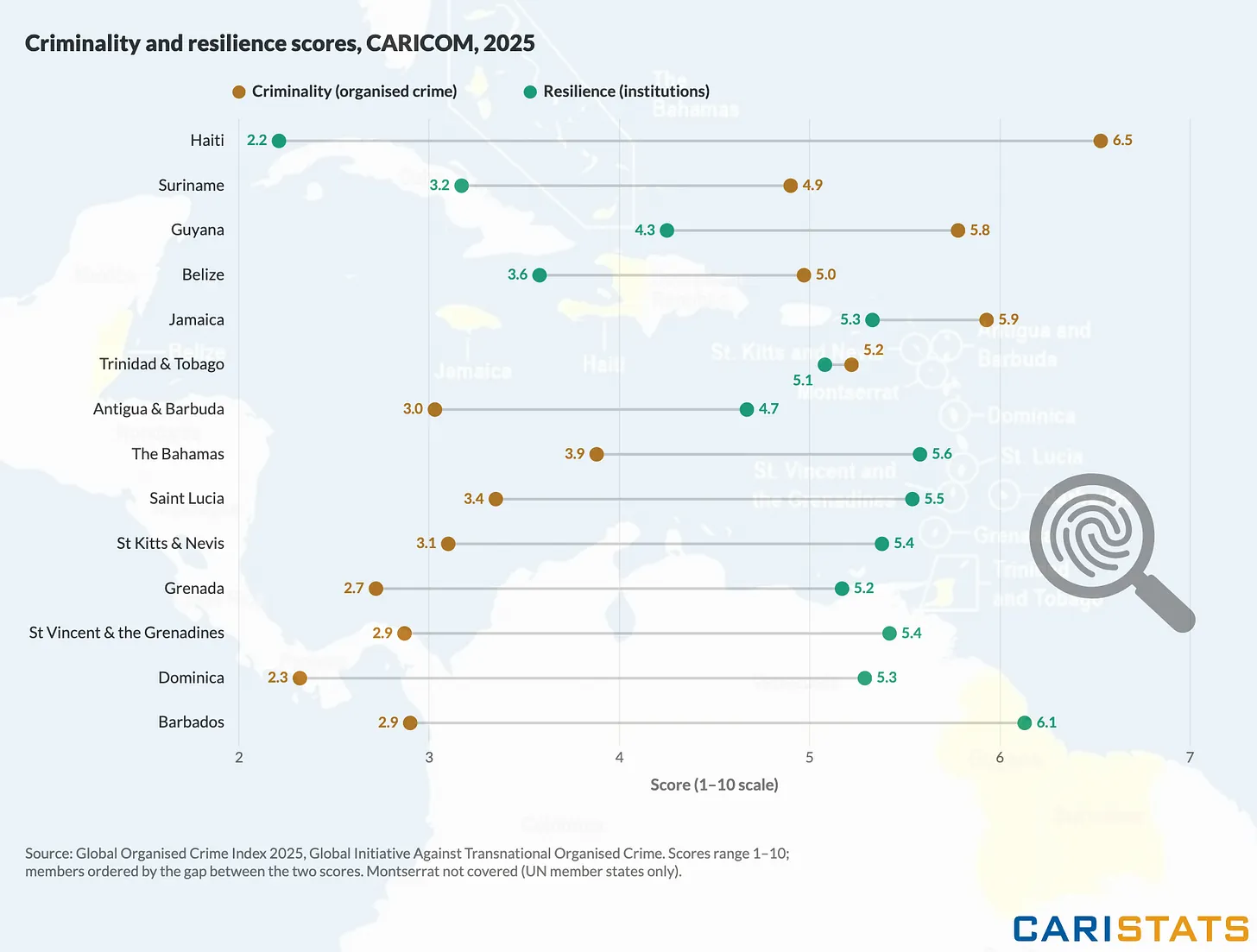
Where Organised Crime Is Most Likely to Take Root in the Caribbean
Organised crime is far more than a public safety challenge—it is fundamentally an economic burden that undermines long-term growth, discourages foreign and domestic investment, skews competitive market dynamics, and siphons billions in public resources that would otherwise fund critical infrastructure, social programs, and community development. While the overall prevalence of criminal activity is an important metric to track, experts emphasize that the true scale of damage a nation sustains from organised criminal networks depends not on crime levels alone, but on the ability of public and governmental institutions to counteract and contain these groups.
To capture both dimensions of this complex issue, the Global Organised Crime Index developed by the Global Initiative Against Transnational Organised Crime measures two key metrics for every nation: a criminality score that ranks the scale and scope of organised criminal activity on a 1 to 10 scale, and a resilience score that assesses the strength of anti-crime institutions, also on a 1 to 10 scale. A new 2025 analysis of CARICOM (Caribbean Community) member states reveals a sharp divide across the bloc, with many nations seeing stark gaps between their criminality levels and institutional resilience.
The 2025 data shows that most CARICOM member states fell into a low-risk category in 2025, combining relatively low levels of organised criminal activity with reasonably strong institutional resilience. Barbados posted a criminality score of just 2.9 alongside a resilience score of 6.1, with neighboring Grenada, Dominica, and other smaller Eastern Caribbean states recording nearly identical profiles. For higher-risk states including Jamaica, which scored 5.9 for criminality and 5.3 for resilience, and Trinidad and Tobago, which notched 5.2 for criminality and 5.1 for resilience, elevated crime levels were offset by strong institutional performance: both nations posted resilience scores above the regional average, keeping their institutional capacity roughly aligned with the threat they face.
However, a second, far higher-risk group of CARICOM nations faces the dangerous combination of elevated organised criminal activity and severely underdeveloped institutional resilience. This group includes Haiti, which recorded a 6.5 criminality score and just a 2.2 resilience score; Guyana, with 5.8 criminality and 4.3 resilience; Belize, at 5.0 criminality and 3.6 resilience; and Suriname, with 4.9 criminality and 3.2 resilience.
This particular pairing is what generates the most severe long-term consequences for affected nations. When institutional capacity cannot keep pace with the growth of organised criminal networks, these groups gradually embed themselves into both the formal economy and the structures of state power, becoming a chronic, systemic problem that is far more difficult and costly to root out than it would have been to prevent in its early stages.
Overall, the 2025 Organised Crime Index data offers targeted insight for policymakers across the Caribbean, identifying regions where organised crime is most likely to become deeply entrenched rather than merely highlighting where criminal activity is most prevalent. This framework allows regional and international stakeholders to direct targeted support to high-need nations, addressing institutional gaps before they lead to irreversible systemic damage.
-
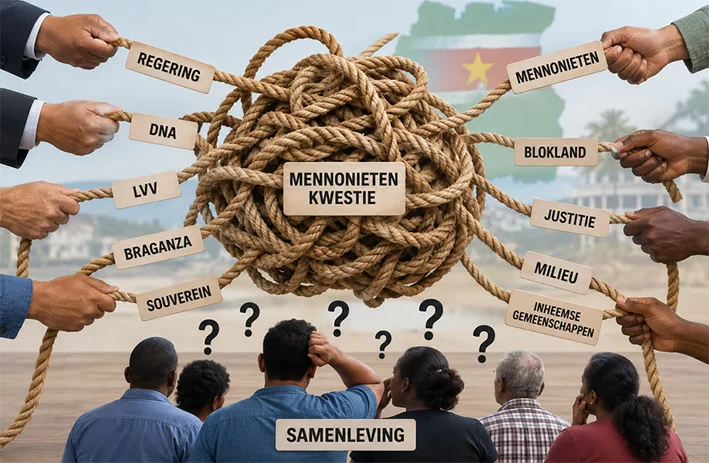
Column: Leg eindelijk alle kaarten over de Mennonieten op tafel
As questions continue to mount over the presence of Mennonite communities in Suriname, a new group of Mennonite arrivals entered the country Thursday aboard a Copa Airlines flight. This new influx comes even as critical details remain unresolved about the status of existing Mennonite groups, the agricultural land they intend to work, and the agreements that were purportedly struck before their initial arrival. This situation cannot continue as it stands: full, permanent clarity on this entire issue is long overdue.
Against this backdrop, the recent site visit by Members of Parliament Rabin Parmessar and Jennifer Vreedzaam to the areas where Mennonites have settled is a welcome step. It is positive that elected representatives are not limiting their questioning to debates within the National Assembly, but are instead choosing to see conditions firsthand and speak directly to stakeholders. Even so, this on-the-ground visit is far from sufficient to resolve the deep uncertainty surrounding the settlement initiative.
During the visit, Peter Petersen, a Mennonite originally from Belize, made statements that have underscored the need for further formal investigation. Petersen told lawmakers that his group had no idea they would be required to leave the area they are currently occupying; instead, they were told that formal approval for agricultural use of the land was still being processed. He also shared that group members have already sold all their property in Belize and shipped their agricultural equipment to Suriname to begin work. Most notably, when asked who had facilitated the group’s relocation to Suriname, Petersen named two individuals: Ruud Souverein and Lionel Blokland.
These claims require urgent follow-up investigation, as both names have already been linked to the Mennonite settlement initiative and the allocation of agricultural land in Suriname. Souverein was involved in efforts to bring Mennonite farmers to Suriname for large-scale agricultural projects during the previous national administration. Through his firm Terra Invest, Souverein submitted extensive applications for large land parcels. While not all of these applications were approved, the paper trail confirms that the current controversial situation has roots in decisions made by the previous government. More recently, Braganza Marketing Group has emerged as a key actor in the initiative. The Surinamese Ministry of Agriculture, Livestock and Fisheries (LVV) has signed formal agreements with Braganza for large-scale agricultural development projects, and the company has publicly stated its intent to partner with Mennonite farmers on these projects.
However, conflicting public statements from all involved parties, including the national government, have only deepened public confusion. LVV Minister Mike Noersaliem told parliament that the Surinamese government has not entered into any formal agreement directly with the Mennonite groups. Technically, this statement may be accurate, but that does not resolve the core controversy. If a company that has a direct formal agreement with the Surinamese state then brings Mennonite farmers into the agricultural project, the debate cannot end with a technical disclaimer that there is no direct agreement between the state and the Mennonites. This technicality hides far more complex arrangements that need to be brought into the open.
A series of core questions remain unanswered: Who first contacted the Mennonite groups about relocating? What promises were made to them before they left Belize? What agreements have they reached with Braganza or other private entities? Was the LVV aware that Mennonite farmers would be brought into these development projects? If the ministry was aware, when did they learn of this partnership, and how does this align with the government’s recent public order that Mennonites leave the land currently occupied? It is also critical to clarify what the Mennonite settlers themselves believed they were getting when they relocated. Do they expect to own or occupy the land themselves? Are they working as employees for Braganza? Are they private investors, project partners, or independent agricultural producers within the larger development scheme? These are not semantic points: the answers will directly determine the legal rights, obligations and accountability of all parties involved.
In this context, the $150 per hectare payment Petersen mentioned is also a key relevant detail. Who is paying this fee, to whom is it paid, and what is it for? Until this detail is clarified, a core part of the entire arrangement remains hidden from public view. And all the while, new groups of Mennonite settlers continue to arrive in Suriname, which only increases the urgency of resolving the controversy. Who is organizing these new arrivals? What information are they given before they leave their home country? Are they aware that there is ongoing debate and regulatory uncertainty about land access and approval in Suriname? Who is receiving them upon arrival, and what future plans are they promised upon entry?
It would be deeply irresponsible to allow Mennonite families to continue selling their belongings, shipping their equipment and relocating to Suriname under the impression they will be able to begin agricultural work, when fundamental questions about the project remain unresolved on the Surinamese side. This debate does not need to devolve into being for or against Mennonite immigration. The settlers who have already moved to Suriname deserve clarity just as much as the Surinamese public. If agreements were made with the settlers, we need to establish who made those agreements and on what legal basis. If agreements were made that cannot be honored, we must also establish who bears responsibility for that outcome.
Suriname’s parliament must deepen its investigation into this matter and leave no stone unturned. It is not only the current LVV minister that must provide answers. The full history of the initiative under the previous government also needs to be reconstructed: What land applications were submitted? What agreements were reached? What changes or adjustments were made to the plan along the way? And how did the country end up in a situation where Mennonite settlers are already living and working in Suriname, while they maintain they were invited here to develop agricultural land? Braganza must also provide full transparency about its role. If all processes have followed proper legal procedure, the company should be able to explain its agreements with the Mennonite settlers and how these align with its formal contract with the Surinamese state.
If evidence emerges that Mennonite settlers were brought to Suriname under false pretenses, it will be necessary to determine whether further legal action is required. The Mennonite controversy is already about far more than just agricultural development. It touches on state-owned land, governmental accountability, transparency, environmental protection, foreign investment, and the reliability of agreements made by the Surinamese government. Enough statements have been issued, and enough questions have been raised. It is time to put all cards on the table. The public deserves full clarity on who brought the Mennonites to Suriname, what promises were made to them, and what agreements underpin the entire initiative. As long as new settlers keep arriving while these questions remain unanswered, the problem will only continue to grow.
-
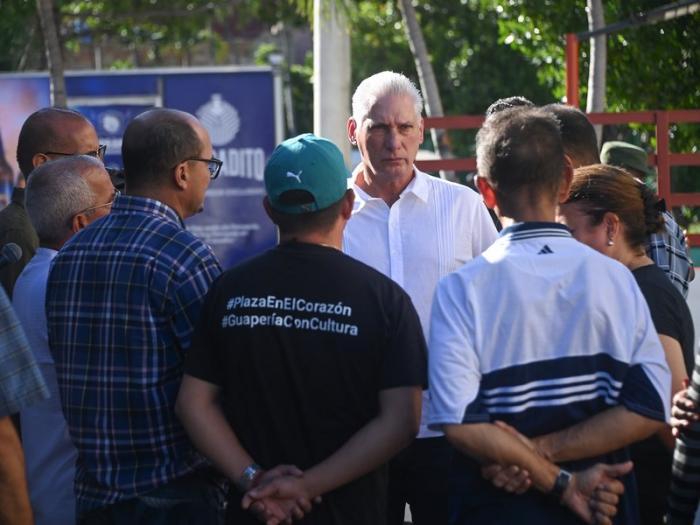
Díaz-Canel inspects Ariguanabo water supply system
On Thursday, September 18, 2026, Cuba’s top leader Miguel Díaz-Canel Bermúdez — who holds the dual positions of First Secretary of the Central Committee of the Communist Party of Cuba and President of the Republic — embarked on a day-long inspection tour of high-priority public works, sports and sustainable infrastructure projects across Artemisa province and the capital city of Havana.
The first stop on the president’s itinerary was the Ariguanabo water supply facility, located in Bauta municipality of Artemisa. This site is a critical component of western Havana’s water distribution network, providing clean drinking water to more than 23 percent of the capital’s total population, covering the densely populated municipalities of La Lisa, Playa, and Marianao. The visit was part of ongoing oversight for the national Comprehensive Program to Guarantee Stable Water Access for Havana’s residents. During the inspection, Díaz-Canel received a full briefing on the facility’s current operations and upcoming upgrades from senior government officials, including Minister of Energy and Mines Vicente de la O Levy, National Institute of Hydraulic Resources President Antonio Rodríguez Rodríguez, Havana Provincial Communist Party Committee First Secretary Liván Izquierdo Alonso, and Havana Governor Yanet Hernández Pérez.
Briefers updated the president on progress across the full water program, noting that new generator sets are already being deployed at key pumping stations across the system to improve reliability. Teams are also advancing site preparation for new photovoltaic solar farms and grid-scale energy storage facilities, designed to cut the system’s carbon footprint and reduce vulnerability to power disruptions. Discussions during the briefing also touched on water security efforts across the country, including ongoing work to stabilize supplies for communities in Santiago de Cuba province, covering the provincial capital and the municipalities of Guamá, San Luis, Contramaestre, and Songo-La Maya.
Following the inspection of the Ariguanabo facility, the president traveled back to Havana for his second stop: La Polar Stadium, Cuba’s first sports venue to install synthetic playing turf back in 2017. The stadium already leverages photovoltaic solar panels to power lighting for evening matches, fitting into Cuba’s broader push for renewable energy adoption across public infrastructure. During the visit, Díaz-Canel was briefed on plans for the venue’s third phase of modernization, which includes expanding spectator seating and upgrading on-site facilities with cutting-edge sports technology.
The president used the visit to emphasize the central role of grassroots sports in Cuban communities, calling for expanded access to neighborhood athletic activities and stronger collaboration between local schools and community groups to grow popular sports including soccer. He noted that competitive sports do more than develop athletic talent and boost personal self-esteem; they also serve as a unifying force that brings together players’ families and entire local neighborhoods.
The third and final stop on Thursday’s itinerary was a newly developed solar-powered charging station located at the intersection of 23rd and J Streets in Havana’s historic Vedado district. The facility boasts 18 individual charging points, purpose-built to power the fleet of electric tricycles that now handle solid waste collection for the surrounding Rampa neighborhood. After touring the station, Pedro Lizardo Garcés Escalona, president of the Rampa People’s Council, shared details of the new waste collection model with the Cuban presidency’s press team.
Lizardo explained that 15 solar-powered tricycles now serve the 15 electoral districts that make up the Rampa People’s Council. The project has introduced coordinated collection schedules: residents are asked to place their waste bags outside their buildings by 7 a.m. and 7 p.m. daily, with some areas adjusted to a 6 p.m. evening collection to improve efficiency. He reported that the community-focused initiative has already delivered dramatic, positive results for local residents, with more than 20 large illegal open dump sites completely eliminated across the district.
The initiative also includes restoration work for street corners that were damaged by heavy waste collection equipment used in previous collection models, improving the overall quality of public space in the neighborhood. Lizardo acknowledged that organizational and cultural challenges remain, noting that low civic compliance in some areas continues to slow progress toward the clean, vibrant neighborhood residents expect. Even so, the successful pilot in Rampa is already being scaled to other People’s Councils across the Plaza de la Revolución municipality.
Looking forward, the project aligns with Cuba’s long-term goals to transition toward a circular economy that prioritizes raw material recovery and waste reduction. The ultimate aim, Lizardo explained, is to fully revitalize sidewalks, community gardens, and public parks, creating a cleaner, more attractive environment for both local residents and visitors who pass through the iconic Vedado district.
-

Onderwijsbonden beginnen volgende week onderhandelingen over nieuwe loonstructuur
After months of preparatory work and unexpected delays, joint education unions in Suriname have confirmed that the first full round of negotiations for a new dedicated pay structure for education workers will kick off on September 24 and 25, according to an internal GOV (Gezamenlijke Onderwijs Vakbonden, or Joint Education Unions) notice obtained by local outlet Starnieuws on September 17.
Work on the separate, education-specific pay framework began back in June, with the four participating unions — Syndicaat, DoHoS, FOLS and VWPU — laying out a core goal of building a “fair, inflation-resilient” pay system that will be rolled out in phases. The unions first presented the preliminary framework to the Government Negotiation Body (OO) on July 24, and a follow-up presentation to the Presidential Working Group on Trade Union Affairs, chaired by Minister of the Interior Marinus Bee, was originally scheduled for August 27.
That presentation was unexpectedly postponed, however, after the national government proposed a general 15 percent pay increase for civil servants and equivalent public employees. Despite the holdup to the scheduled presentation, unions continued advancing work on the dedicated education pay structure, and finally submitted their full pay scale proposal to government representatives led by Minister Bee and the OO on September 14. Now, the first plenary sessions to dive into substantive discussions of the proposed framework are locked in for later this month.
In their internal notice to members, the unions have chosen not to release specific pay figures at this stage of the process. Union leaders acknowledged that widespread impatience and demand for clarity have grown among education workers, particularly amid ongoing challenging economic conditions, but stressed that no numerical details will be shared publicly before negotiations advance. The organizations also reassured members that they will confront every challenge head-on during talks to secure a beneficial outcome for education staff.
Beyond the pay structure negotiations, the unions added that they hold weekly coordination meetings with staff from the Ministry of Education, Science and Culture to track progress on implementing the collective agreement reached on June 2, 2026. Unions have urged education workers to follow GOV’s official communication channels for all future updates as negotiations progress.
-

Amazon Warriors stun Red Force to claim CPL crown
In a dramatic, come-from-behind thriller at Bridgetown’s Kensington Oval on Thursday, the Guyana Amazon Warriors etched their name in Caribbean cricket history, claiming the first-ever Women’s Caribbean Premier League title with a tension-fueled two-wicket win over the Trinidad and Tobago Red Force that went down to the final three balls of the match.
The script for the day was set early when Trinidad and Tobago Red Force skipper Deandra Dottin won the toss and opted to set a target, betting on her bowling unit to defend a competitive total. What followed was a steady, well-constructed innings that saw the Red Force build momentum gradually after a cautious opening. They reached just 27 for the loss of two wickets by the end of the mandatory powerplay, and did not cross the 50-run mark until the 10th over, off 57 deliveries. Opener Sushma Verma anchored the innings with a polished 39 runs from 34 balls, featuring two boundaries and two towering sixes to top score for her side. Late-order hitting added crucial impetus to the total: Marizanne Kapp smashed 25 runs off only 10 deliveries, while Shikha Pandey contributed a quickfire 27 to lift the Red Force to a challenging 145 for six at the close of their 20 overs. For the Amazon Warriors, fast bowler Shabnim Ismail was the stand-out performer with figures of two wickets for just 18 runs, while Shamilia Connell chipped in with one wicket for 18 runs to keep her side in the game.
Chasing 146 runs for victory, the Amazon Warriors got off to a promising start, despite losing opener Eboni Brathwaite for five runs on the final ball of the first over. By the end of the powerplay, they had reached 43 for one, putting them well ahead of the required run rate. But the Red Force bowling attack turned the match on its head soon after, led by Dottin, Pandey and Karishma Ramharack who all claimed two wickets apiece. The chase collapsed spectacularly, with the Amazon Warriors slumping to 71 for six by the middle of the 13th over. The dismissals came quick: opener Tazmin Brits made 22, Erin Burns 12, Realeanna Grimmond two, Shemaine Campbelle nine, and Nadine de Klerk fell for a duck, leaving the tournament’s underdogs on the brink of defeat.
What followed was one of the most remarkable lower-order fightbacks in women’s T20 cricket. Player-of-the-Match Chedean Nation and captain Chloe Tryon refused to let their side’s title hopes die, combining for a match-winning stand that defied the Red Force’s momentum. Nation, playing against her home country teammates, unleashed a brutal innings of 39 not out from just 21 deliveries, smashing four sixes to keep the scoreboard ticking. Tryon was equally clinical, stroking 32 runs from 18 balls, including four fours and one six to bring the Amazon Warriors within touching distance of the target.
Going into the final over, the Amazon Warriors still needed nine runs to win. Nation stepped up to face the first delivery from West Indies teammate Ramharack, and launched it straight over the boundary for six to cut the requirement to three runs. After a dot ball on the second delivery, Nation connected with Ramharack’s third ball, sending it flying over the rope once again to seal the win, sparking wild celebrations from her teammates and fans packed into the Kensington Oval stands. The title win caps a remarkable run for the Guyana Amazon Warriors, who pulled off one of the most memorable comebacks in Caribbean Premier League history to claim the first-ever women’s title.