博客

  • Dominican Republic advances regional development as tourism and exports hit records

    Dominican Republic advances regional development as tourism and exports hit records

    In a major push to decongest the capital and spread economic opportunity across the country, the Dominican government has announced significant progress on a slate of regional development projects designed to draw foreign and domestic investment, generate new jobs, and expand access to public services outside of Santo Domingo this week. Top officials have emphasized that balanced territorial growth, upgraded infrastructure, and inclusive economic expansion are core priorities of the current administration, marking a shift away from over-concentration of development in the capital region.

    Félix Reyna, director of the Dominican Republic’s Directorate of Strategy and Government Communication (Diecom), outlined that ongoing initiatives across four key development hubs — Manzanillo, Punta Bergantín, Cabo Rojo, and Miches — are focused on four pillars: expanding core public infrastructure, supporting local productive sectors, delivering hands-on technical training to local workforces, and connecting unemployed residents to open positions across growing industries. These projects are laying the groundwork for long-term, sustainable growth in regions that have historically been overlooked in national development planning.

    In the country’s second-largest city of Santiago de los Caballeros, a transformative 13-kilometer monorail transit project is on track to launch trial operations this coming October. The system will feature 14 stations across the city and integrate seamlessly with Santiago’s existing cable car, dedicated bus rapid transit corridors, and city-wide bicycle network to create a fully connected multi-modal public transit system. Officials confirmed that the unified fare for a ride across any mode of the integrated network will be set at 35 Dominican pesos, keeping the service accessible for low and middle-income commuters.

    Santiago is also set to receive major investments in critical public infrastructure beyond transit. Around 9 billion Dominican pesos have been allocated for the construction of the Cibao Central Aqueduct, which will resolve long-standing water access issues for hundreds of thousands of residents across the region. Additionally, a separate 1.7 billion Dominican peso investment is currently under review to upgrade and expand Santiago’s public hospital infrastructure, improving access to quality healthcare for local communities.

    Beyond infrastructure development, the Dominican Republic is posting landmark economic gains across two of its most vital sectors: tourism and exports. From January through August 2026, the country welcomed a record-breaking 8,556,415 international visitors arriving by air and sea, representing a 6.9% year-over-year increase compared to the same period in 2025. This growth confirms the Dominican Republic’s position as the top tourist destination in the Caribbean. Exports also hit an all-time high over the same eight-month period, reaching a total of $10.56 billion USD — an 11.4% increase year over year. Raw gold emerged as the country’s top export, contributing $2.02 billion USD to the total export figure.

    On the policy front, the Dominican government has formally approved the 2027 General State Budget Bill, which totals 2.04 trillion Dominican pesos. The budget framework prioritizes funding for key sectors that drive inclusive growth: public education, public health, regional infrastructure development, private sector productivity, and institutional strengthening to improve government service delivery.

    On the international stage, Dominican President Luis Abinader traveled to New York City to take part in the 81st session of the United Nations General Assembly. During his visit, the president is scheduled to hold a series of high-level bilateral and multilateral meetings with global leaders, where he will advocate for policy priorities and initiatives that advance the Dominican Republic’s national interests on the global stage.

  • Abinader honors 14 Dominicans for their contributions in the U.S.

    Abinader honors 14 Dominicans for their contributions in the U.S.

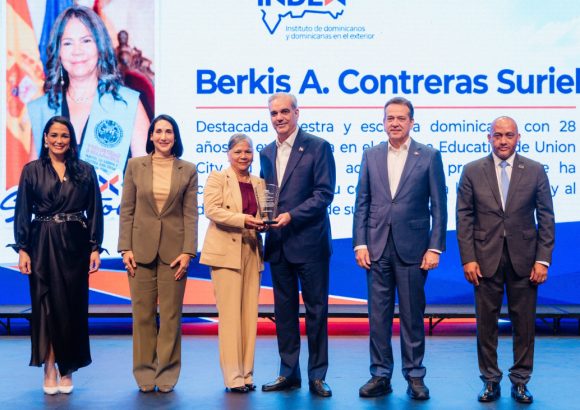
    Held in New York City, the fourth annual “Index Somos Todos” Outstanding Dominican Abroad Recognition ceremony brought top Dominican government officials together with members of the country’s vast global diaspora to celebrate the achievements and contributions of 14 exceptional Dominican professionals based in the United States. Leading the event were Dominican Republic President Luis Abinader, First Lady Raquel Arbaje, and Foreign Minister Víctor “Ito” Bisonó, with the program organized by the Institute of Dominicans Abroad (Index), the government body dedicated to connecting the nation with its global community of expatriates.

    The 2025 cohort of honorees spans a wide range of professional sectors, reflecting the diverse impact of Dominican diaspora members across U.S. society. Recognized leaders include New York Police Department Lieutenant Gypsy Pichardo, pulmonologist and academic professor Wilson Arismendy Quezada, prominent businesswoman Bernarda Rodríguez, public health coordinator Yraida Aponte, communications strategist Mayra Serafina Linares, senior technology executive Jorge Ulloa, primary care physician Yohanna Olivo, and bodega industry leader Carlos Elpidio Herrera. The list of honorees also includes actress and entrepreneur Lorena Jorge, U.S. military veteran Alfonso Geomar Matos Mesa, physician Agustín Apolinar Rojas, Union City Public Works Commissioner Wendy Arelis Mesa Grullón, educator and author Berkis Contreras Suriel, and behavioral health executive Ertuania Jorge Ghosh.

    During his remarks at the ceremony, Foreign Minister Bisonó underscored the Dominican government’s ongoing commitment to deepening and strengthening ties with the Dominican diaspora, a community that numbers more than three million people spread across 129 countries and territories around the world. Bisonó emphasized that the contributions of Dominican expatriates extend far beyond the critical economic support of remittances, noting that diaspora members also drive growth through cross-border investment, entrepreneurial innovation, and the sharing of specialized knowledge and professional expertise built through their careers abroad.

    He highlighted that annual remittances from the diaspora are projected to reach approximately $11.9 billion in 2025, with the vast majority of that funds coming from Dominican communities in the United States. The packed ceremony drew a diverse audience of attendees, including senior Dominican government delegates, U.S.-based community leaders, family members of the honorees, and representatives of the large Dominican diaspora community across the United States.

  • Master of the Ocean 2026 opens in Cabarete with Dominican flair and action-packed multidisciplinary competition

    Master of the Ocean 2026 opens in Cabarete with Dominican flair and action-packed multidisciplinary competition

    One of the world’s most demanding multidisciplinary water sports competitions, the 21st edition of Master of the Ocean, has officially launched in the coastal town of Cabarete, Dominican Republic. The annual event draws elite and amateur athletes from more than 12 countries, who gather to test their versatility across five distinct ocean-based disciplines: kitesurfing, wing foil, surfing, stand up paddle (SUP), and windsurfing.

    The opening ceremony, held on September 16 at Coconuts Restaurant on Cabarete’s Hideaway Beach, set a vibrant tropical tone for the competition. The gathering brought together competing athletes, event organizing committees, local government officials, and tourism industry guests to mark the start of the week-long event.

    Organizers faced an early challenge from unpredictable weather, as unstable northeast winds and intermittent rain showers disrupted the originally planned competition schedule, forcing last-minute adjustments to heat timings. Once meteorological and ocean conditions stabilized, the opening rounds of kitesurf, wing foil, surf, and SUP got underway, with competitors navigating consistent 1- to 3-foot breaking waves.

    What sets Master of the Ocean apart from single-discipline water sports events is its unique format and focus on all-around athletic ability. Each heat features four competitors, with only the top two advancing to subsequent rounds. Athletes must demonstrate seamless adaptability, switching between five vastly different disciplines over the course of the competition and adjusting their technique to match shifting ocean swells and wind patterns.

    In the opening kitesurf heats, two-time defending overall champion Maxime L’Huillier of France claimed a decisive victory in Heat 1. Additional opening heat wins went to Tom Court of England, local favorite Joselito del Rosario from the Dominican Republic, and Germany’s Lucas Matthes.

    L’Huillier and Court carried their momentum into the opening wing foil rounds, where they notched another pair of wins, while Jan Malte Claus and Matthes secured victories in the two remaining opening wing foil heats. In the opening surf heats, wins went to Mad Max Tullet, Tom Court, Jan Malte Claus, and Dominican athlete Francis Gonzalez. For the opening SUP rounds, first-place finishes went to L’Huillier, Deni Blondet of Peru, local competitor Sammy Perez Hults, and Gonzalez.

    The windsurfing discipline got underway after stronger winds moved into the Cabarete coast, though official results for its opening rounds remain pending as wind conditions weakened again before heats could be completed.

    The competition is set to continue through the coming days at the Cabarete venue, far beyond just a sporting event. The competition blends elite water sports action with laid-back Caribbean beach culture, live music, and community engagement, while also positioning the Dominican Republic as a leading global destination for sustainable adventure tourism and world-class water sports.

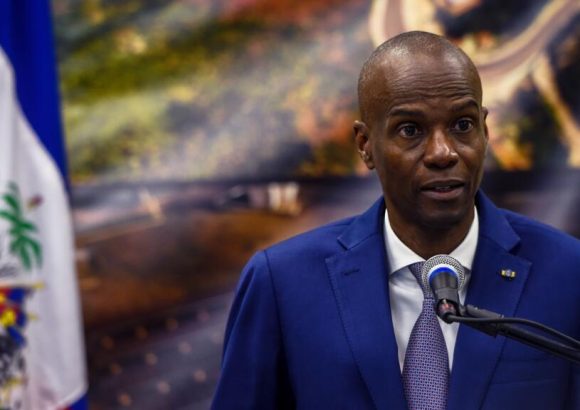
  • Haiti extradites 18 suspects to U.S. in President Jovenel Moïse assassination case

    Haiti extradites 18 suspects to U.S. in President Jovenel Moïse assassination case

    On Sunday, Haitian officials made a major announcement regarding the high-profile 2021 assassination of former President Jovenel Moïse, confirming that multiple individuals charged with connection to the killing have been extradited to the United States. The announcement also brought public acknowledgment of a disappointing reality: Haiti’s own domestic judicial process into the assassination remains mired in crippling delays, years after the crime took place.

    While Haiti’s Ministry of Justice declined to share an exact number of transferred suspects, U.S. Attorney Jason A. Reding Quiñones clarified that 18 individuals were moved from Haitian custody to U.S. authorities aboard a U.S. military aircraft, where they will now answer to charges in the American judicial system. This transfer was carried out in direct response to an extradition request submitted by U.S. law enforcement, executed under the terms of the longstanding extradition treaty between the two nations. To date, U.S. prosecutors have brought charges against a total of 30 people linked directly to the July 7, 2021 assassination.

    In its official statement, the Haitian Justice Ministry outlined the significant barriers that have blocked progress in the country’s domestic case. As of 2026, five full years after Moïse was killed at his private residence in Port-au-Prince, the domestic investigation has yet to progress to a formal trial. In contrast, U.S. legal proceedings have moved forward steadily, with law enforcement completing arrests, moving forward with prosecutions, and securing convictions connected to the plot already.

    The pool of extradited suspects includes one of the most high-profile figures tied to the attack: Joseph Félix Badio, who Haitian authorities identify as a key mastermind of the assassination plot. He was transferred alongside a group of Colombian nationals that investigators allege also played direct roles in planning and carrying out the killing.

    Haitian government officials emphasized that the extradition process is expected to benefit the stalled domestic investigation long-term. Evidence and information gathered through U.S. legal proceedings, they say, will provide critical new material to advance Haiti’s own inquiry into the assassination once extradition processes are complete.

    Moïse’s assassination did not only trigger a national judicial reckoning—it dramatically worsened the already fragile political and security crisis that has gripped Haiti for years. In the years following the killing, the country has been overwhelmed by a surge of uncontrolled gang violence that has displaced hundreds of thousands and terrorized civilian communities. Latest United Nations data underscores the severity of the ongoing crisis: in just the first half of 2026 alone, at least 3,050 people have been killed across Haiti, with an additional 1,401 people suffering injuries in gang-related and political violence.

  • Dominican Foreign Minister coordinates UN General Assembly agenda

    Dominican Foreign Minister coordinates UN General Assembly agenda

    NEW YORK — Fresh off his appointment as Dominican Republic’s top diplomat, Foreign Minister Víctor “Ito” Bisonó has kicked off critical coordination work for the country’s upcoming high-stakes participation in the 81st United Nations General Assembly’s High-Level Week, convening a working gathering at the Dominican Permanent Mission to the UN’s New York headquarters Sunday.

    Held ahead of the September 22 to 28 high-profile diplomatic event, the meeting gathered key senior diplomatic figures from the Caribbean nation, including Vice Ministers Vilma Arbaje de Contreras and Rubén Silié, Wellington Bencosme — the Dominican Republic’s Permanent Representative to the UN — full mission delegation members, and senior foreign policy advisors to the Dominican Foreign Ministry.

    During the working session, Bisonó led a comprehensive walkthrough of the country’s official stances for the packed schedule of upcoming activities, which includes multilateral negotiation sessions, high-stakes bilateral diplomatic meetings, and a series of other top-tier international engagements. The core objective of this alignment check is to ensure every Dominican position at the assembly fully adheres to the overarching foreign policy framework laid out by Dominican President Luis Abinader.

    Sunday’s gathering marked a significant milestone for the new foreign minister: it was his first official visit to the Dominican Republic’s UN diplomatic mission since he took office. Bisonó received a formal ceremonial welcome, complete with an official honor guard organized by Ambassador Bencosme. Following the opening reception, the foreign minister toured the mission’s facilities, and held a casual meeting with all local diplomatic and administrative staff to learn about their day-to-day work at the UN post.

  • Five young Dominicans complete 480-hour challenge to reclaim reading record

    Five young Dominicans complete 480-hour challenge to reclaim reading record

    In a remarkable display of endurance and commitment to promoting literacy, five young Dominican participants have crossed the finish line of a grueling 480-hour non-stop reading aloud marathon, wrapping up their 20-day challenge Sunday evening in Santo Domingo.

    The team, composed of Abril del Rosario, Ismael Durán, Maikol Arias, Mayury Vélez and Franchesca Minier, hit the official 480-hour milestone at 6:00 p.m. local time, capping off a round-the-clock effort that saw the group rotate and maintain continuous reading across 20 consecutive days. By the end of the challenge, the participants had worked their way through 63 full books, turning a collective display of endurance into a celebration of written work.

    Crowds of family members, friends, and enthusiastic supporters gathered on site to cheer on the team as they completed their final hour, joining in a joyful celebration of their achievement. Beyond the goal of claiming a world record, the initiative carries a broader social mission: to foster a culture of reading across the Dominican Republic, and shine a spotlight on the active role young Dominicans play in advancing the country’s education, cultural development, and knowledge sharing.

    For organizers, the challenge is also a matter of national pride. The Dominican Republic previously held the Guinness World Record for the longest reading marathon roughly 15 years ago, and this effort was organized to bring the title back to the country. Now that the on-the-ground challenge is complete, the team will submit all required evidence and official documentation to Guinness World Records headquarters. Independent adjudicators will review the submission to verify that all of the organization’s strict requirements have been met, before granting official recognition of the new record attempt.

  • President Abinader launches electronic passport for Dominicans in New York, New Jersey and Boston

    President Abinader launches electronic passport for Dominicans in New York, New Jersey and Boston

    In a major step to modernize consular services and better serve the large Dominican diaspora in the United States, President Luis Abinader has formally rolled out the Caribbean nation’s new electronic passport program for citizens residing overseas, launching the initiative first for Dominican communities in New York, New Jersey and Boston.

    Led jointly by the Dominican Ministry of Foreign Affairs (Mirex) and the General Directorate of Passports (DGP), the new program eliminates a long-standing burden for Dominicans based in the U.S.: for the first time, eligible applicants can complete the entire process to obtain the new electronic travel document without needing to travel back to their home country.

    The cutting-edge e-passport comes with robust security upgrades, incorporating more than 130 distinct anti-fraud and security measures to protect holders against identity theft and document forgery. Beyond enhanced security, the new document includes an unexpected benefit for families: up to $9,000 in coverage to cover the cost of repatriating remains if a Dominican citizen passes away while living abroad. Government officials note that this coverage is specifically designed to ease the financial and emotional strain on grieving families who would otherwise face steep, unplanned costs to bring their loved one home for burial.

    Lorenzo Ramírez, director of the DGP, confirmed that the rollout of the electronic passport program will proceed in phases, with gradual expansion to additional Dominican consulates across the United States and other countries with large Dominican populations in the coming months. In a further announcement highlighting the government’s digital modernization push, Ramírez also revealed that officials are developing a new Digital Travel Credential system that will allow Dominican travelers to store official travel identification directly on their mobile devices, creating a more streamlined and contactless travel experience in the future.

    Alongside the e-passport launch, local consular leadership has announced sweeping improvements to on-the-ground services for Dominicans in New York. Jesús Vásquez Martínez, Dominican Consul General in New York, confirmed that the main consulate now opens for services on weekends – a long-requested change that accommodates working residents who cannot take time off during standard weekday business hours. Vásquez Martínez also added that the processing timeline for Dominican citizenship applications for people born outside the country has been cut dramatically, with a new maximum processing time of just 60 days, down from much longer wait times that previously separated families from full citizenship status.

    The expansion of Dominican consular services in the New York region has also received formal backing from U.S. officials. The U.S. State Department has already given approval for the opening of three new Dominican consular outposts in the New York City area, located in the Bronx, Long Island and Brooklyn. A fourth potential location in Upper Manhattan is currently under review to meet ongoing demand from the large local Dominican community.

    All of these coordinated changes are part of the Dominican government’s stated strategic goal: to bring government and consular services closer to its large overseas diaspora, while systematically modernizing national travel documentation and consular support systems to meet 21st-century needs.

  • Tourist bloodied in alleged assault after encounter with jet ski operator

    Tourist bloodied in alleged assault after encounter with jet ski operator

    A 25-year-old American tourist from Ohio is speaking out about a violent alleged assault that left her injured and uncertain about ever returning to The Bahamas, a popular Caribbean travel destination that has faced repeated questions over tourist safety in its unregulated beach tourism sector.

    Briana Bazel and her best friend had traveled to New Providence for what was supposed to be a celebratory first trip to The Bahamas – and the friend’s first journey outside the United States. The pair had pre-booked a jet ski excursion online before leaving the U.S., but their planned activity was canceled just two hours after they arrived on the island on September 10. Stranded without their planned activity, the women were waiting at Goodman’s Bay on September 11 when a man approached them, introducing himself as a licensed jet ski operator and tour guide. He offered the pair a package combining jet ski rides and island sightseeing, and even connected them with his cousin to act as their private taxi driver.

    Bazel claims the man and his cousin showed official-looking badges to convince the women they were legitimate, though she now doubts the credentials were authentic. For most of the day, the outing proceeded without incident: the group went sightseeing, stopped at local restaurants, and completed the jet ski ride as promised. Later that evening, the two women ran into the men again at the Green Parrot venue, and the group accepted an invitation to move on to a separate lounge on Palm Tree Avenue.

    It was there that the situation turned violent, according to Bazel. After Bazel mentioned to her friend that she was menstruating, the man’s demeanor shifted dramatically. He grew angry, telling Bazel outside the lounge (away from the loud indoor music) that he believed she used the comment as an excuse to reject his sexual advances. When Bazel explicitly clarified that she had never intended to have sex with him, the confrontation escalated: he grabbed her arm, and when she pulled away, he punched her directly in the face.

    “I immediately started bleeding as soon as he did it,” Bazel recalled from her home in Ohio, adding that bystanders outside the lounge did nothing to intervene. “Nobody did anything, nobody helped.” She ran back inside to find her friend, too afraid to fight back as the man grew increasingly aggressive. Staff from the lounge escorted the pair to a local police station, where Bazel filed an official complaint. A police officer then took her to a local hospital for treatment, and a hospital worker drove her back to her Airbnb accommodation. The punch cut through her upper lip after it collided with her tooth, leaving her with severe pain that made eating and drinking nearly impossible in the immediate aftermath of the attack. Though her injury has healed since her return to the U.S., the emotional impact of the incident has left her hesitant to travel back to the country.

    Bazel shared her experience in a viral TikTok video, which opens with footage of her bloodied face holding a tissue to her swollen lip. As of press time, the video has amassed more than 54,000 views, and dozens of other female tourists have since reached out to Bazel to share their own similar allegations of harassment or scams connected to the same man and his taxi driver cousin.

    Following the filing of Bazel’s complaint, the Royal Bahamas Police Force has confirmed the investigation is active and has issued a wanted poster for the suspect. Local officials have acknowledged the seriousness of the allegations, though the industry regulatory process is still unfolding. Transport Minister Leon Lundy noted that it has not yet been confirmed whether the suspect is a licensed jet ski operator, a detail that sits at the center of growing concerns about unvetted operators in the Bahamas’ beach tourism sector. Lundy said the Ministry of Transport takes regulatory enforcement seriously, and will support the ongoing police investigation before taking any regulatory action within its authority once all facts are confirmed. He added that he hopes Bazel is receiving the care and support she needs, and encouraged any other victims of harassment or violence to come forward to file official complaints.

    Tourism Minister Glenys Hanna-Martin echoed that sentiment, saying she is deeply concerned about the social media conversation that has followed the incident, which has painted the Bahamas in a negative light. “My thoughts are with the young woman involved, and I sincerely hope she is receiving the care and support she needs following what must have been a very difficult experience,” Hanna-Martin said. “We are mindful of the impact incidents such as this can have on our tourism industry. We await the outcome of the police investigation and will allow the facts to guide any further action.”

    This latest allegation is not an isolated incident, and it reinforces warnings that the U.S. State Department has issued to American travelers for years. The State Department’s current travel advisory for the Bahamas explicitly warns of risks connected to unlicensed jet ski and personal watercraft operators, noting that many independent operators lack proper licensing and insurance, and have been linked to reports of sexual assault, serious injury, and death. U.S. government employees are officially prohibited from renting jet skis from unregulated independent operators in the country, and warnings were amplified after a string of reported sexual assaults involving American tourists and jet ski operators in recent years. Most recently, in April 2025, another American woman reported being raped by a jet ski operator near Junkanoo Beach, leading to formal charges against a suspect in that case.

    For Bazel, the future of any return to the Bahamas remains uncertain. She initially ruled out ever going back, but noted that she met many kind, welcoming Bahamian residents during the end of her trip, leaving her divided. “Until it seems like there’s going to be something done about it, I don’t think I would come back or even recommend people to go there,” she said.

  • City Council in all out war against litterbugs

    City Council in all out war against litterbugs

    On September 20, 2026, the Georgetown City Council announced a sweeping new enforcement campaign to end rampant illegal littering and unauthorised waste dumping that has left the Guyanese capital’s drainage system chronically clogged and dysfunctional.

    During a regular statutory council meeting, Mayor Alfred Mentore issued a formal directive ordering the city’s police unit to develop a targeted enforcement strategy to hold repeat and first-time violators accountable. To strengthen the crackdown, the city administration will formally request the Guyana Police Force to share footage from its network of surveillance cameras to identify offenders breaking local litter laws. The push for CCTV access originated from a proposal put forward by People’s Progressive Party Civic (PPPC) councillor Alfonso De Armas, who argued that expanded camera monitoring would be a critical tool to curb indiscriminate waste disposal across the capital.

    Mayor Mentore outlined harsh, unprecedented penalties for anyone caught violating waste regulations: offenders will be publicly identified via photographs paired with booking boards listing their names and specific offences, which will be published to name and shame violators. “Fine them, book them like a criminal… and take them out and lock them up, charge them at our level and send them through the court system and deal with it; this thing has to stop,” Mentore stressed. The new policy will also hold third parties accountable: any individual who hires or directs others to dump waste illegally will face prosecution, and vendors found complicit in arranging unauthorised disposal will have their operating privileges revoked immediately. “If they continue doing this, they will feel the wrath of the law,” the mayor added.

    Mentore also called on acting Chief Constable Marston McInroy to immediately deploy a dedicated enforcement team to target dumpers operating on public streets, roadside drains and urban parapets. The mayor used the meeting to directly address widespread public allegations that city police have been accepting bribes from offenders in exchange for avoiding arrest and prosecution, demanding an immediate end to the practice. “I’m asking you Mr Chief Constabulary to address this matter, to find ways internally on how we will go about dealing with this thing rather than behave as if we’re shaking down people. Let the ‘shake down people’ get some people locked up. I don’t want to hear about shaking down anymore,” Mentore said.

    A proposal from Walter Narine, head of the city’s solid waste management department, to offer financial incentives to whistleblowers – rewarding informants with a percentage of fines collected from convicted offenders – was deferred until the city can complete an assessment of the newly announced enforcement measures.

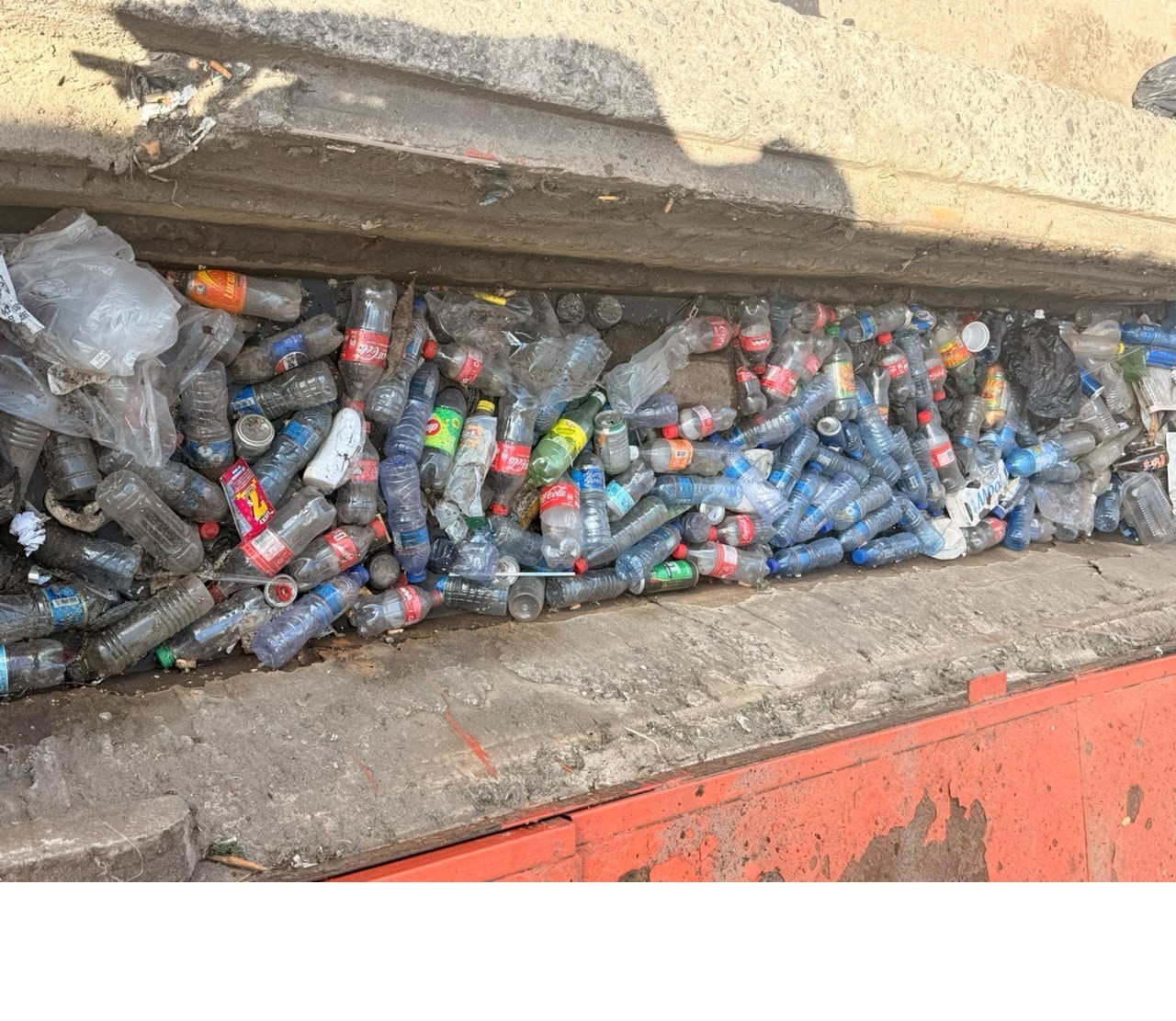
    The aggressive new policy comes amid a long-simmering public health and infrastructure crisis in Georgetown, where dozens of urban drains – including some located steps away from City Hall itself – are completely blocked by plastic waste, discarded debris and abandoned infrastructure. For months, the main drain outside the National Library on Church Street has remained blocked by a fallen disused traffic light control box, while another large abandoned traffic light base sits clogging a drain at the intersection of Avenue of the Republic and Robb Street.

    While limited drain cleaning operations are currently underway across the city, long-term maintenance remains non-existent, with many newly cleared drains already filling back up with silt. Clogged, foul-smelling drains that regularly overflow during rain are now a persistent issue near multiple branches of major American fast food franchises in the capital. The crisis also underscores unfulfilled past promises: more than a year ago, Mayor Mentore pledged comprehensive drainage fixes during a tour of the Plaisance bus park, but the area still faces recurring flooding after every heavy downpour with no improvements made.

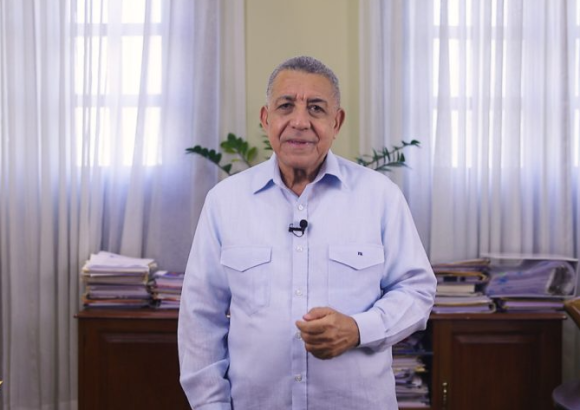
  • Simons: Olie alleen garandeert geen welvaart

    Simons: Olie alleen garandeert geen welvaart

    As Suriname’s landmark GranMorgu offshore oil development moves into a new, tangible phase, national leaders and project partners are sounding a clear warning: oil reserves alone will not deliver widespread prosperity to the South American nation. To capture long-term, inclusive benefits from the emerging oil and gas sector, the country must prioritize immediate investments in education, vocational training, and core infrastructure, officials emphasized during recent site visits and stakeholder meetings.

    Suriname President Jennifer Simons outlined this priority during a September 19 tour of Kuldipsingh Port Facilities, where critical infrastructure and equipment for the GranMorgu project are currently staged. Ahead of her site visit, Simons hosted a senior delegation from project lead TotalEnergies at her office, underscoring the national government’s close alignment with the project’s development timeline.

    “Oil discovery does not put money in people’s pockets automatically,” Simons told reporters during the tour. “If you do not pursue education or learn a skilled trade, you will not be able to access the opportunities this sector brings. You have to bring the right capabilities to the table.” The president specifically highlighted the urgency of preparing young Surinamese workers for a coming surge in demand for technically and practically skilled labor as the project ramps up toward production.

    Walking through the port, Simons inspected specialized equipment being prepped for offshore deployment, and said the physical presence of the infrastructure has made the years-long project finally feel tangible. “We have heard about this project for years, but being here to see the progress with my own eyes changes everything,” she said. “The equipment has arrived, it is on site, and it is clear this project is finally off the ground. There is no turning back now.”

    Patrick Pouyanné, CEO of French energy major TotalEnergies, confirmed during the meetings that the $12 billion GranMorgu project remains on track to launch commercial oil production in 2028. Half of the project’s total capital investment – roughly $6 billion – has already been deployed, bringing the project to the 50% completion milestone. Pouyanné emphasized that economic benefits for Suriname are already flowing, rather than being delayed until the first barrel of oil is extracted.

    “Our work to build local capabilities and contribute to national prosperity does not have to wait until 2028,” Pouyanné said. “That work is already underway, delivering tangible results today.” The energy giant is continuing to invest in exploratory drilling across Suriname’s offshore basin, he added, with new discoveries potentially extending the lifespan of offshore operations and unlocking additional development opportunities for the country.

    Suriname’s Minister of Oil, Gas and the Environment Patrick Brunings called the progress at the port facility “very impressive” and expressed full confidence that the 2028 production target will be met. Annand Jagesar, CEO of state-owned oil firm Staatsolie, echoed the government’s focus on inclusive growth, noting that the GranMorgu project should deliver far more than just oil extraction.

    “This project must also create tangible opportunities for local Surinamese businesses and host communities,” Jagesar said. Targeted investments in local knowledge, skills training, and small and medium enterprise development will ensure that a larger share of economic activity generated by the offshore industry stays within Suriname, supporting broad-based growth rather than isolated gains.

    President Simons echoed this priority, noting that the accelerating progress of GranMorgu makes preparedness more critical than ever. As the development of Suriname’s oil sector becomes increasingly concrete, the country must ensure its own people hold the knowledge and skills needed to turn the sector’s potential into tangible, shared prosperity for all Surinamese, she said.