博客

  • From cultural icon to courtroom: the alleged RD$40 million Barra Payán embezzlement case

    From cultural icon to courtroom: the alleged RD$40 million Barra Payán embezzlement case

    Santo Domingo’s cherished culinary institution Barra Payán, established in 1956 by Juan Frías Payán and celebrated for its iconic sandwiches and milkshakes, now finds itself embroiled in a severe financial scandal. The Public Prosecutor’s Office has unveiled allegations of an elaborate embezzlement scheme totaling nearly RD$40 million, shaking the foundations of this Dominican cultural landmark.

    According to judicial authorities, former administrators and partners Marcos Antonio Frías García, Juan Ismael Frías García, and Dagoberto Cabrera orchestrated a systematic cash diversion operation between 2019 and 2022. The accused allegedly withheld substantial portions of daily revenue rather than depositing complete sums into corporate accounts, creating significant discrepancies between recorded sales and actual bank deposits.

    A forensic audit certified by the Institute of Certified Public Accountants of the Dominican Republic (ICPARD) quantified the financial damage at RD$39,784,661.18. Prosecutors further contend that company resources were improperly utilized for personal expenditures and unauthorized loan arrangements, pushing the historically stable enterprise toward potential insolvency.

    The alleged financial misconduct victimized multiple family members including Juan Santiago Frías Paulino, Juan Abraham Frías Paulino, Yeimy Cantalicia Frías Paulino, and Juan Carlos Frías Beltrán. Legal proceedings have been initiated under Article 408 of the Dominican Penal Code concerning aggravated breach of trust and disloyal administration.

    Following the defendants’ arrest on February 5, 2026, prosecutors sought coercive measures including a RD$1 million financial guarantee, travel prohibitions, and mandatory court appearances. However, judicial proceedings encountered unexpected delay when defense counsel formally recused Judge Fátima Veloz over alleged partiality concerns. The case has been referred to the Presidency of the Court of Appeals of the National District for evaluation of the recusal petition’s validity.


  • Goudzoekers Rosebel-Zijin weigeren ontruiming en noemen zich geen illegalen

    Goudzoekers Rosebel-Zijin weigeren ontruiming en noemen zich geen illegalen

    A tense standoff continues in Suriname as artisanal gold miners operating within the Rosebel-Zijin mining concession have publicly refused to vacate the area. The situation reached a critical point on Tuesday evening during a community meeting in Paranam, where miners unanimously declared they would not leave the site they currently occupy. They assert they do not consider their activities illegal, significantly complicating resolution efforts. Despite their firm stance, the miners expressed a willingness to engage in structured dialogue and establish orderly agreements to prevent further escalation.

    The potential eviction, announced by police authorities, sparked significant political debate earlier in the day within the National Assembly. Assembly member Silvana Afonsoewa (NDP) voiced strong opposition to immediate police action, advocating instead for preliminary negotiations with the mining communities. She highlighted the profound social implications and potential for violent confrontation that a forced eviction could trigger.

    Following a meeting of parliamentary faction leaders, Rabin Parmessar (NDP) confirmed that representatives of the gold miners are scheduled to meet with the Ministers of Natural Resources and Justice & Police on Wednesday afternoon. This high-level discussion aims to forge a peaceful solution that avoids further tensions and potential violence.

    The Paranam meeting was organized by community leader Miriam Asadanoe, partly in response to a recent fatal incident in the concession area that claimed the life of a young miner. Asadanoe revealed she has been providing ongoing support to the victim’s family and emphasized the inherently complex nature of the Rosebel dispute, noting the concession area is situated directly within an established village. “In such situations, legal standing is not immediately clear-cut, which is precisely why dialogue is essential,” she stated in an interview. She expressed astonishment at the police’s eviction announcement, which was made without prior consultation, labeling the approach as fundamentally misguided.

    Asadanoe confirmed she has discussed the matter directly with President Jennifer Simons, who reportedly shares the position that dialogue must precede any enforcement action. Nearly one hundred miners participated in the meeting, proposing various solutions including formal cooperation agreements with the mining company and frameworks for regulated artisanal work within designated zones. These proposals will be compiled into an official report to be presented to the president this week. Asadanoe stressed that the miners seek clarity and recognition, not confrontation, asserting that “if they are listened to seriously, a clash can be prevented.”

  • Santiago Prosecutor’s Office destroys 64 illegal slot machines

    Santiago Prosecutor’s Office destroys 64 illegal slot machines

    SANTIAGO – In a decisive move against unauthorized gambling operations, the Santiago Prosecutor’s Office has executed the systematic destruction of 64 slot machines confiscated during a series of coordinated law enforcement operations. The initiative, spearheaded by the Office’s Special Investigations Department, targeted establishments illegally operating gambling devices across the city.

    Prosecutor Merary Guzmán, who leads the department, detailed that the seized equipment—which included gaming machines, associated cards, and software—was recovered from various unauthorized venues. These included corner stores, cafés, billiard halls, and lottery outlets, all operating in violation of Dominican Republic’s Law 29-06. This legislation strictly permits gambling activities solely within licensed and regulated premises.

    The operations were conducted in collaboration with the Cibao Central Regional Intelligence Sub-Directorate (Dintel), represented by Police Lieutenant Colonel Vladimir Félix García Santos, and the Preventive Police. Prosecutor Guzmán emphasized that the presence of such unregulated slot machines in community spaces poses significant social risks, particularly by facilitating underage access to gambling. This exposure, she warned, can precipitate gambling addiction among youth and potentially fuel related criminal behavior to support such habits.

    Notably, the crackdown has garnered substantial support from local residents, reflecting increasing public consciousness about the detrimental effects of illicit gambling on neighborhood safety and family welfare. Reaffirming the commitment of the Public Prosecutor’s Office, Guzmán pledged to continue these enforcement actions with transparency and responsibility, focusing on crime prevention, community well-being, and the protection of minors.

  • Cuban scientists continue to deliver good news

    Cuban scientists continue to deliver good news

    In a significant scientific gathering at Havana’s Palace of the Revolution, Cuban President Miguel Díaz-Canel Bermúdez convened with the nation’s leading health experts to review groundbreaking progress in pneumococcal vaccine development. The meeting revealed extraordinary outcomes from Cuba’s vaccination initiatives, particularly noting that incidence rates among children aged one to four years have plummeted to zero since 2019.

    Dagmar García Rivera, Deputy Director of Research and Development at the Finlay Institute of Vaccines (IFV), presented compelling data demonstrating how Streptococcus pneumoniae remains the primary cause of bacterial infectious diseases in children under five globally. Despite existing vaccination programs, millions continue to die from pneumonia and related complications worldwide.

    The Cuban scientific team has developed an innovative approach to multivalent vaccines targeting multiple pneumococcal serotypes. Their research has produced a 7-serotype vaccine, an advanced 11-serotype candidate currently in clinical trials, and a pioneering 16-serotype vaccine in preclinical development.

    Dr. Yury Valdés Balbín, Director General of IFV, emphasized the unique capacity of Cuba’s healthcare system to conduct sophisticated clinical trials within primary care settings rather than hospitals. “Only a political system like ours has the capacity to coordinate all stakeholders,” Balbín stated, acknowledging the efforts of healthcare workers across Havana, Cienfuegos, and Santiago de Cuba.

    The most compelling evidence came from Project Leader María Eugenia Toledo Romaní, who revealed that after vaccinating over 90% of children aged 1-5 in Cienfuegos province, invasive disease rates dropped from 3.1-9.1 per 10,000 children to absolute zero. Notably, all pneumococcal cases occurring after 2019 were exclusively among unvaccinated children.

    The data further demonstrated that unvaccinated children face 3.48 times greater risk of ICU admission for severe pneumonia compared to vaccinated children. Vicente Vérez Bencomo, President of Finlay Vaccines S.A., concluded that despite these achievements, Cuban science continues to pursue technological leaps beyond even their 16-serotype vaccine, maintaining Fidel Castro’s principle: “We have to compete with the best.”

  • In the face of imperial harassment, solidarity among Cubans

    In the face of imperial harassment, solidarity among Cubans

    Amidst Cuba’s ongoing economic challenges, tobacco producers from Villa Clara province have emerged as beacons of community solidarity through a significant humanitarian contribution. These agricultural workers have generously donated 48 complete photovoltaic power modules designed to provide emergency electricity to critical healthcare facilities throughout the region.

    The comprehensive donation package, comprising advanced solar panels and power stations, will ensure uninterrupted operation at polyclinics, maternity wards, nursing homes, funeral services, and hospitals during power disruptions. This initiative represents the collective effort of local farmers who have personally allocated their savings toward addressing infrastructure vulnerabilities in their community.

    This marks the latest in a series of philanthropic actions undertaken by Villa Clara’s agricultural sector. Previous contributions have included hospital roof waterproofing projects, acquisition of climate control equipment, comprehensive facility renovations, and refurbishment of medical wards. These cumulative efforts have substantially improved living conditions for hundreds of children, elderly residents, and vulnerable community members.

    The movement has inspired participation from diverse economic sectors across the region, with both state enterprises and private businesses preparing additional donations of food supplies, medical equipment, clothing, and essential utensils for distribution to those most affected by current economic conditions.

    This demonstration of civic responsibility underscores the resilience of Cuban communities during difficult periods, highlighting how collective action and shared resources can effectively address critical public needs when institutional capacities are strained.

  • Duquesa Landfill enters first phase of environmental transformation

    Duquesa Landfill enters first phase of environmental transformation

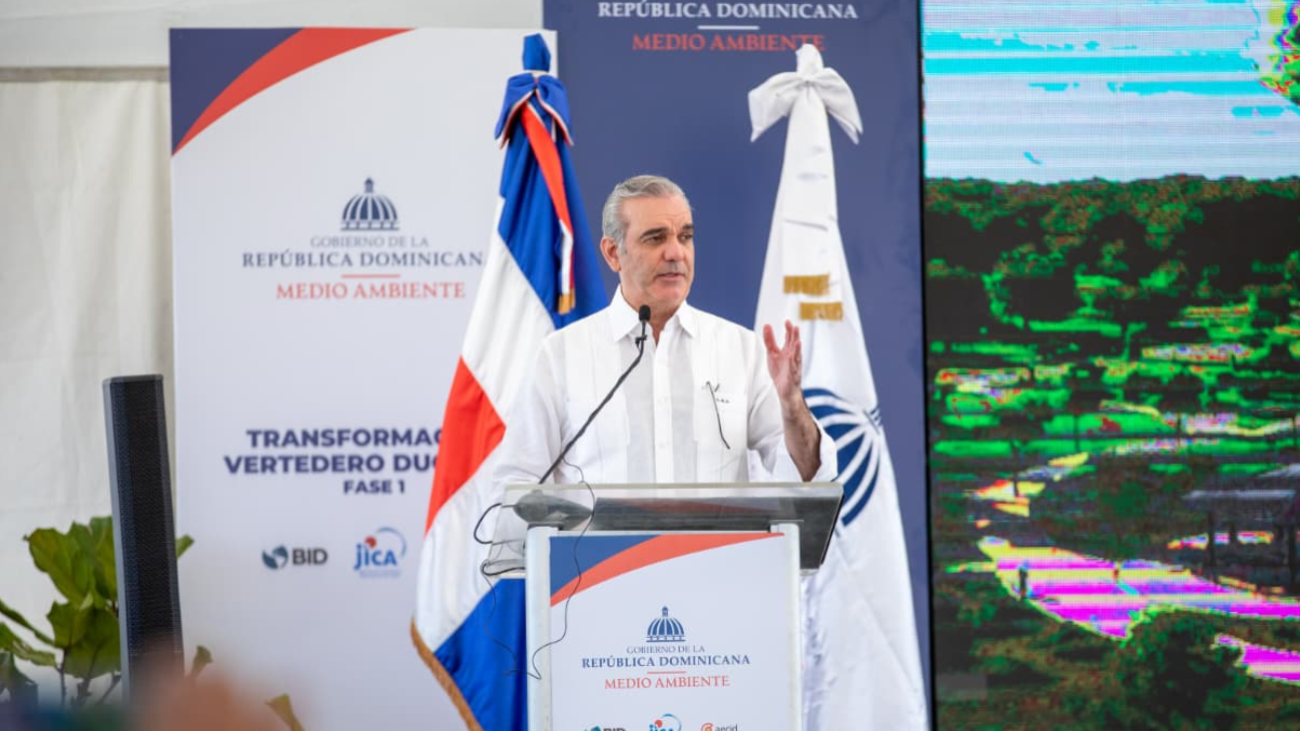
    The Dominican government has initiated a landmark environmental project to transform the problematic Duquesa landfill into a model of sustainable waste management. President Luis Abinader officially launched the comprehensive initiative on Tuesday, marking a significant step toward addressing one of the nation’s most pressing environmental challenges.

    The $110 million remediation effort represents a strategic partnership between the Ministry of Environment and Natural Resources and international financial institutions including the Inter-American Development Bank, Japan International Cooperation Agency, and Spanish Agency for International Development Cooperation. This collaborative approach underscores the global significance of proper waste management solutions.

    President Abinader characterized the project as far more than mere landfill closure, describing it as a complete environmental transformation employing advanced engineering solutions, risk mitigation protocols, and ecological restoration techniques. The initiative addresses decades of environmental degradation that has particularly affected adjacent communities through recurrent fires and toxic emissions.

    The comprehensive program includes critical technical components such as soil stabilization, leachate management, greenhouse gas capture, runoff control systems, and slope reshaping. These engineering interventions will establish the foundation for environmental recovery while preventing further contamination.

    Beyond the technical aspects, the project incorporates significant social elements including recreational infrastructure for surrounding communities. Planned facilities include sports fields, children’s play areas, outdoor gym equipment, an amphitheater, and a five-kilometer recreational circuit. The program also formalizes the status of waste pickers and is projected to mitigate approximately 140,000 tons of CO₂ equivalent annually through advanced gas capture systems.

    Environment Minister Paíno Henríquez identified Duquesa as the country’s largest environmental liability, containing over 30 million tons of accumulated waste. The successful maintenance of a fire-free period at the site demonstrates preliminary progress toward sustainable management.

    This initiative forms part of broader national efforts to transform waste management infrastructure, having already addressed 30 landfills across the country since 2020 through a dedicated solid waste management trust. The Duquesa project and concurrent cleanup of the Gurabo ravine in Santiago are positioned as national benchmarks for modern environmental remediation.

  • Firmness vs. Blockade: the formula of a friendly embrace

    Firmness vs. Blockade: the formula of a friendly embrace

    International condemnation mounts against United States economic policies toward Cuba as multiple nations and multilateral organizations express solidarity with the Caribbean nation. The coordinated responses challenge what numerous governments characterize as imperialist tactics designed to cripple Cuba’s economy and create humanitarian suffering.

    Mexican President Claudia Sheinbaum confirmed the dispatch of over 800 tons of humanitarian aid to Cuba, emphasizing her nation’s enduring solidarity. “Mexico will always stand in solidarity, seeking the best way to support the Cuban people,” Sheinbaum stated, while urging the US government to prevent further deterioration of Cuba’s humanitarian situation.

    Russia’s government denounced American tactics as “suffocating” measures causing severe difficulties for Cuba. Kremlin spokesman Dmitry Peskov confirmed ongoing discussions with Cuban officials about potential solutions and assistance measures. Russian Foreign Minister Sergey Lavrov reiterated Moscow’s “firm readiness to continue providing Cuba with necessary political and material support” during a telephone conversation with Cuban Foreign Minister Bruno Rodríguez Parrilla.

    China joined the chorus of criticism, with Foreign Ministry spokesperson Guo Jiakun declaring Beijing’s “firm support for Cuba in defending its national sovereignty and security.” China condemned practices it described as inhumane measures that deprive Cubans of their right to subsistence and development.

    Venezuela’s government rejected US executive orders imposing punitive measures on countries trading with Cuba, calling the designation of Cuba as a national security threat “an absurdity.” Brazil’s President Luiz Inácio Lula da Silva characterized US policy as a “massacre fueled by US speculation” lasting over six decades, pledging Brazilian solidarity and support.

    The Non-Aligned Movement, G77 plus China, and the Bolivarian Alliance for the Peoples of Our America (ALBA-TCP) issued formal statements criticizing the extraterritorial nature of US measures. These organizations emphasized the measures’ violation of UN Charter principles and international law, while reaffirming their unwavering solidarity with Cuba.

    United Nations spokesperson Stéphane Dujarric expressed concern about Cuba’s growing fuel shortage and its impact on the population, confirming the UN’s monitoring of the situation and coordination with the Cuban government to provide support including food, water, sanitation, and medical care.

    Pope Leo XIV and Arab League Secretary General Ahmed Aboul Gheit additionally voiced concern over escalating US aggression against Cuba, joining the widespread international call for avoiding actions that increase suffering among the Cuban people.

  • State Council approves relief from work duties for delegates of People’s Power whose responsibilities allow it

    State Council approves relief from work duties for delegates of People’s Power whose responsibilities allow it

    In an unprecedented move addressing Cuba’s severe economic and political challenges, the Council of State has authorized the temporary release of municipal delegates from their regular employment duties to strengthen connections with constituents. The decision, formalized through Agreement No. 556-X on February 9, 2026, comes as the nation grapples with fuel shortages, energy system failures, and deteriorating public services exacerbated by recent U.S. government measures.

    Juan Esteban Lazo Hernández, President of the National Assembly of People’s Power, announced the measure citing constitutional provisions that mandate delegates to balance their elected responsibilities with community needs. The resolution acknowledges the critical role delegates played during the pandemic and subsequent weather emergencies, highlighting their established capacity for maintaining direct constituent communication.

    Under the agreement, Municipal Assembly presidents will assess which delegates can be temporarily relieved from their professional occupations based on work flexibility considerations. Those unable to leave their jobs will maintain constituent relationships primarily during non-working hours, with enhanced emphasis on community participation in problem-solving initiatives.

    The directive establishes a comprehensive framework for crisis management communication, requiring delegates to regularly update constituents about national developments while collecting community feedback and proposals. People’s Councils will intensify oversight of local entities, particularly focusing on food production, energy distribution, and price control measures implemented by the government.

    Local administrations must actively support the initiative despite current resource constraints, with the Commission for Attention to Local Organs of People’s Power monitoring implementation progress. The measure represents one of Cuba’s most significant adjustments to grassroots governance mechanics since the 2019 adoption of Law No. 132 governing Municipal Assemblies structure and functionality.

  • Melkcentrale wijzigt naam nieuw product na maatschappelijke kritiek

    Melkcentrale wijzigt naam nieuw product na maatschappelijke kritiek

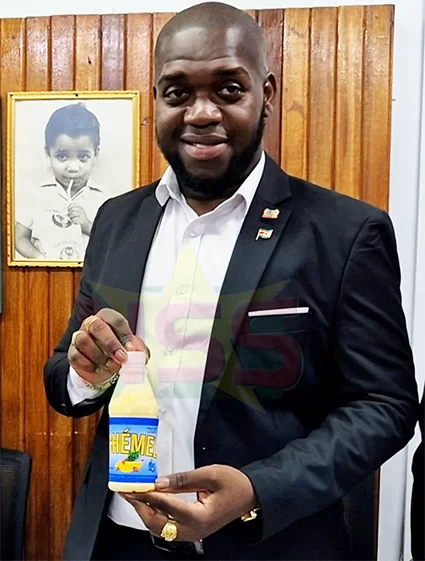
    In a swift reversal following public criticism, Melkcentrale NV has announced it will rename its newly launched dairy product originally called ‘Monchémel’ after CEO Monché Atompai. The product will now be marketed under the name ‘Tropimel’, with only the first 100-unit batch retaining the director’s namesake branding.

    The company revealed the strategic pivot through its official Facebook page just one day after the product’s unveiling. According to the statement, attaching the CEO’s name to the initial limited edition serves as a symbolic gesture recognizing Atompai’s dedication and leadership within the organization.

    During Tuesday’s press conference, management had presented the product exclusively as Monchémel without disclosing the planned name change or limited production scale. Executives initially claimed staff had collectively chosen the name as gratitude for their director. ‘The entire staff selected this name as thanks to our director. He deserves it,’ management stated during the presentation.

    CEO Atompai expressed surprise and honor during the event, noting: ‘They indicated it relates to how I’ve worked recently. They say I came as a hero, which is why they chose to give such a name to a product.’

    The subsequent clarification emphasizes that Tropimel’s introduction marks a significant corporate milestone. Melkcentrale’s statement elaborated: ‘Linking the first batch’s name to our director symbolizes our appreciation for the hard work, dedication, and team spirit characterizing our organization.’

    Following the initial 100 units, all subsequent production will carry the Tropimel branding when the product launches commercially on February 11th.

  • AILA confirms sufficient fuel supply for Air Europa and Iberia stopovers

    AILA confirms sufficient fuel supply for Air Europa and Iberia stopovers

    Santo Domingo’s Las Américas International Airport (AILA) has emerged as a vital refueling station for European carriers Air Europa and Iberia, commencing technical stopover operations this Wednesday amid a severe fuel shortage crisis in Cuba.

    Airport authorities confirmed unlimited fuel capacity and operational readiness to handle the increased demand. Luis López, spokesperson for airport management company Aeropuertos Siglo XXI (Aerodom), assured that AILA possesses both the infrastructure and fuel reserves to accommodate all technical stop requirements without restrictions.

    “The airport maintains sufficient fuel availability and operational capabilities to fully meet airline demands,” López stated, emphasizing that refueling procedures would continue normally despite the regional supply challenges.

    Air Europa has scheduled technical stops on February 11-13, with each aircraft requiring approximately 15,000 gallons of fuel before proceeding to final destinations. The current arrangement covers a four-day period through February 14, though officials noted flexibility for potential schedule extensions depending on Havana’s fuel situation.

    Iberia similarly confirmed plans to utilize AILA’s facilities, citing the airport’s strategic location and reliable fuel supply chain as critical factors in maintaining flight operations during Cuba’s supply disruption.

    All technical stopovers will be centralized at Las Américas International Airport, where authorities maintain continuous coordination with airlines to ensure operational efficiency and uninterrupted fuel provision while Cuba’s supply issues persist.