博客

  • St. John’s Rural South to Host Town Hall Meeting Thursday

    St. John’s Rural South to Host Town Hall Meeting Thursday

    The political leadership of Antigua and Barbuda will engage directly with constituents of St. John’s Rural South in a comprehensive town hall meeting scheduled for Thursday evening. The gathering, set to commence at 6 p.m. at Golden Grove Primary School, will feature an influential panel including Prime Minister Gaston Browne, local Parliamentary Representative Daryll Matthew, Attorney General Steadroy ‘Cutie’ Benjamin, and ruling ABLP Party Chairman E.P. Chet Greene.

    This forum represents a significant opportunity for residents to voice concerns and seek clarifications on multiple pressing policy areas. The announced agenda encompasses six critical domains: infrastructure development initiatives, employment opportunities and job creation strategies, housing and accommodation challenges, community crime prevention measures, national immigration policies, and specific constituency matters affecting daily life in St. John’s Rural South.

    The town hall format emphasizes the government’s commitment to transparent governance and participatory democracy, allowing for unfiltered dialogue between policymakers and the citizens they represent. Such direct engagement opportunities are particularly valuable for addressing hyperlocal issues that might otherwise receive limited national attention. The choice of venue at a community school further underscores the administration’s intent to maintain accessibility and approachability in these discussions.

  • Leatherback Nesting Season Begins as Environmental Group Urges Vigilance

    Leatherback Nesting Season Begins as Environmental Group Urges Vigilance

    The Environmental Awareness Group (EAG) has issued a public advisory alerting residents and visitors to the imminent arrival of leatherback sea turtles along the shores of Antigua and Barbuda for the critical 2026 nesting period. This conservation organization emphasizes the necessity of community involvement in monitoring these endangered marine creatures during their reproductive cycle.

    Citizens are being mobilized as environmental stewards to report any indications of sea turtle presence, including: nesting females, visible egg clutches, distinctive track patterns on beaches, or emerging hatchlings. The EAG has established a dedicated reporting channel, directing observations to their office at telephone number 462-6236.

    Critical guidelines have been disseminated to ensure minimal human disruption to these vulnerable species. The public is strongly advised to maintain considerable distance from nesting turtles and strictly refrain from using photographic flashes during nocturnal hours, as artificial illumination can severely disorient both adult turtles and offspring, potentially jeopardizing their survival.

    The conservation group further advocates for active public participation in educational outreach, urging community members to disseminate awareness information and bolster preservation initiatives designed to safeguard these threatened marine animals throughout this biologically significant season. This collective effort represents a crucial component of broader wildlife protection strategies in the Caribbean region.

  • Stop the strangulation of Cuba

    Stop the strangulation of Cuba

    The SVG Cuba Friendship Society has aligned with global civil society organizations in vehemently condemning recent United States governmental actions aimed at intensifying economic pressure on Cuba. This collective denunciation challenges the US State Department’s controversial designation of Cuba as a state sponsor of terrorism, characterizing this label as a disingenuous pretext for maintaining punitive sanctions that have persisted since 1962.

    Despite facing six decades of comprehensive economic restrictions, Cuba has consistently demonstrated international solidarity by sharing its limited resources with developing nations worldwide. The Caribbean nation has provided substantial assistance in critical sectors including education, healthcare, sports development, and agricultural expertise to numerous countries experiencing poverty and underdevelopment.

    The recent Executive Order issued on January 29 represents an escalation of US policy, specifically designed to prevent petroleum shipments from reaching the Cuban population. This measure has been characterized as particularly severe, potentially crossing ethical boundaries in its impact on civilian welfare.

    In response to these developments, the Cuban government has renewed its call for diplomatic engagement with the United States, emphasizing the historical precedent of cooperative relations between the neighboring nations prior to 1962. Cuban officials highlight the mutual benefits that could be realized through normalized bilateral relations.

    The international community, including United Nations Secretary General Antonio Guterres and Pope Francis, has joined the appeal for US respect of Cuban sovereignty and the initiation of constructive dialogue. These appeals gain credibility from Cuba’s documented role as a mediator in international conflicts, notably facilitating peace talks between warring factions in Colombia.

    Cuba’s historical contributions to global liberation movements, particularly in Africa where Cuban forces contributed to the defeat of apartheid, stand in stark contrast to terrorism sponsorship allegations. The island nation has educated thousands of international students, including Americans, and has provided medical expertise to developing countries worldwide.

    The current policy approach primarily affects vulnerable Cuban civilians while failing to address any legitimate security concerns. Alternative diplomatic solutions exist that could better serve both nations’ interests while respecting international law and human rights principles.

  • Gonsalves says govt should reverse decision not to host netball tourney

    Gonsalves says govt should reverse decision not to host netball tourney

    Opposition Leader Ralph Gonsalves has issued a forceful appeal to the current administration to reverse its decision to withdraw from hosting the Americas World Cup Netball Qualifiers scheduled for October. The political leader made his case during his weekly radio address, emphasizing the critical importance of maintaining governmental commitments to national sporting bodies.

    The controversy stems from a February 5th communication from Sports Minister Kaschaka Cupid informing the St. Vincent and the Grenadines Netball Association (SVGNA) of Cabinet’s resolution to cancel the tournament hosting rights. The justification cited insufficient time to complete necessary facility upgrades at Arnos Vale Sporting Complex.

    This decision represents a reversal of the previous administration’s commitment formalized in October 2025. Then-SVGNA President Natasha Baptiste had confirmed the Unity Labour Party government provided written assurance to convert the sporting complex into an indoor facility, a crucial factor in securing the international bid.

    Gonsalves presented a multifaceted argument for reconsideration. He highlighted netball’s unique status as the sport where St. Vincent and the Grenadines achieves its highest global ranking at position 17. The opposition leader revealed detailed preparatory work already undertaken, including a EC$200,000 refurbishment of the Old Montrose netball court and advanced planning with international construction groups from Trinidad, Canada, and the United Kingdom.

    The former administration had earmarked EC$5-6 million for the project, which Gonsalves contrasted with recent budgetary allocations including EC$2.1 million for the Prime Minister’s official residence and vehicle fleet. He suggested the government reprioritize spending, noting the netball facility would serve broader national interests beyond the tournament.

    Gonsalves concluded with an urgent plea for reversal, emphasizing the tournament’s significance in determining which two teams will join Jamaica’s Sunshine Girls representing the Americas Region at the 2027 Netball World Cup in Sydney.

  • SVG to phase out reliance on Cuban district health officers

    SVG to phase out reliance on Cuban district health officers

    KINGSTOWN, St. Vincent – Prime Minister Godwin Friday has unveiled a transformative healthcare strategy that includes phasing out reliance on Cuban medical personnel over a three-year period. The announcement came during the presentation of the nation’s first EC$1.9 billion budget since the New Democratic Party’s electoral victory last November.

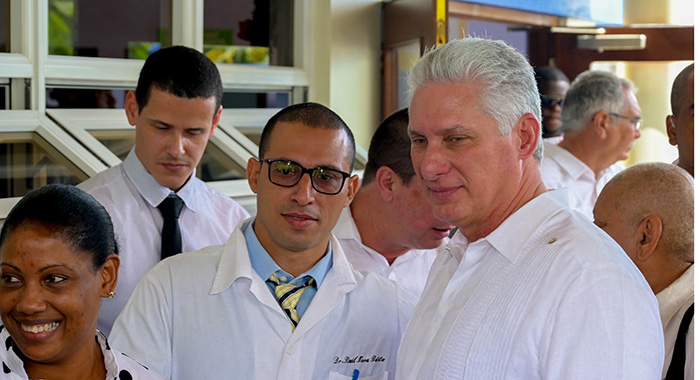
    The move follows recent statements from the United States condemning Cuba’s medical missions as “forced labour schemes” and urging regional governments to terminate their participation. While Prime Minister Friday did not explicitly link the phase-out to US pressure, the timing coincides with Washington’s intensified campaign against Cuba’s international medical programs.

    Under the “Medical Staffing Localisation” initiative, St. Vincent will recruit four local medical officers in 2026 to begin replacing Cuban District Medical Officers, addressing both language barriers and reducing foreign staffing costs. “They may be redeployed elsewhere as needed,” Friday stated during his parliamentary address.

    The health sector allocation of EC$117.5 million reflects what the Prime Minister described as “a holistic vision that nurtures mind, body, and spirit while safeguarding environmental services.” He emphasized that “access to affordable, high-quality healthcare is not merely a social service; it is a strategic investment in growth.”

    The government’s reform agenda confronts a severe public health crisis revealed by the 2023 Census, showing 12,239 hypertension cases and 7,039 diabetes cases nationwide. Friday characterized non-communicable diseases as a “silent epidemic” that reduces quality of life and strains healthcare resources.

    Preventive measures will include cancer screening for breast, cervical, prostate, and colon cancers at all primary healthcare centers. Additionally, EC$1 million has been allocated to a Patient Support Unit for coordinating overseas radiotherapy and other critical interventions.

    The administration is implementing a comprehensive Health Information System supported by a six-million-dollar grant from Taiwan, digitizing medical records to enable data-driven planning and accountability. The system modernization complements policy revisions to strengthen mental health services and enhance geriatric care facilities.

    “Our reform agenda is grounded in risk mitigation, self-reliance, and institutional strength,” Friday declared. “We are building a system that is resilient to shocks and responsive to local needs.”

  • Rosita Leeflang nieuwe directeur van STVS

    Rosita Leeflang nieuwe directeur van STVS

    Suriname’s media landscape witnesses a significant leadership transition as Rosita Leeflang assumes the role of Director at the Surinamese Television Foundation (STVS). She succeeds Raoul Abisoina, who held the position for over five years. Abisoina expressed philosophical acceptance of his departure, acknowledging that such changes inherently accompany political appointments. “This is something one must always anticipate,” Abisoina stated in comments to Starnieuws.

    Leeflang brings comprehensive expertise as a seasoned media and communications specialist with extensive background in journalism, media production, and cultural entrepreneurship. Her established career includes notable work as journalist, news anchor, and producer within Suriname’s media industry.

    Beyond traditional journalism, Leeflang has actively contributed to cultural preservation through various documentary projects and cultural initiatives. She owns Roseternal Media, a production company specializing in news content, documentary films, and event management.

    Her cultural leadership extends to chairing the Foundation K.A.S.E.K.O., an organization dedicated to promoting Surinamese kaseko music culture. Her documentary ‘Langabere,’ celebrating kaseko musical traditions, recently gained international recognition through selection at the Curaçao International Film Festival, enhancing her global professional profile.

    Academically, Leeflang possesses robust qualifications in historical and heritage studies. She earned a Master’s degree in Museum and Heritage Studies from the Reinwardt Academy, complementing her earlier Bachelor’s degree in History. This combination of practical media experience, cultural advocacy, and academic foundation positions Leeflang to provide comprehensive leadership for STVS’s future development.

  • SVG facing ‘silent crisis of poverty’ — PM Friday

    SVG facing ‘silent crisis of poverty’ — PM Friday

    Prime Minister Godwin Friday has unveiled alarming data indicating that St. Vincent and the Grenadines faces a severe poverty crisis, with approximately one-third of the population either living in poverty or at immediate risk of falling below the poverty line. The revelation came during Monday’s parliamentary budget address for 2026, where the leader presented findings from two comprehensive surveys conducted over the past six years.

    The independent poverty assessment, drawing from the 2018 Survey of Living Conditions and the 2023 Population and Housing Census, paints what Friday described as “a stark reality” for the Caribbean nation. According to the data, more than 33% of Vincentians exist in financially precarious circumstances, potentially pushed into poverty by a single missed paycheck or natural disaster.

    Economic pressures have dramatically increased the cost of basic nutrition, with the annual indigence threshold now exceeding EC$3,642 per adult—approximately EC$10 daily—merely to maintain adequate food intake. For families, the situation proves even more challenging, with a typical three-person household requiring a minimum monthly expenditure of EC$1,898 to avoid poverty—a target becoming increasingly unattainable amid persistent inflation.

    The analysis reveals concentrated poverty in female-headed households and northern rural communities, regions still recovering from the economic devastation of the April 2021 La Soufrière volcanic eruption. This has created a pronounced geographic divide between the relatively prosperous south and economically depressed north—a disparity the administration’s “One Nation” transformation agenda specifically targets.

    Friday, whose New Democratic Party ended 24 years of Unity Labour Party governance with a landslide 14-1 electoral victory last November, acknowledged that official statistics have historically failed to reflect citizens’ lived experiences. While the nation shows signs of macroeconomic growth, Friday emphasized this progress remains exclusionary, failing to elevate living standards for substantial population segments.

    Women bearing caregiving responsibilities with limited land access face disproportionate vulnerability, while remote communities struggle with healthcare access, educational quality, and financial safety nets. Economic pressures have driven increased school dropout rates, and without formal credit or insurance options, families lack protection against disasters.

    The government has committed to addressing these structural inequalities through both immediate relief and long-term strategy. Social assistance increases to EC$500 monthly aim to provide immediate relief, while the Youth Guarantee Pledge ensures employment, training, or internship opportunities for young people in vulnerable communities.

    Friday concluded with a firm commitment to ending geographic determinism in prosperity, stating: “We will not leave another generation behind to languish and wonder why they must always be the last to savour our national bounty.”


  • ChatGPT helped write Friday’s Budget Speech – Gonsalves

    ChatGPT helped write Friday’s Budget Speech – Gonsalves

    In a scathing parliamentary address, Opposition Leader Ralph Gonsalves has launched extraordinary allegations against Prime Minister Godwin Friday’s administration, claiming the recently delivered national budget was partially authored by artificial intelligence. The controversial remarks came during Tuesday’s parliamentary debate following Monday’s budget presentation—the first by a New Democratic Party finance minister since 2001.

    Gonsalves characterized the EC$1.9 billion fiscal package as “unimaginative in its strategic thrust” and accused the government of “treading water dangerously” amid regional economic turmoil. He particularly criticized the administration’s commitment to establishing a Citizenship by Investment (CBI) program, calling it a “terrible policy pronouncement” that represents vain hope rather than substantive economic strategy.

    The opposition leader asserted that the budget speech suffered from fundamental incoherence and internal contradictions, which he attributed to multiple authors including AI-generated content. “I recognize the language. He himself wrote a few small portions,” Gonsalves stated, claiming two principal advisors composed most of the address while ChatGPT contributed as a “non-human author.”

    Gonsalves identified specific alleged evidence of AI involvement, including excessive use of dashes without spacing, random bold formatting inconsistencies, and clusters of short one-sentence paragraphs—which he described as “hallmark ChatGPT giveaways.” He further criticized that human authors ignored the AI’s editing advice, resulting in repetitive elements and questionable data points.

    The opposition leader concluded that the NDP government has experienced “the shortest honeymoon in human history” with growing public dissatisfaction after just nine weeks in office. The budget debate continues through Friday, when Prime Minister Friday is expected to formally respond to these allegations.

  • Dominican tourism breaks January record with 1.2 million visitors

    Dominican tourism breaks January record with 1.2 million visitors

    The Dominican Republic’s tourism sector has achieved an unprecedented milestone, recording its strongest January performance in history with over 1.2 million visitors marking a spectacular start to 2026. According to Tourism Minister David Collado, who unveiled the remarkable statistics during a presentation at Pontifical Catholic University Madre y Maestra (PUCMM), the country welcomed 1,219,606 tourists during the first month of the year.

    This figure represents a substantial 5.5% increase compared to January 2025 and an extraordinary 61.7% surge above pre-pandemic levels recorded in 2019. The data reveals particularly impressive growth in air arrivals, with 825,847 visitors arriving by air—an 8.7% year-on-year increase. Meanwhile, cruise tourism demonstrated explosive growth, with 393,759 passengers arriving by sea, marking a 21% increase from 2025 and a staggering 152% surge from 2019 levels.

    Minister Collado emphasized the historical significance of these numbers, stating: “This is the first time in our nation’s history that we have exceeded 1.2 million visitors in January, confirming the extraordinary momentum of Dominican tourism.”

    The United States remained the dominant source market, contributing 35% of all visitors, followed by Canada (24%), Argentina (8%), Colombia (5%), France (3%), with the United Kingdom and Italy each accounting for 2%. Punta Cana International Airport handled the majority of arrivals at 63%, followed by Las Américas (18%), Cibao (9%), Puerto Plata (6%), with La Romana and Samaná accounting for 2% and 1% respectively.

    Supporting these arrival numbers, hotel occupancy rates surpassed 82% throughout January, while tourist satisfaction ratings reached an impressive 4.4 out of 5 points. The aviation sector also showed robust performance with 6,789 flights recorded and an average occupancy rate of 75%, indicating sustained growth across all tourism indicators.

  • Serious collision on Jacinto J. Peynado Bridge leaves one missing

    Serious collision on Jacinto J. Peynado Bridge leaves one missing

    A significant emergency response was activated in Santo Domingo’s National District following a serious collision between a car and a motorcycle on the Jacinto J. Peynado Bridge in the Puerto Isabela sector. The incident resulted in one individual, presumed to be the motorcyclist, being thrown into the waters of the Isabela River below.

    According to official reports from the coordinated 911 Emergency System, four other individuals involved in the accident were promptly transported to nearby medical facilities for treatment of their injuries. The severity of the collision triggered an extensive multi-agency response, deploying substantial resources to the scene.

    Emergency services mounted a comprehensive search and rescue operation involving four ambulances from the Directorate of Emergency Health Services (DAEH), six National Police units, two Digesett traffic police units, and two firefighting units from the National District Fire Department. The operation received aerial support from a 911 surveillance drone, while specialized dive teams from the Fire Department and Civil Defense personnel conducted underwater search efforts in the river.

    As of the most recent updates, rescue teams have been unable to locate the missing individual. Authorities have confirmed that search operations continue unabated, with the situation remaining fluid and under active investigation. The ongoing efforts highlight the complex challenges faced by emergency responders in water-based rescue scenarios.