博客

  • High Performance Centre coach Eugene talks Kings and Volcanoes

    High Performance Centre coach Eugene talks Kings and Volcanoes

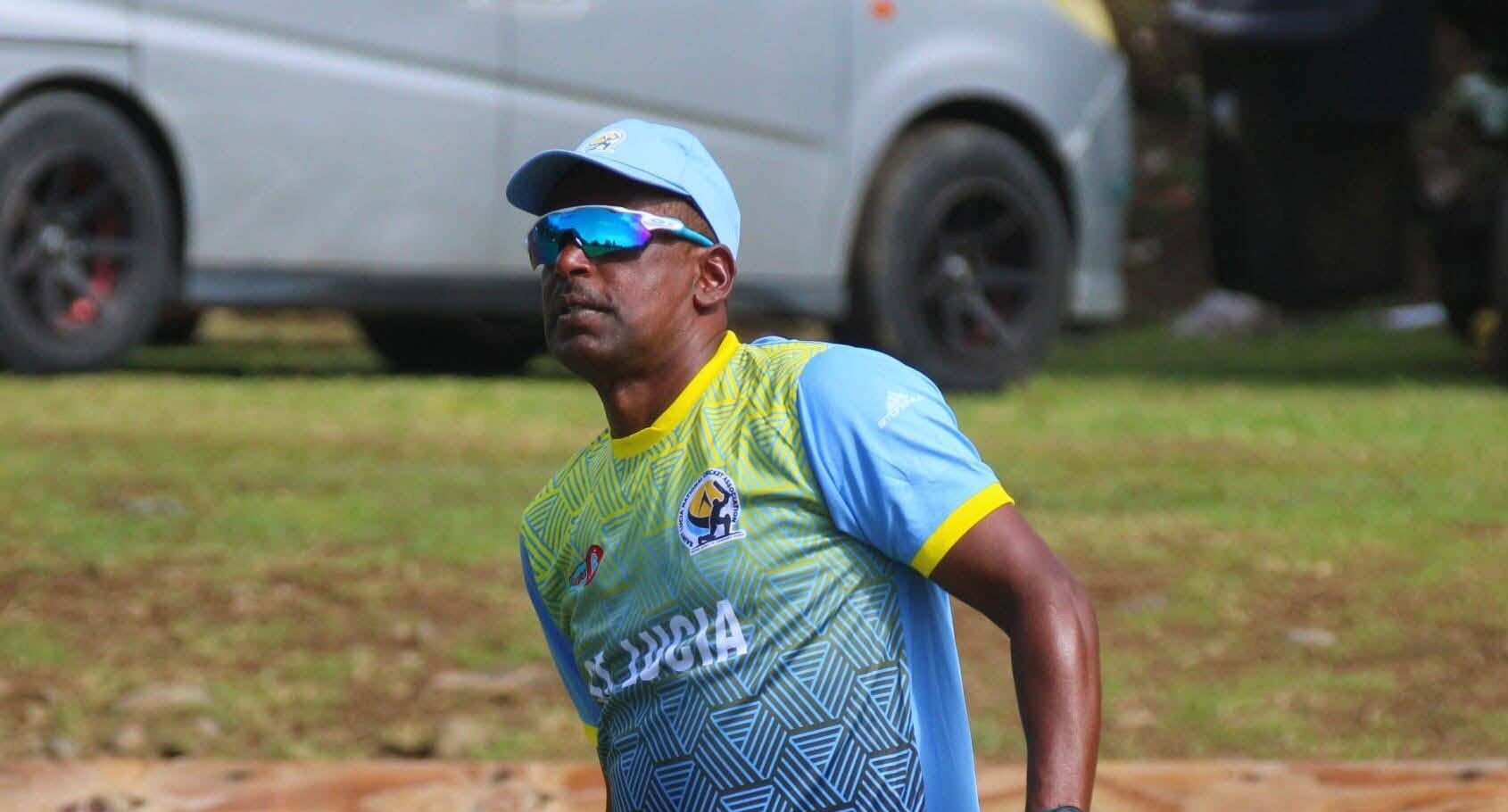
    Fresh off completing his assistant coaching role with the Saint Lucia Kings in the Caribbean Premier League (CPL), John Eugene, head coach of the Saint Lucia Cricket High Performance Centre (HPC), has returned to local cricket duties, bringing with him a mix of candid reflection on his recent franchise experience and cautious optimism for the island’s cricketing future.

    The 2025 CPL tournament ended in underperformance for the Kings, the 2024 title holders. The side failed to qualify for the playoff round, with the Antigua & Barbuda Falcons ultimately claiming their first-ever championship title. In a frank assessment of the campaign, Eugene acknowledged that the season fell well short of expectations. “We must be honest and say that it was a disappointing season,” he admitted. “We didn’t really execute the plans that we set about, and obviously, that cost us a lot of crucial matches, hence we were not in the playoffs.”

    Despite the underwhelming result, Eugene emphasized that the stint provided irreplaceable professional growth. Working alongside global top-tier cricketers and sharing coaching duties with legendary West Indian cricket figures Daren Sammy, the Kings’ head coach, and Floyd Reifer, gave him invaluable insight that he will bring back to Saint Lucia’s local development programs. “The experience out there is valuable and it’s a lot of learning,” he added.

    Back at the HPC, Eugene was quick to praise his assistant coaches Dalton Polius and Larry Edward for maintaining high energy and consistent training standards throughout his extended absence for the CPL. He reported that young domestic cricketers have turned in encouraging performances in the ongoing Saint Lucia National Cricket Association Super 50 tournament, with several emerging players stepping up to deliver notable scores.

    Eugene noted that while Saint Lucia already has a deep pool of raw cricketing talent and has held nearly year-round competitive matches in 2025, consistent execution under pressure remains an area for refinement for young local players. “For me, it’s just a matter of continuous development from the players,” he said. “There are great opportunities ahead for everybody to put up their hands. The guys really must look to capitalise on these tournaments. … But all in all, it’s good that we have had cricket for almost a whole year. So it’s good that the guys are well on their way playing.”

    Looking ahead to October, Eugene is eagerly anticipating a transformative development for Saint Lucia cricket: the Windward Islands Volcanoes men’s professional franchise is set to relocate its headquarters to the island, with an initial three-year hosting agreement. Eugene says the partnership between the Volcanoes franchise and the HPC will open new doors for local athletes and coaching staff alike, ranging from cross-training opportunities to pathways for talented HPC players to join the professional franchise setup.

    For Eugene, the arrival of the Volcanoes is more than just an administrative change – it is a catalyst that will push local players to raise their standards and learn from a full-time professional program. “I want to view it as an opportunity, or somewhat of a sort of motivation, for our players to step up their game, look at the programme, and see how best they can improve and how best they can go about getting better,” he explained. “For me, it’s a massive opportunity, and for all involved really; coaches and everybody. So, we look forward to the Volcanoes being here.”


  • DCA Intermediate League continues with five matches this weekend

    DCA Intermediate League continues with five matches this weekend

    After a mid-competition break, local domestic cricket action returns to Dominica this weekend, as the Dominica Cricket Association (DCA) prepares to restart its 2026 Maxroy Trading Ltd. Intermediate League with a full slate of five matches spread across four competition venues.

    The first round of post-break fixtures gets underway on Saturday, September 26, with two back-to-back contests that will reshape the league’s current standings. At the iconic Botanic Gardens ground, KFC Summits will lock horns with Grand Bay Colts, promising a tense battle between two sides vying to climb up the rankings. Meanwhile, across town at Benjamin’s Park, Rueben Bakery Christians will take the pitch against Kalinago Blasters, with both teams eager to collect crucial points to solidify their positions in the ongoing campaign. Cricket analysts and local fans anticipate both matches will deliver high-energy play, as every fixture carries increased weight ahead of the league’s knockout stages.

    The weekend of cricket action will continue on Sunday, September 27, with three more scheduled encounters to round out the latest round of play. At the Vieille Case ground, Nagico Northern Stars will face off against the Gladiators in what is expected to be a close contest between two evenly matched sides. Back at Benjamin’s Park, Emerald Stars will go head-to-head with the Police Sports Club, looking to build on any momentum gained from their previous outings. To close out the full weekend of Intermediate League action, Lapwet Tigers and Gallion will meet at the Botanic Gardens, wrapping up the rescheduled round of fixtures and setting the stage for the next phase of the 2026 competition.

  • CSPJ : Certification of magistrates (lists of certified and non-certified magistrates)

    CSPJ : Certification of magistrates (lists of certified and non-certified magistrates)

    In a landmark step for judicial reform in Haiti, the Superior Council of the Judiciary (Conseil Supérieur du Pouvoir Judiciaire, CSPJ) published the long-awaited results of its magistrate certification review on Wednesday, September 24, 2026. The outcome follows three consecutive days of closed-door deliberations, administrative and legal vetting, and thorough review of 159 submitted candidate files.

    After completing the comprehensive evaluation process, the CSPJ has formally certified 119 sitting magistrates across Haiti’s local, first-instance, and appellate courts to continue in their judicial roles. Of the remaining 40 files reviewed, 17 magistrates have been stripped of certification and disqualified from judicial service, all cited for failing to meet basic standards of professional and moral integrity. One disqualified magistrate, Dieuveuil Boileau, was additionally found to hold a fraudulent Baccalaureate II diploma, further justifying his removal.

    Two additional magistrates were formally requested to exercise their retirement rights, a move that clears the way for institutional restructuring of the lower judiciary. Seven other certification files remain open, with the CSPJ announcing that further investigation will be conducted to resolve outstanding questions about the candidates’ eligibility before a final ruling is issued.

    Among the 119 certified magistrates are a range of sitting judicial officers, from local justices of the peace to senior court leaders. Notably, the certification includes one posthumous approval for Jacques Philippe Vincent, acting presiding judge at the Magistrate’s Court of Acul Samedi, confirming the court’s recognition of his service even after his passing. Several senior former judges, including Lionel Ralph Dimanche, former dean of the Court of First Instance of Croix-des-Bouquets, and Yvon Jean Noel, deputy government commissioner at the Port-au-Prince Court of Appeal, also received certification after mandatory review.

    The 17 non-certified magistrates hold roles across multiple jurisdictions, including deputy government prosecution positions in Port-au-Prince, Petit-Goâve, and Croix-des-Bouquets, as well as substitute judge seats in Limonade, Camp-Perrin, and Kenscoff. All were disqualified on the grounds of failing to maintain the professional and ethical standards required of Haiti’s judiciary, a decision that represents a significant push by the CSPJ to root out corruption and unethical conduct within the country’s legal system.

    This certification process comes as Haiti continues its multiyear effort to reform its judicial institutions, rebuild public trust in the rule of law, and address longstanding systemic challenges including widespread corruption, backlogged court dockets, and inconsistent adherence to professional standards among judicial officers. The publication of the full certified and disqualified lists marks an unprecedented level of transparency in the country’s judicial reform process.

  • Barbados pursues new tax, investment treaties

    Barbados pursues new tax, investment treaties

    As the Caribbean nation works to draw fresh foreign capital and strengthen cross-border economic ties, Barbados is actively advancing negotiations for new double taxation agreements (DTAs) and bilateral investment treaties (BITs) with a range of non-conventional trading partners, including an unnamed European country that has already held informal talks with Barbadian authorities, a top government official confirmed this Wednesday.

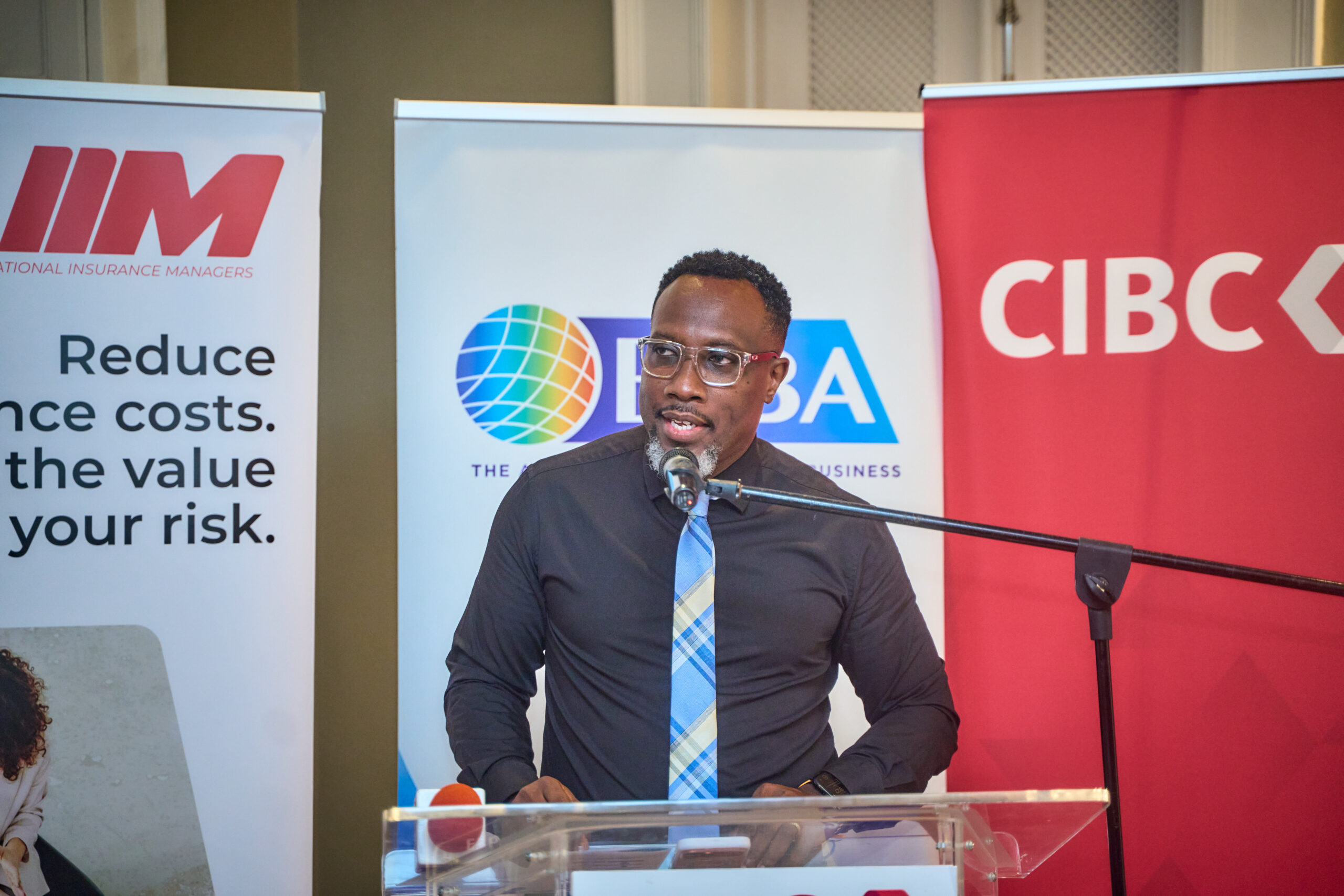
    Speaking to journalists at the official media launch of Global Business Week, hosted at CIBC Great House in Warrens, Kevin Hunte, Permanent Secretary of Barbados’ Ministry of Business, outlined that ongoing discussions are focused on securing both a DTA and BIT with the undisclosed European partner. Hunte emphasized that the government’s push to expand the country’s existing network of international tax and investment treaties has not slowed amid shifting global economic conditions, noting that Barbados has worked for years to open formal negotiations with this particular European nation.

    A cross-government working group, comprising the Ministry of Business, Ministry of Foreign Affairs, the Prime Minister’s Office and the Cabinet, currently conducts reviews to prioritize target jurisdictions for new agreements. Hunte added that in the current global tax landscape, bilateral investment treaties have gained greater urgency than traditional double taxation agreements, driven by widespread international restructuring of global tax frameworks.

    Sangene Watkins-Diagne, Director of the International Business Unit within the Ministry of Business, echoed Hunte’s comments, confirming that the government’s strategy centers on expanding the treaty network beyond Barbados’ long-standing core trading partners. The initiative is being developed in close collaboration with Pascal Saint-Amans, a senior tax policy expert serving as consultant to the Prime Minister.

    “Barbados already has comprehensive treaties in place with all of its major trading partners, so at this stage our focus is on branching out into less traditional jurisdictions,” Watkins-Diagne explained. She also provided an update on a recent diplomatic and economic win, noting that Barbados had successfully secured its removal from Spain’s controversial tax blacklist. Watkins-Diagne called the island’s previous inclusion on the list “very unfortunate,” crediting coordinated work between the Ministry of Business, Spain’s Honorary Consul in Barbados, and the Barbados Revenue Authority for engaging Spanish regulators and reversing the designation.

    While the government has already compiled a formal list of priority countries for new treaty negotiations, Watkins-Diagne noted that progress depends entirely on the willingness of partner nations to enter into formal talks with Barbados. “We do have a list of priority countries, but we need to hold preliminary discussions to confirm whether a country is willing to negotiate a double taxation agreement with us, so those conversations are still ongoing across multiple jurisdictions,” she said.

    She confirmed that the European country referenced by Hunte has only been part of unofficial exploratory talks to date, with no formal negotiations launched yet, so the nation’s name will remain undisclosed for the time being. Watkins-Diagne argued that securing a DTA and BIT with this European partner would likely open the door for similar agreements with other non-traditional jurisdictions, creating a domino effect for future expansion.

    In an open appeal to the international business community, Watkins-Diagne called on investors and cross-border service providers to share feedback on which new treaties would deliver the greatest benefit to their operations and clients. “We continue to work actively in expanding our treaty network. If any investors or service providers have ideas, or have heard their clients say that their work would be transformed if Barbados had a treaty with a specific country, we want to hear that input,” she stated.

    The announcement came during the media launch for the 2026 Global Business Week Conference, which is scheduled to take place October 22–23 at the Wyndham Grand Barbados Sam Lord’s Castle Resort. This year’s conference will center on the theme “Resilience: Adapting, Transforming, Thriving,” bringing together global business leaders to discuss economic adaptation and growth in an evolving global tax and investment landscape.

  • Tropical Disturbance Now Has 70% Chance of Developing in Atlantic

    Tropical Disturbance Now Has 70% Chance of Developing in Atlantic

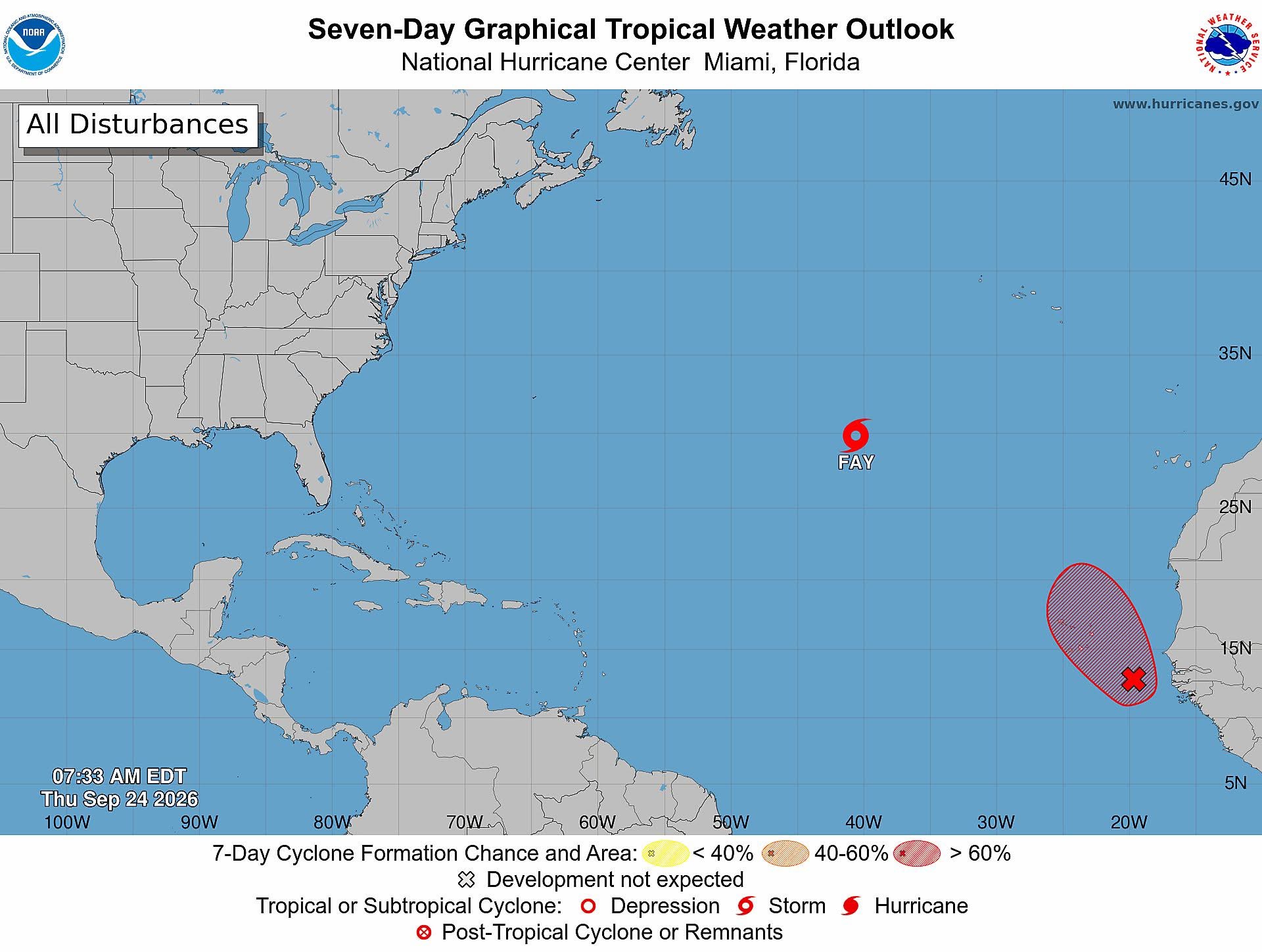
    The U.S. National Hurricane Center (NHC) has upgraded its probability forecast for a developing tropical system in the far eastern Atlantic, now estimating a 70% chance that the disturbance will strengthen into either a tropical depression or a named tropical storm. In its official 8 a.m. public update issued Thursday, forecasters outlined that the broad low-pressure system, identified by the designation AL90, is currently positioned several hundred miles south-southeast of the Cabo Verde Islands. At present, the system generates a wide, disorganized spread of showers and convective thunderstorm activity across the surrounding region.

    Per NHC forecasting models, AL90 is projected to track northwestward, eventually shifting to a more northward path over the coming days. This trajectory will bring the system close enough to the Cabo Verde Islands to bring unsettled weather to parts of the archipelago by Friday. The 48-hour and seven-day formation probabilities for the system both sit at 70%, marking a 10 percentage point increase from the 60% odds published in the NHC’s 2 a.m. outlook earlier Thursday.

    Despite the elevated chance of early formation, NHC forecasters note that unfavorable atmospheric conditions will halt the system’s strengthening by the weekend. Increasing wind shear in the upper levels of the atmosphere is expected to tear the system apart, limiting any further organized development after that point. While the system is not expected to last long, local authorities and residents across the Cabo Verde Islands have been urged to stay updated on the latest forecasts. The disturbance is projected to bring gusty winds, intense downpours, and a heightened risk of flash flooding to portions of the island chain starting as early as Friday.

    As of the latest Thursday update, AL90 remains far out in the eastern tropical Atlantic. The NHC’s current assessment confirms that there is no immediate threat to the island nation of Antigua and Barbuda, nor to any areas in the northeastern Caribbean. Forecasters will continue to issue regular updates and track the system’s movement and development closely as it progresses across the Atlantic basin.

  • Provisional List of the 9 Candidates Registered for the Presidency in Haiti

    Provisional List of the 9 Candidates Registered for the Presidency in Haiti

    On September 23, 2026, Haiti’s Provisional Electoral Council (CEP) released its first provisional roster of registered candidates for the country’s upcoming December 2026 presidential election, revealing nine names that have completed initial registration — while leaving the much-anticipated candidacy of former Haitian president Michel Martelly in administrative limbo, amid ongoing questions over whether international sanctions will disqualify his bid under new electoral rules.

    The nine candidates that appear on the published preliminary list are Claude Joseph of Les engagés pour le Développement, Ricardo Jean-Pierre of Parti Nationaliste Haïtien, Gary Bodeau of PLATFÒM REKONSILYE, Wilson Jeudy of Vision-Action-Réalisation, Wilner Joseph of VIKTWA, Jocelerme Privert of AYITI TRANSFOME, Maxo Joseph of Réveil des Citoyens Haitiens, Munir Joseph Mourra of Mobilisation pour le Progrès d’Haïti, and Gandhy Dorfeuille of Ansanm Nou Fò. All nine have completed initial paperwork to appear on the roster, but CEP officials stress that the entire list remains provisional, with full eligibility still pending completion of rigorous compliance checks.

    CEP teams are currently conducting deep dives into the physical documentation submitted by each prospective candidate, with two key eligibility criteria under review: confirmation that each candidate meets constitutional requirements for the presidency, and verification that each candidate’s political party has secured the required 30,000 registered affiliated members. No candidate will receive final official approval until this verification process is concluded.

    Martelly, whose candidacy has dominated pre-election speculation, does not yet appear on the published list. CEP confirmed that the former president submitted his registration just one day before the preliminary list was released, and the council’s digital administrative systems require additional time to process, validate, and update the new entry alongside other applications.

    The delay in processing Martelly’s registration is not the only barrier his candidacy faces, however. Under a 2026 electoral decree, any individual subject to United Nations Security Council sanctions is barred from qualifying as a candidate. While Martelly is not currently named to the UN Security Council’s sanctions list, he faces sweeping unilateral sanctions from multiple Western governments and major international blocs over allegations of criminal activity and ties to Haitian armed gangs.

    The UN Panel of Experts on Haiti first publicly linked Martelly to gang activity in an October 2023 official report, which accused the former president of funding and backing armed gangs to expand his personal political influence. Canada became the first nation to impose direct sanctions on Martelly in November 2022, targeting him over allegations of corruption and gang financing. In August 2024, the United States government added Martelly to its sanctions list, citing his alleged role in transnational cocaine trafficking, money laundering, and continued support for violent gangs. Most recently, in December 2025, the European Union Council added Martelly to its sanctions blacklist, imposing an asset freeze and global travel ban over his proven complicity in organized gang violence.

    Haitian legal analysts are now at the center of a growing national debate over whether these international sanctions and expert findings meet the legal threshold to disqualify Martelly under the 2026 electoral decree’s requirements for candidate probity and moral integrity. The CEP’s upcoming ruling on Martelly’s eligibility has emerged as the most contentious and closely watched issue in the lead-up to the December vote, with major implications for the legitimacy of Haiti’s electoral process as the country works to emerge from years of political and security crisis.

  • Halo donates to GN Trust for student-athletes scholarships in UK

    Halo donates to GN Trust for student-athletes scholarships in UK

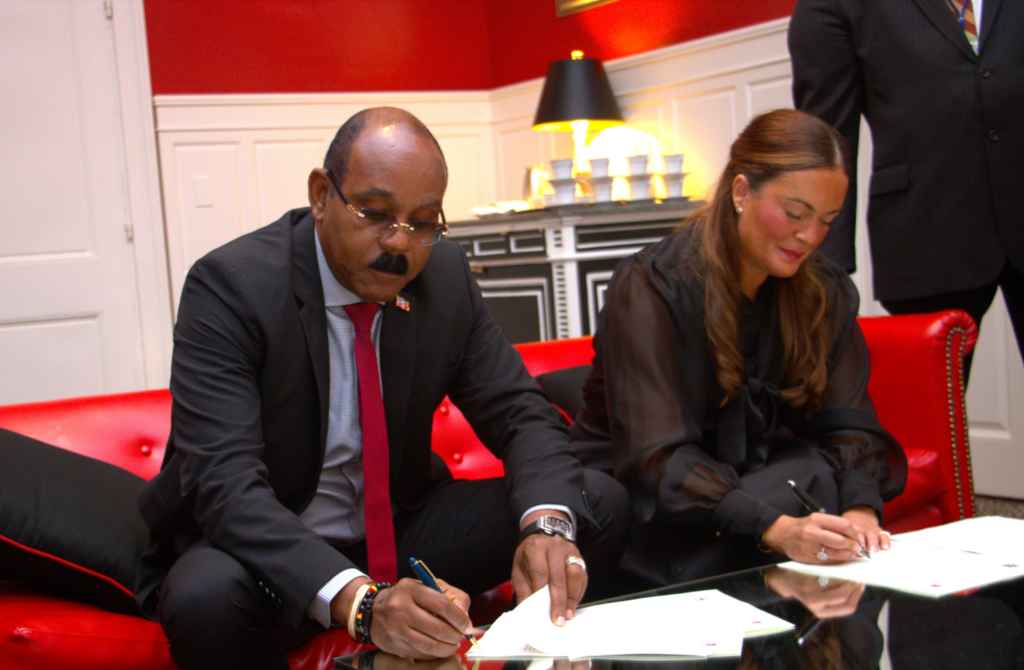
    In a formal ceremony held at Government House on Wednesday, the Halo Foundation, led by its founder Her Excellency Lady Sandra Williams, has handed over an $18,000 contribution to Ricky Santos, president of the GN Trust, to expand access to life-changing educational and athletic opportunities for emerging young Antiguan sportspeople.

  • Rize & Whine and Tipsy Music Festival teams to curate WCMF 2026 VIP experience

    Rize & Whine and Tipsy Music Festival teams to curate WCMF 2026 VIP experience

    As one of the Caribbean’s most anticipated annual celebrations of Creole-rooted music, the 26th World Creole Music Festival (WCMF) has announced a new collaboration to transform its premium guest experience for the 2026 edition. Scheduled to run October 23 through 25 at Dominica’s Windsor Park Sports Stadium in the capital city of Roseau, the festival has selected the production teams behind two beloved regional events — Dominica’s Rize & Whine and Barbados’ Tipsy Music Festival — to lead the design and execution of its all-new VIP and VVIP hospitality offerings.

    The partnership aims to deliver a far more immersive premium experience than previous editions, blending world-class live entertainment with elevated hospitality, locally infused culinary programming, curated beverage options, and even wellness-focused amenities. Structured as a two-tiered offering to match different guest preferences, both VIP and VVIP ticket holders will access exclusive perks tailored to enhance their entire festival stay. All premium guests will benefit from dedicated fast-track entrance lanes, unobstructed premium viewing areas close to the main stage, private premium bar service, reserved on-site parking, upgraded clean restroom facilities, curated culinary experiences, and trained professional hospitality staff on call throughout the event.

    A standout addition for all premium ticket holders is a custom shot station that honors Dominica’s longstanding cultural tradition of infusing local rum with homegrown herbs, native roots, and tropical seasonal fruits. Guests will also have access to branded photo activation zones to capture their festival experiences, plus a range of additional interactive pop-up events running across the three nights of the festival.

    Malcolm Pendenque, a lead producer on the project, shared that the team’s core focus is crafting a seamless, memorable experience from the moment guests arrive on-site through their final exit after the final performance each night. “We’re not just adding extra seats — we’re building a full premium experience that complements the incredible music lineup,” Pendenque noted.

    VVIP ticket holders will unlock an expanded set of exclusive amenities to set their experience apart. Highlights include live chef demonstration and serving stations featuring fusion dishes drawing on culinary traditions from Dominica, Trinidad and Tobago, and Jamaica, plus on-site spa and grooming services for guests looking to relax between sets. VVIP guests will also enjoy access to top-shelf premium spirits and vintage champagne, one-on-one personalized hospitality assistance, extra spaced-out premium seating, a covered air-conditioned food court to escape tropical heat, a private dedicated VVIP photo area, and a convenient shoe drop-in valet service.

    The two production teams bring years of regional events experience to the collaboration: Rize & Whine, based in Dominica, has built a reputation for immersive food and music events since its founding in 2019, while Barbados’ Tipsy Music Festival has been a staple of the eastern Caribbean events calendar since launching in 2013.

    The 2026 WCMF is set to showcase a diverse lineup of talent spanning multiple Creole-influenced and popular Caribbean genres, including bouyon, reggae, soca, dancehall, kompa, and amapiano, with a mix of homegrown Dominican artists, top regional acts, and globally recognized international performers. Already announced headliners and featured acts include Grammy Award-winning R&B star Ne-Yo, soca icon Machel Montano, reggae legend Maxi Priest, leading dancehall artists Alkaline and Skillibeng, South African amapiano trailblazer Uncle Waffles, roots reggae icon Capleton, and fast-rising R&B star Fridayy.

    VIP and VVIP tickets are available for purchase now exclusively through the official Dominica Festivals online ticketing platform. Event organizers have encouraged attendees planning to attend the three-night festival to book accommodation and arrange travel well in advance to secure preferred arrangements ahead of the popular event.

  • CAF grants US$200k for resilient housing standards

    CAF grants US$200k for resilient housing standards

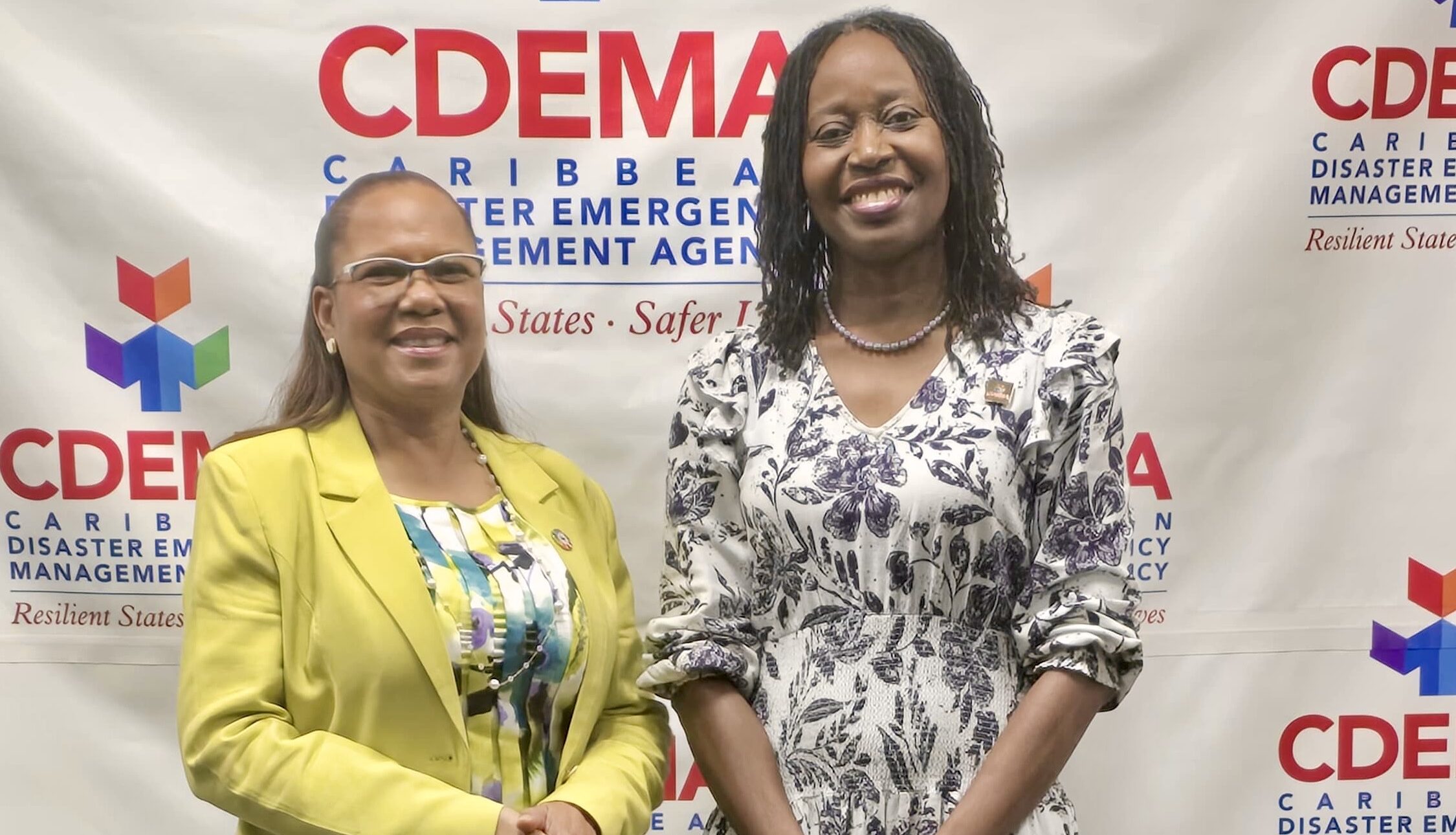
    The Caribbean, long recognized as one of the globe’s most high-risk regions for natural hazards, is set to receive targeted support to improve its residential safety standards, after the Development Bank of Latin America and the Caribbean (CAF) greenlit a $200,000 technical assistance grant for the Caribbean Disaster Emergency Management Agency (CDEMA).

    For decades, frequent extreme weather events including devastating tropical cyclones, flash floods, catastrophic landslides, and unforeseen seismic activity have destroyed residential neighborhoods, uprooted communities, and set back years of hard-won economic progress across the Caribbean’s small developing island nations. Unlike reactive post-disaster reconstruction efforts, this new 18-month initiative, the Regional Resilient Residential Construction and Reconstruction Project, prioritizes proactive risk reduction to strengthen the region’s existing housing stock, prevent preventable loss of life, protect personal property, and speed up social and economic recovery following future extreme events.

    Built on the foundation of CDEMA’s existing Safer Building Programme, the project centers its work on the people and institutions that shape local construction practices across the region. Unlike large-scale infrastructure projects that focus only on physical builds, this initiative targets human capacity: technical assistance will directly reach local builders, trade artisans, independent construction contractors, and Technical and Vocational Education and Training (TVET) institutions across 19 Caribbean member states. Through hands-on targeted training and updated educational materials, the program will upskill current tradespeople in climate-resilient construction techniques, while supporting vocational colleges to integrate the region’s official Regional Code of Practice for Residential Construction into their permanent core curricula, creating long-term systemic change.

    Beyond upskilling trade professionals, the initiative also aims to embed a culture of disaster preparedness across all layers of Caribbean society. A core component of the grant will fund public and institutional awareness campaigns to highlight the life-saving value of resilient housing standards. By engaging homeowners, local mortgage lenders, property developers, and national government policymakers, the project seeks to drive widespread adoption of certified, safer building practices for both public sector housing developments and private residential construction.

    Dr. Stacy Richards-Kennedy, CAF’s regional manager for the Caribbean, emphasized that proactive risk management delivers far greater long-term value than post-disaster recovery. “Rebuilding after a disaster will always be necessary, but preparing before one strikes is where we can make the greatest difference,” she explained. “Resilience begins with the way residential infrastructure is designed and built. This aligns with CAF’s commitment to invest not only in resilient infrastructure projects, but also in knowledge, technical capacity and practices that will serve to reinforce a culture of disaster preparedness across the Caribbean. CAF is proud to partner with CDEMA and to provide technical assistance grant funding to support this important project to build more resilient communities.”

    CDEMA Executive Director Elizabeth Riley echoed this focus on pre-emptive investment, noting that repeated climate disasters have underscored the urgent need to build local capacity to protect the region’s hard-won socio-economic development. “Every disaster reminds us that resilience is not built in the aftermath of an event, but through the decisions we make before it occurs,” Riley said. “Strengthening the way our homes and communities are designed and built is therefore a critical investment in protecting lives, livelihoods and our development gains.”

    Riley also highlighted the critical role of cross-institutional partnerships in advancing long-term climate adaptation and regional safety. “CDEMA is pleased to be working with CAF to address these challenges by strengthening resilient construction practices, building technical capacity and promoting greater disaster preparedness across the Caribbean,” she said. “Partnerships such as this are critical to ensuring that our communities are better prepared to withstand the impacts of disasters and that the region’s development gains are protected.”

  • Antigua and Barbuda, Octopus Energy Explore Ways to Cut Electricity Bills and Fuel Imports

    Antigua and Barbuda, Octopus Energy Explore Ways to Cut Electricity Bills and Fuel Imports

    Against a backdrop of accelerating climate change and growing global pressure to end fossil fuel dependency, a landmark new partnership between U.K.-based energy innovator Octopus Energy and the government of Antigua and Barbuda has launched to reimagine the Caribbean nation’s energy future. Unveiled during the Global Citizen NOW: Impact Session held alongside New York Climate Week, the collaboration sets out to deliver a cleaner, more affordable, and far more resilient energy system for the country’s residents by leveraging cutting-edge smart renewable technology.

    At the core of the joint initiative is a shared goal to cut Antigua and Barbuda’s longstanding reliance on costly imported fossil fuels, by integrating four key clean energy pillars: utility and residential solar power, utility-scale and distributed battery storage, widespread electric vehicle adoption, and flexible, intelligent demand management. What makes the partnership particularly distinct is Octopus Energy’s deep expertise in Virtual Power Plants (VPPs) — a groundbreaking smart energy system that networks decentralized clean energy assets, from rooftop solar panels and home battery banks to electric vehicles, to operate as a single coordinated energy resource that stabilizes grid stress and cuts consumer costs.

    Octopus Energy already operates one of the world’s largest VPP networks, connecting and optimizing nearly 500,000 individual energy devices across its existing markets. The combined capacity of this network is roughly equivalent to the output of three full-sized nuclear power stations, demonstrating the scalable impact of the technology the firm will bring to the Caribbean.

    For Antigua and Barbuda, this partnership is far more than an energy project: it is a critical step toward delivering the nation’s ambitious climate and energy targets. The country has committed to sourcing 86% of its total electricity from renewable sources and requiring all new car sales to be electric by 2030, goals that require targeted technical expertise and innovative partnership to achieve. As a small island developing state (SIDS), Antigua and Barbuda faces a unique dual crisis: it is on the front lines of climate change impacts including rising sea levels and more intense extreme weather, even as its economy and energy system remain hostage to volatile global fossil fuel markets that keep household energy costs artificially high. Expanding locally generated renewable energy directly addresses both challenges simultaneously, boosting energy security while cutting the country’s carbon footprint.

    Gaston Browne, Prime Minister of Antigua and Barbuda, emphasized the stakes of the transition for his nation in remarks following the announcement. “For Small Island Developing States such as Antigua and Barbuda, the transition to renewable energy is both an environmental imperative and an economic necessity,” Browne said. “Our continued dependence on imported fossil fuels exposes our people and businesses to high and volatile energy costs, while climate change poses an existential threat to our development.”

    He added that the collaboration with Octopus Energy opens the door to practical, integrated solutions that combine renewable generation, electric mobility, storage, and smart technology to deliver tangible benefits. “Antigua and Barbuda has set an ambitious course towards a cleaner and more sustainable energy future. We welcome partnerships that bring innovation, investment and proven technology to help translate that ambition into measurable benefits for our citizens,” Browne said. “Our objective is clear: to build a modern, resilient and increasingly renewable energy system that delivers cleaner and more affordable power while demonstrating that small island states can lead the global energy transition.”

    The partnership will hit its first milestone well ahead of broader energy planning, with Octopus Energy’s electric vehicle division set to supply a fleet of electric vehicles for the 2026 Commonwealth Heads of Government Meeting (CHOGM), which Antigua and Barbuda will host in its capital St. John’s from 1–4 November that year. The event will serve as a live demonstration of the country’s commitment to electric mobility and clean energy for international audiences.

    Zoisa North-Bond, CEO of Octopus Energy Generation, noted that the collaboration fills a critical gap for climate-vulnerable small island nations that have long been overlooked in the global clean energy transition. “By partnering with Antigua and Barbuda, we’re exploring how clean power and technology can help address the unique energy challenges small islands face,” North-Bond said. “Our goal is simple: people everywhere should benefit from the lower costs that renewables and smart tech offers. Together, we hope to build an implementable plan to reduce reliance on fossil fuels and build a more resilient energy system.”

    Global Citizen, which organized the impact session that brought the two parties together, hailed the partnership as a model for how cross-sector collaboration can deliver tangible progress for SIDS. Michael Sheldrick, Co-Founder and Chief Policy, Impact and Government Relations Officer at Global Citizen, said small island states should never be forced to choose between affordable energy for their residents and climate resilience. “This partnership demonstrates the practical coalition needed to deliver both: government leadership, Octopus Energy’s technology and delivery expertise, and Global Citizen’s ability to convene partners and mobilize action,” Sheldrick said. “Beginning with electric mobility at CHOGM and building towards a smarter, locally powered energy system, Antigua and Barbuda can create a model with relevance far beyond its shores.”

    The Antigua and Barbuda partnership is part of Octopus Energy Generation’s broader global expansion strategy, which increasingly prioritizes expanding renewable energy access, attracting clean energy investment, and unlocking economic opportunity in emerging and developing markets. Through the firm’s Power Africa Initiative, Octopus has set a target to catalyze $450 million in new clean energy investment across the African continent. The company is also currently developing Sierra Leone’s first ever utility-scale wind farm on climate-vulnerable Sherbro Island, in partnership with actor and activist Idris Elba’s Elba Hope Foundation. The project will bring reliable, affordable clean power to thousands of currently underserved households and local businesses.