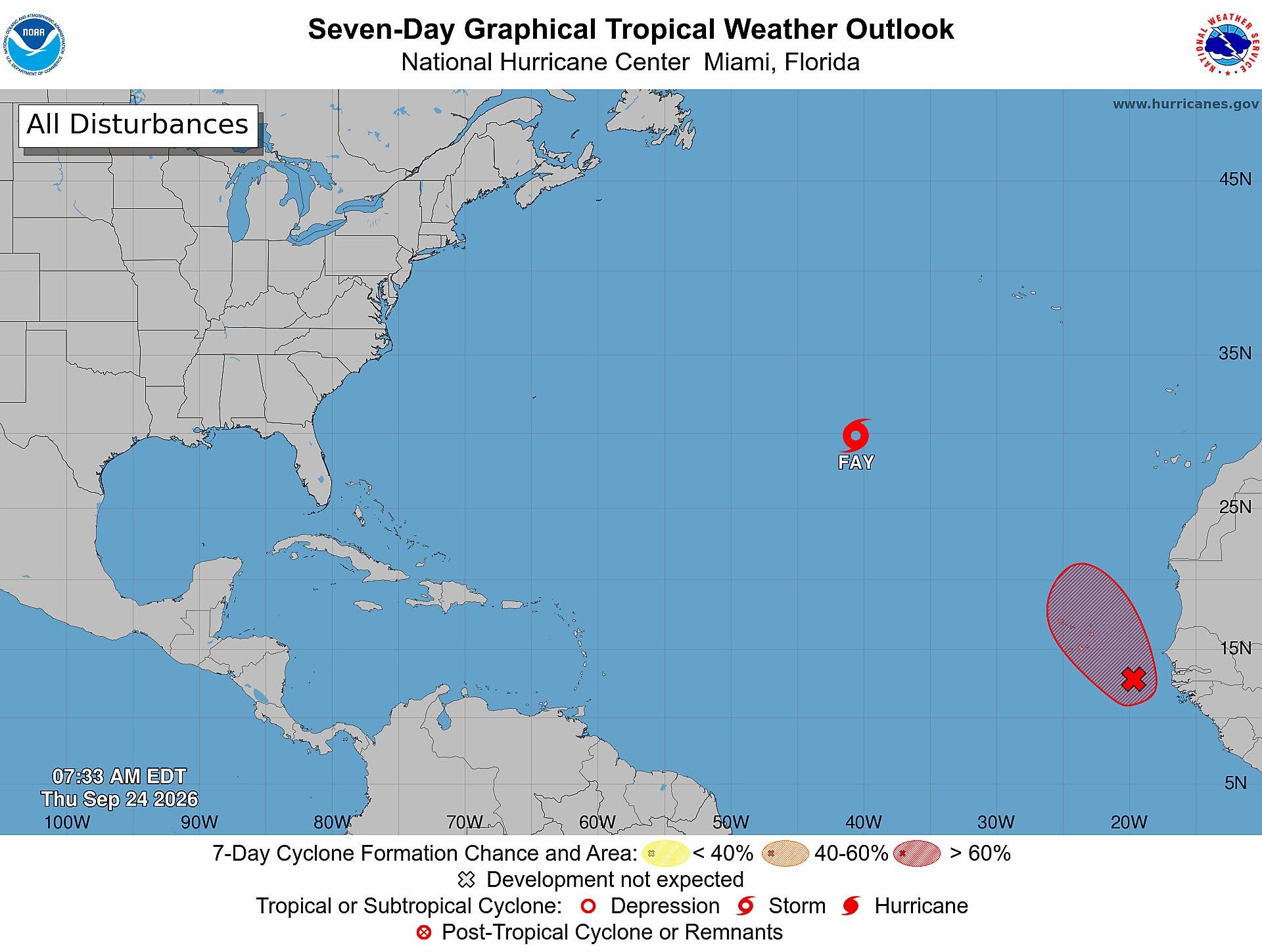
The U.S. National Hurricane Center (NHC) has upgraded its probability forecast for a developing tropical system in the far eastern Atlantic, now estimating a 70% chance that the disturbance will strengthen into either a tropical depression or a named tropical storm. In its official 8 a.m. public update issued Thursday, forecasters outlined that the broad low-pressure system, identified by the designation AL90, is currently positioned several hundred miles south-southeast of the Cabo Verde Islands. At present, the system generates a wide, disorganized spread of showers and convective thunderstorm activity across the surrounding region.
Per NHC forecasting models, AL90 is projected to track northwestward, eventually shifting to a more northward path over the coming days. This trajectory will bring the system close enough to the Cabo Verde Islands to bring unsettled weather to parts of the archipelago by Friday. The 48-hour and seven-day formation probabilities for the system both sit at 70%, marking a 10 percentage point increase from the 60% odds published in the NHC’s 2 a.m. outlook earlier Thursday.
Despite the elevated chance of early formation, NHC forecasters note that unfavorable atmospheric conditions will halt the system’s strengthening by the weekend. Increasing wind shear in the upper levels of the atmosphere is expected to tear the system apart, limiting any further organized development after that point. While the system is not expected to last long, local authorities and residents across the Cabo Verde Islands have been urged to stay updated on the latest forecasts. The disturbance is projected to bring gusty winds, intense downpours, and a heightened risk of flash flooding to portions of the island chain starting as early as Friday.
As of the latest Thursday update, AL90 remains far out in the eastern tropical Atlantic. The NHC’s current assessment confirms that there is no immediate threat to the island nation of Antigua and Barbuda, nor to any areas in the northeastern Caribbean. Forecasters will continue to issue regular updates and track the system’s movement and development closely as it progresses across the Atlantic basin.