博客

  • Straw vendors face income loss during Bay Street Market closure, urge better communication for future maintenance

    Straw vendors face income loss during Bay Street Market closure, urge better communication for future maintenance

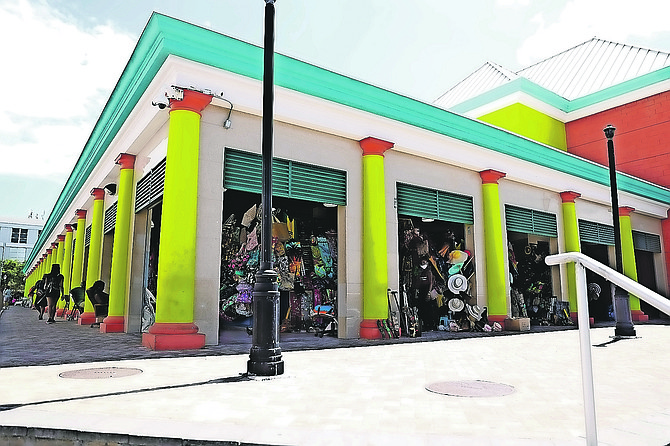
    Nassau, Bahamas – A routine 48-hour closure of the iconic Bay Street Straw Market for annual maintenance and deep cleaning has sparked financial strain for local straw vendors, who warn the shutdown is cutting into critical earnings during an already sluggish sales season. What’s more, many sellers lost additional working days to the pre-closure work of preparing their stalls, compounding the financial blow.

    Rebecca Small-Morley, president of the Straw Business Persons Society, explained that while vendors received roughly 30 days’ advance notice of the shutdown, which runs across Wednesday and Thursday, the timing still poses a major hardship for workers who rely entirely on daily in-person sales to make ends meet. The market is scheduled to resume regular operations at 7 a.m. on Friday.

    The Straw Market Authority, the governing body that oversees the popular tourist-focused market, has defended the two-day closure, arguing that full-scale deep cleaning, structural repairs, and routine maintenance work cannot safely be completed while the market is open to shoppers. Executive Chairman Joseph Johnson emphasized in an official statement that the shutdown is necessary to complete “essential work” to uphold a safe, hygienic environment for vendors, market staff, and the thousands of tourists that visit the site annually.

    Small-Morley clarified that vendors do not push back on the need for cleaning and upkeep; their complaint centers on the disruptive scheduling of the work, and they are calling for administrative changes to minimize future income losses. Initially, the authority required vendors to remove all of their merchandise from the market entirely, a demand that Small-Morley and the Straw Advancements Association pushed back against. Small-Morley cited a past incident where one vendor moved all her products off-site, only for heavy rain to damage a portion of her stock, leaving her to cover unexpected extra costs for transportation and labor to relocate the goods. After negotiations, vendors reached a compromise to move all stock off the floor and store it inside their individual stalls, eliminating the need for full off-site removal.

    Looking ahead, Small-Morley is advocating for alternative scheduling for future maintenance work. She proposed that routine cleaning be completed after vendors end their daily shifts or during quiet evening hours, with more specialized, large-scale work scheduled separately on an as-needed basis to avoid full shutdowns. “I’m hoping that they could hire people going forward who could come in and do cleaning at a certain point where we wouldn’t have to be disrupted any longer from any income, especially during the low season,” she said in an interview.

    Small-Morley noted that even meager daily earnings make a huge difference for vendors during the slow sales period. “I got a vendor who said I made $30 one day. The next day, I made $40,” she shared. “I’m just saying, if she needed to buy lunch, she still could buy lunch. That may not be much, but it’s something coming in.” The shutdown hits especially hard for low-income vendors who do not have substantial emergency savings to cover gaps in income. “Let’s face it, an average person doesn’t have $1,000 in their savings account to say, we have a week off; that’s not an average person,” she added.

    In a silver lining, the market’s closure coincides with a new initiative to support vendors: the Ministry of Culture, Arts and Heritage is hosting its first-ever vendor empowerment session on the second day of the shutdown, with two sessions offered to accommodate different schedules: one from 10 a.m. to 1 p.m. and a second from 5 p.m. to 8 p.m. Small-Morley confirmed that any vendor who attends the session will receive a one-week rent discount for their stall, and the event will also include a listening session where vendors can voice concerns and share suggestions for the market’s future management.

    Despite this positive step, Small-Morley flagged ongoing communication gaps between vendors and the newly appointed Straw Market Authority board. She explained that while vendors have seen the names of new board members, they have not received formal introductions, nor have they been briefed on the board’s strategic plans for the market. “You don’t know who is who, and that’s a problem because I feel that you should introduce yourself to the two leaders of the market,” she said. “Give us your game plan, ask us what we are expecting or looking forward to from the new board, but nothing of that nature has happened.” Small-Morley added that the timing of the new board’s appointment has not been publicly shared with vendors, and poor communication remains a persistent systemic issue at the market. She has called on the new board to establish clear, consistent lines of communication with vendors and their elected representatives.

    Small-Morley also addressed recent public speculation that the two-day closure was timed to coincide with the upcoming royal visit of King Charles III, telling reporters that she has received no official information linking the shutdown to the trip, and the speculation is unfounded.


  • MIREX urges caution over job offers sending Dominicans to Russia

    MIREX urges caution over job offers sending Dominicans to Russia

    Santo Domingo, Dominican Republic – In an official public advisory released September 24, the Dominican Ministry of Foreign Affairs (MIREX) has issued an urgent warning to the nation’s citizens about fraudulent job recruitment schemes that falsely promise civilian employment in Russia, before funneling recruits into military service amid the ongoing Russia-Ukraine conflict.

    The foreign ministry’s guidance comes in response to a growing number of formal complaints from Dominican nationals who have fallen victim to the deceptive operations. Recruiters typically operate entirely through online platforms or unvetted third-party intermediaries, luring job seekers with attractive work offers that require international travel to Russia. Once recruits arrive in the country, they are coerced or misled into signing military contracts and deployed to active frontline combat zones in Ukraine, according to survivor accounts.

    One high-profile case that has brought national attention to the scam involves 28-year-old Juan Carlos Ávila Espaillat, a native of Higüey, Dominican Republic. Ávila Espaillat told reporters he traveled to Russia earlier this year after accepting what he believed was a legitimate civilian job offer. He only realized the true nature of the arrangement after being pressured to sign a military contract and shipped to the frontlines against Ukraine. The young man later shared graphic video footage from a Russian military hospital, where he was recovering from severe leg injuries sustained in a combined attack involving drones and landmines. His story has become a central example of the deadly risks posed by these fraudulent recruitment networks.

    In its formal statement, MIREX urged Dominican citizens to exercise extreme vigilance when evaluating any international job offer, especially those that come through unconfirmed online channels or brokers with no verifiable professional credentials. The ministry outlined clear steps for job seekers to protect themselves: all applicants must independently verify the source of any employment offer, confirm the legal identity of the hiring organization, and review every term of a proposed contract in full before making travel arrangements or signing any binding documentation. The advisory repeated its recommendation that Dominicans complete full background checks on both job opportunities and the parties facilitating them before agreeing to travel internationally.

    For citizens who have already fallen for the deceptive offers and found themselves trapped in high-risk or vulnerable situations abroad, MIREX confirmed it will extend full consular support to assist with resolving their cases and securing safe return where possible.

  • Abinader pledges government support for Dominican Historical and Cultural Museum in New York

    Abinader pledges government support for Dominican Historical and Cultural Museum in New York

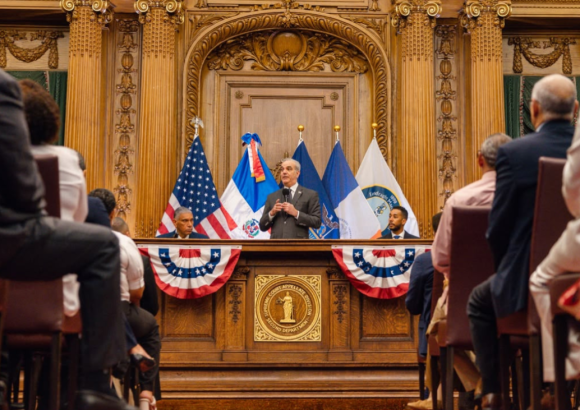
    During an official visit to New York City on Friday, Dominican Republic President Luis Abinader announced his administration will explore all viable pathways to support the long-delayed completion of the Dominican Historical and Cultural Museum, a landmark project focused on preserving and celebrating the deep history and far-reaching cultural contributions of Dominican communities across the United States.

    While touring the project’s proposed site, President Abinader requested that U.S. Congressman Adriano Espaillat and the museum’s core management team share full project blueprints, design schematics, and a detailed financial breakdown of remaining resources required to wrap up construction and launch operations. He framed the initiative as a transformative undertaking with profound historical, educational, and economic value for both the Dominican diaspora and the broader New York community, confirming his government will conduct a thorough review of all possible support mechanisms.

    “Share with us your full requirements, and my administration will coordinate with you and Congressman Espaillat to identify how we can bring this project across the finish line,” Abinader told the leadership team overseeing the multi-decade effort.

    Congressman Espaillat, who first introduced the idea for the museum more than 20 years ago, emphasized the institution’s critical significance to the hundreds of thousands of Dominicans who call New York home. The museum will be sited in Upper Manhattan’s Inwood neighborhood, a neighborhood located within the area officially designated as the Dominican District on the Federal Register of Historic Districts. Espaillat noted that the region already hosts the densest concentration of Dominican residents in the U.S., with an estimated 500,000 people of Dominican origin residing across western Bronx and Upper Manhattan alone.

    After Espaillat first proposed the project, the Institute of Dominican Studies adopted the initiative, with the mission of building a permanent public institution dedicated to centering Dominican history and culture in the United States. The project has secured long-term institutional backing from the City University of New York (CUNY), and is being developed to operate as a university-affiliated public museum.

    To date, project organizers have raised approximately $38 million in funding from a mix of local, state, and federal government sources and elected representative initiatives in New York. The completed facility will house five distinct exhibition halls, each dedicated to exploring different chapters and themes of Dominican history and cultural expression.

    A core permanent feature of the museum will be an ongoing oral history project, which will collect and archive first-person testimonies from Dominican migrants who built families, community institutions, and cultural hubs across the United States. Additional planned amenities include a Spanish-language children’s library designed to preserve linguistic heritage for younger generations, dedicated exhibit spaces for Dominican baseball and sports, and galleries highlighting Dominican music and other traditional cultural practices.

    Ultimately, organizers say the museum will fill a long-standing gap in public cultural representation, giving younger generations of Dominicans born in New York and across the United States the opportunity to connect with their ancestral roots and learn about the foundational contributions earlier generations made to both diaspora communities and American society at large.

  • Dominican Republic reaffirms commitment to inclusive, sustainable development at UN

    Dominican Republic reaffirms commitment to inclusive, sustainable development at UN

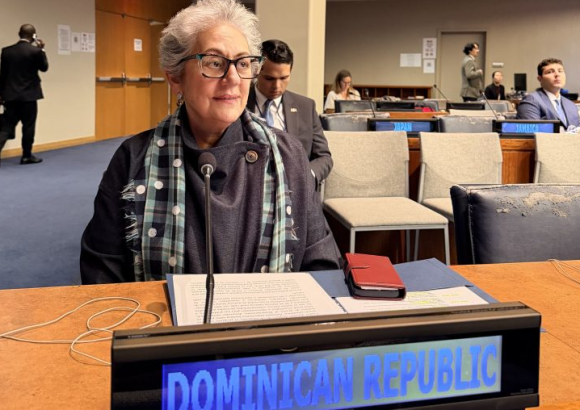
    During a landmark high-level gathering at the United Nations commemorating four decades since the adoption of the Declaration on the Right to Development, the Dominican Republic has publicly reaffirmed its unwavering dedication to upholding the fundamental right to development for all people. The nation also used the platform to urge the global community to adopt inclusive, sustainable development frameworks that prioritize human well-being in public policy, while accounting for the unique socioeconomic and structural contexts of individual nations.

    Delivering the Dominican Republic’s official position to attendees was Vilma Arbaje de Contreras, Vice Minister of Foreign Affairs for Economic Affairs and International Cooperation. In her address, she drew global attention to deep, long-standing inequities that continue to divide the international community, pointing out persistent gaps between developed and developing nations in access to development financing, functional institutional growth, cutting-edge technology, and equitable economic opportunity. She further noted that many developing economies face amplified exposure to systemic risks, from the accelerating impacts of climate change to a rapidly shifting, increasingly complex global geopolitical and economic landscape that exacerbates existing vulnerabilities.

    Arbaje de Contreras called for a fundamental reevaluation of how the global community approaches development progress and access to international support. She argued that the international system must move beyond overreliance on traditional narrow economic metrics, and instead integrate measurements of national vulnerability, adaptive resilience, and institutional capacity into criteria for accessing global cooperation and development financing.

    To illustrate its commitment to this people-first development vision, the Dominican Republic highlighted its own long-term domestic development agenda: the National Development Strategy and Meta RD 2036. This ambitious initiative outlines a clear roadmap to transform the nation’s economy by 2036, with core targets including doubling the country’s real gross domestic product, eradicating extreme poverty, tripling the average national salary, and generating an estimated 1.7 million new formal jobs. The overarching end goal of the strategy is to lift the Dominican Republic to developed-country status.

    In closing, Arbaje de Contreras emphasized that traditional global development rankings, which are almost exclusively based on per-capita income, often fail to capture the full scope of structural challenges and inherent vulnerabilities that small and developing economies like the Dominican Republic navigate on a daily basis. This outdated measurement approach, she argued, can distort understanding of a country’s actual development needs and hinder access to critical international support.

  • Dominican Republic heads to Argentina as Guest of Honor at FIT Latin America 2026

    Dominican Republic heads to Argentina as Guest of Honor at FIT Latin America 2026

    Fresh off a successful appearance at Paris’ leading international tourism exhibition, the Dominican Republic is shifting its focus to the next major industry gathering, with tourism officials gearing up for a high-profile turn as Guest of Honor at the 30th edition of FIT Latin America 2026 in Buenos Aires. Dominican Tourism Minister David Collado has confirmed the country’s delegation is already en route to Argentina for the four-day event, which will run from September 26 to 29 at the iconic La Rural exhibition center.

    As the honored guest nation, the Dominican Republic will claim a sprawling 400-square-meter dedicated pavilion in the event’s international exhibition zone, designed to immerse visitors in the full breadth of the country’s diverse tourism offerings. Attendees will get an up-close look at everything from the Dominican Republic’s world-famous white-sand Caribbean beaches and vibrant local gastronomy to its rich musical traditions, handcrafted artisanal goods, centuries-old cultural heritage, and one-of-a-kind travel experiences that cater to every type of traveler.

    More than 35 private-sector stakeholders will join the official national delegation, spanning major hotel groups, boutique accommodation providers, and specialized tourism experience companies that operate across the country. The delegation’s core agenda for the event centers on three key priorities: unlocking new cross-border business partnerships, amplifying the Dominican Republic’s profile as a top global travel destination, and expanding and strengthening international air connectivity between the country and regional and global markets.

    Hosted in Argentina’s capital, FIT Latin America 2026 will occupy more than 20,000 square meters of total exhibition space, making it one of the largest regional tourism industry gatherings of the year. To accommodate both public interest and professional networking, event organizers have structured the schedule to welcome general leisure travelers on the first two days, September 26 and 27, while reserving the final two days, September 28 and 29, exclusively for B2B meetings and engagements among tourism industry professionals.

    This high-stakes participation in FIT Latin America is not an isolated appearance: it forms a core part of the Dominican Ministry of Tourism’s long-term, global promotion strategy, which aims to solidify the country’s reputation as a must-visit travel destination among travel industry leaders, tour operators, and tourism businesses across the Latin American region. The strategy builds on the momentum from recent international exhibitions, continuing the country’s steady push to expand its tourism market share and attract more international visitors from across the globe.

  • Brooklyn declares September 24 Dominican Pride Day during Abinader’s visit

    Brooklyn declares September 24 Dominican Pride Day during Abinader’s visit

    During an official working visit to Brooklyn, New York on Thursday, Dominican Republic President Luis Abinader gathered with leaders and members of the city’s large Dominican diaspora community for a historic event that marked a new chapter in ties between the borough and the Caribbean nation.

    The meeting was hosted by Brooklyn Borough President Antonio Reynoso, who used the occasion to make a landmark proclamation: September 24, 2026 will officially be known as Dominican Pride Day in Brooklyn. The designation serves two key purposes: to honor the countless social, economic, and cultural contributions that the Dominican diaspora has made to the borough’s growth and identity, and to commemorate President Abinader’s landmark visit to the community.

    Reynoso, who made history as both the first Dominican and the first Latino to hold the office of Brooklyn Borough President, opened his remarks by celebrating the profound impact of the local Dominican community. He noted that more than 100,000 Dominican residents currently call Brooklyn home, and that their contributions span every sector from small business to public service, arts to education. Reynoso expressed optimism that President Abinader’s visit would create new pathways for collaboration between Brooklyn and the Dominican Republic, unlocking mutually beneficial opportunities for diaspora members on both sides of the border. As part of the event, Reynoso was honored with an award recognizing his commitment to public service and his advocacy for Dominican heritage.

    In his address to the gathered community, President Abinader spoke of his pride in the achievements of Dominicans based in Brooklyn, emphasizing the critical role the diaspora plays in supporting the Dominican Republic’s economic and social development. He thanked community members for their ongoing support of family and friends back home, via consistent remittances, direct investment in local projects, and personal assistance that lifts millions of households out of economic uncertainty.

    The Dominican president also outlined his administration’s ongoing work to improve access to government services for Dominican citizens living abroad. He highlighted ongoing efforts to expand consular service access across the United States and digitize routine government procedures to reduce wait times and bureaucratic friction for the diaspora. Most importantly, Abinader argued that continued progress and economic expansion within the Dominican Republic will deliver the greatest long-term benefits to Dominicans living overseas, strengthening national identity and creating more opportunities for cross-border exchange.

    To illustrate the progress his administration has delivered, President Abinader pointed to major gains across multiple key sectors. He noted that between 2019 and the first half of 2026, the national poverty rate fell sharply from 25.9% to 14.8%. Other key achievements include expanded infrastructure across the country, a resurgent tourism sector that drives job growth, improved energy security and access, new mass transit projects serving urban populations, targeted development of the Pedernales region, and new industrial initiatives in Manzanillo.

    On the public safety front, Abinader confirmed that the Dominican government is continuing to prioritize reducing violent crime, specifically homicides, and implementing comprehensive reform of the National Police to improve accountability and community trust. He also acknowledged that the country, like many across the globe, faces new and emerging challenges, particularly in connection to the rapid development of artificial intelligence and the need to develop adaptive governance frameworks for new technologies.

    In addition to the proclamation of Dominican Pride Day, the event brought major news for Dominican residents in New York: Jesus Vásquez Martínez, the Dominican Consul General in New York, announced that the Dominican Consulate in Brooklyn has received permanent authorization from the U.S. Department of State and is now fully operational. Vásquez Martínez also confirmed that the Dominican Central Electoral Board will maintain an on-site presence at the new Brooklyn consulate, allowing local residents to complete voter registration, update their information, and access other electoral services without traveling to Manhattan.

    Closing out the formal remarks, Reverend Father Jeremías Castillo praised President Abinader’s recent call for a national day of prayer in the Dominican Republic, noting that the initiative aligns deeply with the nation’s long-standing religious traditions and shared cultural history.

    The event capped off a day of meetings between President Abinader and local community leaders, reinforcing the close ties between the Dominican Republic and one of the largest Dominican diaspora communities in the United States.

  • Santo Domingo Book Fair inaugurates Panama, José Mármol and Comics pavilions

    Santo Domingo Book Fair inaugurates Panama, José Mármol and Comics pavilions

    The XXVIII Santo Domingo International Book Fair (FILSD 2026), one of the Caribbean’s most anticipated annual cultural gatherings, marked a key milestone in its 2026 iteration this Thursday with the official inauguration of three distinct pavilions, each bringing unique cultural and literary value to the 11-day event. Leading the opening ceremonies was Roberto Ángel Salcedo, the Dominican Republic’s Minister of Culture, who highlighted the fair’s ongoing mission to celebrate regional literary heritage and foster cross-cultural exchange among neighboring nations.

    As the 2026 edition’s guest of honor country, Panama unveiled a thoughtfully curated pavilion designed to immerse visitors in the nation’s rich cultural identity. The space showcases authentic Panama folklore, traditional handicrafts, and centuries-old cultural traditions that define Panamanian life, offering fair attendees a vivid glimpse into the country’s history and modern cultural landscape. The opening of the Panama pavilion drew senior diplomatic representatives from both nations, including Yira Ramonet, Panama’s Ambassador to the Dominican Republic, and Roberto Salcedo, the Dominican Ambassador to Panama, alongside a host of cultural affairs officials from both sides, underscoring the strong bilateral cultural ties the event seeks to strengthen.

    Alongside the national guest pavilion, FILSD 2026 also debuted a dedicated pavilion honoring José Mármol, this year’s selected honored author. Mármol, a towering figure in contemporary Dominican literary circles, has built a 40-plus-year career as a celebrated poet and essayist, whose work has shaped decades of Dominican literary discourse and earned him recognition as one of the most vital voices in modern Caribbean literature. The pavilion serves as a retrospective of his career, featuring original manuscripts, personal items, and discussions of his most influential works.

    The third newly inaugurated space, the fair’s popular Comic Pavilion, caters to lovers of sequential art, illustration, and contemporary visual culture. As part of its 2026 programming, the pavilion opened with a moving posthumous tribute to Harold Priego, a beloved Dominican cartoonist whose work left an indelible mark on the nation’s comic and visual arts scene. The tribute will run throughout the fair, showcasing a collection of Priego’s most iconic works and celebrating his contributions to the development of Dominican comic culture.

    Scheduled to run from September 24 through October 4 at the centrally located Juan Pablo Duarte Cultural Plaza in Santo Domingo, FILSD 2026 is designed to engage audiences across all age groups, bringing together a diverse program of literary discussions, art exhibitions, workshops, and public cultural events that make literature and the arts accessible to the entire community.

  • Ali urges Permanent Members of UN Security Council to support Rodrigues-Birkett to become next Secretary-General

    Ali urges Permanent Members of UN Security Council to support Rodrigues-Birkett to become next Secretary-General

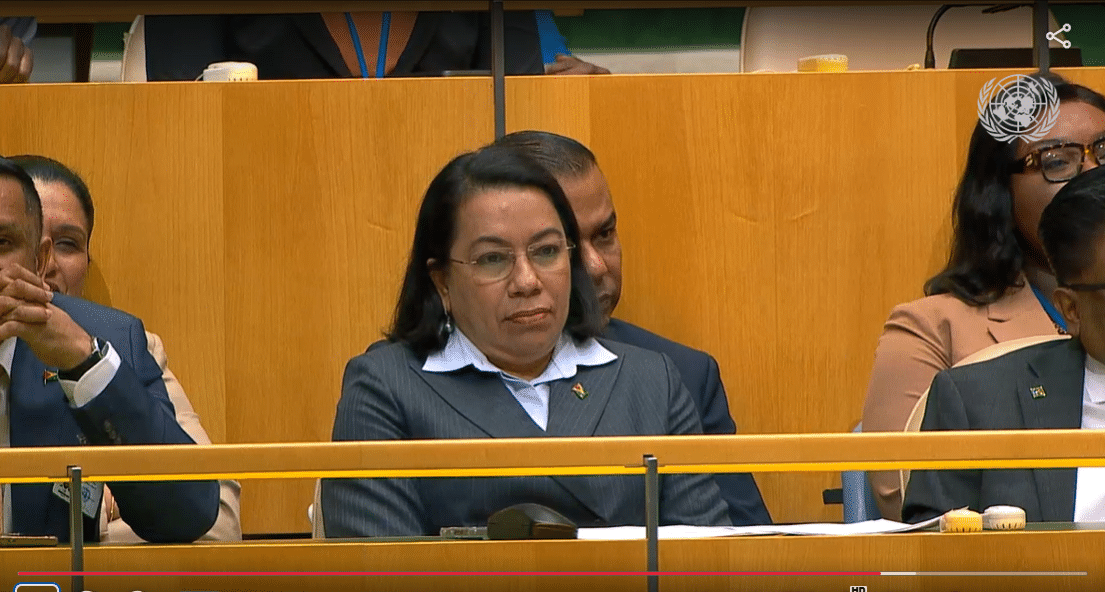
    NEW YORK – September 24, 2026 – Speaking during the 81st session of the United Nations General Assembly, Guyana’s President Irfaan Ali has issued a formal, impassioned appeal to all UN member states and particularly the Permanent Five (P5) members of the UN Security Council to throw their support behind his country’s candidate, Ambassador Carolyn Rodrigues-Birkett, for the post of UN Secretary-General.

    Rodrigues-Birkett, who currently serves as Guyana’s Permanent Representative to the UN and was jointly nominated by Guyana and the Caribbean Community (CARICOM), has previously faced a reported veto from the United States over her characterization of the ongoing crisis in Palestine as genocide. President Ali did not directly address this reported veto during his address, but made a point to explicitly call for support from all P5 members – China, France, Russia, the United Kingdom, and the United States – urging the body to evaluate the nominee on her qualifications rather than geopolitical divisions.

    “The responsibility for recommending the next Secretary General rests in the first instance with the Security Council, and we therefore respectfully place before its members the candidature of Carolyn Rodrigues-Birkett endorsed by the Caribbean Community,” President Ali told the assembled delegates. “We invite all to consider her candidacy on its merits, and to judge whether her vision, experience, expertise, and record can help restore confidence in the United Nations at this critical moment.”

    Rodrigues-Birkett brings deep UN institutional experience to the role, having led Guyana’s delegation during the country’s 2024–2025 term as a non-permanent member of the Security Council. President Ali argued that the UN is currently at a crossroads, marked by growing divides between the Global North and Global South, large and small nations, and developed and developing economies, and that Rodrigues-Birkett’s background uniquely positions her to bridge these gaps.

    “What we need now is leadership capable of restoring trust without compromising principles, of listening without surrendering conviction, of building bridges across the widening chasms between these groups,” President Ali said. “We need a Secretary-General who will defend the Charter not only when it is politically convenient, but precisely when its principles are under pressure.”

    Off-script from his prepared remarks, President Ali highlighted Rodrigues-Birkett’s personal journey as an Indigenous woman from a small village in Guyana’s Barima/Waini Region, who overcame systemic barriers related to Indigeneity, gender, and poverty to rise to senior leadership roles in Guyana, including serving as Minister of Amerindian Affairs and later Foreign Minister. “Her character is built on struggle, sacrifice, commitment. Her accomplishments are crafted in her humanity,” he added.

    On the topic of the Middle East, President Ali reaffirmed Guyana’s longstanding position, reiterating a call for a just and durable resolution to the Palestinian crisis that ends civilian suffering, upholds the Palestinian people’s inalienable right to self-determination and a sovereign, secure homeland. “We reiterate our support for a two-state solution,” he confirmed.

  • Bail, Sentencing and Repeat Offenders Heading to Parliament Next Week

    Bail, Sentencing and Repeat Offenders Heading to Parliament Next Week

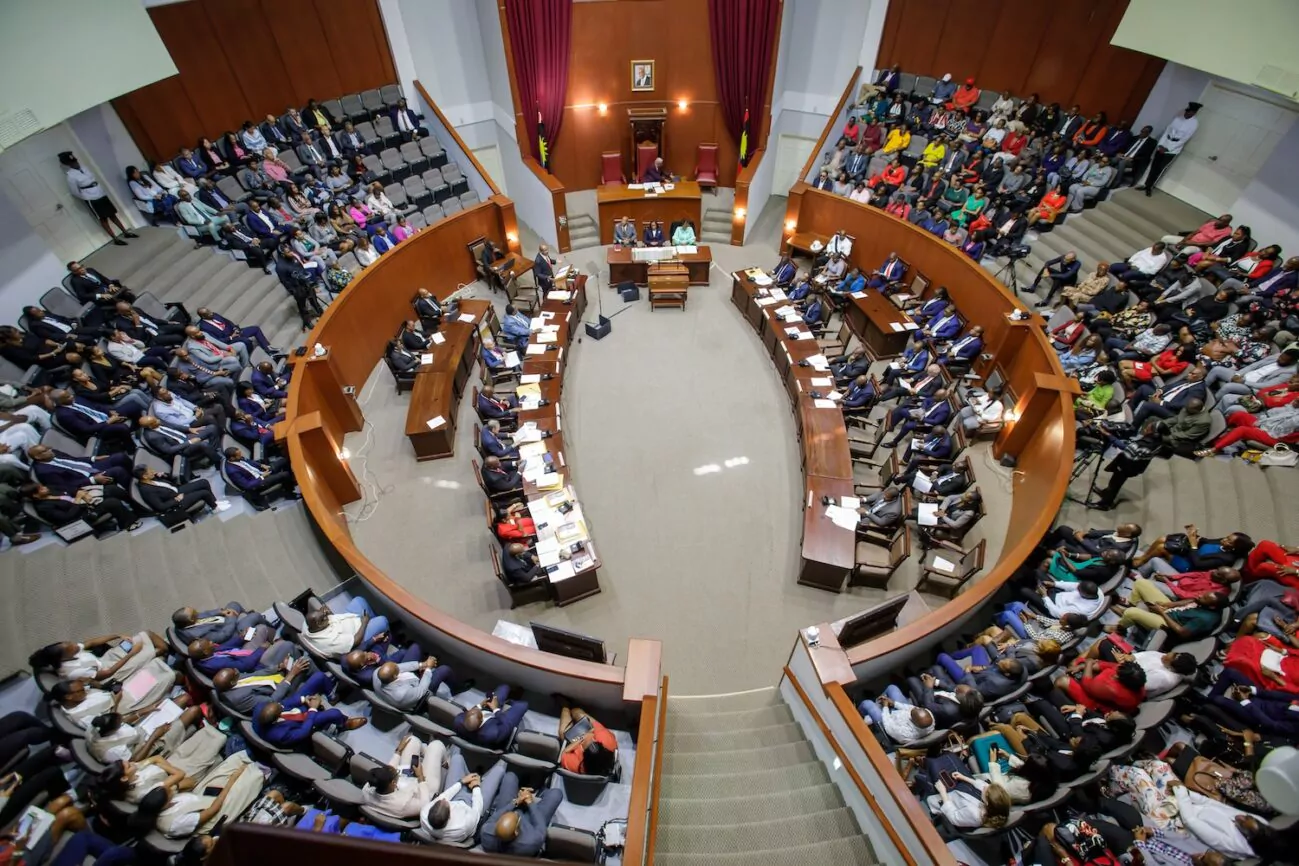
    Lawmakers in Antigua and Barbuda are gearing up to take up pressing public safety issues when the national parliament convenes for its next scheduled sitting next Monday and Tuesday. Top items on the unofficial agenda include a review of current bail protocols, sentencing guidelines, and the growing challenge of repeat offending, according to official statements from the country’s Cabinet.

    The push for a legislative debate on these topics comes directly from the nation’s senior law enforcement leadership, who brought their unaddressed concerns to a closed-door meeting with Cabinet members this past Wednesday. Law enforcement officials specifically zeroed in on two high-priority groups: individuals currently out on bail while facing charges for severe violent offenses, and defendants who have been arrested and prosecuted multiple times for violating the same criminal statutes.

    Cabinet officials emphasized that the upcoming discussion is not an isolated review of narrow procedural issues, but rather a component of a broader, ongoing national conversation about reducing violent crime and improving the fairness and effectiveness of the country’s justice system. Beyond adjustments to bail and sentencing rules, the national government is simultaneously evaluating a suite of additional policy changes aimed at boosting law enforcement capacity, hardening border security protocols, and cracking down on the illegal flow of firearms into the twin-island nation—all key drivers of local crime rates, according to government analysts.

    Notably, official public notes released by the Cabinet following Wednesday’s meeting did not disclose any draft piece of legislation or specific formal proposal that parliamentarians will be asked to vote on during the upcoming sitting. Government insiders indicate the session will likely serve as an opportunity for open debate among elected representatives, with formal policy proposals expected to be drafted and released in the weeks following the preliminary discussion.

  • Leisure : Did you know ? #62

    Leisure : Did you know ? #62

    Haiti-based digital media outlet HaitiLibre has rolled out the 62nd installment of its popular twice-weekly general knowledge series, “Did You Know?”, published on September 24, 2026. This week’s quiz segment centers on a question highlighting a prominent Haitian-American creator: Which Paris-trained, New York-based fashion designer founded the luxury Epice clothing brand?

    The official answer reveals Dayanne Danier, a designer who has built a dynamic creative and professional bridge between Haiti’s capital Port-au-Prince and the global fashion hub New York. Trained in the rigorous, time-honored techniques of haute couture, Danier has cultivated an instantly recognizable design signature that pairs sleek, modern silhouettes with the intricate, vibrant artisanal details rooted in Haitian cultural heritage.

    Beyond building her own successful fashion label, Danier has long prioritized inclusive economic growth in her country of origin. She founded the non-profit organization Fleur de Vie, which works to expand educational access and professional skills training for Haitians, with a specific focus on the local textile and garment industry. By teaching advanced sewing and craft techniques to local artisans, Danier is actively supporting the structural development and professionalization of Haiti’s burgeoning creative economy. Her seasonal collections, which are regularly featured at high-profile industry events and charity fashion shows, embody a new model of conscious fashion: sophisticated, contemporary, and deeply rooted in Caribbean cultural identity.

    This feature is part of HaitiLibre’s broader interactive quiz platform, Quiz.HaitiLibre, which hosts a growing catalog of general knowledge content covering topics ranging from local Haitian culture to global current affairs. As part of the platform’s scheduled monthly content update, 30 new quiz games were added to the platform on September 1, 2026, bringing the total number of available interactive games to 240, with new content added every calendar month going forward.

    All quiz content on the platform is exclusive, free to access, and does not require user registration. Designed to appeal to all age groups, each game offers three adjustable difficulty levels: easy, intermediate, and hard, and all content is available in both French and English. Users are invited to explore the full catalog of quizzes at https://quiz.haitilibre.com/en, share the platform with friends and family, and leave feedback via a comment form available at the end of every quiz.